EQUILIBRIUM LEVEL OF
  NATIONAL INCOME
“Value of commodities and
 services produced in an
 economy during a given
 period, counted without
       duplication”
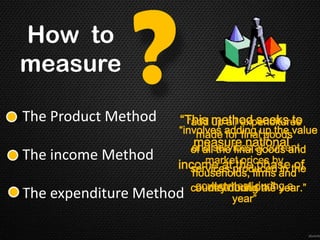
How to
measure

The Product Method          “This method seeks to
                             “add up all expenditures
                       “involves adding up the value
                           made for final goods
                           measure national
                          of allservices at current
                          and the final goods and
The   income Method          market prices by of
                       income atproduced in the
                          services thefirms and
                                         phase
                          households,
                              distribution.”
                           government during a
                          country during the year.”
The   expenditure Method            year”
‘How much should be the
    national TO THE DEMAND OF THE
PRODUCTION
             income?
                = PEOPLE            ’
   So that goods, Do not remain unsold and
                  Do not face shortage
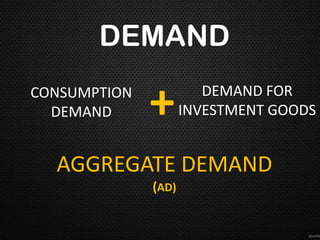
DEMAND
CONSUMPTION
  DEMAND      +         DEMAND FOR
                     INVESTMENT GOODS


  AGGREGATE DEMAND
              (AD)
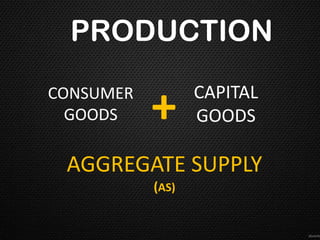
PRODUCTION
CONSUMER
  GOODS    +      CAPITAL
                  GOODS

 AGGREGATE SUPPLY
           (AS)
AGGREGATE DEMAND

     =
       (AD)


AGGREGATE SUPPLY
       (AS)
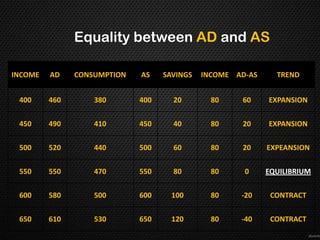
Equality between AD and AS

INCOME   AD    CONSUMPTION   AS    SAVINGS   INCOME AD-AS     TREND


 400     460       380       400     20        80    60     EXPANSION

 450     490       410       450     40        80    20     EXPANSION

 500     520       440       500     60        80    20     EXPEANSION

 550     550       470       550     80        80     0     EQUILIBRIUM

 600     580       500       600     100       80    -20     CONTRACT

 650     610       530       650     120       80    -40     CONTRACT
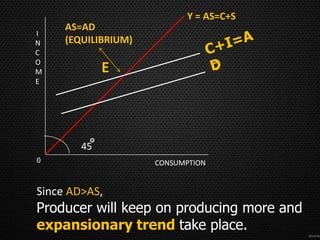
Y = AS=C+S
     AS=AD
I
N    (EQUILIBRIUM)
C
O
M            E
E


        45
0                    CONSUMPTION


Since AD>AS,
Producer will keep on producing more and
expansionary trend take place.
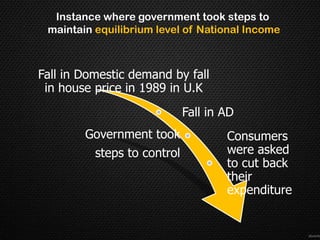
Instance where government took steps to
 maintain equilibrium level of National Income


Fall in Domestic demand by fall
 in house price in 1989 in U.K
                             Fall in AD
        Government took              Consumers
          steps to control           were asked
                                     to cut back
                                     their
                                     expenditure
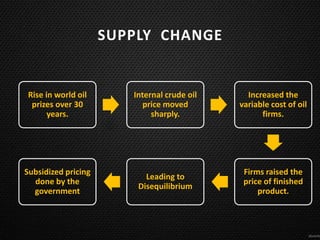
SUPPLY CHANGE


 Rise in world oil      Internal crude oil     Increased the
  prizes over 30           price moved       variable cost of oil
       years.                sharply.              firms.


Subsidized pricing                            Firms raised the
                           Leading to
  done by the                                 price of finished
                         Disequilibrium
  government                                      product.
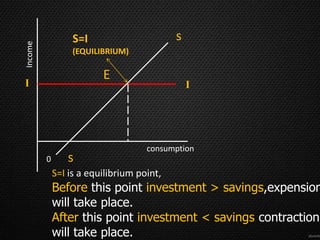
S=I                      s
Income

                  (EQUILIBRIUM)

                         E
I                                              I


                                    consumption
         0      s
             S=I is a equilibrium point,
             Before this point investment > savings,expension
             will take place.
             After this point investment < savings contraction
             will take place.
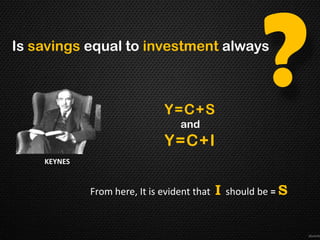
Is savings equal to investment always


                              Y=C+S
                                  and
                              Y=C+I
    KEYNES


             From here, It is evident that   I   should be = S
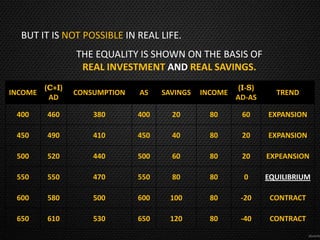
BUT IT IS NOT POSSIBLE IN REAL LIFE.
                 THE EQUALITY IS SHOWN ON THE BASIS OF
                  REAL INVESTMENT AND REAL SAVINGS.
         (C+I)                                           (I-S)
INCOME           CONSUMPTION   AS    SAVINGS   INCOME              TREND
          AD                                            AD-AS

 400     460         380       400     20        80      60      EXPANSION

 450     490         410       450     40        80      20      EXPANSION

 500     520         440       500     60        80      20      EXPEANSION

 550     550         470       550     80        80       0      EQUILIBRIUM

 600     580         500       600     100       80      -20      CONTRACT

 650     610         530       650     120       80      -40      CONTRACT
Thank you

Equilibrium level national income

  • 1.
    EQUILIBRIUM LEVEL OF NATIONAL INCOME
  • 2.
    “Value of commoditiesand services produced in an economy during a given period, counted without duplication”
  • 3.
    How to measure The ProductMethod “This method seeks to “add up all expenditures “involves adding up the value made for final goods measure national of allservices at current and the final goods and The income Method market prices by of income atproduced in the services thefirms and phase households, distribution.” government during a country during the year.” The expenditure Method year”
  • 4.
    ‘How much shouldbe the national TO THE DEMAND OF THE PRODUCTION income? = PEOPLE ’ So that goods, Do not remain unsold and Do not face shortage
  • 5.
    DEMAND CONSUMPTION DEMAND + DEMAND FOR INVESTMENT GOODS AGGREGATE DEMAND (AD)
  • 6.
    PRODUCTION CONSUMER GOODS + CAPITAL GOODS AGGREGATE SUPPLY (AS)
  • 7.
    AGGREGATE DEMAND = (AD) AGGREGATE SUPPLY (AS)
  • 8.
    Equality between ADand AS INCOME AD CONSUMPTION AS SAVINGS INCOME AD-AS TREND 400 460 380 400 20 80 60 EXPANSION 450 490 410 450 40 80 20 EXPANSION 500 520 440 500 60 80 20 EXPEANSION 550 550 470 550 80 80 0 EQUILIBRIUM 600 580 500 600 100 80 -20 CONTRACT 650 610 530 650 120 80 -40 CONTRACT
  • 9.
    Y = AS=C+S AS=AD I N (EQUILIBRIUM) C O M E E 45 0 CONSUMPTION Since AD>AS, Producer will keep on producing more and expansionary trend take place.
  • 10.
    Instance where governmenttook steps to maintain equilibrium level of National Income Fall in Domestic demand by fall in house price in 1989 in U.K Fall in AD Government took Consumers steps to control were asked to cut back their expenditure
  • 11.
    SUPPLY CHANGE Risein world oil Internal crude oil Increased the prizes over 30 price moved variable cost of oil years. sharply. firms. Subsidized pricing Firms raised the Leading to done by the price of finished Disequilibrium government product.
  • 12.
    S=I s Income (EQUILIBRIUM) E I I consumption 0 s S=I is a equilibrium point, Before this point investment > savings,expension will take place. After this point investment < savings contraction will take place.
  • 13.
    Is savings equalto investment always Y=C+S and Y=C+I KEYNES From here, It is evident that I should be = S
  • 14.
    BUT IT ISNOT POSSIBLE IN REAL LIFE. THE EQUALITY IS SHOWN ON THE BASIS OF REAL INVESTMENT AND REAL SAVINGS. (C+I) (I-S) INCOME CONSUMPTION AS SAVINGS INCOME TREND AD AD-AS 400 460 380 400 20 80 60 EXPANSION 450 490 410 450 40 80 20 EXPANSION 500 520 440 500 60 80 20 EXPEANSION 550 550 470 550 80 80 0 EQUILIBRIUM 600 580 500 600 100 80 -20 CONTRACT 650 610 530 650 120 80 -40 CONTRACT
  • 15.

Editor's Notes

  • #4 The product approach measuring national income involves adding up the value of all the final goods and services produced in the country during the year.The expenditure approach to measuring national income is to add up all expenditures made for final goods and services at current market prices by households, firms and government during a yearThis method seeks to measure national income at the phase of distribution.
  • #5 real life examples of national level of equilibriumConsider a £300 million increase in business capital investment – for example created when an overseas company decides to build a new production plant in the UK. This will set off a chain reaction of increases in expenditures. Firms who produce the capital goods that are purchased will experience an increase in their incomes and profits. If they in turn, collectively spend about 3/5 of that additional income, then £180m will be added to the incomes of others