EPITOPE MAPPING THROUGH
BIOINFORMATICAL ANALYSIS
Jajati Keshari Nayak
PhD1st yr
MBGE,GBUA&T
ID-55493
Antigen-antibody interaction
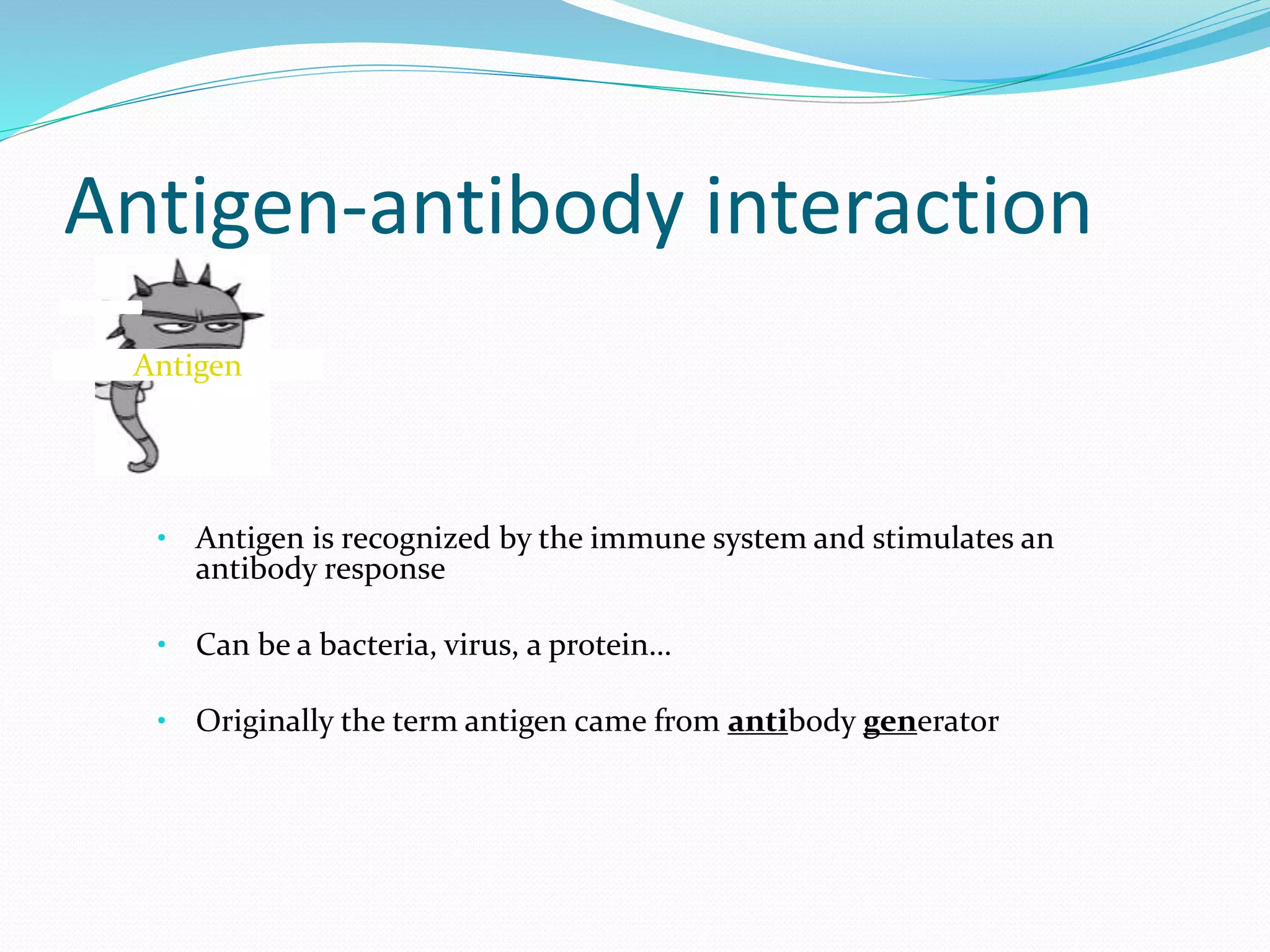
• Antigen is recognized by the immune system and stimulates an
antibody response
• Can be a bacteria, virus, a protein…
• Originally the term antigen came from antibody generator
Antigen
 An
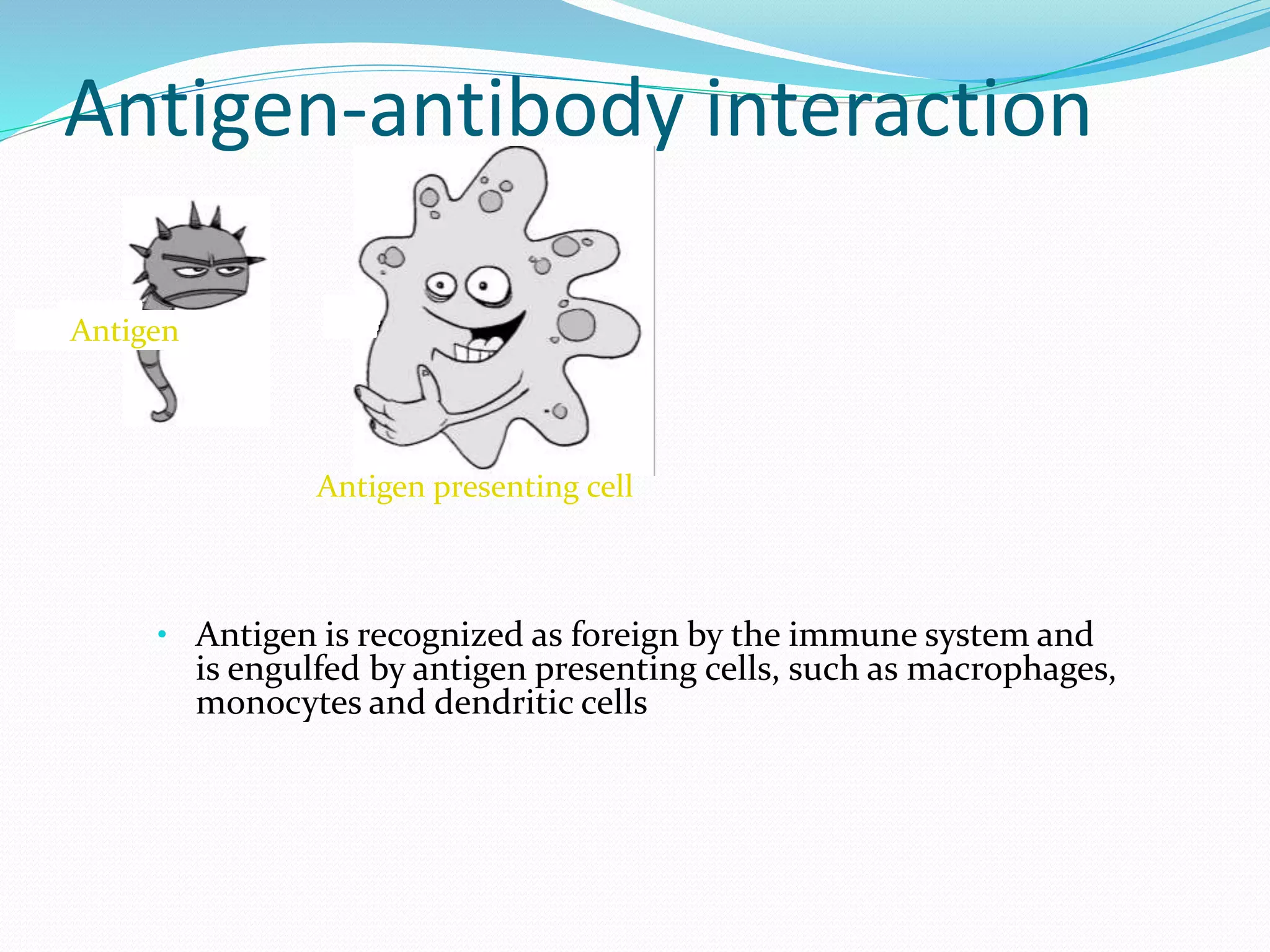
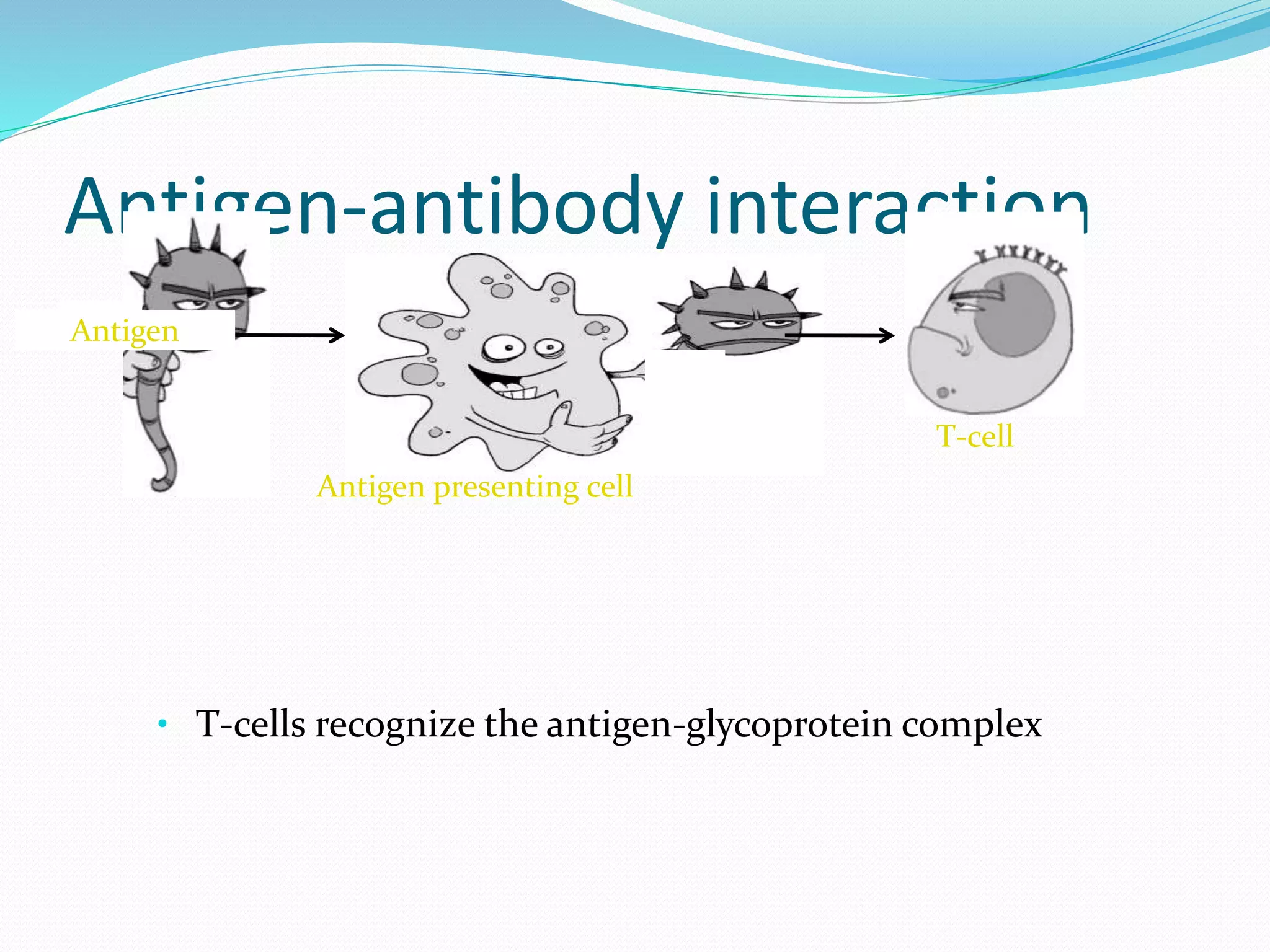
• Antigen is recognized as foreign by the immune system and
is engulfed by antigen presenting cells, such as macrophages,
monocytes and dendritic cells
Antigen presenting cell
Antigen
Antigen-antibody interaction
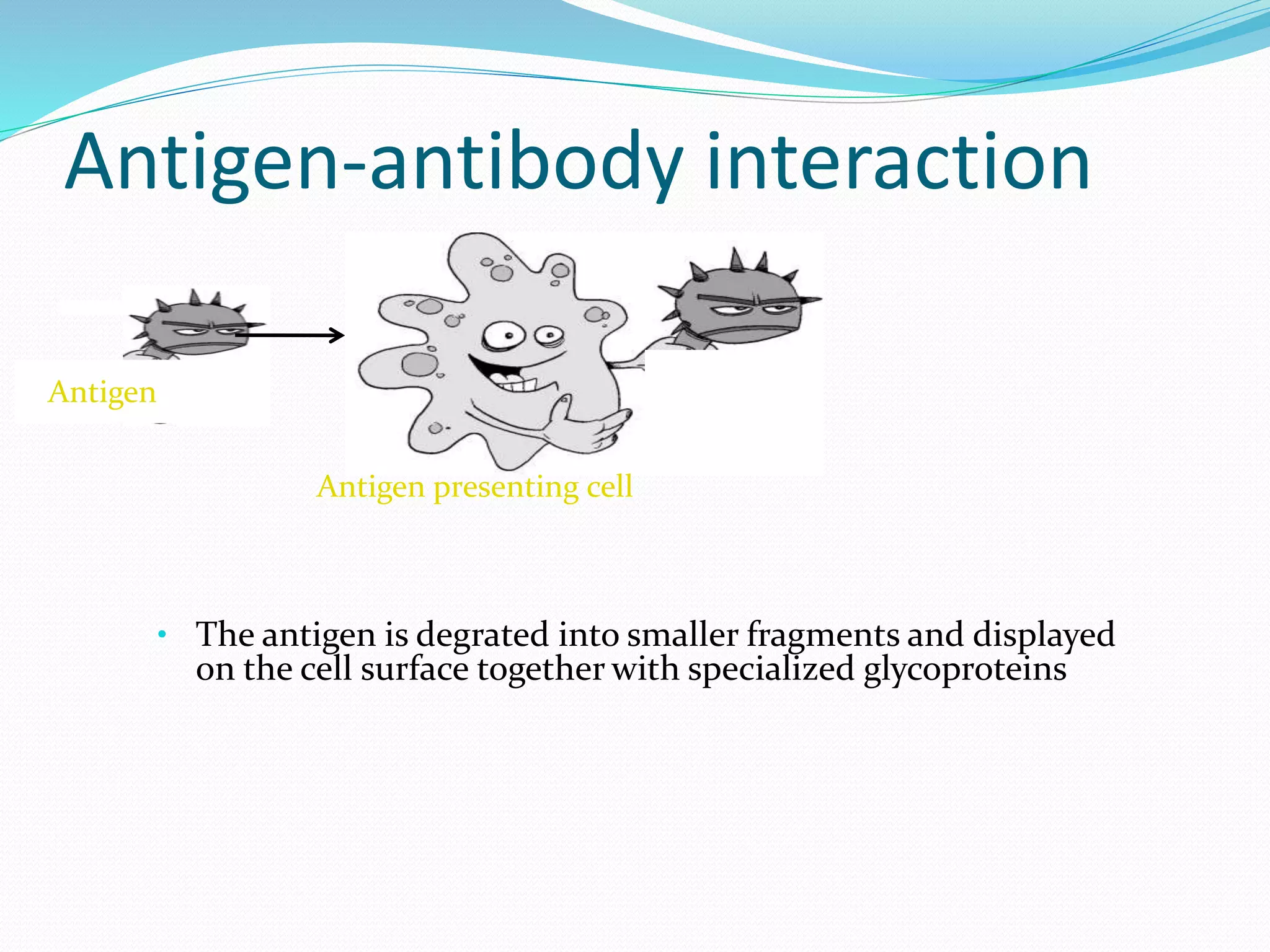
• The antigen is degrated into smaller fragments and displayed
on the cell surface together with specialized glycoproteins
Antigen presenting cell
Antigen
Antigen-antibody interaction
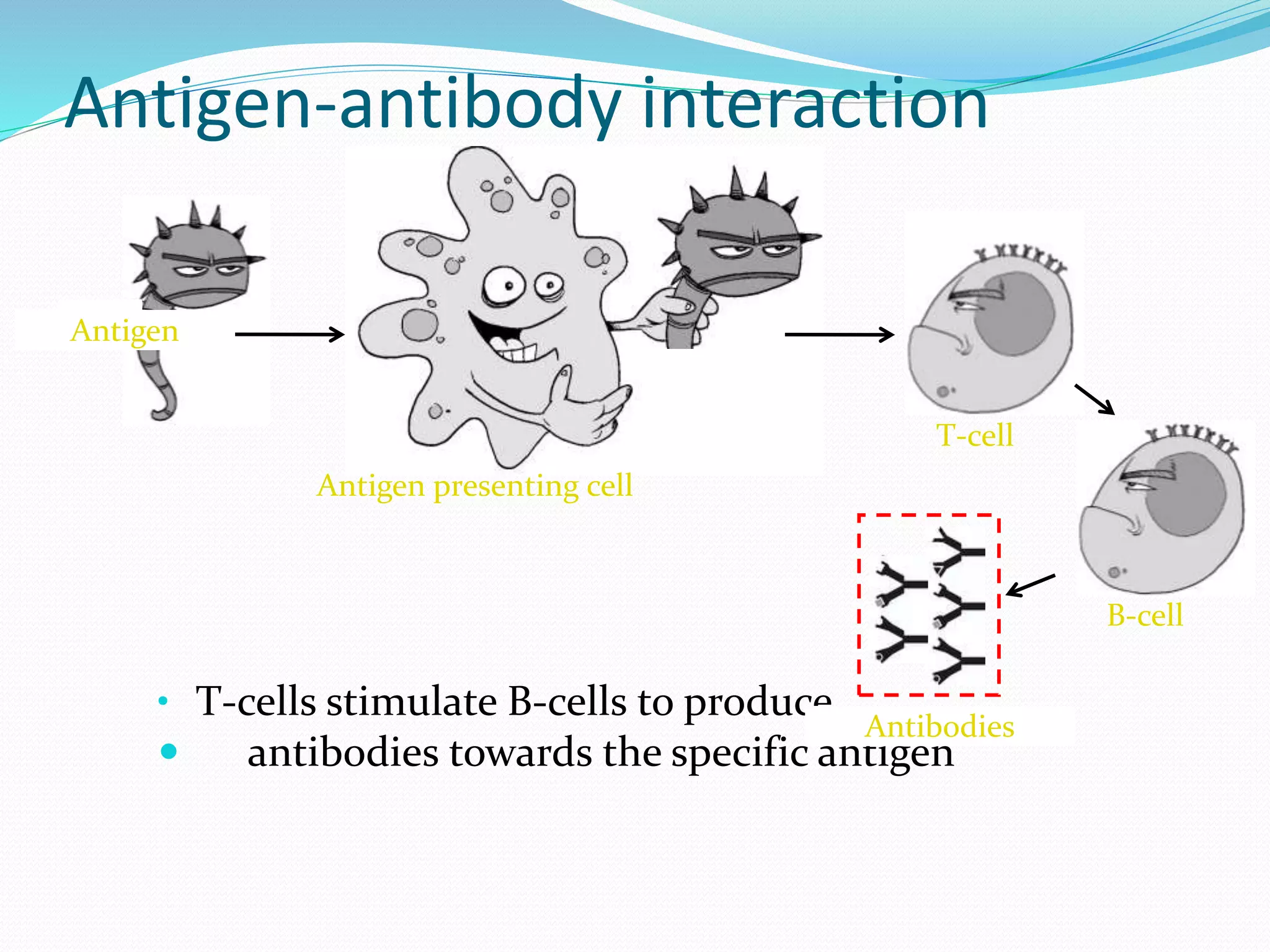
• T-cells recognize the antigen-glycoprotein complex
Antigen presenting cell
T-cell
Antigen
Antigen-antibody interaction
• T-cells stimulate B-cells to produce
 antibodies towards the specific antigen
Antigen presenting cell
T-cell
B-cell
Antibodies
Antigen
Antigen
Antigen presenting cell
Epitope
T-cell
B-cell
Antibodies
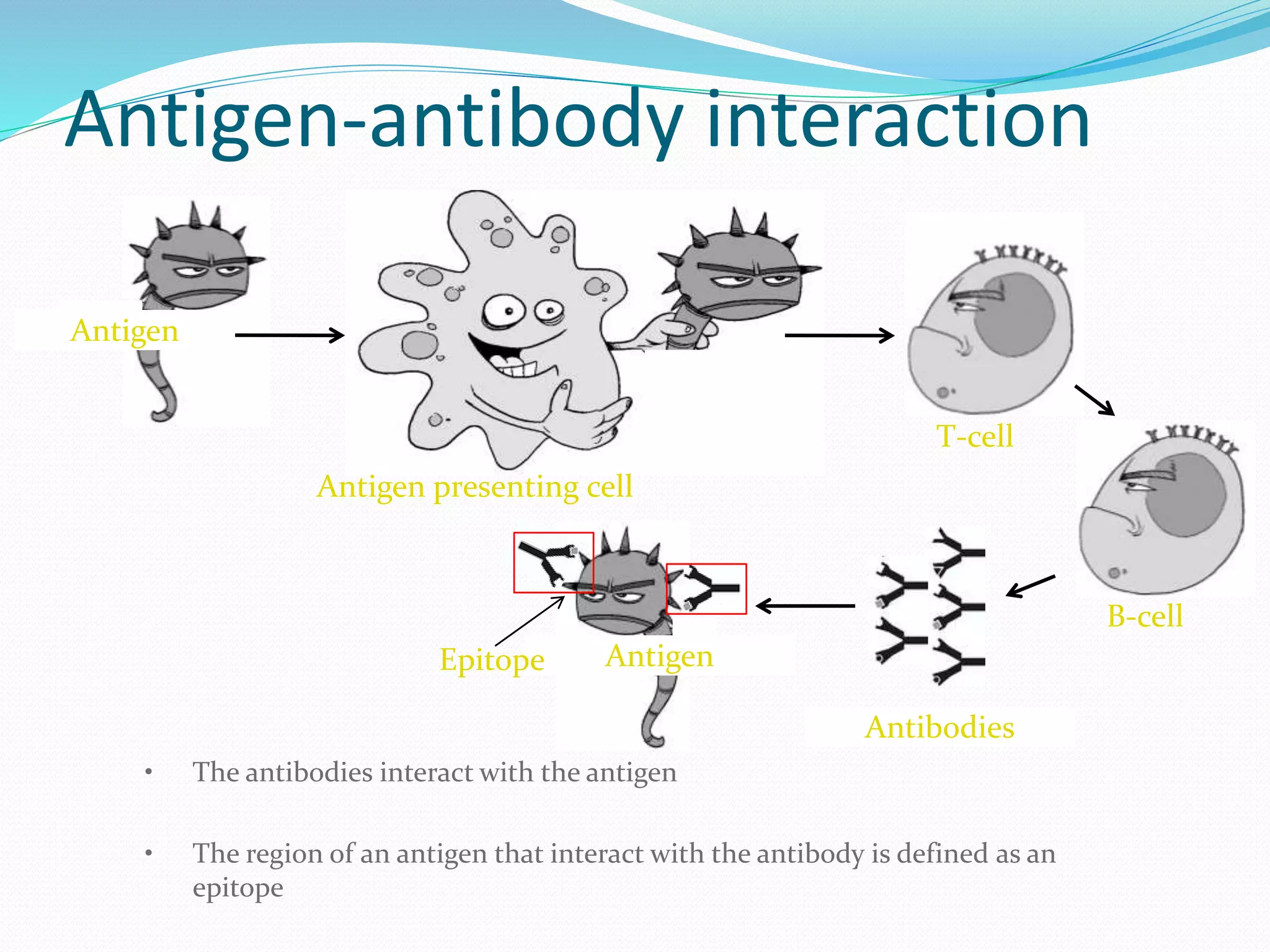
• The antibodies interact with the antigen
• The region of an antigen that interact with the antibody is defined as an
epitope
Antigen
Antigen-antibody interaction
Antigen presenting cell
T-cell
B-cell
Antigen
Antibodies
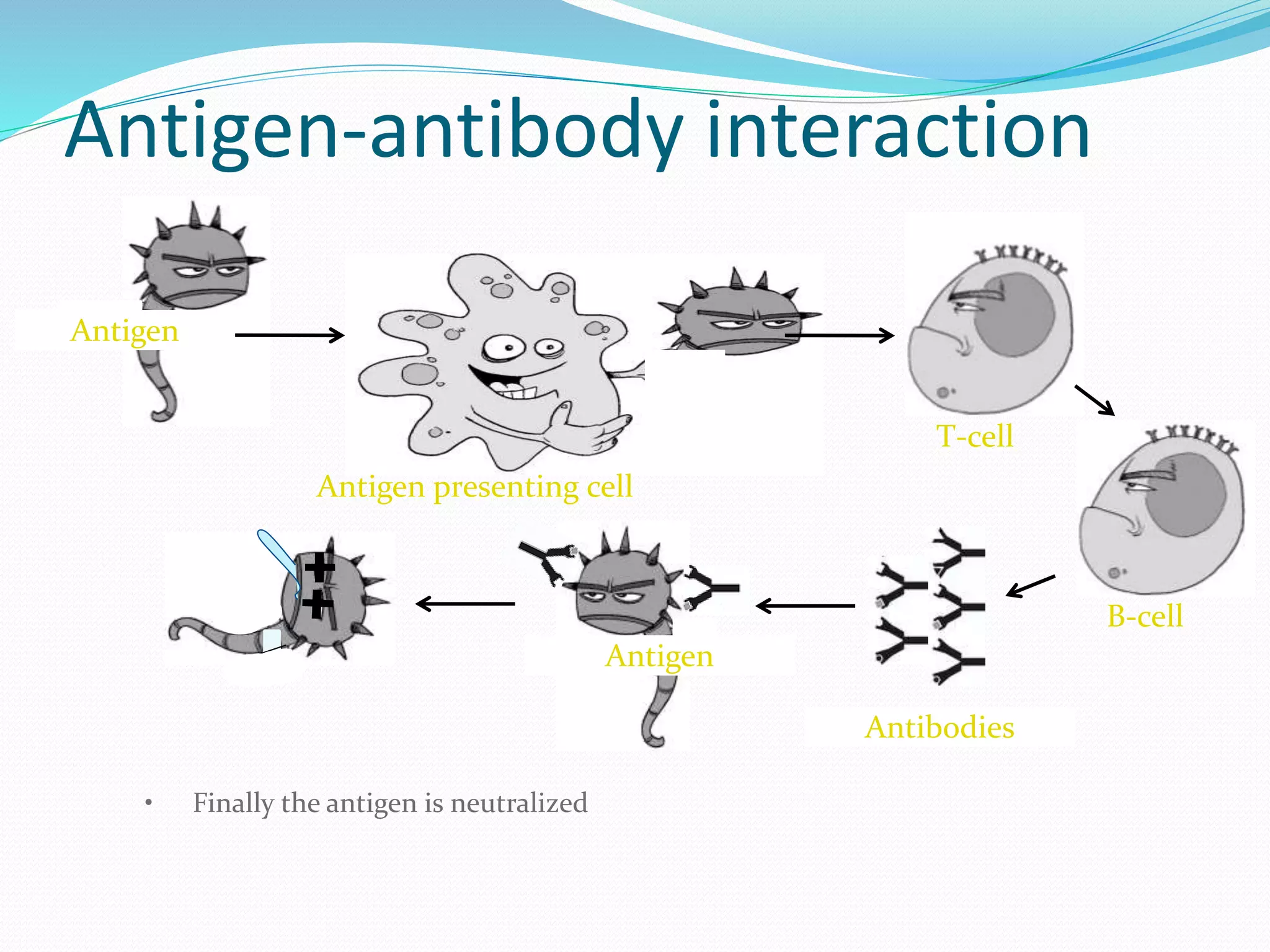
• Finally the antigen is neutralized
Antigen
Antigen-antibody interaction
Antigen presenting cell
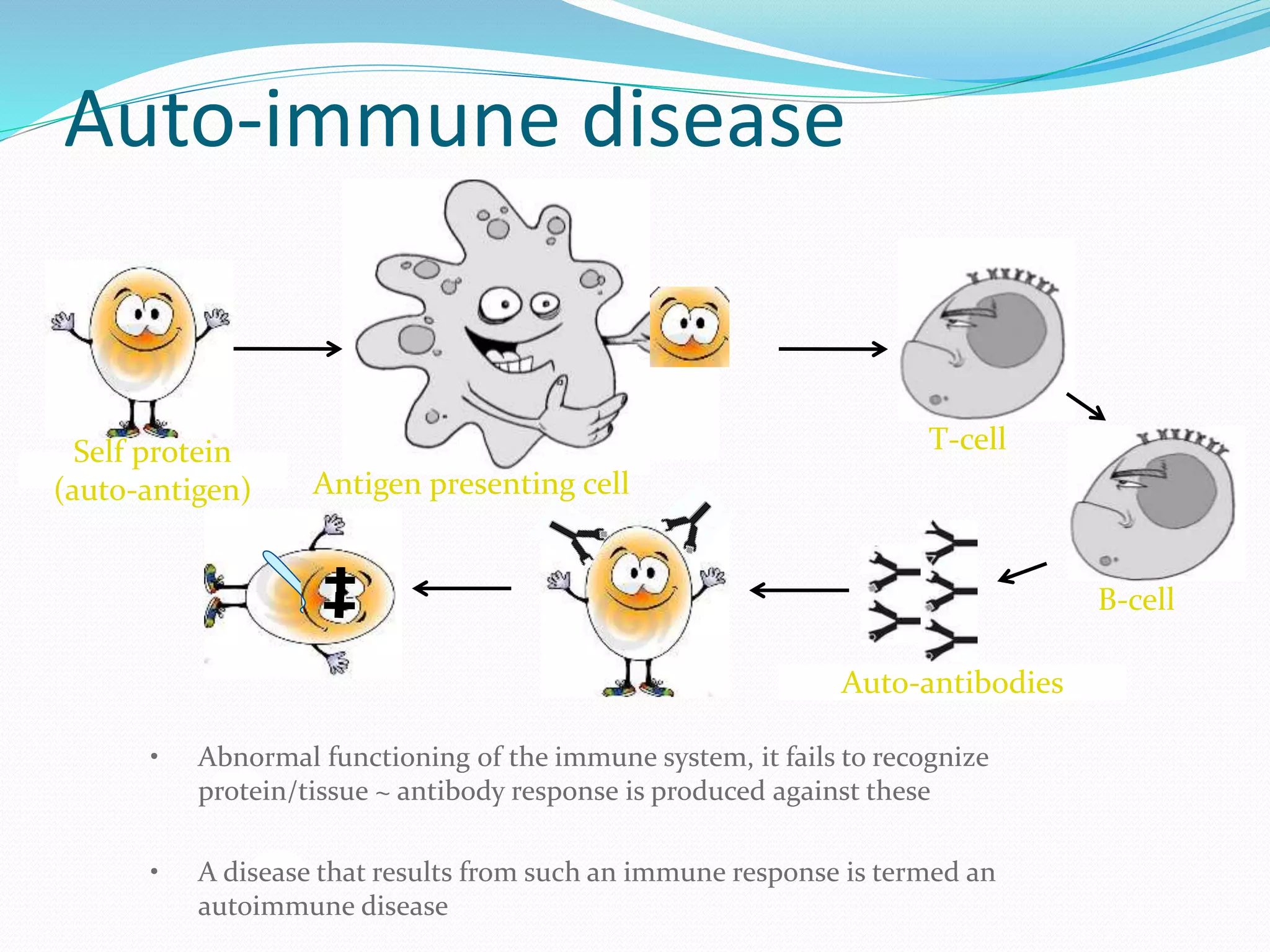
T-cellSelf protein
(auto-antigen)
B-cell
Auto-antibodies
• Abnormal functioning of the immune system, it fails to recognize
protein/tissue ~ antibody response is produced against these
• A disease that results from such an immune response is termed an
autoimmune disease
Auto-immune disease
Epitope mapping
• Epitope mapping is the process of identifying the binding
sites of antibodies on their target antigens
• Several strategies for epitope mapping exist:
 recombinant proteins
 X-ray co-crystallography
 phage-display
 peptide scanning
 truncated resin-bound peptides
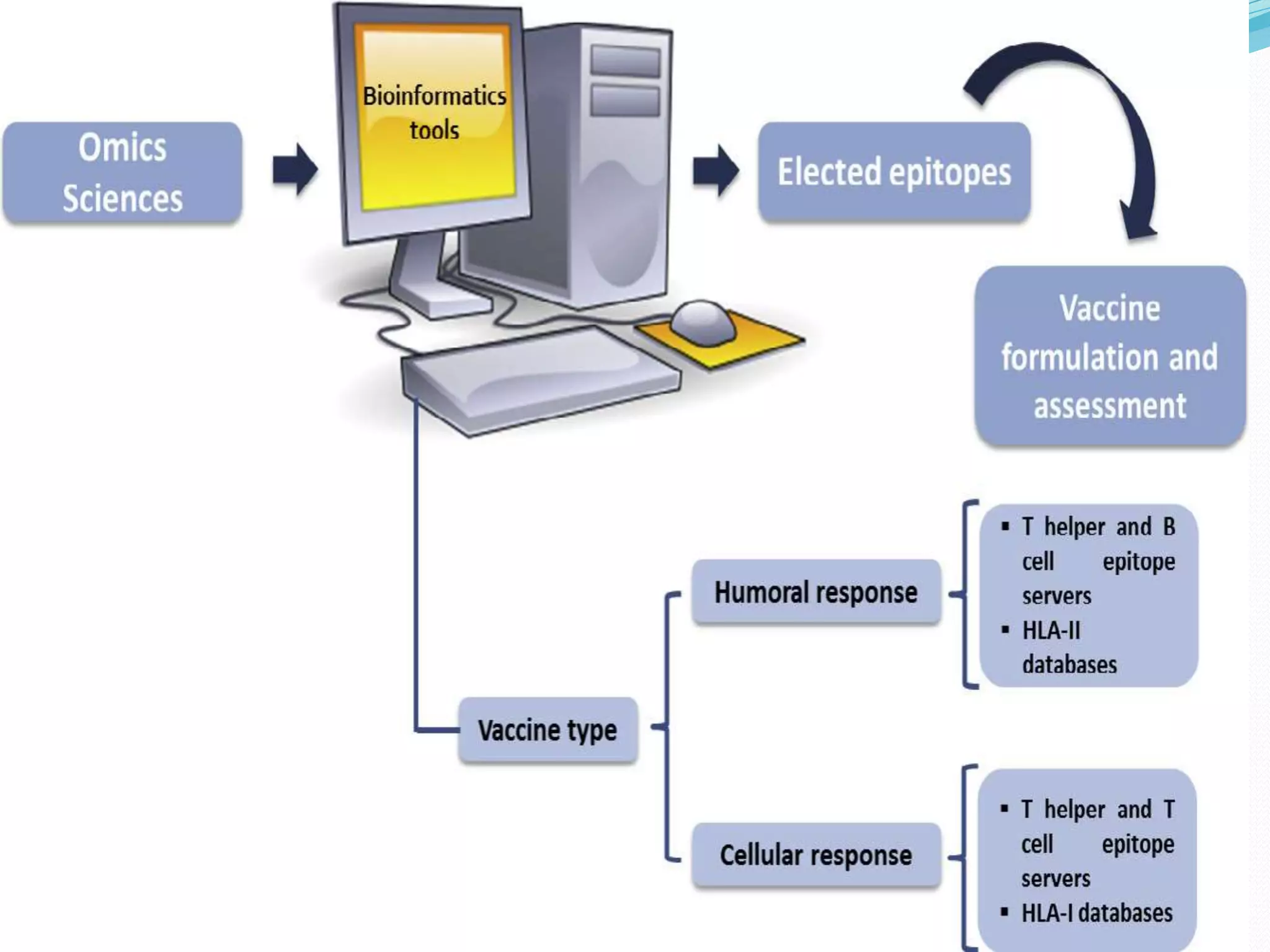
 Through Bioinformatical analysis
Need
 Used for vaccine development against influenza,small
pox,pertusis
 mAB and Polyclonal antobodies production.
 To know the antigen-antibody interaction.
Why epitope mapping ??
 Conventional vaccine production is time consuming.
 Atteneuated or killed pathogen may cause disease in
host genome.
 To know the different consensus and conserved
sequence which forms epitopes.
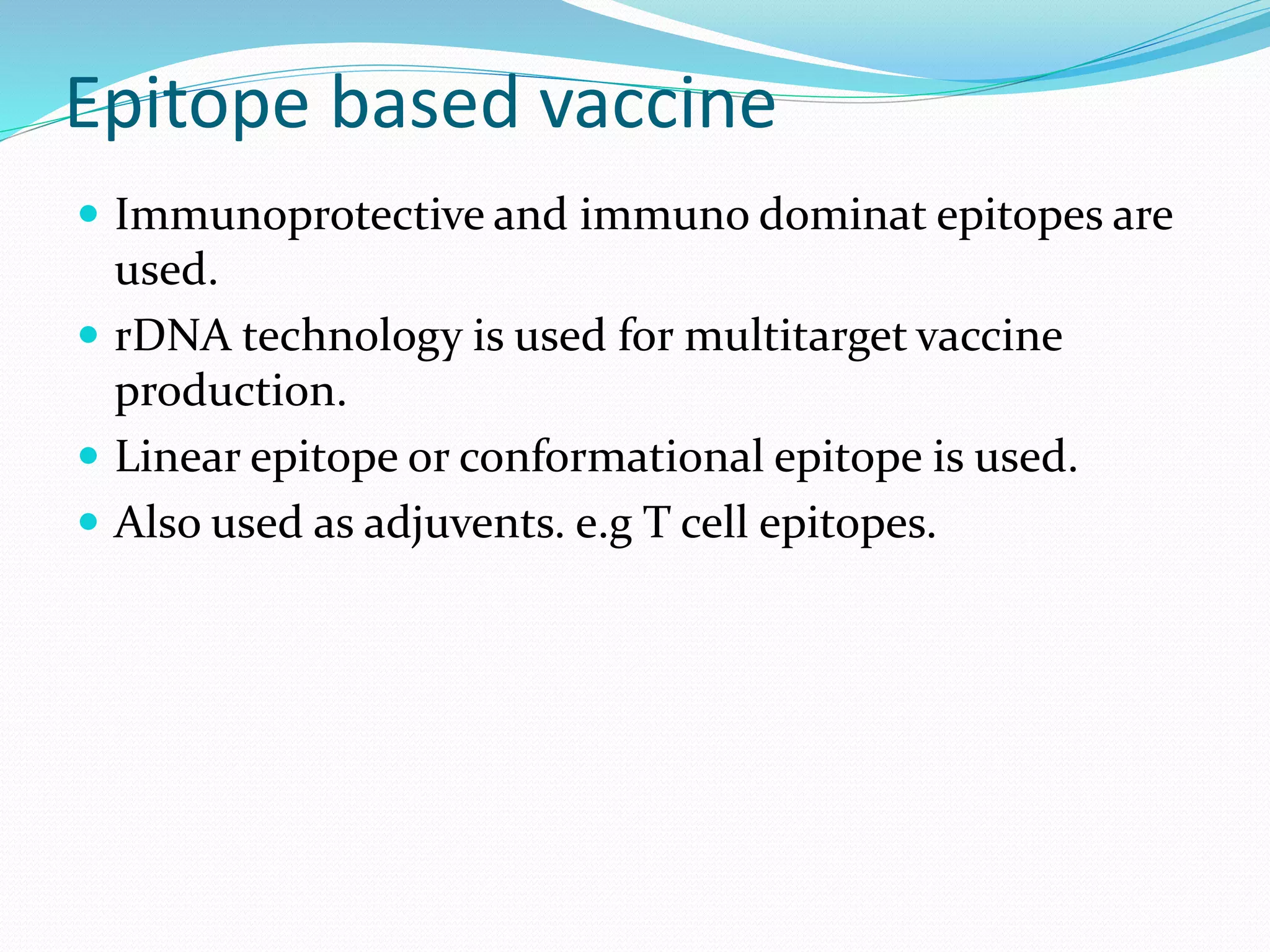
Epitope based vaccine
 Immunoprotective and immuno dominat epitopes are
used.
 rDNA technology is used for multitarget vaccine
production.
 Linear epitope or conformational epitope is used.
 Also used as adjuvents. e.g T cell epitopes.
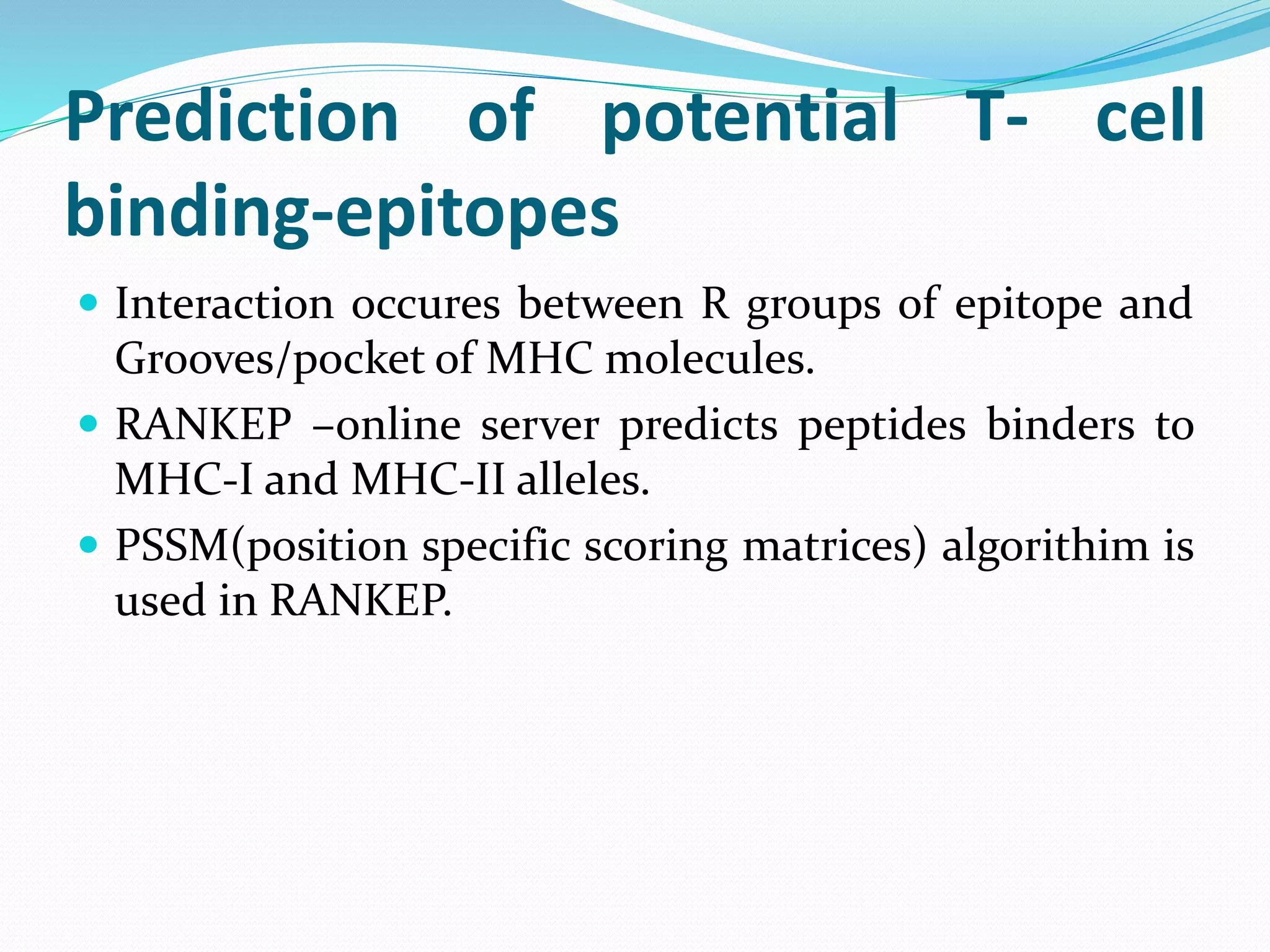
Prediction of potential T- cell
binding-epitopes
 Interaction occures between R groups of epitope and
Grooves/pocket of MHC molecules.
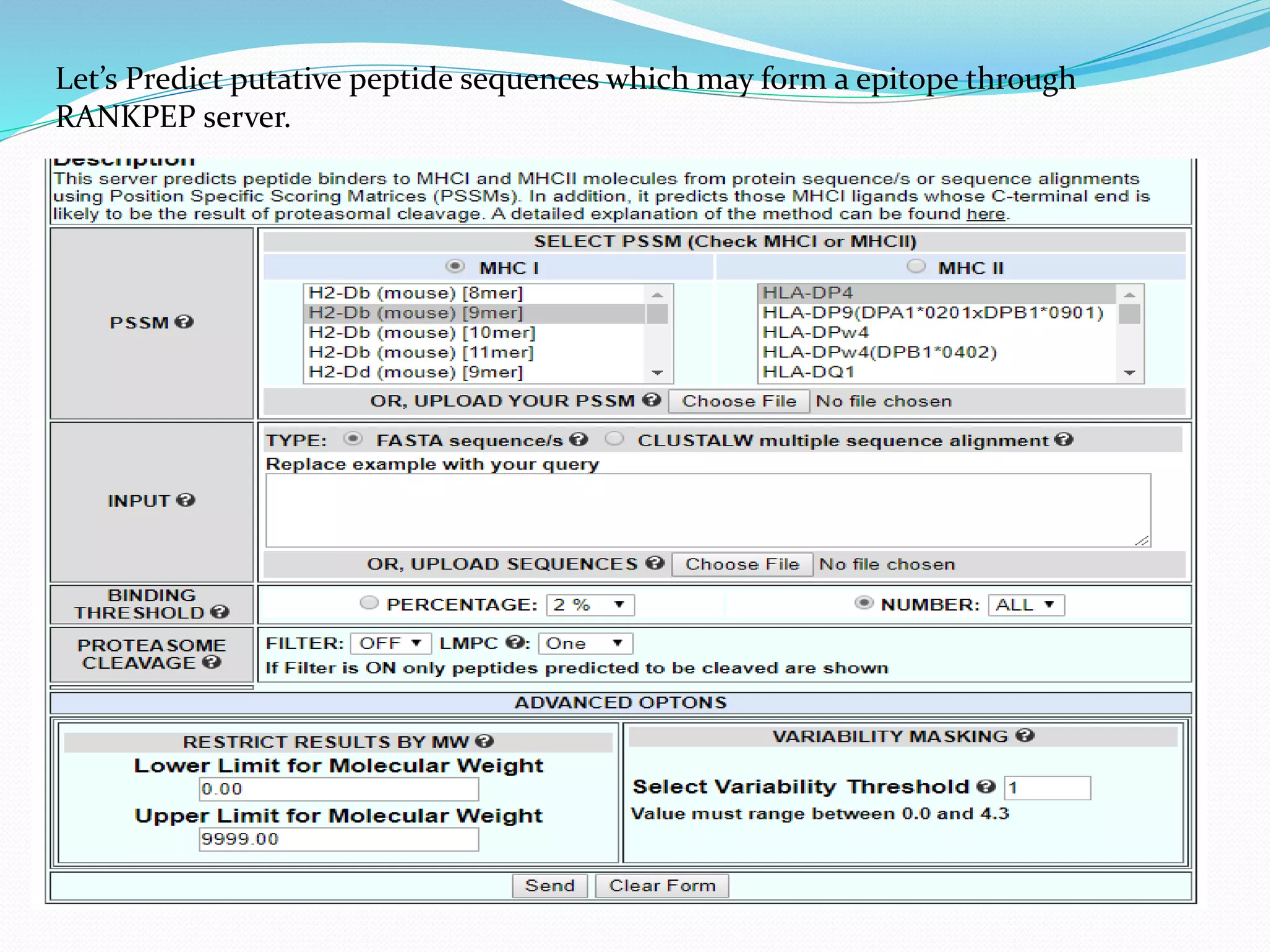
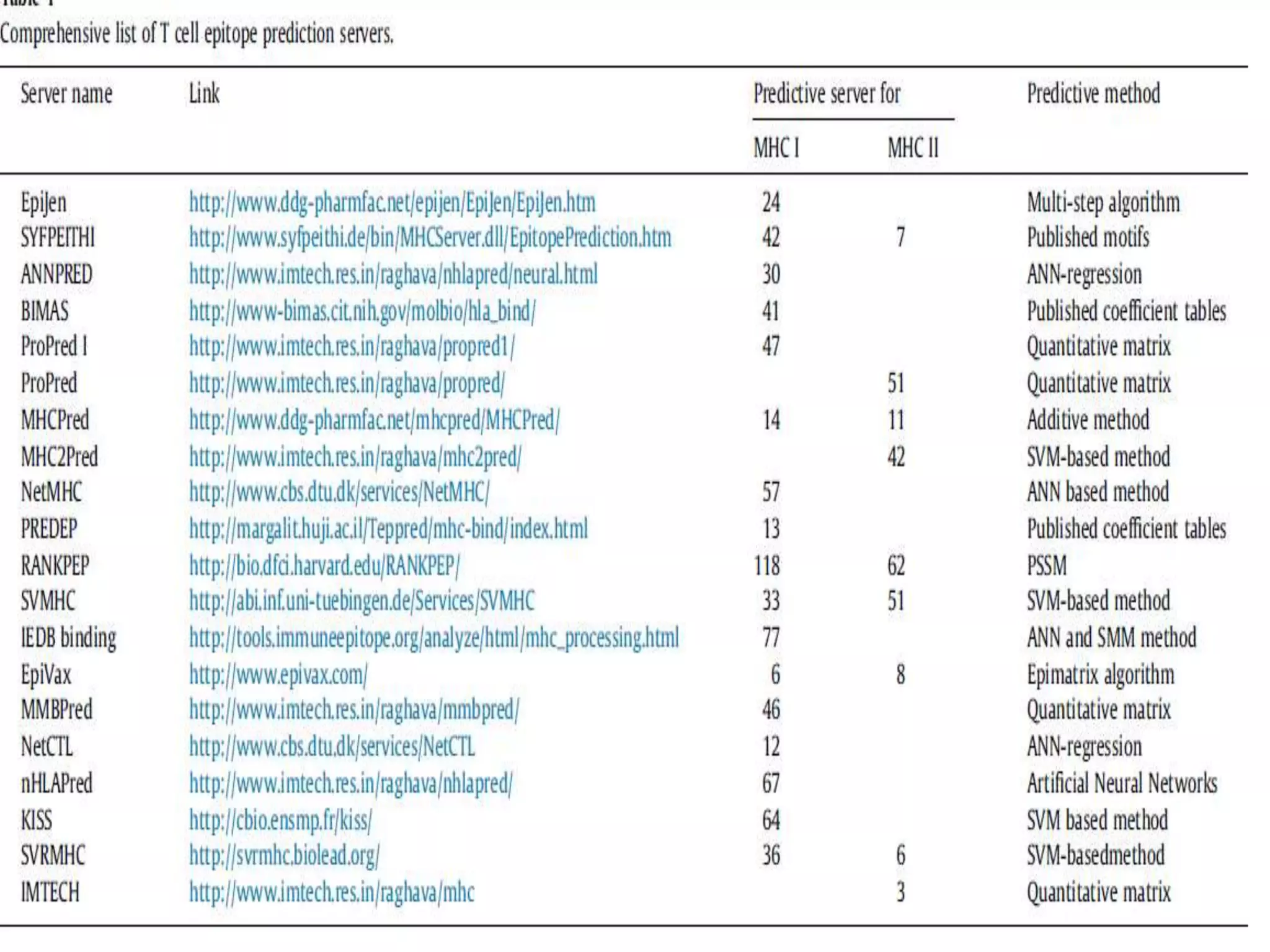
 RANKEP –online server predicts peptides binders to
MHC-I and MHC-II alleles.
 PSSM(position specific scoring matrices) algorithim is
used in RANKEP.
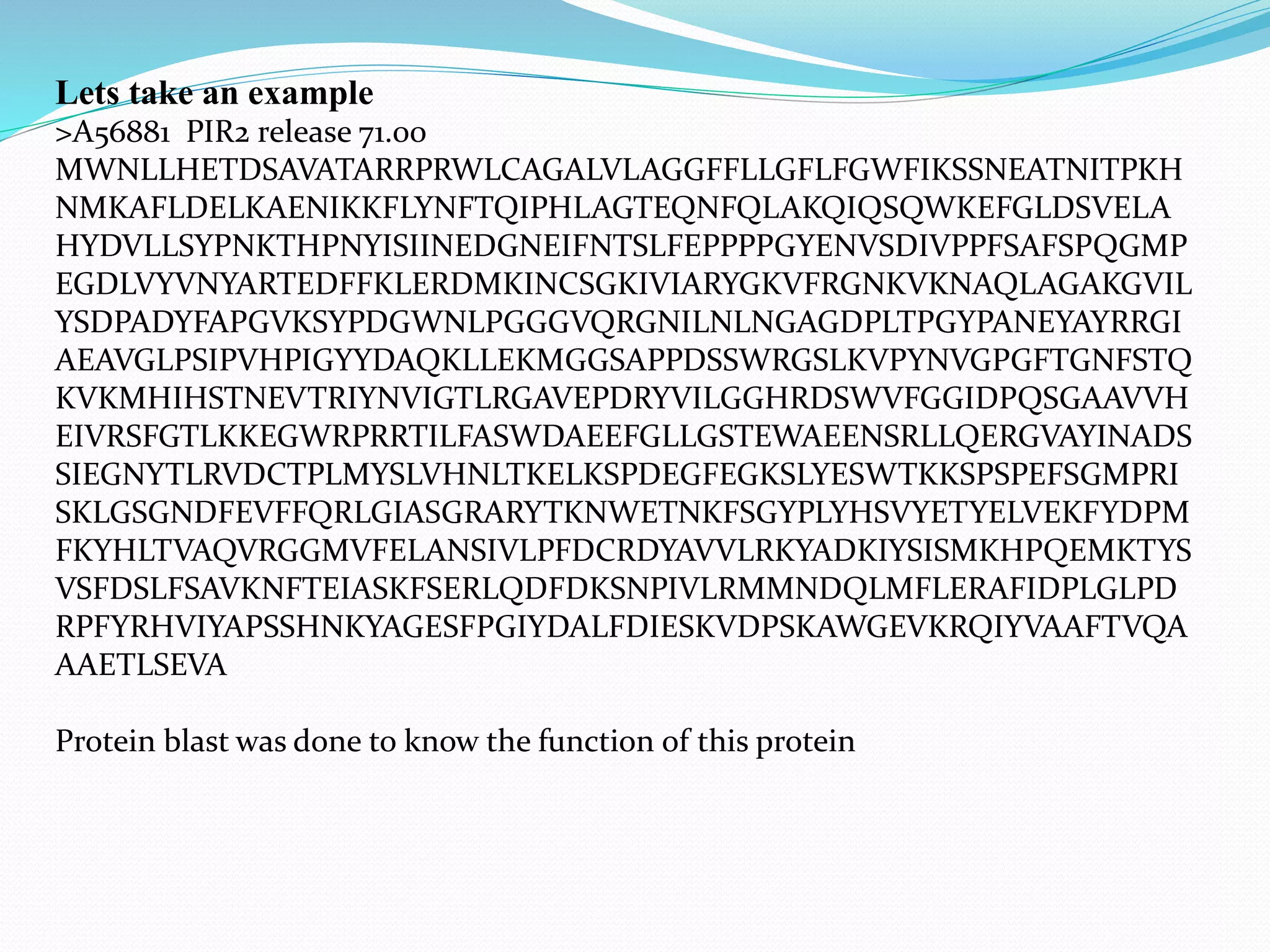
Lets take an example
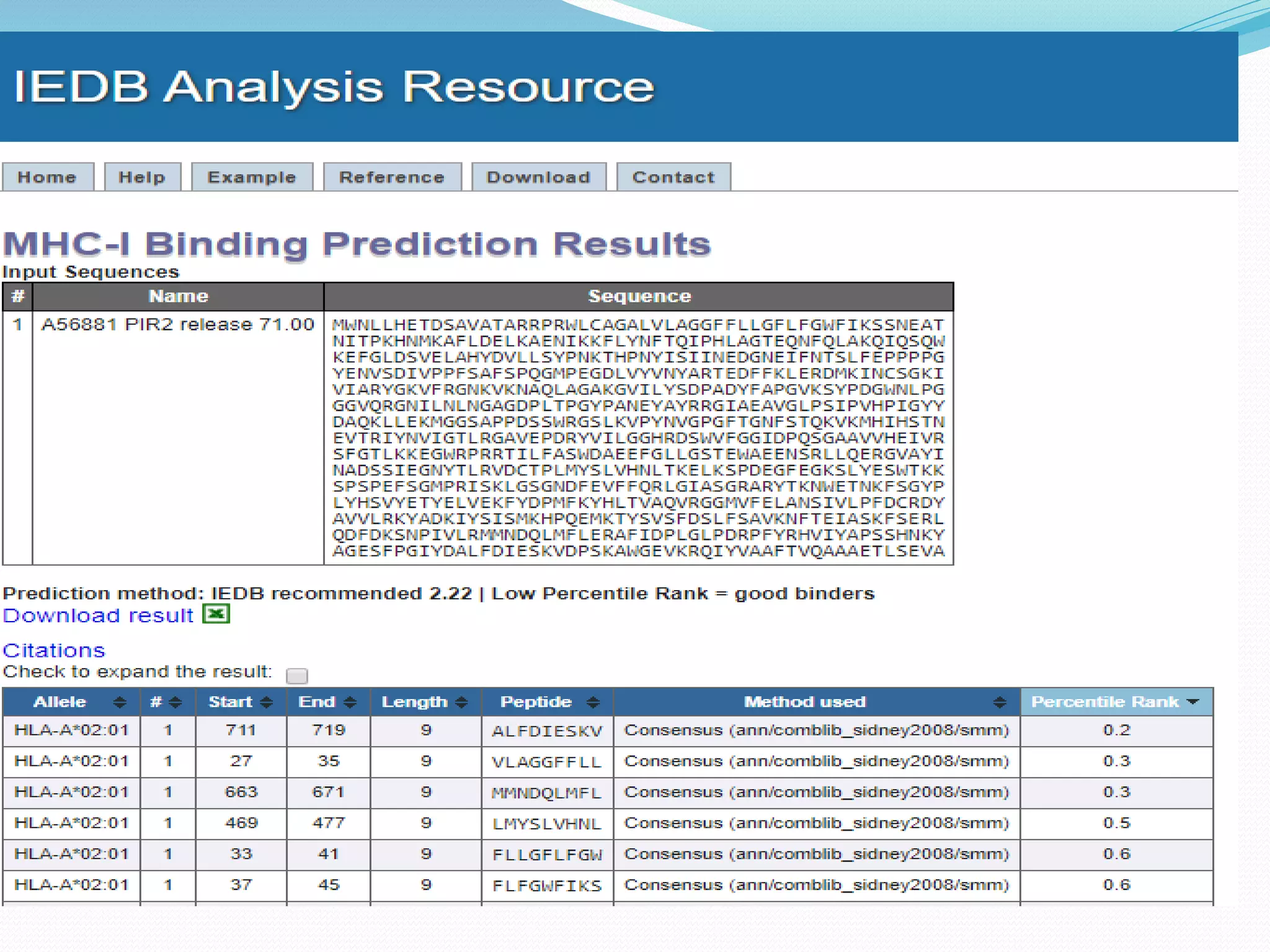
>A56881 PIR2 release 71.00
MWNLLHETDSAVATARRPRWLCAGALVLAGGFFLLGFLFGWFIKSSNEATNITPKH
NMKAFLDELKAENIKKFLYNFTQIPHLAGTEQNFQLAKQIQSQWKEFGLDSVELA
HYDVLLSYPNKTHPNYISIINEDGNEIFNTSLFEPPPPGYENVSDIVPPFSAFSPQGMP
EGDLVYVNYARTEDFFKLERDMKINCSGKIVIARYGKVFRGNKVKNAQLAGAKGVIL
YSDPADYFAPGVKSYPDGWNLPGGGVQRGNILNLNGAGDPLTPGYPANEYAYRRGI
AEAVGLPSIPVHPIGYYDAQKLLEKMGGSAPPDSSWRGSLKVPYNVGPGFTGNFSTQ
KVKMHIHSTNEVTRIYNVIGTLRGAVEPDRYVILGGHRDSWVFGGIDPQSGAAVVH
EIVRSFGTLKKEGWRPRRTILFASWDAEEFGLLGSTEWAEENSRLLQERGVAYINADS
SIEGNYTLRVDCTPLMYSLVHNLTKELKSPDEGFEGKSLYESWTKKSPSPEFSGMPRI
SKLGSGNDFEVFFQRLGIASGRARYTKNWETNKFSGYPLYHSVYETYELVEKFYDPM
FKYHLTVAQVRGGMVFELANSIVLPFDCRDYAVVLRKYADKIYSISMKHPQEMKTYS
VSFDSLFSAVKNFTEIASKFSERLQDFDKSNPIVLRMMNDQLMFLERAFIDPLGLPD
RPFYRHVIYAPSSHNKYAGESFPGIYDALFDIESKVDPSKAWGEVKRQIYVAAFTVQA
AAETLSEVA
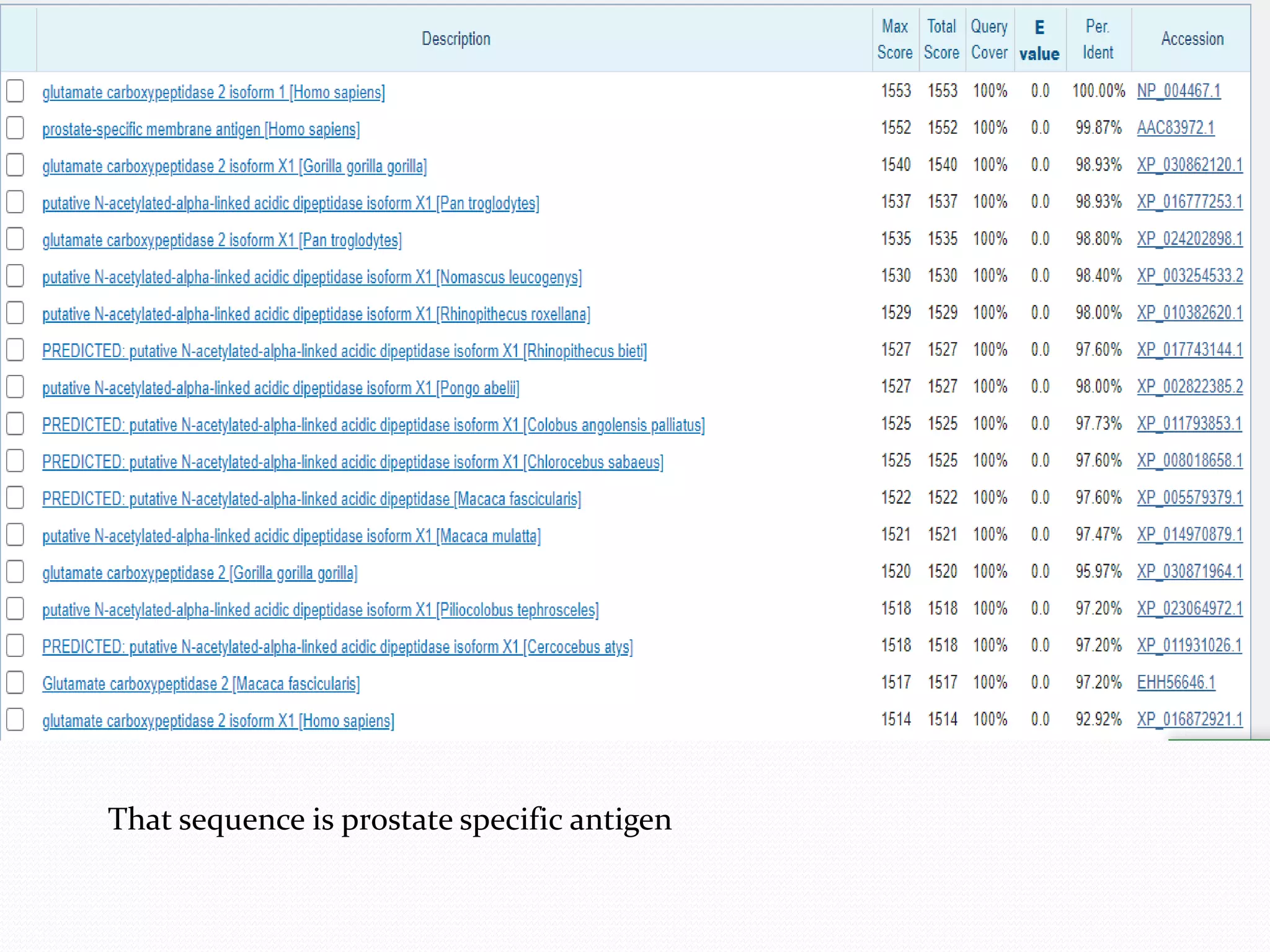
Protein blast was done to know the function of this protein
That sequence is prostate specific antigen
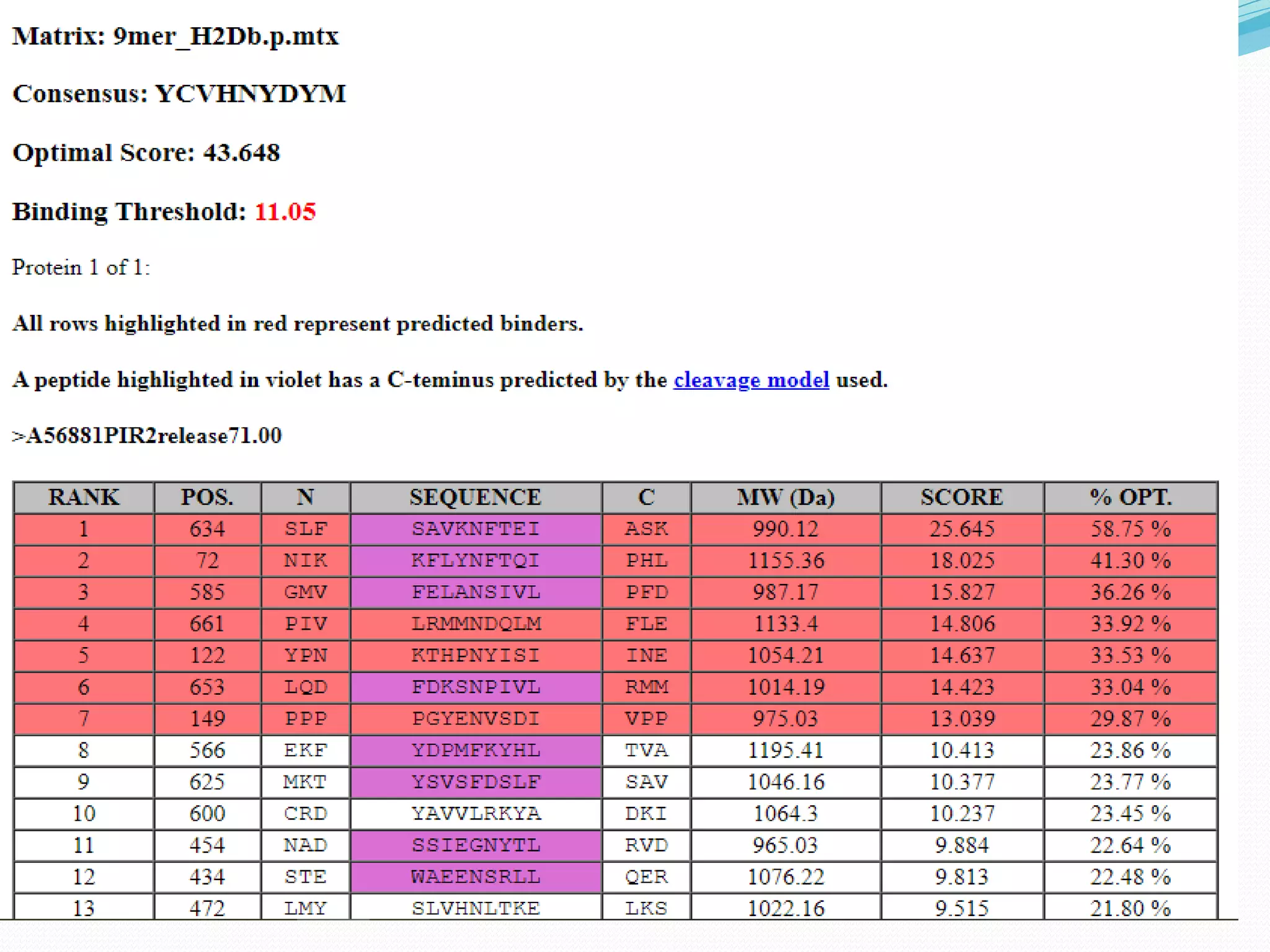
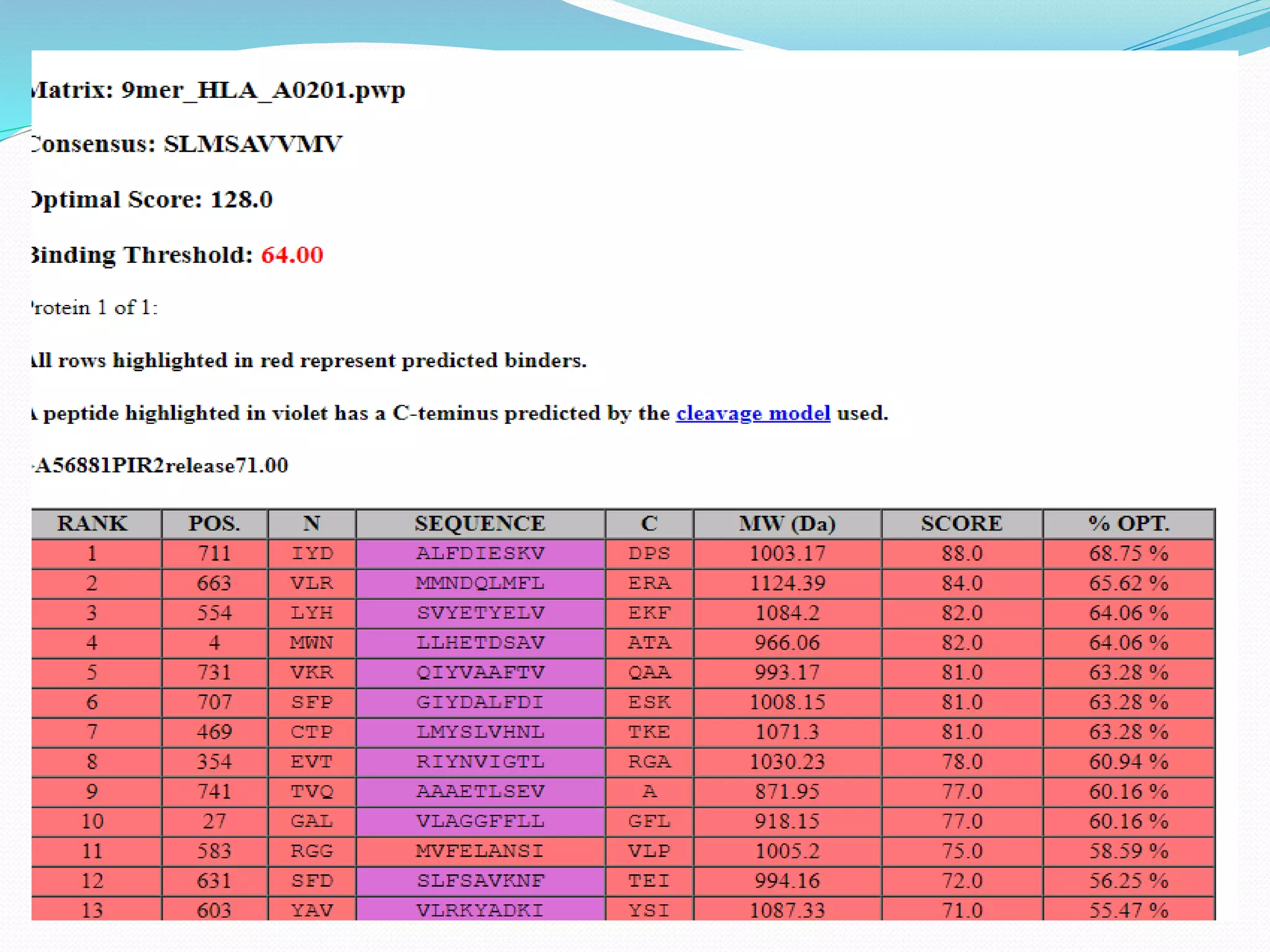
Let’s Predict putative peptide sequences which may form a epitope through
RANKPEP server.
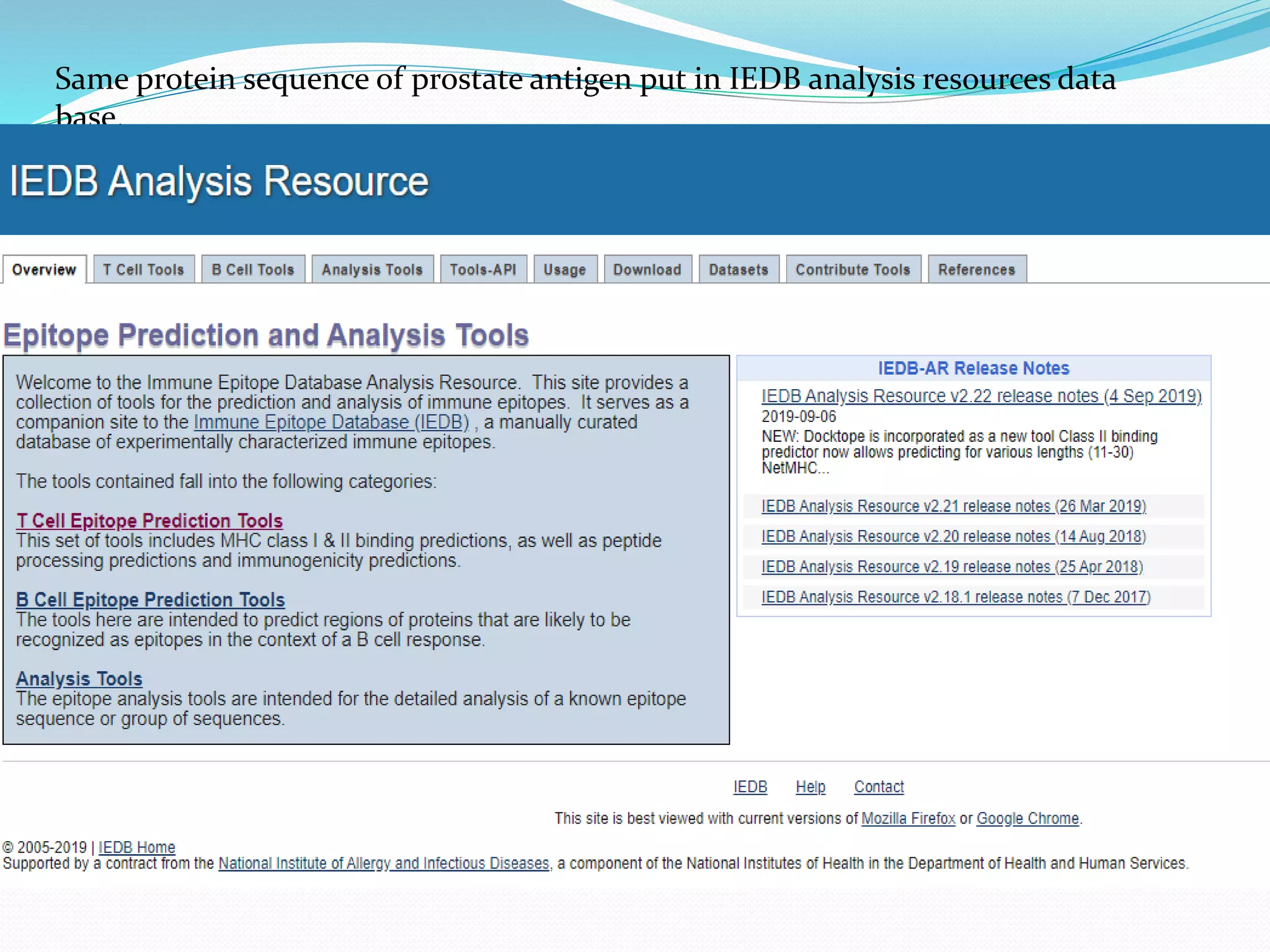
Same protein sequence of prostate antigen put in IEDB analysis resources data
base.
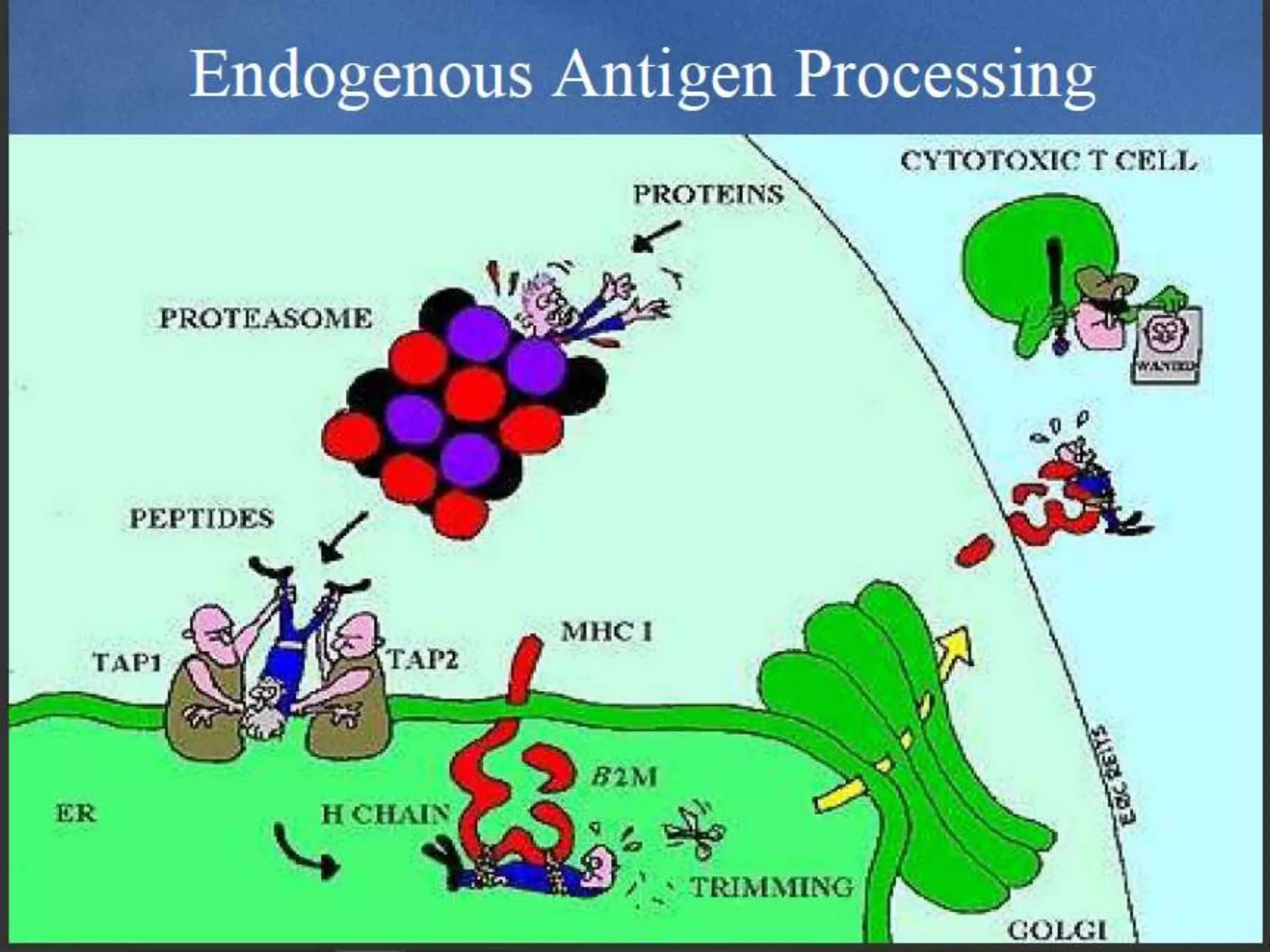
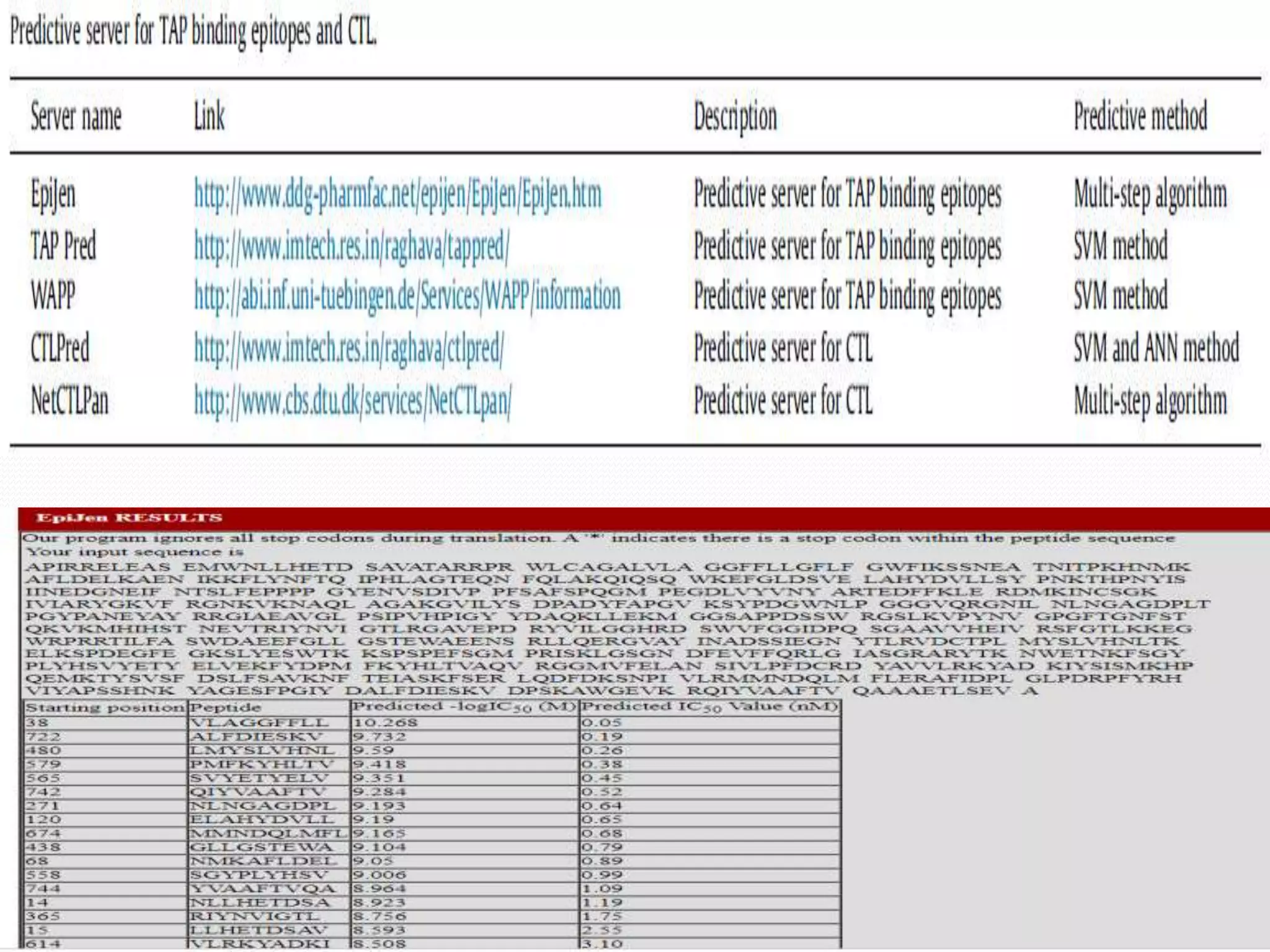
TAP associated epitope prediction
What is TAP ???
Transporter associated with antigen processing
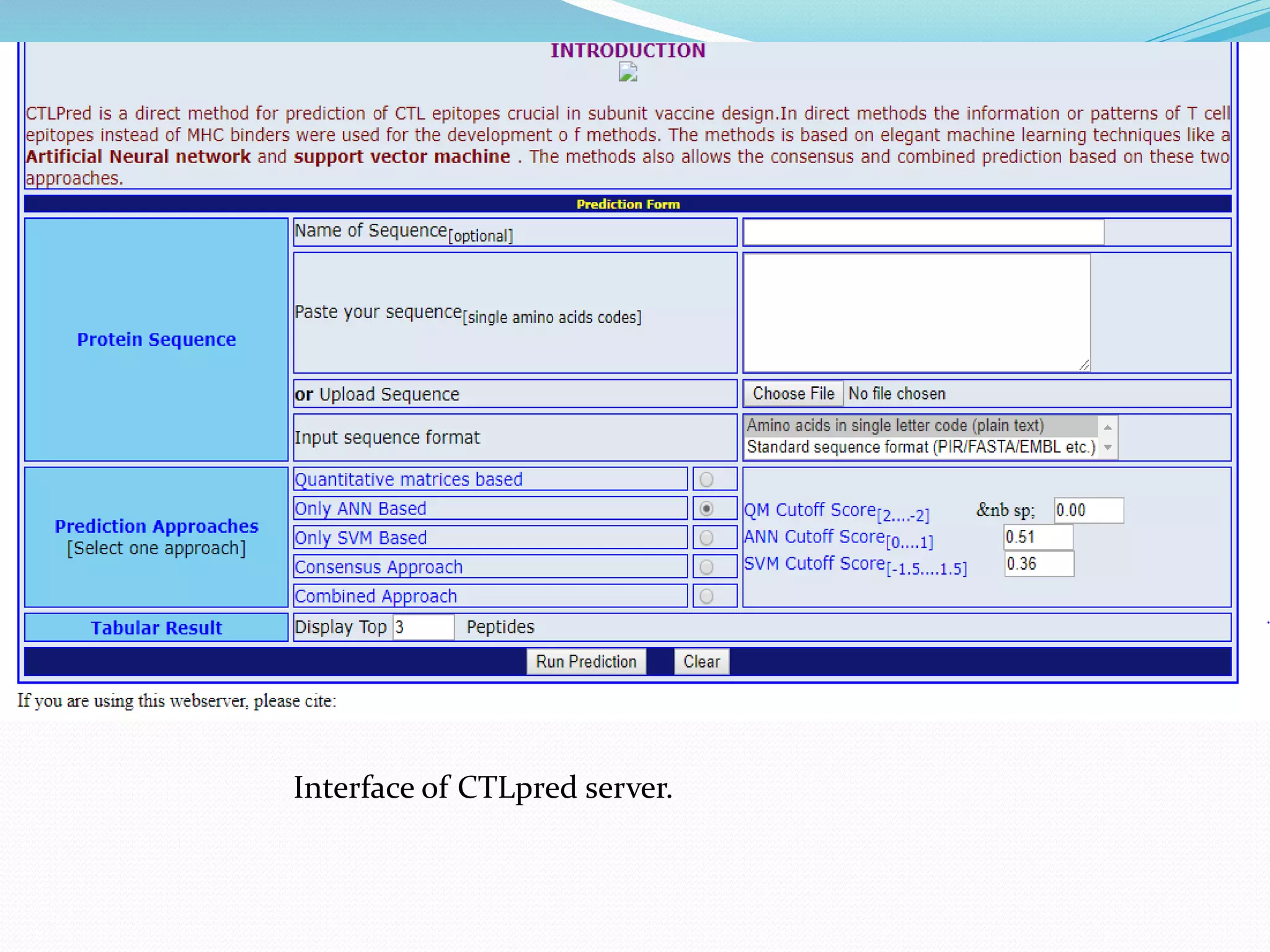
Interface of CTLpred server.
PREDICTION OF B-CELL BINDING
EPITOPES
 B cell epitopes are recognized by B cell receptors or
antibodies in their native structure.
 Score is calculated on the bais of AA properties such as
hydrophilicity,charge,exposed surface area and secondary
structures.
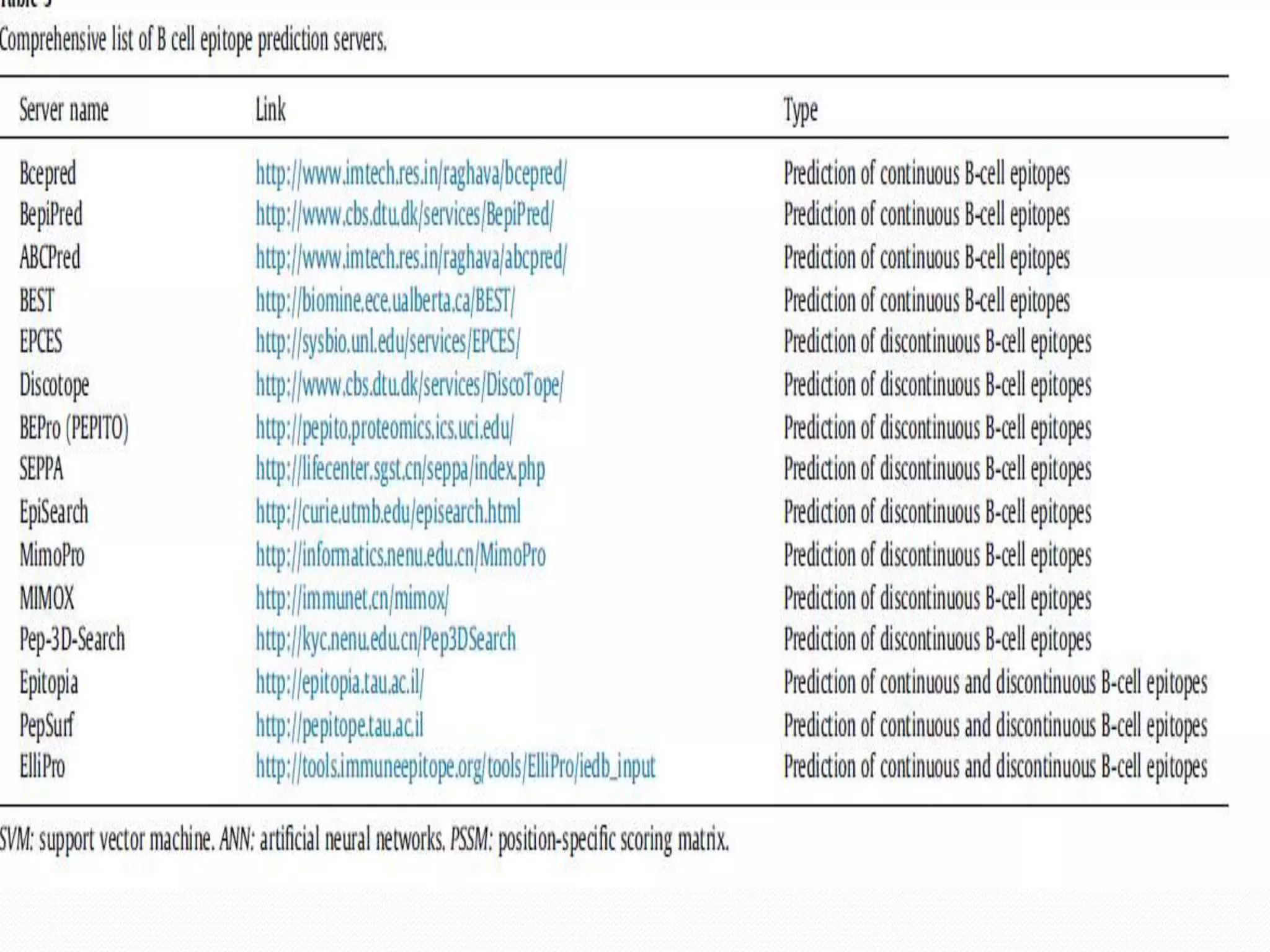
 Different online server are present for continuous and
discontinous B-cell epitopes.
 It has been tested on B cell epitope database (BCIPEP),
and will therefore presumbly have better performance for
prediction of B cell epitope of the antigen. Bcepred can
predict continuous B cell epitopes.
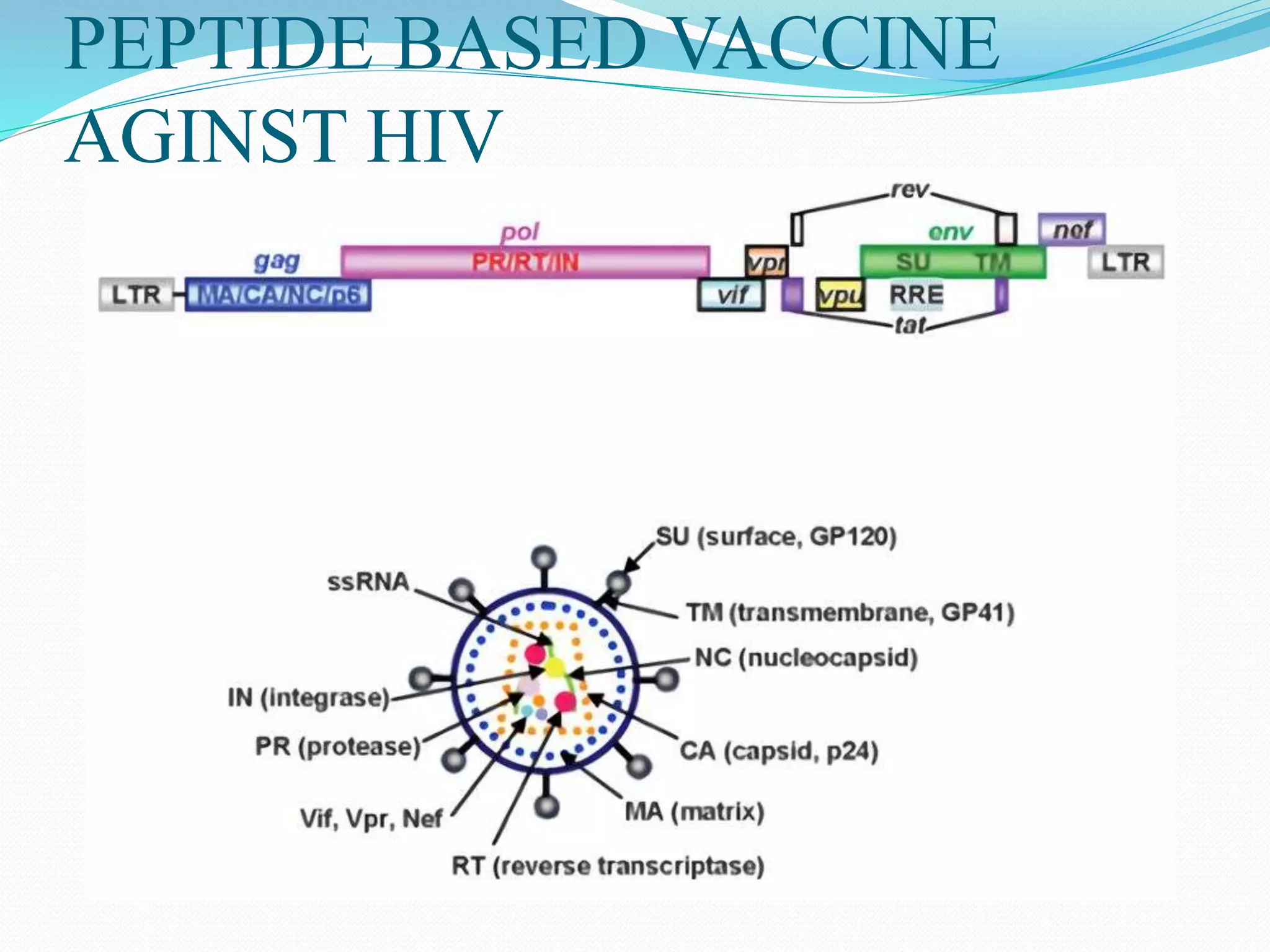
PEPTIDE BASED VACCINE
AGINST HIV
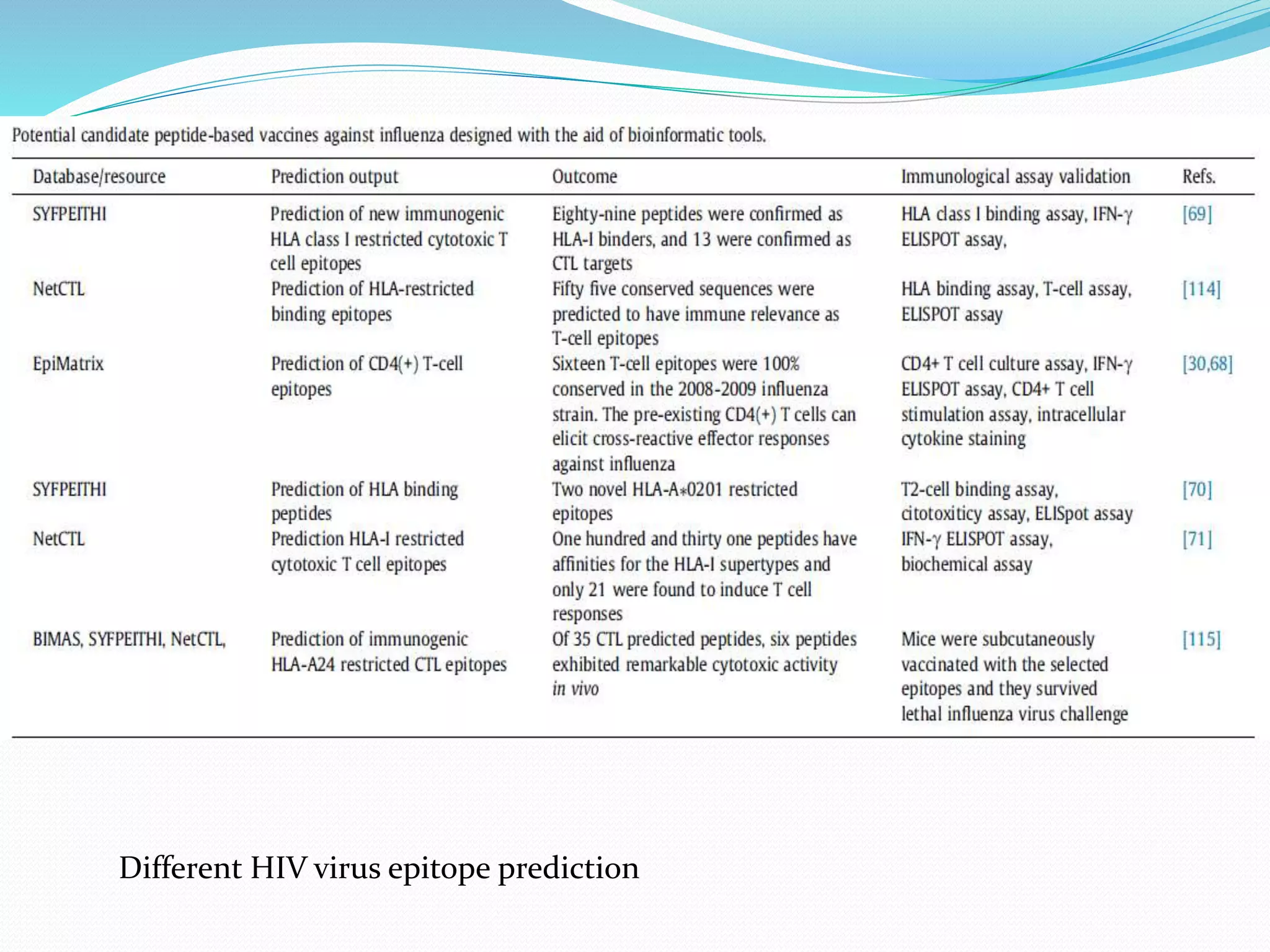
Different HIV virus epitope prediction
CONCLUSION
 Epitope mapping gives high throughput analysis of
dfferent candidate sequences for prediction of
potential epitopes.
 Less time consuming and less expensive.

Epitope mapping through bioinformatical analysis

  • 1.
    EPITOPE MAPPING THROUGH BIOINFORMATICALANALYSIS Jajati Keshari Nayak PhD1st yr MBGE,GBUA&T ID-55493
  • 2.
    Antigen-antibody interaction • Antigenis recognized by the immune system and stimulates an antibody response • Can be a bacteria, virus, a protein… • Originally the term antigen came from antibody generator Antigen
  • 3.
     An • Antigenis recognized as foreign by the immune system and is engulfed by antigen presenting cells, such as macrophages, monocytes and dendritic cells Antigen presenting cell Antigen Antigen-antibody interaction
  • 4.
    Antigen-antibody interaction • Theantigen is degrated into smaller fragments and displayed on the cell surface together with specialized glycoproteins Antigen presenting cell Antigen
  • 5.
    Antigen-antibody interaction • T-cellsrecognize the antigen-glycoprotein complex Antigen presenting cell T-cell Antigen
  • 6.
    Antigen-antibody interaction • T-cellsstimulate B-cells to produce  antibodies towards the specific antigen Antigen presenting cell T-cell B-cell Antibodies Antigen
  • 7.
    Antigen Antigen presenting cell Epitope T-cell B-cell Antibodies •The antibodies interact with the antigen • The region of an antigen that interact with the antibody is defined as an epitope Antigen Antigen-antibody interaction
  • 8.
    Antigen presenting cell T-cell B-cell Antigen Antibodies •Finally the antigen is neutralized Antigen Antigen-antibody interaction
  • 9.
    Antigen presenting cell T-cellSelfprotein (auto-antigen) B-cell Auto-antibodies • Abnormal functioning of the immune system, it fails to recognize protein/tissue ~ antibody response is produced against these • A disease that results from such an immune response is termed an autoimmune disease Auto-immune disease
  • 10.
    Epitope mapping • Epitopemapping is the process of identifying the binding sites of antibodies on their target antigens • Several strategies for epitope mapping exist:  recombinant proteins  X-ray co-crystallography  phage-display  peptide scanning  truncated resin-bound peptides  Through Bioinformatical analysis
  • 11.
    Need  Used forvaccine development against influenza,small pox,pertusis  mAB and Polyclonal antobodies production.  To know the antigen-antibody interaction.
  • 12.
    Why epitope mapping??  Conventional vaccine production is time consuming.  Atteneuated or killed pathogen may cause disease in host genome.  To know the different consensus and conserved sequence which forms epitopes.
  • 13.
    Epitope based vaccine Immunoprotective and immuno dominat epitopes are used.  rDNA technology is used for multitarget vaccine production.  Linear epitope or conformational epitope is used.  Also used as adjuvents. e.g T cell epitopes.
  • 15.
    Prediction of potentialT- cell binding-epitopes  Interaction occures between R groups of epitope and Grooves/pocket of MHC molecules.  RANKEP –online server predicts peptides binders to MHC-I and MHC-II alleles.  PSSM(position specific scoring matrices) algorithim is used in RANKEP.
  • 16.
    Lets take anexample >A56881 PIR2 release 71.00 MWNLLHETDSAVATARRPRWLCAGALVLAGGFFLLGFLFGWFIKSSNEATNITPKH NMKAFLDELKAENIKKFLYNFTQIPHLAGTEQNFQLAKQIQSQWKEFGLDSVELA HYDVLLSYPNKTHPNYISIINEDGNEIFNTSLFEPPPPGYENVSDIVPPFSAFSPQGMP EGDLVYVNYARTEDFFKLERDMKINCSGKIVIARYGKVFRGNKVKNAQLAGAKGVIL YSDPADYFAPGVKSYPDGWNLPGGGVQRGNILNLNGAGDPLTPGYPANEYAYRRGI AEAVGLPSIPVHPIGYYDAQKLLEKMGGSAPPDSSWRGSLKVPYNVGPGFTGNFSTQ KVKMHIHSTNEVTRIYNVIGTLRGAVEPDRYVILGGHRDSWVFGGIDPQSGAAVVH EIVRSFGTLKKEGWRPRRTILFASWDAEEFGLLGSTEWAEENSRLLQERGVAYINADS SIEGNYTLRVDCTPLMYSLVHNLTKELKSPDEGFEGKSLYESWTKKSPSPEFSGMPRI SKLGSGNDFEVFFQRLGIASGRARYTKNWETNKFSGYPLYHSVYETYELVEKFYDPM FKYHLTVAQVRGGMVFELANSIVLPFDCRDYAVVLRKYADKIYSISMKHPQEMKTYS VSFDSLFSAVKNFTEIASKFSERLQDFDKSNPIVLRMMNDQLMFLERAFIDPLGLPD RPFYRHVIYAPSSHNKYAGESFPGIYDALFDIESKVDPSKAWGEVKRQIYVAAFTVQA AAETLSEVA Protein blast was done to know the function of this protein
  • 17.
    That sequence isprostate specific antigen
  • 18.
    Let’s Predict putativepeptide sequences which may form a epitope through RANKPEP server.
  • 21.
    Same protein sequenceof prostate antigen put in IEDB analysis resources data base.
  • 24.
    TAP associated epitopeprediction What is TAP ??? Transporter associated with antigen processing
  • 27.
  • 28.
    PREDICTION OF B-CELLBINDING EPITOPES  B cell epitopes are recognized by B cell receptors or antibodies in their native structure.  Score is calculated on the bais of AA properties such as hydrophilicity,charge,exposed surface area and secondary structures.  Different online server are present for continuous and discontinous B-cell epitopes.  It has been tested on B cell epitope database (BCIPEP), and will therefore presumbly have better performance for prediction of B cell epitope of the antigen. Bcepred can predict continuous B cell epitopes.
  • 30.
  • 31.
    Different HIV virusepitope prediction
  • 32.
    CONCLUSION  Epitope mappinggives high throughput analysis of dfferent candidate sequences for prediction of potential epitopes.  Less time consuming and less expensive.

Editor's Notes

  • #3 Imagine that we have an antigen. An Antigen, is a molecule, usually foreign, which is recognized by the immune system and stimulates a antibody response. Originally the term came from antibody generator. An antigen can be a bacteria, virus, a protein, a lipid, carbohydrate…..
  • #4 This antigen is recognized as foreign by the immune system and the antigen is engulfed by antigen presenting cells
  • #5 The antigen is degrated into smaller fragments and displayed on the cell surface together with specialized glycoproteints.
  • #6 T-Cells will recognize the antigen-glycoprotein complex
  • #7 T-Cells stimulate B-cells to produce antibodies towards the specific antigen. These antibodies are of significant importance, so I’m going to take a moment to introduce you to these antibodies.
  • #8 Next the antibodies produced will interact with the antigen. The region of an antigen that interacts with an antibody is defined as an epitope. And it is this specific interaction between the antibody and the epitope of the antigen that I’m interested in.
  • #9 Finally, when the antibodies have bound to the antigen, the antigen is neutralized. This is more or less what happens, when an antigen induces an antigen response. The antigen is recognized as foreign by the immune system, a cascade of cellular reactions takes place, and eventually specific antibodies are generated towards the antigen, and finally the antigen is neutralized.
  • #10 Occasionally, abnormal functioning of the immune system occur, the immune system fails to recognize own cells/proteins, and an antibody response is produced against these. A Disease that results from such an immune response is termed an auto-immune disease. The Antibodies produced in this process are termed auto-antibodies, whereas the protein/tissue that triggers this immune response is termed auto-antigen. type 1 diabetes is one of the most known autoimmune diseases, where the insulin producing cells are destroyed, another example is celiac disease, which I’m going to introduce you to.