
Environmental Management
System (EMS)
EMS Definition
An EMS is a set of management processes and
procedures that allows an organization to evaluate,
control, and reduce the environmental impacts of its
activities, products, and services and operate with
greater efficiency and control.
Greater efficiency and control
Reduce environmental impacts
Environmental stewardship
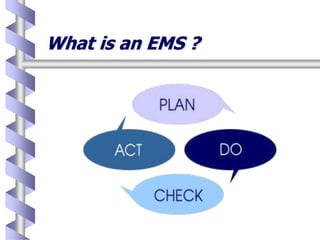
What is an EMS ?
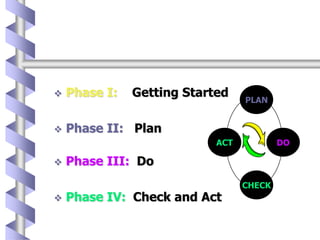
 Phase I: Getting Started
 Phase II: Plan
 Phase III: Do
 Phase IV: Check and Act
PLAN
CHECK
DOACT
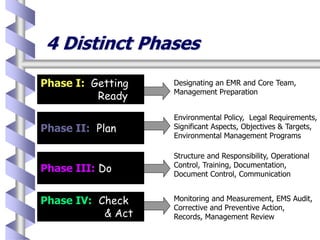
4 Distinct Phases
Phase I: Getting
Ready
Phase II: Plan
Phase III: Do
Phase IV: Check
& Act
Environmental Policy, Legal Requirements,
Significant Aspects, Objectives & Targets,
Environmental Management Programs
Structure and Responsibility, Operational
Control, Training, Documentation,
Document Control, Communication
Monitoring and Measurement, EMS Audit,
Corrective and Preventive Action,
Records, Management Review
Designating an EMR and Core Team,
Management Preparation
Why Implement an EMS?
 Credibility with Citizens and Regulators
 Positive Public Image
 Competitiveness
 Better Management of Resources
What are the Benefits that have
been seen with EMS Adoption?
 Improved communication
 Increased operational efficiency and
consistency
 Improved environmental management
 Improved relationships with regulators
 Cost savings
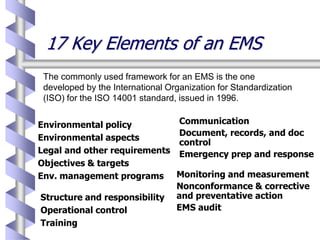
17 Key Elements of an EMS
Environmental policy
Environmental aspects
Legal and other requirements
Objectives & targets
Env. management programs
Structure and responsibility
Operational control
Training
Communication
Document, records, and doc
control
Emergency prep and response
Monitoring and measurement
Nonconformance & corrective
and preventative action
EMS audit
The commonly used framework for an EMS is the one
developed by the International Organization for Standardization
(ISO) for the ISO 14001 standard, issued in 1996.
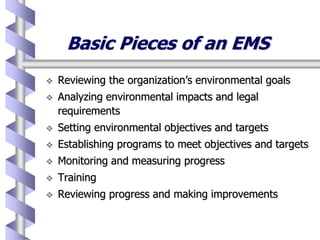
Basic Pieces of an EMS
 Reviewing the organization’s environmental goals
 Analyzing environmental impacts and legal
requirements
 Setting environmental objectives and targets
 Establishing programs to meet objectives and targets
 Monitoring and measuring progress
 Training
 Reviewing progress and making improvements
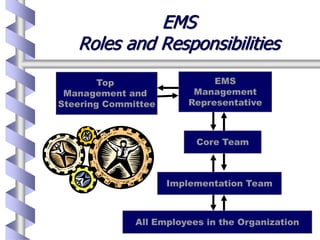
EMS
Roles and Responsibilities
Top
Management and
Steering Committee
EMS
Management
Representative
Implementation Team
All Employees in the Organization
Core Team
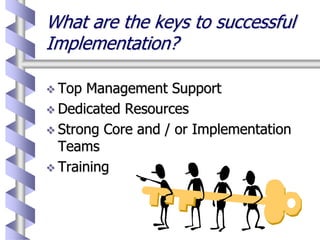
What are the keys to successful
Implementation?
 Top Management Support
 Dedicated Resources
 Strong Core and / or Implementation
Teams
 Training
Environmetal management sysetm

Environmetal management sysetm

  • 1.
  • 2.
    EMS Definition An EMSis a set of management processes and procedures that allows an organization to evaluate, control, and reduce the environmental impacts of its activities, products, and services and operate with greater efficiency and control. Greater efficiency and control Reduce environmental impacts Environmental stewardship
  • 3.
  • 4.
     Phase I:Getting Started  Phase II: Plan  Phase III: Do  Phase IV: Check and Act PLAN CHECK DOACT
  • 5.
    4 Distinct Phases PhaseI: Getting Ready Phase II: Plan Phase III: Do Phase IV: Check & Act Environmental Policy, Legal Requirements, Significant Aspects, Objectives & Targets, Environmental Management Programs Structure and Responsibility, Operational Control, Training, Documentation, Document Control, Communication Monitoring and Measurement, EMS Audit, Corrective and Preventive Action, Records, Management Review Designating an EMR and Core Team, Management Preparation
  • 6.
    Why Implement anEMS?  Credibility with Citizens and Regulators  Positive Public Image  Competitiveness  Better Management of Resources
  • 7.
    What are theBenefits that have been seen with EMS Adoption?  Improved communication  Increased operational efficiency and consistency  Improved environmental management  Improved relationships with regulators  Cost savings
  • 8.
    17 Key Elementsof an EMS Environmental policy Environmental aspects Legal and other requirements Objectives & targets Env. management programs Structure and responsibility Operational control Training Communication Document, records, and doc control Emergency prep and response Monitoring and measurement Nonconformance & corrective and preventative action EMS audit The commonly used framework for an EMS is the one developed by the International Organization for Standardization (ISO) for the ISO 14001 standard, issued in 1996.
  • 9.
    Basic Pieces ofan EMS  Reviewing the organization’s environmental goals  Analyzing environmental impacts and legal requirements  Setting environmental objectives and targets  Establishing programs to meet objectives and targets  Monitoring and measuring progress  Training  Reviewing progress and making improvements
  • 10.
    EMS Roles and Responsibilities Top Managementand Steering Committee EMS Management Representative Implementation Team All Employees in the Organization Core Team
  • 11.
    What are thekeys to successful Implementation?  Top Management Support  Dedicated Resources  Strong Core and / or Implementation Teams  Training