













Computer-Aided Qualitative Research Europe
         7 & 8 Oct 2010, Lisbon


     For more information about our events, please visit:
                   http://www.merlien.org
Enhancing the quality of
qualitative research using
software
   Dr. Susanne Friese
   Leibniz University of Hanover, Germany
Why paying attention to quality?

To evaluate whether a given methodology is
scientific
     • How do we adequately represent reality when we “do
       science”?
     • How do we need to conceptualise terms, theoretical
       approaches and methods to discover the unknown?
Quality throughout the research
process
• Decisions about research questions and theoretical
  approach: Does the research question drive the method?
• Selection of the field and the materials
• Does the researcher explicitly describe underlying
  assumptions?
• Accurate technical implementation of data collection and
  analysis
• Methodological competencies of the researchers
• Presentation of the results, power and conviction: To what
  extend does the study contribute to the existing body of knowledge? Could
  the« so what » question be answered?
Evaluating quality
• Traditional criteria are:
   • Validity
   • Reliability
   • Representativeness / generalisability
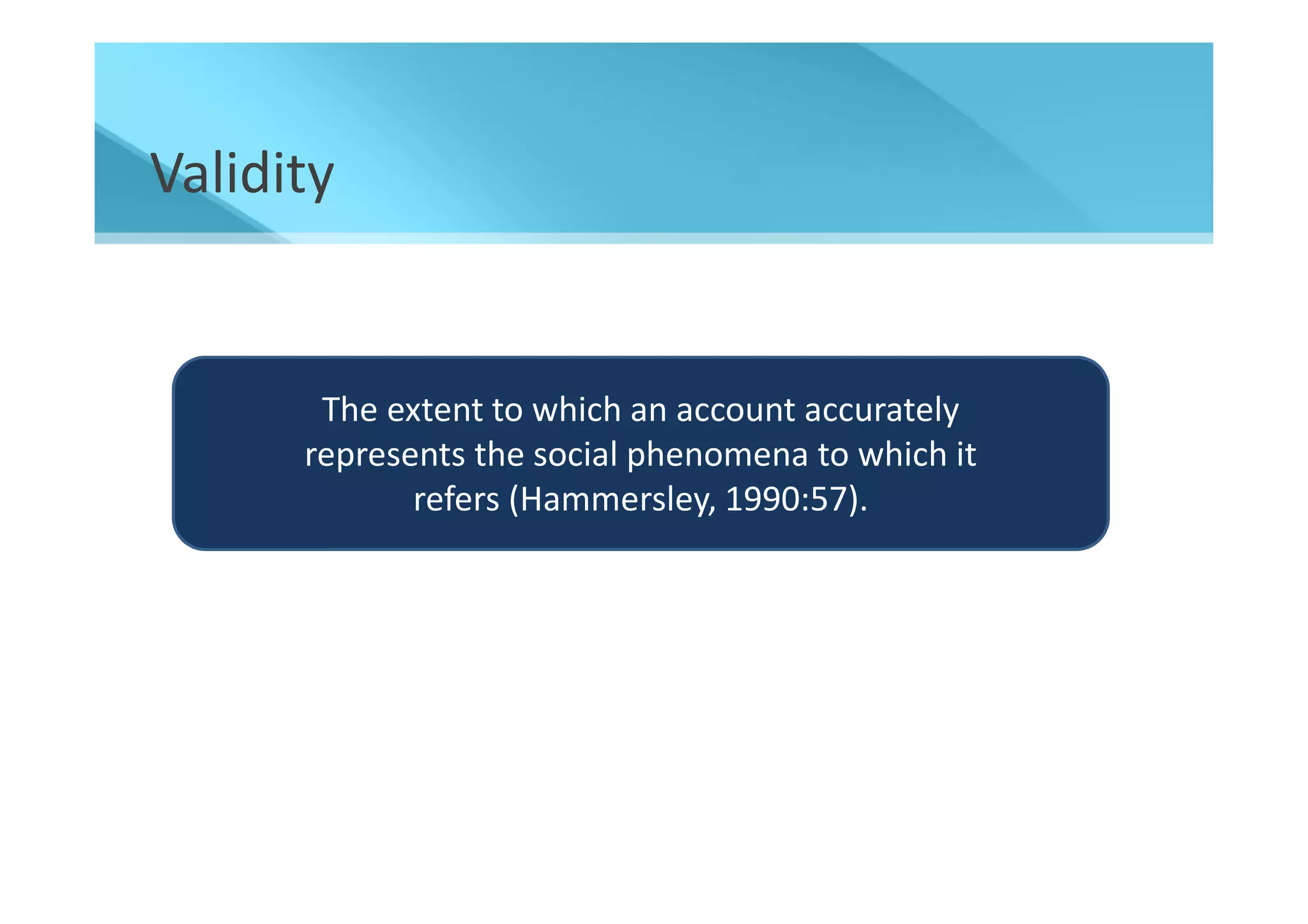
Validity


       The extent to which an account accurately
      represents the social phenomena to which it
             refers (Hammersley, 1990:57).
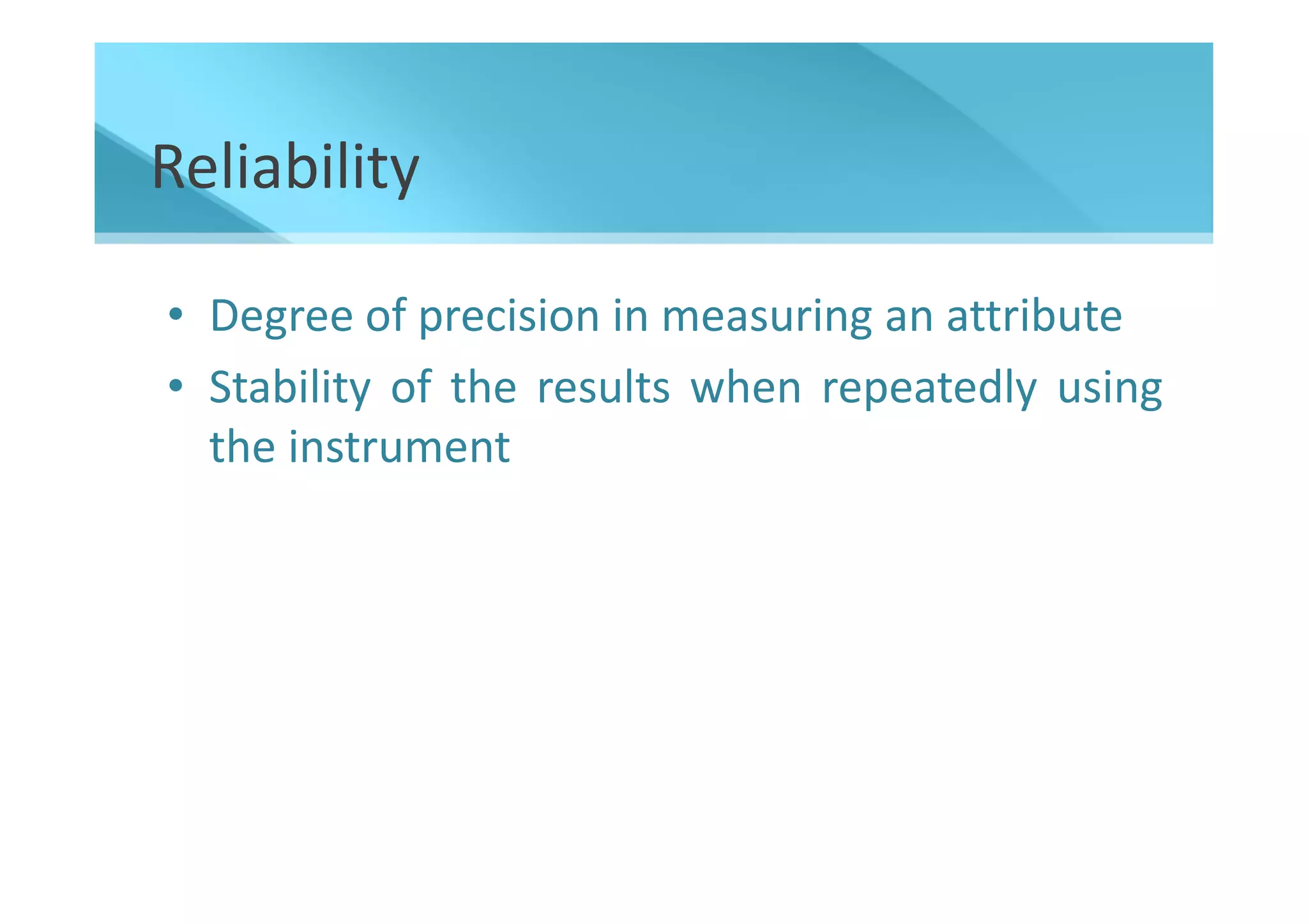
Reliability

• Degree of precision in measuring an attribute
• Stability of the results when repeatedly using
  the instrument
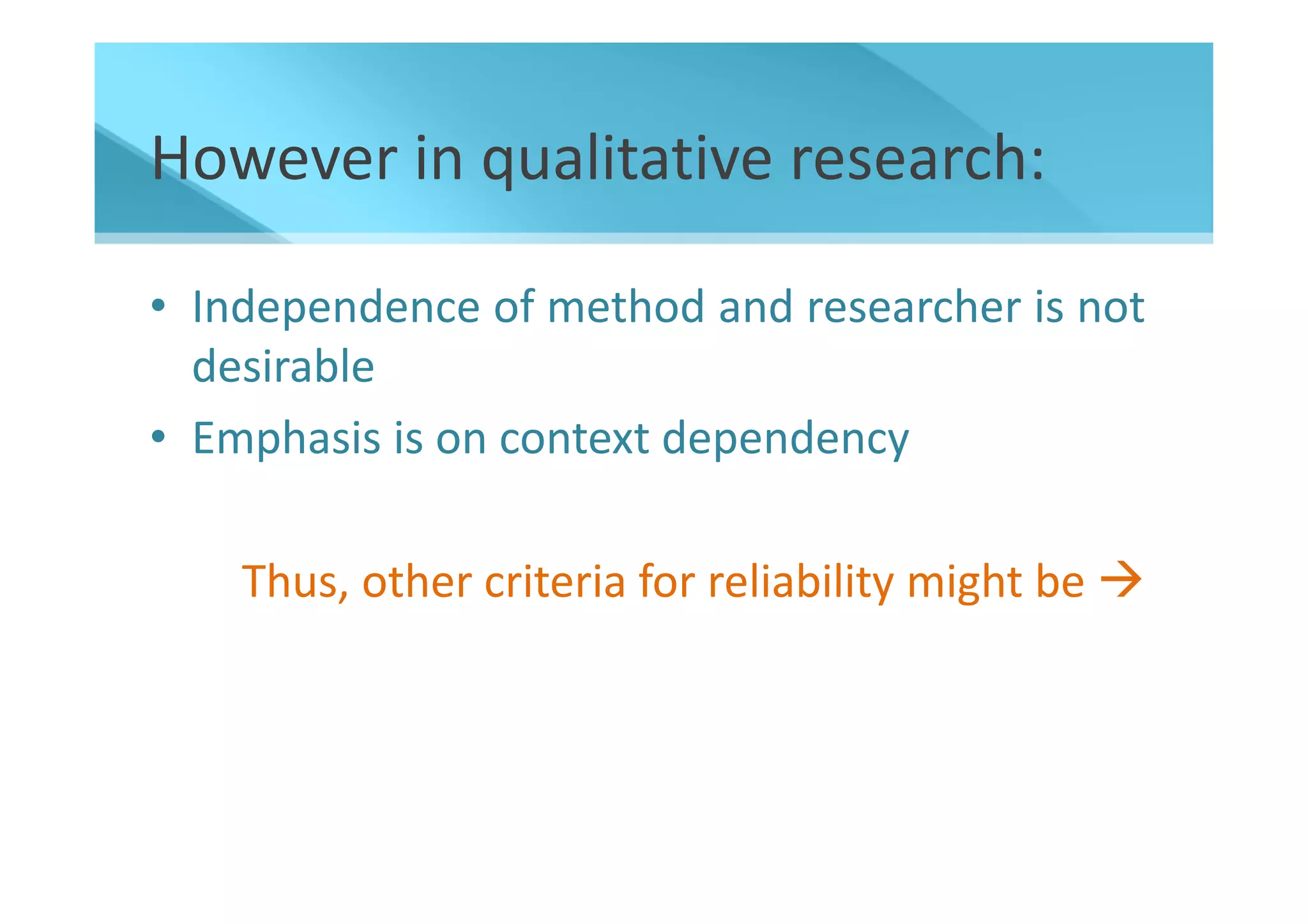
However in qualitative research:

• Independence of method and researcher is not
  desirable
• Emphasis is on context dependency

    Thus, other criteria for reliability might be
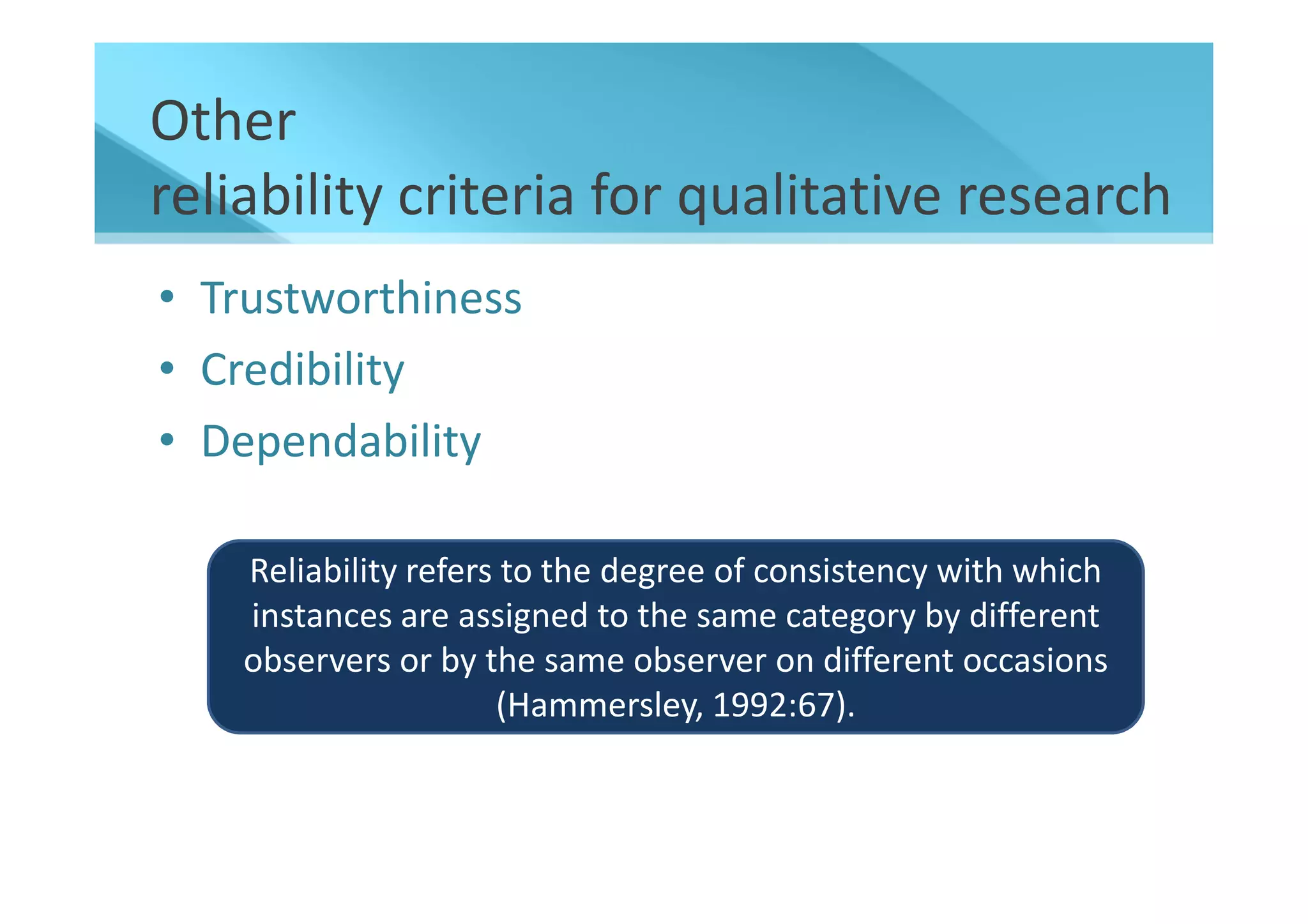
Other
reliability criteria for qualitative research
• Trustworthiness
• Credibility
• Dependability

    Reliability refers to the degree of consistency with which
    instances are assigned to the same category by different
    observers or by the same observer on different occasions
                      (Hammersley, 1992:67).
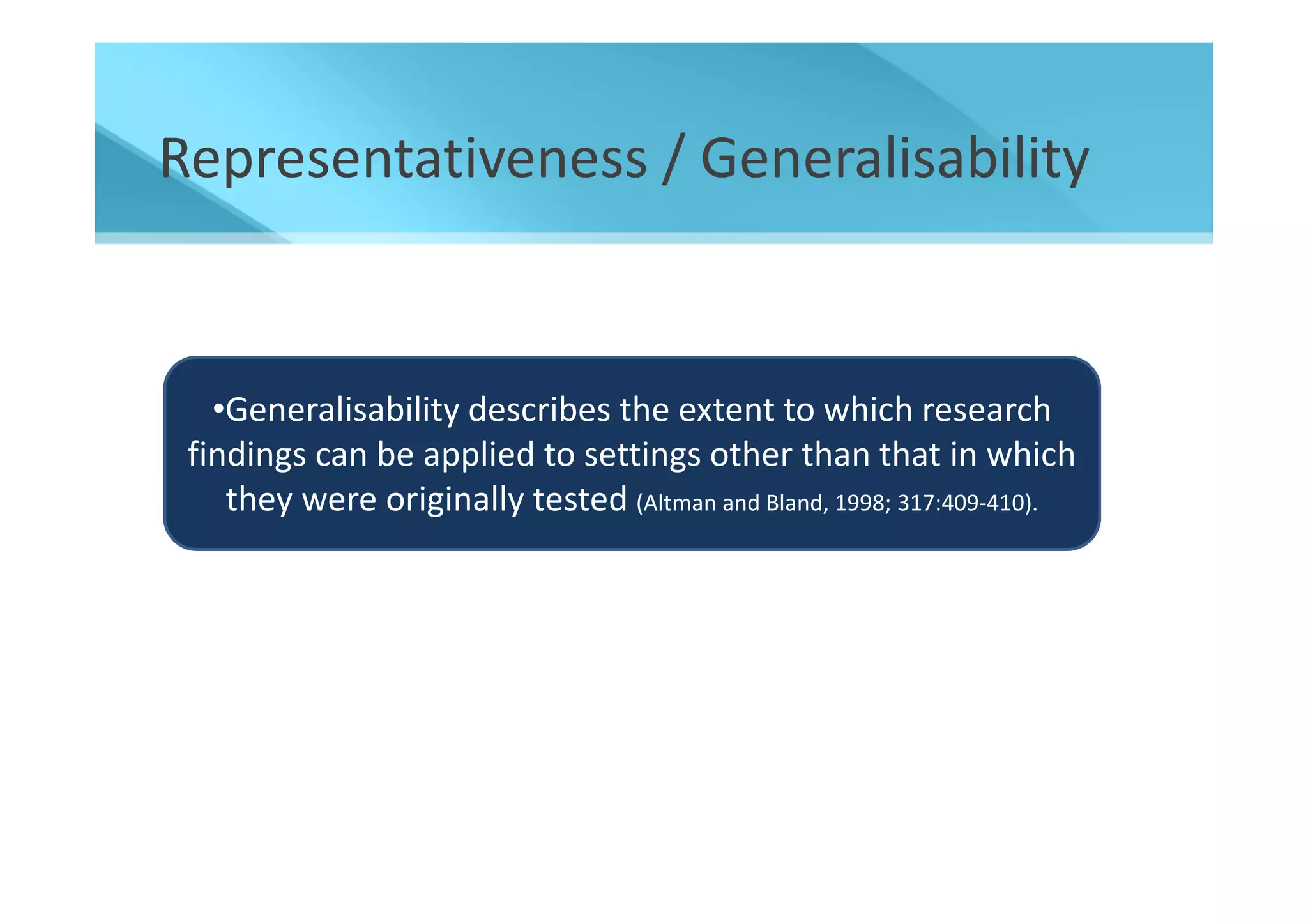
Representativeness / Generalisability


   •Generalisability describes the extent to which research
 findings can be applied to settings other than that in which
    they were originally tested (Altman and Bland, 1998; 317:409-410).
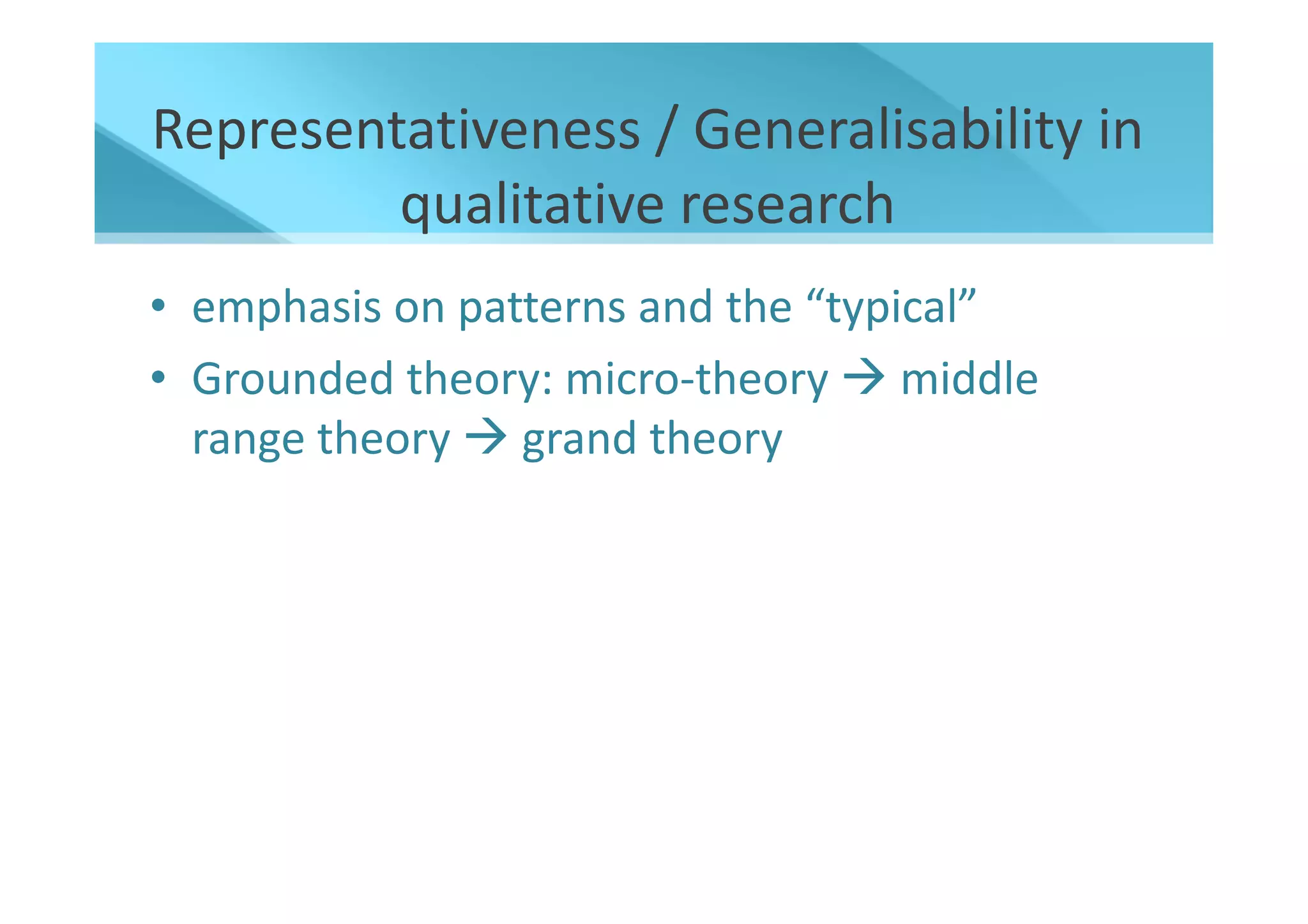
Representativeness / Generalisability in
         qualitative research
• emphasis on patterns and the “typical”
• Grounded theory: micro-theory middle
  range theory grand theory
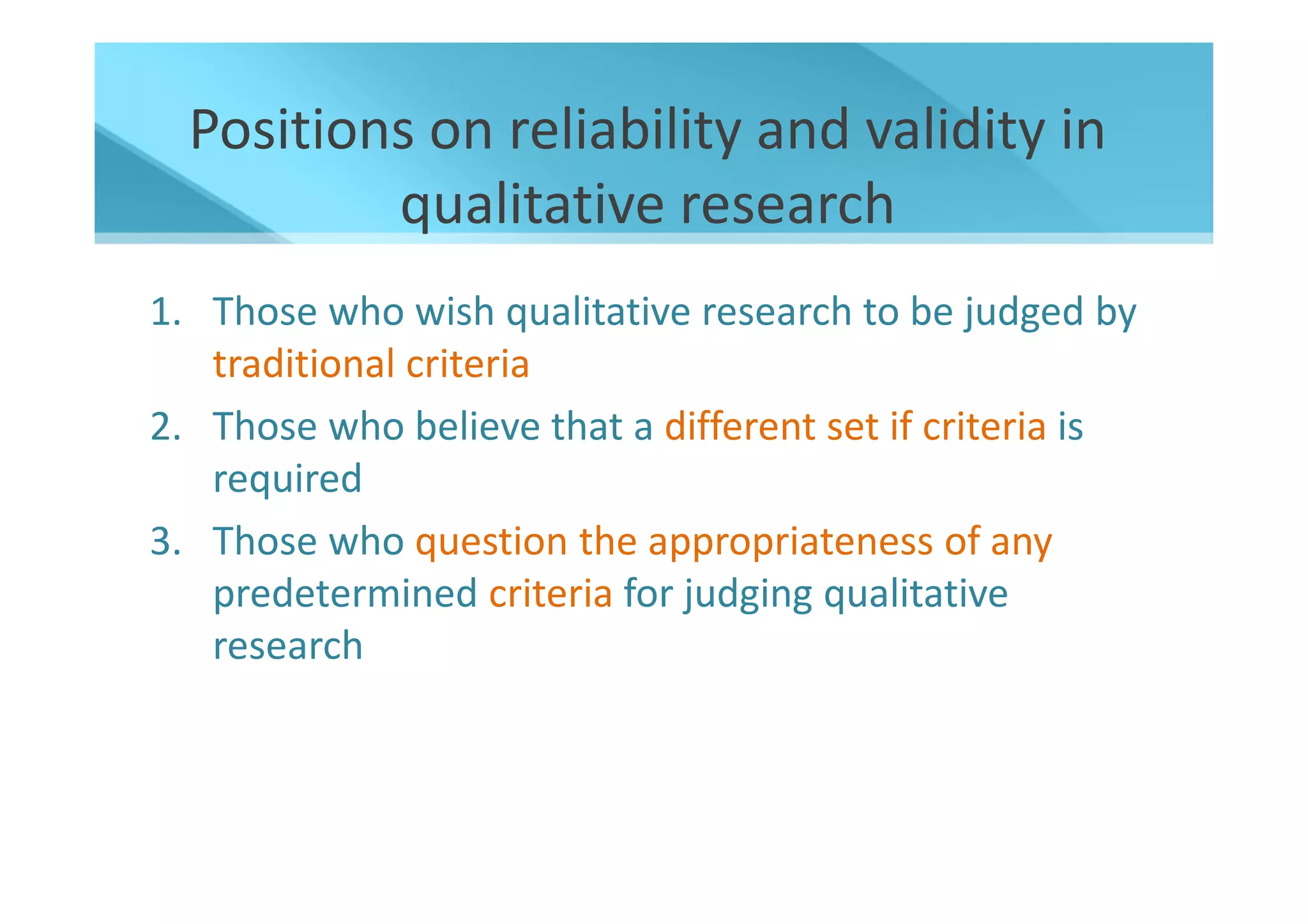
Positions on reliability and validity in
          qualitative research
1. Those who wish qualitative research to be judged by
   traditional criteria
2. Those who believe that a different set if criteria is
   required
3. Those who question the appropriateness of any
   predetermined criteria for judging qualitative
   research
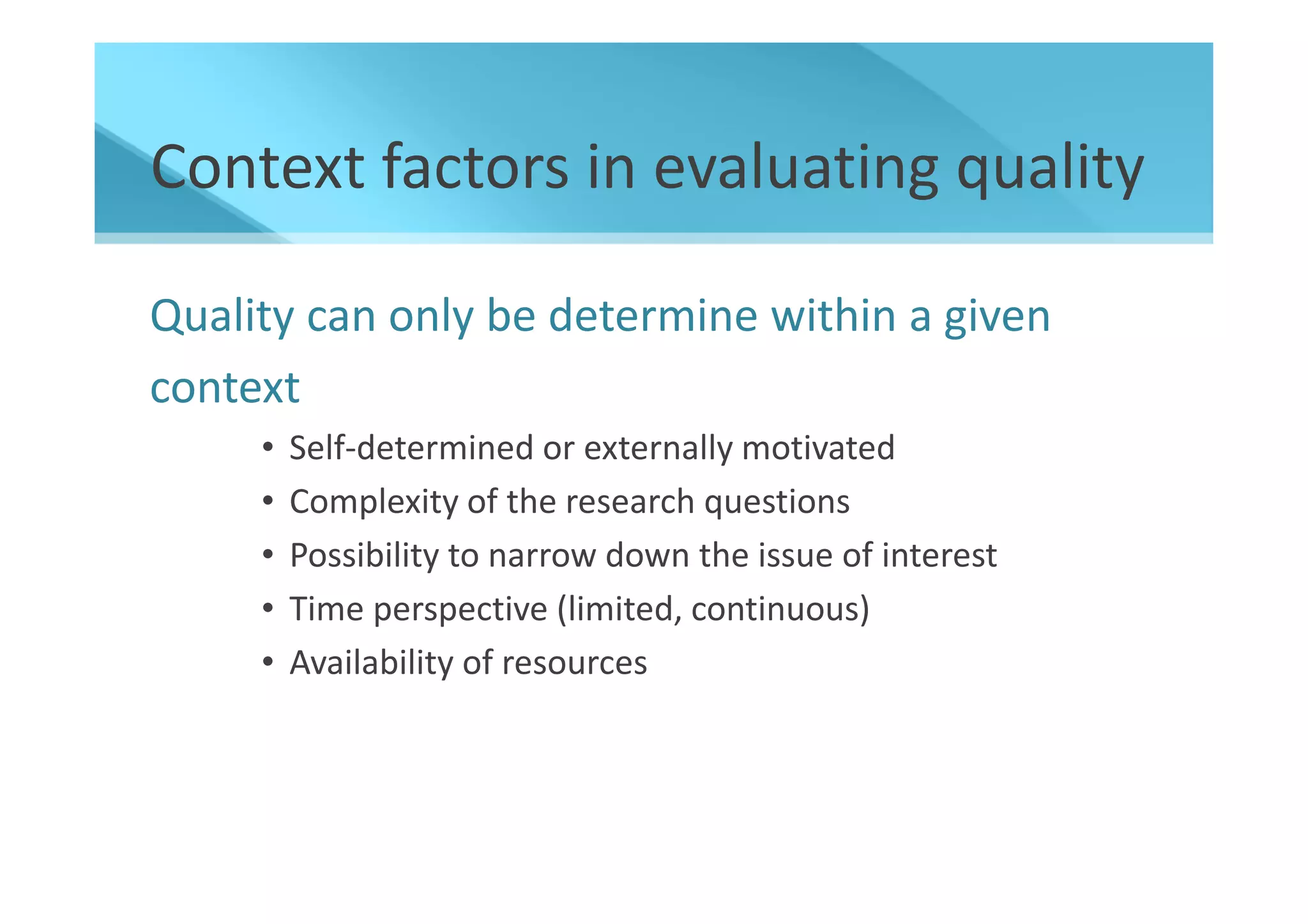
Context factors in evaluating quality

Quality can only be determine within a given
context
     •   Self-determined or externally motivated
     •   Complexity of the research questions
     •   Possibility to narrow down the issue of interest
     •   Time perspective (limited, continuous)
     •   Availability of resources
Improving quality with the
aid of software
Validity

•          : data collected in a natural setting
•           inter-subjectivity and transparency
Validity

•          : data collected in a natural setting
                its presentation
•           inter-subjectivity and transparency
Trustworthiness
•   Prolonged stay in the field
•   Analysis of negative cases
•   Seeking feedback from colleagues
•   Member check
Trustworthiness
•   Prolonged stay in the field
•   Analysis of negative cases
•   Seeking feedback from colleagues
•   Member check
Credibility
• Writing notes during the entire research process
  (research diary)
• Synthesis of the developed concepts with existing
  literature
• Second reader
• Audit trail / external auditor
Credibility
• Writing notes during the entire research process
  (research diary)
• Synthesis of the developed concepts with existing
  literature
• Second reader
• Audit trail / external auditor
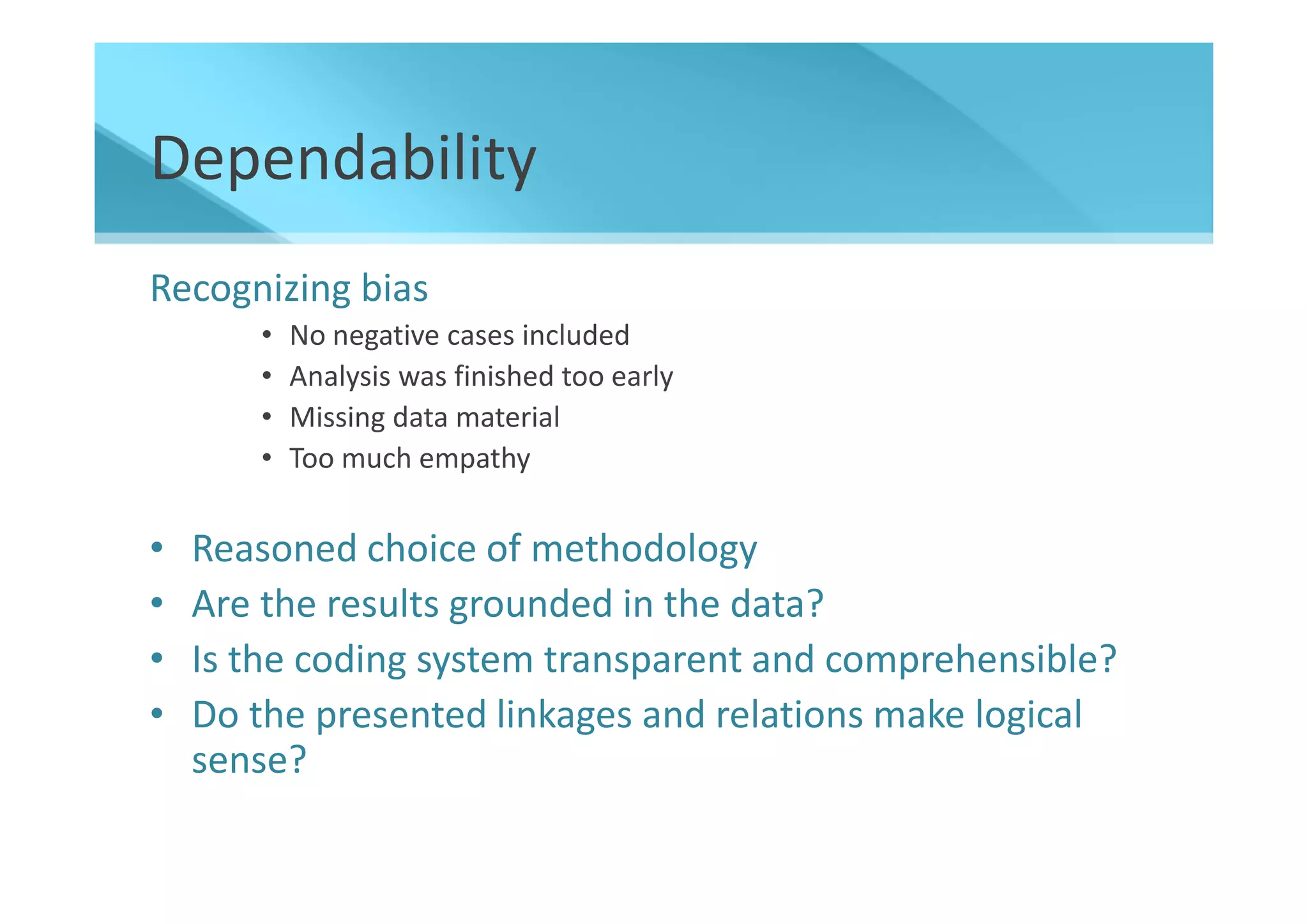
Dependability
Recognizing bias
       •   No negative cases included
       •   Analysis was finished too early
       •   Missing data material
       •   Too much empathy


•   Reasoned choice of methodology
•   Are the results grounded in the data?
•   Is the coding system transparent and comprehensible?
•   Do the presented linkages and relations make logical
    sense?
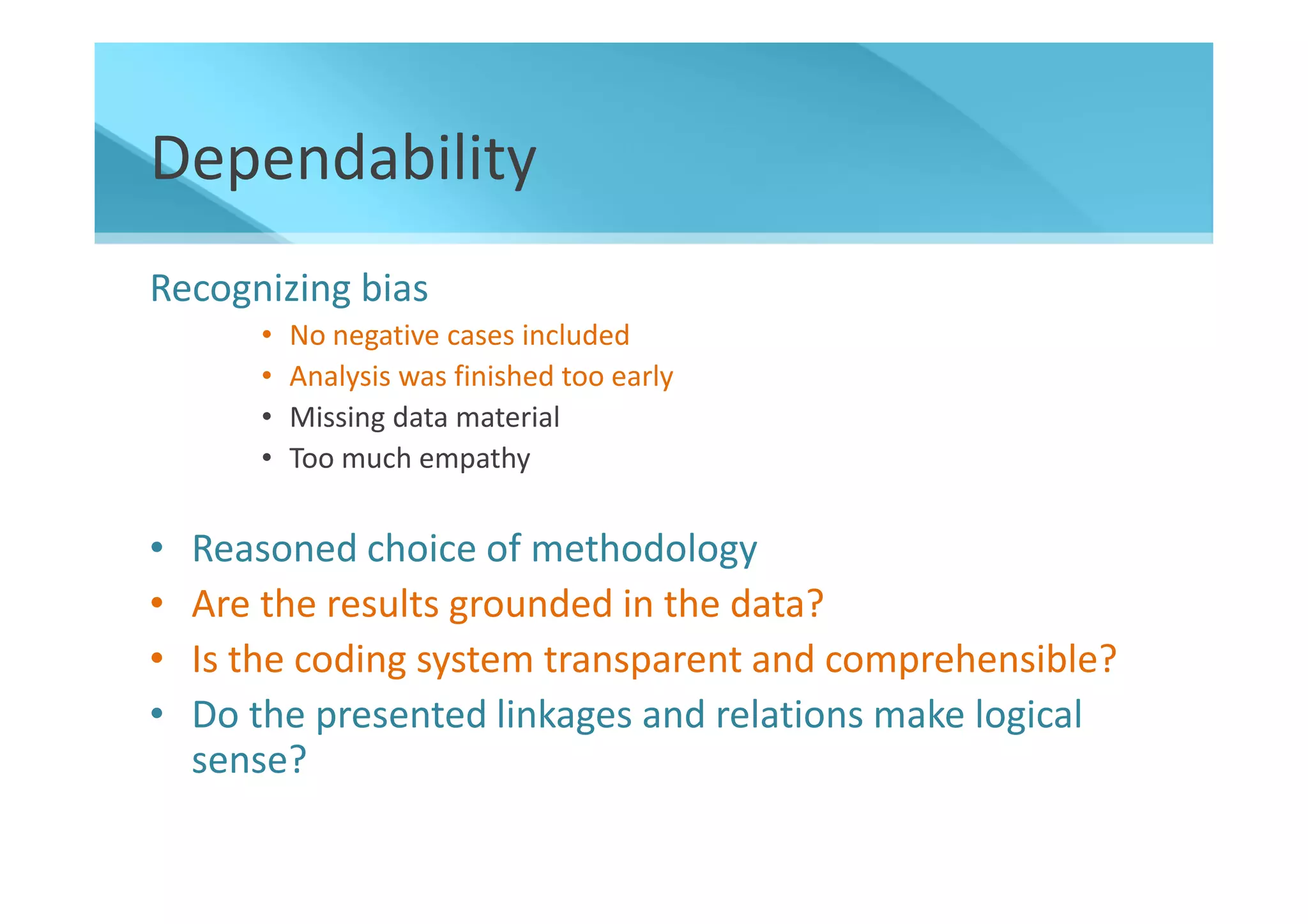
Dependability
Recognizing bias
       •   No negative cases included
       •   Analysis was finished too early
       •   Missing data material
       •   Too much empathy


•   Reasoned choice of methodology
•   Are the results grounded in the data?
•   Is the coding system transparent and comprehensible?
•   Do the presented linkages and relations make logical
    sense?
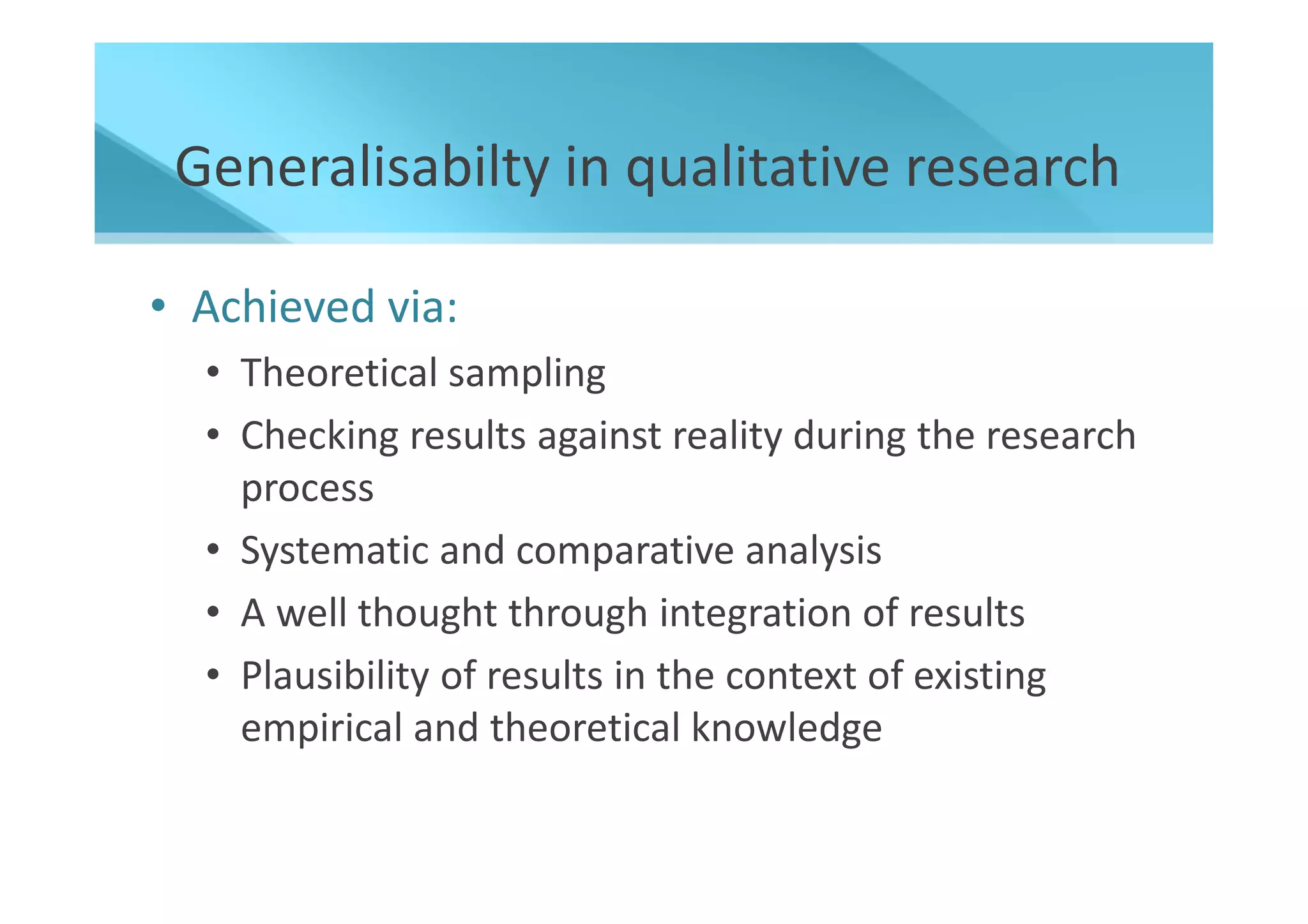
Generalisabilty in qualitative research

• Achieved via:
  • Theoretical sampling
  • Checking results against reality during the research
    process
  • Systematic and comparative analysis
  • A well thought through integration of results
  • Plausibility of results in the context of existing
    empirical and theoretical knowledge
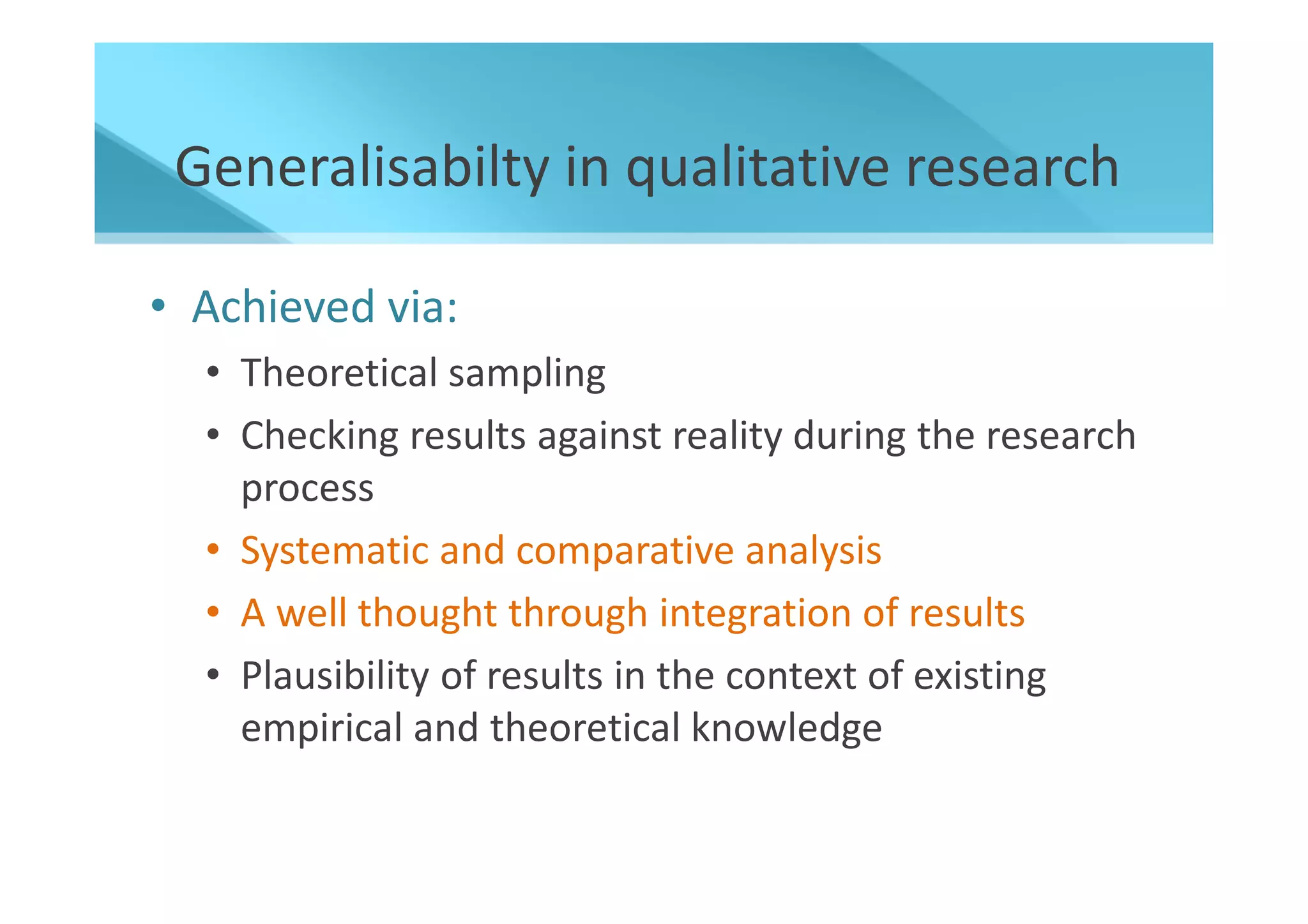
Generalisabilty in qualitative research

• Achieved via:
  • Theoretical sampling
  • Checking results against reality during the research
    process
  • Systematic and comparative analysis
  • A well thought through integration of results
  • Plausibility of results in the context of existing
    empirical and theoretical knowledge
Followed by live
presentation in ATLAS.ti
Computer-Aided Qualitative Research Europe
         7 & 8 Oct 2010, Lisbon


     For more information about our events, please visit:
                   http://www.merlien.org

Enhancing the quality of qualitative research using software

  • 1.
    Computer-Aided Qualitative ResearchEurope 7 & 8 Oct 2010, Lisbon For more information about our events, please visit: http://www.merlien.org
  • 2.
    Enhancing the qualityof qualitative research using software Dr. Susanne Friese Leibniz University of Hanover, Germany
  • 3.
    Why paying attentionto quality? To evaluate whether a given methodology is scientific • How do we adequately represent reality when we “do science”? • How do we need to conceptualise terms, theoretical approaches and methods to discover the unknown?
  • 4.
    Quality throughout theresearch process • Decisions about research questions and theoretical approach: Does the research question drive the method? • Selection of the field and the materials • Does the researcher explicitly describe underlying assumptions? • Accurate technical implementation of data collection and analysis • Methodological competencies of the researchers • Presentation of the results, power and conviction: To what extend does the study contribute to the existing body of knowledge? Could the« so what » question be answered?
  • 5.
    Evaluating quality • Traditionalcriteria are: • Validity • Reliability • Representativeness / generalisability
  • 6.
    Validity The extent to which an account accurately represents the social phenomena to which it refers (Hammersley, 1990:57).
  • 7.
    Reliability • Degree ofprecision in measuring an attribute • Stability of the results when repeatedly using the instrument
  • 8.
    However in qualitativeresearch: • Independence of method and researcher is not desirable • Emphasis is on context dependency Thus, other criteria for reliability might be
  • 9.
    Other reliability criteria forqualitative research • Trustworthiness • Credibility • Dependability Reliability refers to the degree of consistency with which instances are assigned to the same category by different observers or by the same observer on different occasions (Hammersley, 1992:67).
  • 10.
    Representativeness / Generalisability •Generalisability describes the extent to which research findings can be applied to settings other than that in which they were originally tested (Altman and Bland, 1998; 317:409-410).
  • 11.
    Representativeness / Generalisabilityin qualitative research • emphasis on patterns and the “typical” • Grounded theory: micro-theory middle range theory grand theory
  • 12.
    Positions on reliabilityand validity in qualitative research 1. Those who wish qualitative research to be judged by traditional criteria 2. Those who believe that a different set if criteria is required 3. Those who question the appropriateness of any predetermined criteria for judging qualitative research
  • 13.
    Context factors inevaluating quality Quality can only be determine within a given context • Self-determined or externally motivated • Complexity of the research questions • Possibility to narrow down the issue of interest • Time perspective (limited, continuous) • Availability of resources
  • 14.
    Improving quality withthe aid of software
  • 15.
    Validity • : data collected in a natural setting • inter-subjectivity and transparency
  • 16.
    Validity • : data collected in a natural setting its presentation • inter-subjectivity and transparency
  • 17.
    Trustworthiness • Prolonged stay in the field • Analysis of negative cases • Seeking feedback from colleagues • Member check
  • 18.
    Trustworthiness • Prolonged stay in the field • Analysis of negative cases • Seeking feedback from colleagues • Member check
  • 19.
    Credibility • Writing notesduring the entire research process (research diary) • Synthesis of the developed concepts with existing literature • Second reader • Audit trail / external auditor
  • 20.
    Credibility • Writing notesduring the entire research process (research diary) • Synthesis of the developed concepts with existing literature • Second reader • Audit trail / external auditor
  • 21.
    Dependability Recognizing bias • No negative cases included • Analysis was finished too early • Missing data material • Too much empathy • Reasoned choice of methodology • Are the results grounded in the data? • Is the coding system transparent and comprehensible? • Do the presented linkages and relations make logical sense?
  • 22.
    Dependability Recognizing bias • No negative cases included • Analysis was finished too early • Missing data material • Too much empathy • Reasoned choice of methodology • Are the results grounded in the data? • Is the coding system transparent and comprehensible? • Do the presented linkages and relations make logical sense?
  • 23.
    Generalisabilty in qualitativeresearch • Achieved via: • Theoretical sampling • Checking results against reality during the research process • Systematic and comparative analysis • A well thought through integration of results • Plausibility of results in the context of existing empirical and theoretical knowledge
  • 24.
    Generalisabilty in qualitativeresearch • Achieved via: • Theoretical sampling • Checking results against reality during the research process • Systematic and comparative analysis • A well thought through integration of results • Plausibility of results in the context of existing empirical and theoretical knowledge
  • 25.
  • 26.
    Computer-Aided Qualitative ResearchEurope 7 & 8 Oct 2010, Lisbon For more information about our events, please visit: http://www.merlien.org