Reliability and validity in qualitative
research and handling qualitative data
examples
Dr. Branly Mbunga
1
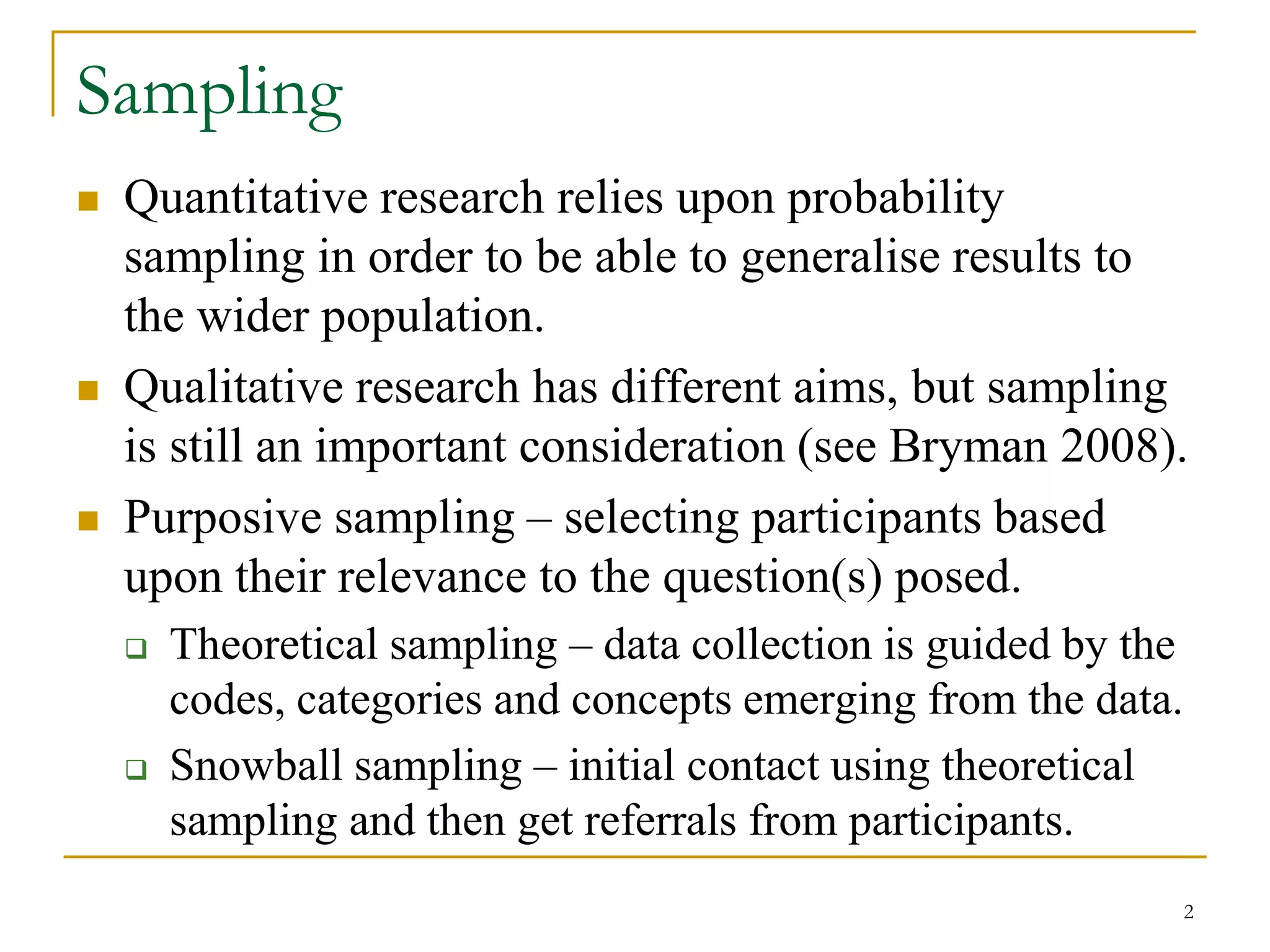
Sampling
 Quantitative research relies upon probability
sampling in order to be able to generalise results to
the wider population.
 Qualitative research has different aims, but sampling
is still an important consideration (see Bryman 2008).
 Purposive sampling – selecting participants based
upon their relevance to the question(s) posed.
 Theoretical sampling – data collection is guided by the
codes, categories and concepts emerging from the data.
 Snowball sampling – initial contact using theoretical
sampling and then get referrals from participants.
2
Reliability
 In quantitative research a reliable measure is one
which produces the same response to a question.
 Allows for replication of previous studies – e.g.
measuring party identification over time.
 In qualitative research our goals are different,
however we can re-conceptualise the concept of
reliability in order to produce good social
research.
3
Reliability (LeCompte and Goetz 1982)
 External reliability – can the study be repeated? If
you are replicating a previous study, adopt similar
role to previous researcher.
 Internal reliability – when there is more than one
observer all should agree on what is seen and
heard.
4
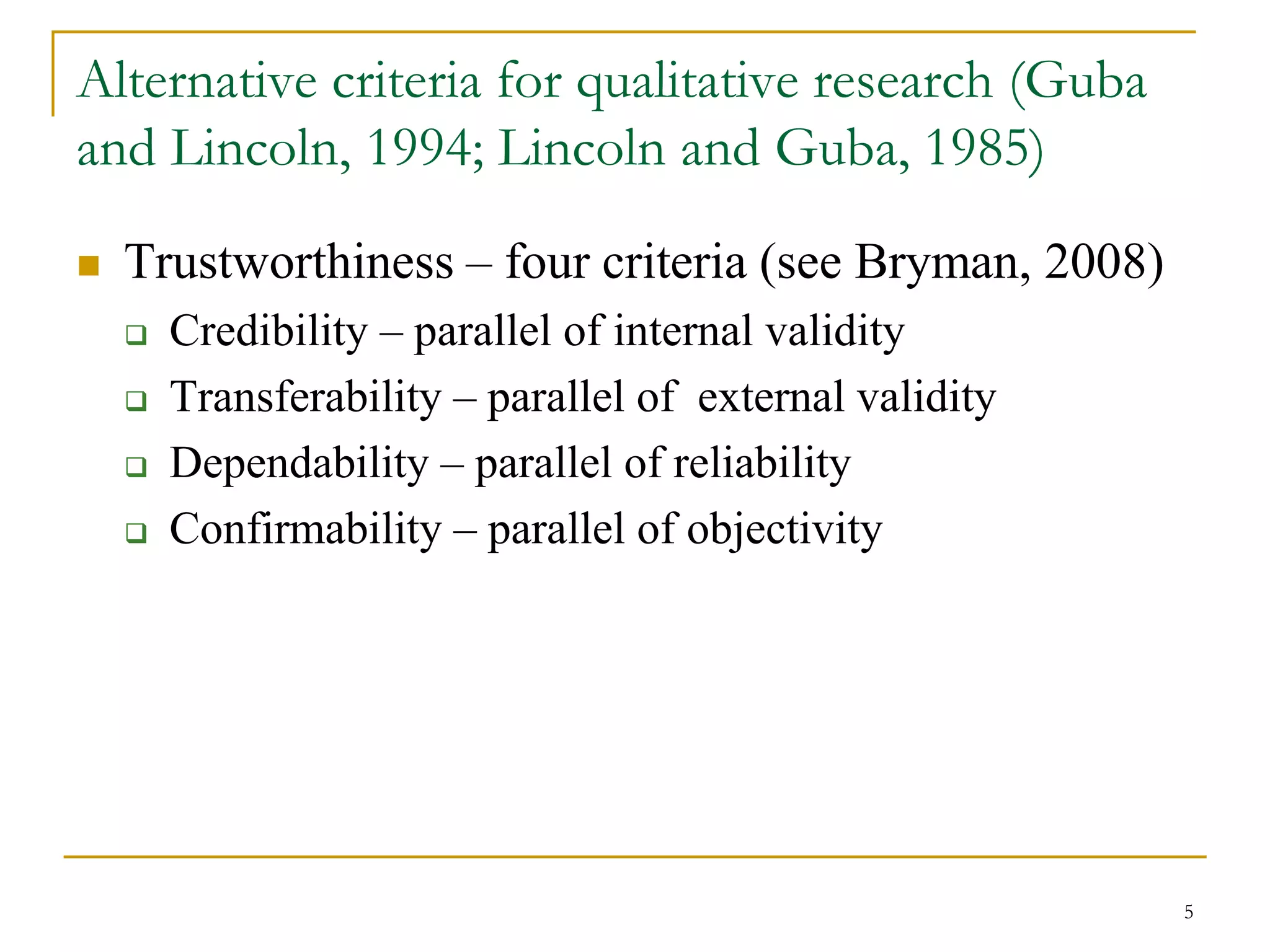
Alternative criteria for qualitative research (Guba
and Lincoln, 1994; Lincoln and Guba, 1985)
 Trustworthiness – four criteria (see Bryman, 2008)
 Credibility – parallel of internal validity
 Transferability – parallel of external validity
 Dependability – parallel of reliability
 Confirmability – parallel of objectivity
5
Credibility
 Acknowledges there are multiple accounts of
social reality.
 Credible research is that which has been carried
out according to best practices and peer-review.
 Goal is to confirm the social researcher correctly
understood the social world.
6
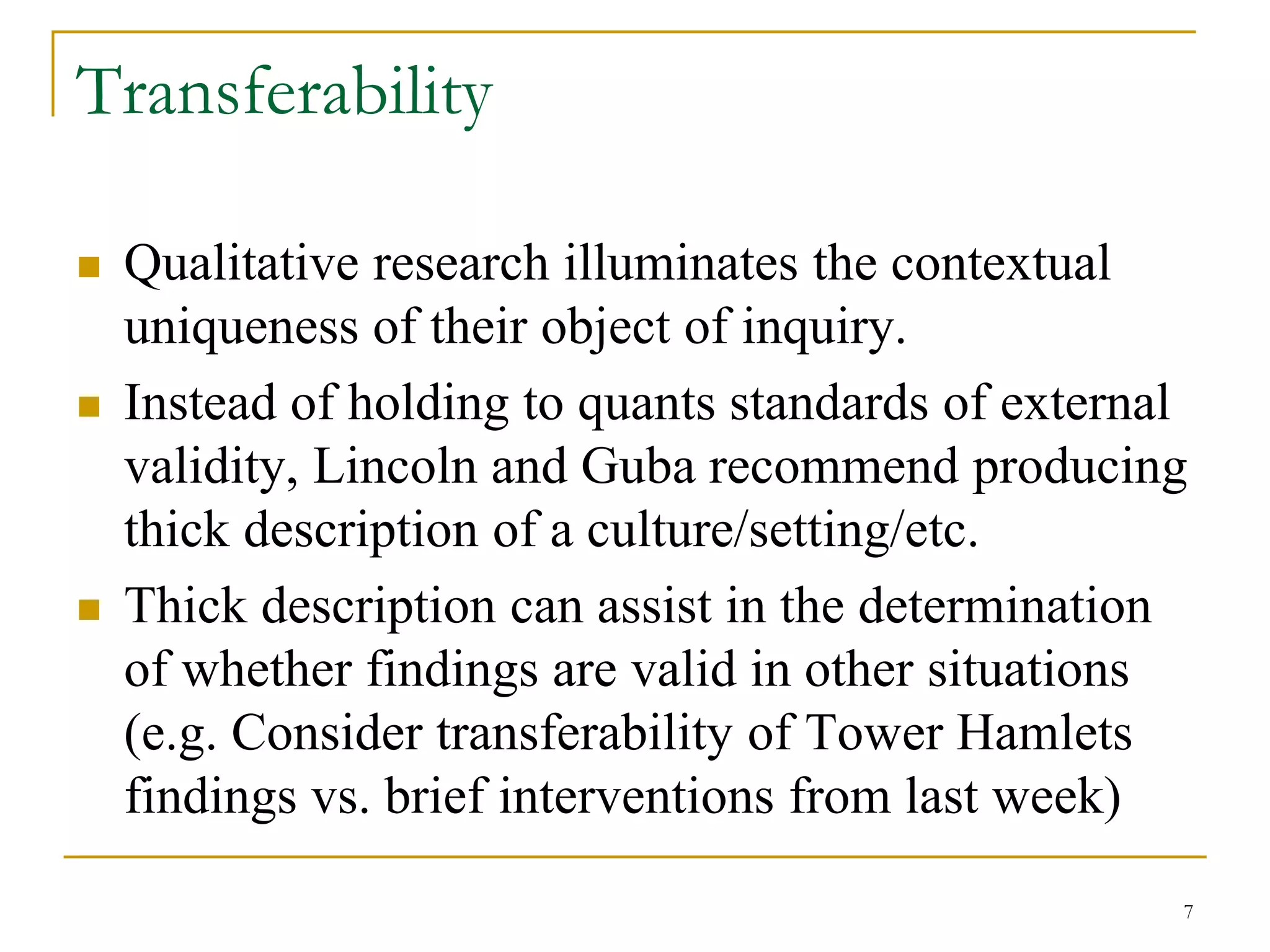
Transferability
 Qualitative research illuminates the contextual
uniqueness of their object of inquiry.
 Instead of holding to quants standards of external
validity, Lincoln and Guba recommend producing
thick description of a culture/setting/etc.
 Thick description can assist in the determination
of whether findings are valid in other situations
(e.g. Consider transferability of Tower Hamlets
findings vs. brief interventions from last week)
7
Dependability
 Dependability – parallel of reliability
 An “auditing” approach to research
 Detail work phases (research question, sampling,
data collection, field notes, transcripts, methods
of data analysis planned)
 Peer review
 Not wide spread. High demands on auditors.
8
Confirmability
 Aims for ‘objectivity’ – being a neutral observer
of events – is impossible given the qualitative
epitsemology.
 Instead confirmability is concerned with ensuring
the researcher has acted in good faith.
 Research and finding have not been overtly swayed by
personal values
 Confirmability should be a criteria for auditors or
peer review.
9

Reliability_and_Validity_in_Qualitative.ppt

  • 1.
    Reliability and validityin qualitative research and handling qualitative data examples Dr. Branly Mbunga 1
  • 2.
    Sampling  Quantitative researchrelies upon probability sampling in order to be able to generalise results to the wider population.  Qualitative research has different aims, but sampling is still an important consideration (see Bryman 2008).  Purposive sampling – selecting participants based upon their relevance to the question(s) posed.  Theoretical sampling – data collection is guided by the codes, categories and concepts emerging from the data.  Snowball sampling – initial contact using theoretical sampling and then get referrals from participants. 2
  • 3.
    Reliability  In quantitativeresearch a reliable measure is one which produces the same response to a question.  Allows for replication of previous studies – e.g. measuring party identification over time.  In qualitative research our goals are different, however we can re-conceptualise the concept of reliability in order to produce good social research. 3
  • 4.
    Reliability (LeCompte andGoetz 1982)  External reliability – can the study be repeated? If you are replicating a previous study, adopt similar role to previous researcher.  Internal reliability – when there is more than one observer all should agree on what is seen and heard. 4
  • 5.
    Alternative criteria forqualitative research (Guba and Lincoln, 1994; Lincoln and Guba, 1985)  Trustworthiness – four criteria (see Bryman, 2008)  Credibility – parallel of internal validity  Transferability – parallel of external validity  Dependability – parallel of reliability  Confirmability – parallel of objectivity 5
  • 6.
    Credibility  Acknowledges thereare multiple accounts of social reality.  Credible research is that which has been carried out according to best practices and peer-review.  Goal is to confirm the social researcher correctly understood the social world. 6
  • 7.
    Transferability  Qualitative researchilluminates the contextual uniqueness of their object of inquiry.  Instead of holding to quants standards of external validity, Lincoln and Guba recommend producing thick description of a culture/setting/etc.  Thick description can assist in the determination of whether findings are valid in other situations (e.g. Consider transferability of Tower Hamlets findings vs. brief interventions from last week) 7
  • 8.
    Dependability  Dependability –parallel of reliability  An “auditing” approach to research  Detail work phases (research question, sampling, data collection, field notes, transcripts, methods of data analysis planned)  Peer review  Not wide spread. High demands on auditors. 8
  • 9.
    Confirmability  Aims for‘objectivity’ – being a neutral observer of events – is impossible given the qualitative epitsemology.  Instead confirmability is concerned with ensuring the researcher has acted in good faith.  Research and finding have not been overtly swayed by personal values  Confirmability should be a criteria for auditors or peer review. 9