ENHANCING THE MEETING EXPERIENCE
TRANSFORMATIONAL EXPERIENCES
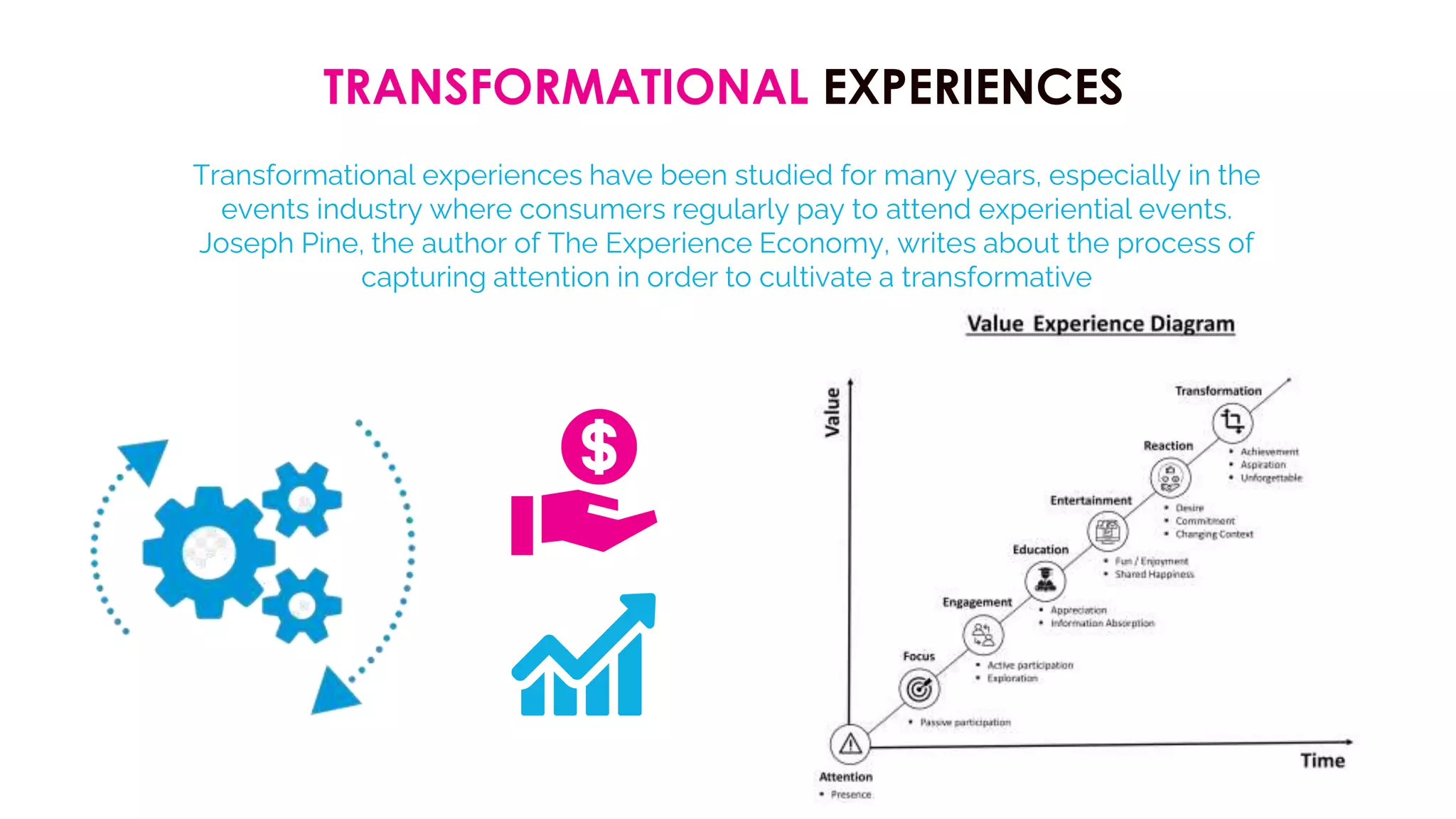
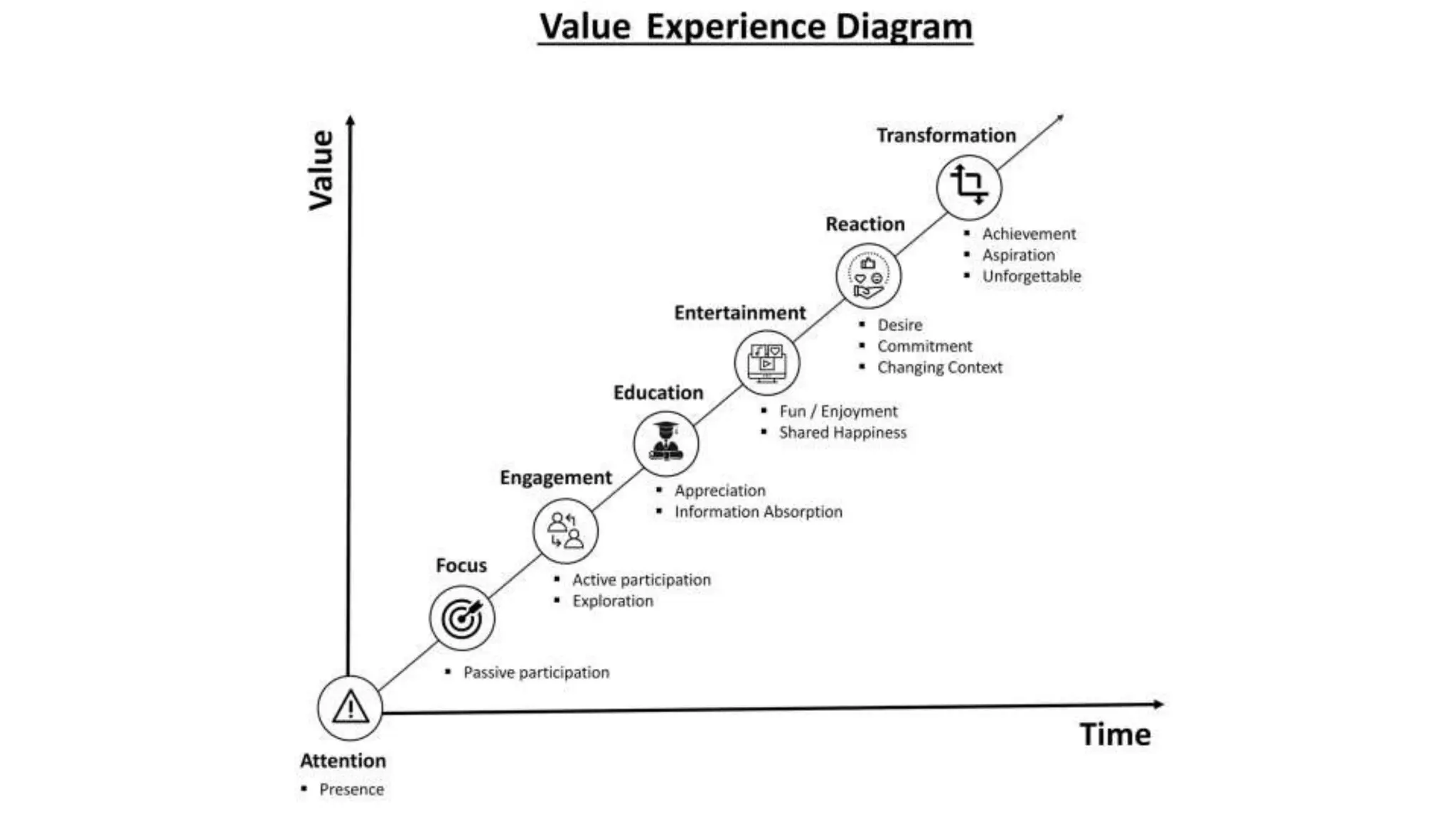
Transformational experiences have been studied for many years, especially in the
events industry where consumers regularly pay to attend experiential events.
Joseph Pine, the author of The Experience Economy, writes about the process of
capturing attention in order to cultivate a transformative
MEETING ENGAGEMENT
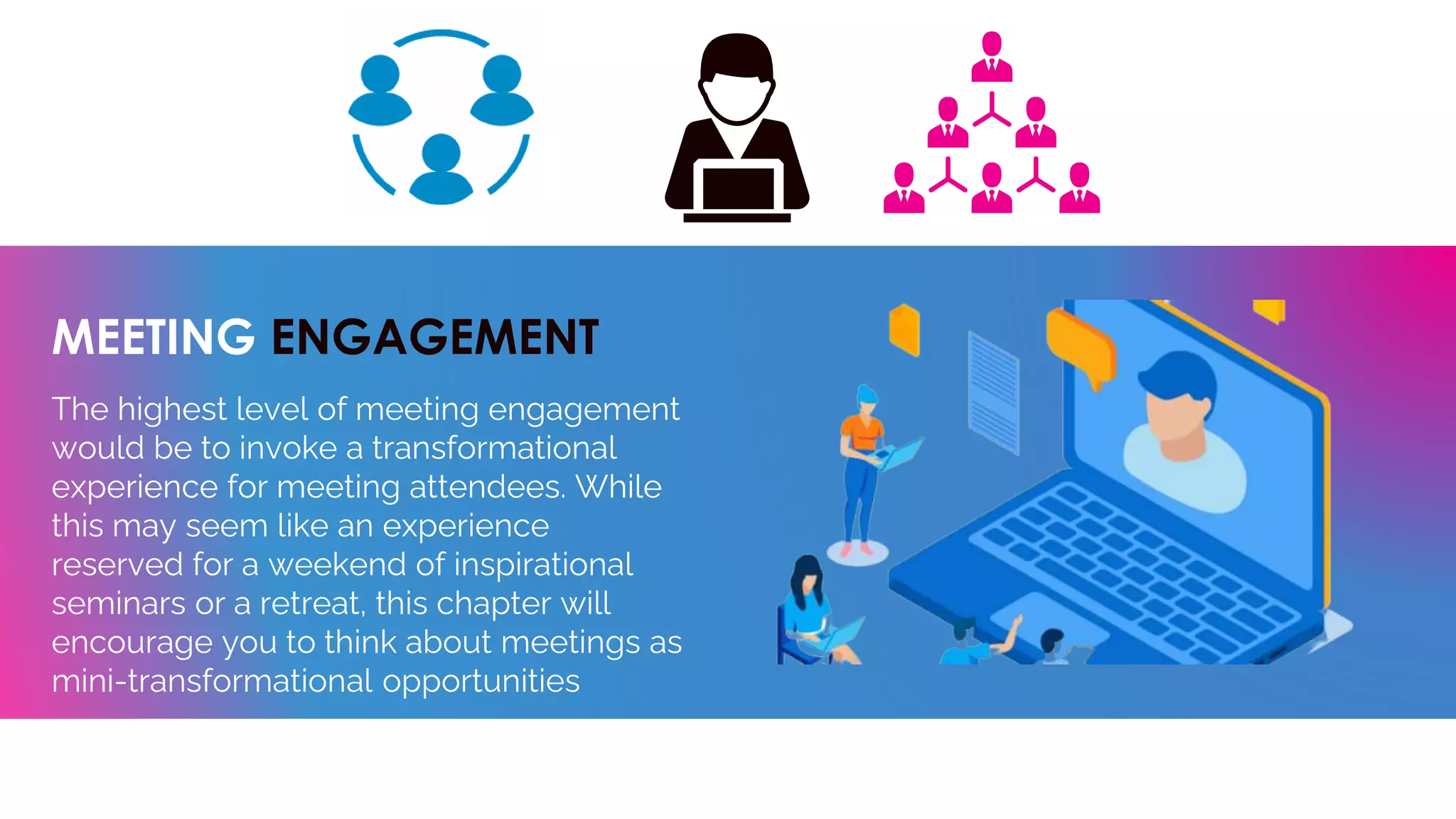
The highest level of meeting engagement
would be to invoke a transformational
experience for meeting attendees. While
this may seem like an experience
reserved for a weekend of inspirational
seminars or a retreat, this chapter will
encourage you to think about meetings as
mini-transformational opportunities
SPEND TIME TOGETHER
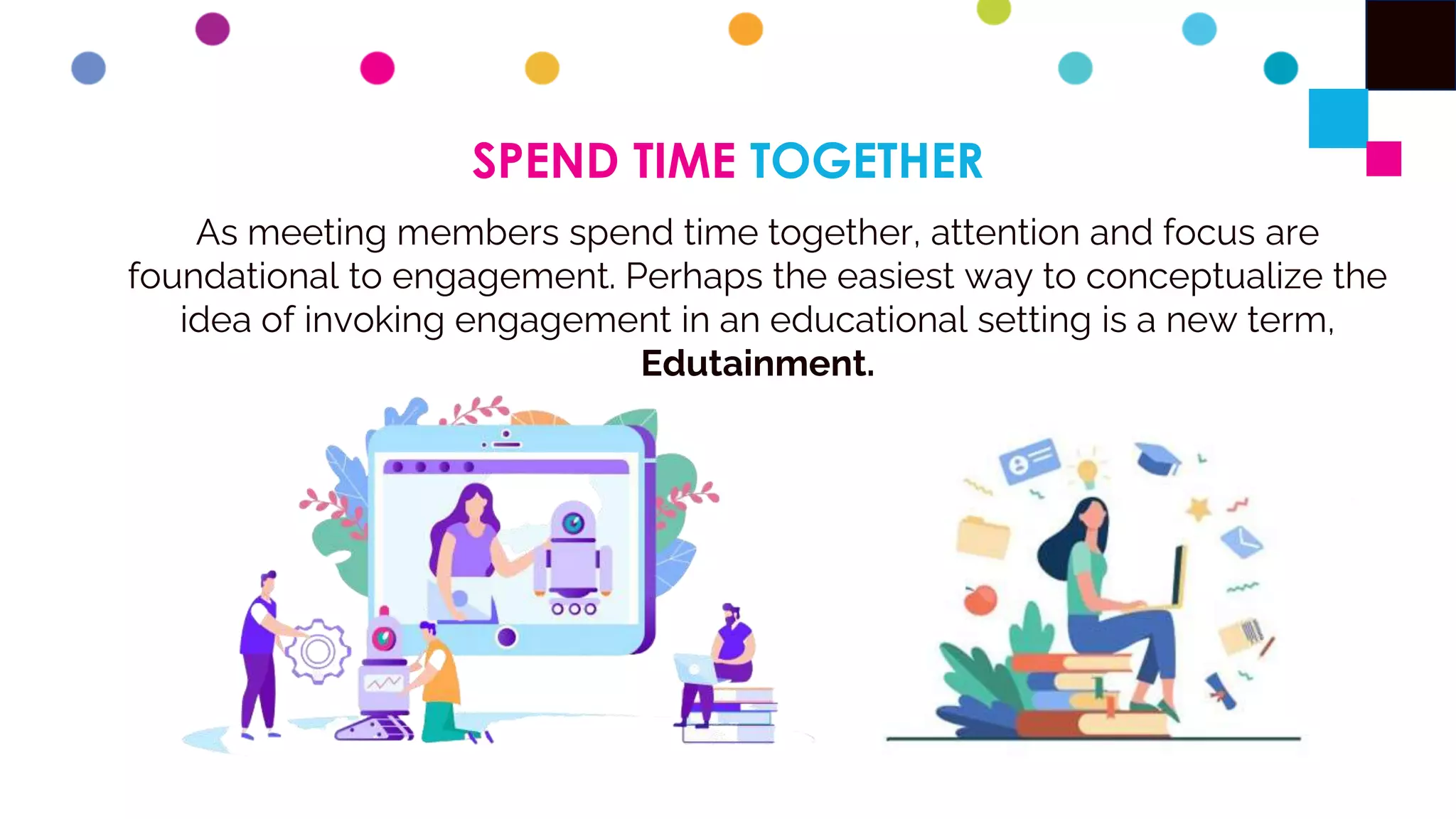
As meeting members spend time together, attention and focus are
foundational to engagement. Perhaps the easiest way to conceptualize the
idea of invoking engagement in an educational setting is a new term,
Edutainment.
EDUTAINMENT
It is a process of education that uses
entertainment to engage audiences
with the purpose of educating them
in the process.
In addition, weave personal stories and
anecdotes into key points in the
meeting where helpful; they can often
help reinforce key messages and build
retention.
POWER TO
EDUTAIN
A good meeting host will plan out simple, but
engaging points that have the power to edutain.
For example, a short quiz with a funny but
relevant question can help to “edutain” an
audience.
MOST MEETINGS WILL START WITH PASSIVE
PARTICIPATION
Most meetings will start with passive participation which can naturally evolve into active
participation as the meeting progresses. For example, passive meeting engagement may start
with a personal notepad in which attendees write down ideas about questions they may want
to ask later in the meeting. Active participation involves asking questions about the content.
FEELING OF CONNECTION AND SHARED VISION
As the educational process in a meeting naturally progresses, a reaction
from meeting participants can take multiple forms. A positive reaction
from meeting participants involves a feeling of connection and shared
vision
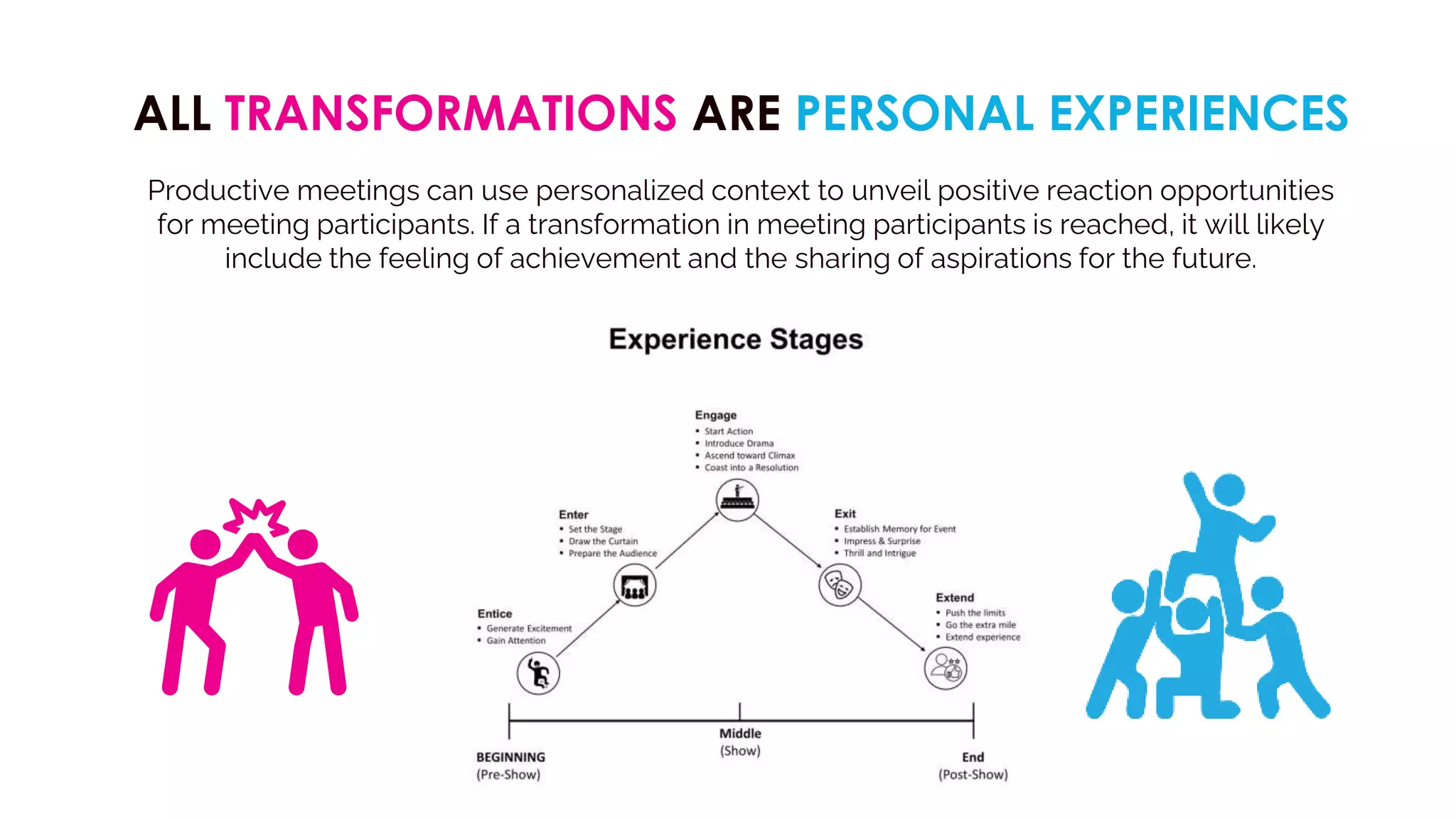
ALL TRANSFORMATIONS ARE PERSONAL EXPERIENCES
Productive meetings can use personalized context to unveil positive reaction opportunities
for meeting participants. If a transformation in meeting participants is reached, it will likely
include the feeling of achievement and the sharing of aspirations for the future.
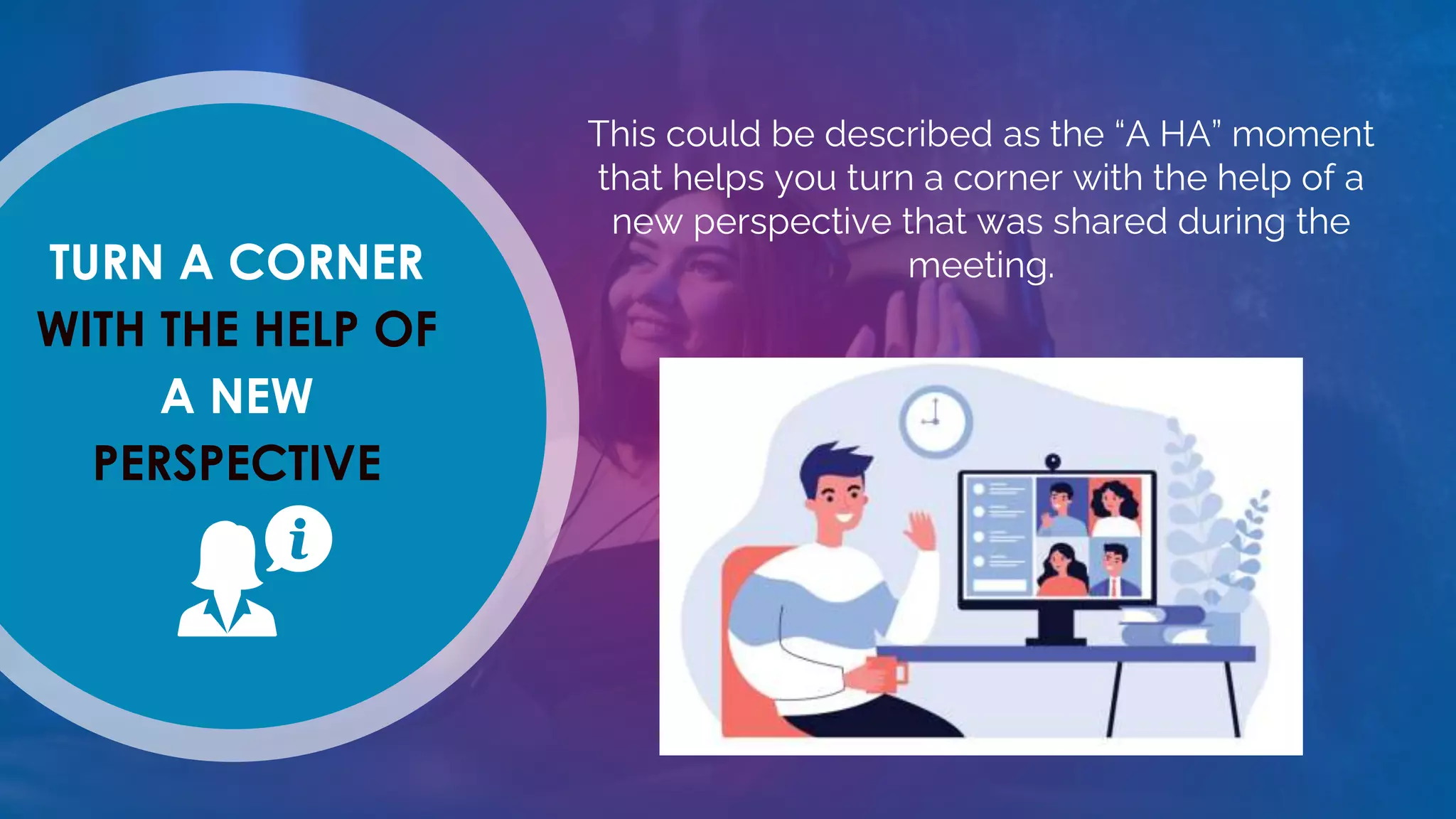
TURN A CORNER
WITH THE HELP OF
A NEW
PERSPECTIVE
This could be described as the “A HA” moment
that helps you turn a corner with the help of a
new perspective that was shared during the
meeting.
1
2
3
TRANSFORMATIONS
Transformations are highly personal experiences
They can be shared
If meetings have a comfortable setting these
personal experiences can have a significant impact
on others when shared.
GIVE YOUR MEETING
A distinct
beginning
Middle
End to facilitate the
possibility of
transformation.
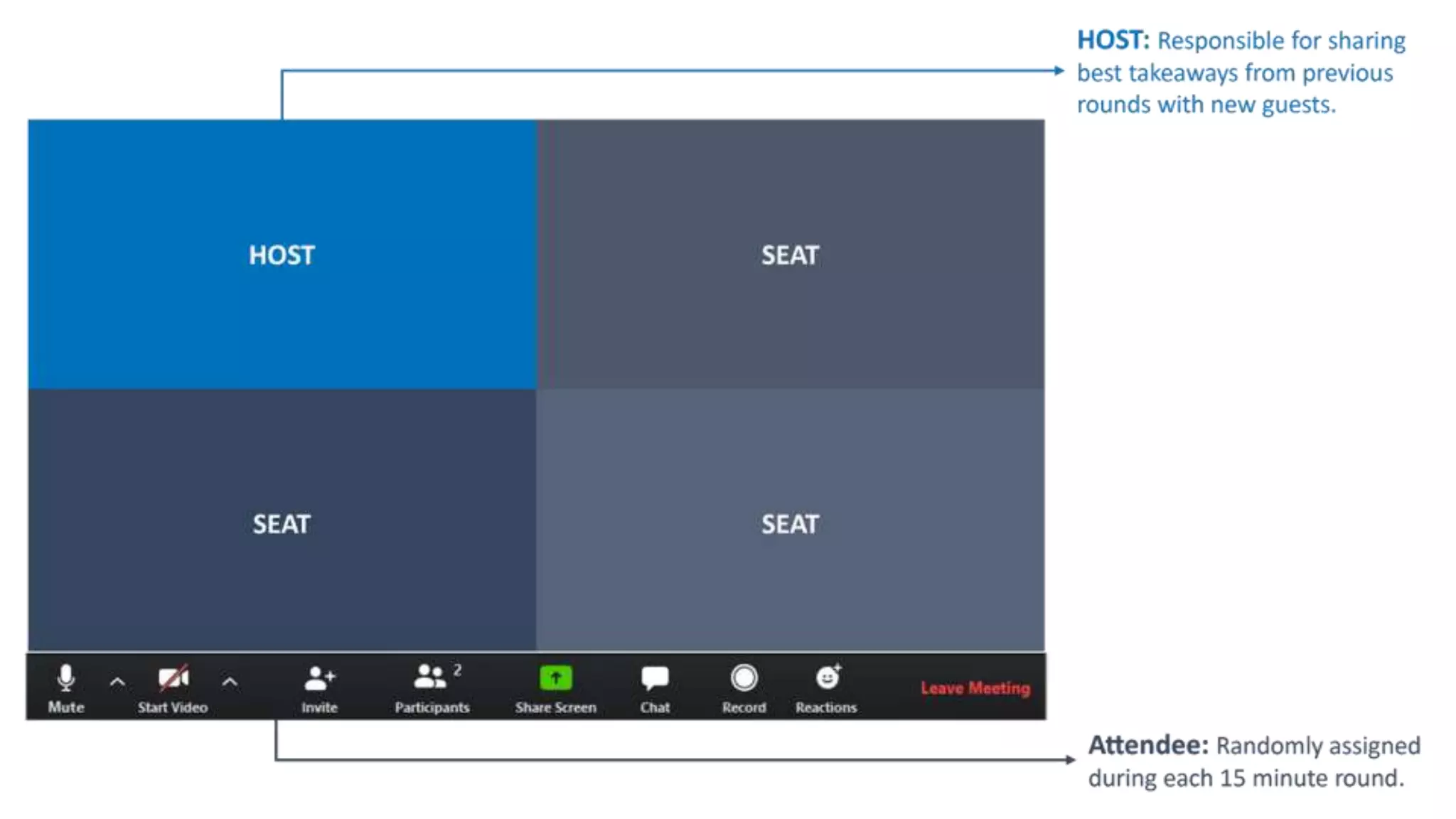
THE VIRTUAL WORLD CAFE
It is designed to break large
meetings down into smaller
groups of four people
Every 15 to 20 minutes three
meeting attendees are rotated
between new break out groups
The idea is a little bit like speed
dating in groups
The idea is to have one
meeting host who is able to
have three people join them in
a set number of rounds
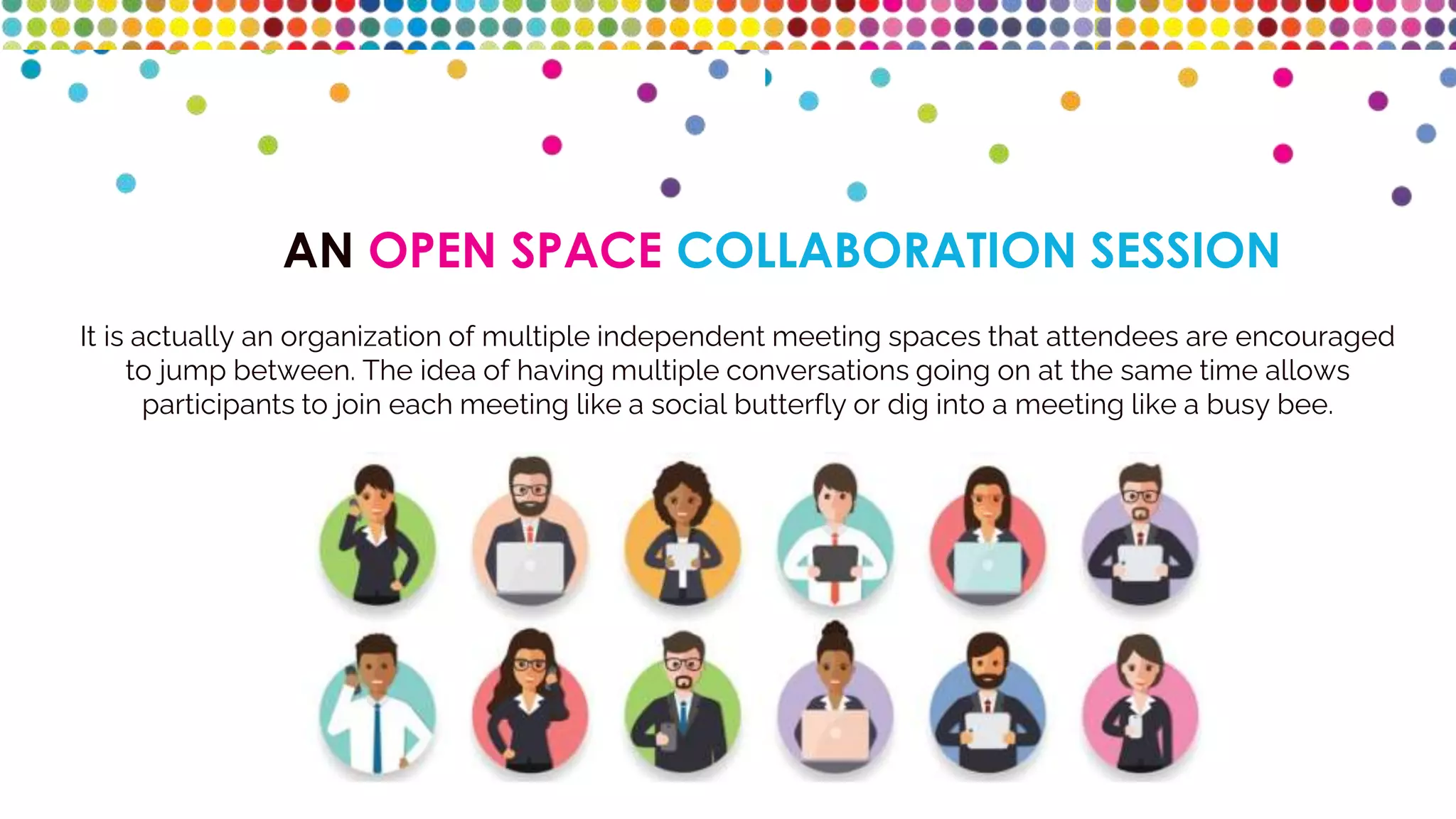
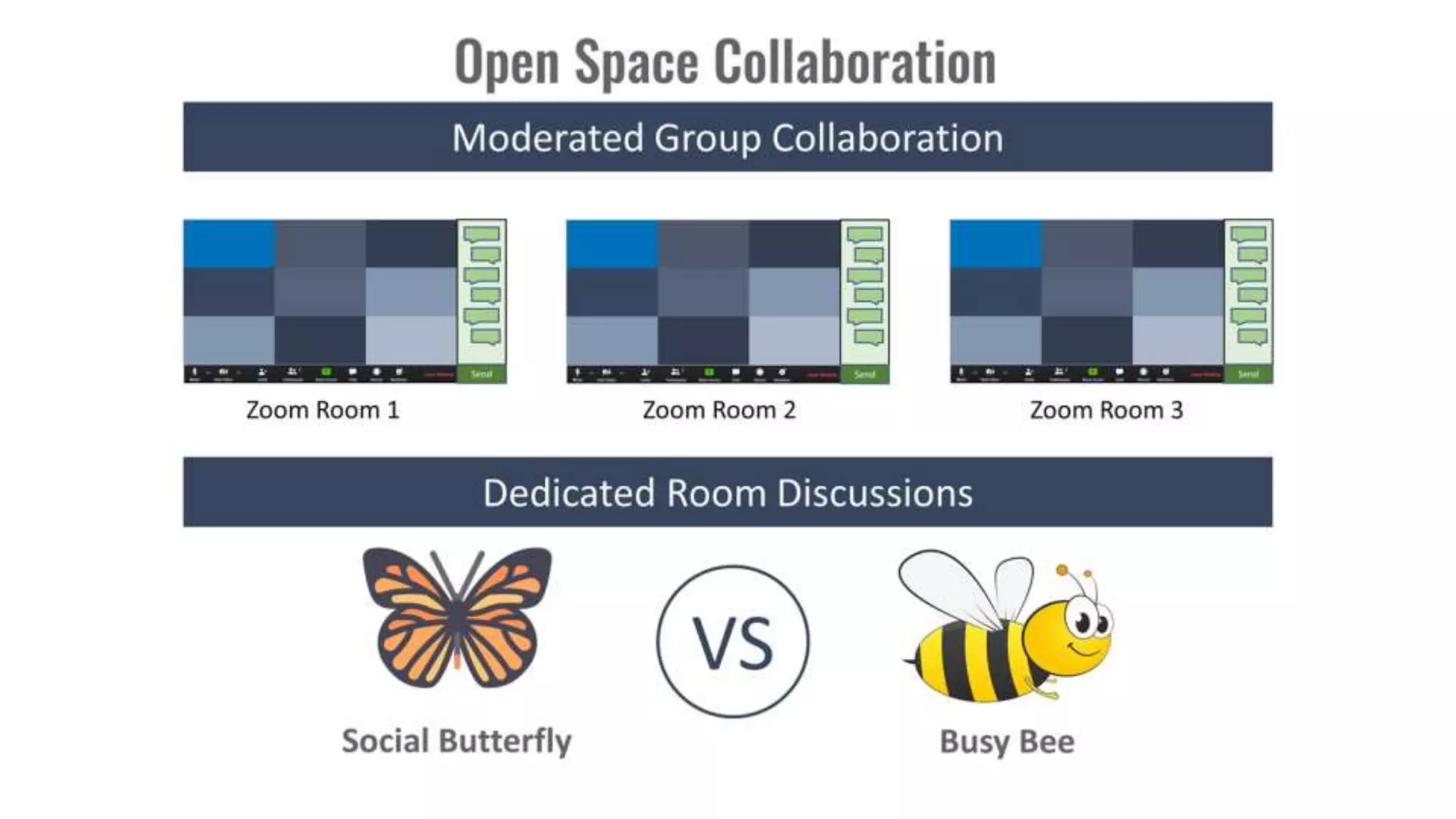
AN OPEN SPACE COLLABORATION SESSION
It is actually an organization of multiple independent meeting spaces that attendees are encouraged
to jump between. The idea of having multiple conversations going on at the same time allows
participants to join each meeting like a social butterfly or dig into a meeting like a busy bee.
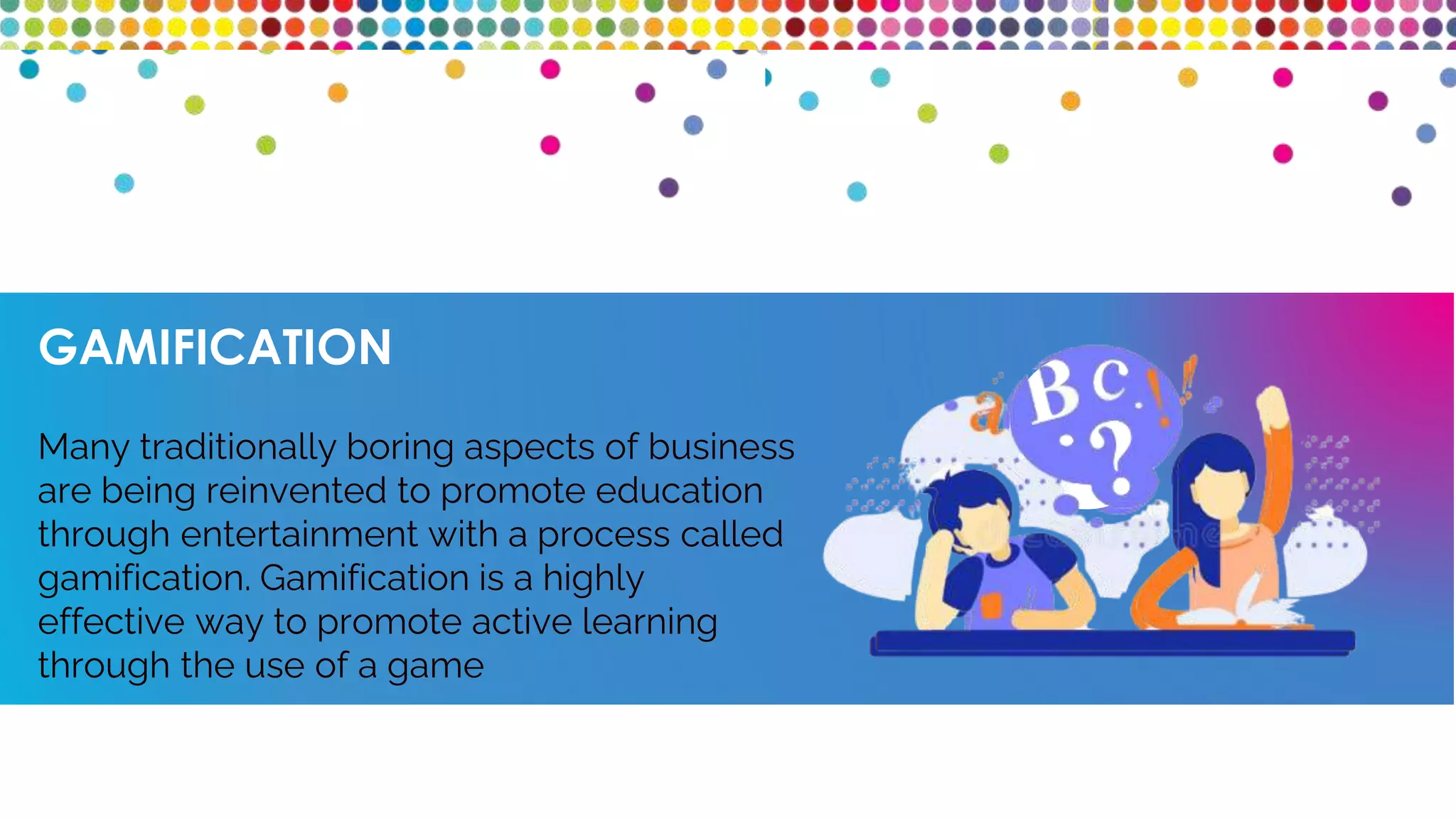
GAMIFICATION
Many traditionally boring aspects of business
are being reinvented to promote education
through entertainment with a process called
gamification. Gamification is a highly
effective way to promote active learning
through the use of a game
JONAH BERGER, THE AUTHOR OF NUDGE
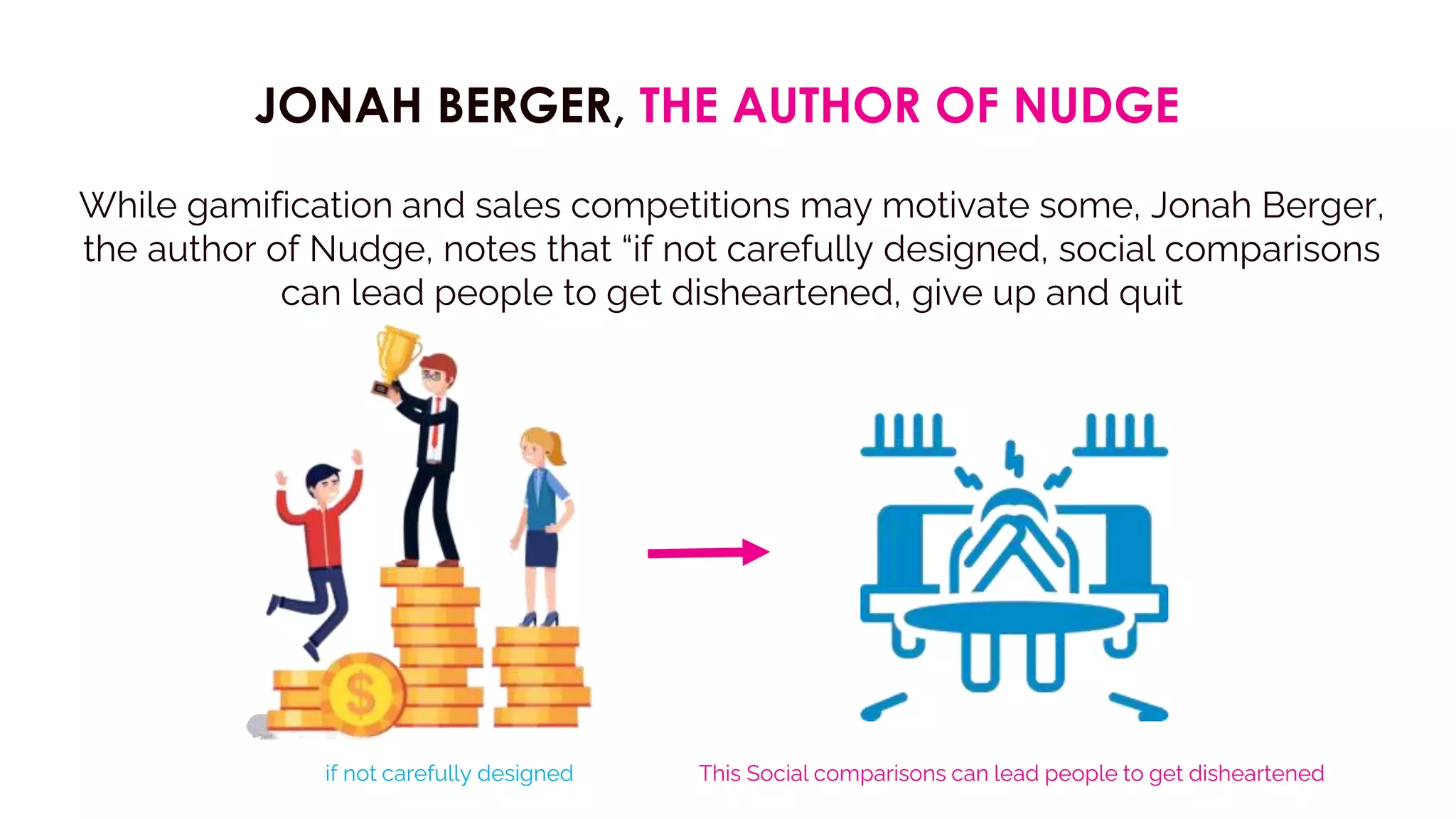
While gamification and sales competitions may motivate some, Jonah Berger,
the author of Nudge, notes that “if not carefully designed, social comparisons
can lead people to get disheartened, give up and quit
if not carefully designed This Social comparisons can lead people to get disheartened
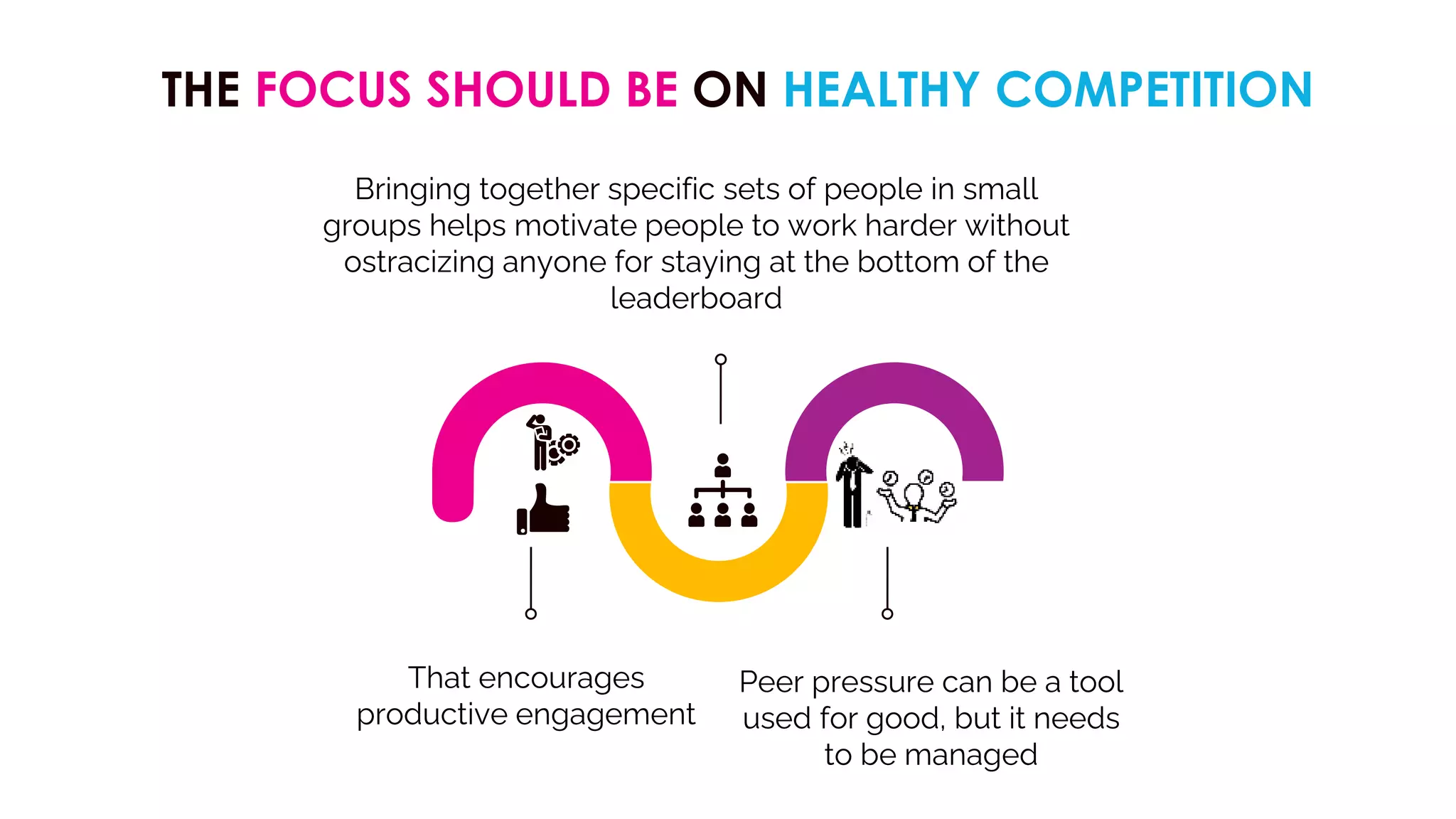
THE FOCUS SHOULD BE ON HEALTHY COMPETITION
That encourages
productive engagement
Peer pressure can be a tool
used for good, but it needs
to be managed
Bringing together specific sets of people in small
groups helps motivate people to work harder without
ostracizing anyone for staying at the bottom of the
leaderboard
SOCIAL FACILITATION
Social facilitation helps teams build commitment for shared projects
and responsibility for showing up and getting the job done
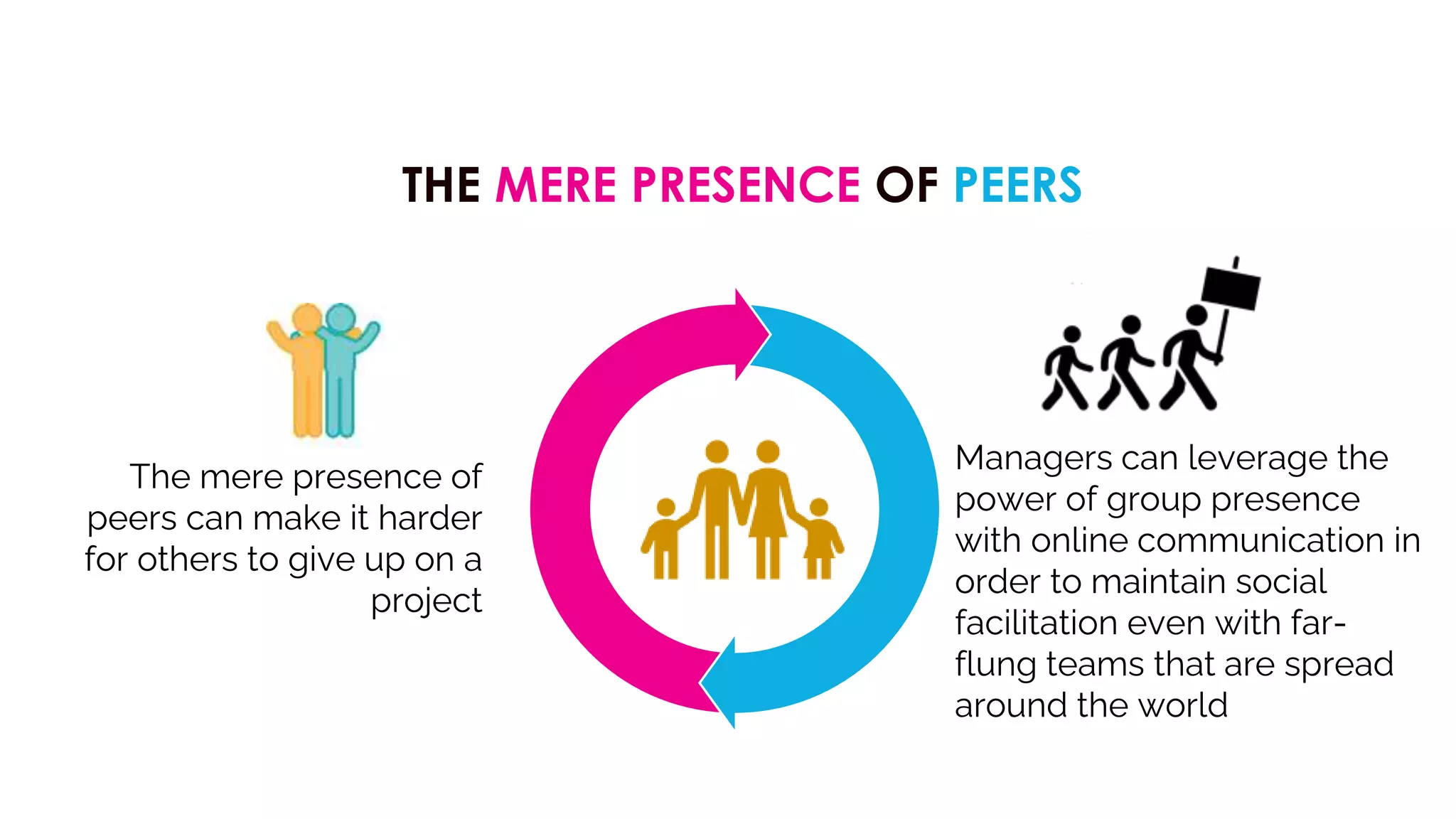
THE MERE PRESENCE OF PEERS
The mere presence of
peers can make it harder
for others to give up on a
project
Managers can leverage the
power of group presence
with online communication in
order to maintain social
facilitation even with far-
flung teams that are spread
around the world
USE A SCORECARD DURING MEETINGS
To keep teams
accountable while
keeping the process
light and fun
Custom scorecards can
be created for
managers who work
with their teams on
specific projects
Managers can use
scorecards with five to
ten data points that
are tracked during
weekly or monthly
meetings
A WELL-PLANNED
“EXIT STRATEGY”
Once your meeting is coming to an end, it’s ideal to plan a
memorable meeting exit. A well-planned “exit strategy”
should support or reinforce the goals established by your
meeting agenda.
THE ROLE OF SMALL GROUP MEETINGS
Malcom Gladwell expanded upon the idea of social facilitation in his book The Tipping Point in a
few important ways.
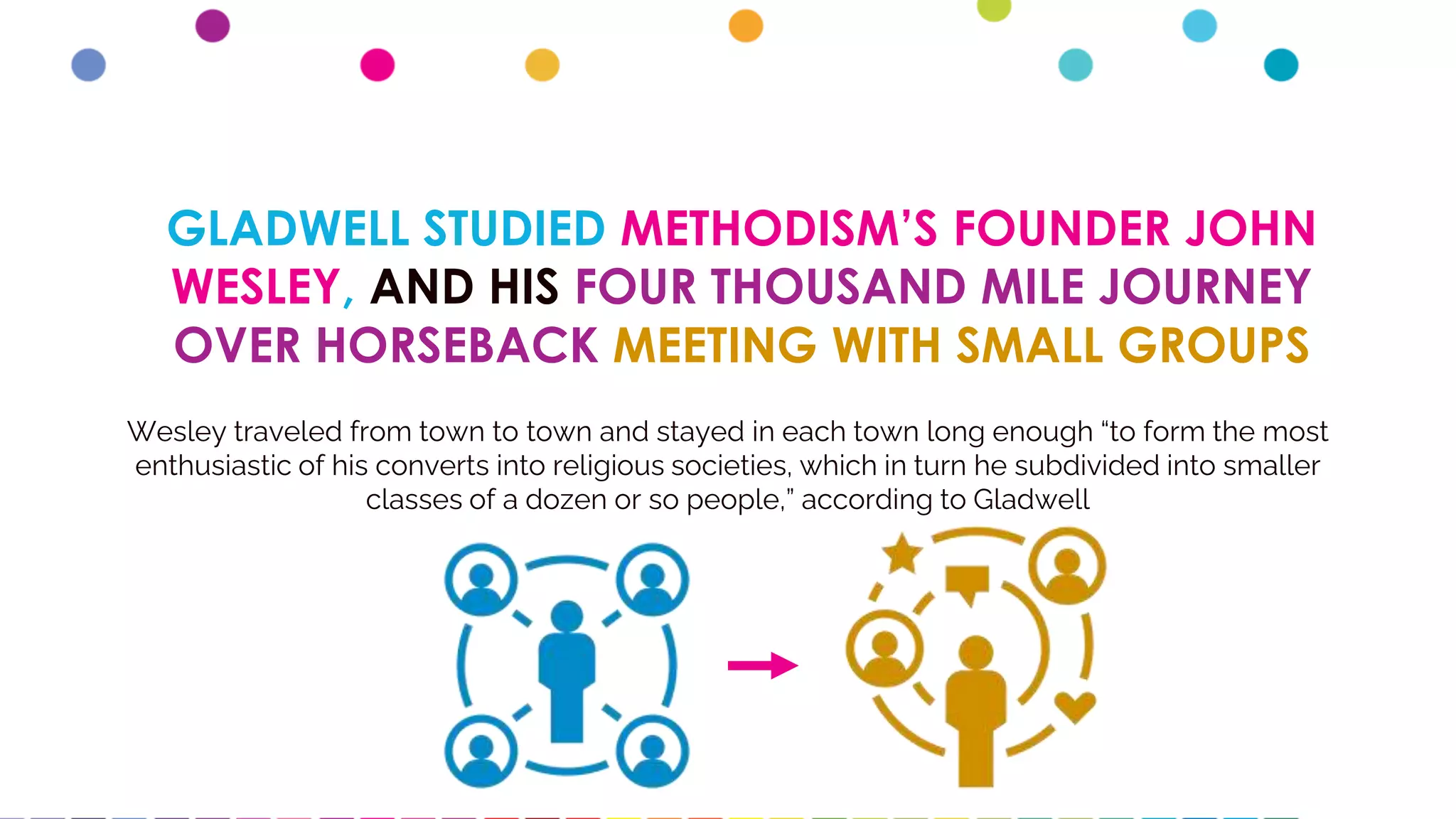
GLADWELL STUDIED METHODISM’S FOUNDER JOHN
WESLEY, AND HIS FOUR THOUSAND MILE JOURNEY
OVER HORSEBACK MEETING WITH SMALL GROUPS
Wesley traveled from town to town and stayed in each town long enough “to form the most
enthusiastic of his converts into religious societies, which in turn he subdivided into smaller
classes of a dozen or so people,” according to Gladwell

Enhancing the meeting experience

  • 1.
  • 2.
    TRANSFORMATIONAL EXPERIENCES Transformational experienceshave been studied for many years, especially in the events industry where consumers regularly pay to attend experiential events. Joseph Pine, the author of The Experience Economy, writes about the process of capturing attention in order to cultivate a transformative
  • 4.
    MEETING ENGAGEMENT The highestlevel of meeting engagement would be to invoke a transformational experience for meeting attendees. While this may seem like an experience reserved for a weekend of inspirational seminars or a retreat, this chapter will encourage you to think about meetings as mini-transformational opportunities
  • 5.
    SPEND TIME TOGETHER Asmeeting members spend time together, attention and focus are foundational to engagement. Perhaps the easiest way to conceptualize the idea of invoking engagement in an educational setting is a new term, Edutainment.
  • 6.
    EDUTAINMENT It is aprocess of education that uses entertainment to engage audiences with the purpose of educating them in the process. In addition, weave personal stories and anecdotes into key points in the meeting where helpful; they can often help reinforce key messages and build retention.
  • 7.
    POWER TO EDUTAIN A goodmeeting host will plan out simple, but engaging points that have the power to edutain. For example, a short quiz with a funny but relevant question can help to “edutain” an audience.
  • 8.
    MOST MEETINGS WILLSTART WITH PASSIVE PARTICIPATION Most meetings will start with passive participation which can naturally evolve into active participation as the meeting progresses. For example, passive meeting engagement may start with a personal notepad in which attendees write down ideas about questions they may want to ask later in the meeting. Active participation involves asking questions about the content.
  • 9.
    FEELING OF CONNECTIONAND SHARED VISION As the educational process in a meeting naturally progresses, a reaction from meeting participants can take multiple forms. A positive reaction from meeting participants involves a feeling of connection and shared vision
  • 10.
    ALL TRANSFORMATIONS AREPERSONAL EXPERIENCES Productive meetings can use personalized context to unveil positive reaction opportunities for meeting participants. If a transformation in meeting participants is reached, it will likely include the feeling of achievement and the sharing of aspirations for the future.
  • 12.
    TURN A CORNER WITHTHE HELP OF A NEW PERSPECTIVE This could be described as the “A HA” moment that helps you turn a corner with the help of a new perspective that was shared during the meeting.
  • 13.
    1 2 3 TRANSFORMATIONS Transformations are highlypersonal experiences They can be shared If meetings have a comfortable setting these personal experiences can have a significant impact on others when shared.
  • 14.
    GIVE YOUR MEETING Adistinct beginning Middle End to facilitate the possibility of transformation.
  • 15.
    THE VIRTUAL WORLDCAFE It is designed to break large meetings down into smaller groups of four people Every 15 to 20 minutes three meeting attendees are rotated between new break out groups The idea is a little bit like speed dating in groups The idea is to have one meeting host who is able to have three people join them in a set number of rounds
  • 18.
    AN OPEN SPACECOLLABORATION SESSION It is actually an organization of multiple independent meeting spaces that attendees are encouraged to jump between. The idea of having multiple conversations going on at the same time allows participants to join each meeting like a social butterfly or dig into a meeting like a busy bee.
  • 21.
    GAMIFICATION Many traditionally boringaspects of business are being reinvented to promote education through entertainment with a process called gamification. Gamification is a highly effective way to promote active learning through the use of a game
  • 22.
    JONAH BERGER, THEAUTHOR OF NUDGE While gamification and sales competitions may motivate some, Jonah Berger, the author of Nudge, notes that “if not carefully designed, social comparisons can lead people to get disheartened, give up and quit if not carefully designed This Social comparisons can lead people to get disheartened
  • 23.
    THE FOCUS SHOULDBE ON HEALTHY COMPETITION That encourages productive engagement Peer pressure can be a tool used for good, but it needs to be managed Bringing together specific sets of people in small groups helps motivate people to work harder without ostracizing anyone for staying at the bottom of the leaderboard
  • 24.
    SOCIAL FACILITATION Social facilitationhelps teams build commitment for shared projects and responsibility for showing up and getting the job done
  • 25.
    THE MERE PRESENCEOF PEERS The mere presence of peers can make it harder for others to give up on a project Managers can leverage the power of group presence with online communication in order to maintain social facilitation even with far- flung teams that are spread around the world
  • 26.
    USE A SCORECARDDURING MEETINGS To keep teams accountable while keeping the process light and fun Custom scorecards can be created for managers who work with their teams on specific projects Managers can use scorecards with five to ten data points that are tracked during weekly or monthly meetings
  • 27.
    A WELL-PLANNED “EXIT STRATEGY” Onceyour meeting is coming to an end, it’s ideal to plan a memorable meeting exit. A well-planned “exit strategy” should support or reinforce the goals established by your meeting agenda.
  • 28.
    THE ROLE OFSMALL GROUP MEETINGS Malcom Gladwell expanded upon the idea of social facilitation in his book The Tipping Point in a few important ways.
  • 29.
    GLADWELL STUDIED METHODISM’SFOUNDER JOHN WESLEY, AND HIS FOUR THOUSAND MILE JOURNEY OVER HORSEBACK MEETING WITH SMALL GROUPS Wesley traveled from town to town and stayed in each town long enough “to form the most enthusiastic of his converts into religious societies, which in turn he subdivided into smaller classes of a dozen or so people,” according to Gladwell