ORGANIZING COLLABORATION
CHANNELS
ALL BUSINESSES ARE DYNAMIC AND IN A CONSTANT
STATE OF CHANGE
ALL BUSINESSES ARE
INTERCONNECTED SYSTEMS
While your organization may see strong results from
hosting many small meetings with dedicated teams,
it’s often difficult for these small groups to see the
bigger picture. In reality, all businesses are
interconnected systems where one decision affects
other areas of the system
MANAGERS NEED TO REMAIN TAPPED
INTO THE COLLABORATION EFFORTS
of their team members and look for overarching cause-and-effect scenarios
that can result from small team decisions. This is why large “all hands” update
meetings are so important for connecting departments under a common vision.
HIGH LEVEL PRESENTATION SLIDES
You may decide to display this type
of slide at the beginning of a
meeting, or toward the last
moments of a meeting to share a
call to action.
can prime meeting attendees for
the desired meeting outcome
A SENSE OF
“DIGITAL
SATURATION”
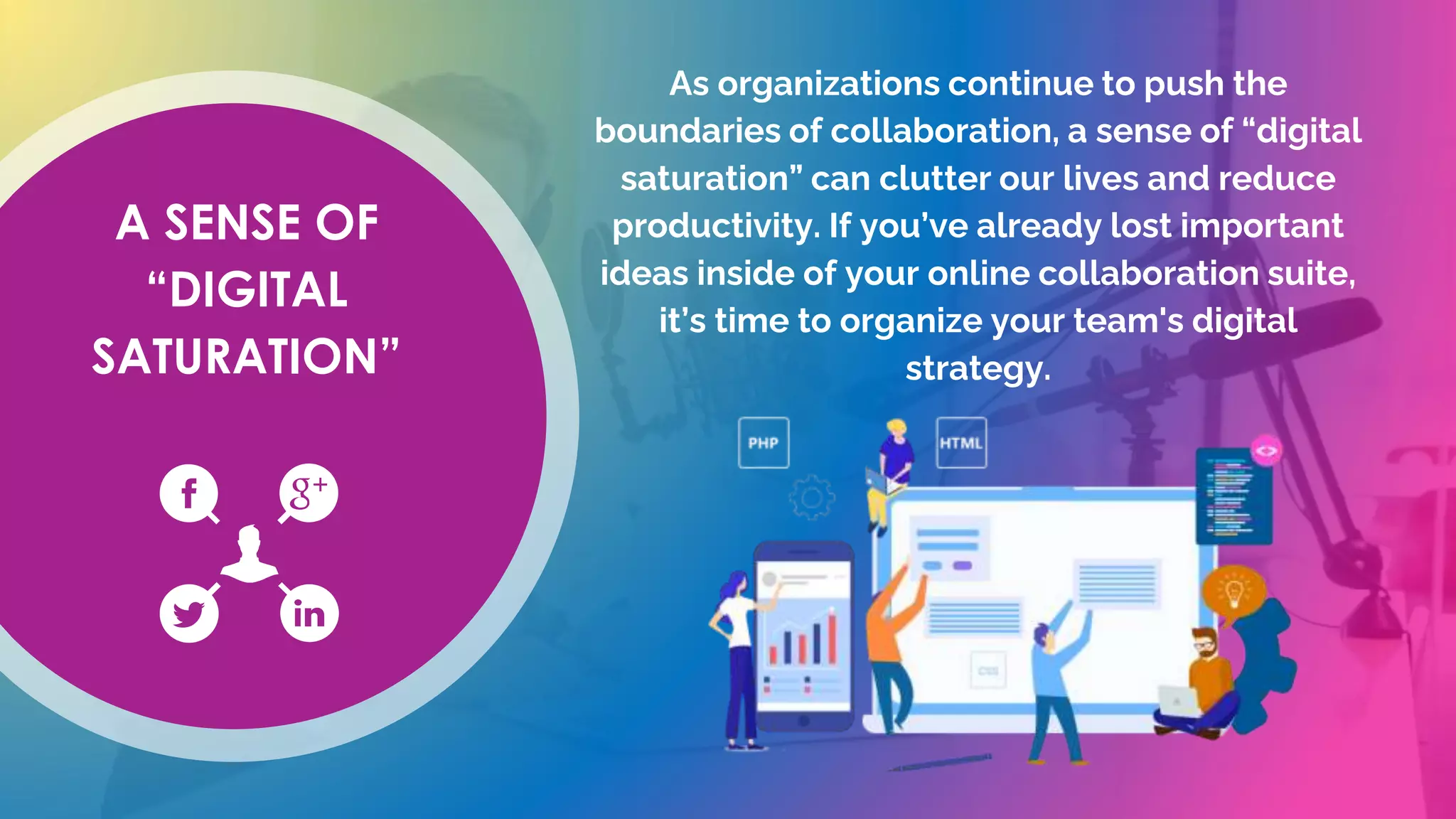
As organizations continue to push the
boundaries of collaboration, a sense of “digital
saturation” can clutter our lives and reduce
productivity. If you’ve already lost important
ideas inside of your online collaboration suite,
it’s time to organize your team's digital
strategy.
IN THE TIPPING POINT
Gladwell reviews a concept in cognitive psychology known as “Channel Capacity”
which explains the limit our brains have for categorizing specific channels of
information. Tests were conducted using a variety of scenarios to test the ability of
human memory to categorize and recall information.
HUMAN INTELLECTUAL CAPACITY
which limits our ability to interpret raw data, is different from our emotional
capacity, which limits our ability to connect with others. Gladwell cites something
psychologists call the “sympathy group” to help explain the number of people in
our lives we can truly care deeply about.
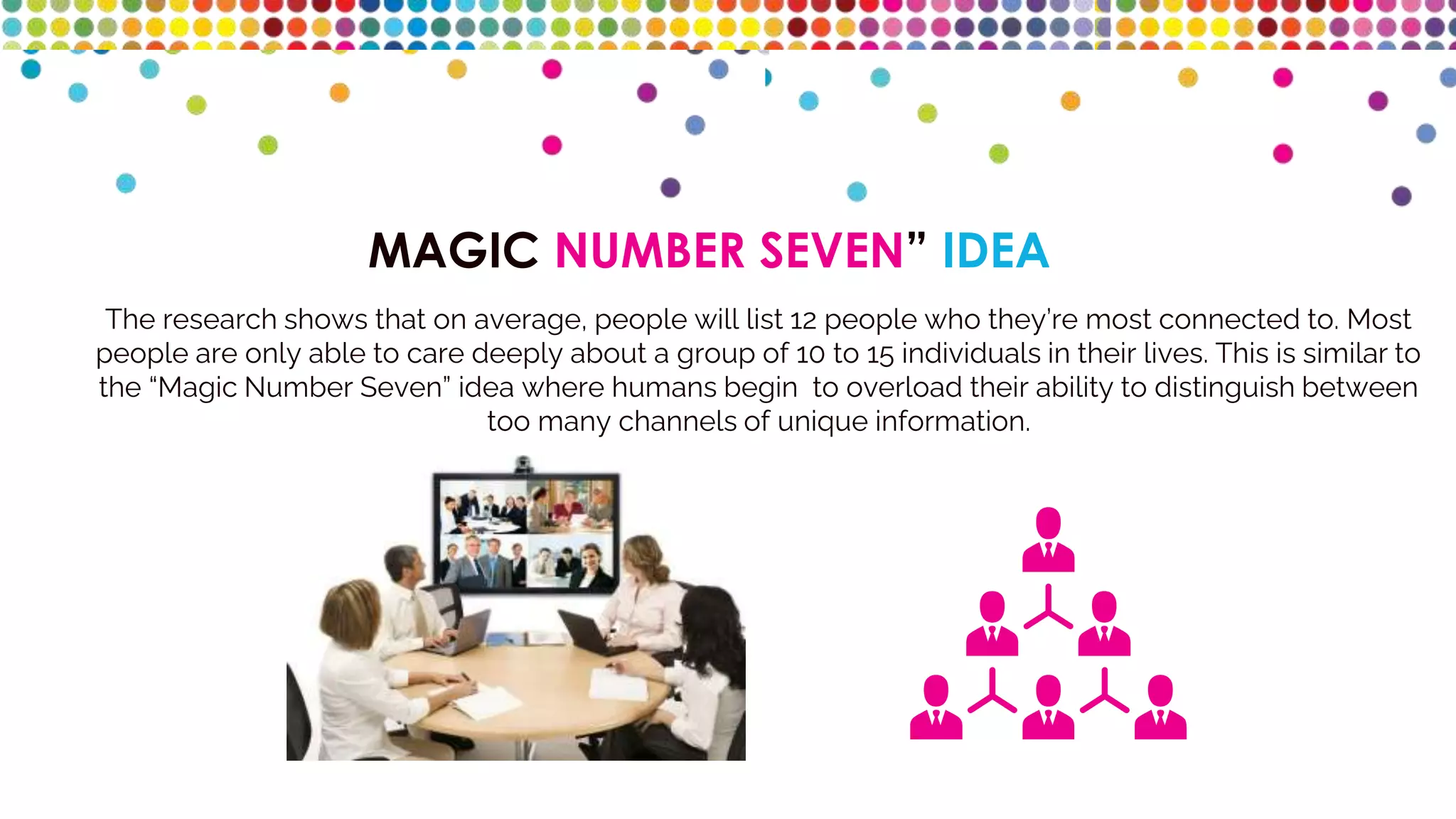
MAGIC NUMBER SEVEN” IDEA
The research shows that on average, people will list 12 people who they’re most connected to. Most
people are only able to care deeply about a group of 10 to 15 individuals in their lives. This is similar to
the “Magic Number Seven” idea where humans begin to overload their ability to distinguish between
too many channels of unique information.
UNIQUE COLLABORATION CHANNELS
We need to streamline the way organizations collaborate by creating only as many unique collaboration
channels as are necessary. Managers need to limit collaboration channels to those who can truly benefit
from them. Managers should actively seek feedback on the relevancy of communication channels in order
to keep channels productive for the team members who use them
PRODUCTIVE
ONLINE
WORKSPACE
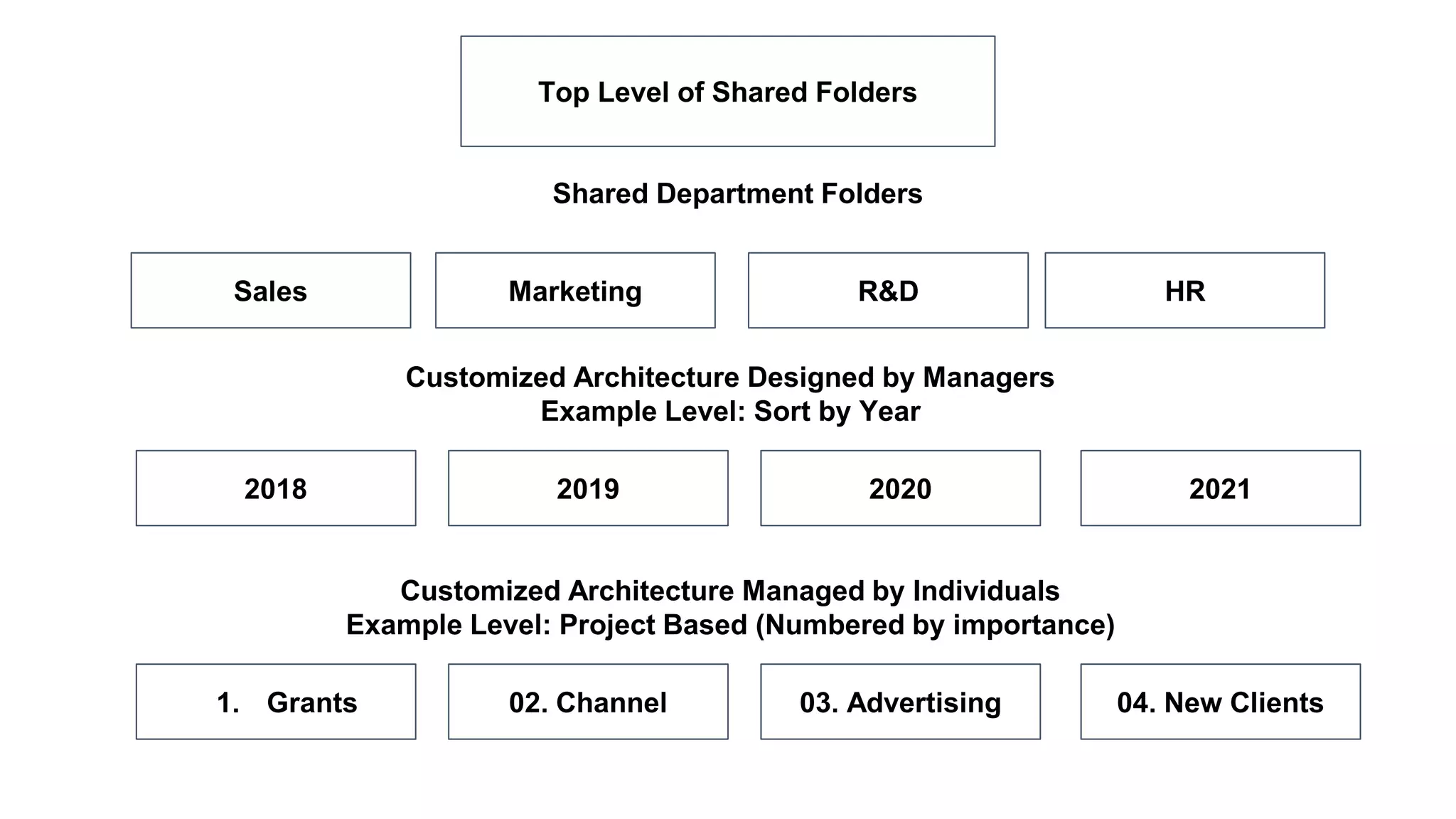
An organized file-sharing system is a
foundation for a productive online workspace.
If possible, try limiting any single level of your
shared folder organization to no more than is
absolutely necessary.
Top Level of Shared Folders
Sales Marketing R&D HR
Shared Department Folders
Customized Architecture Designed by Managers
Example Level: Sort by Year
2018 2019 2020 2021
Customized Architecture Managed by Individuals
Example Level: Project Based (Numbered by importance)
1. Grants 02. Channel 03. Advertising 04. New Clients
1
2
3
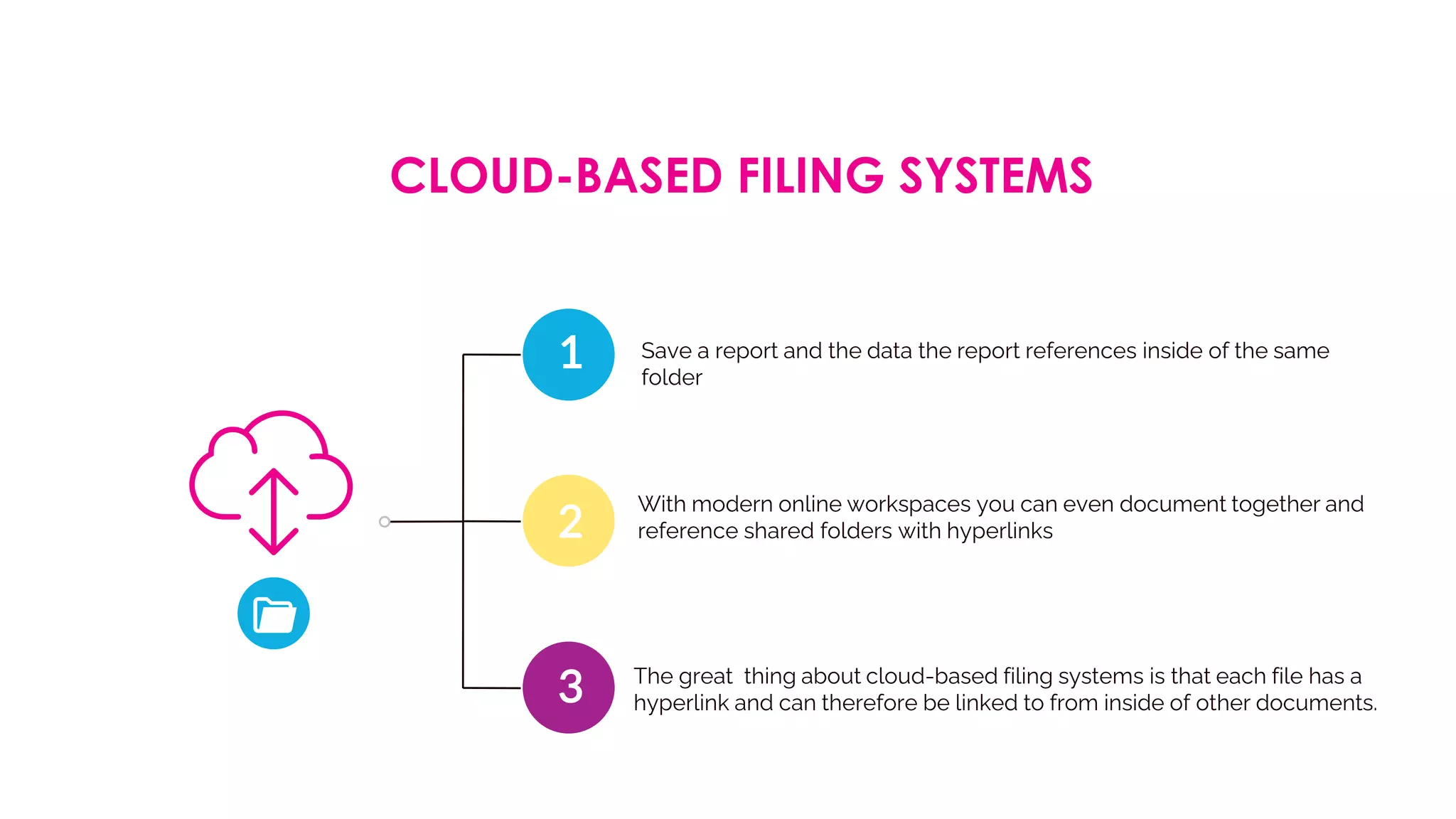
CLOUD-BASED FILING SYSTEMS
Save a report and the data the report references inside of the same
folder
With modern online workspaces you can even document together and
reference shared folders with hyperlinks
The great thing about cloud-based filing systems is that each file has a
hyperlink and can therefore be linked to from inside of other documents.
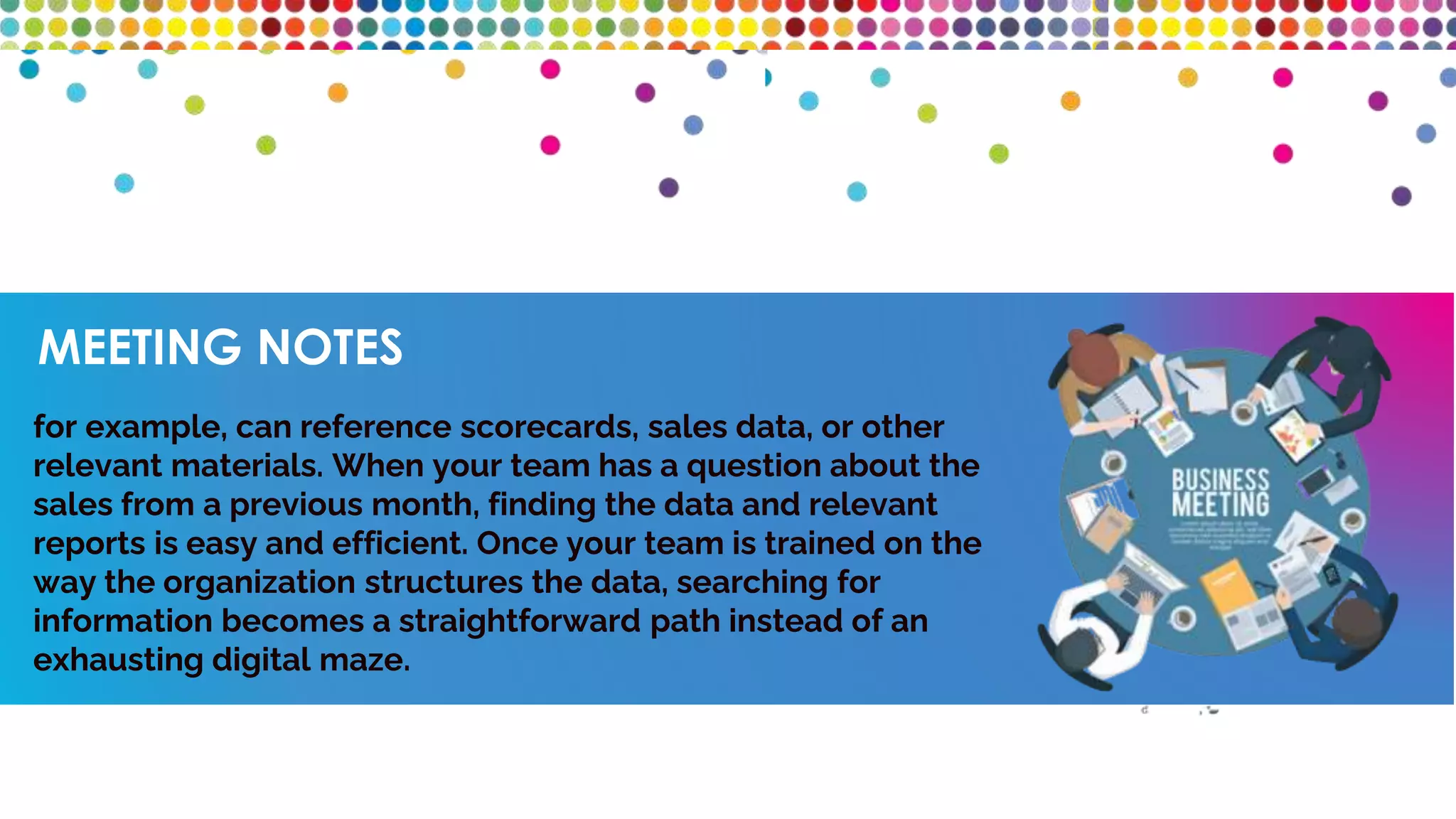
MEETING NOTES
for example, can reference scorecards, sales data, or other
relevant materials. When your team has a question about the
sales from a previous month, finding the data and relevant
reports is easy and efficient. Once your team is trained on the
way the organization structures the data, searching for
information becomes a straightforward path instead of an
exhausting digital maze.

Organizing collaboration channels

  • 1.
  • 2.
    ALL BUSINESSES AREDYNAMIC AND IN A CONSTANT STATE OF CHANGE
  • 3.
    ALL BUSINESSES ARE INTERCONNECTEDSYSTEMS While your organization may see strong results from hosting many small meetings with dedicated teams, it’s often difficult for these small groups to see the bigger picture. In reality, all businesses are interconnected systems where one decision affects other areas of the system
  • 4.
    MANAGERS NEED TOREMAIN TAPPED INTO THE COLLABORATION EFFORTS of their team members and look for overarching cause-and-effect scenarios that can result from small team decisions. This is why large “all hands” update meetings are so important for connecting departments under a common vision.
  • 5.
    HIGH LEVEL PRESENTATIONSLIDES You may decide to display this type of slide at the beginning of a meeting, or toward the last moments of a meeting to share a call to action. can prime meeting attendees for the desired meeting outcome
  • 6.
    A SENSE OF “DIGITAL SATURATION” Asorganizations continue to push the boundaries of collaboration, a sense of “digital saturation” can clutter our lives and reduce productivity. If you’ve already lost important ideas inside of your online collaboration suite, it’s time to organize your team's digital strategy.
  • 7.
    IN THE TIPPINGPOINT Gladwell reviews a concept in cognitive psychology known as “Channel Capacity” which explains the limit our brains have for categorizing specific channels of information. Tests were conducted using a variety of scenarios to test the ability of human memory to categorize and recall information.
  • 8.
    HUMAN INTELLECTUAL CAPACITY whichlimits our ability to interpret raw data, is different from our emotional capacity, which limits our ability to connect with others. Gladwell cites something psychologists call the “sympathy group” to help explain the number of people in our lives we can truly care deeply about.
  • 9.
    MAGIC NUMBER SEVEN”IDEA The research shows that on average, people will list 12 people who they’re most connected to. Most people are only able to care deeply about a group of 10 to 15 individuals in their lives. This is similar to the “Magic Number Seven” idea where humans begin to overload their ability to distinguish between too many channels of unique information.
  • 10.
    UNIQUE COLLABORATION CHANNELS Weneed to streamline the way organizations collaborate by creating only as many unique collaboration channels as are necessary. Managers need to limit collaboration channels to those who can truly benefit from them. Managers should actively seek feedback on the relevancy of communication channels in order to keep channels productive for the team members who use them
  • 11.
    PRODUCTIVE ONLINE WORKSPACE An organized file-sharingsystem is a foundation for a productive online workspace. If possible, try limiting any single level of your shared folder organization to no more than is absolutely necessary.
  • 12.
    Top Level ofShared Folders Sales Marketing R&D HR Shared Department Folders Customized Architecture Designed by Managers Example Level: Sort by Year 2018 2019 2020 2021 Customized Architecture Managed by Individuals Example Level: Project Based (Numbered by importance) 1. Grants 02. Channel 03. Advertising 04. New Clients
  • 13.
    1 2 3 CLOUD-BASED FILING SYSTEMS Savea report and the data the report references inside of the same folder With modern online workspaces you can even document together and reference shared folders with hyperlinks The great thing about cloud-based filing systems is that each file has a hyperlink and can therefore be linked to from inside of other documents.
  • 14.
    MEETING NOTES for example,can reference scorecards, sales data, or other relevant materials. When your team has a question about the sales from a previous month, finding the data and relevant reports is easy and efficient. Once your team is trained on the way the organization structures the data, searching for information becomes a straightforward path instead of an exhausting digital maze.