Options for effective delivery systems including innovative communication strategies and on farm interventions to improve fodder supply Dr. Nguyen Ngoc Anh, Dr. Nguyen Thi Mui (NIAS) Ms. Vo Thi Thin, Mr. Hoang Dinh Hieu (Ky Anh, Ha Tinh) Dr. Truong Tan Khanh, Mr. Van Tien Dung (Tay Nguyen University) Mr. Nguyen Van Ha, Mr. Hoang Van Nhien ( Ea Kar, Daklak) Dr. Tassilo Tiemann (CIAT)  Dr. Werner Stür (Consultant, former CIAT) Enhancing livelihoods of poor livestock keepers through increasing use of fodder (IFAD Technical Assistance Grant 853) Vietnam Report on Project Output 2 Presentation to the FAP End of Project Workshop Luang Prabang, Laos, 15-19 November 2010
Output 2:  Activities Innovative approach for evaluation of year-round feed inventory Introducing promising forage species to improve smallholder cattle feeding systems Development of a decision support tool for feed availability assessment (FEAST) Collection of baseline data Participatory e valuation of feed options around the year and identification of opportunities for improvement Introducing improved feeding and management systems for fattening and cow-calf production
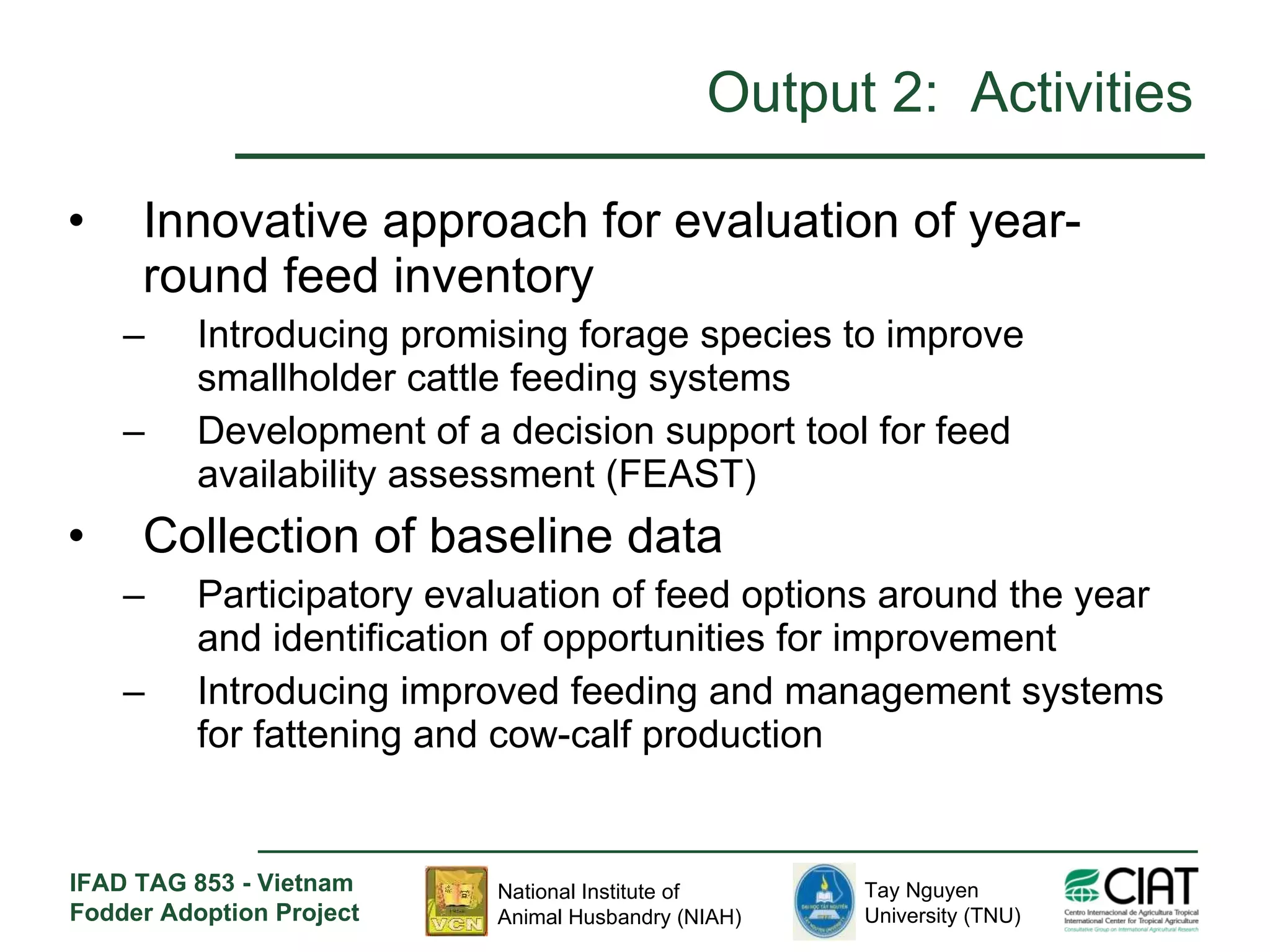
Output 2:  Activities Evaluation of fodder and seed delivery/input supply mechanisms Adjusting and refining improved feeding and management systems with stakeholder feedback Expanding technology through village learning activities and cross visits
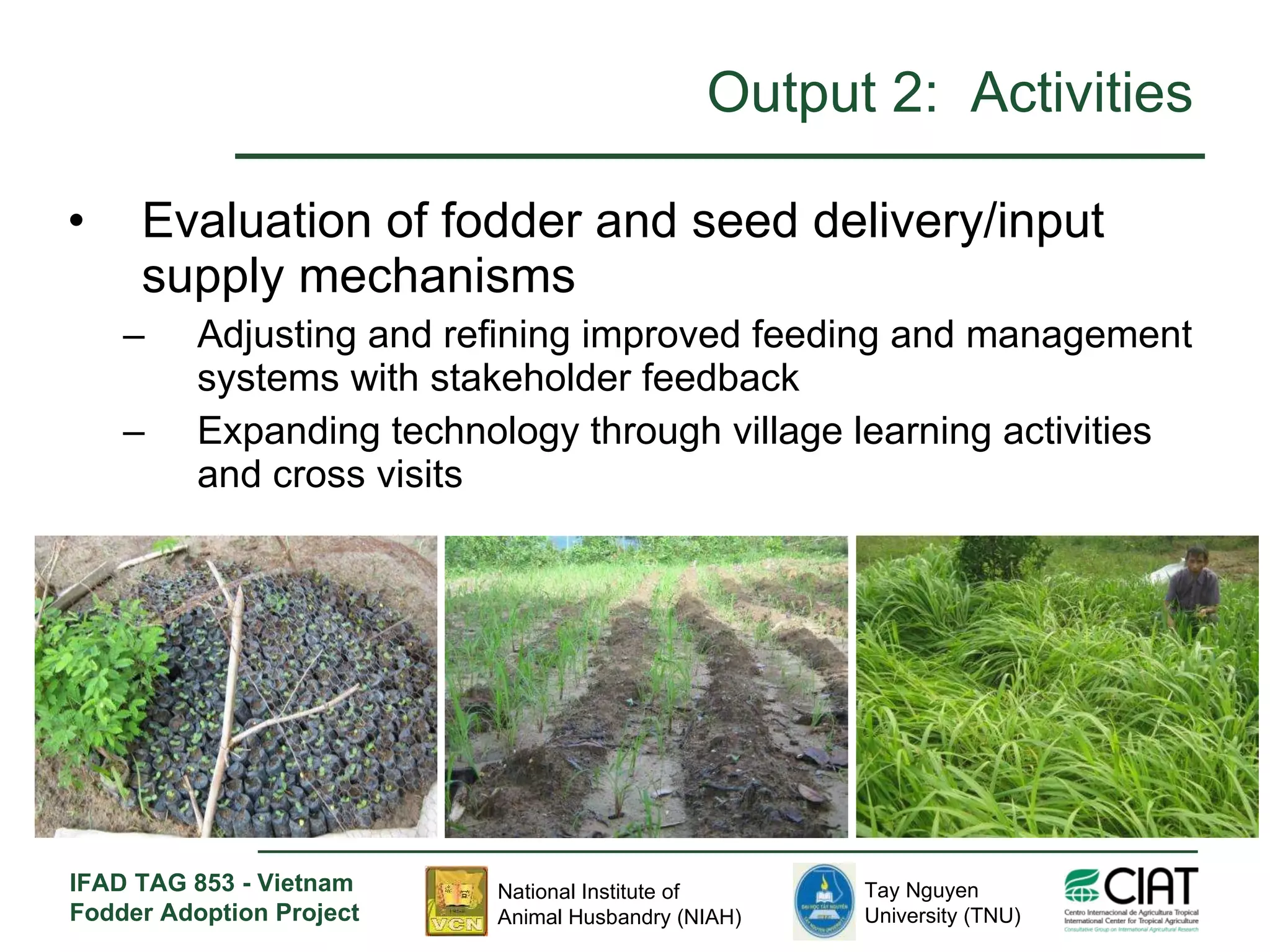
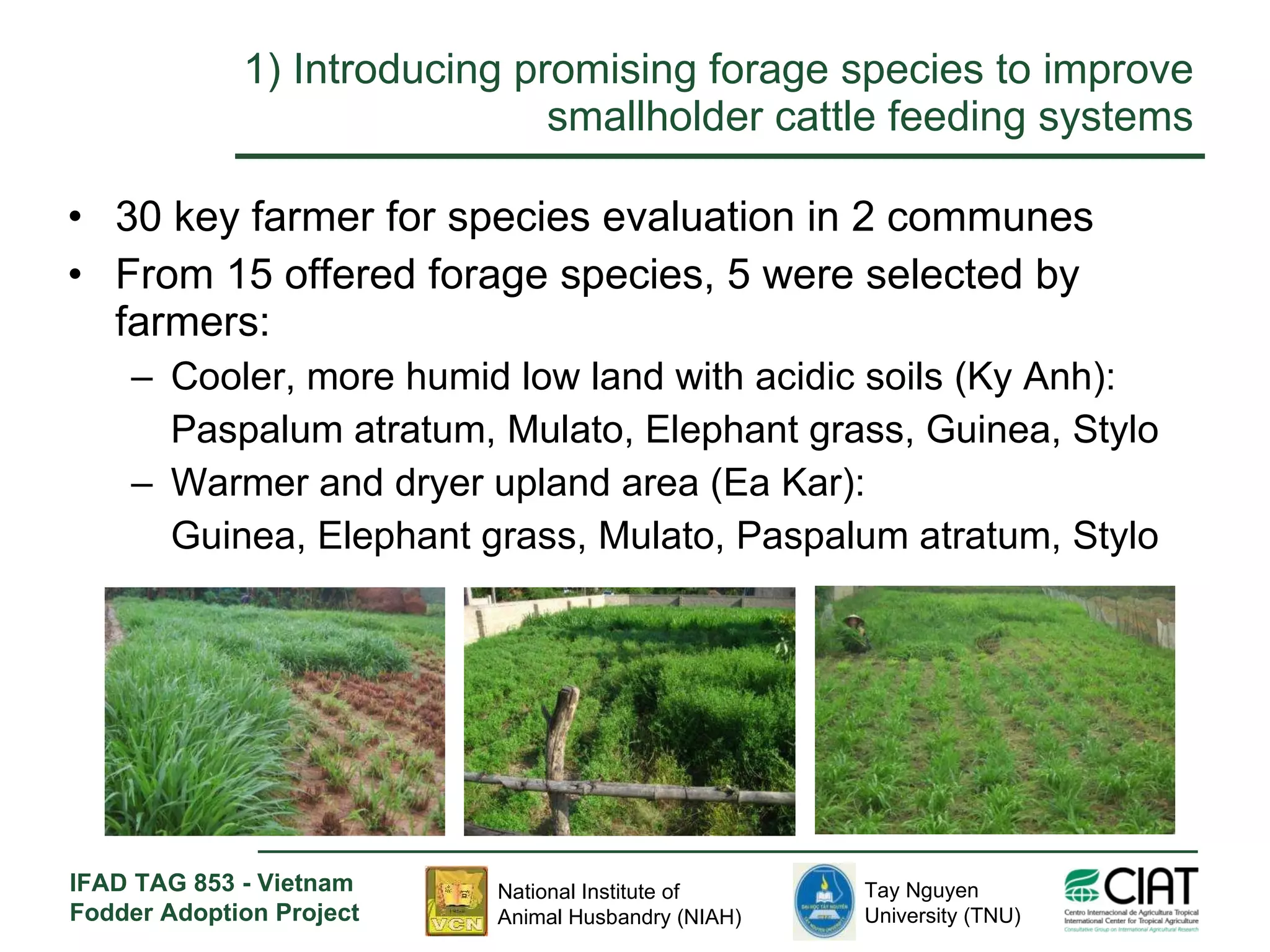
1) Introducing promising forage species to improve smallholder cattle feeding systems 30 key farmer for species evaluation in 2 communes From 15 offered forage species, 5 were selected by farmers: Cooler, more humid low land with acidic soils (Ky Anh):  Paspalum atratum, Mulato, Elephant grass, Guinea, Stylo Warmer and dryer upland area (Ea Kar):  Guinea, Elephant grass, Mulato, Paspalum atratum, Stylo
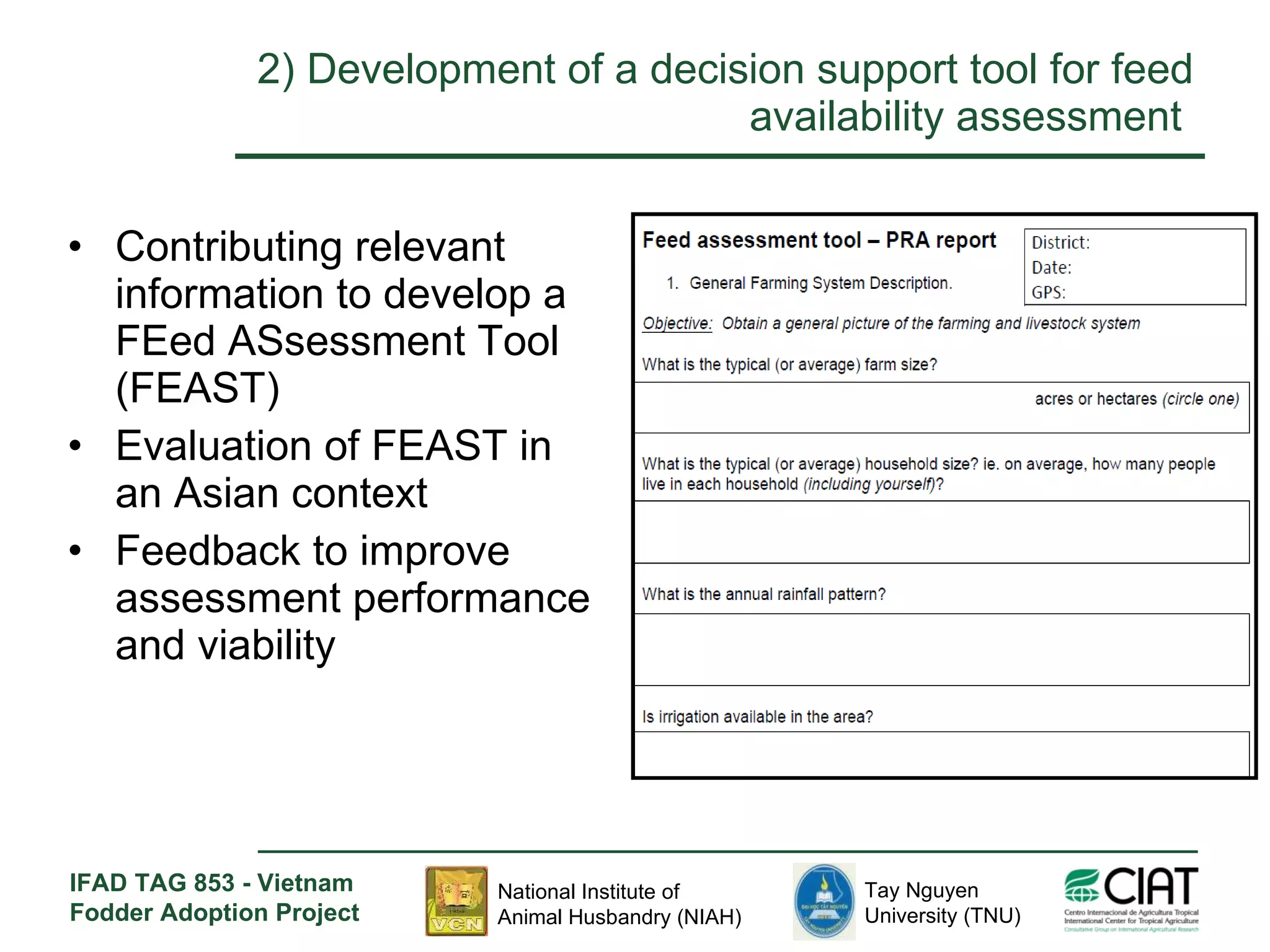
2)  Development of a decision support tool for feed availability assessment  Contributing relevant information to develop a FEed ASsessment Tool (FEAST) Evaluation of FEAST in an Asian context Feedback to improve assessment performance and viability
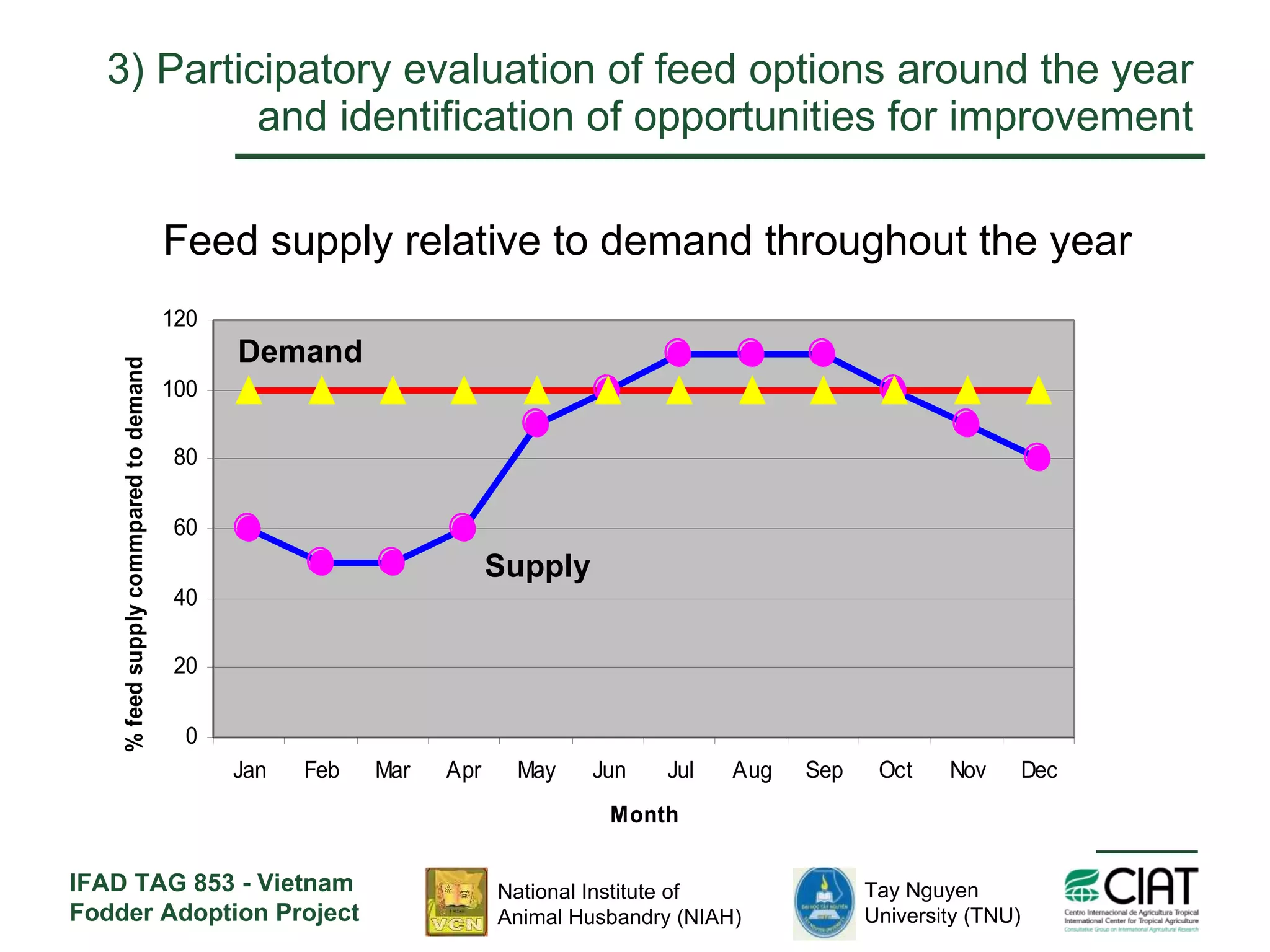
3)  Participatory e valuation of feed options around the year and identification of opportunities for improvement Feed supply relative to demand throughout the year Supply Demand
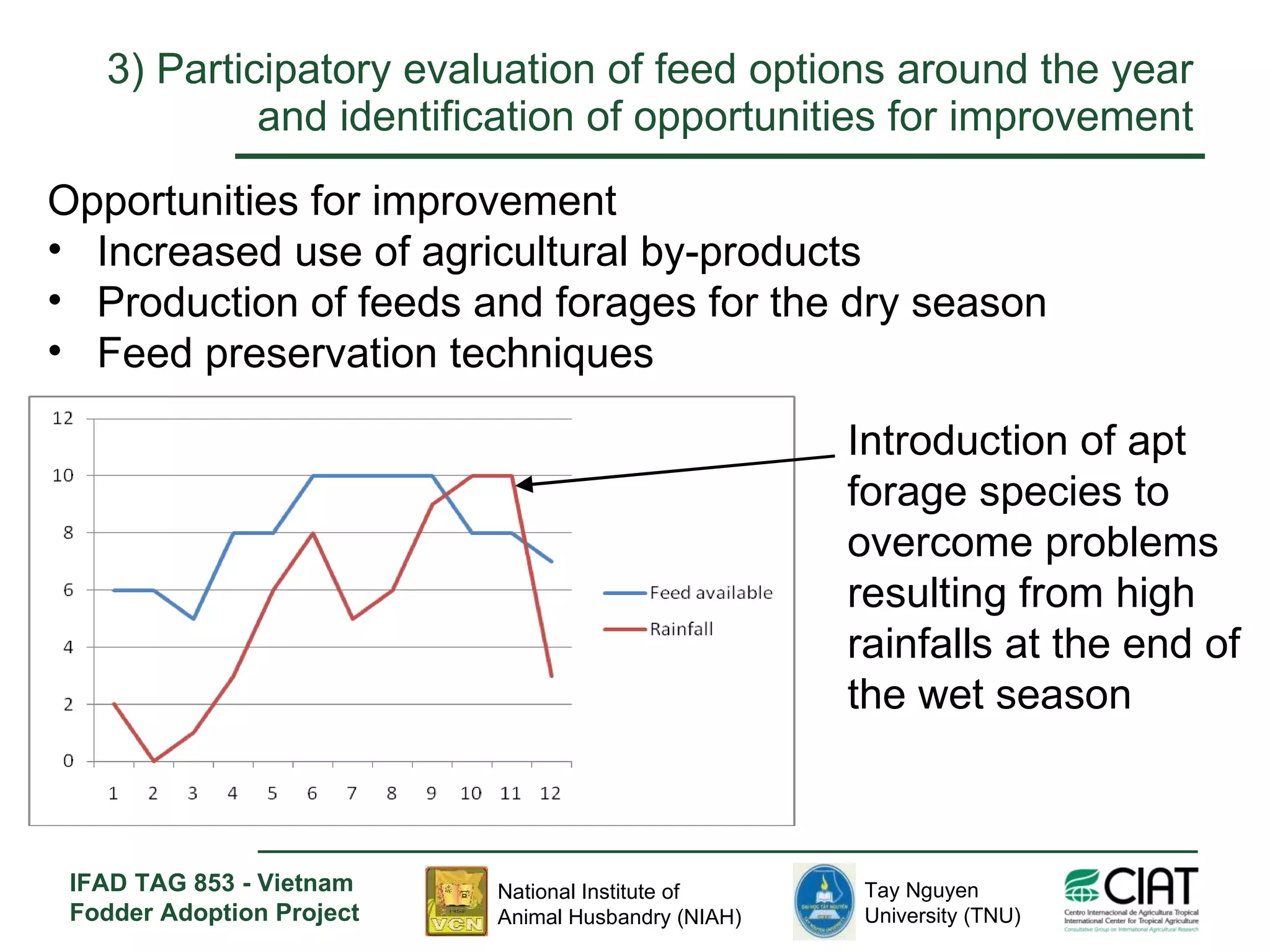
3)  Participatory e valuation of feed options around the year and identification of opportunities for improvement Opportunities for improvement Increased use of agricultural by-products Production of feeds and forages for the dry season Feed preservation techniques Introduction of apt forage species to overcome problems resulting from high rainfalls at the end of the wet season
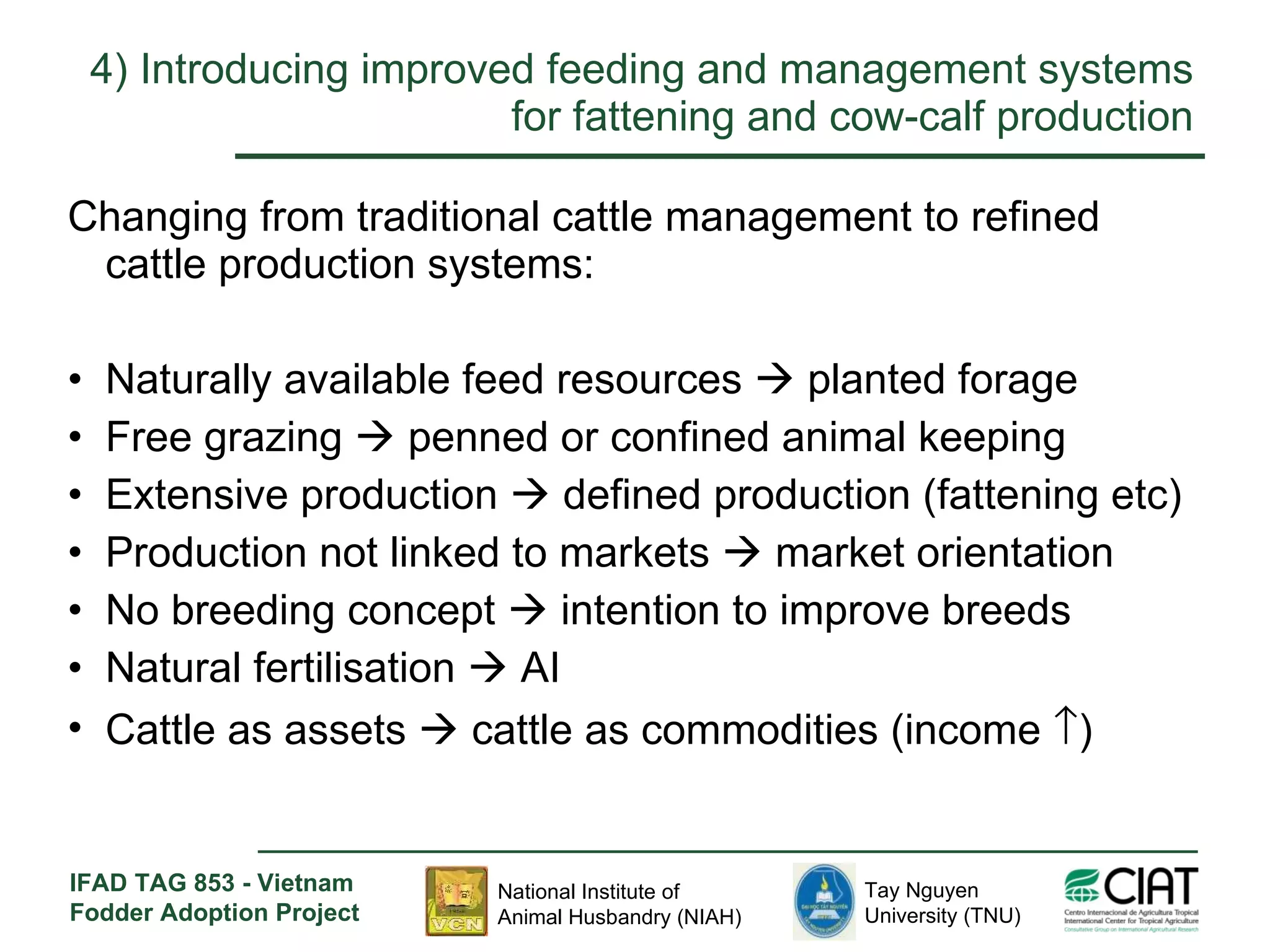
4)  Introducing improved feeding and management systems for fattening and cow-calf production Changing from traditional cattle management to refined cattle production systems: Naturally available feed resources    planted forage  Free grazing    penned or confined animal keeping Extensive production    defined production (fattening etc)  Production not linked to markets    market orientation No breeding concept    intention to improve breeds Natural fertilisation    AI Cattle as assets    cattle as commodities (income   )
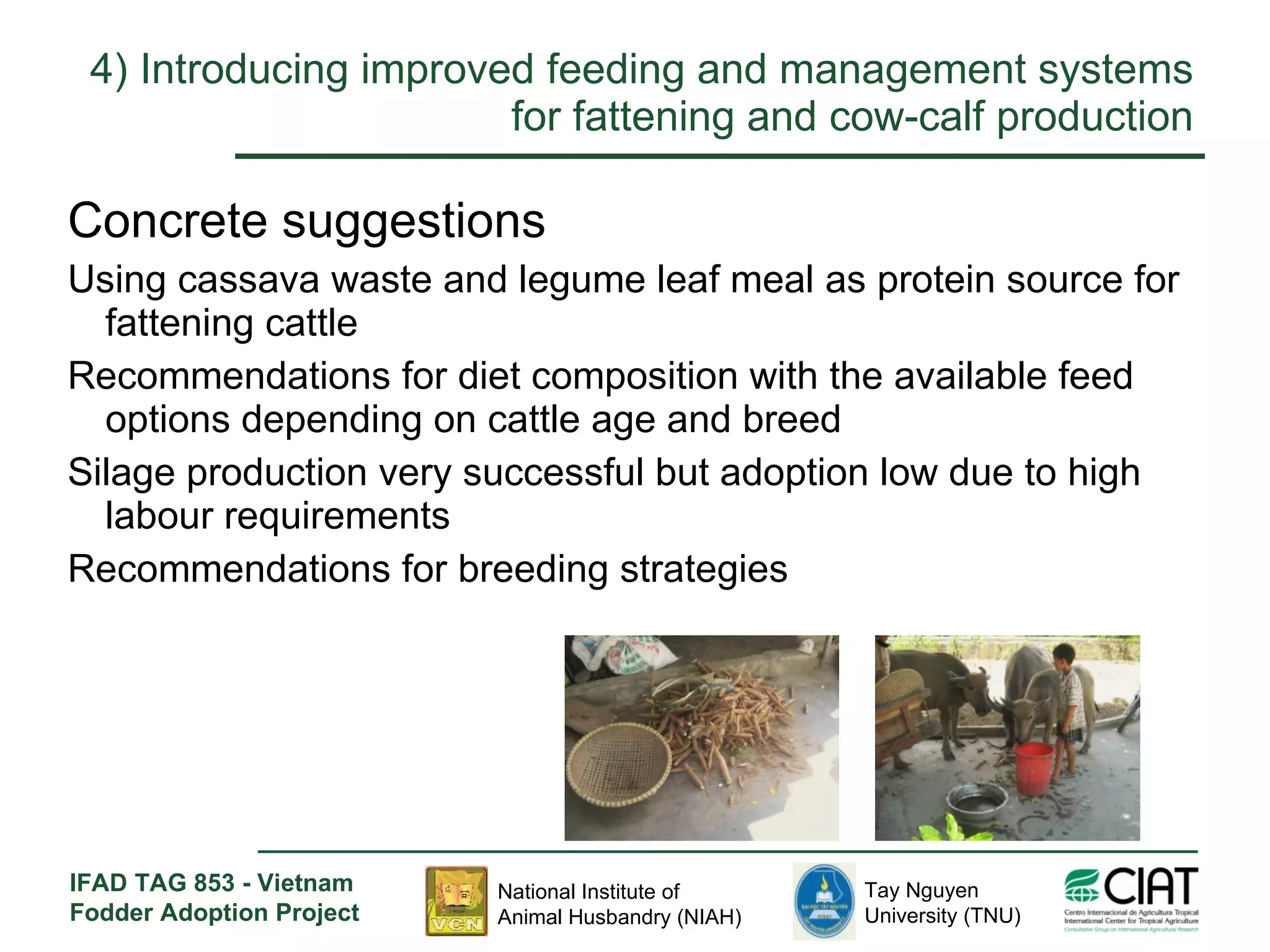
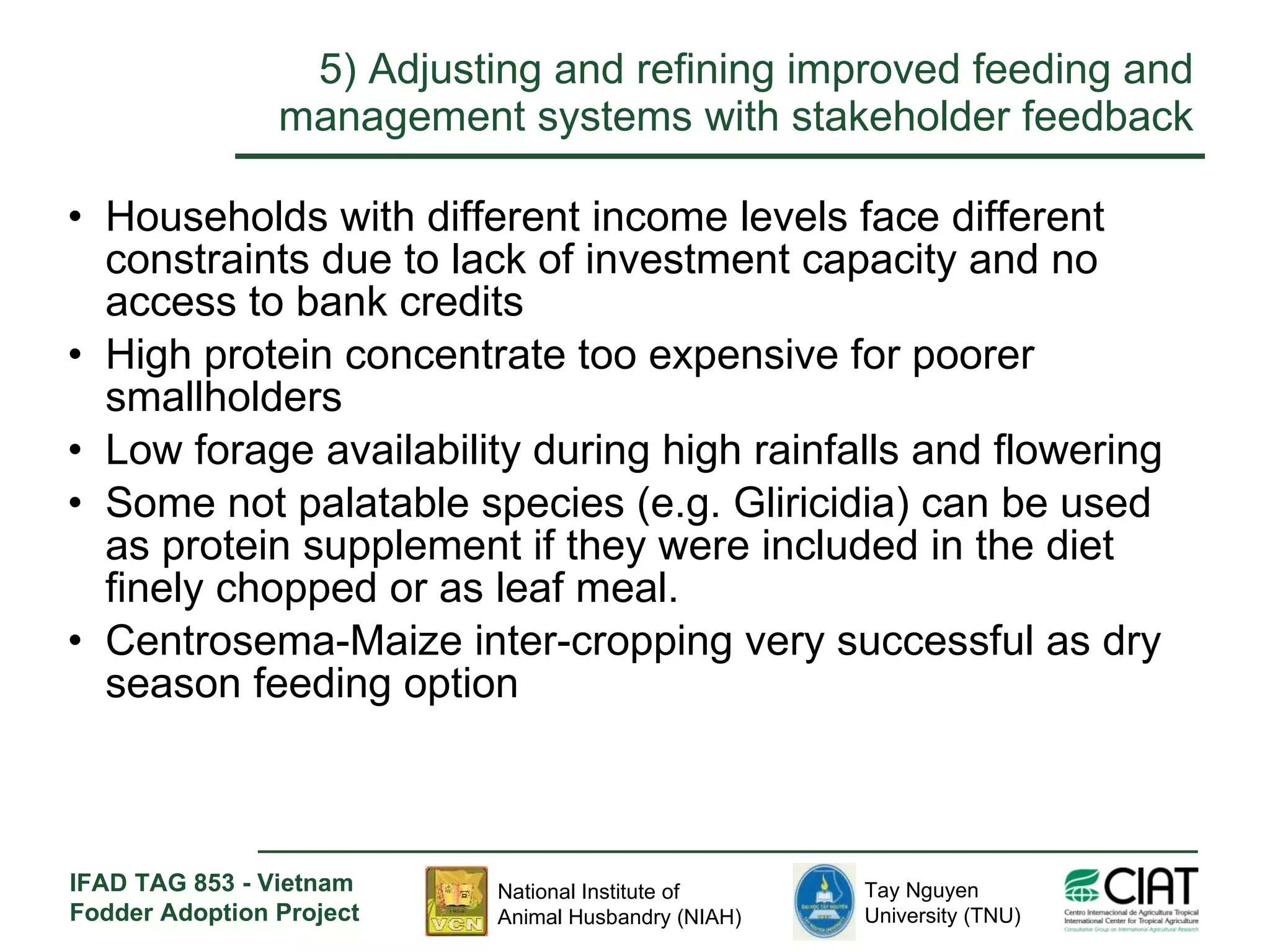
4)  Introducing improved feeding and management systems for fattening and cow-calf production Concrete suggestions Using cassava waste and legume leaf meal as protein source for fattening cattle Recommendations for diet composition with the available feed options depending on cattle age and breed Silage production very successful but adoption low due to high labour requirements Recommendations for breeding strategies
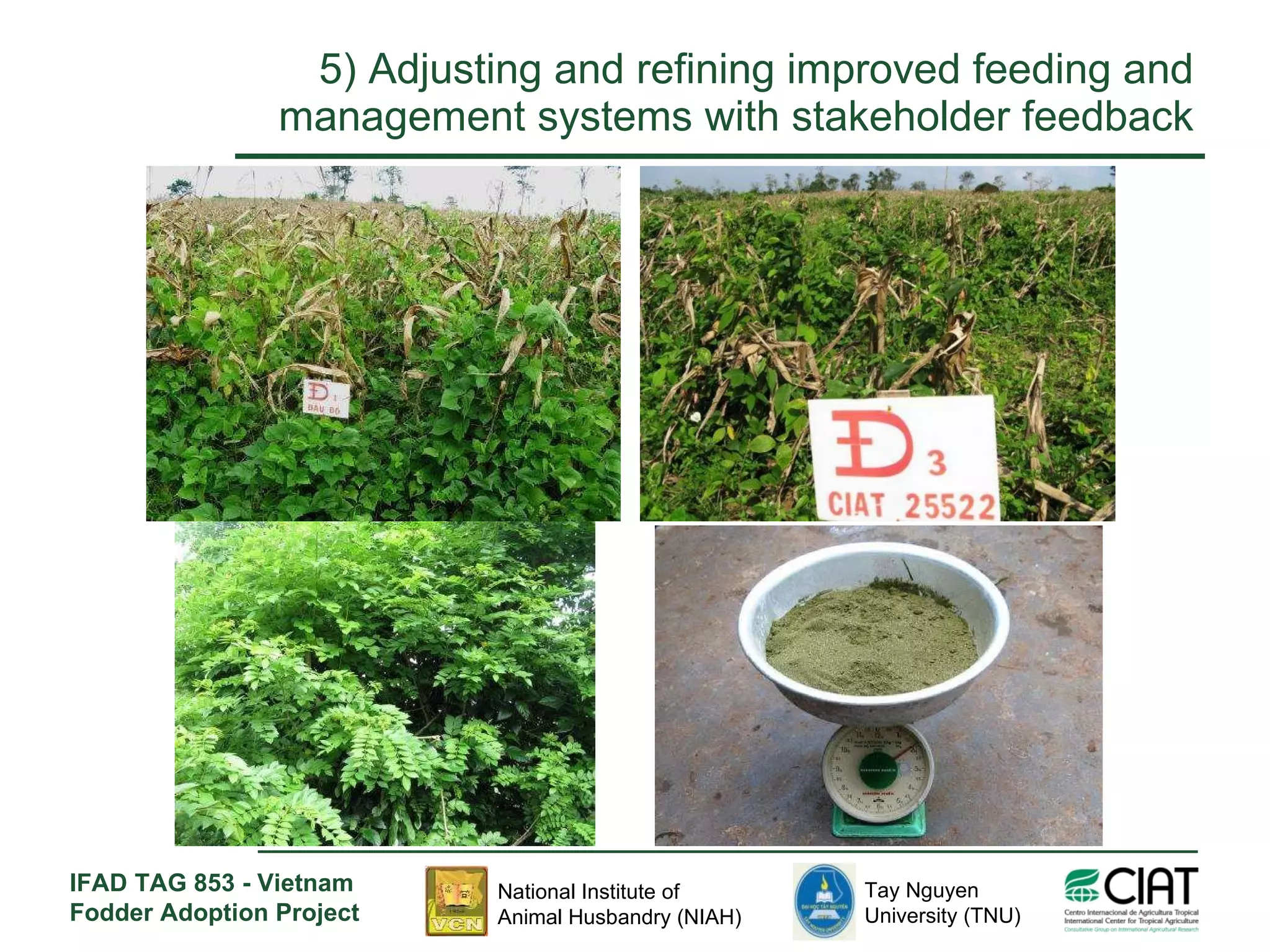
5)  Adjusting and refining improved feeding and management systems with stakeholder feedback Households with different income levels face different constraints due to lack of investment capacity and no access to bank credits  High protein concentrate too expensive for poorer smallholders Low forage availability during high rainfalls and flowering Some not palatable species (e.g. Gliricidia) can be used as protein supplement if they were included in the diet finely chopped or as leaf meal. Centrosema-Maize inter-cropping very successful as dry season feeding option
5)  Adjusting and refining improved feeding and management systems with stakeholder feedback
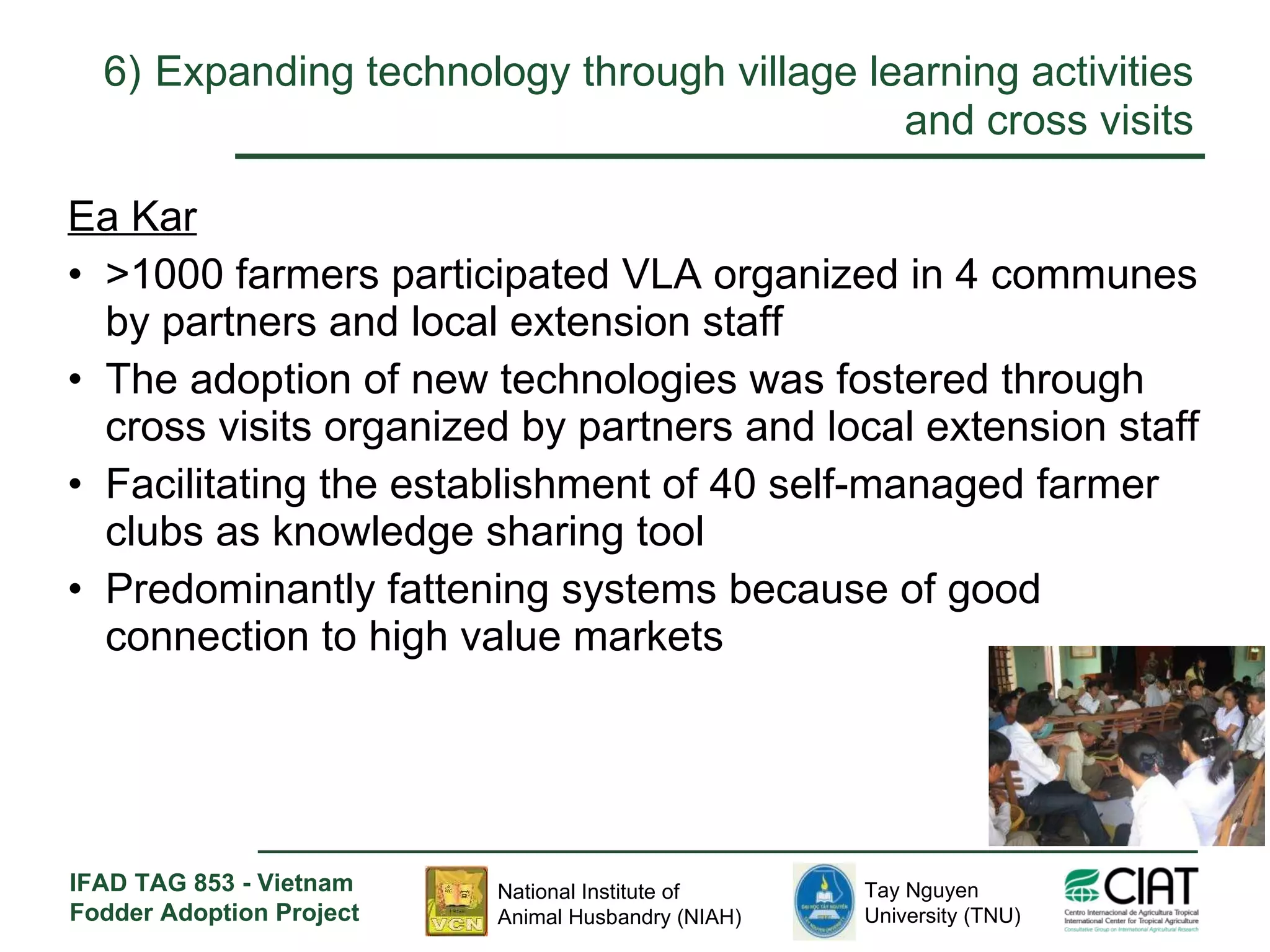
6)   Expanding technology through village learning activities and cross visits Ea Kar >1000 farmers participated VLA organized in 4 communes by partners and local extension staff The adoption of new technologies was fostered through cross visits organized by partners and local extension staff Facilitating the establishment of 40 self-managed farmer clubs as knowledge sharing tool Predominantly fattening systems because of good connection to high value markets
6)  Expanding technology through village learning activities and cross visits Ky Anh Cross visits to farmers which have successfully adopted the new technologies in Ea Kar Motivating farmers to visit project sites ANYTIME Crosslink with other projects (IMPP), NGO’s (VSF) and local programs to facilitate up-scaling of improved forage technologies Forage based multipurpose cattle production systems 200 farmers attended training courses on forage technologies and animal management

Enhancing livelihoods of poor livestock keepers through increasing use of fodder: Vietnam Report on Project Output 2 - Options for effective delivery systems including innovative communication strategies and on farm interventions to improve fodder supply

  • 1.
    Options for effectivedelivery systems including innovative communication strategies and on farm interventions to improve fodder supply Dr. Nguyen Ngoc Anh, Dr. Nguyen Thi Mui (NIAS) Ms. Vo Thi Thin, Mr. Hoang Dinh Hieu (Ky Anh, Ha Tinh) Dr. Truong Tan Khanh, Mr. Van Tien Dung (Tay Nguyen University) Mr. Nguyen Van Ha, Mr. Hoang Van Nhien ( Ea Kar, Daklak) Dr. Tassilo Tiemann (CIAT) Dr. Werner Stür (Consultant, former CIAT) Enhancing livelihoods of poor livestock keepers through increasing use of fodder (IFAD Technical Assistance Grant 853) Vietnam Report on Project Output 2 Presentation to the FAP End of Project Workshop Luang Prabang, Laos, 15-19 November 2010
  • 2.
    Output 2: Activities Innovative approach for evaluation of year-round feed inventory Introducing promising forage species to improve smallholder cattle feeding systems Development of a decision support tool for feed availability assessment (FEAST) Collection of baseline data Participatory e valuation of feed options around the year and identification of opportunities for improvement Introducing improved feeding and management systems for fattening and cow-calf production
  • 3.
    Output 2: Activities Evaluation of fodder and seed delivery/input supply mechanisms Adjusting and refining improved feeding and management systems with stakeholder feedback Expanding technology through village learning activities and cross visits
  • 4.
    1) Introducing promisingforage species to improve smallholder cattle feeding systems 30 key farmer for species evaluation in 2 communes From 15 offered forage species, 5 were selected by farmers: Cooler, more humid low land with acidic soils (Ky Anh): Paspalum atratum, Mulato, Elephant grass, Guinea, Stylo Warmer and dryer upland area (Ea Kar): Guinea, Elephant grass, Mulato, Paspalum atratum, Stylo
  • 5.
    2) Developmentof a decision support tool for feed availability assessment Contributing relevant information to develop a FEed ASsessment Tool (FEAST) Evaluation of FEAST in an Asian context Feedback to improve assessment performance and viability
  • 6.
    3) Participatorye valuation of feed options around the year and identification of opportunities for improvement Feed supply relative to demand throughout the year Supply Demand
  • 7.
    3) Participatorye valuation of feed options around the year and identification of opportunities for improvement Opportunities for improvement Increased use of agricultural by-products Production of feeds and forages for the dry season Feed preservation techniques Introduction of apt forage species to overcome problems resulting from high rainfalls at the end of the wet season
  • 8.
    4) Introducingimproved feeding and management systems for fattening and cow-calf production Changing from traditional cattle management to refined cattle production systems: Naturally available feed resources  planted forage Free grazing  penned or confined animal keeping Extensive production  defined production (fattening etc) Production not linked to markets  market orientation No breeding concept  intention to improve breeds Natural fertilisation  AI Cattle as assets  cattle as commodities (income  )
  • 9.
    4) Introducingimproved feeding and management systems for fattening and cow-calf production Concrete suggestions Using cassava waste and legume leaf meal as protein source for fattening cattle Recommendations for diet composition with the available feed options depending on cattle age and breed Silage production very successful but adoption low due to high labour requirements Recommendations for breeding strategies
  • 10.
    5) Adjustingand refining improved feeding and management systems with stakeholder feedback Households with different income levels face different constraints due to lack of investment capacity and no access to bank credits High protein concentrate too expensive for poorer smallholders Low forage availability during high rainfalls and flowering Some not palatable species (e.g. Gliricidia) can be used as protein supplement if they were included in the diet finely chopped or as leaf meal. Centrosema-Maize inter-cropping very successful as dry season feeding option
  • 11.
    5) Adjustingand refining improved feeding and management systems with stakeholder feedback
  • 12.
    6) Expanding technology through village learning activities and cross visits Ea Kar >1000 farmers participated VLA organized in 4 communes by partners and local extension staff The adoption of new technologies was fostered through cross visits organized by partners and local extension staff Facilitating the establishment of 40 self-managed farmer clubs as knowledge sharing tool Predominantly fattening systems because of good connection to high value markets
  • 13.
    6) Expandingtechnology through village learning activities and cross visits Ky Anh Cross visits to farmers which have successfully adopted the new technologies in Ea Kar Motivating farmers to visit project sites ANYTIME Crosslink with other projects (IMPP), NGO’s (VSF) and local programs to facilitate up-scaling of improved forage technologies Forage based multipurpose cattle production systems 200 farmers attended training courses on forage technologies and animal management