Big data from small farms 
Mark van Wijk, Romain Frelat, Randall Ritzema and Sabine 
Douxchamps 
ILRI@40 Livestock and Environment workshop 
Addis Ababa, 7 November 2014
Farming systems analysis and HH modeling for: 
- Finding structure in variability in farming 
systems 
- Understanding of systems functioning 
- Targeting of interventions
However… 
Typically we got stuck in in-depth site specific 
studies 
We did not deliver on the targeting promised: 
What works where for which farmer?
Here… 
1. Ongoing work on bringing together HH 
level characterization data 
2. Present a simple analysis of farm 
household level food security that can be 
used across many datasets
A key decision: 
Go simple!!
From food self-sufficiency towards 
food security
Keep the analysis simple enough to 
be able to apply it across HH 
characterization data collected in 
different surveys!
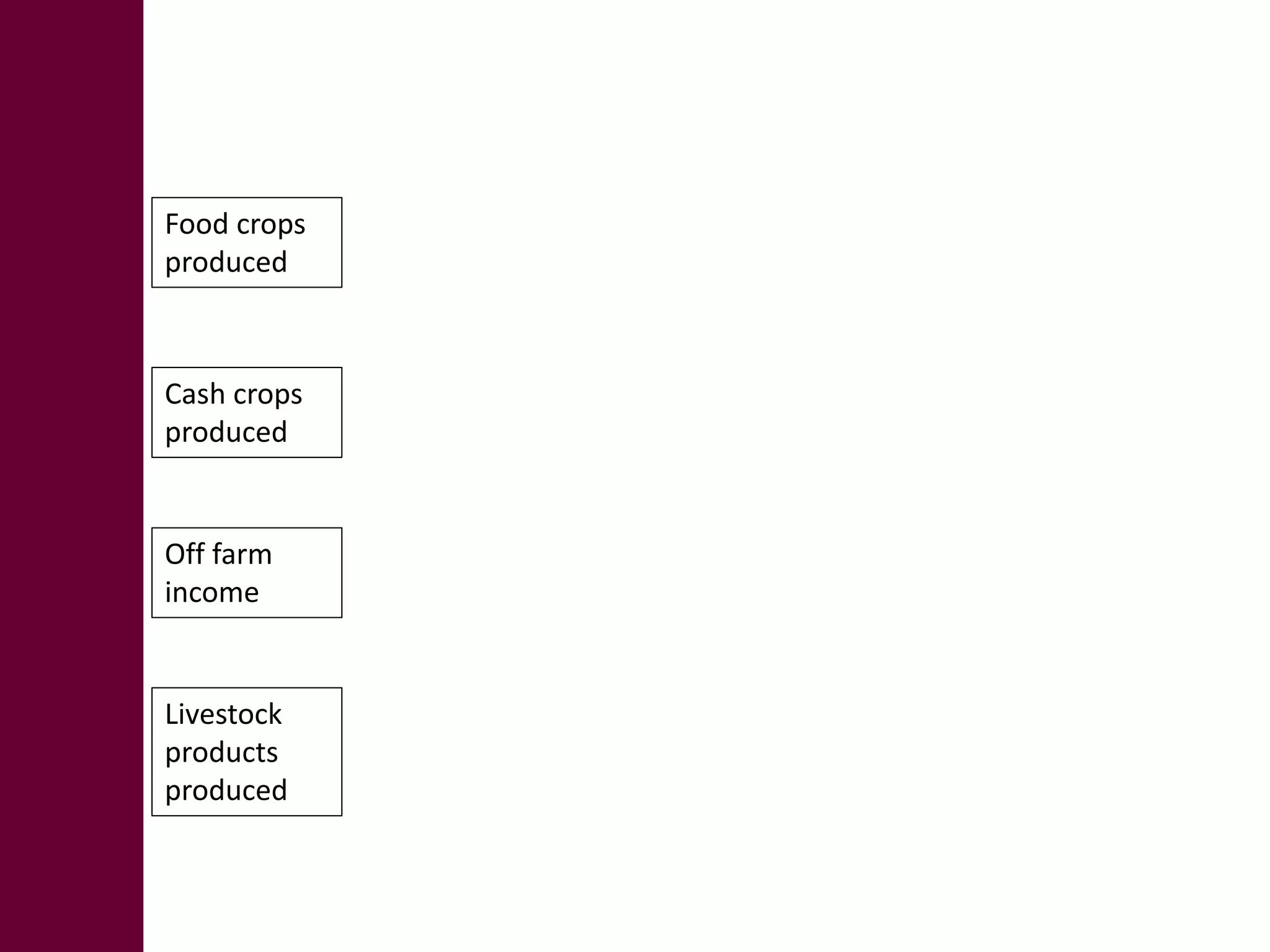
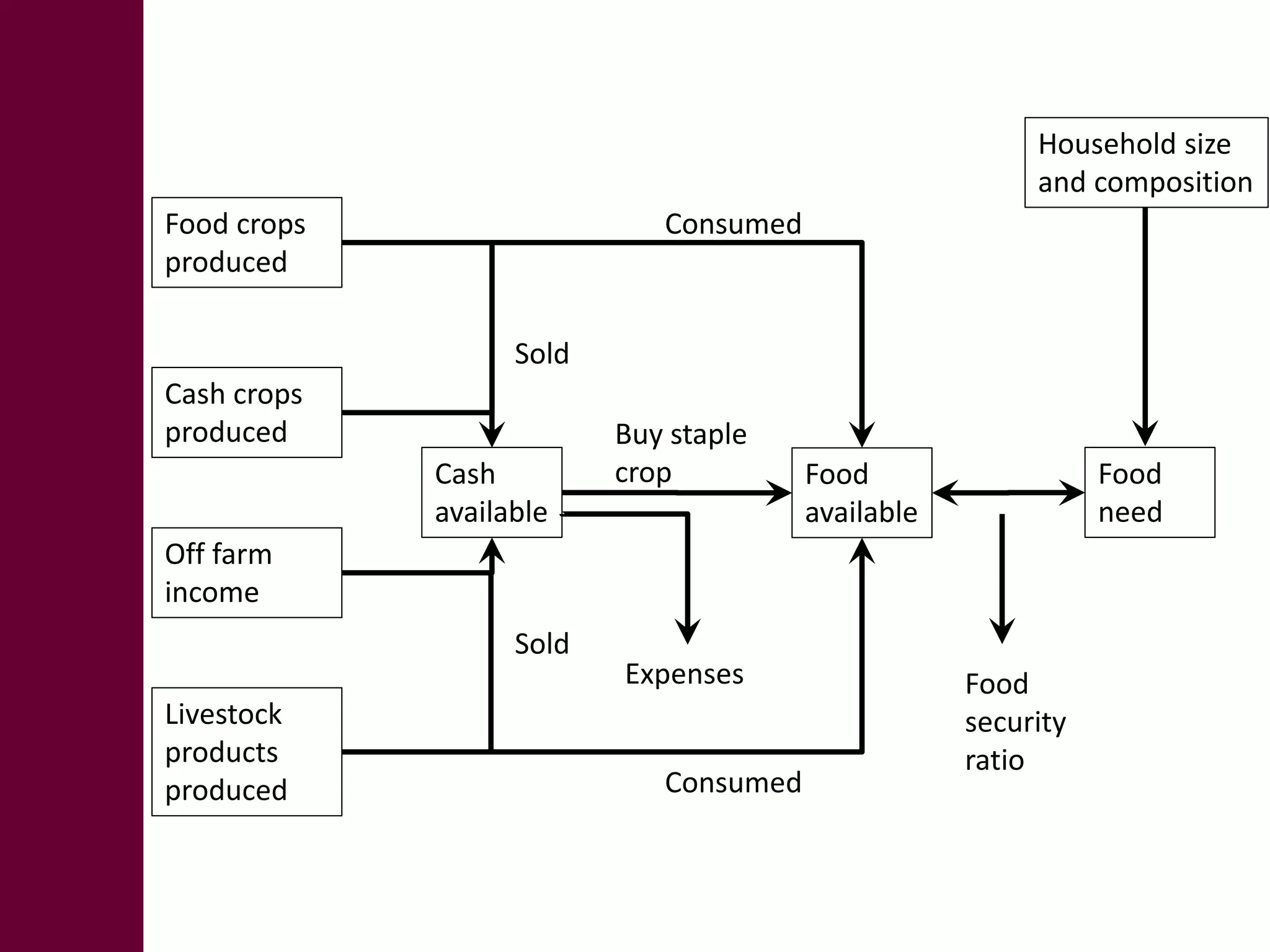
Food crops 
produced 
Cash crops 
produced 
Off farm 
income 
Livestock 
products 
produced
Food crops 
produced 
Cash crops 
produced 
Off farm 
income 
Livestock 
products 
produced 
Food 
available 
Consumed 
Consumed
Food crops 
produced 
Cash crops 
produced 
Off farm 
income 
Livestock 
products 
produced 
Cash 
available 
Food 
available 
Consumed 
Consumed 
Sold 
Sold
Food crops 
produced 
Cash crops 
produced 
Off farm 
income 
Livestock 
products 
produced 
Cash 
available 
Food 
available 
Consumed 
Buy staple 
crop 
Expenses 
Consumed 
Sold 
Sold
Food crops 
produced 
Cash crops 
produced 
Off farm 
income 
Livestock 
products 
produced 
Cash 
available 
Food 
available 
Food 
need 
Buy staple 
crop 
Expenses 
Household size 
and composition 
Consumed 
Consumed 
Sold 
Sold
Food crops 
produced 
Cash crops 
produced 
Off farm 
income 
Livestock 
products 
produced 
Cash 
available 
Food 
available 
Food 
need 
Buy staple 
crop 
Expenses 
Household size 
and composition 
Consumed 
Consumed 
Sold 
Sold 
Food 
security 
ratio
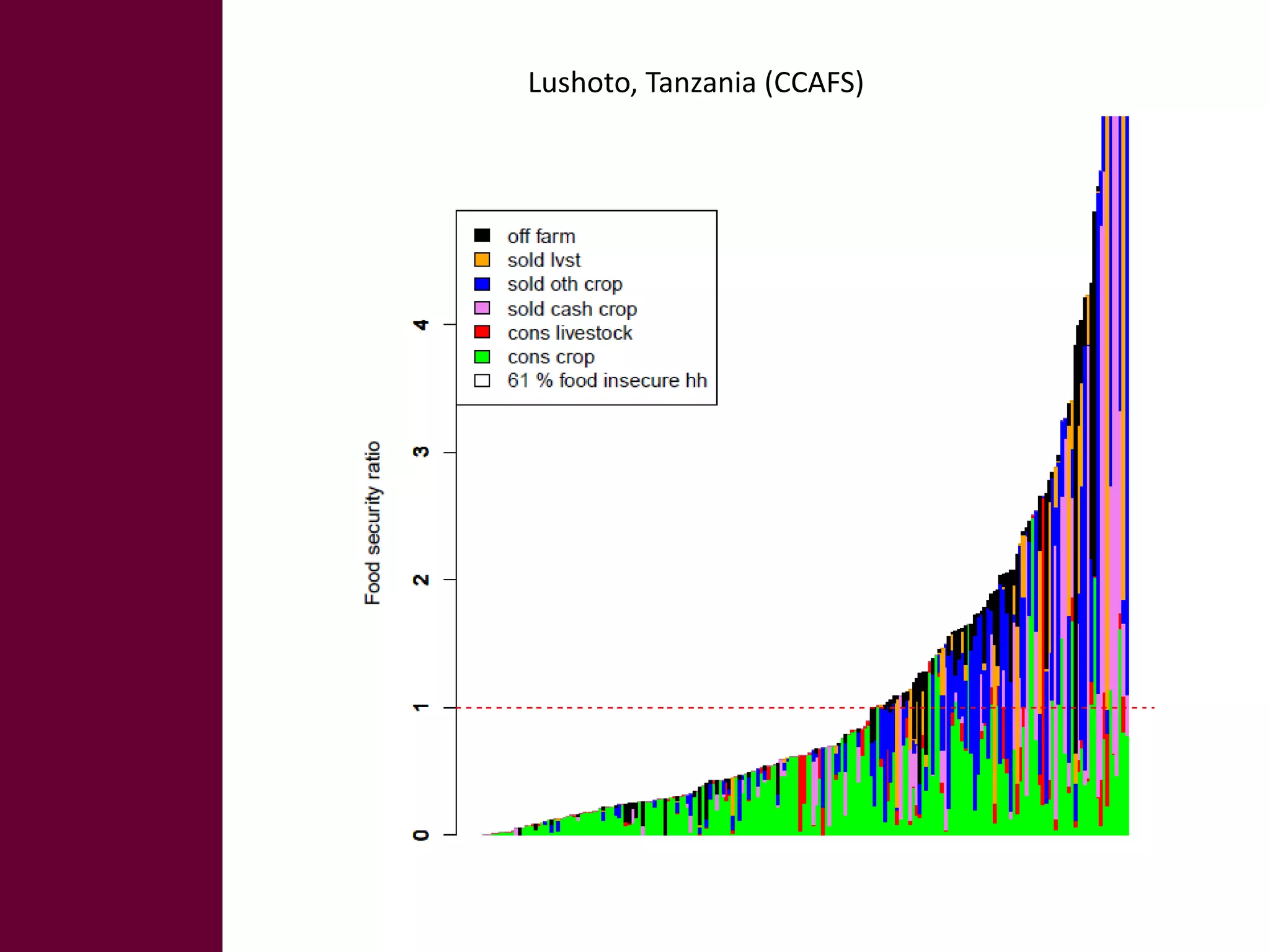
Lushoto, Tanzania (CCAFS)
Rapid intervention analyses
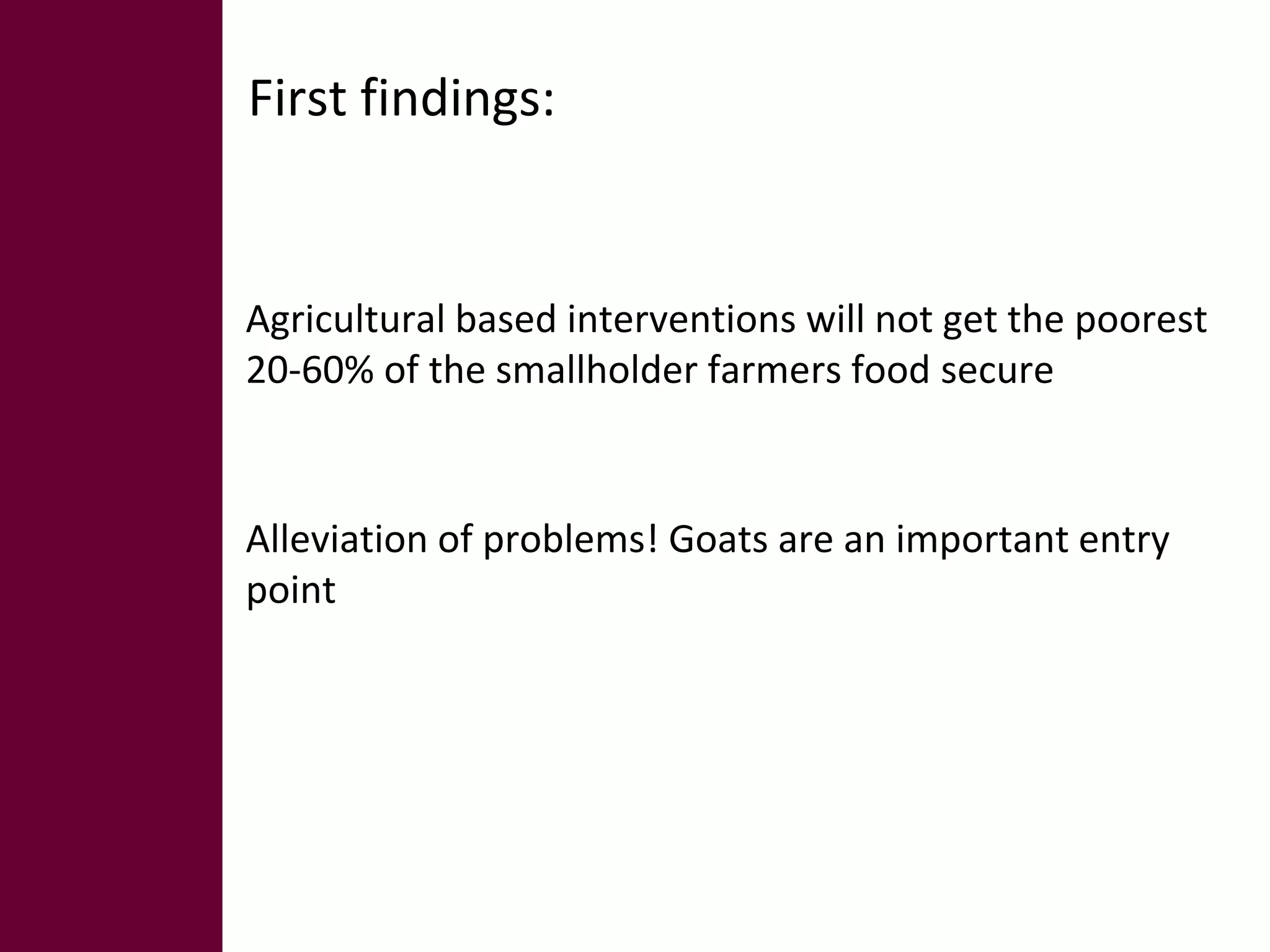
First findings: 
Agricultural based interventions will not get the poorest 
20-60% of the smallholder farmers food secure 
Alleviation of problems! Goats are an important entry 
point
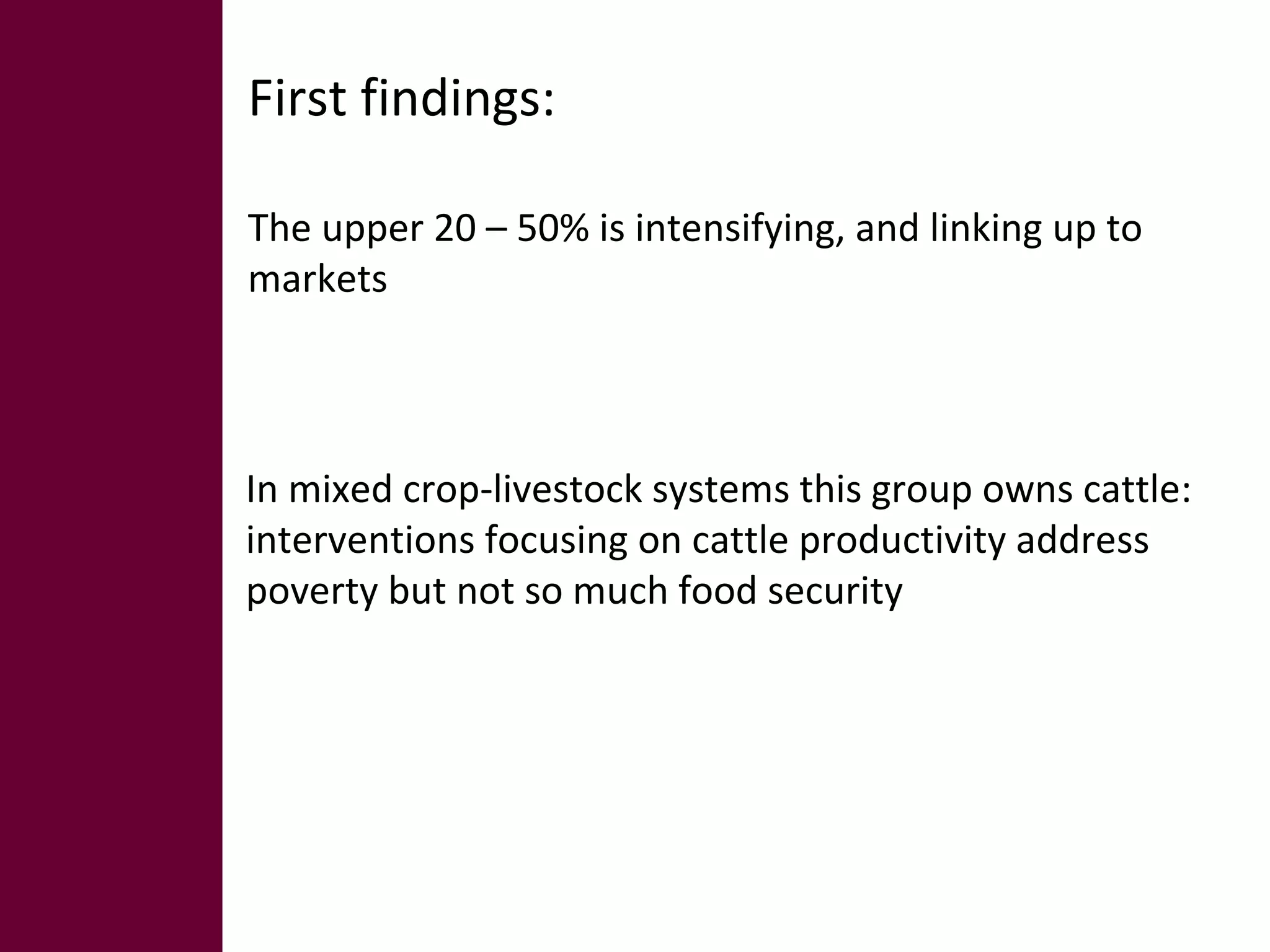
First findings: 
The upper 20 – 50% is intensifying, and linking up to 
markets 
In mixed crop-livestock systems this group owns cattle: 
interventions focusing on cattle productivity address 
poverty but not so much food security
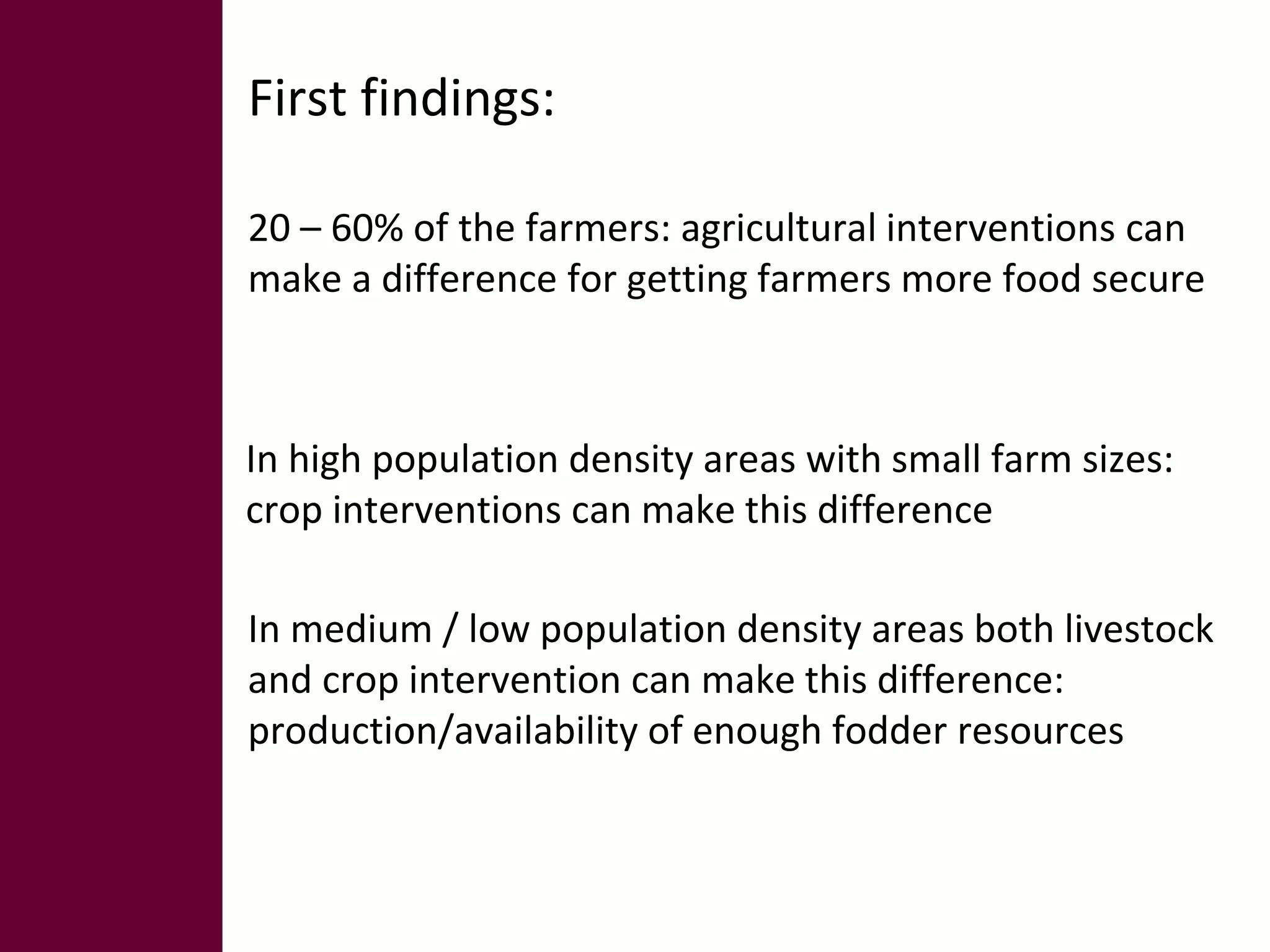
First findings: 
20 – 60% of the farmers: agricultural interventions can 
make a difference for getting farmers more food secure 
In high population density areas with small farm sizes: 
crop interventions can make this difference 
In medium / low population density areas both livestock 
and crop intervention can make this difference: 
production/availability of enough fodder resources
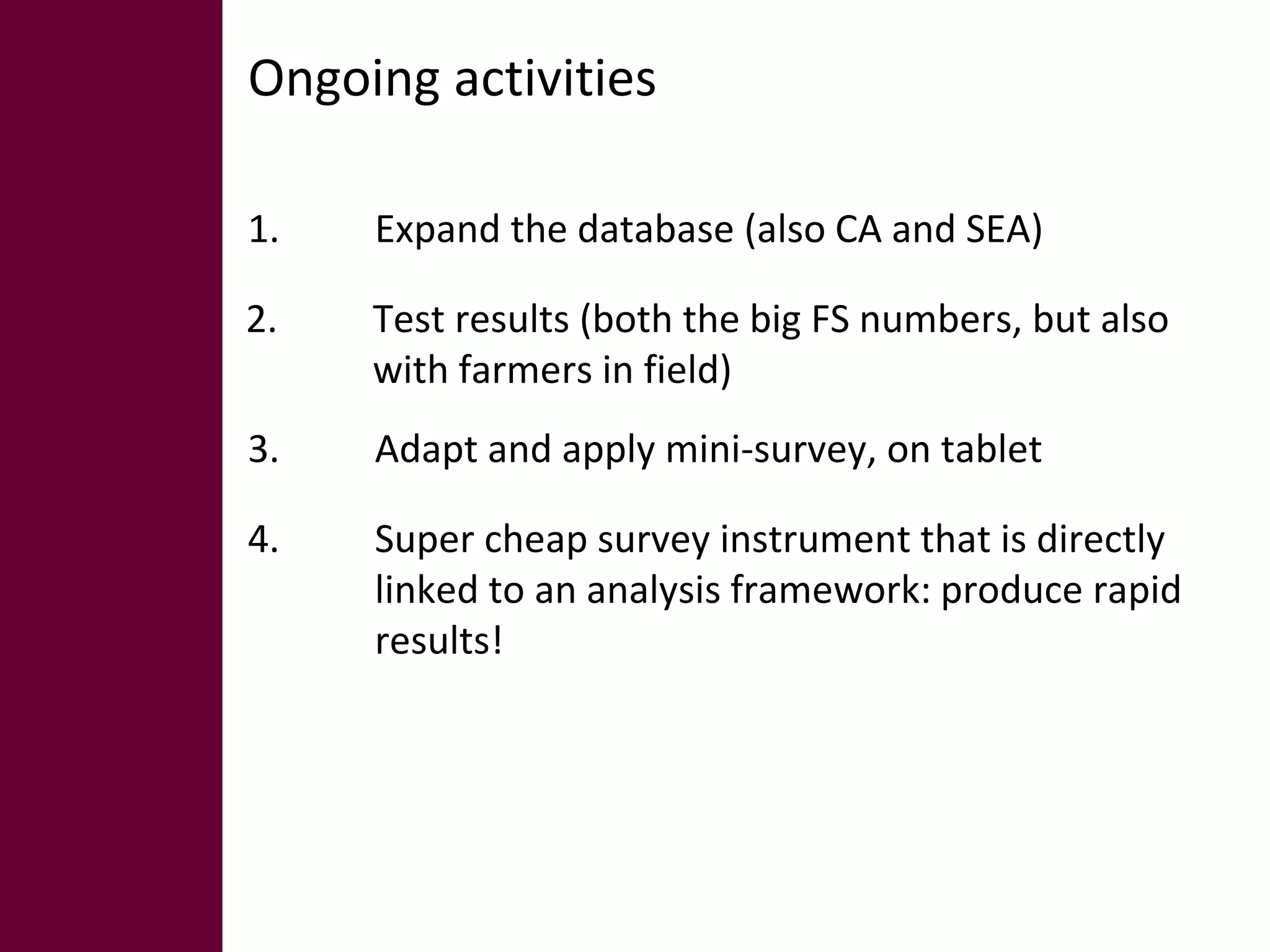
Ongoing activities 
1. Expand the database (also CA and SEA) 
2. Test results (both the big FS numbers, but also 
with farmers in field) 
3. Adapt and apply mini-survey, on tablet 
4. Super cheap survey instrument that is directly 
linked to an analysis framework: produce rapid 
results!
Ongoing activities 
5. Implement gender component 
6. With the mini-survey we fill gaps in the 
database, but also set up some permanent 
monitoring sites 
7. For more in-depth analyses: use existing tools, 
but also develop an ‘intermediate complexity 
HH model’
Targeting 
Can we identify robust interventions that cut across 
systems and socio-economic scenarios? 
(what works where for which group of farmers) 
Can we upscale the strategies to quantify investment 
needs in interventions?
Generate bottom up based information 
to improve large scale impact assessment 
exercises
Look at changing livelihoods: from that 
perspective add to the land expansion / 
intensification – land sharing / sparing 
debates
Thanks!!

Big data from small farms

  • 1.
    Big data fromsmall farms Mark van Wijk, Romain Frelat, Randall Ritzema and Sabine Douxchamps ILRI@40 Livestock and Environment workshop Addis Ababa, 7 November 2014
  • 2.
    Farming systems analysisand HH modeling for: - Finding structure in variability in farming systems - Understanding of systems functioning - Targeting of interventions
  • 3.
    However… Typically wegot stuck in in-depth site specific studies We did not deliver on the targeting promised: What works where for which farmer?
  • 4.
    Here… 1. Ongoingwork on bringing together HH level characterization data 2. Present a simple analysis of farm household level food security that can be used across many datasets
  • 5.
    A key decision: Go simple!!
  • 6.
    From food self-sufficiencytowards food security
  • 7.
    Keep the analysissimple enough to be able to apply it across HH characterization data collected in different surveys!
  • 8.
    Food crops produced Cash crops produced Off farm income Livestock products produced
  • 9.
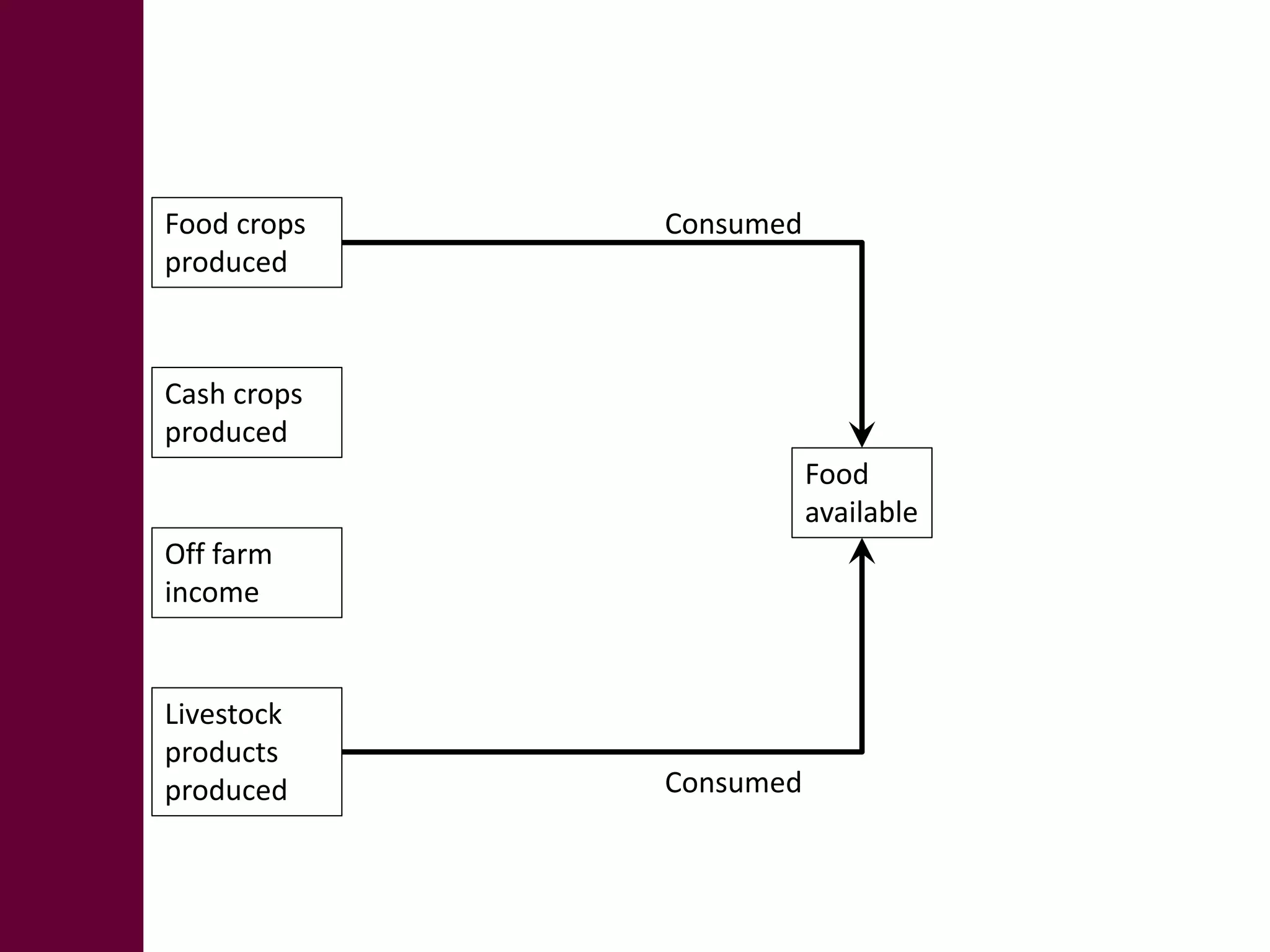
    Food crops produced Cash crops produced Off farm income Livestock products produced Food available Consumed Consumed
  • 10.
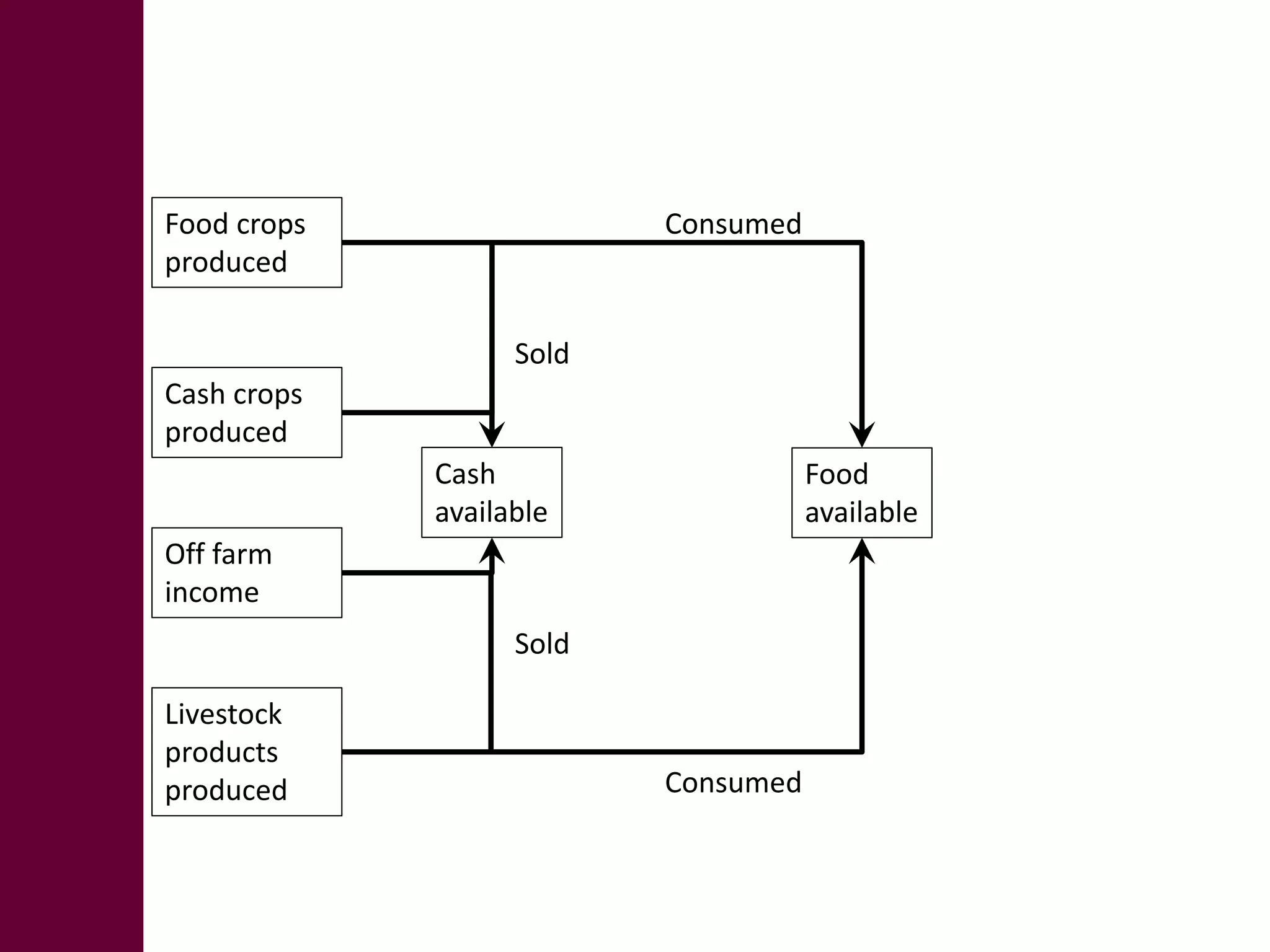
    Food crops produced Cash crops produced Off farm income Livestock products produced Cash available Food available Consumed Consumed Sold Sold
  • 11.
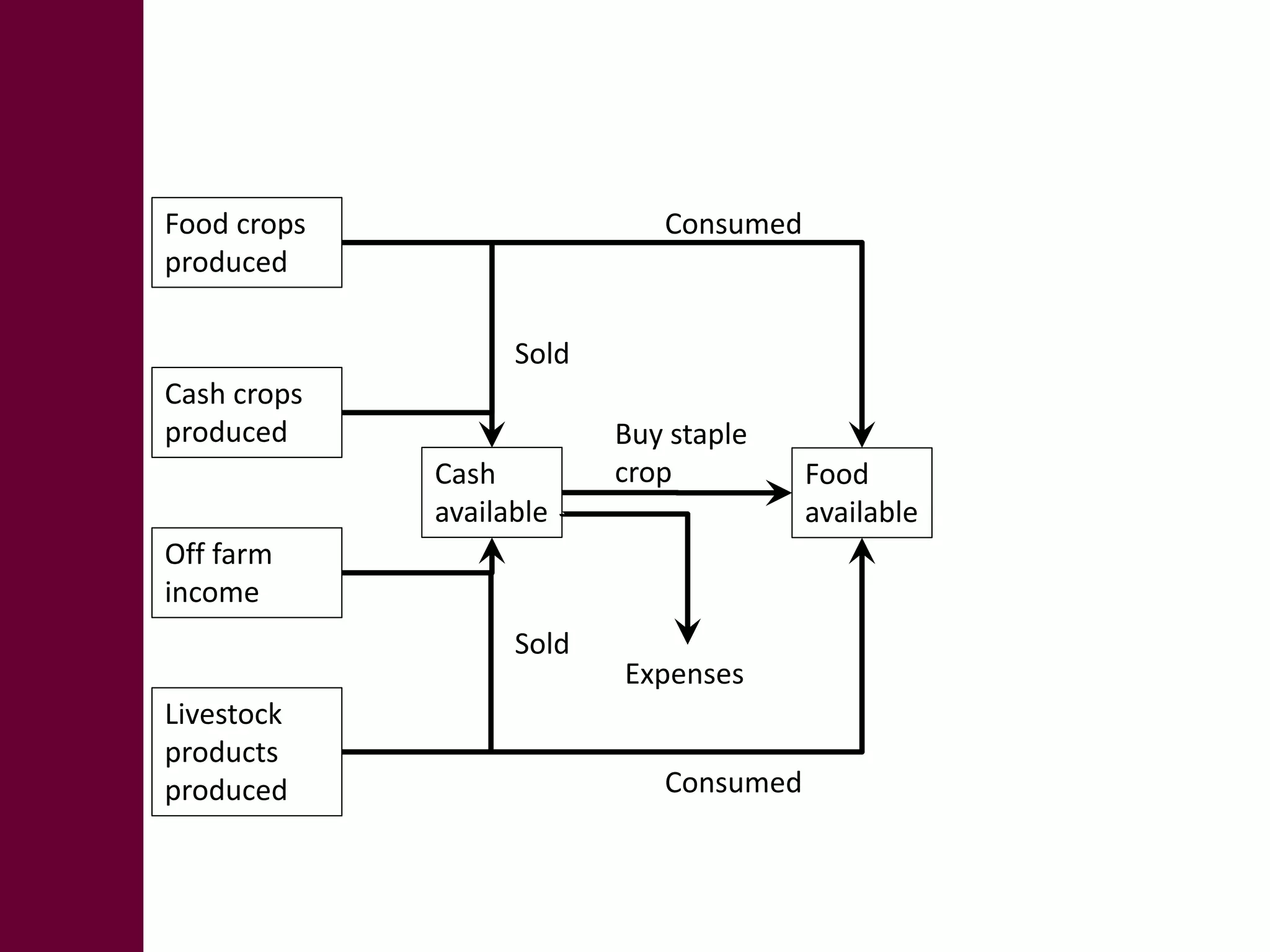
    Food crops produced Cash crops produced Off farm income Livestock products produced Cash available Food available Consumed Buy staple crop Expenses Consumed Sold Sold
  • 12.
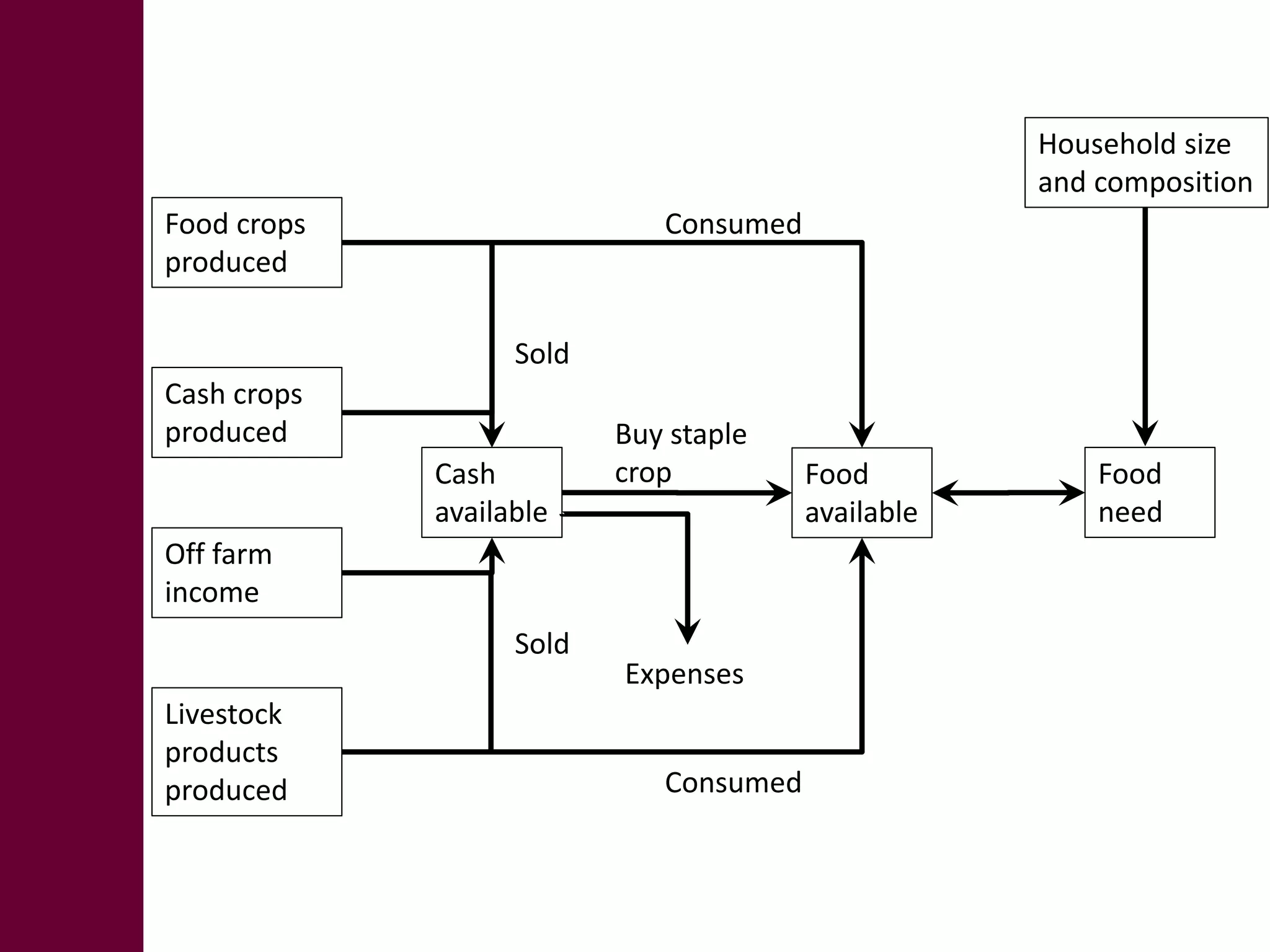
    Food crops produced Cash crops produced Off farm income Livestock products produced Cash available Food available Food need Buy staple crop Expenses Household size and composition Consumed Consumed Sold Sold
  • 13.
    Food crops produced Cash crops produced Off farm income Livestock products produced Cash available Food available Food need Buy staple crop Expenses Household size and composition Consumed Consumed Sold Sold Food security ratio
  • 14.
  • 16.
  • 17.
    First findings: Agriculturalbased interventions will not get the poorest 20-60% of the smallholder farmers food secure Alleviation of problems! Goats are an important entry point
  • 18.
    First findings: Theupper 20 – 50% is intensifying, and linking up to markets In mixed crop-livestock systems this group owns cattle: interventions focusing on cattle productivity address poverty but not so much food security
  • 19.
    First findings: 20– 60% of the farmers: agricultural interventions can make a difference for getting farmers more food secure In high population density areas with small farm sizes: crop interventions can make this difference In medium / low population density areas both livestock and crop intervention can make this difference: production/availability of enough fodder resources
  • 20.
    Ongoing activities 1.Expand the database (also CA and SEA) 2. Test results (both the big FS numbers, but also with farmers in field) 3. Adapt and apply mini-survey, on tablet 4. Super cheap survey instrument that is directly linked to an analysis framework: produce rapid results!
  • 21.
    Ongoing activities 5.Implement gender component 6. With the mini-survey we fill gaps in the database, but also set up some permanent monitoring sites 7. For more in-depth analyses: use existing tools, but also develop an ‘intermediate complexity HH model’
  • 22.
    Targeting Can weidentify robust interventions that cut across systems and socio-economic scenarios? (what works where for which group of farmers) Can we upscale the strategies to quantify investment needs in interventions?
  • 23.
    Generate bottom upbased information to improve large scale impact assessment exercises
  • 24.
    Look at changinglivelihoods: from that perspective add to the land expansion / intensification – land sharing / sparing debates
  • 25.