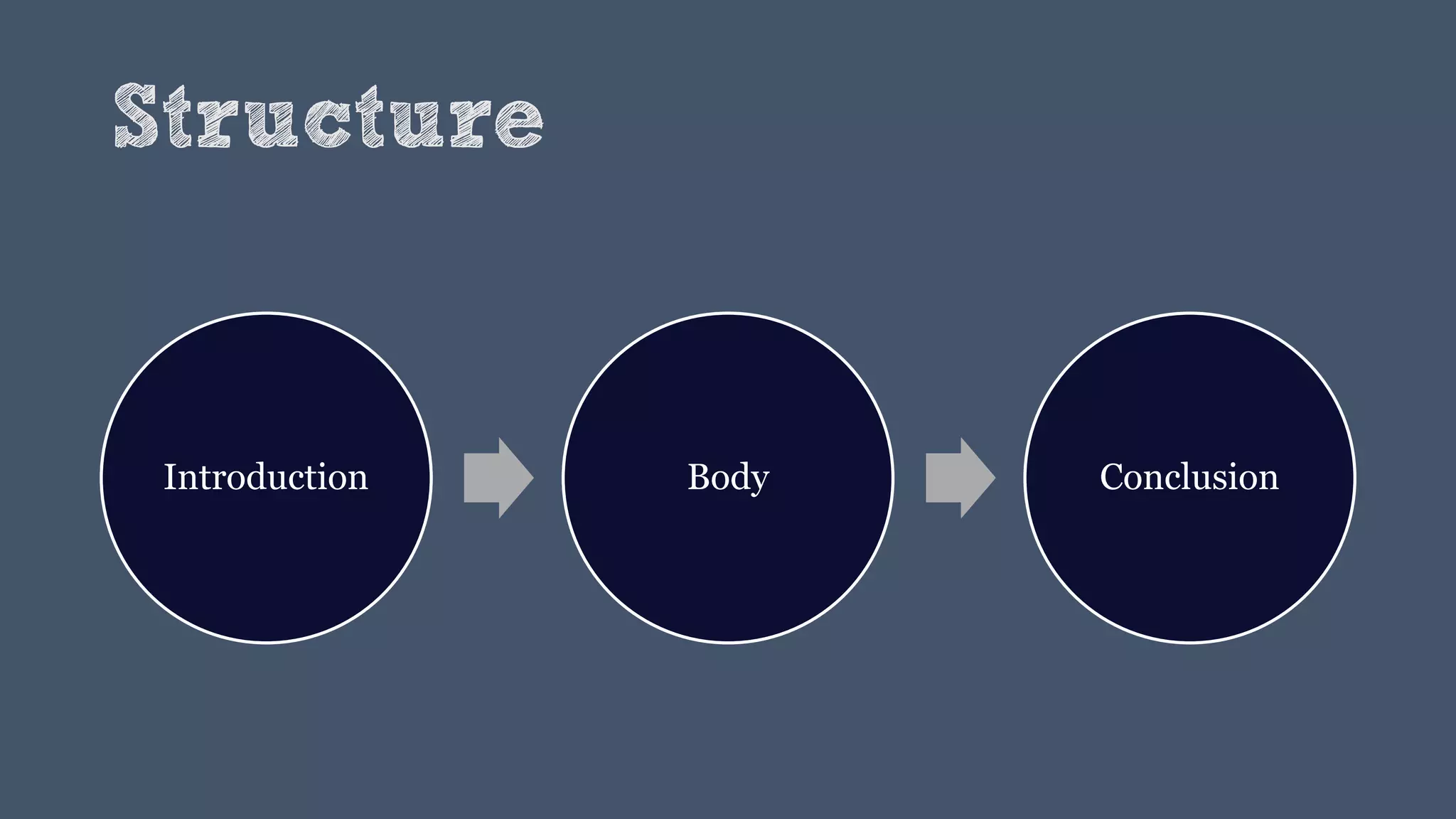
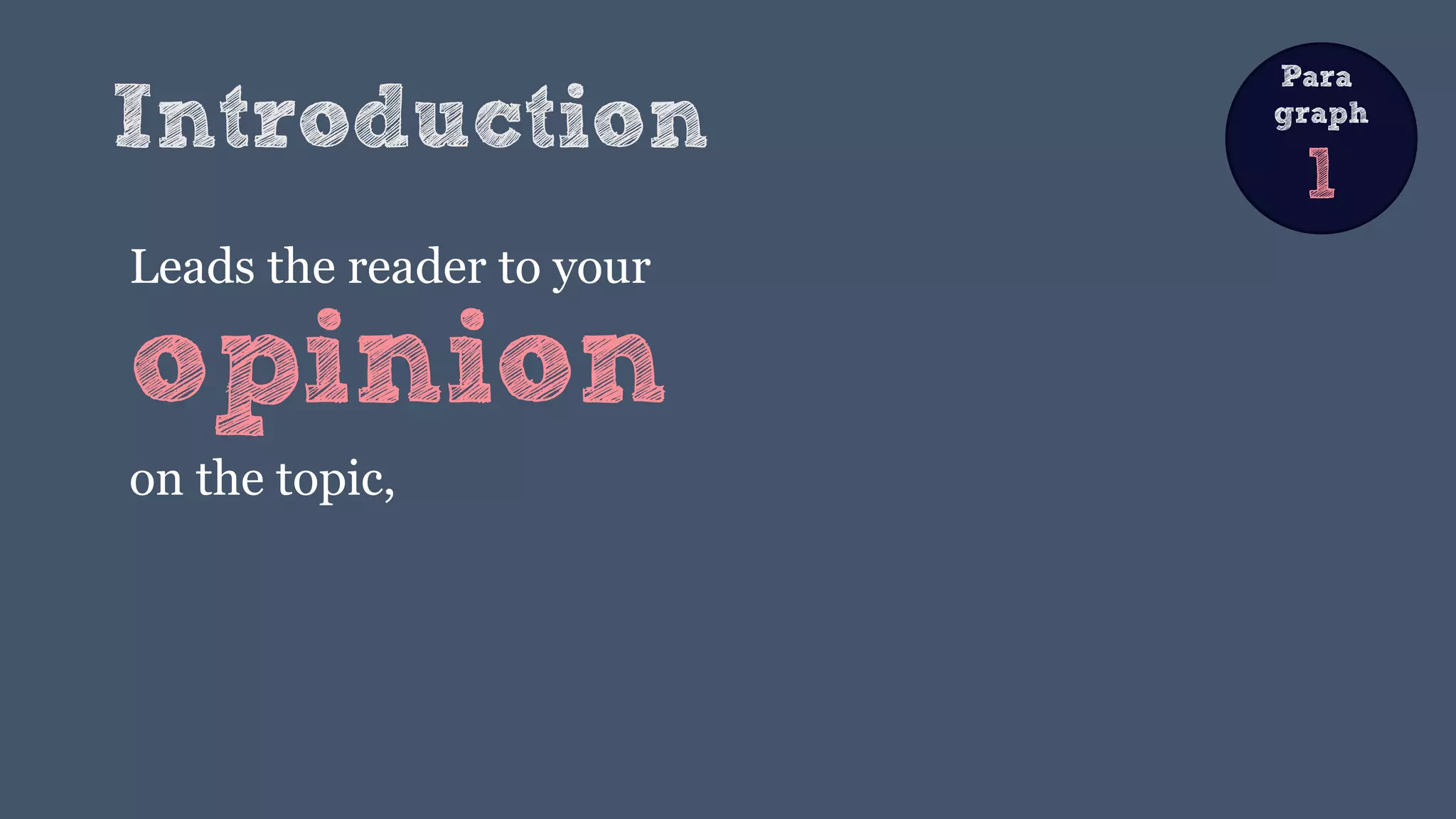
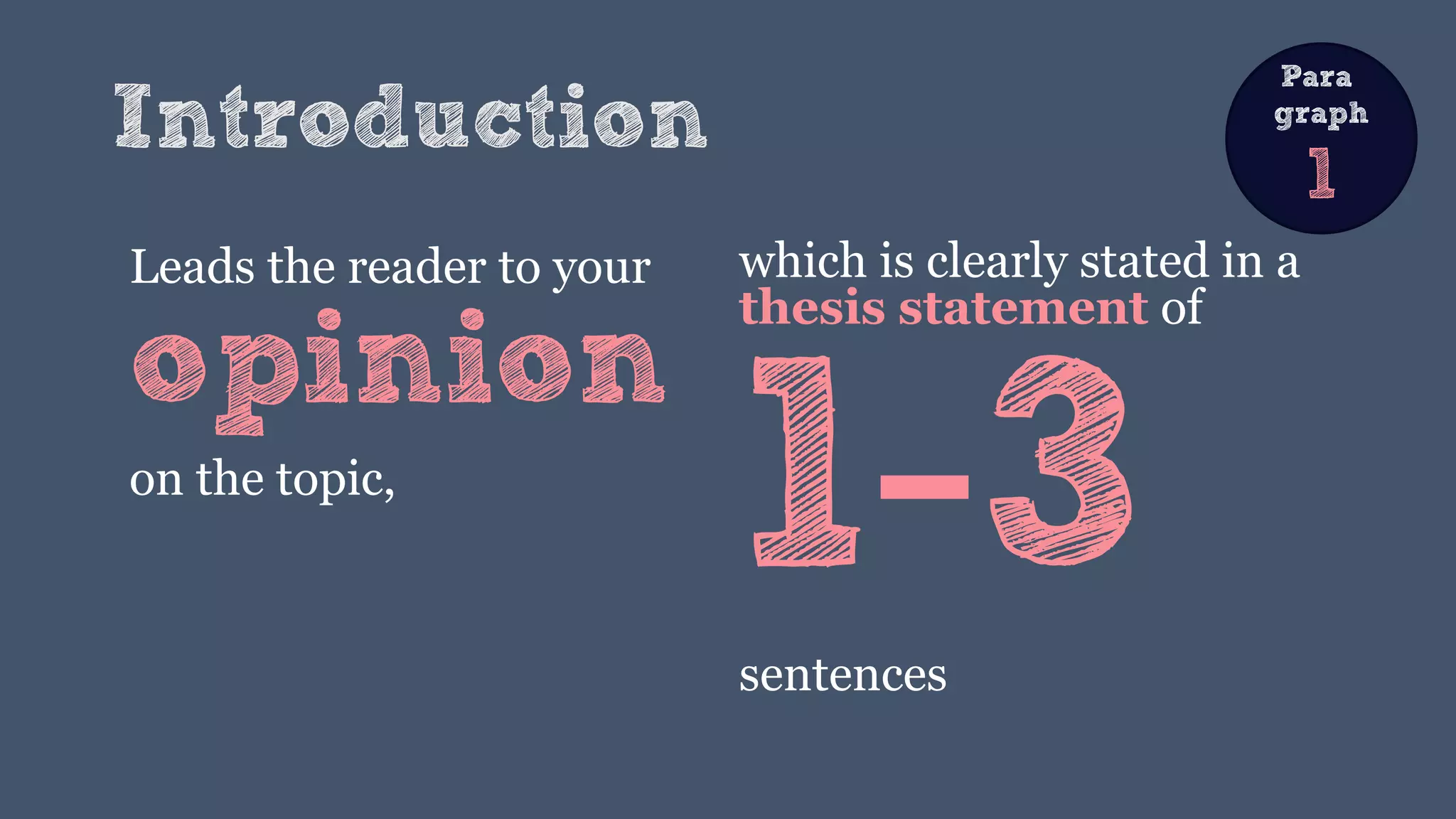
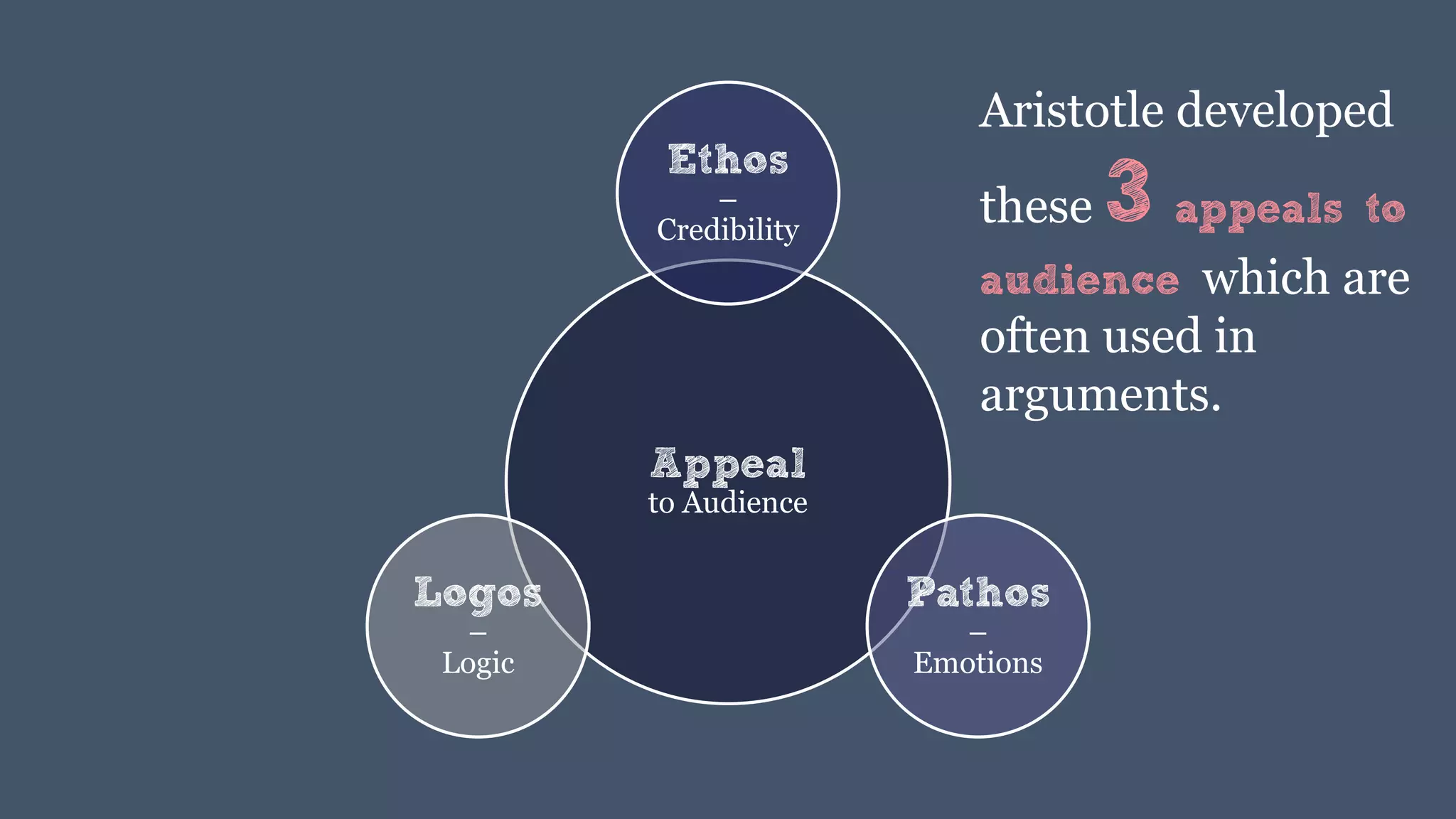
The document outlines the essential components of argumentative writing, emphasizing the importance of a clearly stated opinion, credible evidence, and effective refutation of opposing arguments. It describes the structure of an argumentative essay, including the introduction, body, and conclusion, while highlighting the need for external sources to support claims. Additionally, it discusses the rhetorical appeals of ethos, pathos, and logos, and provides a checklist for writing a clear and focused thesis statement.
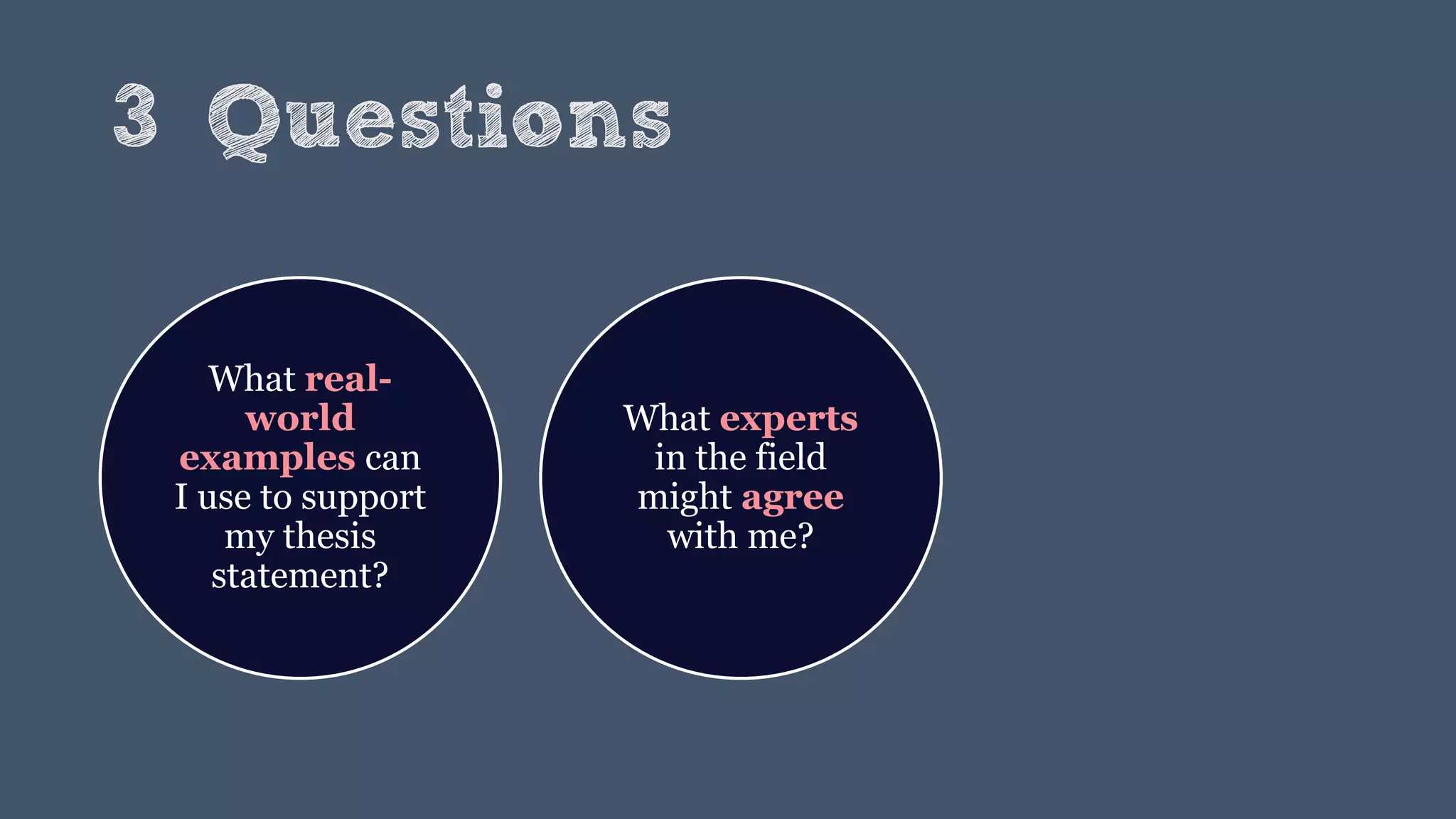
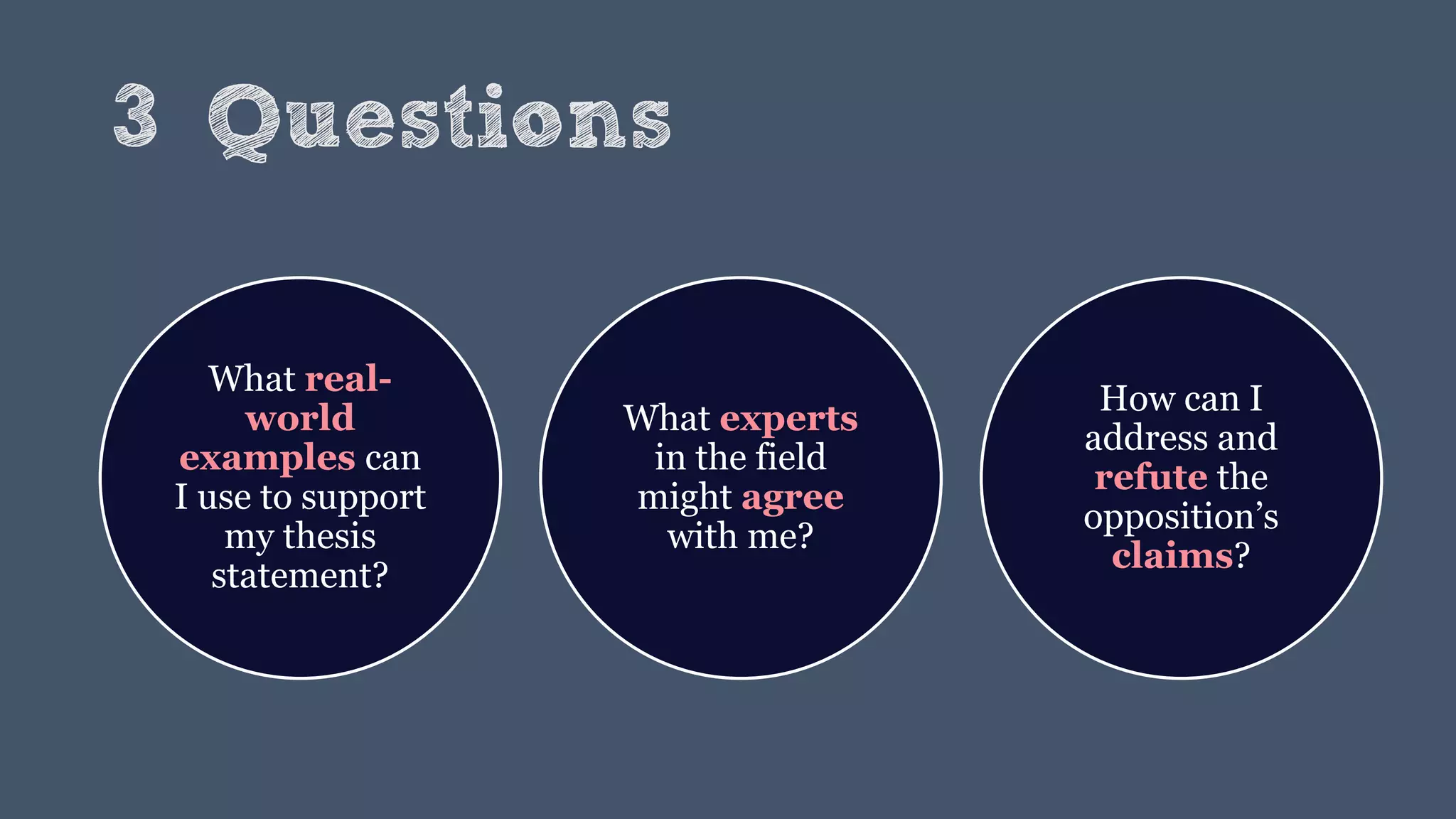
3 Questions
What real-
world
examplescan
I use to support
my thesis
statement?
What experts
in the field
might agree
with me?
How can I
address and
refute the
opposition’s
claims?
Your claim
is your
yourposition or stand on the issue
What view you
want your readers to
accept
23.
Your claim
is your
yourposition or stand on the issue
What view you
want your readers to
accept
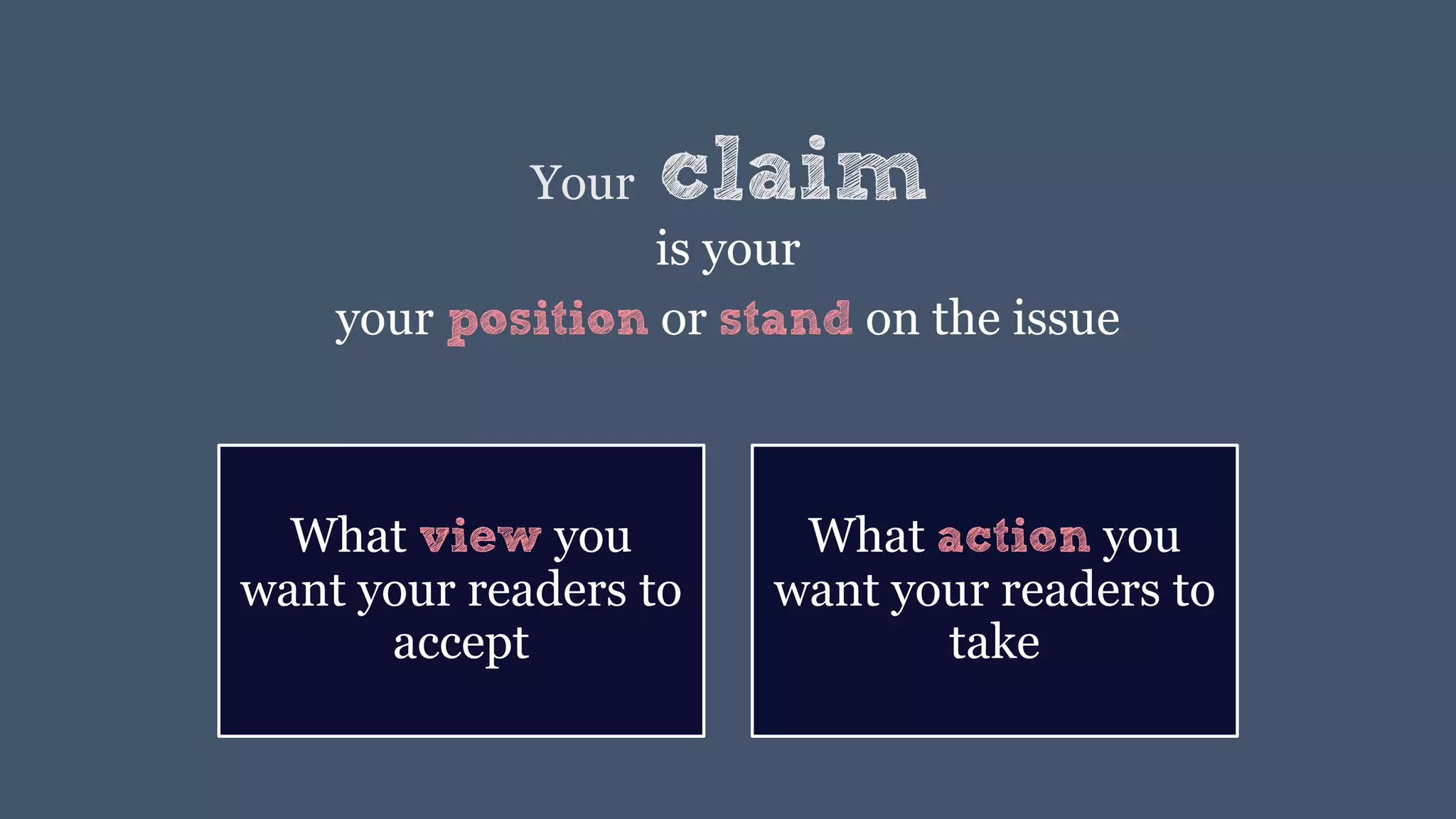
What action you
want your readers to
take
24.
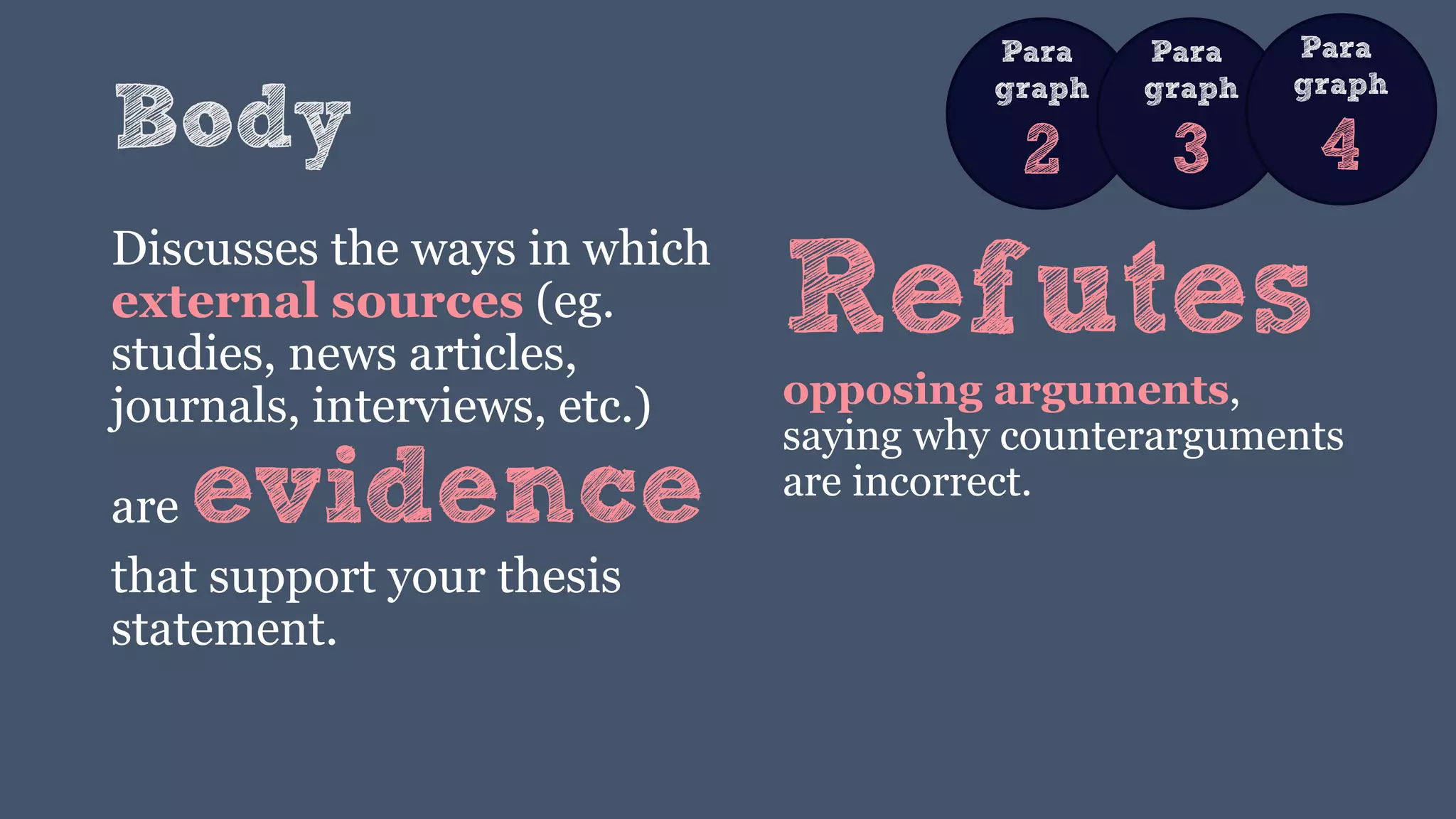
Body
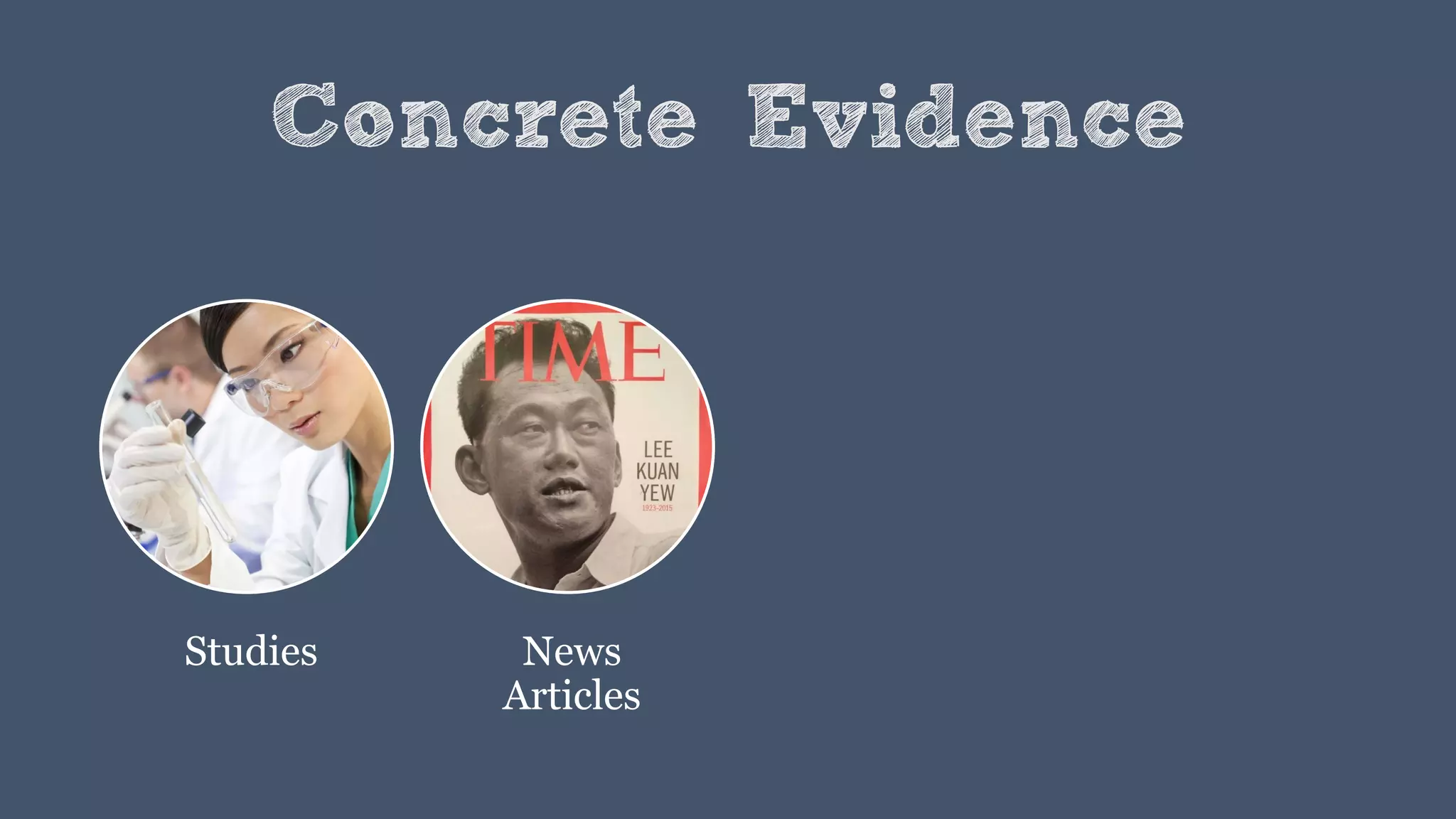
Discusses the waysin which
external sources (eg.
studies, news articles,
journals, interviews, etc.)
are evidence
that support your thesis
statement.
Para
graph
2
Para
graph
3
Para
graph
4
25.
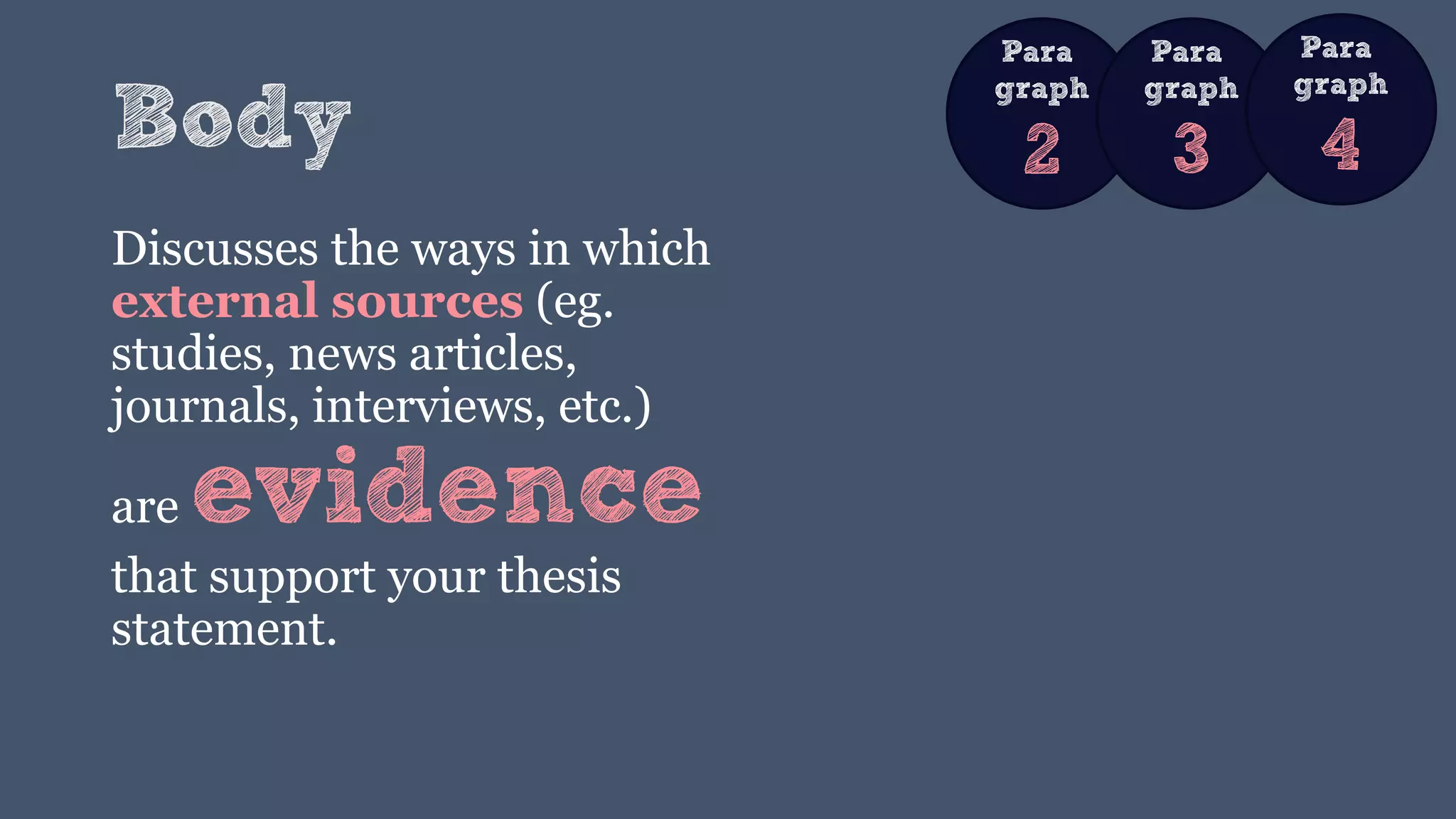
Body
Discusses the waysin which
external sources (eg.
studies, news articles,
journals, interviews, etc.)
are evidence
that support your thesis
statement.
Refutes
opposing arguments,
saying why counterarguments
are incorrect.
Para
graph
2
Para
graph
3
Para
graph
4
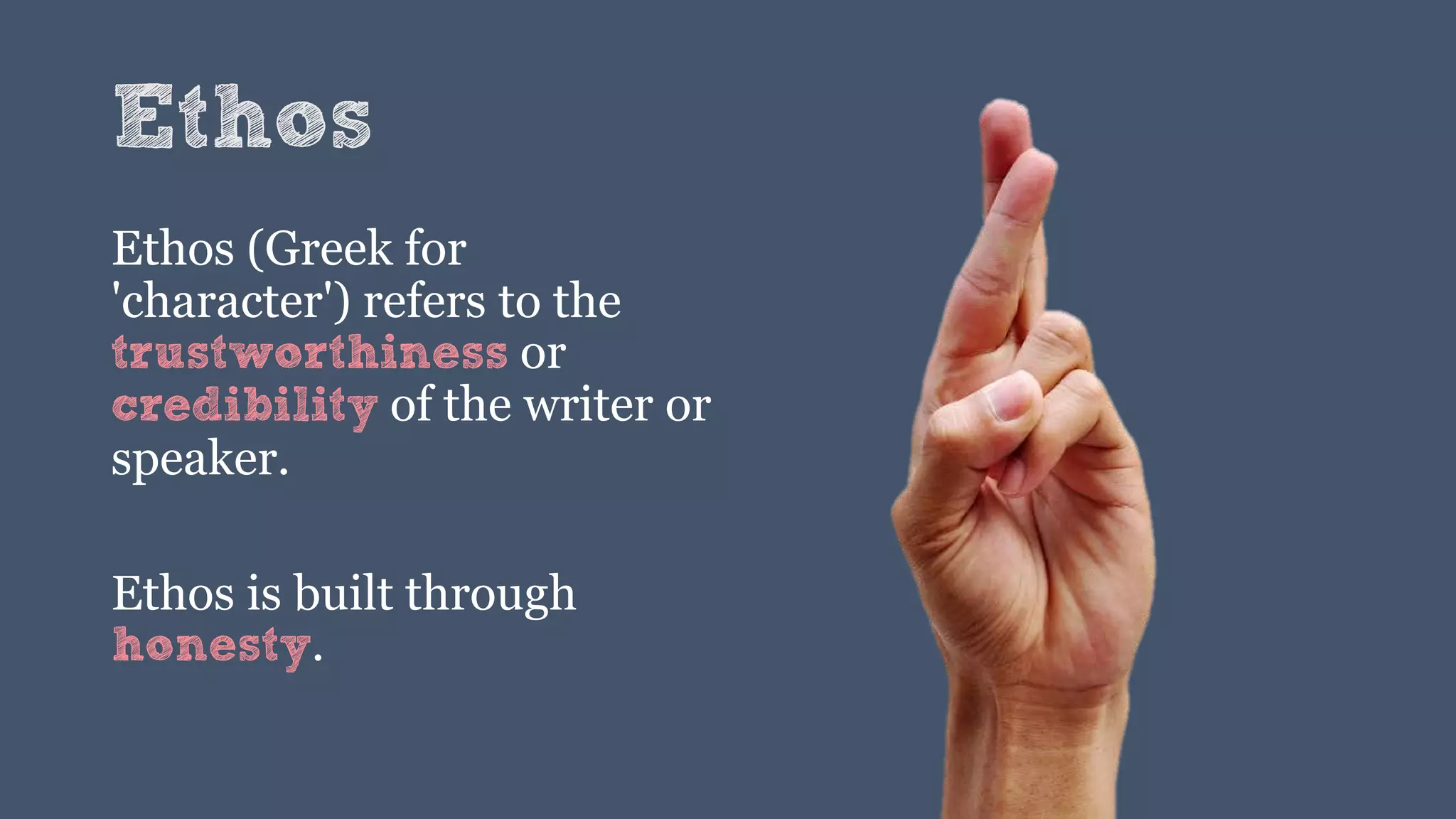
Credibility
depends on
Relevant tothe
topic
Provided by a
credible source (an
expert in the field)
Reputable
(i.e.available contact
information, up-to-
date source etc.)
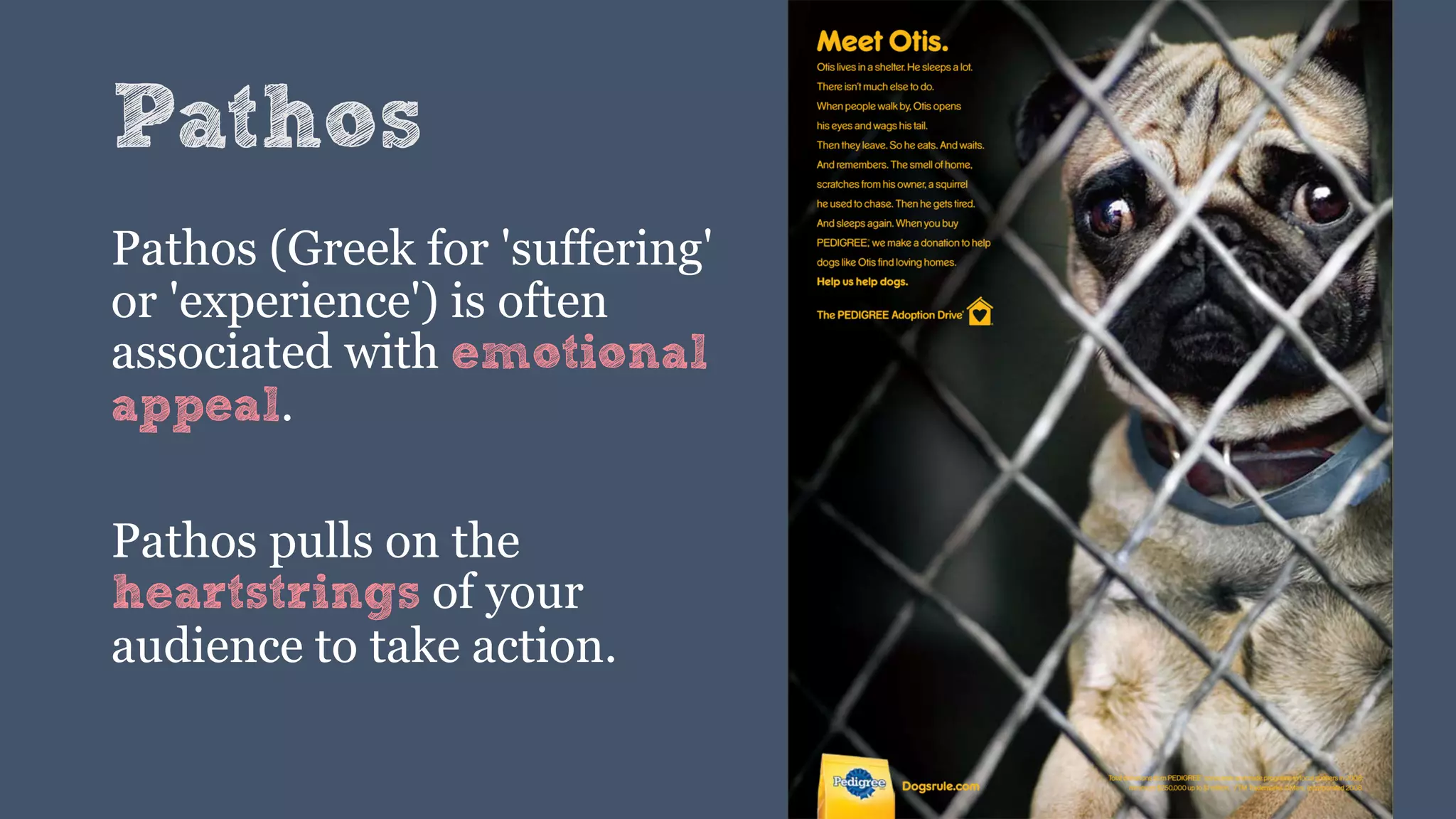
Pathos
Pathos (Greek for'suffering'
or 'experience') is often
associated with emotional
appeal.
Pathos pulls on the
heartstrings of your
audience to take action.
43.
Logos
Logos (Greek for'word')
refers to the message
internal consistency
• clarity of the claim
• logic of its reasons
• effectiveness of its
supporting evidence
44.
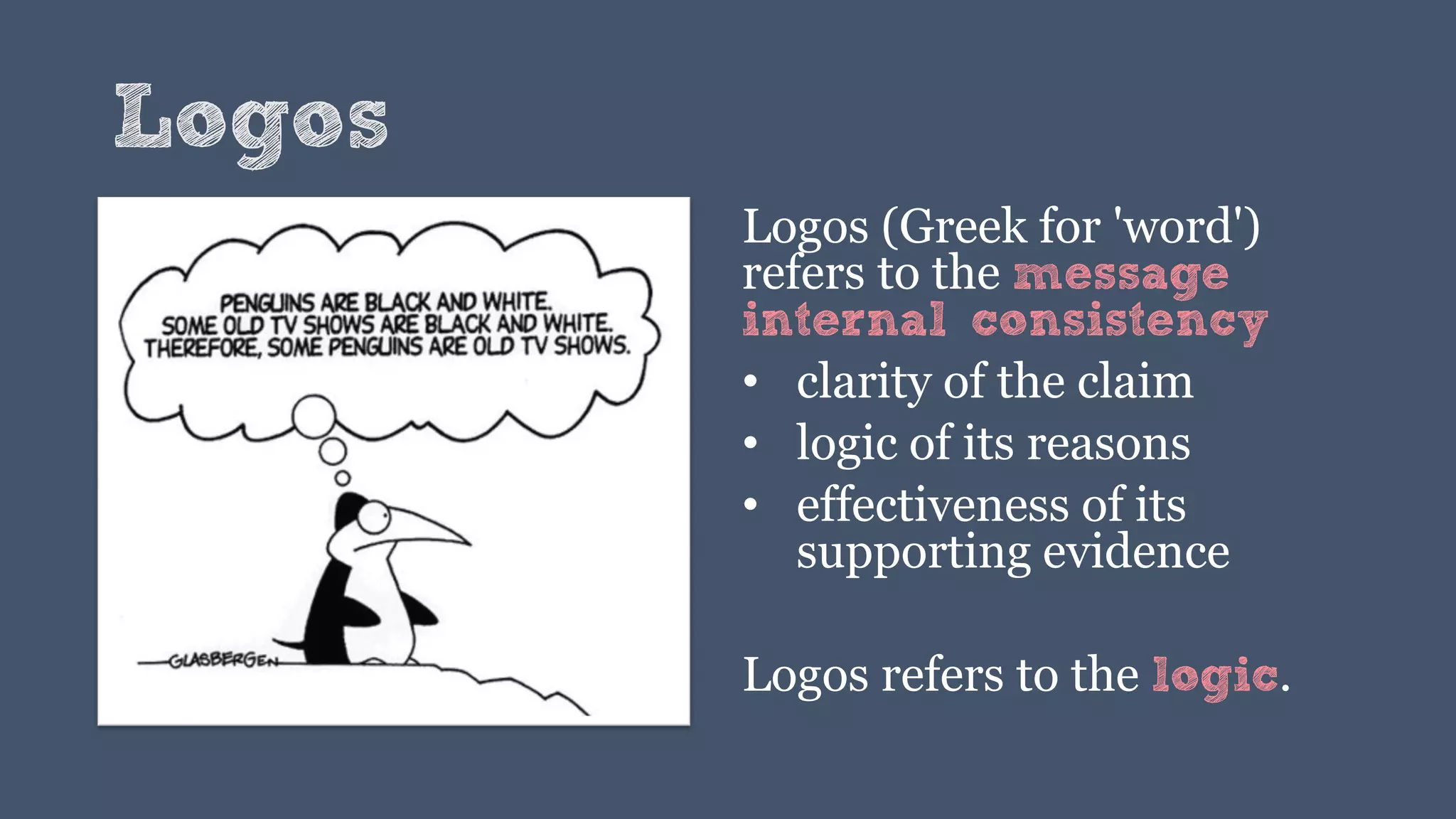
Logos
Logos (Greek for'word')
refers to the message
internal consistency
• clarity of the claim
• logic of its reasons
• effectiveness of its
supporting evidence
Logos refers to the logic.
Remember
1
It is notenough to simply
state whether you agree/
disagree with the author or
speaker. Instead, you must
clearly articulate why you
agree/ disagree.
48.
Remember
1
It is notenough to simply
state whether you agree/
disagree with the author or
speaker. Instead, you must
clearly articulate why you
agree/ disagree.
2
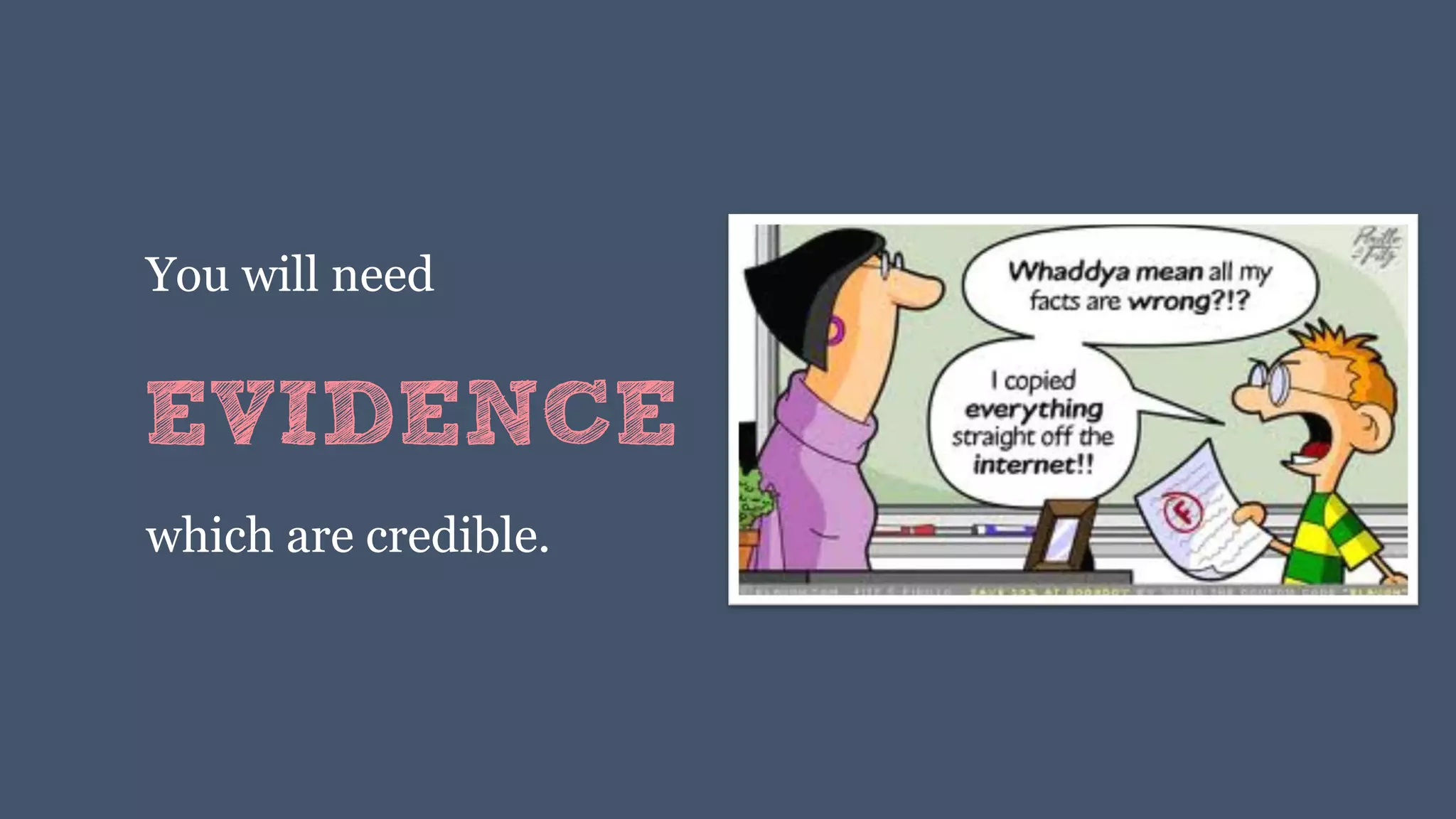
Always provide evidence
from valid external sources
(newspaper articles,
studies, interviews,
statistics, etc.) to support
your thesis.
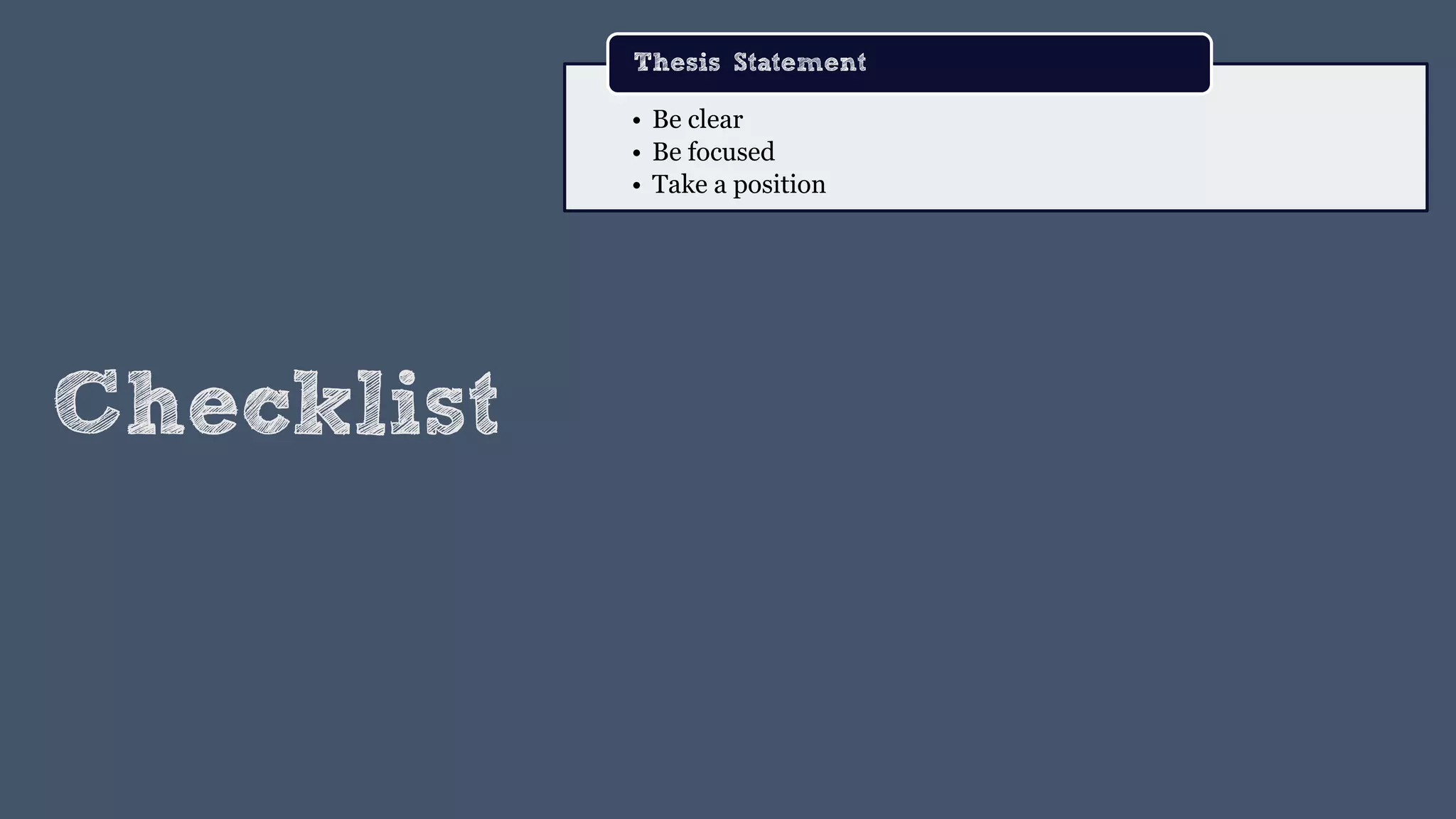
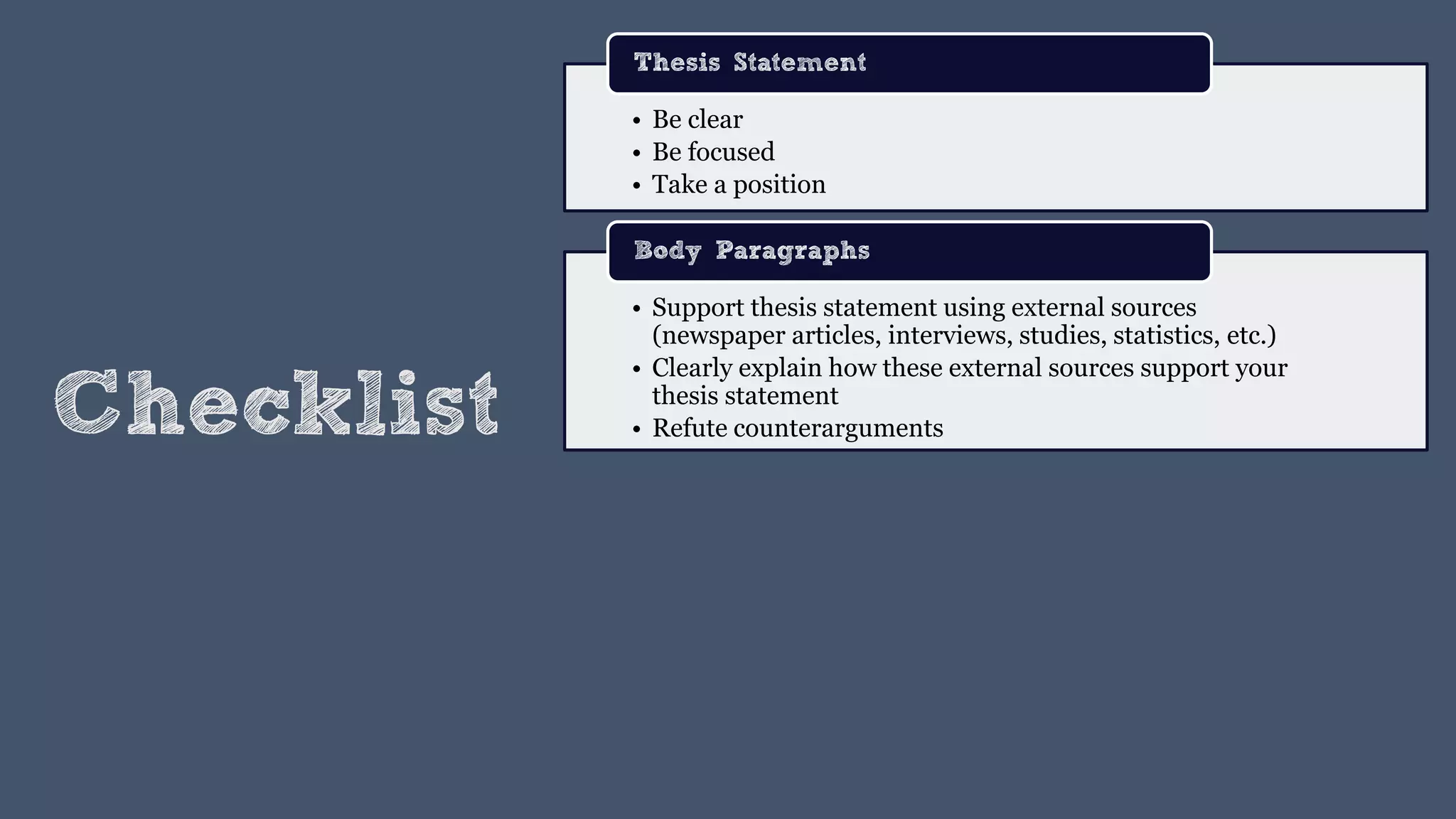
Checklist
• Be clear
•Be focused
• Take a position
Thesis Statement
• Support thesis statement using external sources
(newspaper articles, interviews, studies, statistics, etc.)
• Clearly explain how these external sources support your
thesis statement
• Refute counterarguments
Body Paragraphs
51.
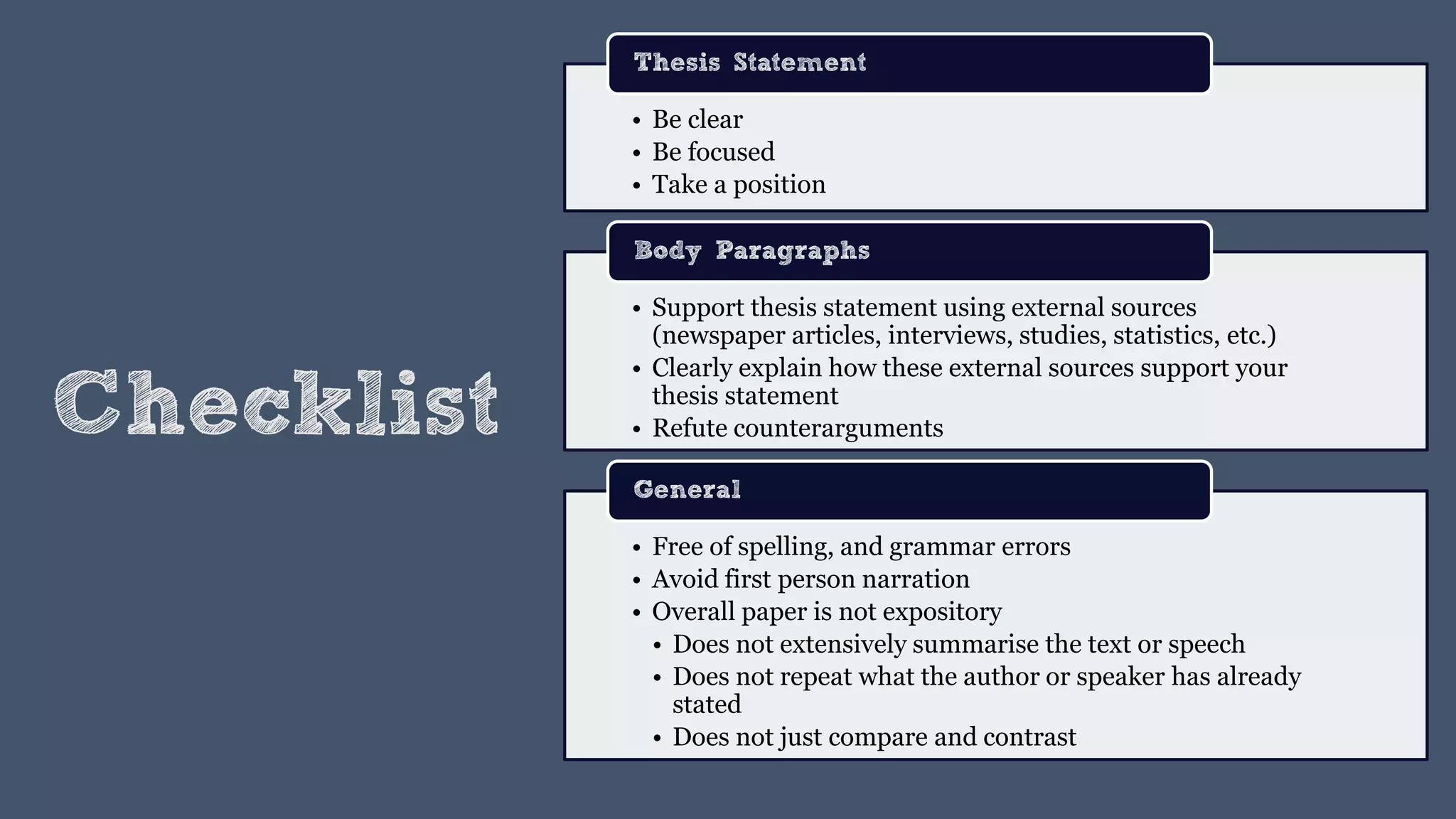
Checklist
• Be clear
•Be focused
• Take a position
Thesis Statement
• Support thesis statement using external sources
(newspaper articles, interviews, studies, statistics, etc.)
• Clearly explain how these external sources support your
thesis statement
• Refute counterarguments
Body Paragraphs
• Free of spelling, and grammar errors
• Avoid first person narration
• Overall paper is not expository
• Does not extensively summarise the text or speech
• Does not repeat what the author or speaker has already
stated
• Does not just compare and contrast
General
52.
Created by
Goh BangRui
Follow me
on
@slideshare.
@gohbangrui
bit.ly/gohbangrui












![Argumentative Essay [Autosaved].pptxasdf](https://cdn.slidesharecdn.com/ss_thumbnails/argumentativeessayautosaved-251123231228-be72e8ed-thumbnail.jpg?width=640&height=640&fit=bounds)


