Bell Work
Please take out a sheet of
paper. Then, make a list of
everything you already know
about argumentative writing.
In argumentative writing, a writer
takes a stand or forms an opinion and
writes to convince the reader to
believe this point of view.
It has an introduction, a body where
the claim is developed and the
counterclaims are disproven, and a
conclusion.
A counterclaim is simply the opinion that is
opposite of yours.
Argumentative writing
follows the usual 5-paragraph format.
Writing Your Introduction
The introduction has a “hook” to catch
the reader’s attention. Some “hooks”
include opening with:
◦ an unusual detail
◦ a strong statement
◦ a quotation
◦ a question (it MUST be thought
provoking!)
◦ an exaggeration or outrageous statement
◦ a shocking statistic
◦ figurative language
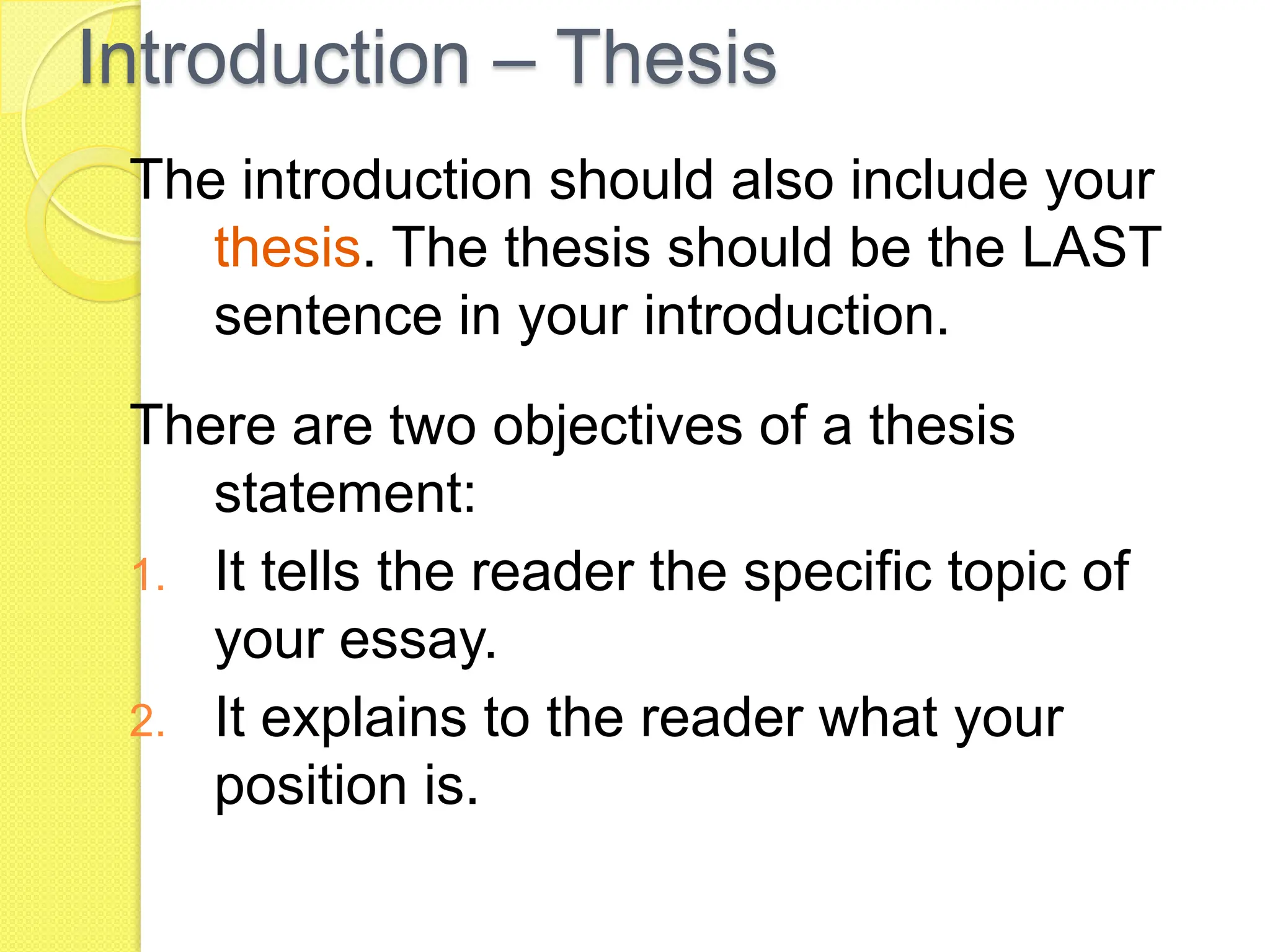
Introduction – Thesis
The introduction should also include your
thesis. The thesis should be the LAST
sentence in your introduction.
There are two objectives of a thesis
statement:
1. It tells the reader the specific topic of
your essay.
2. It explains to the reader what your
position is.
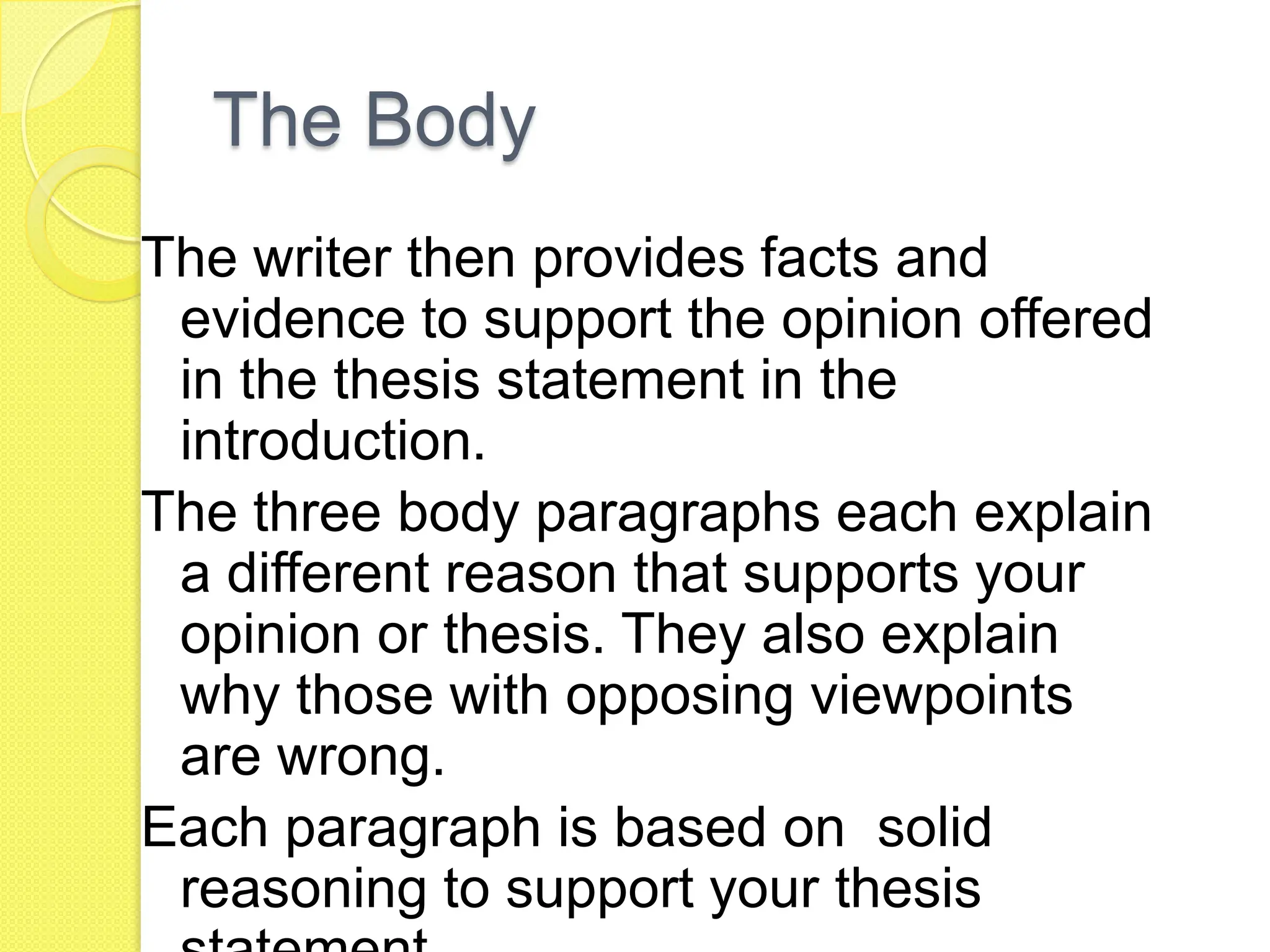
The Body
The writer then provides facts and
evidence to support the opinion offered
in the thesis statement in the
introduction.
The three body paragraphs each explain
a different reason that supports your
opinion or thesis. They also explain
why those with opposing viewpoints
are wrong.
Each paragraph is based on solid
reasoning to support your thesis
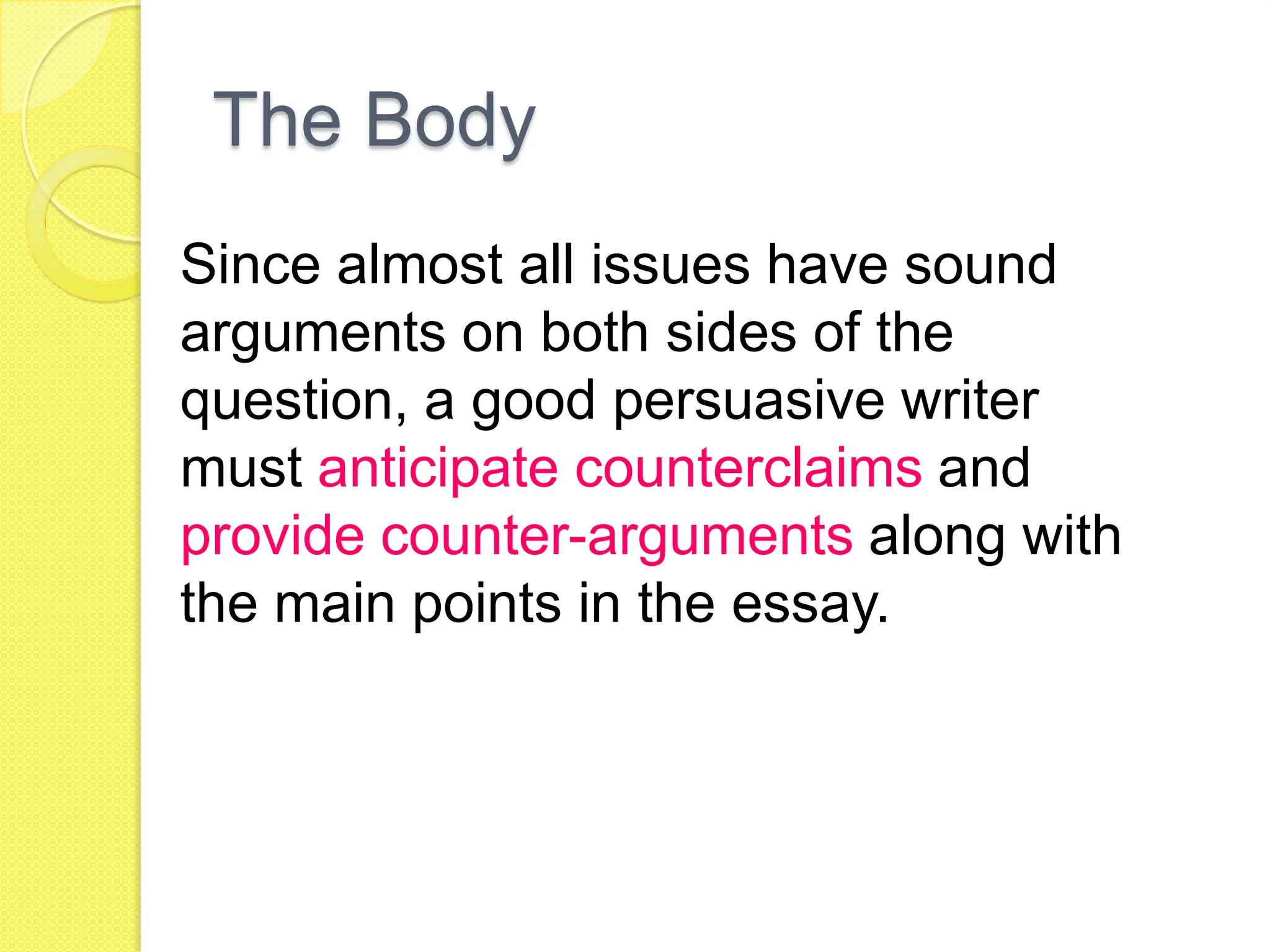
The Body
Since almost all issues have sound
arguments on both sides of the
question, a good persuasive writer
must anticipate counterclaims and
provide counter-arguments along with
the main points in the essay.
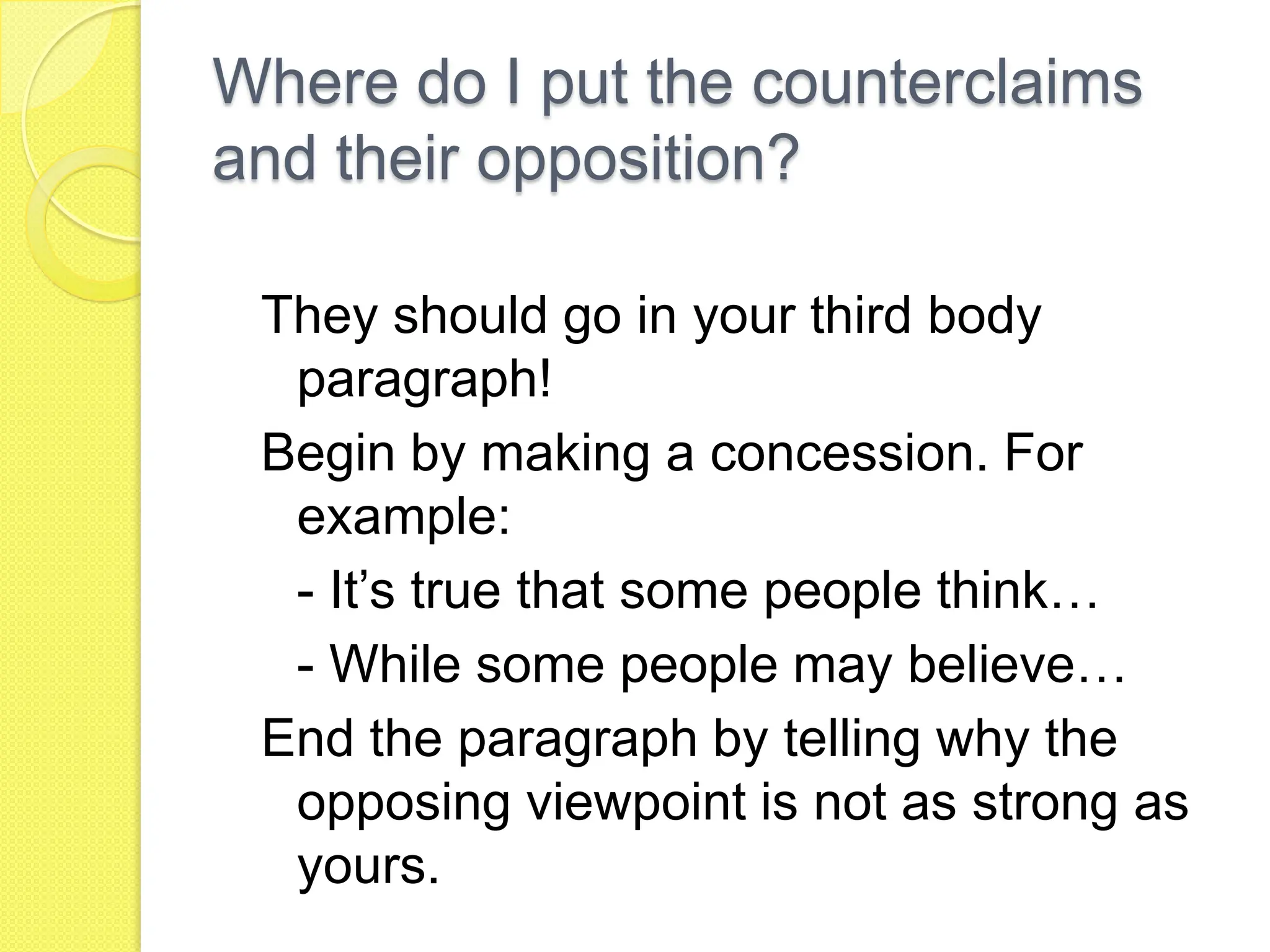
Where do I put the counterclaims
and their opposition?
They should go in your third body
paragraph!
Begin by making a concession. For
example:
- It’s true that some people think…
- While some people may believe…
End the paragraph by telling why the
opposing viewpoint is not as strong as
yours.
The Conclusion
Argumentative essays end by
summarizing the most important
details of the argument and stating
once again what the reader is to
believe or do.
General guidelines when writing an
argumentative essay:
1. Have a firm opinion that you want your
reader to accept.
2. Be sure your intro includes a hook,
necessary and appropriate background
information, and a thesis.
3. Offer valid evidence to support your
opinion, show the counterclaim, and
refute it.
4. Conclude with a restatement of what you
want the reader to do or believe.

argumentative review.pdf

  • 1.
    Bell Work Please takeout a sheet of paper. Then, make a list of everything you already know about argumentative writing.
  • 2.
    In argumentative writing,a writer takes a stand or forms an opinion and writes to convince the reader to believe this point of view.
  • 3.
    It has anintroduction, a body where the claim is developed and the counterclaims are disproven, and a conclusion. A counterclaim is simply the opinion that is opposite of yours. Argumentative writing follows the usual 5-paragraph format.
  • 4.
    Writing Your Introduction Theintroduction has a “hook” to catch the reader’s attention. Some “hooks” include opening with: ◦ an unusual detail ◦ a strong statement ◦ a quotation ◦ a question (it MUST be thought provoking!) ◦ an exaggeration or outrageous statement ◦ a shocking statistic ◦ figurative language
  • 5.
    Introduction – Thesis Theintroduction should also include your thesis. The thesis should be the LAST sentence in your introduction. There are two objectives of a thesis statement: 1. It tells the reader the specific topic of your essay. 2. It explains to the reader what your position is.
  • 6.
    The Body The writerthen provides facts and evidence to support the opinion offered in the thesis statement in the introduction. The three body paragraphs each explain a different reason that supports your opinion or thesis. They also explain why those with opposing viewpoints are wrong. Each paragraph is based on solid reasoning to support your thesis
  • 7.
    The Body Since almostall issues have sound arguments on both sides of the question, a good persuasive writer must anticipate counterclaims and provide counter-arguments along with the main points in the essay.
  • 8.
    Where do Iput the counterclaims and their opposition? They should go in your third body paragraph! Begin by making a concession. For example: - It’s true that some people think… - While some people may believe… End the paragraph by telling why the opposing viewpoint is not as strong as yours.
  • 9.
    The Conclusion Argumentative essaysend by summarizing the most important details of the argument and stating once again what the reader is to believe or do.
  • 10.
    General guidelines whenwriting an argumentative essay: 1. Have a firm opinion that you want your reader to accept. 2. Be sure your intro includes a hook, necessary and appropriate background information, and a thesis. 3. Offer valid evidence to support your opinion, show the counterclaim, and refute it. 4. Conclude with a restatement of what you want the reader to do or believe.