English v. Spanish  By: Veronica Ricigliano
Spanish Worldwide The population of people who speak Spanish worldwide is about 322 million. From those 322 million, 20% of them are in the United States. By the time it is 2030, the number is projected to double (Encarta, 2004)
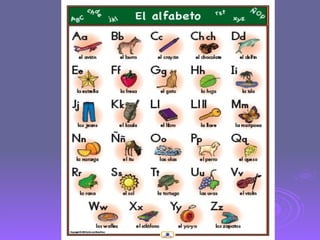
Features of Spanish  Spanish is a Romance language and is part of the Indo- European language family (Coe, 1987).  The Spanish alphabet contains 27 letters and only 18 consonant phonemes.  There are two letters that have the double letters –  ll  and  rr .  The  ñ  is the 27 th  letter that is pronounced different than the letter n.  Spanish vocabulary is phonetic and is written how it sounds
 
Spanish Grammar The grammar used is masculine and feminine.  To speak about something masculine, you use the article  el , to talk about something feminine you use the article  la .  The four main articles used are:  el, la, los, and las.
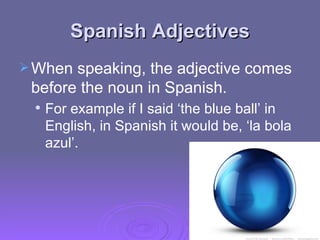
Spanish Adjectives When speaking, the adjective comes before the noun in Spanish.  For example if I said ‘the blue ball’ in English, in Spanish it would be, ‘la bola azul’.
Differences  Spanish 5 vowels Spelled phonetically  Adjective comes before noun Grammar is either masculine or feminine Alphabet is 27 letters  Verbs are conjugated based on the speaker English  5 vowels but long/short NOT spelled phonetically Adjective comes after the noun Grammar is not gender based  Alphabet is 24 letters Verbs are conjugated based on when the action happen
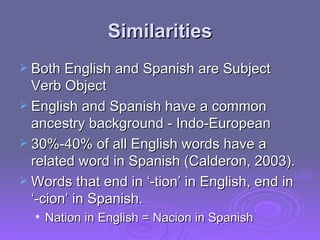
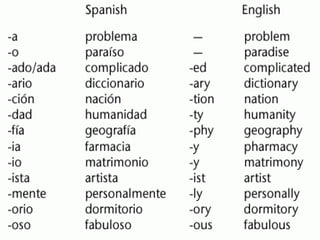
Similarities Both English and Spanish are Subject Verb Object English and Spanish have a common ancestry background - Indo-European 30%-40% of all English words have a related word in Spanish (Calderon, 2003). Words that end in ‘-tion’ in English, end in ‘-cion’ in Spanish.  Nation in English = Nacion in Spanish
 
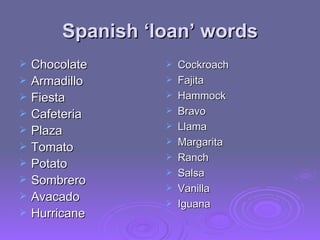
Spanish ‘loan’ words Chocolate  Armadillo Fiesta Cafeteria Plaza  Tomato Potato  Sombrero  Avacado  Hurricane  Cockroach Fajita Hammock  Bravo Llama  Margarita  Ranch Salsa Vanilla  Iguana
Interview with Angie This picture was taken almost 2 years ago. Isn’t she the cutest?
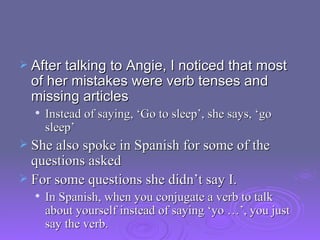
After talking to Angie, I noticed that most of her mistakes were verb tenses and missing articles Instead of saying, ‘Go to sleep’, she says, ‘go sleep’ She also spoke in Spanish for some of the questions asked For some questions she didn’t say I.  In Spanish, when you conjugate a verb to talk about yourself instead of saying ‘yo …’, you just say the verb.
Cont… She also couldn’t say my name correctly Instead of saying Veronica she pronounced it Beronica V isn’t pronounced in Spanish, it is replaced with a ‘B’.
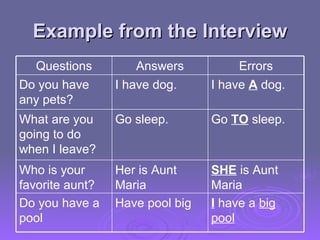
Example from the Interview I  have a  big pool Have pool big Do you have a pool SHE  is Aunt Maria Her is Aunt Maria Who is your favorite aunt? Go  TO  sleep. Go sleep. What are you going to do when I leave? I have  A  dog. I have dog. Do you have any pets? Errors Answers Questions
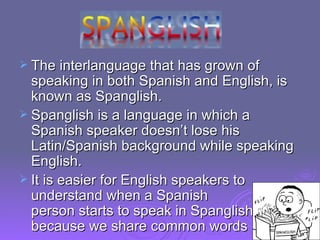
The interlanguage that has grown of speaking in both Spanish and English, is known as Spanglish. Spanglish is a language in which a Spanish speaker doesn’t lose his Latin/Spanish background while speaking English.  It is easier for English speakers to understand when a Spanish  person starts to speak in Spanglish because we share common words
Instructional Impact A teacher needs to be nurturing to an ELL student and make sure they know that they are trying and doing a great job.  When correcting a child, who has said something wrong, we should repeat the sentence back to them correctly to let them know that you understand what they are trying to say.
Cont. We should make learning English fun for all students. We should keep the materials visual as well as interactive and engaging. Things we can do to teach Spanish speaking children: Use tons of visuals Teach using clips (Youtube, educational videos, etc.) Use songs to have children remember information using a catchy tune Play games!

English and spanish

  • 1.
    English v. Spanish By: Veronica Ricigliano
  • 2.
    Spanish Worldwide Thepopulation of people who speak Spanish worldwide is about 322 million. From those 322 million, 20% of them are in the United States. By the time it is 2030, the number is projected to double (Encarta, 2004)
  • 3.
    Features of Spanish Spanish is a Romance language and is part of the Indo- European language family (Coe, 1987). The Spanish alphabet contains 27 letters and only 18 consonant phonemes. There are two letters that have the double letters – ll and rr . The ñ is the 27 th letter that is pronounced different than the letter n. Spanish vocabulary is phonetic and is written how it sounds
  • 4.
  • 5.
    Spanish Grammar Thegrammar used is masculine and feminine. To speak about something masculine, you use the article el , to talk about something feminine you use the article la . The four main articles used are: el, la, los, and las.
  • 6.
    Spanish Adjectives Whenspeaking, the adjective comes before the noun in Spanish. For example if I said ‘the blue ball’ in English, in Spanish it would be, ‘la bola azul’.
  • 7.
    Differences Spanish5 vowels Spelled phonetically Adjective comes before noun Grammar is either masculine or feminine Alphabet is 27 letters Verbs are conjugated based on the speaker English 5 vowels but long/short NOT spelled phonetically Adjective comes after the noun Grammar is not gender based Alphabet is 24 letters Verbs are conjugated based on when the action happen
  • 8.
    Similarities Both Englishand Spanish are Subject Verb Object English and Spanish have a common ancestry background - Indo-European 30%-40% of all English words have a related word in Spanish (Calderon, 2003). Words that end in ‘-tion’ in English, end in ‘-cion’ in Spanish. Nation in English = Nacion in Spanish
  • 9.
  • 10.
    Spanish ‘loan’ wordsChocolate Armadillo Fiesta Cafeteria Plaza Tomato Potato Sombrero Avacado Hurricane Cockroach Fajita Hammock Bravo Llama Margarita Ranch Salsa Vanilla Iguana
  • 11.
    Interview with AngieThis picture was taken almost 2 years ago. Isn’t she the cutest?
  • 12.
    After talking toAngie, I noticed that most of her mistakes were verb tenses and missing articles Instead of saying, ‘Go to sleep’, she says, ‘go sleep’ She also spoke in Spanish for some of the questions asked For some questions she didn’t say I. In Spanish, when you conjugate a verb to talk about yourself instead of saying ‘yo …’, you just say the verb.
  • 13.
    Cont… She alsocouldn’t say my name correctly Instead of saying Veronica she pronounced it Beronica V isn’t pronounced in Spanish, it is replaced with a ‘B’.
  • 14.
    Example from theInterview I have a big pool Have pool big Do you have a pool SHE is Aunt Maria Her is Aunt Maria Who is your favorite aunt? Go TO sleep. Go sleep. What are you going to do when I leave? I have A dog. I have dog. Do you have any pets? Errors Answers Questions
  • 15.
    The interlanguage thathas grown of speaking in both Spanish and English, is known as Spanglish. Spanglish is a language in which a Spanish speaker doesn’t lose his Latin/Spanish background while speaking English. It is easier for English speakers to understand when a Spanish person starts to speak in Spanglish because we share common words
  • 16.
    Instructional Impact Ateacher needs to be nurturing to an ELL student and make sure they know that they are trying and doing a great job. When correcting a child, who has said something wrong, we should repeat the sentence back to them correctly to let them know that you understand what they are trying to say.
  • 17.
    Cont. We shouldmake learning English fun for all students. We should keep the materials visual as well as interactive and engaging. Things we can do to teach Spanish speaking children: Use tons of visuals Teach using clips (Youtube, educational videos, etc.) Use songs to have children remember information using a catchy tune Play games!