Engaging New Students Through an Extended ‘Induction’ Process Heather Farley Dr Alison Hampton
Background Transition from secondary to tertiary education can be difficult & may not be a continuous, linear progression We need to: Ensure compatibility between changing (rising?) student expectations & their actual experience   (Cook, Rushton, et al, 2005) Develop effective two way communication with ‘stakeholders’ … Understand what motivates the ’21 st  Century Student’  (Redmond, 2008)
Today’s ‘Generation Y’ Student  (Redmond, 2008) ‘ Workers with attitude’ who will challenge & are quick to judge ‘value’ Digital Natives who are connected 24-7 Unprecedented parental support  & involvement - ‘helicopter parents’  Attendance/punctuality is always optional ‘ Work’ is the Apprentice & Dragons Den WLB is more than a buzz word Image or brand matters Motivated by mentors/coaches & not bosses/superiors
Current Drivers Student Transition & Retention research, data & activity  (Cook et al, 2007) External Audit: QAA, NSS, … Internal Policy: University 1 st  year retention policy; UBS 1 st  year retention and attendance monitoring & support strategies; Faculty Working Group on 1 st  year experience The Stakeholders themselves: students, tutors, parents, school teachers, …
Current ‘Retention’ Figures (based on ‘Success 1’ data… 92% (2009/10) 88% (2008/09) Retention Targets for MES 94% 83% Marketing, Entrepreneurship & Strategy (MES) 90% 87% University Average 92% 89% Ulster Business School 2007/08 2006/07
What is ‘Induction’ Nowadays? An ongoing process or ‘student journey’  (Cooper, 2007) Encompasses a number of stages: Pre-entry &/or Application stage ‘ Front end’ Induction ‘ Ongoing’ Curriculum Development (including aspects such as provision of formative feedback & attendance monitoring) Onward Progression  … with ... Staff Development activity to support
What is ‘Induction’ ctd? Incorporates a number of aspects of student interaction: Academic Need to Personal get the balance   Social right Vocational
Pre-entry / Application Stage Greater involvement re. school visits Tailored session for BSc (Hons) Marketing during Open Week - Mini Marketing Activity Parent & Student evening (CI/CF event)
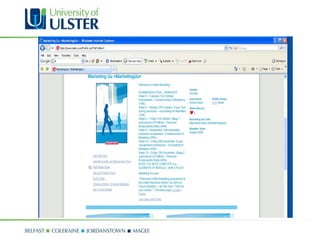
‘Front end’ Induction Year 1 Tutor role – first point of contact Social Networking Site (confirmed places in August are invited to join Bebo): Virtual Tour of campus includes  facilities and car parking Links students pre-induction & beyond Gives an insight into the ‘individual’ student
 
 
‘ Front end’ Induction ctd… Induction – over 2 days in week 0 Minimum requirements Informal with interactive sessions - Ice Breakers: Speed Intro’s - Team Building: Lost - Orientation of Campus: Treasure Hunt - Expectations workshop: Lecturers vs students ‘ A day in the life of a 1 st  year student’ competition (UBS) Quiz … ‘Dinner with the Dean’!
Induction feedback from the students….. “ The activities at induction were very good. The orientation task which our group really got into was fun and allowed us to find rooms” “ The first day was very long…the people who came to speak to us were good and friendly but it was a lot to take in”  “ I enjoyed the induction tasks and it was good being split into smaller groups because no-one else from my school was doing my course – so it was a bit scary at the start”
Ongoing Curriculum Development Maximum 15 students per seminar group Seminars start in week 1 Small group seminar tutor = Studies Adviser Formative feedback given by week 6 Attendance monitoring & interviews (support mechanism) Use of Turning Point technology Vocational activity (Personal Employability Skills module; WBL; PDP)
And What Next? More ‘connectivity’ & integration between different activities / stages / tutors Continued use of data & evaluation, to: monitor & evaluate what is done inform what happens next  Focus a little more on the ‘student voice’ Look further at ‘induction’ activity beyond year 1/the new entrant … develop ‘independent learners’

Engaging New Students Extended Induction

  • 1.
    Engaging New StudentsThrough an Extended ‘Induction’ Process Heather Farley Dr Alison Hampton
  • 2.
    Background Transition fromsecondary to tertiary education can be difficult & may not be a continuous, linear progression We need to: Ensure compatibility between changing (rising?) student expectations & their actual experience (Cook, Rushton, et al, 2005) Develop effective two way communication with ‘stakeholders’ … Understand what motivates the ’21 st Century Student’ (Redmond, 2008)
  • 3.
    Today’s ‘Generation Y’Student (Redmond, 2008) ‘ Workers with attitude’ who will challenge & are quick to judge ‘value’ Digital Natives who are connected 24-7 Unprecedented parental support & involvement - ‘helicopter parents’ Attendance/punctuality is always optional ‘ Work’ is the Apprentice & Dragons Den WLB is more than a buzz word Image or brand matters Motivated by mentors/coaches & not bosses/superiors
  • 4.
    Current Drivers StudentTransition & Retention research, data & activity (Cook et al, 2007) External Audit: QAA, NSS, … Internal Policy: University 1 st year retention policy; UBS 1 st year retention and attendance monitoring & support strategies; Faculty Working Group on 1 st year experience The Stakeholders themselves: students, tutors, parents, school teachers, …
  • 5.
    Current ‘Retention’ Figures(based on ‘Success 1’ data… 92% (2009/10) 88% (2008/09) Retention Targets for MES 94% 83% Marketing, Entrepreneurship & Strategy (MES) 90% 87% University Average 92% 89% Ulster Business School 2007/08 2006/07
  • 6.
    What is ‘Induction’Nowadays? An ongoing process or ‘student journey’ (Cooper, 2007) Encompasses a number of stages: Pre-entry &/or Application stage ‘ Front end’ Induction ‘ Ongoing’ Curriculum Development (including aspects such as provision of formative feedback & attendance monitoring) Onward Progression … with ... Staff Development activity to support
  • 7.
    What is ‘Induction’ctd? Incorporates a number of aspects of student interaction: Academic Need to Personal get the balance Social right Vocational
  • 8.
    Pre-entry / ApplicationStage Greater involvement re. school visits Tailored session for BSc (Hons) Marketing during Open Week - Mini Marketing Activity Parent & Student evening (CI/CF event)
  • 9.
    ‘Front end’ InductionYear 1 Tutor role – first point of contact Social Networking Site (confirmed places in August are invited to join Bebo): Virtual Tour of campus includes facilities and car parking Links students pre-induction & beyond Gives an insight into the ‘individual’ student
  • 10.
  • 11.
  • 12.
    ‘ Front end’Induction ctd… Induction – over 2 days in week 0 Minimum requirements Informal with interactive sessions - Ice Breakers: Speed Intro’s - Team Building: Lost - Orientation of Campus: Treasure Hunt - Expectations workshop: Lecturers vs students ‘ A day in the life of a 1 st year student’ competition (UBS) Quiz … ‘Dinner with the Dean’!
  • 13.
    Induction feedback fromthe students….. “ The activities at induction were very good. The orientation task which our group really got into was fun and allowed us to find rooms” “ The first day was very long…the people who came to speak to us were good and friendly but it was a lot to take in” “ I enjoyed the induction tasks and it was good being split into smaller groups because no-one else from my school was doing my course – so it was a bit scary at the start”
  • 14.
    Ongoing Curriculum DevelopmentMaximum 15 students per seminar group Seminars start in week 1 Small group seminar tutor = Studies Adviser Formative feedback given by week 6 Attendance monitoring & interviews (support mechanism) Use of Turning Point technology Vocational activity (Personal Employability Skills module; WBL; PDP)
  • 15.
    And What Next?More ‘connectivity’ & integration between different activities / stages / tutors Continued use of data & evaluation, to: monitor & evaluate what is done inform what happens next Focus a little more on the ‘student voice’ Look further at ‘induction’ activity beyond year 1/the new entrant … develop ‘independent learners’