

By
Mister Gidion Maru
COTEFL, May 1-2, 2009
Purwokerto
Engaging Literary Text to
Language Exposure for
Foreign English Learners
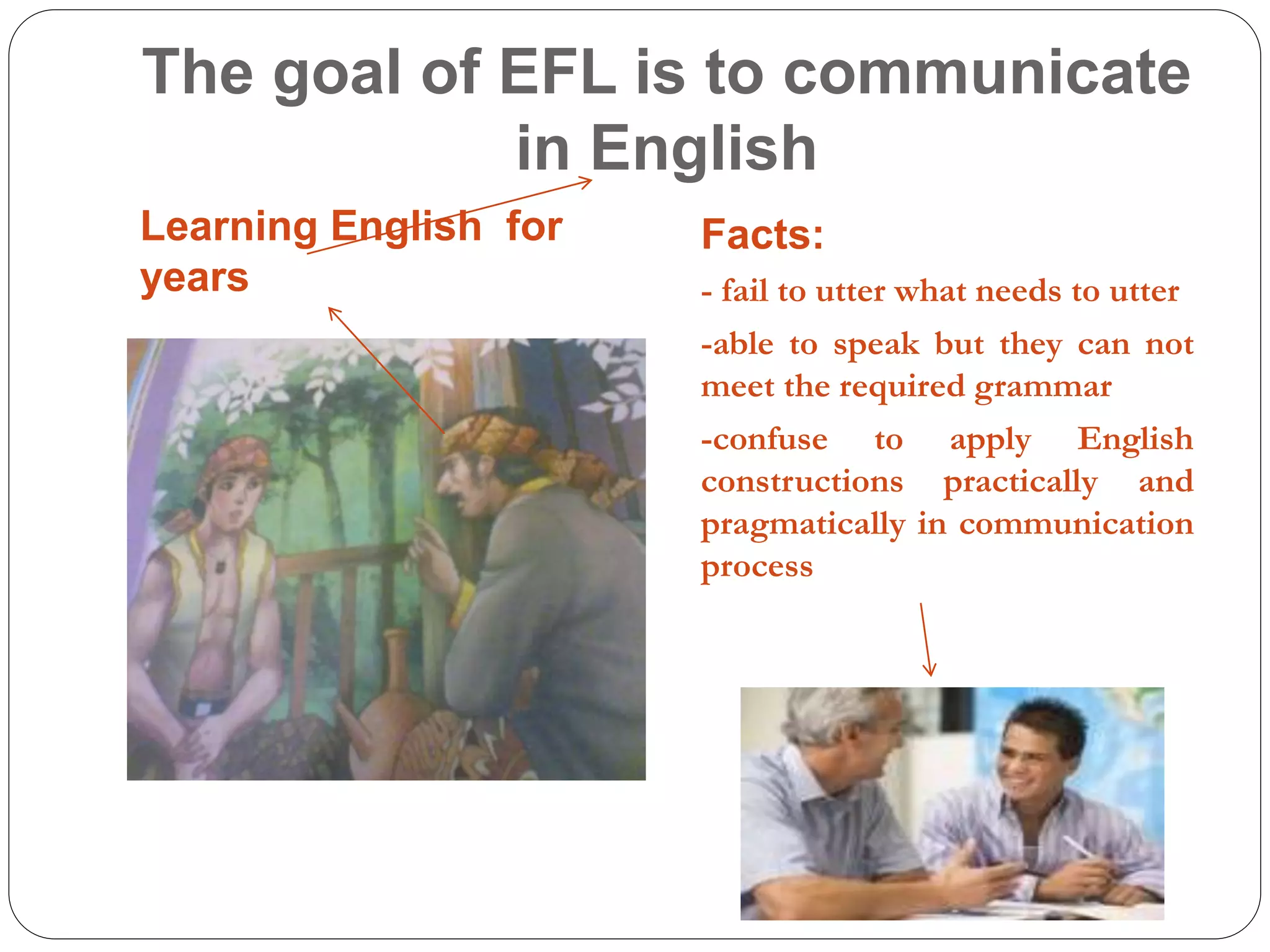
The goal of EFL is to communicate
in English
Learning English for
years
Facts:
- fail to utter what needs to utter
-able to speak but they can not
meet the required grammar
-confuse to apply English
constructions practically and
pragmatically in communication
process
 The intervention of students’ native language
 big class (overcrowded)
 an excessive low number of English as a foreign
language contact hours per week,
 behavioral problems on the part of the students
 lack of resources, equipment and material
 teacher competence
 lack of sufficient support both from government
and parents
 curriculum designed merely to meet grading
system or other purpose
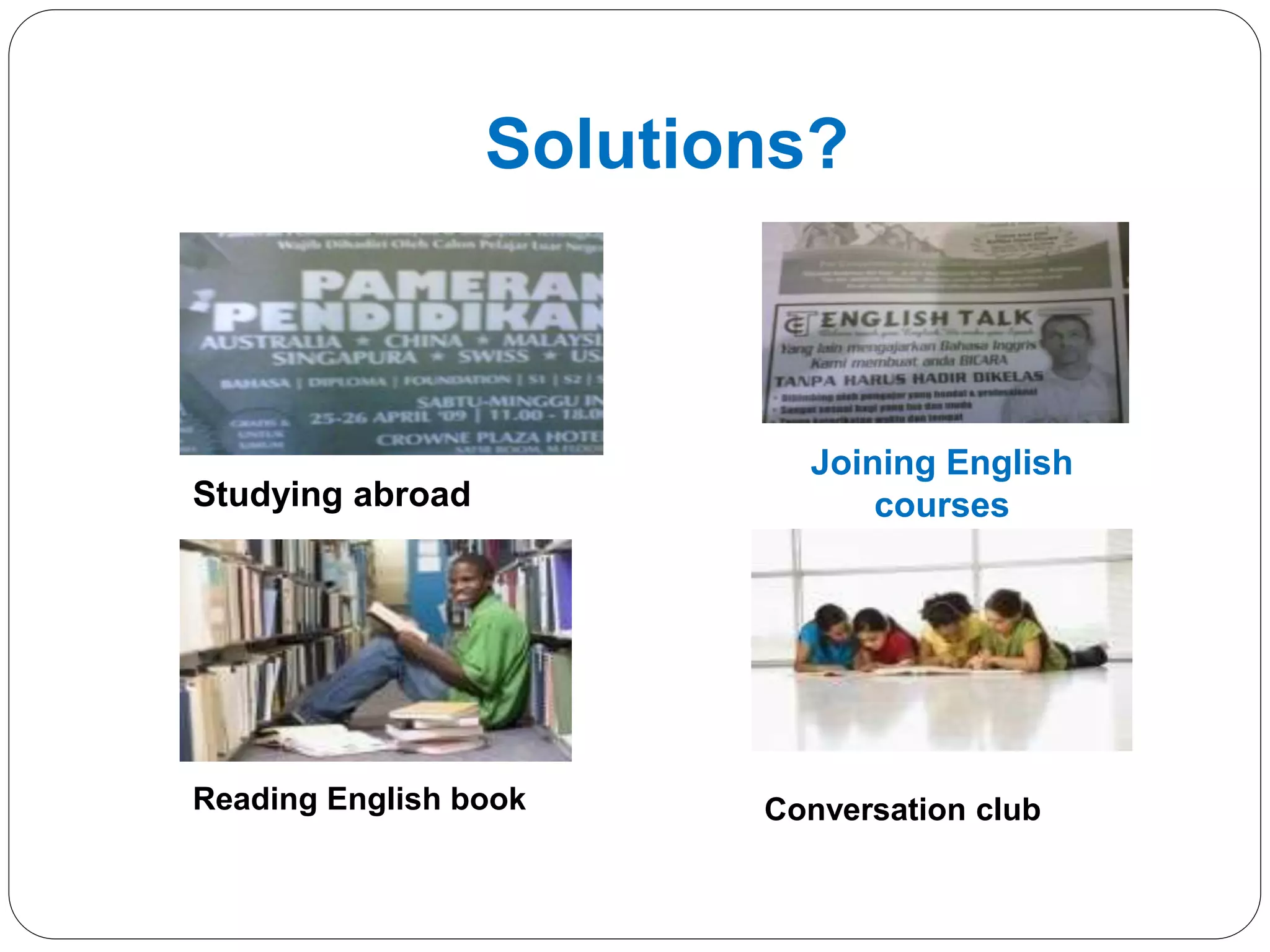
Solutions?
Studying abroad
Joining English
courses
Reading English book Conversation club
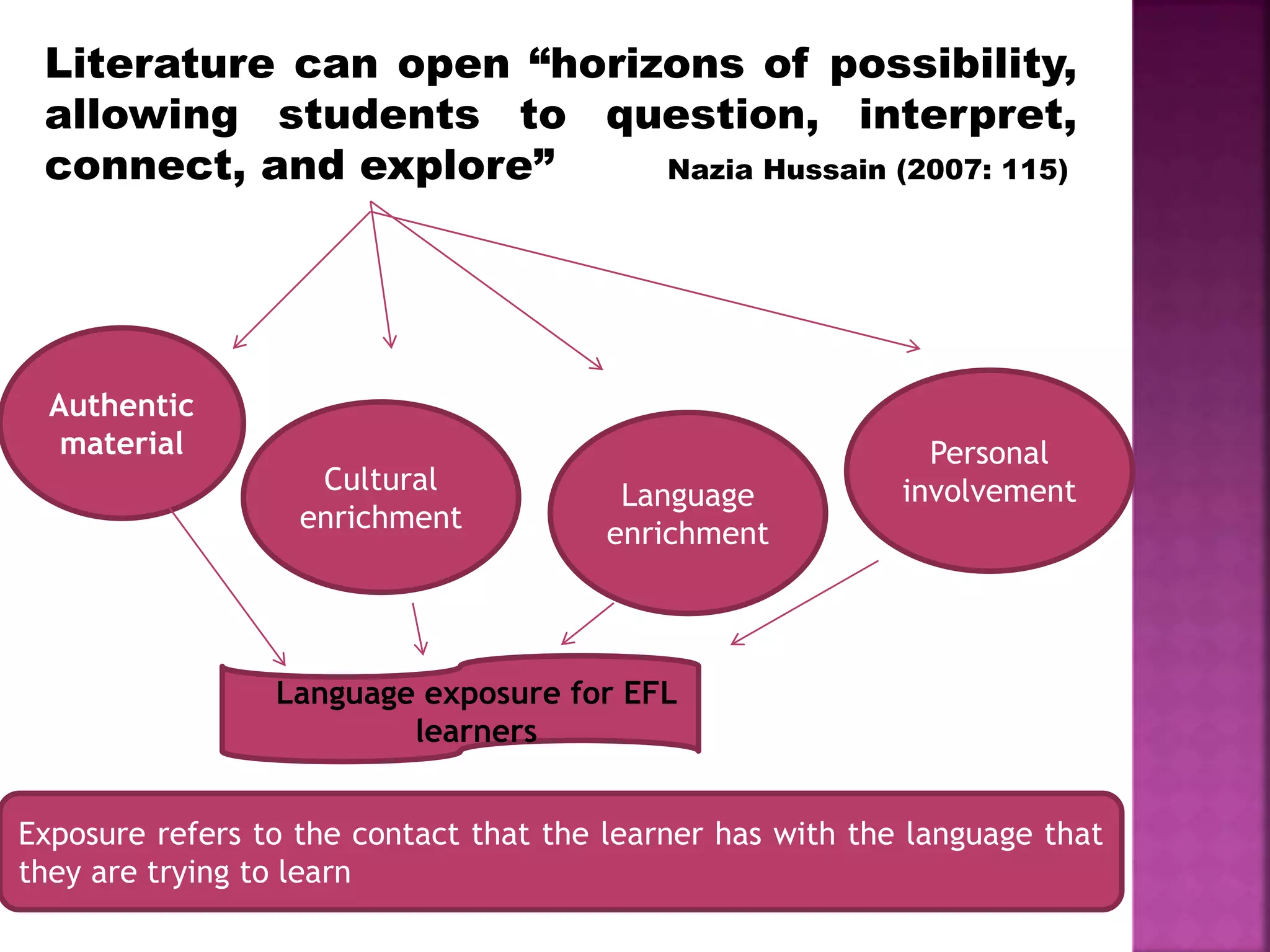
Literature can open “horizons of possibility,
allowing students to question, interpret,
connect, and explore” Nazia Hussain (2007: 115)
Authentic
material
Cultural
enrichment
Language
enrichment
Personal
involvement
Language exposure for EFL
learners
Exposure refers to the contact that the learner has with the language that
they are trying to learn
Hindrance that may block the successful use
of literary text into foreign language class
activities
 there are very few pedagogically-designed
appropriate materials
 there is a lack of preparation in the area of
literature teaching in EFL programs
 Third, there is the absence of clear-cut
objectives defining the role of literature in EFL.
Approach to engage literary text for the purpose of EFL
1. The approach of bringing the
literary text should be focused
on the students’ interest as
language learners.
2. The teacher’s function is not to fill
learners by the knowledge of an
omniscient teacher but as a guide and
assistant for students.
3. the reception aesthetic
theory and quite similarly
the reader response
theories are closely
relevant ones.
Literary text provides students as foreign language learners
with more opportunities to express ideas, thought, and
emotion in appropriate English.
THANK YOU

Engaging literary text to language exposure for foreign presentation

  • 1.
    By Mister Gidion Maru COTEFL,May 1-2, 2009 Purwokerto Engaging Literary Text to Language Exposure for Foreign English Learners
  • 2.
    The goal ofEFL is to communicate in English Learning English for years Facts: - fail to utter what needs to utter -able to speak but they can not meet the required grammar -confuse to apply English constructions practically and pragmatically in communication process
  • 3.
     The interventionof students’ native language  big class (overcrowded)  an excessive low number of English as a foreign language contact hours per week,  behavioral problems on the part of the students  lack of resources, equipment and material  teacher competence  lack of sufficient support both from government and parents  curriculum designed merely to meet grading system or other purpose
  • 4.
  • 5.
    Literature can open“horizons of possibility, allowing students to question, interpret, connect, and explore” Nazia Hussain (2007: 115) Authentic material Cultural enrichment Language enrichment Personal involvement Language exposure for EFL learners Exposure refers to the contact that the learner has with the language that they are trying to learn
  • 6.
    Hindrance that mayblock the successful use of literary text into foreign language class activities  there are very few pedagogically-designed appropriate materials  there is a lack of preparation in the area of literature teaching in EFL programs  Third, there is the absence of clear-cut objectives defining the role of literature in EFL.
  • 7.
    Approach to engageliterary text for the purpose of EFL 1. The approach of bringing the literary text should be focused on the students’ interest as language learners. 2. The teacher’s function is not to fill learners by the knowledge of an omniscient teacher but as a guide and assistant for students. 3. the reception aesthetic theory and quite similarly the reader response theories are closely relevant ones. Literary text provides students as foreign language learners with more opportunities to express ideas, thought, and emotion in appropriate English.
  • 8.