vTHERMODYNE
THERMODYNE ENGINEERING SYSTEMS
 Periodically monitor flue gas
composition and tune your boiler to
maintain excess air at optimum level
vTHERMODYNE
 Recover heat from boiler blow down by
using heat exchanger to preheat boiler
makeup water
vTHERMODYNE
 Install an automatic blowdown control
system as it optimizes blowdown rates
by regulating water discharged in
relation to dissolved solids present in
water
vTHERMODYNE
 Clear boiler waterside heat transfer
surfaces to prevent scaling in boiler
vTHERMODYNE
 Insulate steam distribution and
condensate return lines to reduce
energy losses by 90%
vTHERMODYNE
 Install removable insulation on valves
and fittings and also on components
requiring periodic inspection or repair
vTHERMODYNE
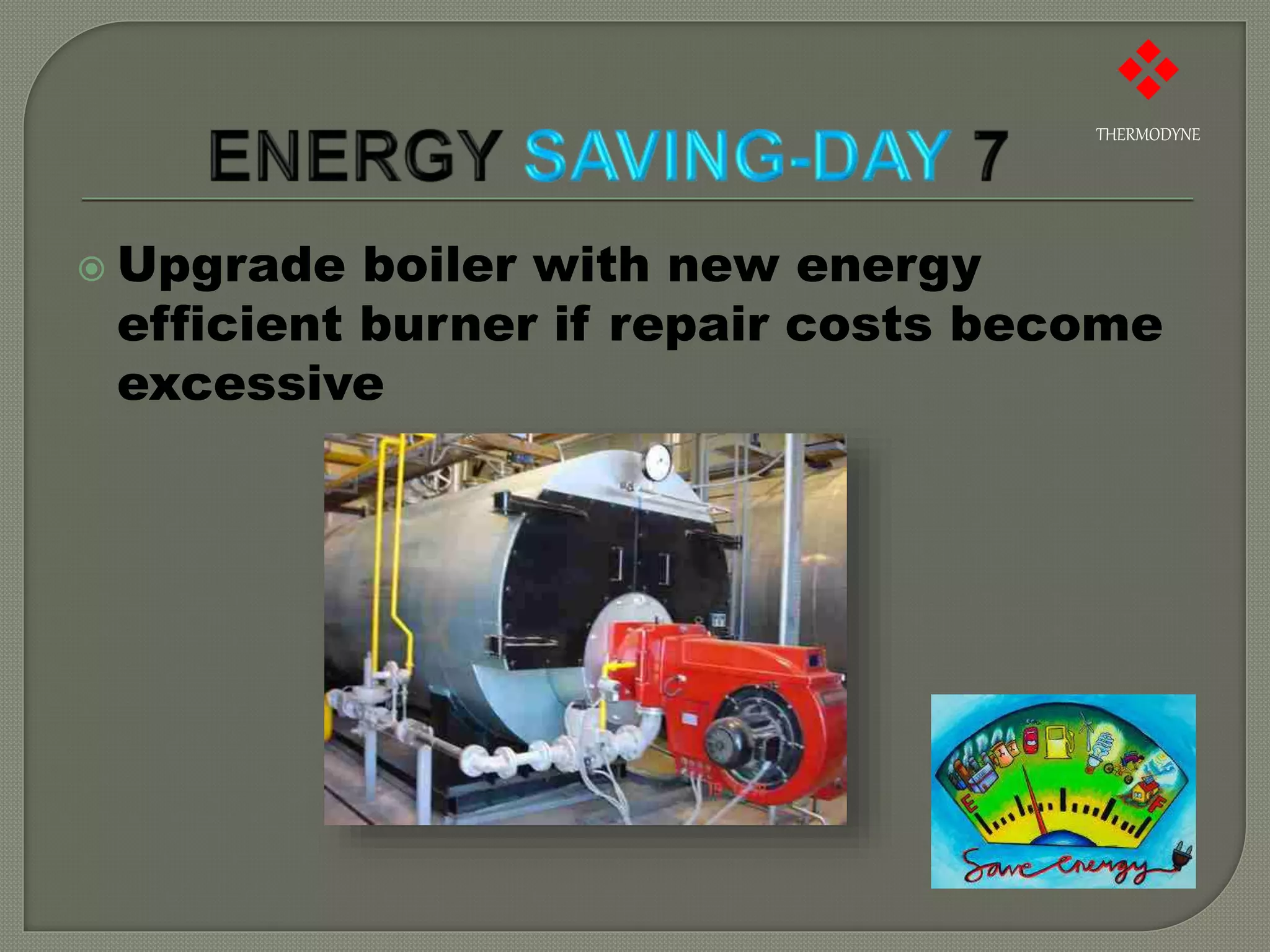
 Upgrade boiler with new energy
efficient burner if repair costs become
excessive
vTHERMODYNE
 Conduct burner maintenance at regular
intervals and install smaller burner on
boiler that is oversized relative to its
steam load
vTHERMODYNE
 Develop and implement a routine inspection
and maintenance program to check steam
traps and steam lines for leaks. Repair leaks
and replace faulty steam traps as soon as
possible.
vTHERMODYNE
 Obtain the services of a water
treatment specialist to prevent system
scale and corrosion and to optimize
cycles of concentration
vTHERMODYNE
 Install economizer as it recovers heat
from hot flue gases and preheats feed
water
vTHERMODYNE
 Install air preheater as it recovers heat
from hot flue gases and transfers this
heat to incoming air for efficient
combustion
vTHERMODYNE
 Develop and implement a boiler tuning
program to be completed a minimum of
once per operating year
vTHERMODYNE
 Consider installing turbulators on 2-3
pass boilers as turbulators can be a
cost-effective way to reduce the stack
temperature and increase the fuel to
steam efficiency
vTHERMODYNE
 Improve efficiency of boiler through
maximizing the return of hot
condensate to the boiler
vTHERMODYNE
 Use variable speed drives on large
boiler combustion air fans with
variable flows
vTHERMODYNE
 Clean burners,nozzels,strainers and
inspect oil heaters for proper oil
temperature
vTHERMODYNE
 Consider multiple or modular boiler
units instead of 1 or 2 large boilers
vTHERMODYNE
 Make sure that boiler duty is at
optimum efficiency. For example, don’t
use two boilers at 30 percent output if
you can run one at 60 to 70 percent
output
vTHERMODYNE
 If you measure steam or gas, measure
the mass flow, not the volume flow. It
takes ten times the energy to create 1
m3 of steam at 10 bar than at 1 bar, yet
the volume is the same
vTHERMODYNE
 Make sure you are only generating
what you need. Measure the demand
and compare it with what the boiler is
generating. This will ensure you’re not
wasting steam heating up your factory
instead of your process
vTHERMODYNE
 Steam metering throughout the entire
distribution system is crucial for good
energy management and to identify and
implement energy saving measures
vTHERMODYNE
 • Remove soot deposits when flue gas
temperature rises 40°C above the
normal. A coating of 3mm thick soot on
the heat transfer surface can cause an
increase in fuel consumption of as
much as 2.5%.
vTHERMODYNE
 • Recover heat from steam condensate.
For every 6°C rise in boiler feed water
temperature through condensate
return, there is 1% saving in fuel.
vTHERMODYNE
 Boilers should be monitored for flue
gas losses, radiation losses,
incomplete combustion, blow down
losses, excess air etc. Proper control
can decrease the consumption upto
20%.
vTHERMODYNE
 • Stop steam leakage. Steam leakage
from a 3 mm-diameter hole on a
pipeline carrying steam at 7kg/cm2
would waste 32 kl of fuel oil per year
amounting to a loss of Rs. 3 lakh.
vTHERMODYNE
 Install a dial type thermometer at the
base of the stack to monitor the
exhaust flue gas temperature
vTHERMODYNE
 The refractory should be checked at
least once in a month for their
condition. Any damage in the refractory
will lead to localized heating of the
shell and damage to the same.
vTHERMODYNE
 Keep a check on the content of
combustion gases using flue gas
analyzer to adjust the air fuel ratio
accordingly
vTHERMODYNE
Optimize the deaerator vent rate
vTHERMODYNE
Recover thermal energy from
waste water streams
vTHERMODYNE
THERMODYNE ENGINEERING SYSTEMS
A-7 / 108 -110, SSGT Road Industrial Area,
Ghaziabad, U.P. – 201009
Mobile No. : +91-9891042944 / +91-9990212122
+91-120-4110482 / 4562332
Email: sales@thermodyneboilers.com
Website: www.thermodynneboilers.com
vTHERMODYNE

Energy Saving Tips For Steam Boiler - Thermodyne Boilers

  • 1.
  • 2.
     Periodically monitorflue gas composition and tune your boiler to maintain excess air at optimum level vTHERMODYNE
  • 3.
     Recover heatfrom boiler blow down by using heat exchanger to preheat boiler makeup water vTHERMODYNE
  • 4.
     Install anautomatic blowdown control system as it optimizes blowdown rates by regulating water discharged in relation to dissolved solids present in water vTHERMODYNE
  • 5.
     Clear boilerwaterside heat transfer surfaces to prevent scaling in boiler vTHERMODYNE
  • 6.
     Insulate steamdistribution and condensate return lines to reduce energy losses by 90% vTHERMODYNE
  • 7.
     Install removableinsulation on valves and fittings and also on components requiring periodic inspection or repair vTHERMODYNE
  • 8.
     Upgrade boilerwith new energy efficient burner if repair costs become excessive vTHERMODYNE
  • 9.
     Conduct burnermaintenance at regular intervals and install smaller burner on boiler that is oversized relative to its steam load vTHERMODYNE
  • 10.
     Develop andimplement a routine inspection and maintenance program to check steam traps and steam lines for leaks. Repair leaks and replace faulty steam traps as soon as possible. vTHERMODYNE
  • 11.
     Obtain theservices of a water treatment specialist to prevent system scale and corrosion and to optimize cycles of concentration vTHERMODYNE
  • 12.
     Install economizeras it recovers heat from hot flue gases and preheats feed water vTHERMODYNE
  • 13.
     Install airpreheater as it recovers heat from hot flue gases and transfers this heat to incoming air for efficient combustion vTHERMODYNE
  • 14.
     Develop andimplement a boiler tuning program to be completed a minimum of once per operating year vTHERMODYNE
  • 15.
     Consider installingturbulators on 2-3 pass boilers as turbulators can be a cost-effective way to reduce the stack temperature and increase the fuel to steam efficiency vTHERMODYNE
  • 16.
     Improve efficiencyof boiler through maximizing the return of hot condensate to the boiler vTHERMODYNE
  • 17.
     Use variablespeed drives on large boiler combustion air fans with variable flows vTHERMODYNE
  • 18.
     Clean burners,nozzels,strainersand inspect oil heaters for proper oil temperature vTHERMODYNE
  • 19.
     Consider multipleor modular boiler units instead of 1 or 2 large boilers vTHERMODYNE
  • 20.
     Make surethat boiler duty is at optimum efficiency. For example, don’t use two boilers at 30 percent output if you can run one at 60 to 70 percent output vTHERMODYNE
  • 21.
     If youmeasure steam or gas, measure the mass flow, not the volume flow. It takes ten times the energy to create 1 m3 of steam at 10 bar than at 1 bar, yet the volume is the same vTHERMODYNE
  • 22.
     Make sureyou are only generating what you need. Measure the demand and compare it with what the boiler is generating. This will ensure you’re not wasting steam heating up your factory instead of your process vTHERMODYNE
  • 23.
     Steam meteringthroughout the entire distribution system is crucial for good energy management and to identify and implement energy saving measures vTHERMODYNE
  • 24.
     • Removesoot deposits when flue gas temperature rises 40°C above the normal. A coating of 3mm thick soot on the heat transfer surface can cause an increase in fuel consumption of as much as 2.5%. vTHERMODYNE
  • 25.
     • Recoverheat from steam condensate. For every 6°C rise in boiler feed water temperature through condensate return, there is 1% saving in fuel. vTHERMODYNE
  • 26.
     Boilers shouldbe monitored for flue gas losses, radiation losses, incomplete combustion, blow down losses, excess air etc. Proper control can decrease the consumption upto 20%. vTHERMODYNE
  • 27.
     • Stopsteam leakage. Steam leakage from a 3 mm-diameter hole on a pipeline carrying steam at 7kg/cm2 would waste 32 kl of fuel oil per year amounting to a loss of Rs. 3 lakh. vTHERMODYNE
  • 28.
     Install adial type thermometer at the base of the stack to monitor the exhaust flue gas temperature vTHERMODYNE
  • 29.
     The refractoryshould be checked at least once in a month for their condition. Any damage in the refractory will lead to localized heating of the shell and damage to the same. vTHERMODYNE
  • 30.
     Keep acheck on the content of combustion gases using flue gas analyzer to adjust the air fuel ratio accordingly vTHERMODYNE
  • 31.
    Optimize the deaeratorvent rate vTHERMODYNE
  • 32.
    Recover thermal energyfrom waste water streams vTHERMODYNE
  • 33.
    THERMODYNE ENGINEERING SYSTEMS A-7/ 108 -110, SSGT Road Industrial Area, Ghaziabad, U.P. – 201009 Mobile No. : +91-9891042944 / +91-9990212122 +91-120-4110482 / 4562332 Email: sales@thermodyneboilers.com Website: www.thermodynneboilers.com vTHERMODYNE