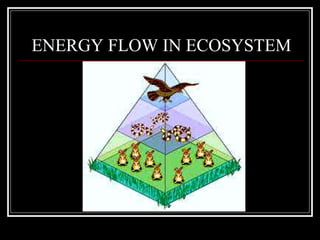
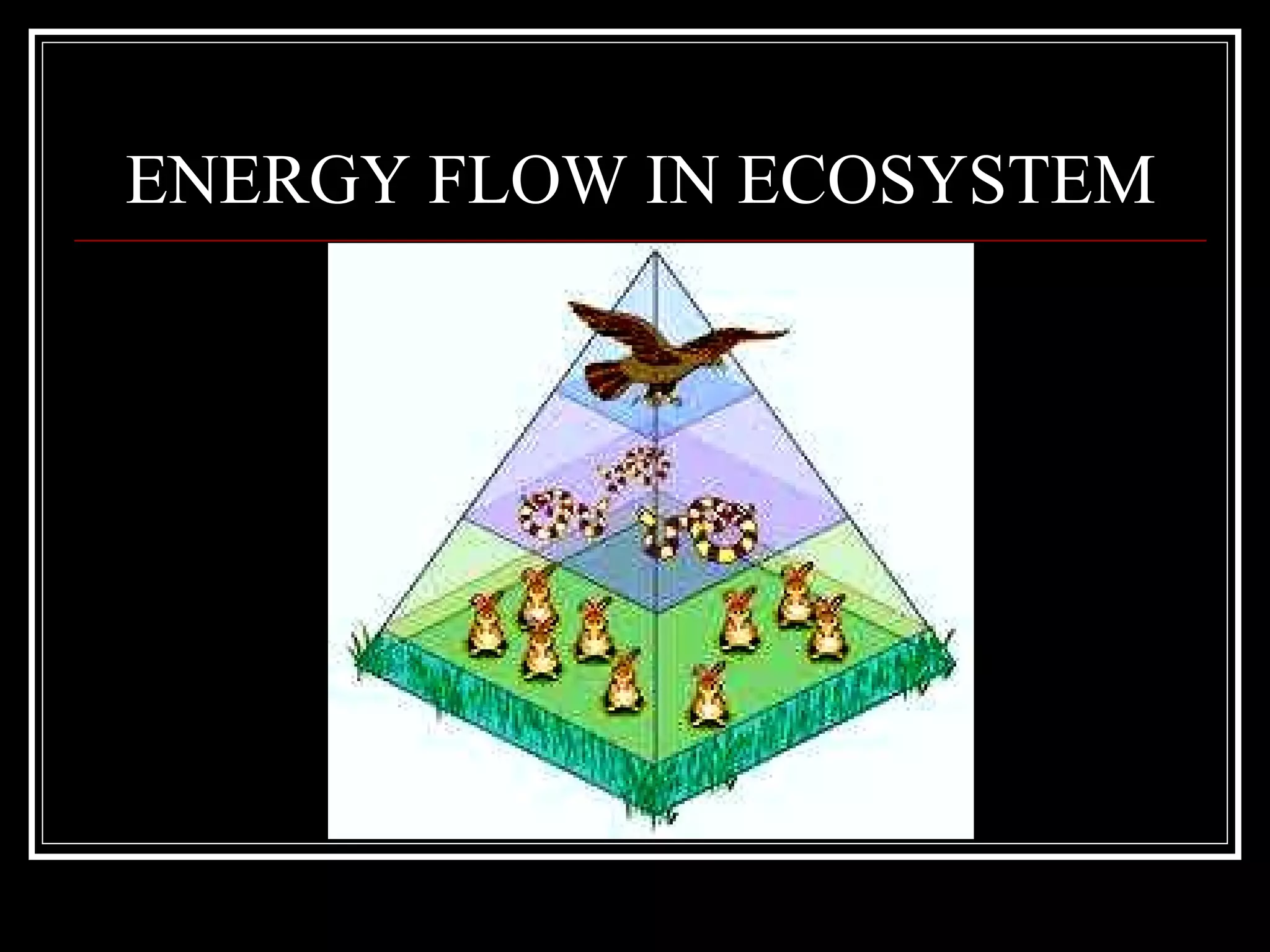
ENERGY FLOW IN ECOSYSTEM
2. Ecosystems and Biomes 2.1 Energy Flow 2.1.1 Energy roles Consumer Producers Decomposer 2.1.2 Food Chain and Food web 2.1.3 Energy Pyramids 2.2 Cycles of  Matter 2.2.1 Water cycle 2.2.2 Carbon and oxygen cycles .
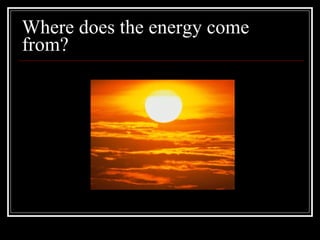
Where does the energy come from?
Organisms and Energy All the energy on Earth comes from the sun!!
Producers Organisms that use the energy from the sun to produce their own food. Ex: Plants, algae and  some bacteria.
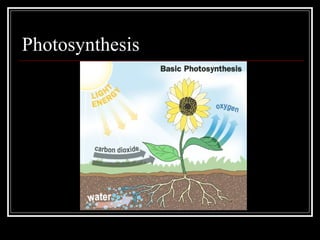
Photosynthesis
Consumers Organisms that obtains energy by feeding on other organisms.  3-Types Herbivores Carnivores Scavengers and decomposers
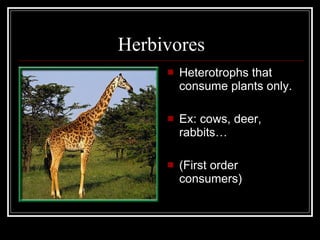
Herbivores Heterotrophs that consume plants only. Ex: cows, deer, rabbits… (First order consumers)
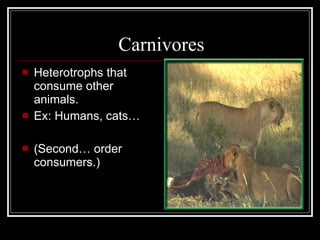
Carnivores Heterotrophs that consume other animals. Ex: Humans, cats… (Second… order consumers.)
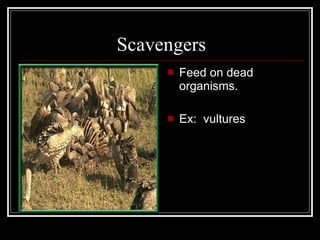
Scavengers Feed on dead organisms. Ex:  vultures
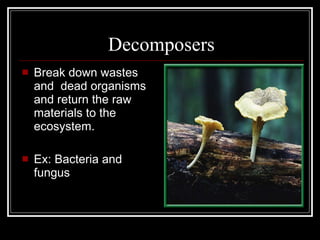
Decomposers Break down wastes and  dead organisms and return the raw materials to the ecosystem. Ex: Bacteria and fungus
Are the decomposer nature´s recyclers? While obtain energy for their own needs, decomposer return simple molecules to the environment. These molecules can be used again by other organisms.
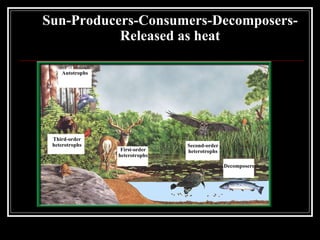
How does energy flow through the ecosystem??? In  ONE  direction only The movement of the energy through the ecosystem can be show in diagram called food chain
Section 2.2 Summary – pages 46 - 57 Sun-Producers-Consumers-Decomposers- Released as heat Autotrophs First-order heterotrophs Third-order heterotrophs Second-order heterotrophs Decomposers
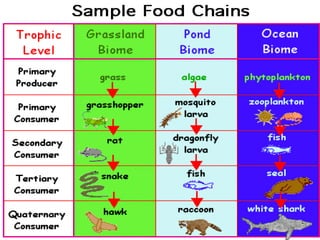
Food chain and Food web The energy enter as sunlight and converted to food molecules by producer. After this energy is transfer to each organism that eat a producer And to another organism that feed on these consumers.
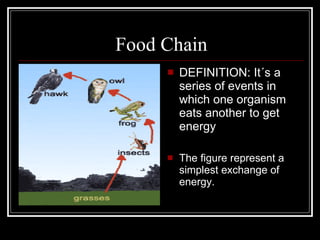
Food Chain DEFINITION: It´s a series of events in which one organism eats another to get energy The figure represent a simplest exchange of energy.
 
 
Videos http://www.youtube.com/watch?v=rHFdl0PzFiE&feature=related http://www.youtube.com/watch?v=LBagx9Qhdx8&feature=relate d
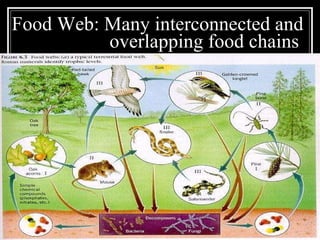
Food Web: Many interconnected and    overlapping food chains
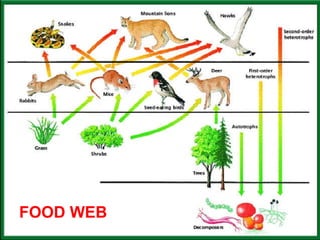
Food Web FOOD WEB
Ecological Pyramids Shows how energy flows through the ecosystem
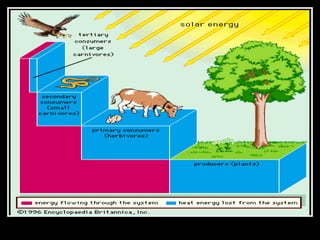
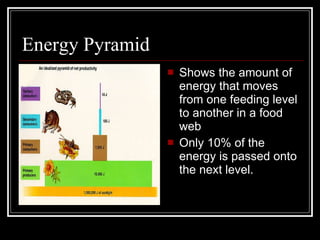
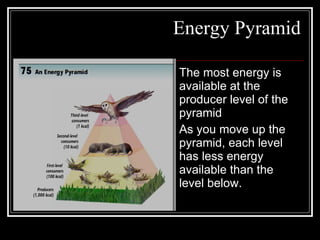
Energy Pyramid Shows the amount of energy that moves from one feeding level to another in a food web Only 10% of the energy is passed onto the next level.
Energy Pyramid The most energy is available at the producer level of the pyramid  As you move up the pyramid, each level has less energy available than the level below.
Cycles of the matter What is a cycle? Is a series of things that repeat over and over again What are some example of cycles? Water cycle Oxygen cycle Carbon dioxide cycle
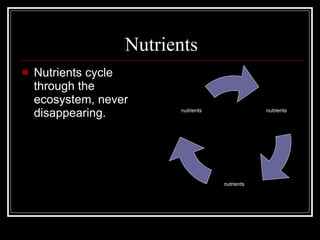
Nutrients Nutrients cycle through the ecosystem, never disappearing.  nutrients nutrients nutrients
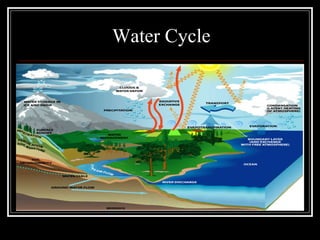
Water Cycle 3 parts… Evaporation Condensation Precipitation
Evaporation The process by which molecules of liquid water absorb energy and change to a gas From oceans, lakes, river. From living things: Leaves of trees, liquid wastes and when you exhale.
Condensation This process by which a gas changes to a liquid. When the gas rises the atmosphere , it cool down and a little drop are formed.  The water droplets collect around particles of dust , eventually forming clouds.
Precipitation To more water condenses the drop grow larger  and heavy then fall back to earth as precipitation. Over ocean and lake  When fall in land may  soak and become groundwater.
Water Cycle
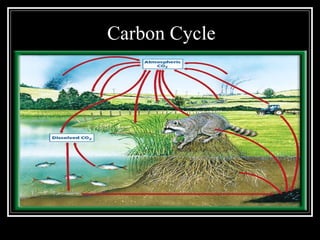
Carbon Cycle
Class work See the video and complete the worshhet. http://www.youtube.com/watch?v=U3SZKJVKRxQ
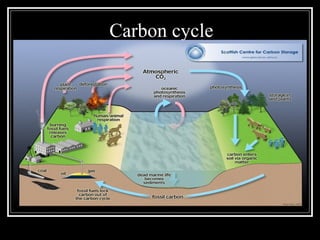
Carbon cycle
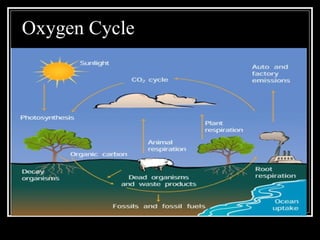
Oxygen Cycle
Oxygen and carbon cycle These two elements are essential to the life on the earth  In ecosystems the process of carbon and oxygen cycles are linked Producers, consumers, and decomposers play important roles  in recycling carbon and oxygen.
Carbon cycle The cycle can start when producers take in carbon  dioxide gas from the air and release oxygen  during photosynthesis.  They take the carbon and make food molecules such as sugar and starches to get energy
Carbon cycle When consumers eat producers, they take in the carbon-containing food molecules to obtain energy. The consumer break down the carbon compounds in  a process called respiration in this time they release Then carbon dioxide is cycled back into the atmosphere as carbon dioxide
Oxygen cycle The oxygen is found through the ecosystems Producers release oxygen in  the photosynthesis process. The organisms take the oxygen from air or water and use it to carry out their life process.
Human Impact  (Released CO2) Industrial pollutions, when people burn oil or fuels.  Clear forests and burn Less trees – less absortion f CO2 from the environment.

Energy flow in ecosystems

  • 1.
    ENERGY FLOW INECOSYSTEM
  • 2.
    2. Ecosystems andBiomes 2.1 Energy Flow 2.1.1 Energy roles Consumer Producers Decomposer 2.1.2 Food Chain and Food web 2.1.3 Energy Pyramids 2.2 Cycles of Matter 2.2.1 Water cycle 2.2.2 Carbon and oxygen cycles .
  • 3.
    Where does theenergy come from?
  • 4.
    Organisms and EnergyAll the energy on Earth comes from the sun!!
  • 5.
    Producers Organisms thatuse the energy from the sun to produce their own food. Ex: Plants, algae and some bacteria.
  • 6.
  • 7.
    Consumers Organisms thatobtains energy by feeding on other organisms. 3-Types Herbivores Carnivores Scavengers and decomposers
  • 8.
    Herbivores Heterotrophs thatconsume plants only. Ex: cows, deer, rabbits… (First order consumers)
  • 9.
    Carnivores Heterotrophs thatconsume other animals. Ex: Humans, cats… (Second… order consumers.)
  • 10.
    Scavengers Feed ondead organisms. Ex: vultures
  • 11.
    Decomposers Break downwastes and dead organisms and return the raw materials to the ecosystem. Ex: Bacteria and fungus
  • 12.
    Are the decomposernature´s recyclers? While obtain energy for their own needs, decomposer return simple molecules to the environment. These molecules can be used again by other organisms.
  • 13.
    How does energyflow through the ecosystem??? In ONE direction only The movement of the energy through the ecosystem can be show in diagram called food chain
  • 14.
    Section 2.2 Summary– pages 46 - 57 Sun-Producers-Consumers-Decomposers- Released as heat Autotrophs First-order heterotrophs Third-order heterotrophs Second-order heterotrophs Decomposers
  • 15.
    Food chain andFood web The energy enter as sunlight and converted to food molecules by producer. After this energy is transfer to each organism that eat a producer And to another organism that feed on these consumers.
  • 16.
    Food Chain DEFINITION:It´s a series of events in which one organism eats another to get energy The figure represent a simplest exchange of energy.
  • 17.
  • 18.
  • 19.
  • 20.
    Food Web: Manyinterconnected and overlapping food chains
  • 21.
  • 22.
    Ecological Pyramids Showshow energy flows through the ecosystem
  • 23.
    Energy Pyramid Showsthe amount of energy that moves from one feeding level to another in a food web Only 10% of the energy is passed onto the next level.
  • 24.
    Energy Pyramid Themost energy is available at the producer level of the pyramid As you move up the pyramid, each level has less energy available than the level below.
  • 25.
    Cycles of thematter What is a cycle? Is a series of things that repeat over and over again What are some example of cycles? Water cycle Oxygen cycle Carbon dioxide cycle
  • 26.
    Nutrients Nutrients cyclethrough the ecosystem, never disappearing. nutrients nutrients nutrients
  • 27.
    Water Cycle 3parts… Evaporation Condensation Precipitation
  • 28.
    Evaporation The processby which molecules of liquid water absorb energy and change to a gas From oceans, lakes, river. From living things: Leaves of trees, liquid wastes and when you exhale.
  • 29.
    Condensation This processby which a gas changes to a liquid. When the gas rises the atmosphere , it cool down and a little drop are formed. The water droplets collect around particles of dust , eventually forming clouds.
  • 30.
    Precipitation To morewater condenses the drop grow larger and heavy then fall back to earth as precipitation. Over ocean and lake When fall in land may soak and become groundwater.
  • 31.
  • 32.
  • 33.
    Class work Seethe video and complete the worshhet. http://www.youtube.com/watch?v=U3SZKJVKRxQ
  • 34.
  • 35.
  • 36.
    Oxygen and carboncycle These two elements are essential to the life on the earth In ecosystems the process of carbon and oxygen cycles are linked Producers, consumers, and decomposers play important roles in recycling carbon and oxygen.
  • 37.
    Carbon cycle Thecycle can start when producers take in carbon dioxide gas from the air and release oxygen during photosynthesis. They take the carbon and make food molecules such as sugar and starches to get energy
  • 38.
    Carbon cycle Whenconsumers eat producers, they take in the carbon-containing food molecules to obtain energy. The consumer break down the carbon compounds in a process called respiration in this time they release Then carbon dioxide is cycled back into the atmosphere as carbon dioxide
  • 39.
    Oxygen cycle Theoxygen is found through the ecosystems Producers release oxygen in the photosynthesis process. The organisms take the oxygen from air or water and use it to carry out their life process.
  • 40.
    Human Impact (Released CO2) Industrial pollutions, when people burn oil or fuels. Clear forests and burn Less trees – less absortion f CO2 from the environment.