
Employee Recruiting 3.0 Social Media Best Practices for Employee Recruitment Summer / Fall 2011 St. Lawrence College Lindsey Fair, Faculty Advisor Matt Landers, Research Lead Chris Green, Researcher (Advertising) Olga Dolia, Researcher (Marketing) Casie Jones, Researcher (HR) Partners
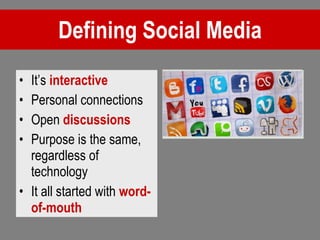
Defining Social Media It’s  interactive Personal connections Open  discussions Purpose is the same, regardless of technology It all started with  word-of-mouth
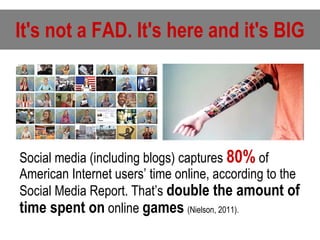
It's not a FAD. It's here and it's BIG Social media (including blogs) captures  80%  of American Internet users’ time online, according to the Social Media Report. That’s  double the amount of time spent on  online  games   (Nielson, 2011).
They want to connect not just surf anymore. They expect to find you there, and that’s where they’re looking.
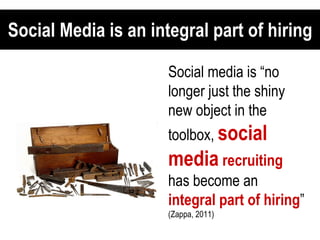
Social Media is an integral part of hiring Social media is “no longer just the shiny new object in the toolbox,  social media  recruiting  has become an  integral part of hiring ”  (Zappa, 2011)
Job Seekers versus Candidates Only  2.9%  of Americans spend time on online classifieds   Classifieds are great for job seekers, but  not so great for industries with low unemployment rates
Not Looking = Top Tier Companies need to appeal to the  53%  of the workforce that are  open to a new job   but  are  not actively looking , according to Jobvite (Murguia, 2011).   Often, these candidates are also the  top tier candidates .
Employers are Onboard 56%  of organizations are  using social networking sites to find candidates  in one way or another.  (SHRM, 2011) two-thirds ( 64%)  of businesses  use two or more social networks  in the recruitment strategy.  (McIlvaine, 2011)   Nearly  90%  of employers  have plans to use social media  as a recruiting tool in the near future  (Adams, 2011) 53% success rate in recruiting through social networks.   (Atenta, 2011)
Industry Comparisons Health care  and social assistance agencies are utilizing social media for recruiting the most  (21%).  Surprisingly, only  13% of technical industries  are using social media to recruit and  only 3% of construction , mining, oil and gas companies are using it for this purpose.  Larger corporations are adopting 3.0 strategies faster than smaller companies  (SHRM, 2011)
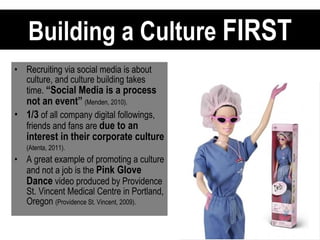
Building a Culture  FIRST Recruiting via social media is about culture, and culture building takes time.  “Social Media is a process not an event”   (Menden, 2010).   1/3  of all company digital followings, friends and fans are  due to an interest in their corporate culture   (Atenta, 2011).   A great example of promoting a culture and not a job is the  Pink Glove Dance  video produced by Providence St. Vincent Medical Centre in Portland, Oregon  (Providence St. Vincent, 2009).
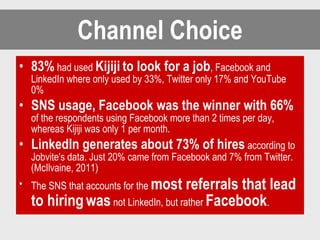
Channel Choice 83%  had used  Kijiji   to look for a job , Facebook and LinkedIn where only used by 33%, Twitter only 17% and YouTube 0% SNS usage, Facebook was the winner with 66%  of the respondents using Facebook more than 2 times per day, whereas Kijiji was only 1 per month.  LinkedIn generates about 73% of hires  according to Jobvite's data. Just 20% came from Facebook and 7% from Twitter. (McIlvaine, 2011)  The SNS that accounts for the  most referrals that lead to hiring   was  not LinkedIn, but rather  Facebook .
Trends Talk  (mobile, digital job fairs, #hashtags)
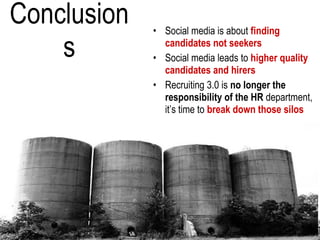
Conclusions Social media is about  finding candidates not seekers Social media leads to  higher quality candidates and hirers Recruiting 3.0 is  no longer the responsibility of the HR  department, it’s time to  break down those silos

Employee recruiting 3.0

  • 1.
    Employee Recruiting 3.0Social Media Best Practices for Employee Recruitment Summer / Fall 2011 St. Lawrence College Lindsey Fair, Faculty Advisor Matt Landers, Research Lead Chris Green, Researcher (Advertising) Olga Dolia, Researcher (Marketing) Casie Jones, Researcher (HR) Partners
  • 2.
    Defining Social MediaIt’s interactive Personal connections Open discussions Purpose is the same, regardless of technology It all started with word-of-mouth
  • 3.
    It's not aFAD. It's here and it's BIG Social media (including blogs) captures 80% of American Internet users’ time online, according to the Social Media Report. That’s double the amount of time spent on online games (Nielson, 2011).
  • 4.
    They want toconnect not just surf anymore. They expect to find you there, and that’s where they’re looking.
  • 5.
    Social Media isan integral part of hiring Social media is “no longer just the shiny new object in the toolbox, social media recruiting has become an integral part of hiring ” (Zappa, 2011)
  • 6.
    Job Seekers versusCandidates Only 2.9% of Americans spend time on online classifieds Classifieds are great for job seekers, but not so great for industries with low unemployment rates
  • 7.
    Not Looking =Top Tier Companies need to appeal to the 53% of the workforce that are open to a new job but are not actively looking , according to Jobvite (Murguia, 2011). Often, these candidates are also the top tier candidates .
  • 8.
    Employers are Onboard56% of organizations are using social networking sites to find candidates in one way or another. (SHRM, 2011) two-thirds ( 64%) of businesses use two or more social networks in the recruitment strategy. (McIlvaine, 2011) Nearly 90% of employers have plans to use social media as a recruiting tool in the near future (Adams, 2011) 53% success rate in recruiting through social networks. (Atenta, 2011)
  • 9.
    Industry Comparisons Healthcare and social assistance agencies are utilizing social media for recruiting the most (21%). Surprisingly, only 13% of technical industries are using social media to recruit and only 3% of construction , mining, oil and gas companies are using it for this purpose. Larger corporations are adopting 3.0 strategies faster than smaller companies (SHRM, 2011)
  • 10.
    Building a Culture FIRST Recruiting via social media is about culture, and culture building takes time. “Social Media is a process not an event” (Menden, 2010). 1/3 of all company digital followings, friends and fans are due to an interest in their corporate culture (Atenta, 2011). A great example of promoting a culture and not a job is the Pink Glove Dance video produced by Providence St. Vincent Medical Centre in Portland, Oregon (Providence St. Vincent, 2009).
  • 11.
    Channel Choice 83% had used Kijiji to look for a job , Facebook and LinkedIn where only used by 33%, Twitter only 17% and YouTube 0% SNS usage, Facebook was the winner with 66% of the respondents using Facebook more than 2 times per day, whereas Kijiji was only 1 per month. LinkedIn generates about 73% of hires according to Jobvite's data. Just 20% came from Facebook and 7% from Twitter. (McIlvaine, 2011) The SNS that accounts for the most referrals that lead to hiring was not LinkedIn, but rather Facebook .
  • 12.
    Trends Talk (mobile, digital job fairs, #hashtags)
  • 13.
    Conclusions Social mediais about finding candidates not seekers Social media leads to higher quality candidates and hirers Recruiting 3.0 is no longer the responsibility of the HR department, it’s time to break down those silos