September 29, 2009The Future of Recruiting is Social - How Social Media is Changing Recruiting Presented By: Brian CavoliDirector of Marketing and Social Media Strategies, JCSIJim SullivanCEO, JCSI
Why We Are HereUnderstand social media trends/ how they impact recruiting
Learn best practices, risks and company investments required
Learn how to evaluate success and measure business impact
Learn how to identify, connect and build relationships with passive candidates in these environments
Learn how this can be applied to enhance your employment brandWhat Else?2
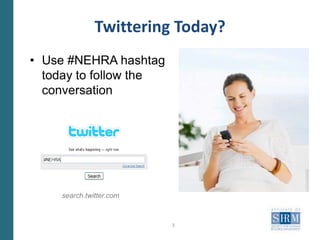
Twittering Today?Use #NEHRA hashtag today to follow the conversation search.twitter.com3
AgendaWho is Using This?Introduction to Social MediaMaking the Case for Social Staffing Evaluating the ToolsMeasurementDiscussion4
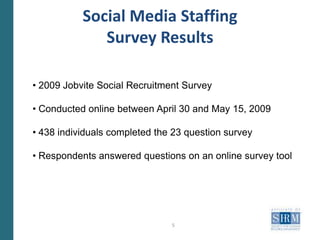
Social Media StaffingSurvey Results2009 Jobvite Social Recruitment Survey
Conducted online between April 30 and May 15, 2009
438 individuals completed the 23 question survey
Respondents answered questions on an online survey tool5
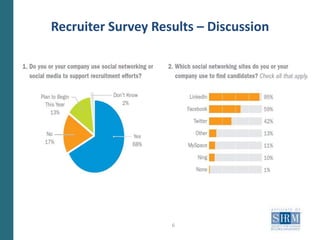
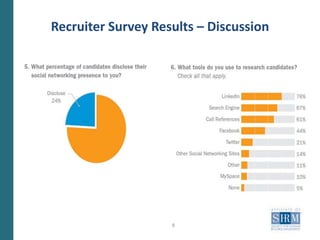
Recruiter Survey Results – Discussion6
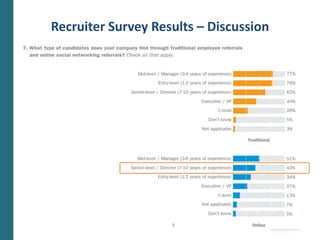
Recruiter Survey Results – Discussion7
Recruiter Survey Results – Discussion8
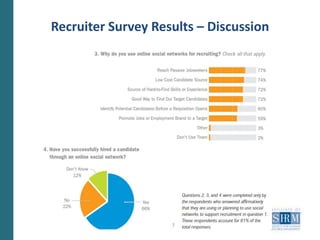
Recruiter Survey Results – Discussion9
AgendaWho is Using This?Introduction to Social MediaMaking the Case for Social Staffing Evaluating the ToolsMeasurementDiscussion10
What is Social MediaContent created by people using highly accessible and scalable publishing technologiesDemocratization of knowledge and informationTransforming people from content consumers into content producers11
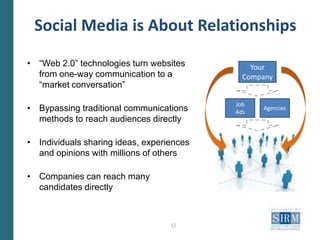
Social Media is About Relationships“Web 2.0” technologies turn websites from one-way communication to a “market conversation”Bypassing traditional communications methods to reach audiences directlyIndividuals sharing ideas, experiences and opinions with millions of othersCompanies can reach many candidates directlyYourCompanyJobAdsAgencies12
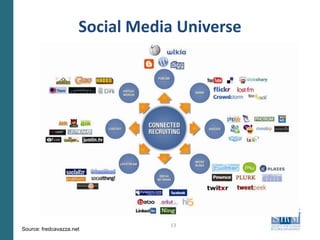
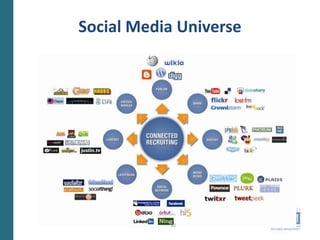
Social Media Universe13Source: fredcavazza.net
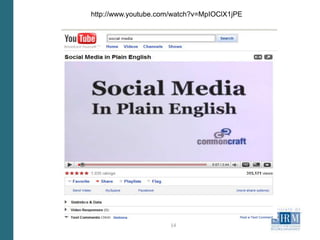
http://www.youtube.com/watch?v=MpIOClX1jPE14
AgendaWho is Using This?Introduction to Social MediaMaking the Case for Social Staffing Evaluating the ToolsMeasurementDiscussion15
The Future Staffing is SocialSocial media has revolutionized marketing – now, it is changing the future of recruitingNever before has the talent deep in a competitor’s organization been so accessibleAds and agencies are losing effectiveness social media can attract higher quality hires at a lower cost 16
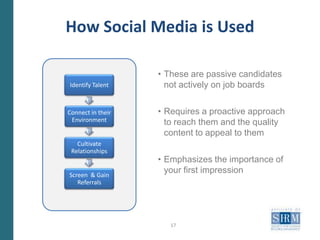
How Social Media is UsedThese are passive candidates not actively on job boards
Requires a proactive approach to reach them and the quality content to appeal to them
Emphasizes the importance of your first impression17
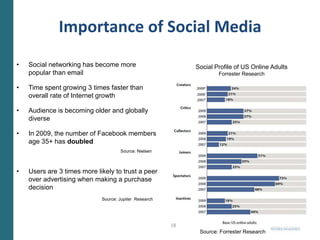
Importance of Social MediaSocial networking has become more popular than emailTime spent growing 3 times faster than overall rate of Internet growthAudience is becoming older and globally diverseIn 2009, the number of Facebook members age 35+ has doubledUsers are 3 times more likely to trust a peer over advertising when making a purchase decisionSocial Profile of US Online AdultsForrester ResearchSource: NielsenSource: Jupiter  ResearchSource: Forrester Research18
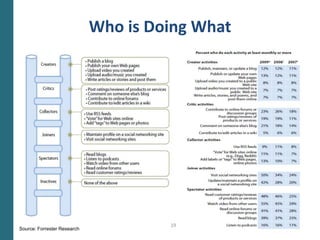
Who is Doing WhatSource: Forrester Research19
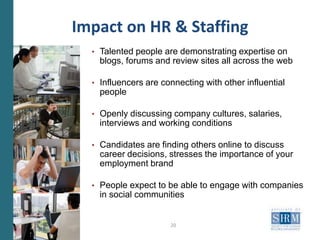
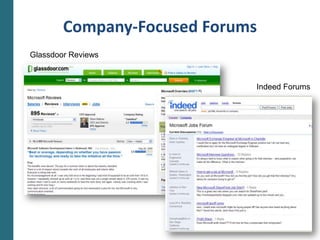
Impact on HR & StaffingTalented people are demonstrating expertise on blogs, forums and review sites all across the web
Influencers are connecting with other influential people
Openly discussing company cultures, salaries, interviews and working conditions
Candidates are finding others online to discuss career decisions, stresses the importance of your employment brand
People expect to be able to engage with companies in social communities20
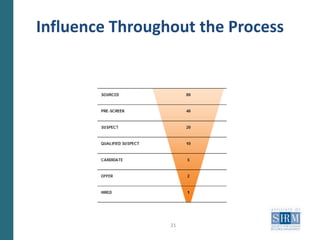
Influence Throughout the Process21
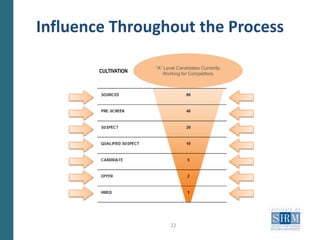
“A” Level Candidates Currently Working for CompetitorsCULTIVATIONInfluence Throughout the Process22
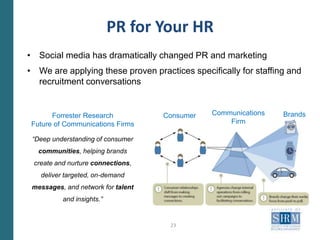
PR for Your HRSocial media has dramatically changed PR and marketingWe are applying these proven practices specifically for staffing and recruitment conversations CommunicationsFirmBrandsConsumerForrester ResearchFuture of Communications Firms“Deep understanding of consumer communities, helping brands create and nurture connections, deliver targeted, on-demand messages, and network for talent and insights.”Source: Forrester Research23
The Next Generation of RecruitingProactive outreach to participate in communities to build relationships as part of a long-term employment strategyDevelop strong understanding of the audience and where they live onlineJoin communities where relevant conversations are occurringIdentify talent based on demonstrated expertiseConnect with them by following/friending, etc Build credibility by contributing to the discussionOffer value by sharing relevant content/resourcesGain referrals through personal networksHelp shape your employment brand24
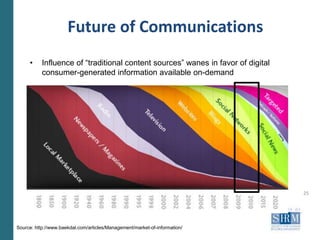
Future of CommunicationsInfluence of “traditional content sources” wanes in favor of digital consumer-generated information available on-demand25Source: http://www.baekdal.com/articles/Management/market-of-information/
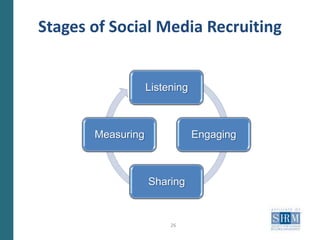
Stages of Social Media Recruiting26
ListeningSeek First to Understand, Then to Be UnderstoodFind the communities, blogs and discussion forums that attract your targeted candidatesApply monitoring tools to pick-up relevant brand mentionsParticipate in the conversation to understand the discussions, topics, personalities and toneIdentify the individuals that demonstrate expertise and influence27
EngagingAdvocate Don’t AdvertiseComment on their contributions so the pitch isn’t the first time they’ve heard of youRead several posts to understand the individual’s personality and areas of expertiseMake every communication personalized and relevantPost links to jobs and content in a way that is relevant to the discussion and adds value to the communityInvite feedback, comments and referrals and make it easy for them to contact you privately28
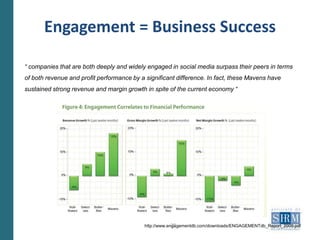
Engagement = Business Success“ companies that are both deeply and widely engaged in social media surpass their peers in terms of both revenue and profit performance by a significant difference. In fact, these Mavens have sustained strong revenue and margin growth in spite of the current economy “http://www.engagementdb.com/downloads/ENGAGEMENTdb_Report_2009.pdf29
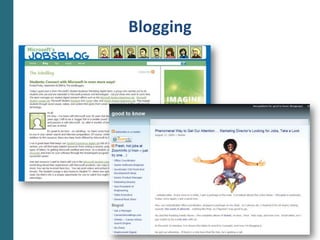
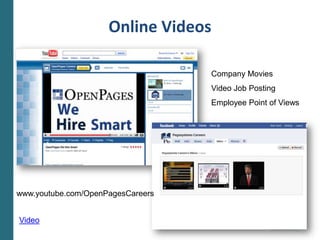
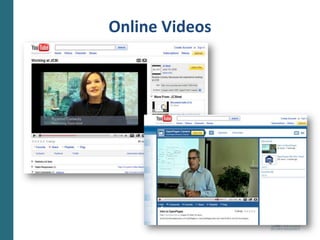
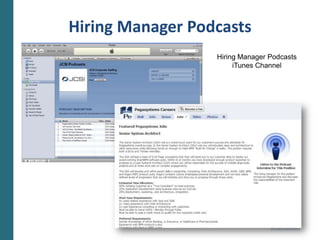
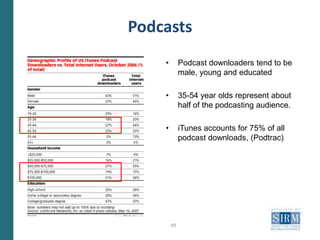
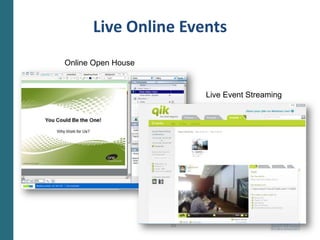
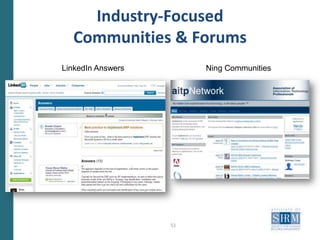
The Right Message for the Right Person at the Right TimeThere are many ways to develop tools and content that will attract and engage candidatesSharingSocial network pagesTwitterCompany videosJob posting videosPodcastsWidgetsTopic  communitiesBlogsWeb events / Webinars30
AgendaWho is Using This?Introduction to Social MediaMaking the Case for Social Staffing Evaluating the ToolsMeasurementDiscussion31
Social Media Universe32
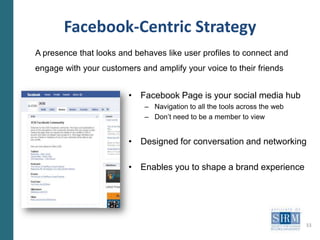
Facebook-Centric StrategyA presence that looks and behaves like user profiles to connect and engage with your customers and amplify your voice to their friendsFacebook Page is your social media hubNavigation to all the tools across the webDon’t need to be a member to viewDesigned for conversation and networking  Enables you to shape a brand experience33
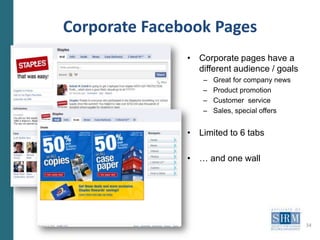
Corporate Facebook PagesCorporate pages have a different audience / goalsGreat for company newsProduct promotion Customer  serviceSales, special offersLimited to 6 tabs… and one wall34
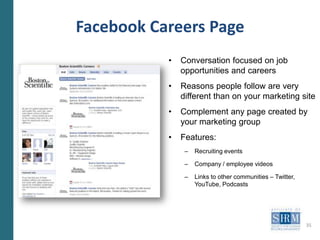
Facebook Careers PageConversation focused on job opportunities and careersReasons people follow are very different than on your marketing siteComplement any page created by your marketing groupFeatures: Recruiting eventsCompany / employee videosLinks to other communities – Twitter, YouTube, Podcasts35
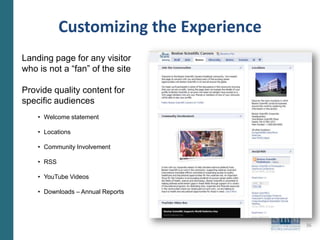
Customizing the ExperienceLanding page for any visitor who is not a “fan” of the siteProvide quality content for specific audiences Welcome statement
Locations
Community Involvement
RSS
YouTube Videos
Downloads – Annual Reports	36
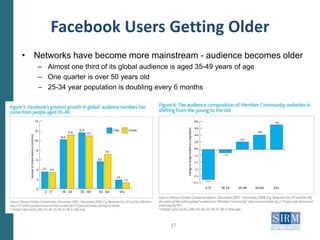
Facebook Users Getting OlderNetworks have become more mainstream - audience becomes olderAlmost one third of its global audience is aged 35-49 years of age One quarter is over 50 years old25-34 year population is doubling every 6 months37
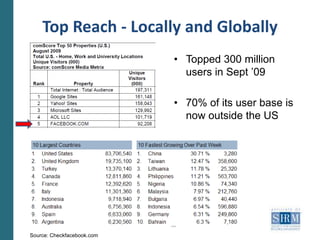
Top Reach - Locally and GloballyTopped 300 million users in Sept ’0970% of its user base is now outside the US38Source: Checkfacebook.com
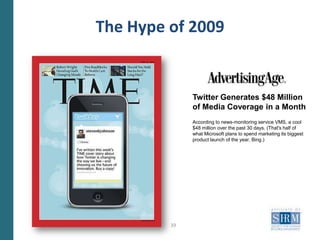
The Hype of 2009Twitter Generates $48 Million of Media Coverage in a MonthAccording to news-monitoring service VMS, a cool $48 million over the past 30 days. (That's half of what Microsoft plans to spend marketing its biggest product launch of the year, Bing.)39
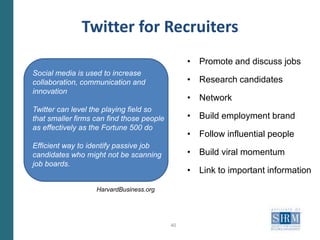
Twitter for RecruitersPromote and discuss jobsResearch candidatesNetwork Build employment brandFollow influential peopleBuild viral momentumLink to important information40Social media is used to increase collaboration, communication and innovationTwitter can level the playing field so that smaller firms can find those people as effectively as the Fortune 500 doEfficient way to identify passive job candidates who might not be scanning job boards.HarvardBusiness.org
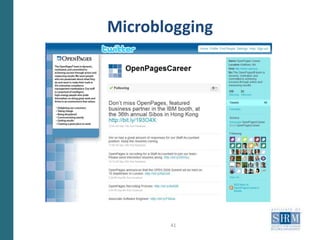
Microblogging41
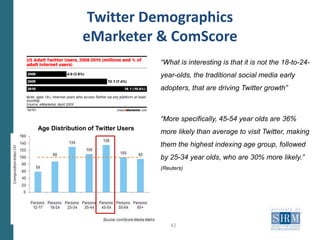
Twitter DemographicseMarketer & ComScore“What is interesting is that it is not the 18-to-24-year-olds, the traditional social media early adopters, that are driving Twitter growth”“More specifically, 45-54 year olds are 36% more likely than average to visit Twitter, making them the highest indexing age group, followed by 25-34 year olds, who are 30% more likely.”    (Reuters)Age Distribution of Twitter Users 42

NEHRA Social Staffing Presentation

  • 1.
    September 29, 2009TheFuture of Recruiting is Social - How Social Media is Changing Recruiting Presented By: Brian CavoliDirector of Marketing and Social Media Strategies, JCSIJim SullivanCEO, JCSI
  • 2.
    Why We AreHereUnderstand social media trends/ how they impact recruiting
  • 3.
    Learn best practices,risks and company investments required
  • 4.
    Learn how toevaluate success and measure business impact
  • 5.
    Learn how toidentify, connect and build relationships with passive candidates in these environments
  • 6.
    Learn how thiscan be applied to enhance your employment brandWhat Else?2
  • 7.
    Twittering Today?Use #NEHRAhashtag today to follow the conversation search.twitter.com3
  • 8.
    AgendaWho is UsingThis?Introduction to Social MediaMaking the Case for Social Staffing Evaluating the ToolsMeasurementDiscussion4
  • 9.
    Social Media StaffingSurveyResults2009 Jobvite Social Recruitment Survey
  • 10.
    Conducted online betweenApril 30 and May 15, 2009
  • 11.
    438 individuals completedthe 23 question survey
  • 12.
    Respondents answered questionson an online survey tool5
  • 13.
  • 14.
  • 15.
  • 16.
  • 17.
    AgendaWho is UsingThis?Introduction to Social MediaMaking the Case for Social Staffing Evaluating the ToolsMeasurementDiscussion10
  • 18.
    What is SocialMediaContent created by people using highly accessible and scalable publishing technologiesDemocratization of knowledge and informationTransforming people from content consumers into content producers11
  • 19.
    Social Media isAbout Relationships“Web 2.0” technologies turn websites from one-way communication to a “market conversation”Bypassing traditional communications methods to reach audiences directlyIndividuals sharing ideas, experiences and opinions with millions of othersCompanies can reach many candidates directlyYourCompanyJobAdsAgencies12
  • 20.
  • 21.
  • 22.
    AgendaWho is UsingThis?Introduction to Social MediaMaking the Case for Social Staffing Evaluating the ToolsMeasurementDiscussion15
  • 23.
    The Future Staffingis SocialSocial media has revolutionized marketing – now, it is changing the future of recruitingNever before has the talent deep in a competitor’s organization been so accessibleAds and agencies are losing effectiveness social media can attract higher quality hires at a lower cost 16
  • 24.
    How Social Mediais UsedThese are passive candidates not actively on job boards
  • 25.
    Requires a proactiveapproach to reach them and the quality content to appeal to them
  • 26.
    Emphasizes the importanceof your first impression17
  • 27.
    Importance of SocialMediaSocial networking has become more popular than emailTime spent growing 3 times faster than overall rate of Internet growthAudience is becoming older and globally diverseIn 2009, the number of Facebook members age 35+ has doubledUsers are 3 times more likely to trust a peer over advertising when making a purchase decisionSocial Profile of US Online AdultsForrester ResearchSource: NielsenSource: Jupiter ResearchSource: Forrester Research18
  • 28.
    Who is DoingWhatSource: Forrester Research19
  • 29.
    Impact on HR& StaffingTalented people are demonstrating expertise on blogs, forums and review sites all across the web
  • 30.
    Influencers are connectingwith other influential people
  • 31.
    Openly discussing companycultures, salaries, interviews and working conditions
  • 32.
    Candidates are findingothers online to discuss career decisions, stresses the importance of your employment brand
  • 33.
    People expect tobe able to engage with companies in social communities20
  • 34.
  • 35.
    “A” Level CandidatesCurrently Working for CompetitorsCULTIVATIONInfluence Throughout the Process22
  • 36.
    PR for YourHRSocial media has dramatically changed PR and marketingWe are applying these proven practices specifically for staffing and recruitment conversations CommunicationsFirmBrandsConsumerForrester ResearchFuture of Communications Firms“Deep understanding of consumer communities, helping brands create and nurture connections, deliver targeted, on-demand messages, and network for talent and insights.”Source: Forrester Research23
  • 37.
    The Next Generationof RecruitingProactive outreach to participate in communities to build relationships as part of a long-term employment strategyDevelop strong understanding of the audience and where they live onlineJoin communities where relevant conversations are occurringIdentify talent based on demonstrated expertiseConnect with them by following/friending, etc Build credibility by contributing to the discussionOffer value by sharing relevant content/resourcesGain referrals through personal networksHelp shape your employment brand24
  • 38.
    Future of CommunicationsInfluenceof “traditional content sources” wanes in favor of digital consumer-generated information available on-demand25Source: http://www.baekdal.com/articles/Management/market-of-information/
  • 39.
    Stages of SocialMedia Recruiting26
  • 40.
    ListeningSeek First toUnderstand, Then to Be UnderstoodFind the communities, blogs and discussion forums that attract your targeted candidatesApply monitoring tools to pick-up relevant brand mentionsParticipate in the conversation to understand the discussions, topics, personalities and toneIdentify the individuals that demonstrate expertise and influence27
  • 41.
    EngagingAdvocate Don’t AdvertiseCommenton their contributions so the pitch isn’t the first time they’ve heard of youRead several posts to understand the individual’s personality and areas of expertiseMake every communication personalized and relevantPost links to jobs and content in a way that is relevant to the discussion and adds value to the communityInvite feedback, comments and referrals and make it easy for them to contact you privately28
  • 42.
    Engagement = BusinessSuccess“ companies that are both deeply and widely engaged in social media surpass their peers in terms of both revenue and profit performance by a significant difference. In fact, these Mavens have sustained strong revenue and margin growth in spite of the current economy “http://www.engagementdb.com/downloads/ENGAGEMENTdb_Report_2009.pdf29
  • 43.
    The Right Messagefor the Right Person at the Right TimeThere are many ways to develop tools and content that will attract and engage candidatesSharingSocial network pagesTwitterCompany videosJob posting videosPodcastsWidgetsTopic communitiesBlogsWeb events / Webinars30
  • 44.
    AgendaWho is UsingThis?Introduction to Social MediaMaking the Case for Social Staffing Evaluating the ToolsMeasurementDiscussion31
  • 45.
  • 46.
    Facebook-Centric StrategyA presencethat looks and behaves like user profiles to connect and engage with your customers and amplify your voice to their friendsFacebook Page is your social media hubNavigation to all the tools across the webDon’t need to be a member to viewDesigned for conversation and networking Enables you to shape a brand experience33
  • 47.
    Corporate Facebook PagesCorporatepages have a different audience / goalsGreat for company newsProduct promotion Customer serviceSales, special offersLimited to 6 tabs… and one wall34
  • 48.
    Facebook Careers PageConversationfocused on job opportunities and careersReasons people follow are very different than on your marketing siteComplement any page created by your marketing groupFeatures: Recruiting eventsCompany / employee videosLinks to other communities – Twitter, YouTube, Podcasts35
  • 49.
    Customizing the ExperienceLandingpage for any visitor who is not a “fan” of the siteProvide quality content for specific audiences Welcome statement
  • 50.
  • 51.
  • 52.
  • 53.
  • 54.
  • 55.
    Facebook Users GettingOlderNetworks have become more mainstream - audience becomes olderAlmost one third of its global audience is aged 35-49 years of age One quarter is over 50 years old25-34 year population is doubling every 6 months37
  • 56.
    Top Reach -Locally and GloballyTopped 300 million users in Sept ’0970% of its user base is now outside the US38Source: Checkfacebook.com
  • 57.
    The Hype of2009Twitter Generates $48 Million of Media Coverage in a MonthAccording to news-monitoring service VMS, a cool $48 million over the past 30 days. (That's half of what Microsoft plans to spend marketing its biggest product launch of the year, Bing.)39
  • 58.
    Twitter for RecruitersPromoteand discuss jobsResearch candidatesNetwork Build employment brandFollow influential peopleBuild viral momentumLink to important information40Social media is used to increase collaboration, communication and innovationTwitter can level the playing field so that smaller firms can find those people as effectively as the Fortune 500 doEfficient way to identify passive job candidates who might not be scanning job boards.HarvardBusiness.org
  • 59.
  • 60.
    Twitter DemographicseMarketer &ComScore“What is interesting is that it is not the 18-to-24-year-olds, the traditional social media early adopters, that are driving Twitter growth”“More specifically, 45-54 year olds are 36% more likely than average to visit Twitter, making them the highest indexing age group, followed by 25-34 year olds, who are 30% more likely.” (Reuters)Age Distribution of Twitter Users 42

Editor's Notes