Emotional Intelligence Leadership
By: Omar Fathy Fekry
Account Lead
 1-Self management and its component
 2-Self motivation and its component
 3- Social awareness
 4-Social skills
 5-Summary
Purpose and Objectives
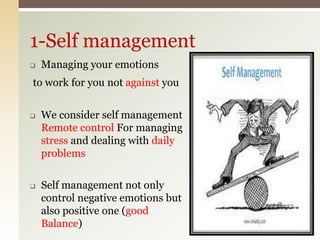
 Managing your emotions
to work for you not against you
 We consider self management
Remote control For managing
stress and dealing with daily
problems
 Self management not only
control negative emotions but
also positive one (good
Balance)
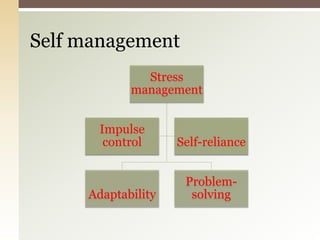
1-Self management
Stress
management
Adaptability
Problem-
solving
Impulse
control Self-reliance
Self management
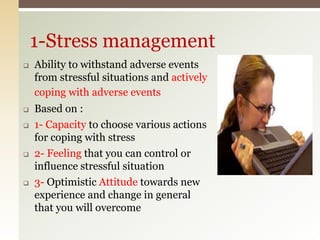
 Ability to withstand adverse events
from stressful situations and actively
coping with adverse events
 Based on :
 1- Capacity to choose various actions
for coping with stress
 2- Feeling that you can control or
influence stressful situation
 3- Optimistic Attitude towards new
experience and change in general
that you will overcome
1-Stress management
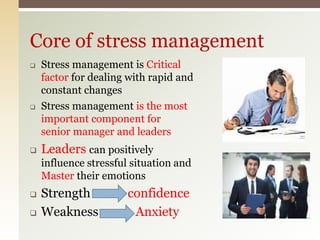
 Stress management is Critical
factor for dealing with rapid and
constant changes
 Stress management is the most
important component for
senior manager and leaders
 Leaders can positively
influence stressful situation and
Master their emotions
 Strength confidence
 Weakness Anxiety
Core of stress management
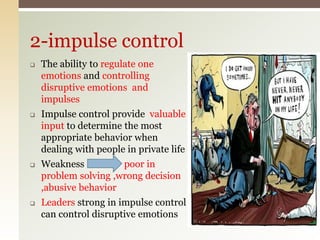
 The ability to regulate one
emotions and controlling
disruptive emotions and
impulses
 Impulse control provide valuable
input to determine the most
appropriate behavior when
dealing with people in private life
 Weakness poor in
problem solving ,wrong decision
,abusive behavior
 Leaders strong in impulse control
can control disruptive emotions
2-impulse control
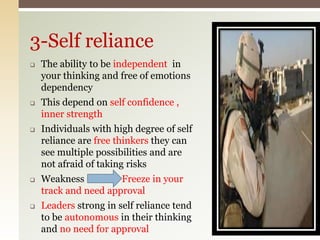
 The ability to be independent in
your thinking and free of emotions
dependency
 This depend on self confidence ,
inner strength
 Individuals with high degree of self
reliance are free thinkers they can
see multiple possibilities and are
not afraid of taking risks
 Weakness Freeze in your
track and need approval
 Leaders strong in self reliance tend
to be autonomous in their thinking
and no need for approval
3-Self reliance
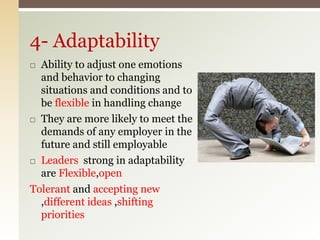
 Ability to adjust one emotions
and behavior to changing
situations and conditions and to
be flexible in handling change
 They are more likely to meet the
demands of any employer in the
future and still employable
 Leaders strong in adaptability
are Flexible,open
Tolerant and accepting new
,different ideas ,shifting
priorities
4- Adaptability
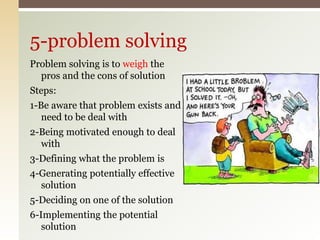
Problem solving is to weigh the
pros and the cons of solution
Steps:
1-Be aware that problem exists and
need to be deal with
2-Being motivated enough to deal
with
3-Defining what the problem is
4-Generating potentially effective
solution
5-Deciding on one of the solution
6-Implementing the potential
solution
5-problem solving
 This skills is important in
strategic planning
 Weakness in this area is often
seen as tendency to get stuck
when thinking about
different ways of solving
problems and difficulty in
deciding best solution
 Leaders strong in problem
solving try to solve problems
rather than avoid them also
they good at decision making
5-Problem solving
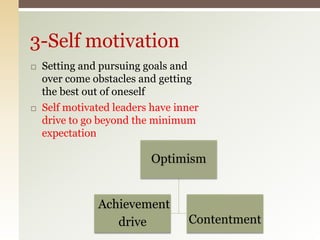
3-Self motivation
 Setting and pursuing goals and
over come obstacles and getting
the best out of oneself
 Self motivated leaders have inner
drive to go beyond the minimum
expectation
Optimism
Achievement
drive Contentment
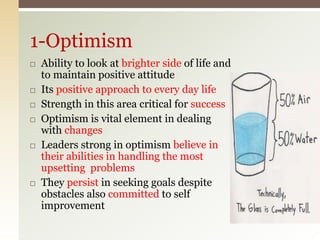
1-Optimism
 Ability to look at brighter side of life and
to maintain positive attitude
 Its positive approach to every day life
 Strength in this area critical for success
 Optimism is vital element in dealing
with changes
 Leaders strong in optimism believe in
their abilities in handling the most
upsetting problems
 They persist in seeking goals despite
obstacles also committed to self
improvement
 The ability to set and achieve goals .its about having sense of
direction in life and striving to realize your potential
 Its strong factor to distinguish stars from average
performers
 Weakness in this area associated with sense of emptiness
 It implies lack of direction ,lack of purpose ,lack of dream
 Leaders with high achievement drive strive to realize their
potentials
 Leaders are result oriented and they strive to excel and
never stop learning
2-Achievement drive
 Ability to enjoy your self this
contributes to the emotional energy
 Contentment fuels the energy
required to increase one motivational
level
 Strength in this area associated with
high performance
 Weakness in this area Feeling of
sadness and worry
 Leaders strong in contentment try to
get best and feel good and inject good
mood and inspiration to their people
3-Contentment
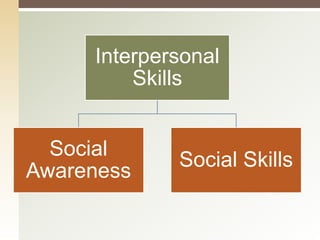
Interpersonal
Skills
Social
Awareness
Social Skills
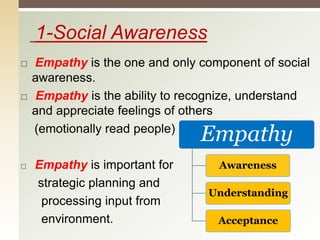
1-Social Awareness
 Empathy is the one and only component of social
awareness.
 Empathy is the ability to recognize, understand
and appreciate feelings of others
(emotionally read people)
 Empathy is important for
strategic planning and
processing input from
environment.
Empathy
Awareness
Understanding
Acceptance
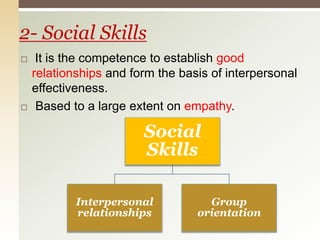
2- Social Skills
 It is the competence to establish good
relationships and form the basis of interpersonal
effectiveness.
 Based to a large extent on empathy.
Social
Skills
Interpersonal
relationships
Group
orientation
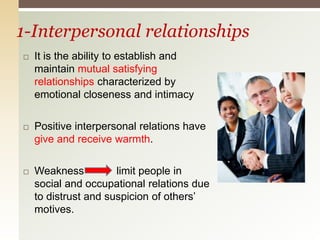
1-Interpersonal relationships
 It is the ability to establish and
maintain mutual satisfying
relationships characterized by
emotional closeness and intimacy
 Positive interpersonal relations have
give and receive warmth.
 Weakness limit people in
social and occupational relations due
to distrust and suspicion of others’
motives.
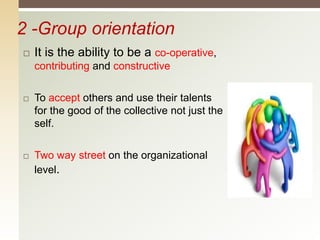
2 -Group orientation
 It is the ability to be a co-operative,
contributing and constructive
 To accept others and use their talents
for the good of the collective not just the
self.
 Two way street on the organizational
level.
Summary
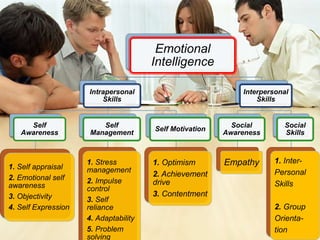
Emotional
Intelligence
Intrapersonal
Skills
Self
Awareness
1. Self appraisal
2. Emotional self
awareness
3. Objectivity
4. Self Expression
Self
Management
1. Stress
management
2. Impulse
control
3. Self
reliance
4. Adaptability
5. Problem
solving
Self Motivation
1. Optimism
2. Achievement
drive
3. Contentment
Interpersonal
Skills
Social
Awareness
Empathy
Social
Skills
1. Inter-
Personal
Skills
2. Group
Orienta-
tion
Emotional intellegence

Emotional intellegence

  • 1.
    Emotional Intelligence Leadership By:Omar Fathy Fekry Account Lead
  • 2.
     1-Self managementand its component  2-Self motivation and its component  3- Social awareness  4-Social skills  5-Summary Purpose and Objectives
  • 3.
     Managing youremotions to work for you not against you  We consider self management Remote control For managing stress and dealing with daily problems  Self management not only control negative emotions but also positive one (good Balance) 1-Self management
  • 4.
  • 5.
     Ability towithstand adverse events from stressful situations and actively coping with adverse events  Based on :  1- Capacity to choose various actions for coping with stress  2- Feeling that you can control or influence stressful situation  3- Optimistic Attitude towards new experience and change in general that you will overcome 1-Stress management
  • 6.
     Stress managementis Critical factor for dealing with rapid and constant changes  Stress management is the most important component for senior manager and leaders  Leaders can positively influence stressful situation and Master their emotions  Strength confidence  Weakness Anxiety Core of stress management
  • 7.
     The abilityto regulate one emotions and controlling disruptive emotions and impulses  Impulse control provide valuable input to determine the most appropriate behavior when dealing with people in private life  Weakness poor in problem solving ,wrong decision ,abusive behavior  Leaders strong in impulse control can control disruptive emotions 2-impulse control
  • 8.
     The abilityto be independent in your thinking and free of emotions dependency  This depend on self confidence , inner strength  Individuals with high degree of self reliance are free thinkers they can see multiple possibilities and are not afraid of taking risks  Weakness Freeze in your track and need approval  Leaders strong in self reliance tend to be autonomous in their thinking and no need for approval 3-Self reliance
  • 9.
     Ability toadjust one emotions and behavior to changing situations and conditions and to be flexible in handling change  They are more likely to meet the demands of any employer in the future and still employable  Leaders strong in adaptability are Flexible,open Tolerant and accepting new ,different ideas ,shifting priorities 4- Adaptability
  • 10.
    Problem solving isto weigh the pros and the cons of solution Steps: 1-Be aware that problem exists and need to be deal with 2-Being motivated enough to deal with 3-Defining what the problem is 4-Generating potentially effective solution 5-Deciding on one of the solution 6-Implementing the potential solution 5-problem solving
  • 11.
     This skillsis important in strategic planning  Weakness in this area is often seen as tendency to get stuck when thinking about different ways of solving problems and difficulty in deciding best solution  Leaders strong in problem solving try to solve problems rather than avoid them also they good at decision making 5-Problem solving
  • 12.
    3-Self motivation  Settingand pursuing goals and over come obstacles and getting the best out of oneself  Self motivated leaders have inner drive to go beyond the minimum expectation Optimism Achievement drive Contentment
  • 13.
    1-Optimism  Ability tolook at brighter side of life and to maintain positive attitude  Its positive approach to every day life  Strength in this area critical for success  Optimism is vital element in dealing with changes  Leaders strong in optimism believe in their abilities in handling the most upsetting problems  They persist in seeking goals despite obstacles also committed to self improvement
  • 14.
     The abilityto set and achieve goals .its about having sense of direction in life and striving to realize your potential  Its strong factor to distinguish stars from average performers  Weakness in this area associated with sense of emptiness  It implies lack of direction ,lack of purpose ,lack of dream  Leaders with high achievement drive strive to realize their potentials  Leaders are result oriented and they strive to excel and never stop learning 2-Achievement drive
  • 15.
     Ability toenjoy your self this contributes to the emotional energy  Contentment fuels the energy required to increase one motivational level  Strength in this area associated with high performance  Weakness in this area Feeling of sadness and worry  Leaders strong in contentment try to get best and feel good and inject good mood and inspiration to their people 3-Contentment
  • 16.
  • 17.
    1-Social Awareness  Empathyis the one and only component of social awareness.  Empathy is the ability to recognize, understand and appreciate feelings of others (emotionally read people)  Empathy is important for strategic planning and processing input from environment. Empathy Awareness Understanding Acceptance
  • 18.
    2- Social Skills It is the competence to establish good relationships and form the basis of interpersonal effectiveness.  Based to a large extent on empathy. Social Skills Interpersonal relationships Group orientation
  • 19.
    1-Interpersonal relationships  Itis the ability to establish and maintain mutual satisfying relationships characterized by emotional closeness and intimacy  Positive interpersonal relations have give and receive warmth.  Weakness limit people in social and occupational relations due to distrust and suspicion of others’ motives.
  • 20.
    2 -Group orientation It is the ability to be a co-operative, contributing and constructive  To accept others and use their talents for the good of the collective not just the self.  Two way street on the organizational level.
  • 21.
  • 22.
    Emotional Intelligence Intrapersonal Skills Self Awareness 1. Self appraisal 2.Emotional self awareness 3. Objectivity 4. Self Expression Self Management 1. Stress management 2. Impulse control 3. Self reliance 4. Adaptability 5. Problem solving Self Motivation 1. Optimism 2. Achievement drive 3. Contentment Interpersonal Skills Social Awareness Empathy Social Skills 1. Inter- Personal Skills 2. Group Orienta- tion

Editor's Notes