EMERGENCY DRUGS
Emergency – An unforeseen occurrence or combination of
circumstances that calls for immediate action or remedy
-Mosby
Drug – Any substance or product thatis used or is
intended to be used to modify or explore physiological
system or pathological states for the benefit of the
recipient.
- W.H.O
Large kit in mobile tool cabinets with several
compartments
Labels should be applied to each compartment in which
drug is stored, listing the drug’s generic and proprietary
names, dosage, indication and expiry date to avoid possible
confusion during emergency.
Expired drugs and empty O2 cylinders are
ineffective
Drug should be replaced prior to expiry
date.
An office staff member should be
assigned to check the emergency drug kit
at least once a week
THE KISS PRINCIPLE
It should be as simple as possible to use.
Pallasch’s in 1967 stated:-
“complexity in a time of adversity breeds chaos”
The doctor should remember 3 things in preparing
and using emergency drug kits:-
1- Drug administration is not necessary for
immediate management of medical emergencies.
2- Primary management of all emergency situations
involves BLS.
3- When in doubt, don’t medicate
Module 3
ACLS Drugs
Module 2
Non- critical drugs and
equipment
Module 1
Basic emergency kit
(Critical drugs and
requirements)
Module 4
Antidotal Drugs
IV ROUTE – 20-30 sec
IN ROUTE -
IM ROUTE – 10 mins
SUBLINGUAL-
s
INDICATIONS
 Anaphylaxis(Acute allergic reaction) - 1:1000/2000
 Actue asthamatic attack(bronchospasm) -1:1000/2000
 Cardiac arrest(Non- injectable form)- 1:10000
Most important emergency drug
Desirable properties of epinephrine include:-
(1)A rapid onset of action
(2) potent action as a bronchial smooth muscle dilator (β2
properties) (3) histamine blocking properties
(4) vasopressor actions; and
(5)cardiac effects*
CRITICAL/ESSENTIAL EMERGENCY DRUGS &
EQUIPMENT
DOSE AND ADMINISTRATION
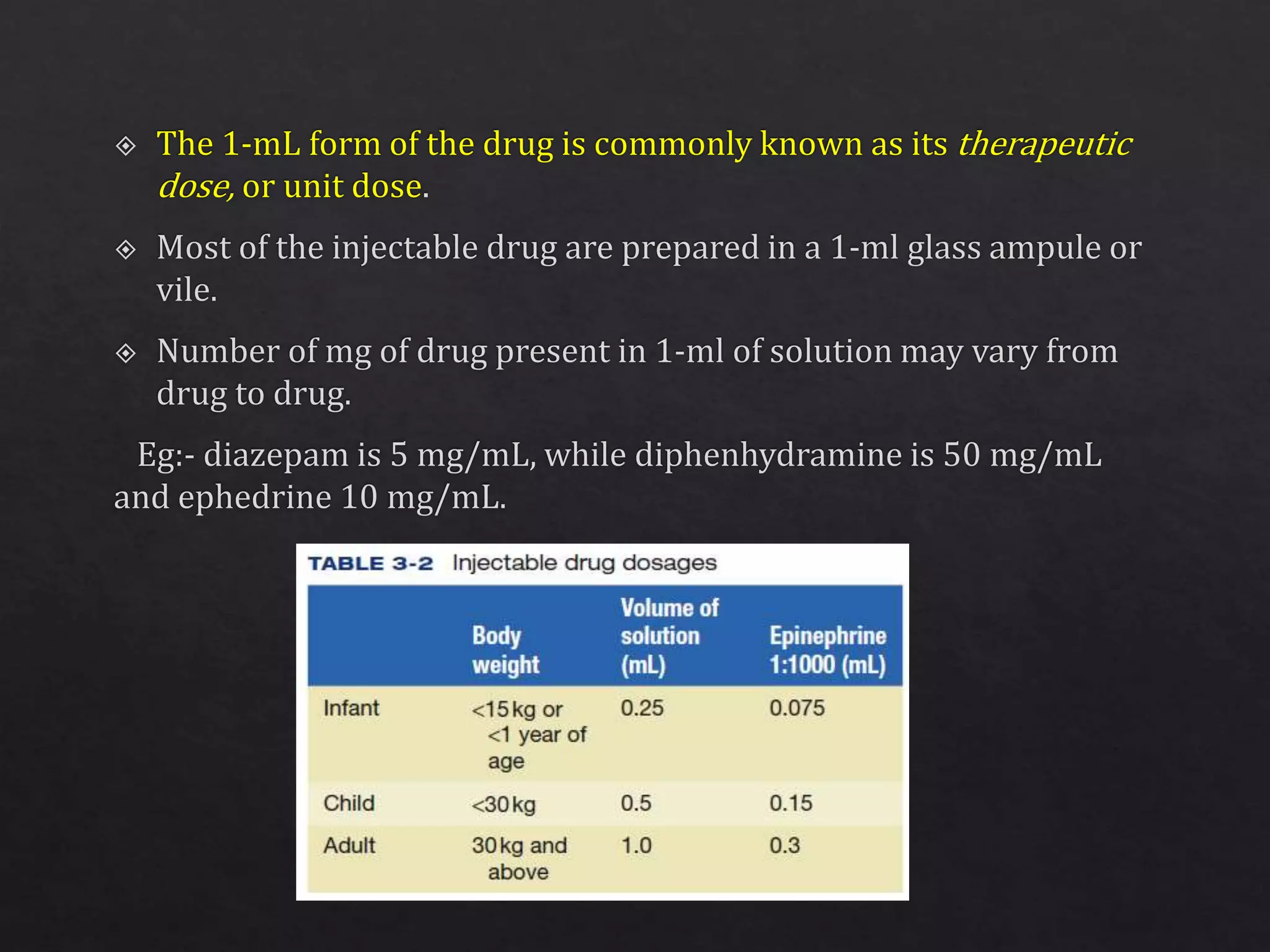
I.M. Or S.C. - 1:1000 concentration In dose of 0.3-0.5 mg for 30 kg or
greater patients and 0.15mg for patients who weigh less than 30kg is
recommended
Preloaded auto injectors are preferred-Ana Guard, Epipen, Epipen
Jr, Auvi Q
Intravenous- 1:10,000- m/m of cardiac arrest
Are competitive antagonists of histamine
They do not prevent the release of histamine from cells in
response to injury, drugs, or antigens but do prevent
histamine’s access to its receptor site on the cell, blocking the
response of the effector cell to histamine.
They are also potent local anesthetics, especially
diphenhydramine and tripelennamine.
Histamine blockers may also produce a degree of CNS
depression(sedation, drowsiness) that would be an
undesirable.
INDICATIONS
SIDE-EFFECTS & CONTRAINDICATIONS
DOSAGE
Diphenhydramine- 10 mg/ mL in 10- and 30-mL multidose vials, 50 mg/mL in
1-mL ampules and 10-mL multidose vials, and 1-mL preloaded syringes.
Chlorpheniramine is available as 10 mg/mL in 1- and 2-mL ampules and as
1-mL preloaded syringes.
A minimum of two 1-mL ampules of either diphenhydramine (50 mg/mL) or
chlorpheniramine (10 mg/mL).
Preloaded syringes of histamine blockers are not recommended because there
is never any urgency associated with their administration.
“E-cylinders” recommended due
to their ease of portability at time
of emergency
Where E is for emergency
E cylinder provides O2 for approximately 30 minutes.
Larger cylinders (H cylinders) provide significantly more O2 but are less
portable; whereas; smaller cylinders (A through D cylinders) contain too little
O2 to be clinically effective for more than an extremely short duration.
Evident respiratory distress.
Management of hyperventilation
Chronic Obstructive Pulmonary Disease
INDICATIONS
CONTRAINDICATIONS
One E cylinder of oxygen is the minimum requirement for an emergency kit.
Uses-
Immediate management of chest pain (Angina pectoris or
Acute myocardial infarction)
Route of administration- Sublingual or translingual spray
SIDE-EFFECTS
A transient, pulsating headache;
Facial flushing; and
A degree of hypotension (especially if
the patient is in an upright position)
CONTRAINDICATION:-
Patients with chest pain who exhibit
clinical signs and symptoms of
hypotension.
Similar to, but more intense than that
Facial flushing, Pounding pulse, Dizziness,
Intense
Headache, and Hypotension.
CONTRAINDICATION:-
Not to be administered to patients seated
in upright positions because significant
postural changes develop.
NITROGLYCERINE AMYL NITRITE
DOSAGE:- 0.3-, 0.4-, 0.6-mg doses of sublingual tablets; 0.4- and 0.8-mg
doses of translingual spray.
Amyl nitrite is available as 0.3-mL doses in yellow Vaporole.
 Acute Asthmaticepisodes
 Allergic reactions
(where bronchospasm is a component)
Route of administration- Metered Dose Inhaler(MDI)
Spacer(for pediatric patients)
Inhalation allows the drug to reach the bronchial
mucosa, where it acts directly on bronchial smooth
muscle.
BRONCHODIALATORS
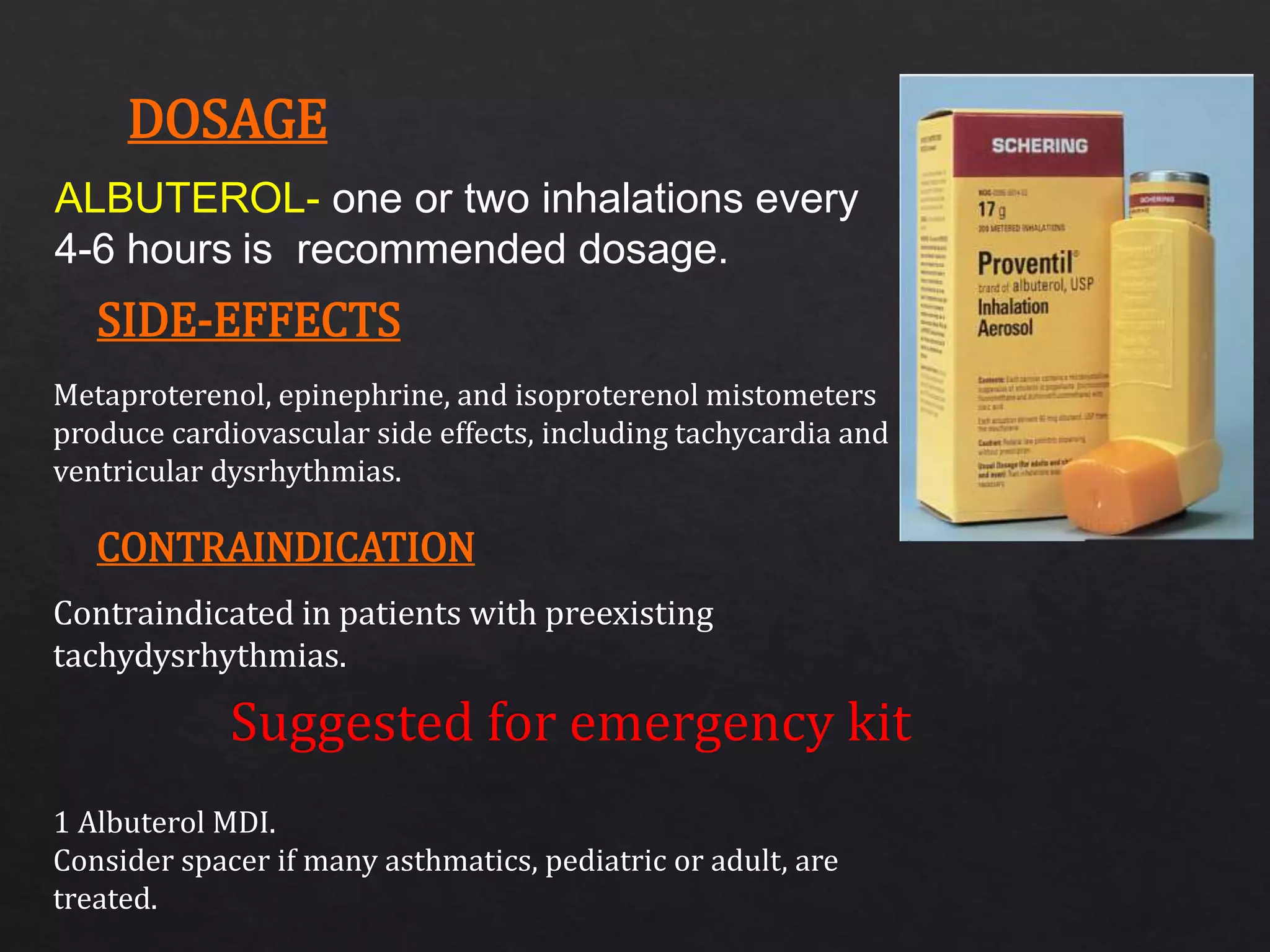
ALBUTEROL- one or two inhalations every
4-6 hours is recommended dosage.
Metaproterenol, epinephrine, and isoproterenol mistometers
produce cardiovascular side effects, including tachycardia and
ventricular dysrhythmias.
Contraindicated in patients with preexisting
tachydysrhythmias.
1 Albuterol MDI.
Consider spacer if many asthmatics, pediatric or adult, are
treated.
DOSAGE
SIDE-EFFECTS
CONTRAINDICATION
USES-
Hypoglycemic with diabetes mellitus
In non-diabetic pt. With hypoglycemia (fasting)
CONTAINDICATION-
administration of any liquid or substance that might become liquid at body
temperature is contraindicated in the unconscious patient.
Any of the forms, including Glucola, Gluco-Stat, Insta-Glucose, nondiet cola
beverages, fruit juices, granulated sugar, and tubes of decorative icing
Can be kept.
ANTIHYPOGLYCEMICS
MOA- irreversibly acetylates platelet cyclooxygenase, removing all
cyclooxygenase activity for the life span of the platelet.
Stops production of proaggregatory thromboxane A2
160-324mg orally.
Management of patients with suspected myocardial
infarction or unstable angina
Kit should include powdered or chewable asprin (325mg)
ANTIPLATELETS
DOSAGE:-
INDICATION:-
CRITICAL EMERGENCY
EQUIPMENTS
1. O2 delivery system
Pocket mask
NON- CRITICAL EMERGENCY DRUGS & EQUIPMENT
INDICATIONS:-
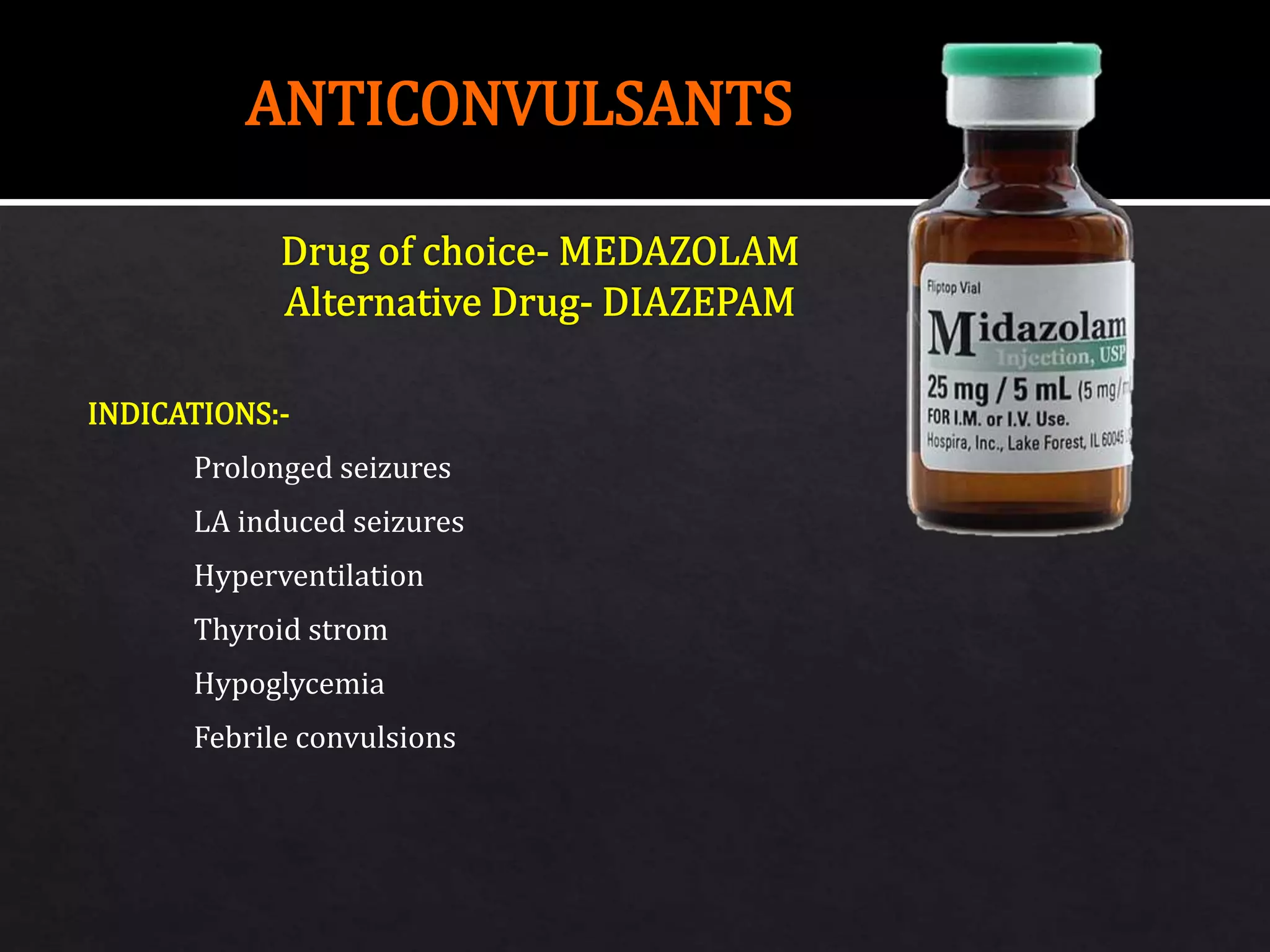
Prolonged seizures
LA induced seizures
Hyperventilation
Thyroid strom
Hypoglycemia
Febrile convulsions
ANTICONVULSANTS
SIDE-EFFECT:-
DOSAGE:-
ANALGESICS
Pain or anxiety increases the myocardial workload which increases the
myocardial requirement for O2, which may prove detrimental to the patient’s
well-being.
Acute myocardial infarction
Intense pain or anxiety
Congestive heart failure
It is administered through an IV route to victims suspected of having AMI.
In victims of injury and multiple trauma;
Morphine sulfate is available 8, 10, and 15 mg/mL (in 2-mL
ampules and 20-mL vials).
INDICATIONS:-
CONTRAINDICATIONS:-
DOSAGE:-
VASOPRESSOR
Ephedrine releases endogenous norepinephrine.
Norepinephrine, in turn, stimulates various α- and
β-receptors.
Because storage sites of norepinephrine can be depleted, tachyphylaxis can
develop to ephedrine’s pressor and cardiac effects.
Effects of ephedrine on coronary blood flow may be dose dependent, but in
general, ephedrine usually increases coronary blood flow.
Ephedrine increases systolic and diastolic blood pressure.
INDICATIONS:-
CONTRAINDICATIONS:-
ANTIHYPOGLYCEMIC
In severely obtunded or unconscious patient,
30 mL of a 50% dextrose solution should be administered IV.
Glucagon is effective only when hepatic glycogen is available.
Hypoglycemia
Diagnostic aid in unconsciousness or seizures of unknown origin
Glucagon administered either IV or IM is
contraindicated in patients in starvation states or with
chronic hypoglycemia.
.
INDICATIONS:-
CONTRAINDICATIONS:-
DOSAGE:-
Indications:- Definitive m/m of acute allergy
Adrenal insufficiency
Asthma
Recurrent anaphylactic episodes
Corticosteroids are considered second-line drugs primarily because of their
slow onset of action.
Hydrocortisone sodium succinate (Solu-Cortef) is available as
50 mg/mL (2-mL vials).
CORTICOSTEROIDS
DOSAGE:-
No contraindications to the administration of corticosteroids in the management
of life-threatening medical emergencies
Suggested for emergency kit. Hydrocortisonesodium succinate (one 2-mL vial).
CONTRAINDICATIONS:-
ANTIHYPERTENSIVES
ESMOLOL LABETALOL
β1-selective (cardioselective) adrenergic
receptor blocking agent.
Very short duration of action (9mins)
Indication:- as an antidysrhythmic agent
in paroxysmal supraventricular
tachycardia (PSVT) and for the
management of intraoperative and
postoperative tachycardia and
hypertension.
β1-receptors in heart, β2-receptors in
bronchial and vascular smooth muscle,
and α1-receptors in vascular smooth
muscle.
Produces a dose-related decrease in
blood pressure without reflex
tachycardia or a significant reduction in
heart rate.
the onset of hypotensive action occurs
within 2 to 5 minutes. Peak effects occur
within 5 to 15 minutes with a duration of
action usually between 2 and 4hours.
INDICATION:-
CONTRAINDICATION:-
DOSAGE:-
ANTICOLINERGICS
bradycardia
hemodynamically significant bradydysrhythmias
Atropine is contraindicated in patients with glaucoma
or prostatic hypertrophy.
Large doses of atropine (2 mg and above)
may produce clinical signs of overdose, including hot, dry
skin; headache; blurred nearsightedness; dry mouth and
throat; disorientation; and hallucinations
0.5 mg/mL in 1-mL vials and as 1 mg/mL in 10-mL preloaded syringes
Two or three ampules of 0.5 mg/mL (for IM administration) or
two 10-mL syringes with 1 mg per syringe (for IV administration).
INDICATION:-
CONTRAINDICATION:-
DOSAGE:-
RESPIRATORY STIMULANT
INDICATION:-
CONTRAINDICATION:-
DOSAGE:-
ANTIHYPERTENSIVE
(non-injectable)
Two drugs that help manage acute elevations in blood pressure—
esmolol for parenteral administration
nitroglycerin for sublingual or translingual administration.
HYDRALAZINE-is a peripheral vasodilator, causing relaxation
of arteriolar smooth muscle via a direct effect.
The peripheral vasodilating effects of hydralazine result in decreased
arterial blood pressure (diastolic more than systolic) and peripheral
vascular resistance.
In addition, hydralazine-induced reflex
Autonomic response increases the heart rate, stroke volume, cardiac
output and left ventricular ejection fraction.
ANTIHYPERTENSIVE
(non-injectable)
INDICATION:-
CONTRAINDICATION:-
DOSAGE:-
One bottle 25mg tablet
OROPHARYNGE
ALAIRWAYS
ENDOTRACHEA
L TUBE
ANTIHYPERTENSIVE
(non-injectable)
Epinephrine’s importance in cardiac arrest lies in the fact that no other
drug can maintain coronary artery blood flow while CPR is in progress,
which is essential for preserving a chance of survival to hospital
discharge in cardiac arrest.
Epinephrine also preserves blood flow to the brain, helping to minimize
neurologic damage.
Cardiac arrest (including ventricular fibrillation, pulseless
ventricular tachycardia,asystole, and pulseless electrical activity).
NO contraindication in emergent situation.
epinephrine may induce or exacerbate ventricular ectopy, especially in
patients who are receiving digitalis.
ACLS essential: CARDIAC ARREST
INDICATION:-
CONTRAINDICATION:-
Epinephrine is available as a 1-mg dose in preloaded syringes containing either 1
Ml (1:1000 concentration) or 10 mL (1:10,000) of solution.
The 1:10,000 concentration is for IV or endotracheal administration, whereas the
1:1000 solution is designed for intramuscular administration.
Two or threepreloaded syringes may be included in the kit.
DOSAGE:-
ACLS essential: ANTIDYSRHYTHMIC
It is both an antidysrhythmic and a potent vasodialator.
Amiodarone is the first-line management of VF and pulseless VT that
is unresponsive to CPR, defibrillation, and vasopressor therapy
(epinephrine).
If amiodarone is unavailable, lidocaine may be considered.
IV amiodarone affects sodium, potassium, and calcium channels and
has α- and β-adrenergic blocking properties.
INDICATION:-
CONTRAINDICATION:-
ACLS essential: SYMPTOMATIC
BRADYCARDIA
Atropine is the drug of choice for hemodynamically unstable
bradydysrhythmias.
A bradydysrhythmia is considered to be
hemodynamically unstable when the following
conditions are present90:
Symptoms:
1. Chest pain
2. Shortness of breath
3. Decreased level of consciousness
4. Weakness, fatigue
5. Exercise intolerance
6. Lightheadedness, dizziness, and “spells”
DOSAGE:-
CONTRAINDICATION:-
INDICATION:-
ACLS essential: PEROXYSMAL
SUPRAVENTRICULAR TACHYCARDIA
Verapamil is included in the ACLS category because it is extremely effective in
the management of supraventricular tachycardia.
Verapamil slows conduction through the atrioventricular node, reducing
ventricular response to atrial flutter and fibrillation.
Used primarily to treat PSVT that does not require
cardioversion
Verapamil is available for injection as 2.5 mg/mL in 2-mL and 4-
mL ampules.
One or two 4-ml ampules.
INDICATION:-
DOSAGE:-
Categories of antidotal drugs include the following:
1. Opioid antagonist
2. Benzodiazepine antagonist
3. Antiemergence delirium drug
4. Vasodilator
Antidotal Drugs: OPOIDS ANALGESICS
Significant side effect of parenteral opioid agonists is their ability to produce
respiratory depression by diminishing the responsiveness of the brain’s
respiratory centers to arterial carbon dioxide.
Naloxone also reverses other properties of opioids, namely analgesia and
sedation.
Naloxone may be administered endotracheally in situations in which IV
access is not available.
Administered via an IV route or endotracheally, improved respiratory
function is noted within 2 minutes.
Nalbuphine- successfully to reverse respiratory depression induced by
opioid agonists
INDICATION:-
DOSAGE:-
Antidotal Drugs: BENZODIAZEPINE ANTAGONIST
INDICATION:-
DOSAGE:-
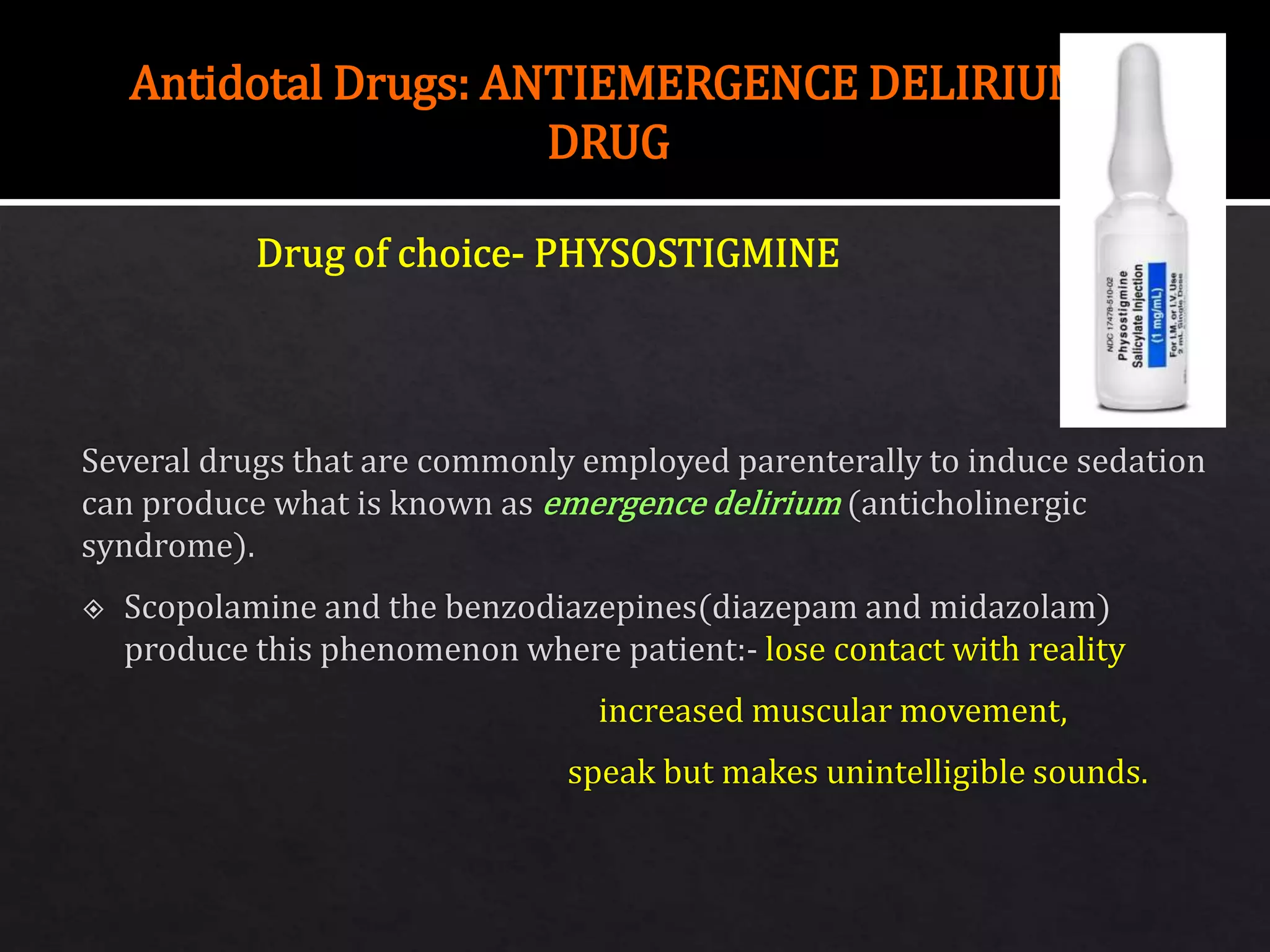
Antidotal Drugs: ANTIEMERGENCE DELIRIUM
DRUG
INDICATION:-
CONTRAINDICATION:-
SIDE-EFFECTS:- MOST COMMON
DOSAGE:-
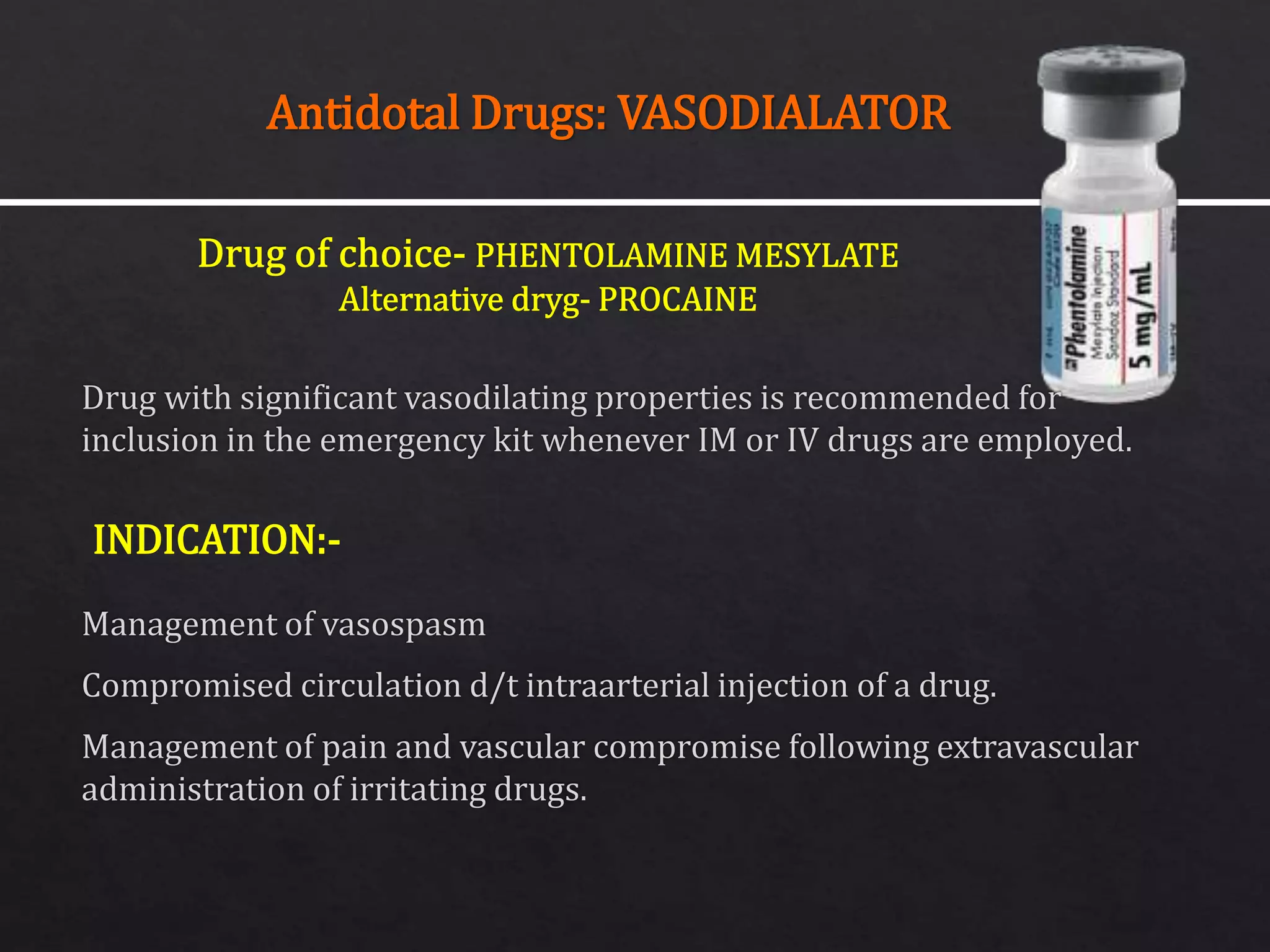
Antidotal Drugs: VASODIALATOR
INDICATION:-
CONTRAINDICATION:-
DOSAGE:-
Emergency drugs
Emergency drugs
Emergency drugs

Emergency drugs

  • 1.
  • 2.
    Emergency – Anunforeseen occurrence or combination of circumstances that calls for immediate action or remedy -Mosby Drug – Any substance or product thatis used or is intended to be used to modify or explore physiological system or pathological states for the benefit of the recipient. - W.H.O
  • 3.
    Large kit inmobile tool cabinets with several compartments Labels should be applied to each compartment in which drug is stored, listing the drug’s generic and proprietary names, dosage, indication and expiry date to avoid possible confusion during emergency.
  • 4.
    Expired drugs andempty O2 cylinders are ineffective Drug should be replaced prior to expiry date. An office staff member should be assigned to check the emergency drug kit at least once a week
  • 5.
    THE KISS PRINCIPLE Itshould be as simple as possible to use. Pallasch’s in 1967 stated:- “complexity in a time of adversity breeds chaos” The doctor should remember 3 things in preparing and using emergency drug kits:- 1- Drug administration is not necessary for immediate management of medical emergencies. 2- Primary management of all emergency situations involves BLS. 3- When in doubt, don’t medicate
  • 6.
    Module 3 ACLS Drugs Module2 Non- critical drugs and equipment Module 1 Basic emergency kit (Critical drugs and requirements) Module 4 Antidotal Drugs
  • 8.
    IV ROUTE –20-30 sec IN ROUTE - IM ROUTE – 10 mins SUBLINGUAL-
  • 9.
    s INDICATIONS  Anaphylaxis(Acute allergicreaction) - 1:1000/2000  Actue asthamatic attack(bronchospasm) -1:1000/2000  Cardiac arrest(Non- injectable form)- 1:10000 Most important emergency drug Desirable properties of epinephrine include:- (1)A rapid onset of action (2) potent action as a bronchial smooth muscle dilator (β2 properties) (3) histamine blocking properties (4) vasopressor actions; and (5)cardiac effects*
  • 11.
  • 13.
    DOSE AND ADMINISTRATION I.M.Or S.C. - 1:1000 concentration In dose of 0.3-0.5 mg for 30 kg or greater patients and 0.15mg for patients who weigh less than 30kg is recommended Preloaded auto injectors are preferred-Ana Guard, Epipen, Epipen Jr, Auvi Q Intravenous- 1:10,000- m/m of cardiac arrest
  • 15.
    Are competitive antagonistsof histamine They do not prevent the release of histamine from cells in response to injury, drugs, or antigens but do prevent histamine’s access to its receptor site on the cell, blocking the response of the effector cell to histamine. They are also potent local anesthetics, especially diphenhydramine and tripelennamine. Histamine blockers may also produce a degree of CNS depression(sedation, drowsiness) that would be an undesirable.
  • 16.
  • 17.
    DOSAGE Diphenhydramine- 10 mg/mL in 10- and 30-mL multidose vials, 50 mg/mL in 1-mL ampules and 10-mL multidose vials, and 1-mL preloaded syringes. Chlorpheniramine is available as 10 mg/mL in 1- and 2-mL ampules and as 1-mL preloaded syringes. A minimum of two 1-mL ampules of either diphenhydramine (50 mg/mL) or chlorpheniramine (10 mg/mL). Preloaded syringes of histamine blockers are not recommended because there is never any urgency associated with their administration.
  • 19.
    “E-cylinders” recommended due totheir ease of portability at time of emergency Where E is for emergency
  • 20.
    E cylinder providesO2 for approximately 30 minutes. Larger cylinders (H cylinders) provide significantly more O2 but are less portable; whereas; smaller cylinders (A through D cylinders) contain too little O2 to be clinically effective for more than an extremely short duration. Evident respiratory distress. Management of hyperventilation Chronic Obstructive Pulmonary Disease INDICATIONS CONTRAINDICATIONS One E cylinder of oxygen is the minimum requirement for an emergency kit.
  • 21.
    Uses- Immediate management ofchest pain (Angina pectoris or Acute myocardial infarction) Route of administration- Sublingual or translingual spray
  • 23.
    SIDE-EFFECTS A transient, pulsatingheadache; Facial flushing; and A degree of hypotension (especially if the patient is in an upright position) CONTRAINDICATION:- Patients with chest pain who exhibit clinical signs and symptoms of hypotension. Similar to, but more intense than that Facial flushing, Pounding pulse, Dizziness, Intense Headache, and Hypotension. CONTRAINDICATION:- Not to be administered to patients seated in upright positions because significant postural changes develop. NITROGLYCERINE AMYL NITRITE DOSAGE:- 0.3-, 0.4-, 0.6-mg doses of sublingual tablets; 0.4- and 0.8-mg doses of translingual spray. Amyl nitrite is available as 0.3-mL doses in yellow Vaporole.
  • 24.
     Acute Asthmaticepisodes Allergic reactions (where bronchospasm is a component) Route of administration- Metered Dose Inhaler(MDI) Spacer(for pediatric patients) Inhalation allows the drug to reach the bronchial mucosa, where it acts directly on bronchial smooth muscle. BRONCHODIALATORS
  • 25.
    ALBUTEROL- one ortwo inhalations every 4-6 hours is recommended dosage. Metaproterenol, epinephrine, and isoproterenol mistometers produce cardiovascular side effects, including tachycardia and ventricular dysrhythmias. Contraindicated in patients with preexisting tachydysrhythmias. 1 Albuterol MDI. Consider spacer if many asthmatics, pediatric or adult, are treated. DOSAGE SIDE-EFFECTS CONTRAINDICATION
  • 26.
    USES- Hypoglycemic with diabetesmellitus In non-diabetic pt. With hypoglycemia (fasting) CONTAINDICATION- administration of any liquid or substance that might become liquid at body temperature is contraindicated in the unconscious patient. Any of the forms, including Glucola, Gluco-Stat, Insta-Glucose, nondiet cola beverages, fruit juices, granulated sugar, and tubes of decorative icing Can be kept. ANTIHYPOGLYCEMICS
  • 27.
    MOA- irreversibly acetylatesplatelet cyclooxygenase, removing all cyclooxygenase activity for the life span of the platelet. Stops production of proaggregatory thromboxane A2 160-324mg orally. Management of patients with suspected myocardial infarction or unstable angina Kit should include powdered or chewable asprin (325mg) ANTIPLATELETS DOSAGE:- INDICATION:-
  • 28.
    CRITICAL EMERGENCY EQUIPMENTS 1. O2delivery system Pocket mask
  • 30.
    NON- CRITICAL EMERGENCYDRUGS & EQUIPMENT
  • 31.
    INDICATIONS:- Prolonged seizures LA inducedseizures Hyperventilation Thyroid strom Hypoglycemia Febrile convulsions ANTICONVULSANTS
  • 32.
  • 33.
    ANALGESICS Pain or anxietyincreases the myocardial workload which increases the myocardial requirement for O2, which may prove detrimental to the patient’s well-being. Acute myocardial infarction Intense pain or anxiety Congestive heart failure It is administered through an IV route to victims suspected of having AMI. In victims of injury and multiple trauma; Morphine sulfate is available 8, 10, and 15 mg/mL (in 2-mL ampules and 20-mL vials). INDICATIONS:- CONTRAINDICATIONS:- DOSAGE:-
  • 34.
    VASOPRESSOR Ephedrine releases endogenousnorepinephrine. Norepinephrine, in turn, stimulates various α- and β-receptors. Because storage sites of norepinephrine can be depleted, tachyphylaxis can develop to ephedrine’s pressor and cardiac effects. Effects of ephedrine on coronary blood flow may be dose dependent, but in general, ephedrine usually increases coronary blood flow. Ephedrine increases systolic and diastolic blood pressure.
  • 35.
  • 36.
    ANTIHYPOGLYCEMIC In severely obtundedor unconscious patient, 30 mL of a 50% dextrose solution should be administered IV. Glucagon is effective only when hepatic glycogen is available. Hypoglycemia Diagnostic aid in unconsciousness or seizures of unknown origin Glucagon administered either IV or IM is contraindicated in patients in starvation states or with chronic hypoglycemia. . INDICATIONS:- CONTRAINDICATIONS:-
  • 37.
  • 38.
    Indications:- Definitive m/mof acute allergy Adrenal insufficiency Asthma Recurrent anaphylactic episodes Corticosteroids are considered second-line drugs primarily because of their slow onset of action. Hydrocortisone sodium succinate (Solu-Cortef) is available as 50 mg/mL (2-mL vials). CORTICOSTEROIDS DOSAGE:-
  • 39.
    No contraindications tothe administration of corticosteroids in the management of life-threatening medical emergencies Suggested for emergency kit. Hydrocortisonesodium succinate (one 2-mL vial). CONTRAINDICATIONS:-
  • 40.
    ANTIHYPERTENSIVES ESMOLOL LABETALOL β1-selective (cardioselective)adrenergic receptor blocking agent. Very short duration of action (9mins) Indication:- as an antidysrhythmic agent in paroxysmal supraventricular tachycardia (PSVT) and for the management of intraoperative and postoperative tachycardia and hypertension. β1-receptors in heart, β2-receptors in bronchial and vascular smooth muscle, and α1-receptors in vascular smooth muscle. Produces a dose-related decrease in blood pressure without reflex tachycardia or a significant reduction in heart rate. the onset of hypotensive action occurs within 2 to 5 minutes. Peak effects occur within 5 to 15 minutes with a duration of action usually between 2 and 4hours.
  • 41.
  • 42.
  • 43.
  • 44.
    bradycardia hemodynamically significant bradydysrhythmias Atropineis contraindicated in patients with glaucoma or prostatic hypertrophy. Large doses of atropine (2 mg and above) may produce clinical signs of overdose, including hot, dry skin; headache; blurred nearsightedness; dry mouth and throat; disorientation; and hallucinations 0.5 mg/mL in 1-mL vials and as 1 mg/mL in 10-mL preloaded syringes Two or three ampules of 0.5 mg/mL (for IM administration) or two 10-mL syringes with 1 mg per syringe (for IV administration). INDICATION:- CONTRAINDICATION:- DOSAGE:-
  • 45.
  • 46.
  • 47.
    ANTIHYPERTENSIVE (non-injectable) Two drugs thathelp manage acute elevations in blood pressure— esmolol for parenteral administration nitroglycerin for sublingual or translingual administration. HYDRALAZINE-is a peripheral vasodilator, causing relaxation of arteriolar smooth muscle via a direct effect. The peripheral vasodilating effects of hydralazine result in decreased arterial blood pressure (diastolic more than systolic) and peripheral vascular resistance. In addition, hydralazine-induced reflex Autonomic response increases the heart rate, stroke volume, cardiac output and left ventricular ejection fraction. ANTIHYPERTENSIVE (non-injectable)
  • 48.
  • 49.
  • 51.
  • 54.
    ANTIHYPERTENSIVE (non-injectable) Epinephrine’s importance incardiac arrest lies in the fact that no other drug can maintain coronary artery blood flow while CPR is in progress, which is essential for preserving a chance of survival to hospital discharge in cardiac arrest. Epinephrine also preserves blood flow to the brain, helping to minimize neurologic damage. Cardiac arrest (including ventricular fibrillation, pulseless ventricular tachycardia,asystole, and pulseless electrical activity). NO contraindication in emergent situation. epinephrine may induce or exacerbate ventricular ectopy, especially in patients who are receiving digitalis. ACLS essential: CARDIAC ARREST INDICATION:- CONTRAINDICATION:-
  • 55.
    Epinephrine is availableas a 1-mg dose in preloaded syringes containing either 1 Ml (1:1000 concentration) or 10 mL (1:10,000) of solution. The 1:10,000 concentration is for IV or endotracheal administration, whereas the 1:1000 solution is designed for intramuscular administration. Two or threepreloaded syringes may be included in the kit. DOSAGE:-
  • 56.
    ACLS essential: ANTIDYSRHYTHMIC Itis both an antidysrhythmic and a potent vasodialator. Amiodarone is the first-line management of VF and pulseless VT that is unresponsive to CPR, defibrillation, and vasopressor therapy (epinephrine). If amiodarone is unavailable, lidocaine may be considered. IV amiodarone affects sodium, potassium, and calcium channels and has α- and β-adrenergic blocking properties.
  • 57.
  • 58.
    ACLS essential: SYMPTOMATIC BRADYCARDIA Atropineis the drug of choice for hemodynamically unstable bradydysrhythmias. A bradydysrhythmia is considered to be hemodynamically unstable when the following conditions are present90: Symptoms: 1. Chest pain 2. Shortness of breath 3. Decreased level of consciousness 4. Weakness, fatigue 5. Exercise intolerance 6. Lightheadedness, dizziness, and “spells”
  • 60.
  • 61.
    ACLS essential: PEROXYSMAL SUPRAVENTRICULARTACHYCARDIA Verapamil is included in the ACLS category because it is extremely effective in the management of supraventricular tachycardia. Verapamil slows conduction through the atrioventricular node, reducing ventricular response to atrial flutter and fibrillation. Used primarily to treat PSVT that does not require cardioversion Verapamil is available for injection as 2.5 mg/mL in 2-mL and 4- mL ampules. One or two 4-ml ampules. INDICATION:- DOSAGE:-
  • 62.
    Categories of antidotaldrugs include the following: 1. Opioid antagonist 2. Benzodiazepine antagonist 3. Antiemergence delirium drug 4. Vasodilator
  • 63.
    Antidotal Drugs: OPOIDSANALGESICS Significant side effect of parenteral opioid agonists is their ability to produce respiratory depression by diminishing the responsiveness of the brain’s respiratory centers to arterial carbon dioxide. Naloxone also reverses other properties of opioids, namely analgesia and sedation. Naloxone may be administered endotracheally in situations in which IV access is not available. Administered via an IV route or endotracheally, improved respiratory function is noted within 2 minutes. Nalbuphine- successfully to reverse respiratory depression induced by opioid agonists
  • 64.
  • 65.
  • 66.
  • 67.
  • 68.
  • 69.
  • 70.
  • 71.

Editor's Notes

  • #9 In other words, enough of the drug must enter the bloodstream and be transported to the part of the body where it exerts its clinical actions (its target organ).
  • #10 increased systolic blood pressure (5%),decreased diastolic blood pressure (14%), increased cardiac output (51%), and increased coronary blood flow. Undesirable actions include epinephrine’s tendency to predispose the heart to dysrhythmias and a relatively short duration of action.
  • #14 Overdosage or inadvertent intravenous injection of epinephrine may cause cerebrovascular hemorrhage resulting from the sharp rise in blood pressure.”
  • #18 Preloaded syringes for only one drug (epinephrine) in the emergency drug kit makes it easier to select the proper drug in the unlikely event that anaphylaxis occurs.
  • #23 duration of action of amyl nitrite is shorter than nitroglycerin, but its shelf life is considerably longer.
  • #25 have specific bronchial smooth muscle–relaxing properties (β2-adrenergic receptor agonists) with little or no stimulatory action on the cardiovascular and gastrointestinal systems (β1)
  • #27 Parenteral administration of antihypoglycemics is recommended in these situations
  • #32 seizure disorders are characterized by stimulation of the central nervous, respiratory, and cardiovascular systems followed by a period of depression of these system.
  • #39 The use of dexamethasone (Decadron) or methyl-prednisolone sodium succinate (Solu-Medrol) is contraindicated in patients with acute adrenal insufficiency. Therefore, hydrocortisone sodium succinate is the corticosteroid ofchoice for the dental emergency kit.
  • #50 Aka Secondary emergency equipments
  • #54 Three items form the essentials of ACLS—epinephrine, O2, and defibrillation
  • #55 In the absence of drug therapy, cerebral blood flow during CPR is minimal, with most blood entering into the common carotid artery and flowing into the external carotid branch, not into the internal carotid artery.91 After the administration of a drug such as epinephrine, with α-adrenergic properties, cerebral blood flow increases significantly
  • #64 Although these agents reversed opioid-induced respiratory depression, when administered to patients with non-opioid-induced respiratory depression, both nalorphine and levallorphan were able to produce their own respiratory depression and to enhance barbiturate-induced respiratory depression.
  • #66 . The availability of a specific antagonist for benzodiazepines adds another degree of safety to IV (and to a lesser extent IM) moderate sedation.
  • #68 recommended for inclusion in the emergency drug kit if scopolamine, benzodiazepines, or other drugs that may induce emergence delirium are administered parenterally.