*Definition: 
Caries calcified tissues of the teeth are modified and dissolved. By mainly Streptococcus 
mutans . 
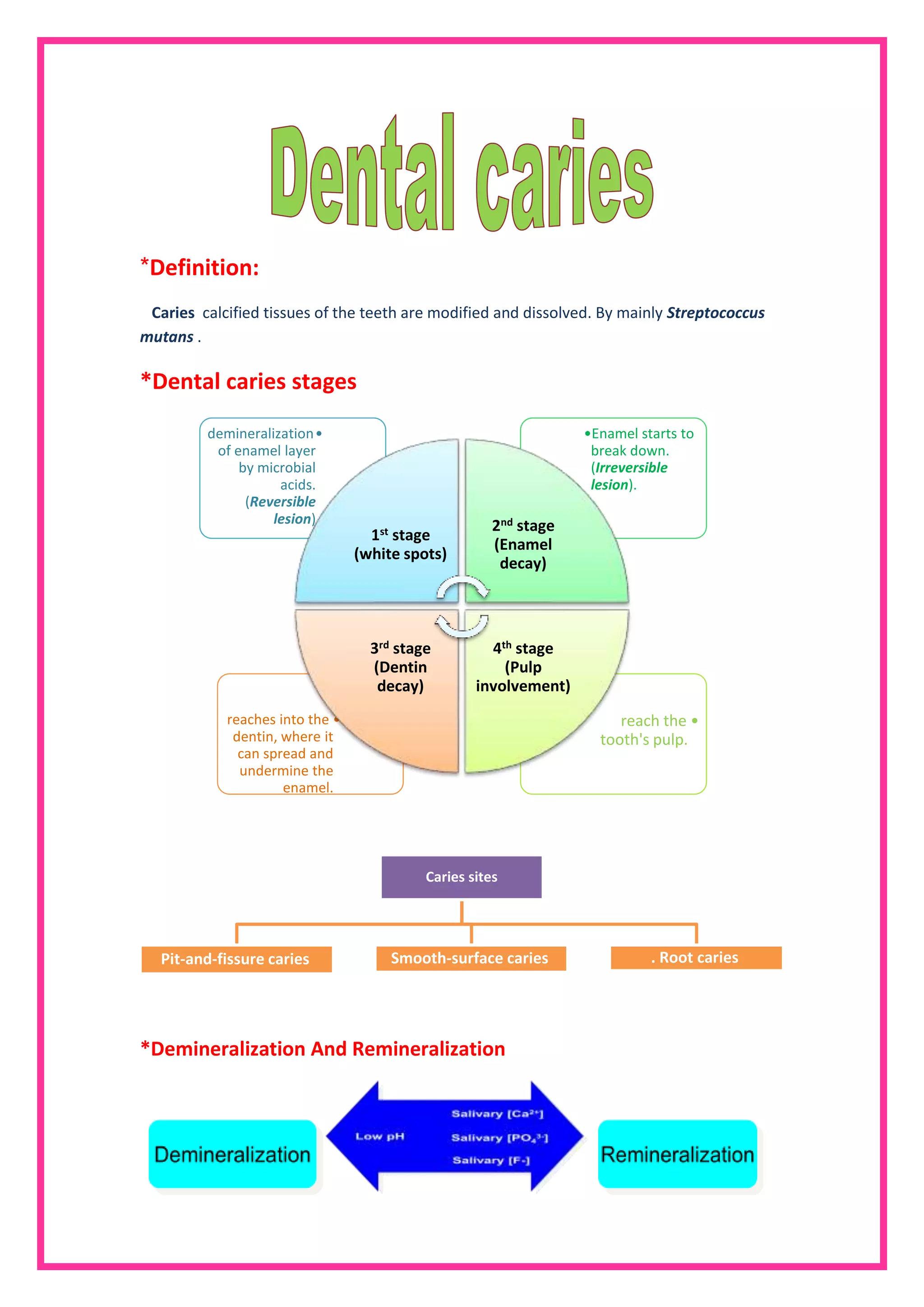
*Dental caries stages 
*Demineralization And Remineralization 
reach the • 
tooth's pulp. 
reaches into the • 
dentin, where it 
can spread and 
undermine the 
enamel. 
•Enamel starts to 
break down. 
(Irreversible 
lesion). 
demineralization • 
of enamel layer 
by microbial 
acids. 
(Reversible 
lesion) 
1st stage 
(white spots) 
2nd stage 
(Enamel 
decay) 
4th stage 
(Pulp 
involvement) 
3rd stage 
(Dentin 
decay) 
Caries sites 
Pit-and-fissure caries Smooth-surface caries . Root caries
*Main Factors Involved In Dental Caries 
Teeth: the microbe challenges a susceptible 
surface on some areas of the tooth to attack 
than other that related to many factor 
position and morphology of teeth. 
Microorganism : S mutans considered the 
caries initiator 
Diet : most cariogenic sugar is sucrose 
Acidogenic bacteria 
•S viridance as S 
mutans. 
•Lactobacillus sp. 
Proteolytic bacteria 
•Actinomyces sp. 
•Colistridia sp. 
•Pseudomonas sp. 
Chromogenic 
bacteria 
•Asprigillus sp. 
Ability to adhere 
to the tooth 
surface 
)colonization). 
Production of 
glucans and other 
polysaccharides to 
plaque 
accumulation. 
Production of 
acids to 
Production of 
acids 
Tolerate the 
low pH values.
 Adherence factors (adhesins as pili). 
 Invasive factors e.g TB as the organism produces disease by invasion 
of tissues. 
 Ability to survive intracellularly as Neisseria sp. 
 Toxic production as Dephtheria, the organism multiplies locally in 
the throat but releases strong toxin diffuses to the blood. 
_______________________________________________________ 
Important 
bacteria in caries 
Streptococcus 
mutans. 
Lactobacilli sp 
Actinomyces sp. 
____________________________________________________ 
Initial attachment 
to tooth surfaces 
Virulence 
factors of 
S mutans 
Acid tolerance 
Acid production 
Polysaccharide 
production 
(1) Extrusion of H+ 
(2) Malolactic 
fermentation 
(3) Alternation of cell 
(4) Production of 
ammonia 
 energy source 
 plaque accumulation. 
 metabolize a variety 
of sugars,resulting in 
the production of a 
number of weak 
acids. 
 Initiators of smooth 
surface caries. 
There is an outer fibrillar 
layer its function include : 
-Attachment to salivary 
pellicle. 
-Adhere to colonizing 
streptococci.
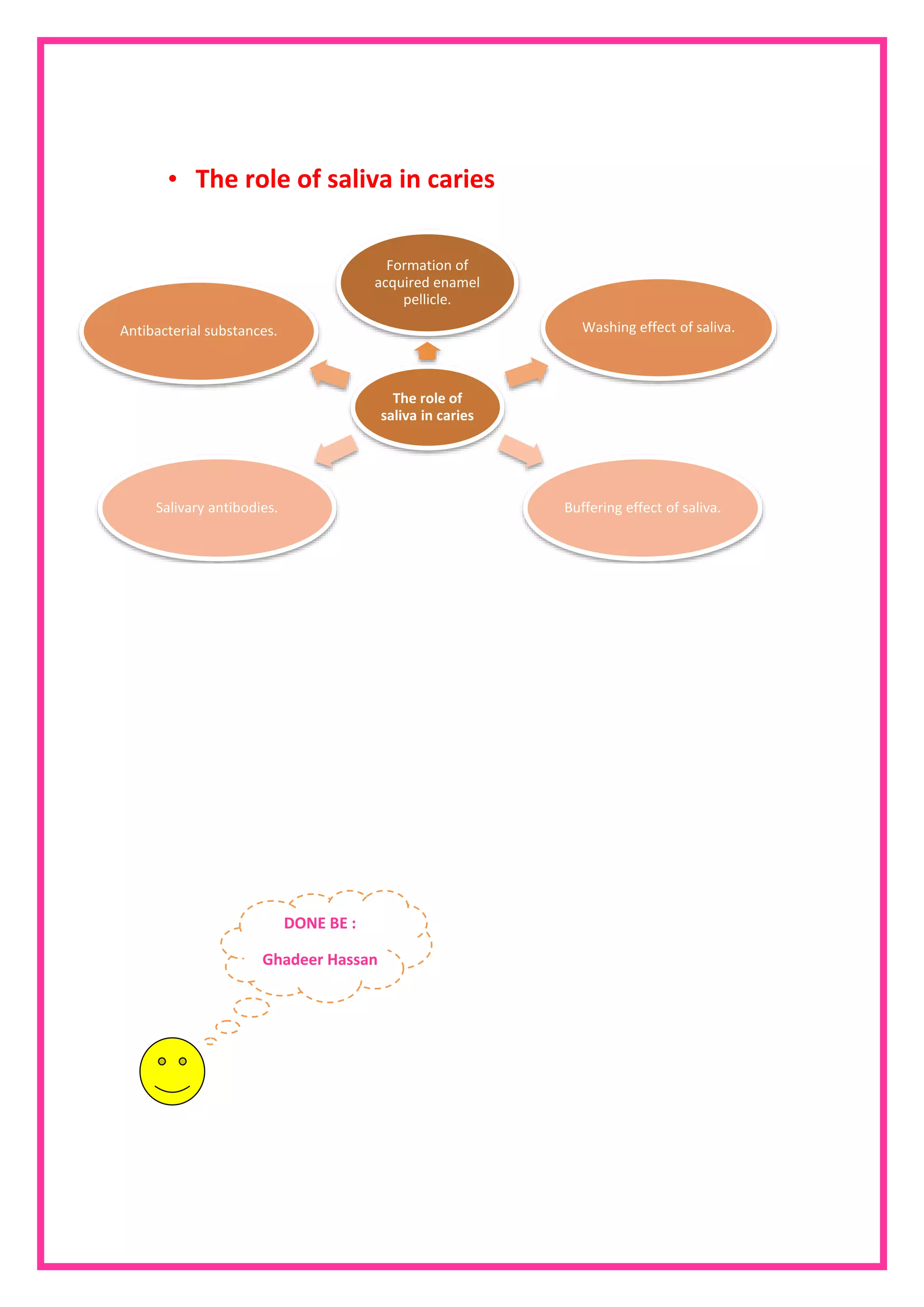
• The role of saliva in caries 
Formation of 
acquired enamel 
pellicle. 
The role of 
saliva in caries 
Washing effect of saliva. 
Antibacterial substances. 
Salivary antibodies. Buffering effect of saliva. 
DONE BE : 
Ghadeer Hassan

Dental caries

  • 1.
    *Definition: Caries calcifiedtissues of the teeth are modified and dissolved. By mainly Streptococcus mutans . *Dental caries stages *Demineralization And Remineralization reach the • tooth's pulp. reaches into the • dentin, where it can spread and undermine the enamel. •Enamel starts to break down. (Irreversible lesion). demineralization • of enamel layer by microbial acids. (Reversible lesion) 1st stage (white spots) 2nd stage (Enamel decay) 4th stage (Pulp involvement) 3rd stage (Dentin decay) Caries sites Pit-and-fissure caries Smooth-surface caries . Root caries
  • 2.
    *Main Factors InvolvedIn Dental Caries Teeth: the microbe challenges a susceptible surface on some areas of the tooth to attack than other that related to many factor position and morphology of teeth. Microorganism : S mutans considered the caries initiator Diet : most cariogenic sugar is sucrose Acidogenic bacteria •S viridance as S mutans. •Lactobacillus sp. Proteolytic bacteria •Actinomyces sp. •Colistridia sp. •Pseudomonas sp. Chromogenic bacteria •Asprigillus sp. Ability to adhere to the tooth surface )colonization). Production of glucans and other polysaccharides to plaque accumulation. Production of acids to Production of acids Tolerate the low pH values.
  • 3.
     Adherence factors(adhesins as pili).  Invasive factors e.g TB as the organism produces disease by invasion of tissues.  Ability to survive intracellularly as Neisseria sp.  Toxic production as Dephtheria, the organism multiplies locally in the throat but releases strong toxin diffuses to the blood. _______________________________________________________ Important bacteria in caries Streptococcus mutans. Lactobacilli sp Actinomyces sp. ____________________________________________________ Initial attachment to tooth surfaces Virulence factors of S mutans Acid tolerance Acid production Polysaccharide production (1) Extrusion of H+ (2) Malolactic fermentation (3) Alternation of cell (4) Production of ammonia  energy source  plaque accumulation.  metabolize a variety of sugars,resulting in the production of a number of weak acids.  Initiators of smooth surface caries. There is an outer fibrillar layer its function include : -Attachment to salivary pellicle. -Adhere to colonizing streptococci.
  • 4.
    • The roleof saliva in caries Formation of acquired enamel pellicle. The role of saliva in caries Washing effect of saliva. Antibacterial substances. Salivary antibodies. Buffering effect of saliva. DONE BE : Ghadeer Hassan