Embryo Transfer in Beef Cattle Ms. Bailes AGSC 336 – Advanced Animal Science
 
Objectives Define embryo transfer  Explain the steps of embryo transfer List the advantages of embryo transfer List the disadvantages of embryo transfer
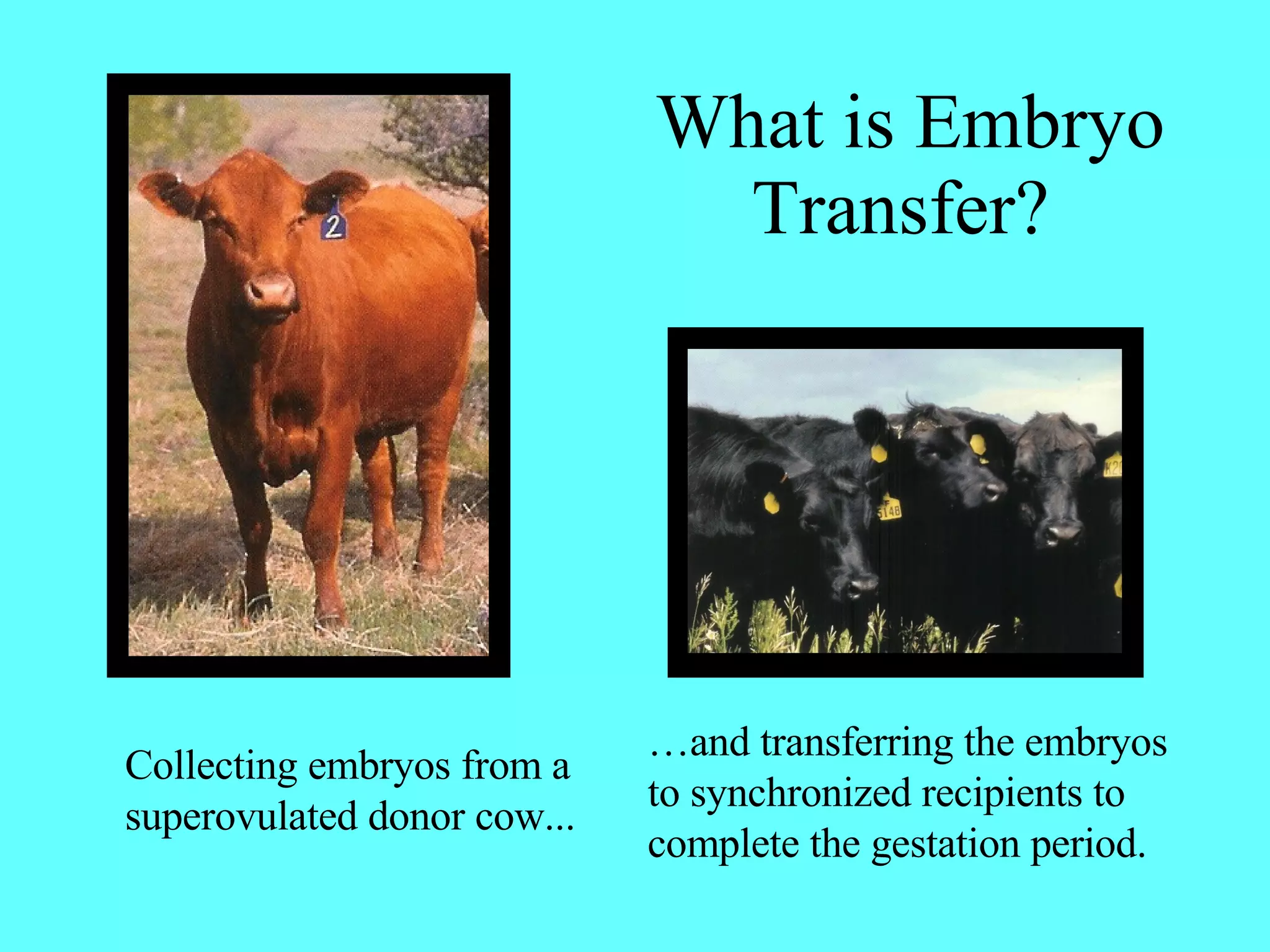
What is Embryo Transfer?  Collecting embryos from a superovulated donor cow... … and transferring the embryos to synchronized recipients to complete the gestation period.
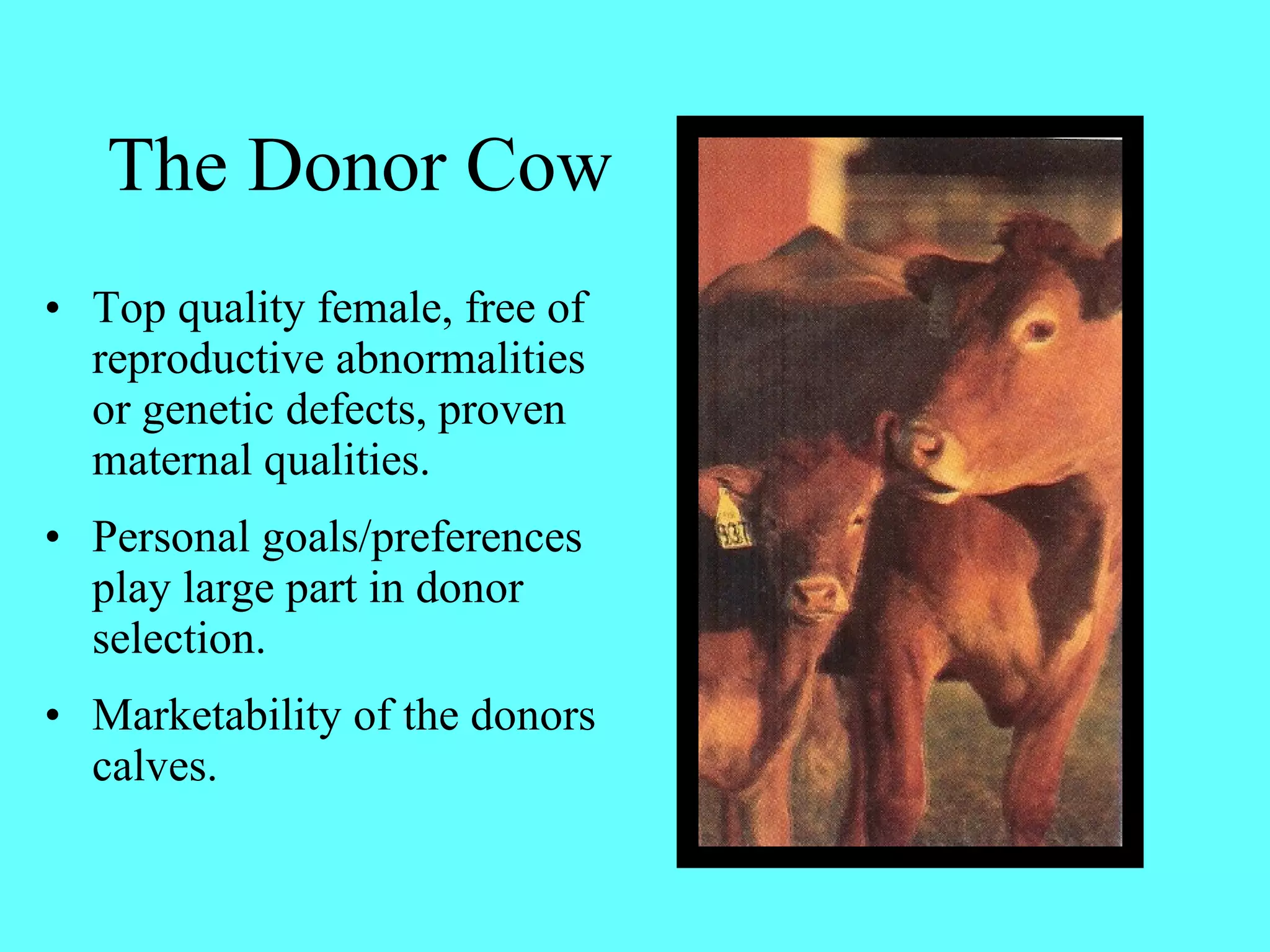
The Donor Cow Top quality female, free of  reproductive abnormalities or genetic defects, proven maternal qualities. Personal goals/preferences play large part in donor selection. Marketability of the donors calves.
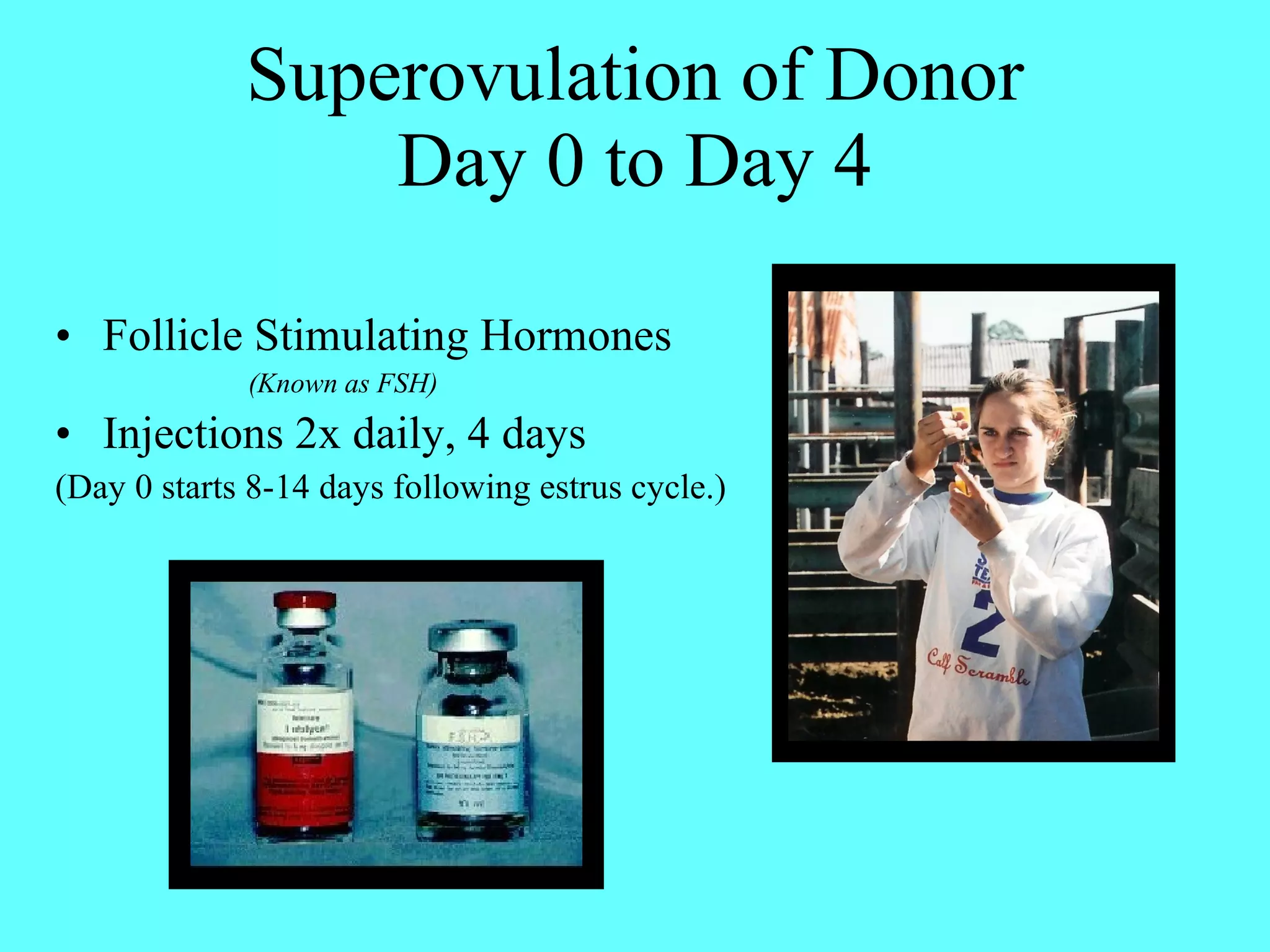
Superovulation of Donor Day 0 to Day 4 Follicle Stimulating Hormones  (Known as FSH) Injections 2x daily, 4 days   (Day 0 starts 8-14 days following estrus cycle.)
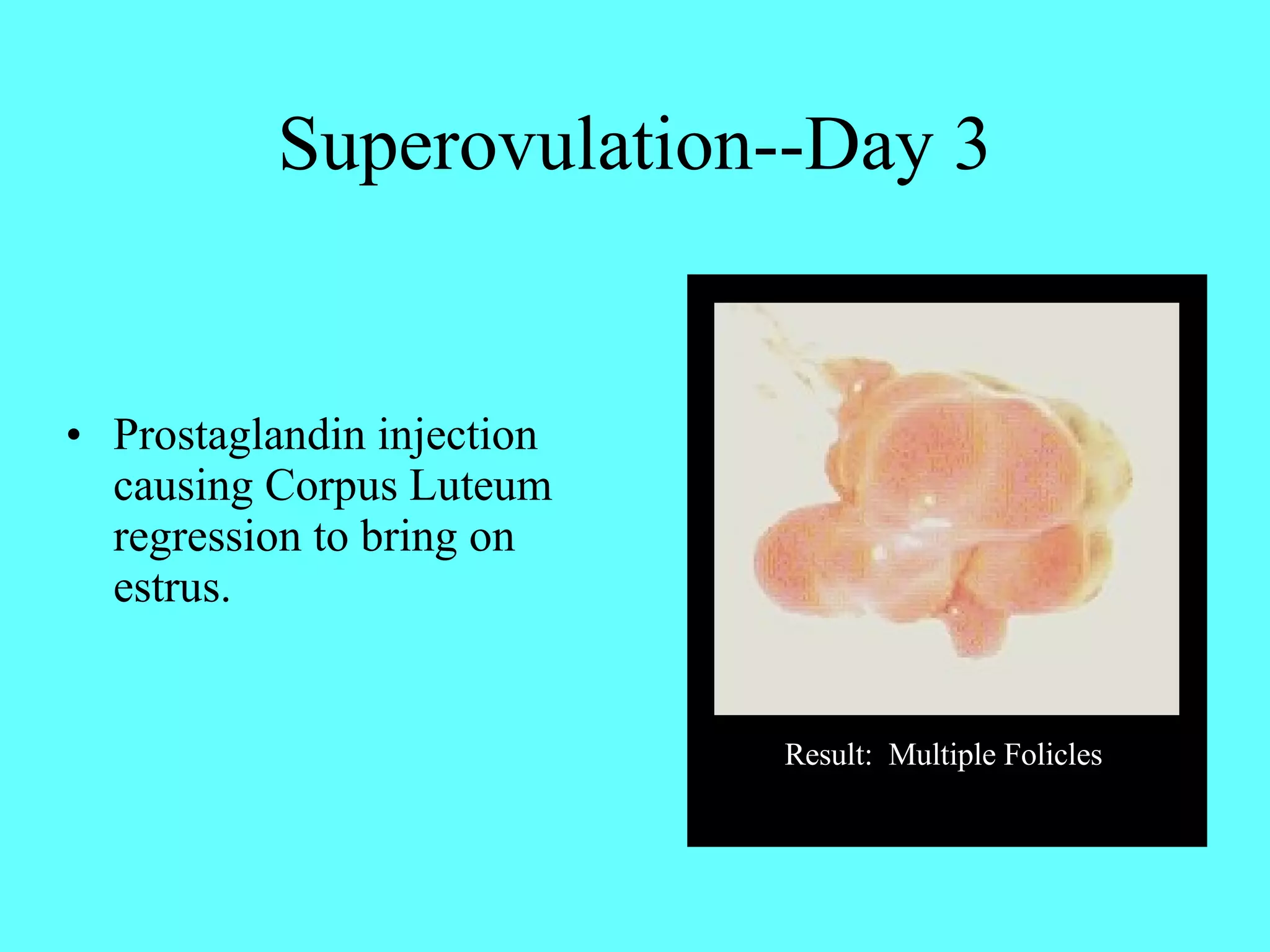
Superovulation--Day 3 Prostaglandin injection causing Corpus Luteum  regression to bring on estrus. Result:  Multiple Folicles Result:  Multiple Folicles
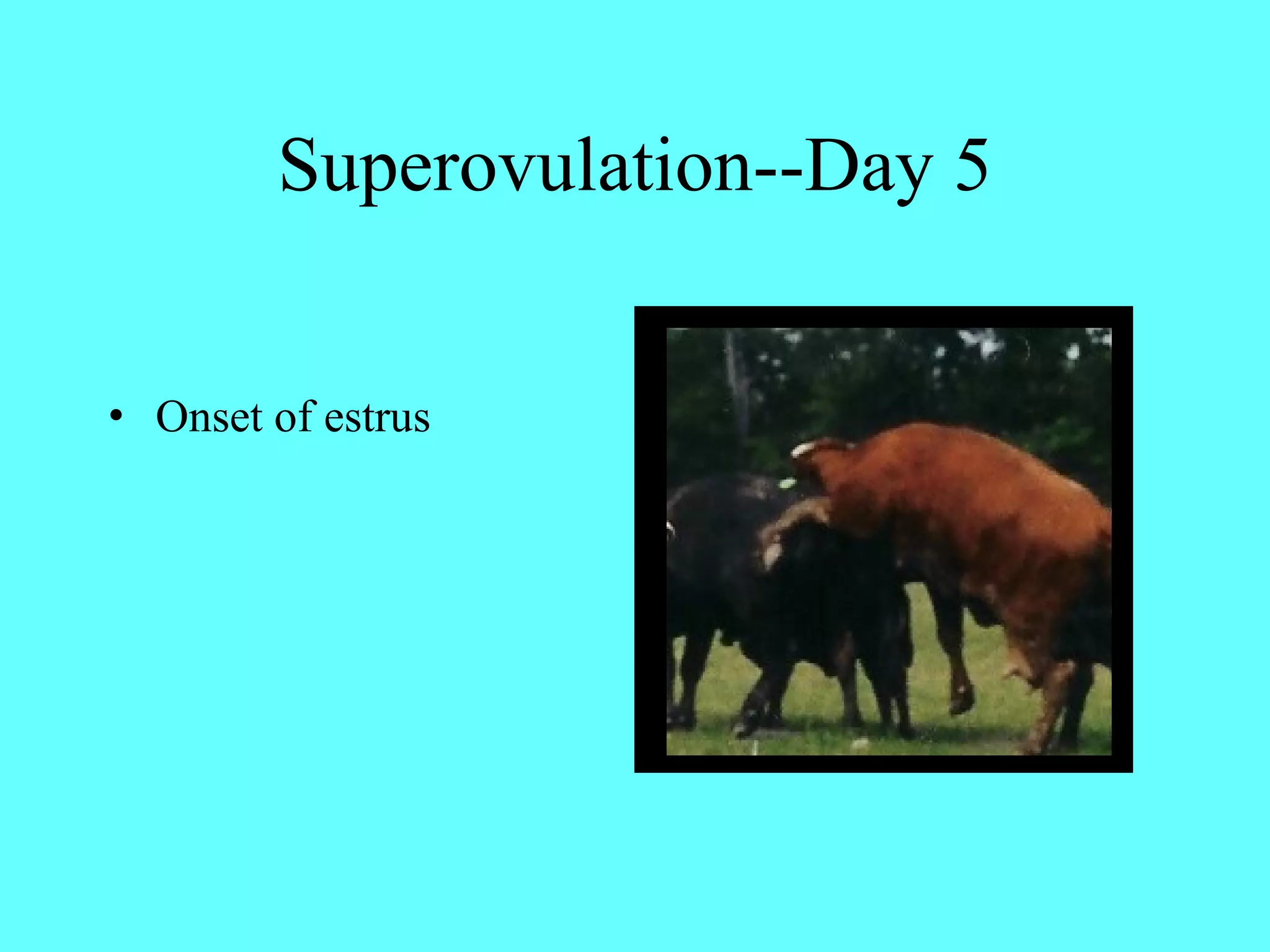
Superovulation--Day 5 Onset of estrus
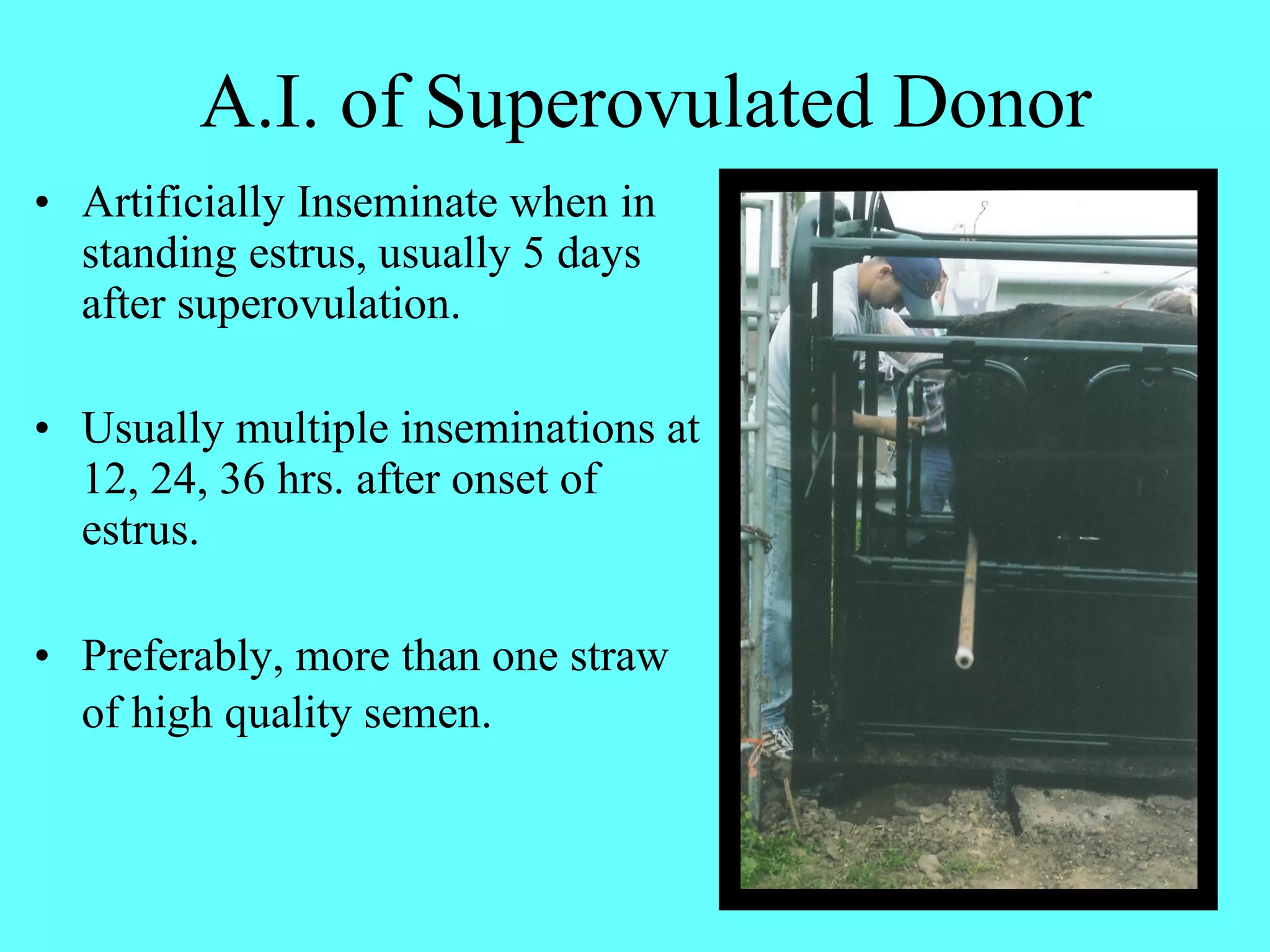
A.I. of Superovulated Donor Artificially Inseminate when in standing estrus, usually 5 days after superovulation. Usually multiple inseminations at 12, 24, 36 hrs. after onset of estrus. Preferably, more than one straw of high quality semen.
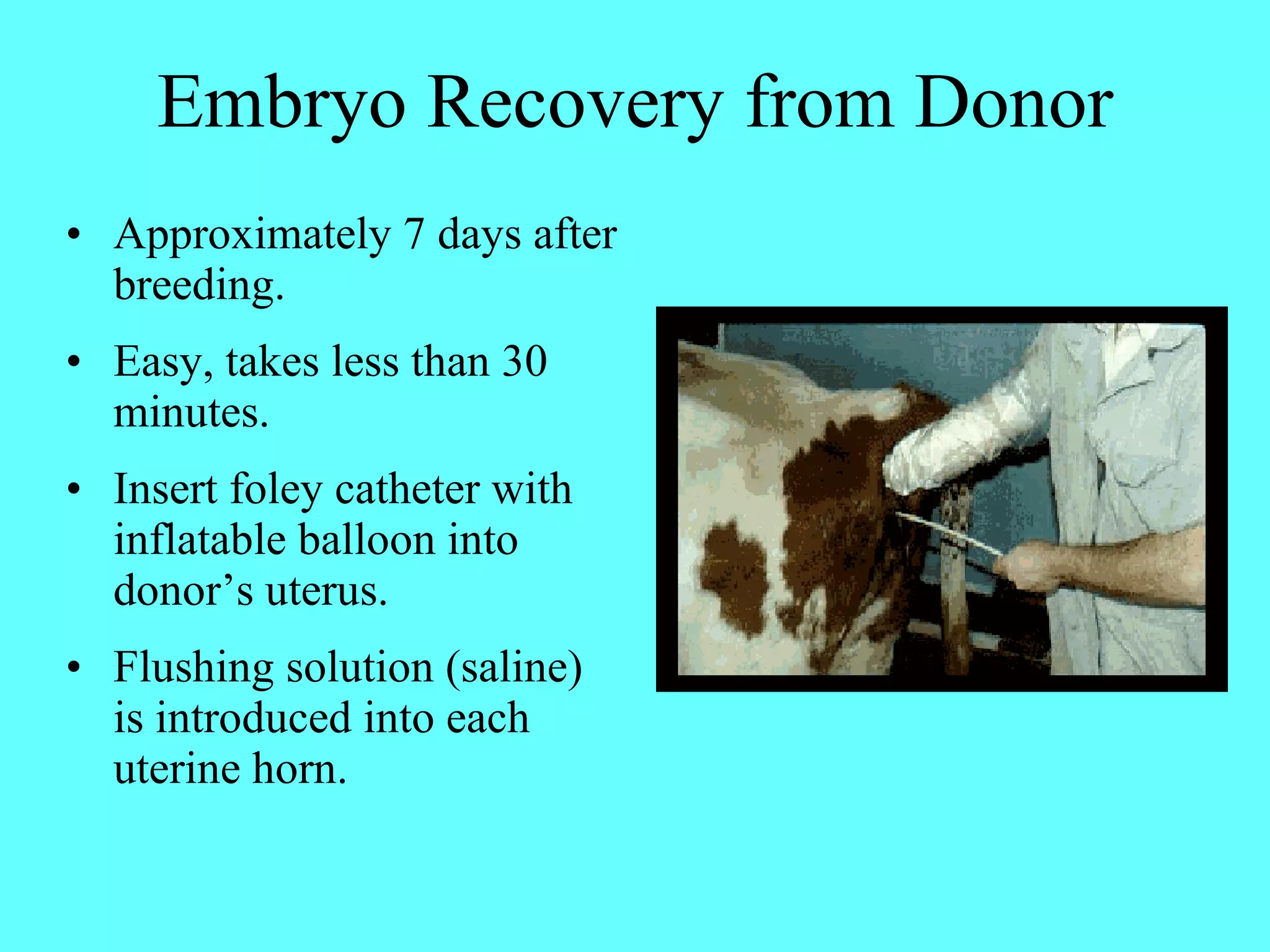
Embryo Recovery from Donor Approximately 7 days after breeding. Easy, takes less than 30 minutes.  Insert foley catheter with inflatable balloon into donor’s uterus. Flushing solution (saline) is introduced into each uterine horn.
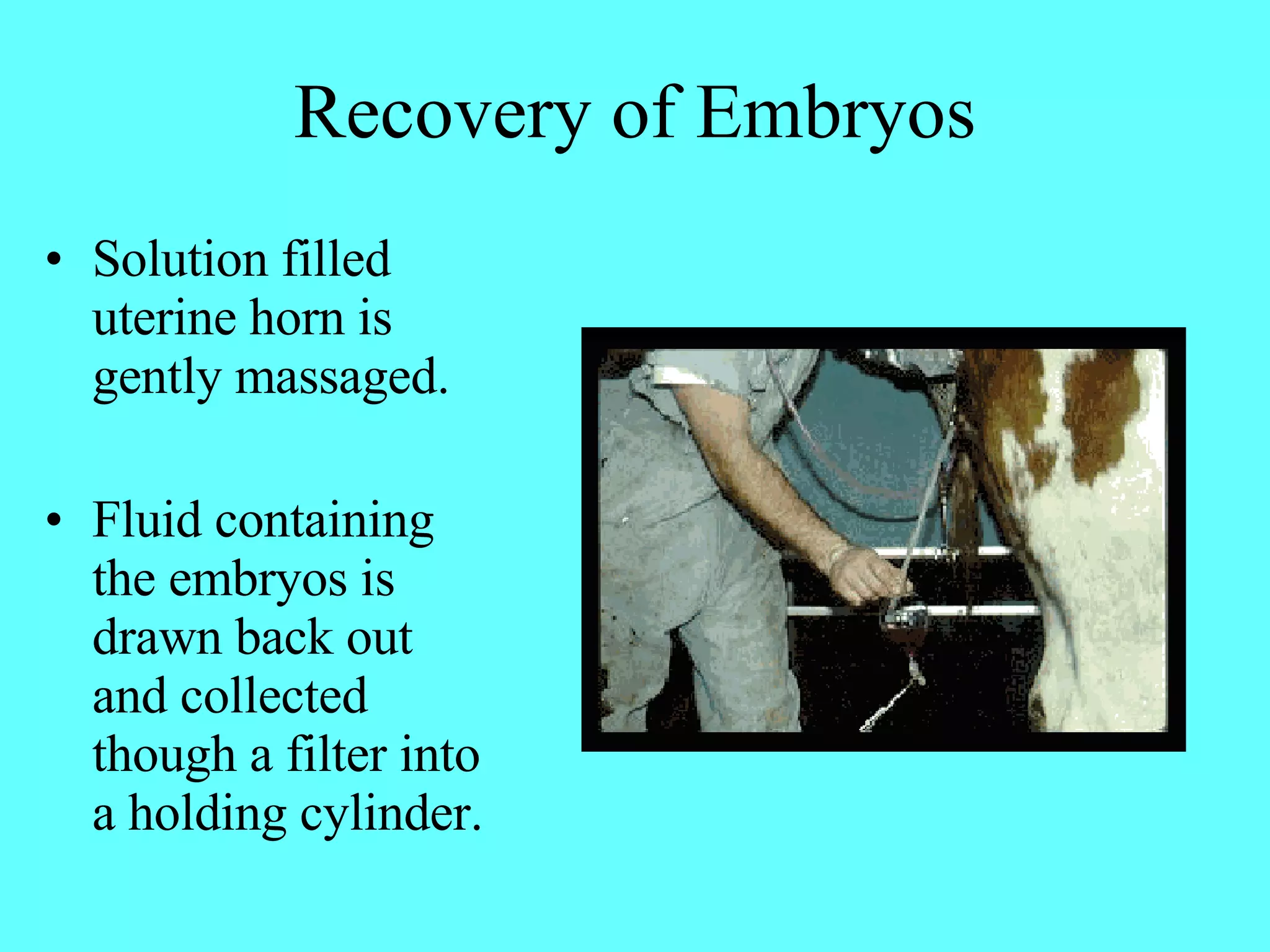
Recovery of Embryos Solution filled uterine horn is gently massaged. Fluid containing the embryos is drawn back out and collected though a filter into a holding cylinder.
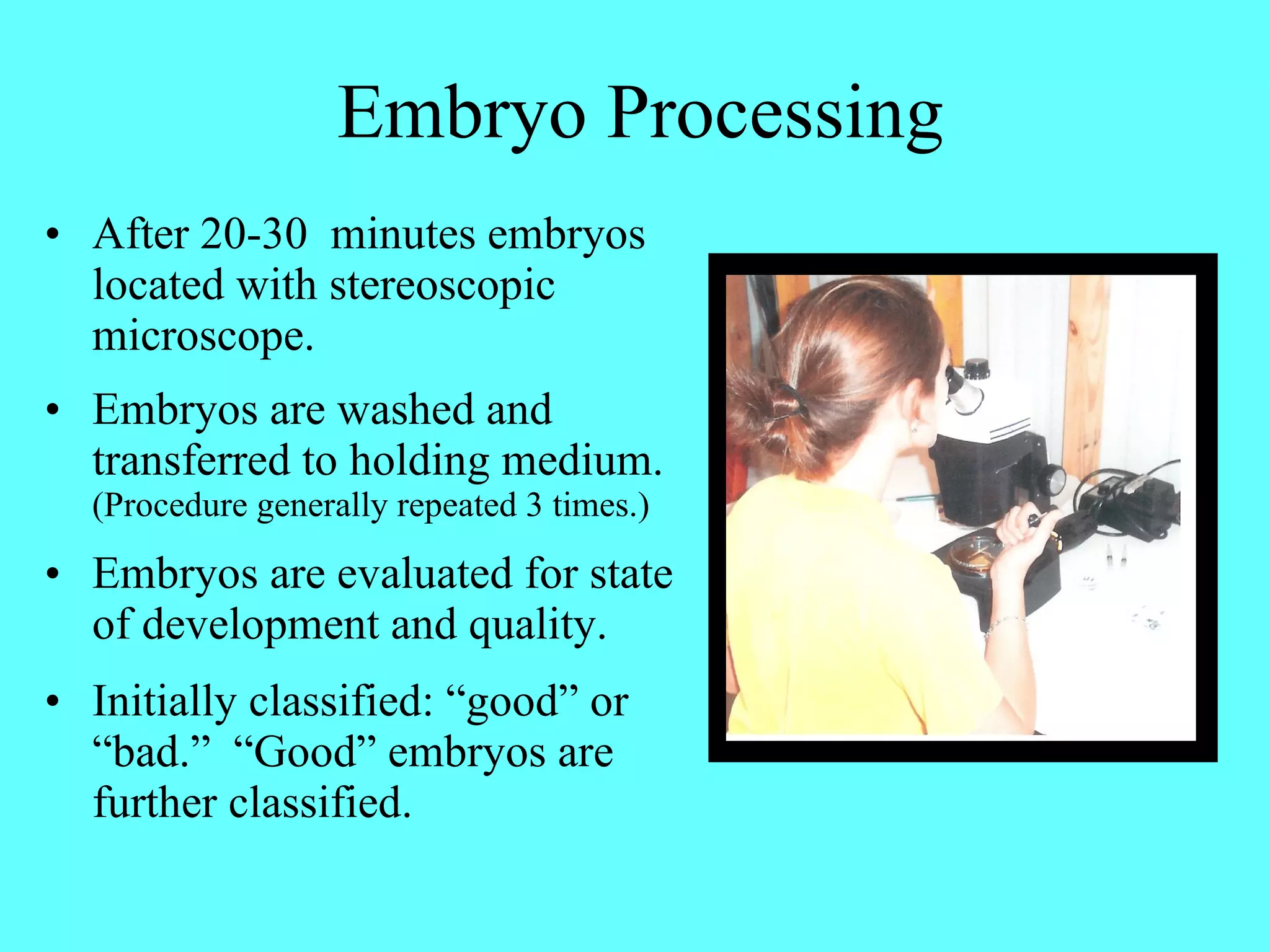
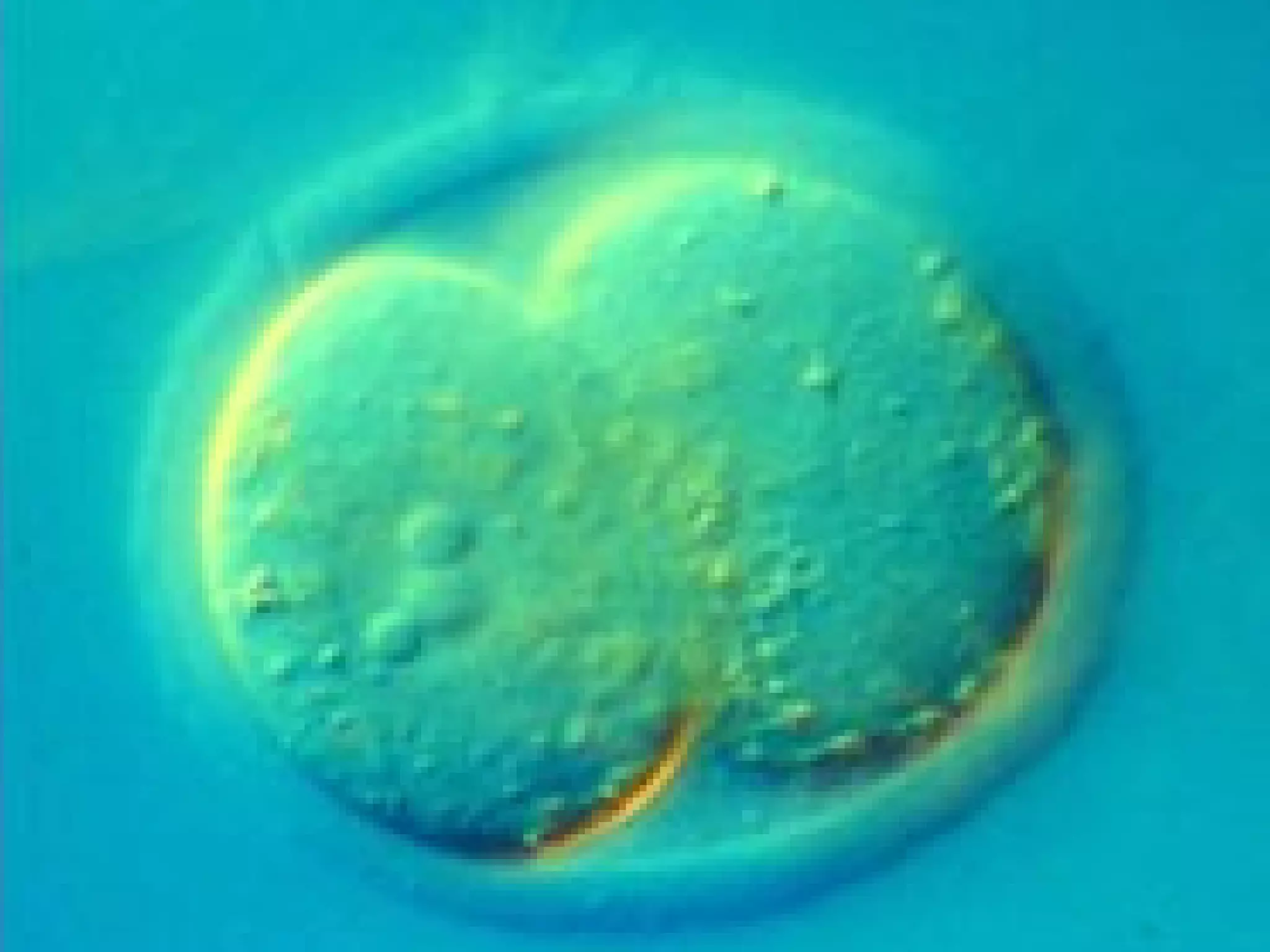
Embryo Processing After 20-30  minutes embryos located with stereoscopic microscope. Embryos are washed and transferred to holding medium.  (Procedure generally repeated 3 times.) Embryos are evaluated for state of development and quality. Initially classified: “good” or “bad.”  “Good” embryos are further classified.
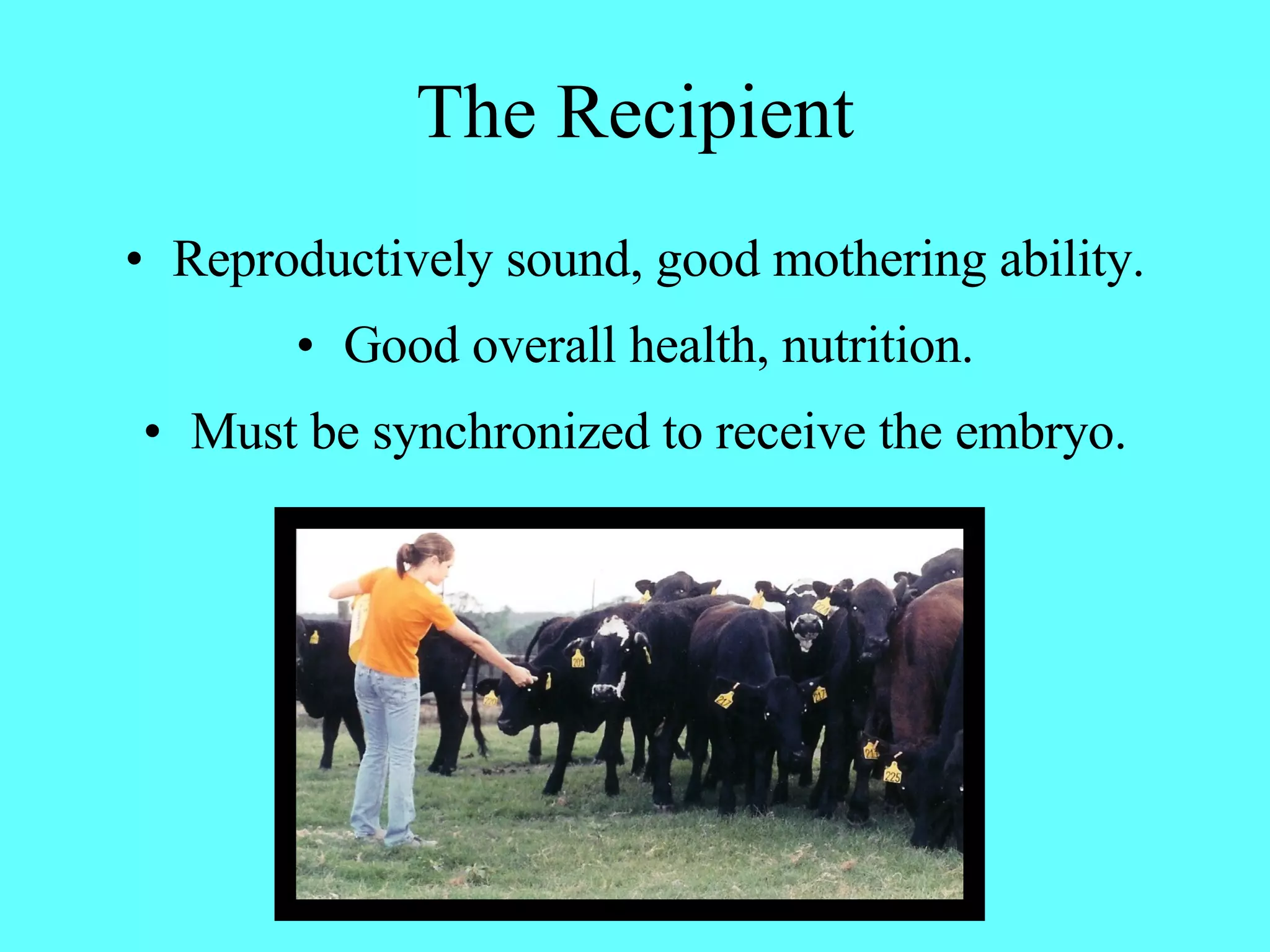
The Recipient Reproductively sound, good mothering ability. Good overall health, nutrition. Must be synchronized to receive the embryo.
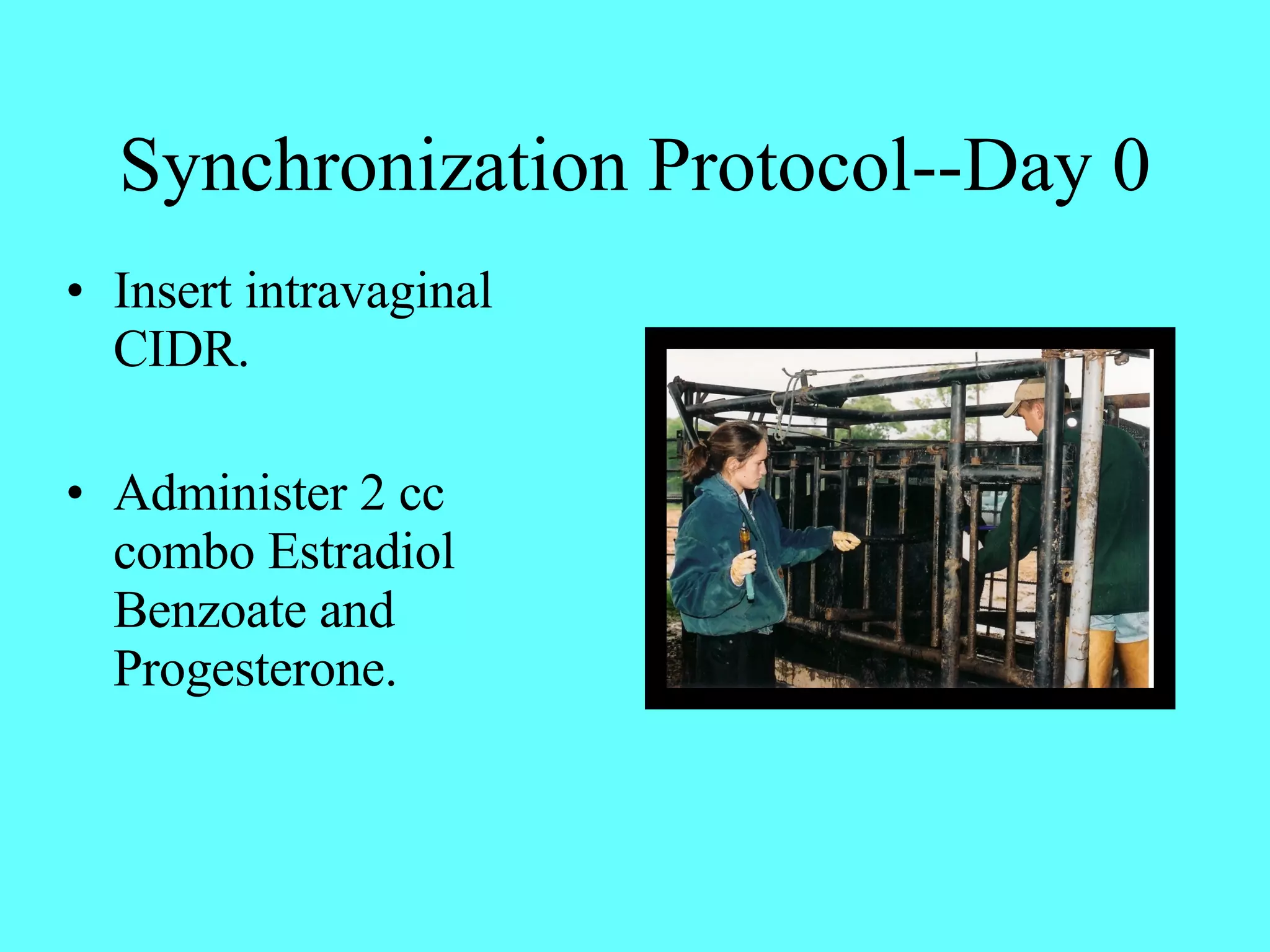
Synchronization Protocol--Day 0 Insert intravaginal CIDR. Administer 2 cc combo Estradiol Benzoate and Progesterone.
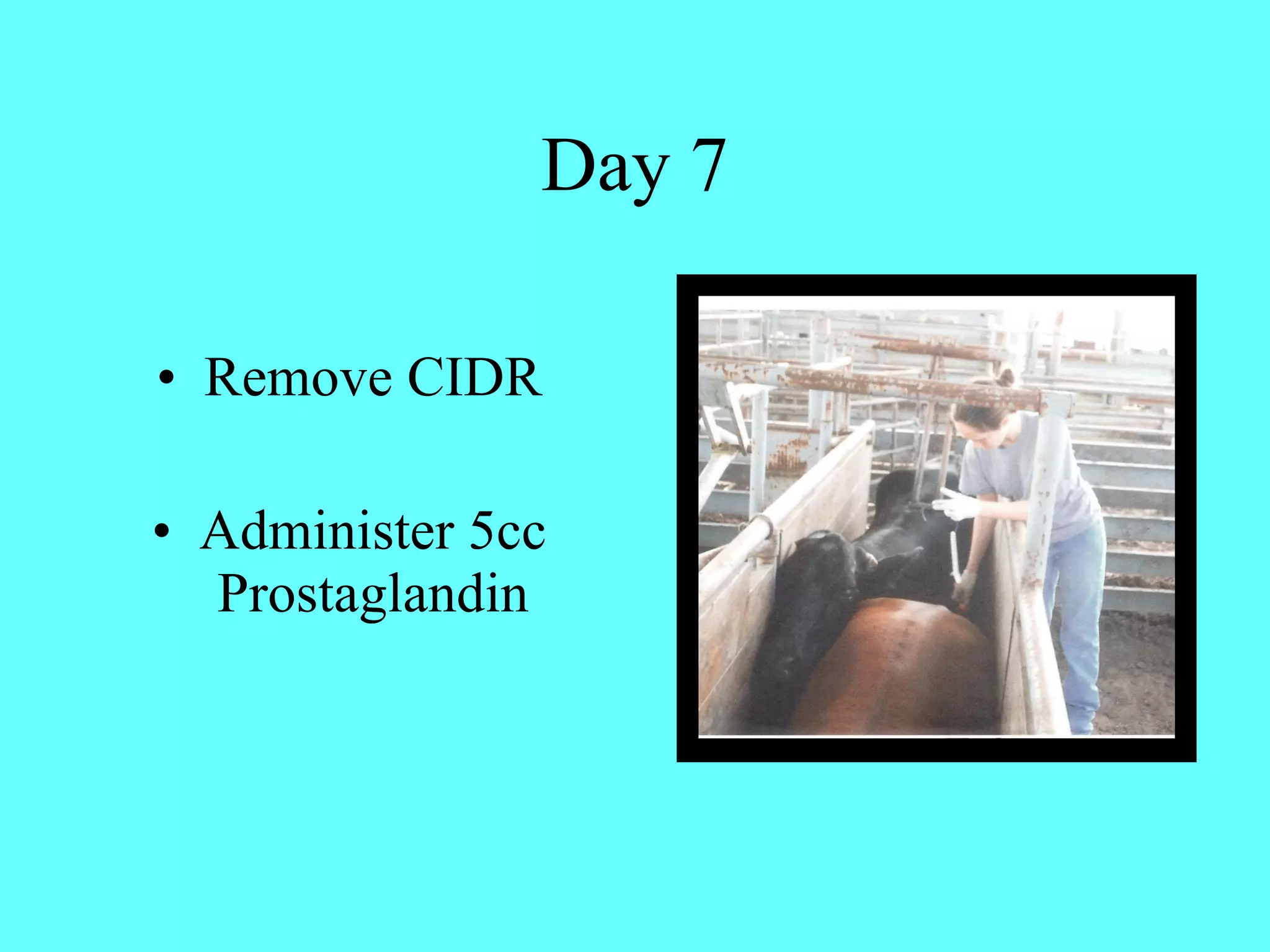
Day 7 Remove CIDR Administer 5cc Prostaglandin
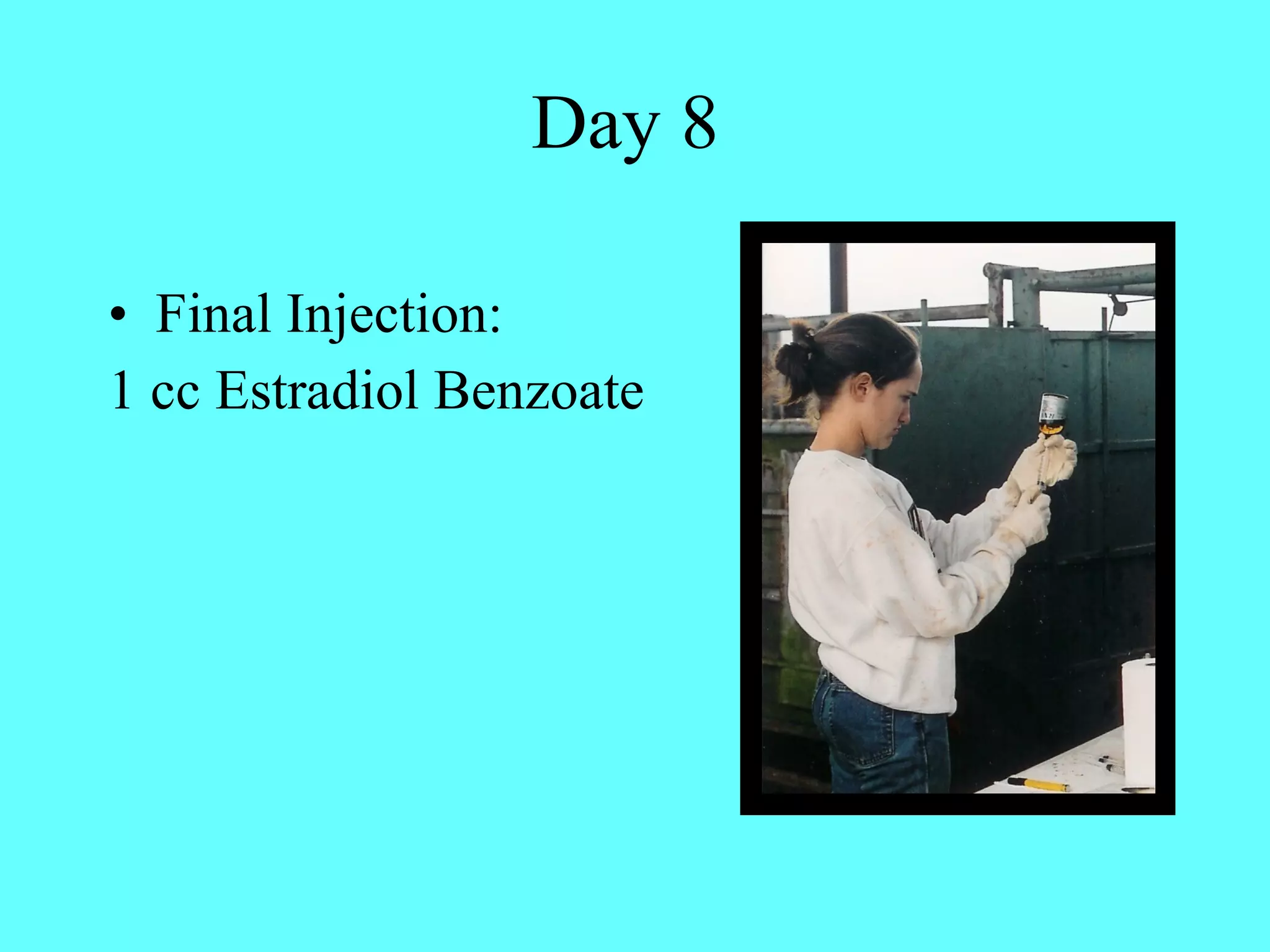
Day 8  Final Injection: 1 cc Estradiol Benzoate
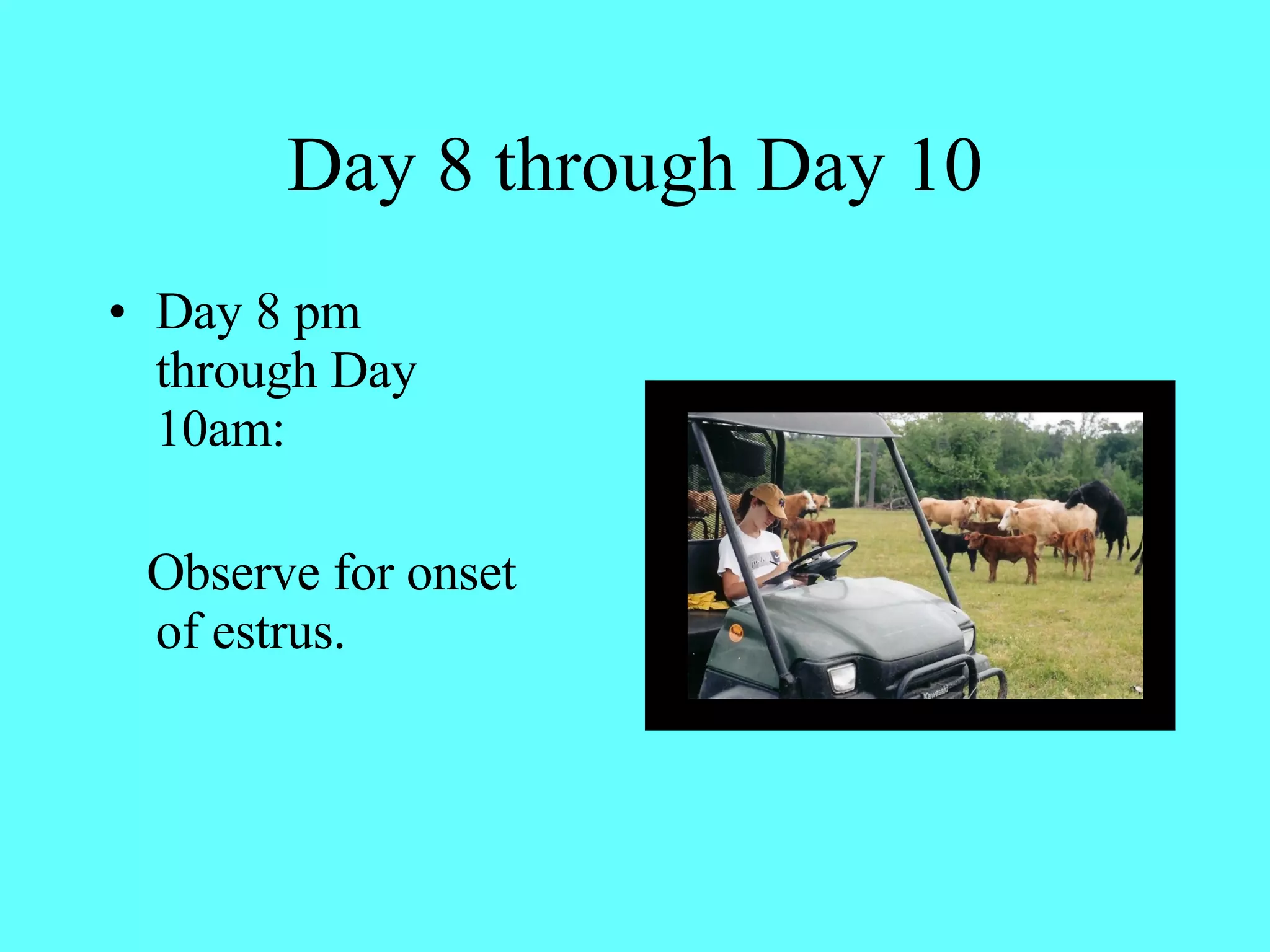
Day 8 through Day 10 Day 8 pm through Day 10am: Observe for onset of estrus.
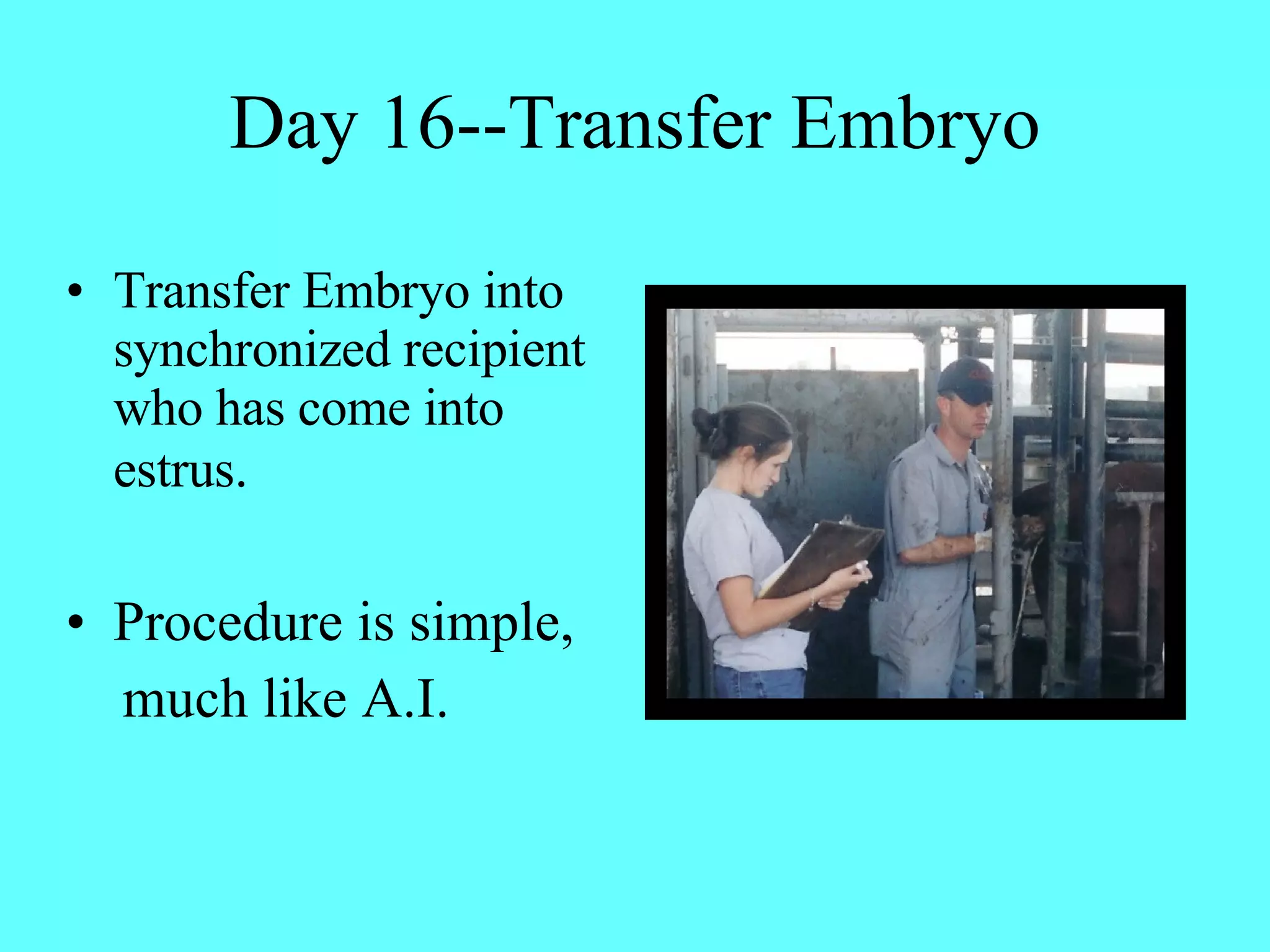
Day 16--Transfer Embryo Transfer Embryo into synchronized recipient who has come into estrus . Procedure is simple,  much like A.I.
Activity Each card has a step in the embryo transfer process. Put yourselves in the proper order of embryo transfer and then explain the process.
Advantages of E.T. Increased number of calves of  genetically  superior cows. Increased marketing opportunities-- offspring AND embryos. Ease of Import/Export. Embyros can be stored indefinitely.
Disadvantages of E.T. Increased expenses and higher break-even costs for calves. Estrus detection required. Synchronization of recipient with donor. Specialized equipment and trained personnel. More expensive and time consuming than  traditional reproductive methods.
In Summary… E.T. is not for every herd. Each female born has thousands of potential eggs. Complete the crossword puzzle which is a summary/review of what we learned today.
 

Embryo Transfer

  • 1.
    Embryo Transfer inBeef Cattle Ms. Bailes AGSC 336 – Advanced Animal Science
  • 2.
  • 3.
    Objectives Define embryotransfer Explain the steps of embryo transfer List the advantages of embryo transfer List the disadvantages of embryo transfer
  • 4.
    What is EmbryoTransfer? Collecting embryos from a superovulated donor cow... … and transferring the embryos to synchronized recipients to complete the gestation period.
  • 5.
    The Donor CowTop quality female, free of reproductive abnormalities or genetic defects, proven maternal qualities. Personal goals/preferences play large part in donor selection. Marketability of the donors calves.
  • 6.
    Superovulation of DonorDay 0 to Day 4 Follicle Stimulating Hormones (Known as FSH) Injections 2x daily, 4 days (Day 0 starts 8-14 days following estrus cycle.)
  • 7.
    Superovulation--Day 3 Prostaglandininjection causing Corpus Luteum regression to bring on estrus. Result: Multiple Folicles Result: Multiple Folicles
  • 8.
  • 9.
    A.I. of SuperovulatedDonor Artificially Inseminate when in standing estrus, usually 5 days after superovulation. Usually multiple inseminations at 12, 24, 36 hrs. after onset of estrus. Preferably, more than one straw of high quality semen.
  • 10.
    Embryo Recovery fromDonor Approximately 7 days after breeding. Easy, takes less than 30 minutes. Insert foley catheter with inflatable balloon into donor’s uterus. Flushing solution (saline) is introduced into each uterine horn.
  • 11.
    Recovery of EmbryosSolution filled uterine horn is gently massaged. Fluid containing the embryos is drawn back out and collected though a filter into a holding cylinder.
  • 12.
    Embryo Processing After20-30 minutes embryos located with stereoscopic microscope. Embryos are washed and transferred to holding medium. (Procedure generally repeated 3 times.) Embryos are evaluated for state of development and quality. Initially classified: “good” or “bad.” “Good” embryos are further classified.
  • 13.
    The Recipient Reproductivelysound, good mothering ability. Good overall health, nutrition. Must be synchronized to receive the embryo.
  • 14.
    Synchronization Protocol--Day 0Insert intravaginal CIDR. Administer 2 cc combo Estradiol Benzoate and Progesterone.
  • 15.
    Day 7 RemoveCIDR Administer 5cc Prostaglandin
  • 16.
    Day 8 Final Injection: 1 cc Estradiol Benzoate
  • 17.
    Day 8 throughDay 10 Day 8 pm through Day 10am: Observe for onset of estrus.
  • 18.
    Day 16--Transfer EmbryoTransfer Embryo into synchronized recipient who has come into estrus . Procedure is simple, much like A.I.
  • 19.
    Activity Each cardhas a step in the embryo transfer process. Put yourselves in the proper order of embryo transfer and then explain the process.
  • 20.
    Advantages of E.T.Increased number of calves of genetically superior cows. Increased marketing opportunities-- offspring AND embryos. Ease of Import/Export. Embyros can be stored indefinitely.
  • 21.
    Disadvantages of E.T.Increased expenses and higher break-even costs for calves. Estrus detection required. Synchronization of recipient with donor. Specialized equipment and trained personnel. More expensive and time consuming than traditional reproductive methods.
  • 22.
    In Summary… E.T.is not for every herd. Each female born has thousands of potential eggs. Complete the crossword puzzle which is a summary/review of what we learned today.
  • 23.