Dr. Laxmi Shrikhande MD; FICOG; FICMU;FICMCH
• Medical Director-Shrikhande Fertility Clinic, Nagpur
• National Corresponding Editor-The Journal of Obstetrics & Gynecology of India
• Senior Vice President FOGSI 2012
• Chairperson Designate ICOG 2020 , Vice Chairperson ICOG 2019
• National Governing Council member ICOG 2012-2017
• National Governing Council Member ISAR 2014-2019
• National Governing Council Member IAGE for 3 terms
• Patron & President -Vidarbha Chapter ISOPARB
• Chairperson-HIV/AIDS Committee, FOGSI (2007-09)
• Received Best Committee Award of FOGSI
• Received Bharat excellence Award for women’s health
• President Nagpur OB/GY Society 2005-06
• Immediate Past President Menopause Society, Nagpur
• Associate member of RCOG
• Member of European Society of Human Reproduction
• Visited 96 FOGSI Societies as invited faculty
• Delivered 11 orations and 450 guest lectures
• Publications-Twenty National & eleven International
• Received Nagpur Ratan Award at the hands of Union Minister Shri Nitinji Gadkari
• Presented Papers in FIGO, AICOG, SAFOG, AICC-RCOG conferences
• Conducted adolescent health programme for more than 15,000 adolescent girls
• Conducted health awareness programme for more than 10,000 women
Preimplantation
Genetic Diagnosis
DR LAXMI SHRIKHANDE
NAGPUR
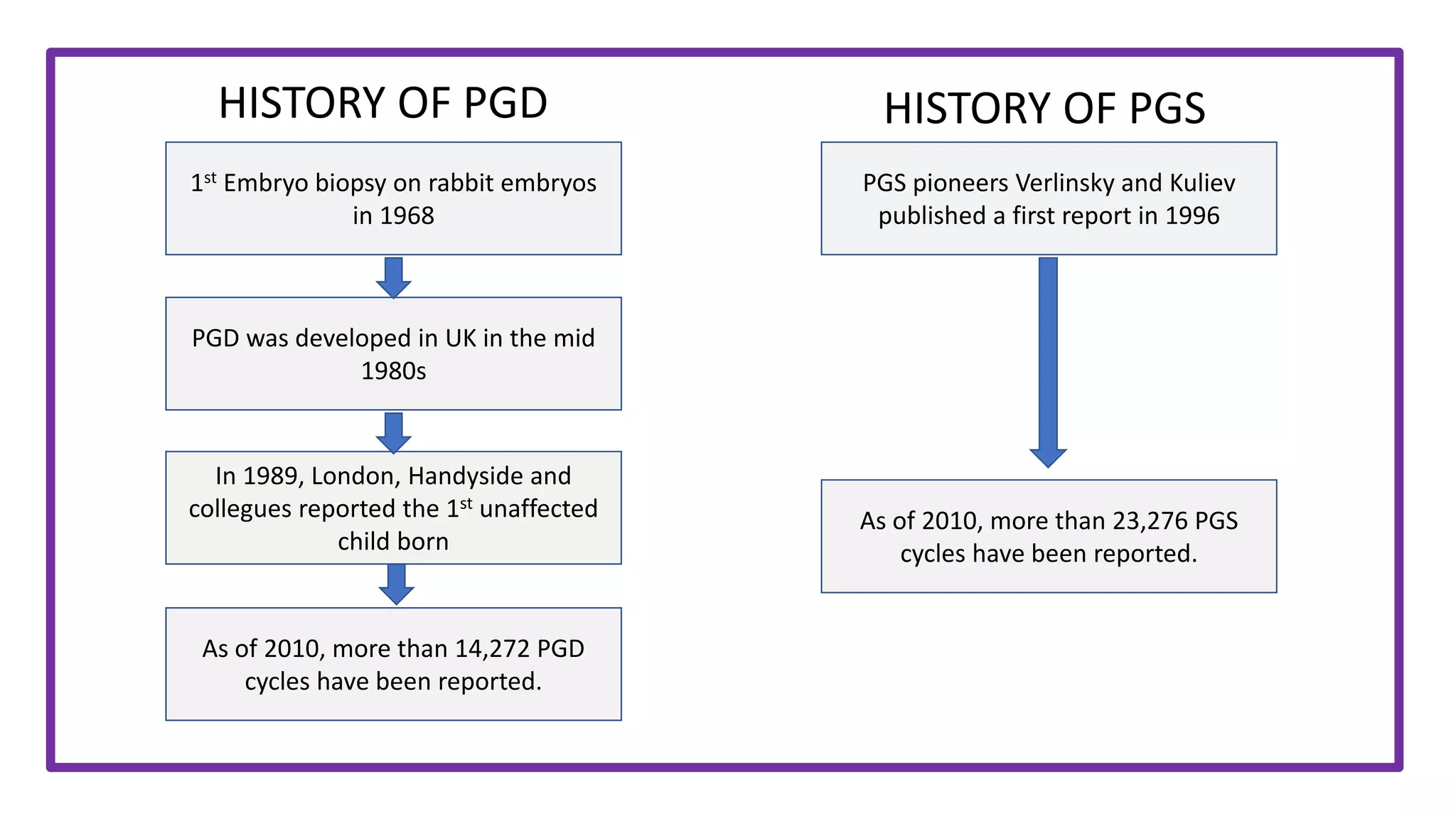
1st Embryo biopsy on rabbit embryos
in 1968
PGD was developed in UK in the mid
1980s
In 1989, London, Handyside and
collegues reported the 1st unaffected
child born
As of 2010, more than 14,272 PGD
cycles have been reported.
HISTORY OF PGD
PGS pioneers Verlinsky and Kuliev
published a first report in 1996
As of 2010, more than 23,276 PGS
cycles have been reported.
HISTORY OF PGS
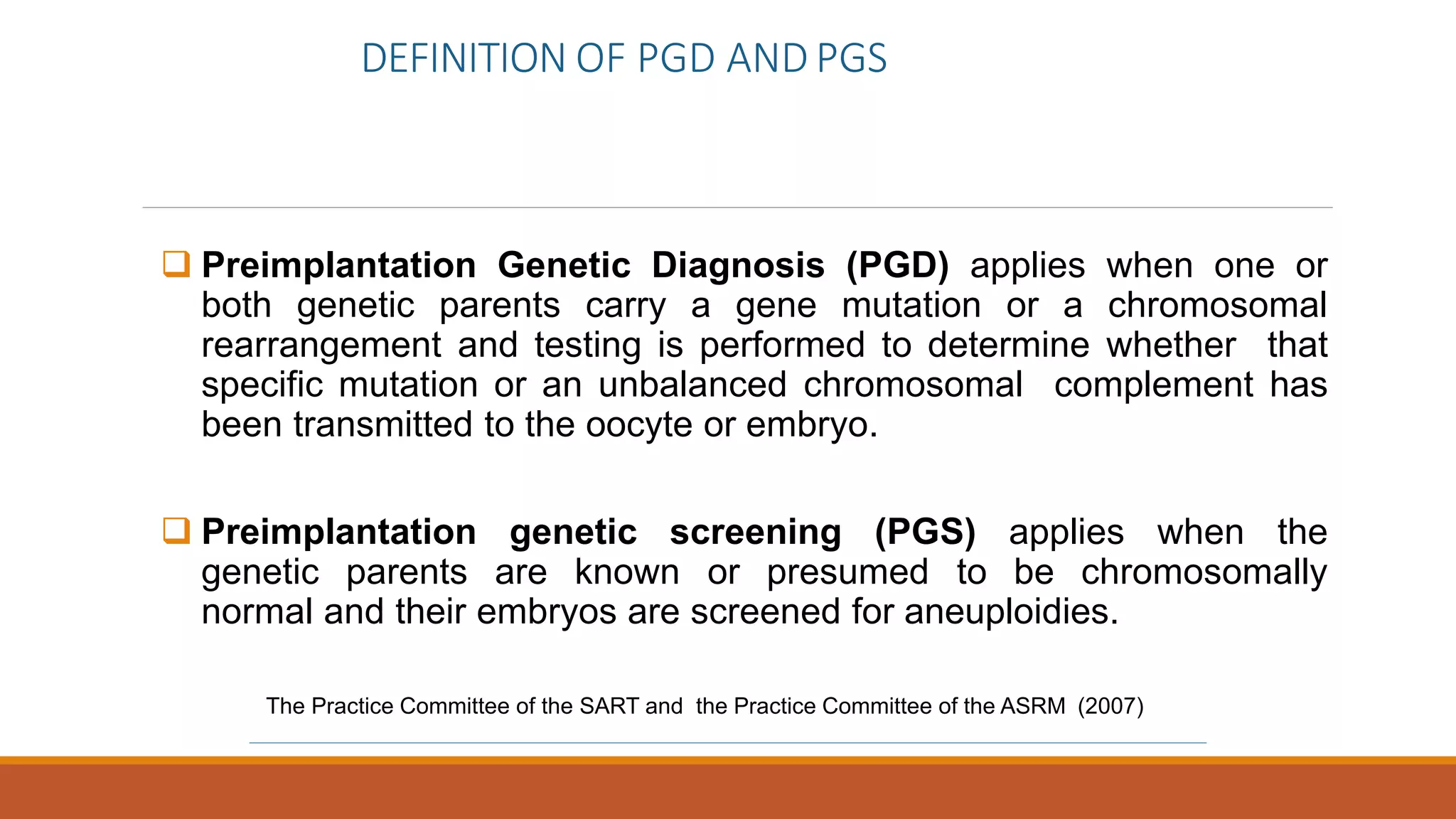
DEFINITION OF PGD AND PGS
 Preimplantation Genetic Diagnosis (PGD) applies when one or
both genetic parents carry a gene mutation or a chromosomal
rearrangement and testing is performed to determine whether that
specific mutation or an unbalanced chromosomal complement has
been transmitted to the oocyte or embryo.
 Preimplantation genetic screening (PGS) applies when the
genetic parents are known or presumed to be chromosomally
normal and their embryos are screened for aneuploidies.
The Practice Committee of the SART and the Practice Committee of the ASRM (2007)
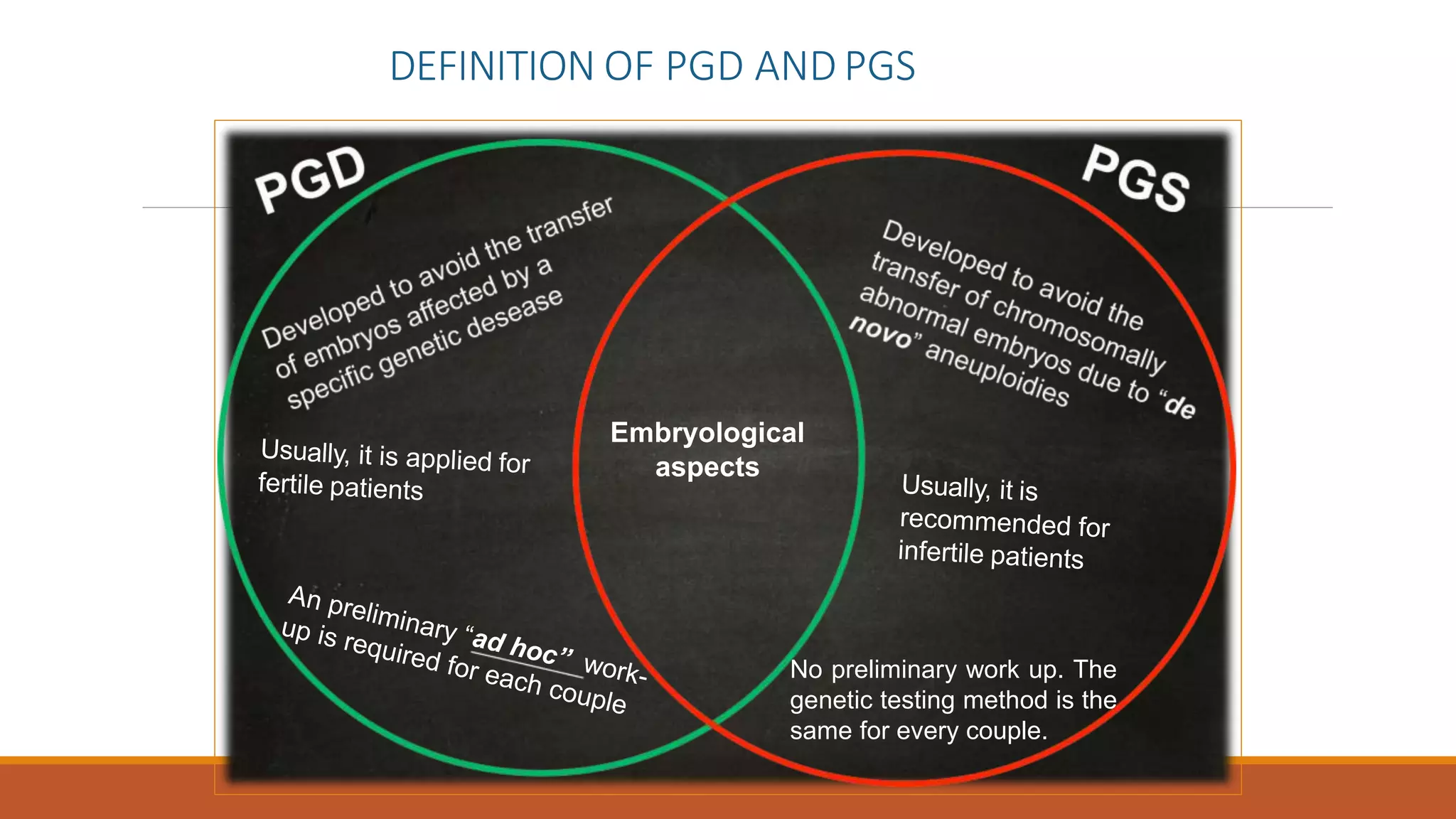
4
No preliminary work up. The
genetic testing method is the
same for every couple.
Embryological
aspects
DEFINITION OF PGD AND PGS
What is pre-implantation genetic screening (PGS)?
PGS (also known as aneuploidy screening) involves checking the chromosomes
of embryos conceived by in vitro fertilisation (IVF) or intra-cytoplasmic sperm
injection (ICSI) for common abnormalities. This avoids having abnormal embryos
transferred to the womb during IVF or ICSI.
In vitro fertilisation
Intra-cytoplasmic sperm injection (ICSI)
Chromosomal abnormalities are a major cause of the failure of embryos to
implant, and of miscarriages. They can also cause conditions such as Down’s
syndrome.
 Young female patients who had experience of Recurrent Pregnancy
Loss, usually defined as 2 or more consecutive miscarriages.
 Young female patients who had experience of repeated IVF failures,
usually defined as 2 or more IVF embryo transfers involving good
quality embryos.
 Advanced female age, usually defined as > 35 years
Indication for PGS
ESHRE PGD Consortium, Goossens et al., 2009
Moving toward eSET for all IVF patient population
1 ≥ 2
Increase the cost-
effectiveness
Decrease time
to pregnancy
Decrease in
abortion rate
Single ET
Increase
implantation rate
Less abnormal
pregnancies
Expected advantages in IVF
PGS application in ART
Rationale for PGS
 more aneuploidy in human
embryos (7- 10% aneuploid)
 low implantation potential
 high miscarriage rate (70%
aneuploid)
B
R
U
S
S
E
L
S
P
G
D
Rationale for PGS
aneuploidy in oocytes
 factors
1. age
2. intrinsic gamete
abnormalities
 prevalence
1. 3% at 22 years
2. >50% over 40 years
Pellestor et al., 2003; Fragouli et al.,
2009
B
R
U
S
S
E
L
S
P
G
D
Rationale for PGS
aneuploidy in embryos
 prevalence
 2/3 human cleavage stage embryos
aneuploid
 58% under 30 years
 77% above 39 years
Delhanty et al., 1997; Magli et
al., 2000; Bielanska et al.,
2005; Mantzouratou et al.,
2007
B
R
U
S
S
E
L
S
P
G
D
Rationale for PGS
aneuploidy in embryos
 factors
 chaotic patterns
 abnormal ploidy
 chromosome loss
- not age-related
 mitotic non- disjunction
- age-related
B
R
U
S
S
E
L
S
P
G
D
INDICATIONS FOR PGD
• Other indications:
Mitochondrial pathologies
Late onset disorders (as Huntington Disease)
Inherited Predisposition to Cancer
HLA Genotyping
DISEASES SCREENABLE BY PGD
•Achondroplasia
•ADPKD1
•ADPKD2
•Adrenoleukodystroph
•Age-related aneuploidies
•Alpha-thalassemia
•Alpha-1-antitrypsin
•Alport disease
•Amyloid precursor protein (APP) mutation
•ARPKD
•Becker muscular dystrophy
•Beta-thalassemia
•Charcot Marie Tooth disease
•Chromosomal translocations
•Congenital adrenal hyperplasia
•Cystic fibrosis
•Down syndrome
•Duchenne muscular dystophy
•Dystonia
•Epidermolysis bullosa
•Familial dysautonomia
•Fanconi anemia
•FAP
•Fragile X syndrome
•Gaucher disease
•Hemophilia A and B
•HLA genotyping
•HSNF5 mutation
•Huntington disease
•Hypophosphatasia
•Incontinentia pigmenti
•Kell disease
•Klinefelter syndrome
•LCHAD
•Lesch Nyhan syndrome
•Marfan syndrome
•Multiple epiphysial dysplasia
•Myotonic dystophy
•Myotubular myopathy
•NF1 and NF2
•Norrie disease
•Osteogenesis imperfecta
•OTC deficiency
•P53 mutations
•PKU
•Retinitis pigmentosa
•SCA6
•Sickle cell anemia
•Sonic hedgehog mutations
•Spinal muscular atrophy (SMA)
•Tay-Sachs disease
•Tuberous sclerosis
•Turner syndrome
•Von Hippel Lindau
•X-linked hydrocephaly
•X-linked hyper IgM syndrome
Monogenic disorders
PGD is available for a large number of monogenic disorders
—that is, disorders due to a single gene only (autosomal
recessive, autosomal dominant or X-linked)— or of
chromosomal structural aberrations (such as a balanced
translocation).
 PGD helps these couples identify embryos carrying a
genetic disease or a chromosome abnormality, thus
avoiding diseased offspring.
Monogenic disorders
The most frequently diagnosed autosomal recessive disorders are cystic fibrosis, Beta-
thalassemia, sickle cell disease and spinal muscular atrophy type 1.
The most common dominant diseases are myotonic dystrophy, Huntington's disease
and Charcot-Marie-Tooth disease; and in the case of the X-linked diseases, most of the
cycles are performed for fragile X syndrome, haemophilia A and Duchenne muscular
dystrophy.
Though it is quite infrequent, some centers report PGD for mitochondrial disorders or
two indications simultaneously.
X-linked diseases
In the case of families at risk of X-linked diseases, patients are provided with a
single PGD assay of gender identification.
Gender selection offers a solution to individuals with X-linked diseases who are
in the process of getting pregnant.
The selection of a female embryo offspring is used in order to prevent the
transmission of X-linked Mendelian recessive diseases. Such X-linked Mendelian
diseases include Duchenne muscular dystrophy(DMD), and hemophilia A and B,
which are rarely seen in females because the offspring is unlikely to inherit two
copies of the recessive allele.
Since two copies of the mutant X allele are required for the disease to be passed
on to the female offspring, females will at worst be carriers for the disease but
may not necessarily have a dominant gene for the disease.
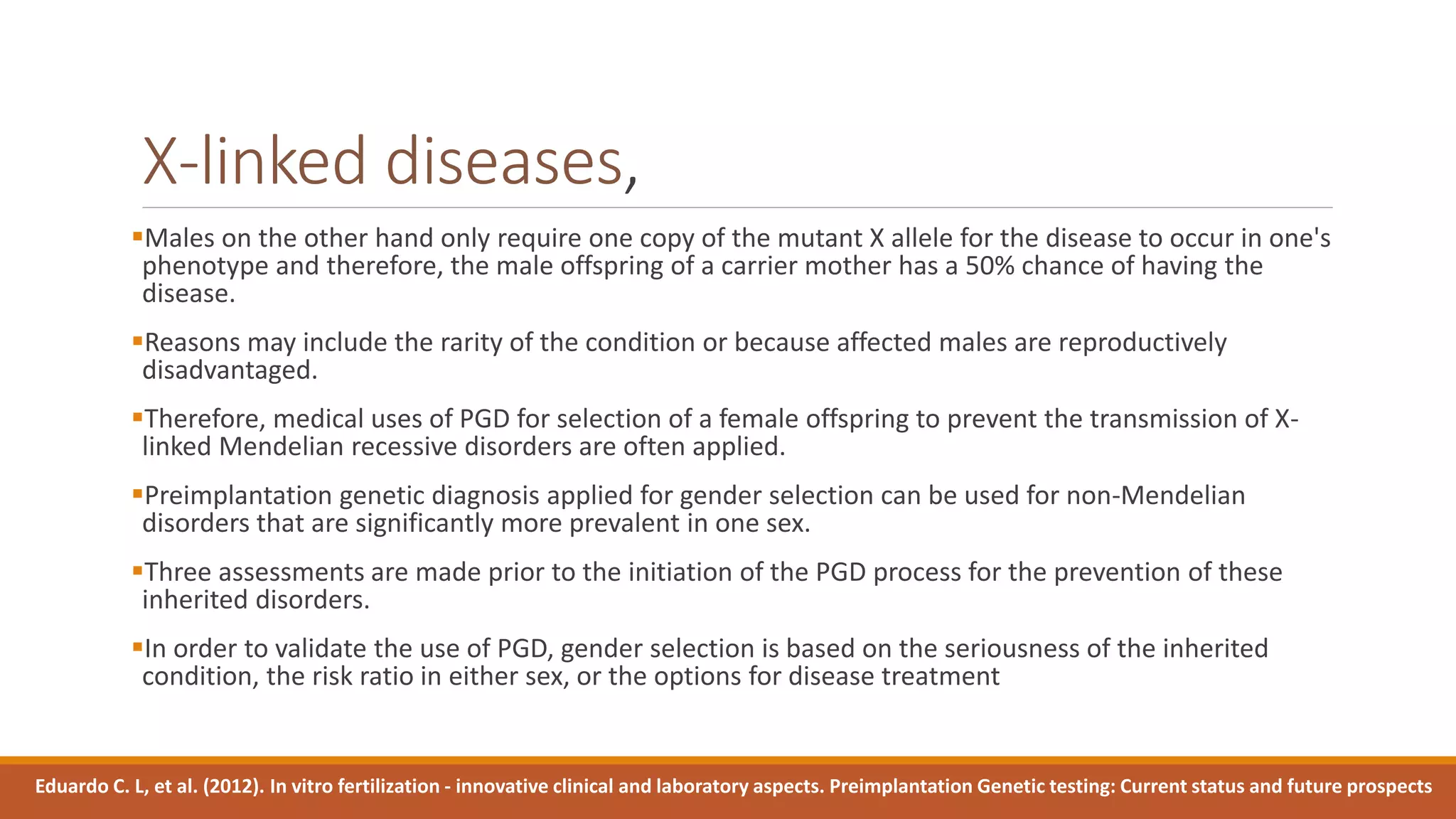
X-linked diseases,
Males on the other hand only require one copy of the mutant X allele for the disease to occur in one's
phenotype and therefore, the male offspring of a carrier mother has a 50% chance of having the
disease.
Reasons may include the rarity of the condition or because affected males are reproductively
disadvantaged.
Therefore, medical uses of PGD for selection of a female offspring to prevent the transmission of X-
linked Mendelian recessive disorders are often applied.
Preimplantation genetic diagnosis applied for gender selection can be used for non-Mendelian
disorders that are significantly more prevalent in one sex.
Three assessments are made prior to the initiation of the PGD process for the prevention of these
inherited disorders.
In order to validate the use of PGD, gender selection is based on the seriousness of the inherited
condition, the risk ratio in either sex, or the options for disease treatment
Eduardo C. L, et al. (2012). In vitro fertilization - innovative clinical and laboratory aspects. Preimplantation Genetic testing: Current status and future prospects
Minor disabilities
PGD has occasionally been used to select an embryo for the
presence of a particular disease or disability, such as
deafness, in order that the child would share that
characteristic with the parents.
Simoncelli,Tania."Pre-implantation Genetic Diagnosis: Ethical Guidelines for Responsible Regulation."
CTA International Center for Technology Assessment. Retrieved on Nov. 19 2013
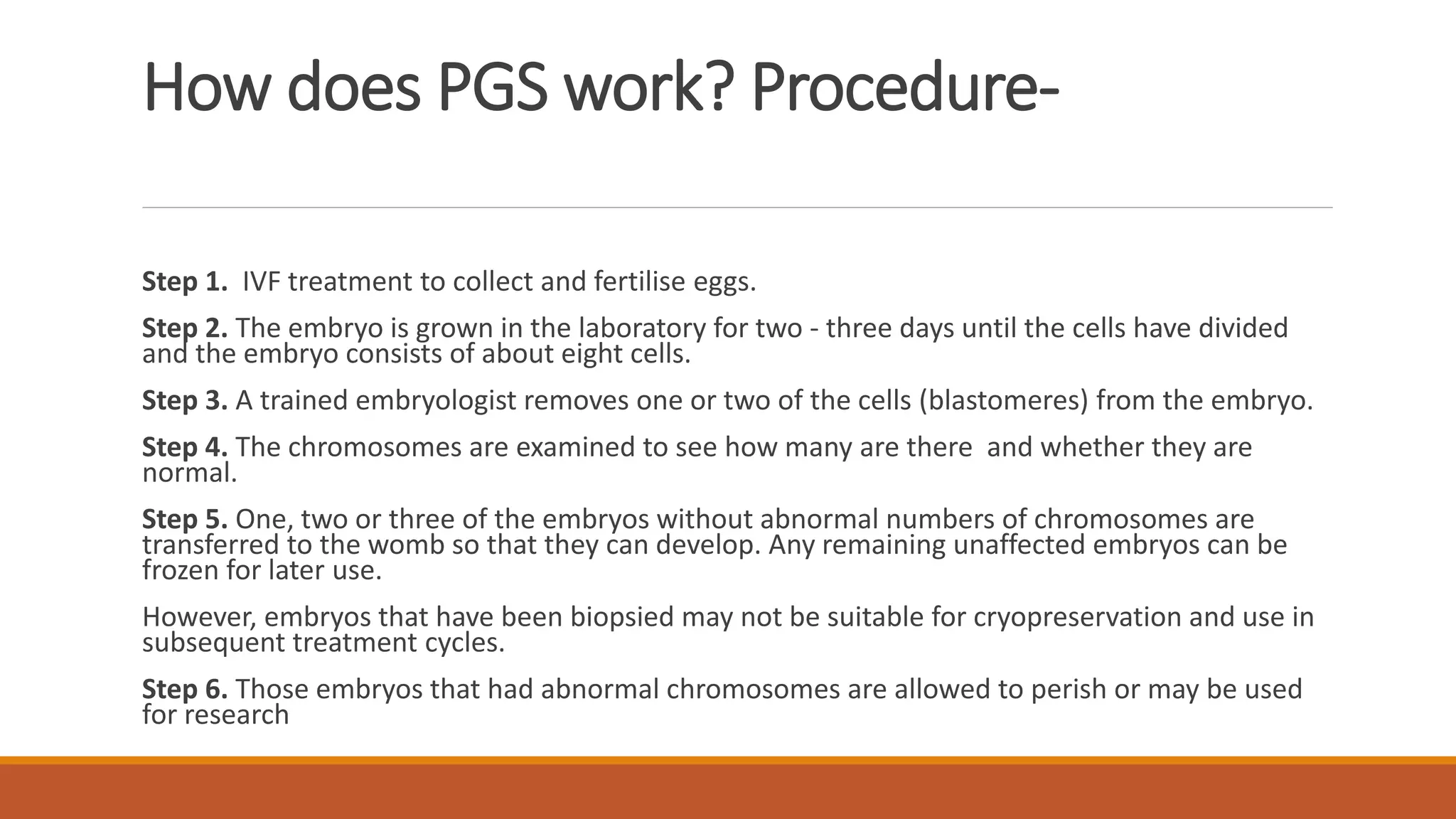
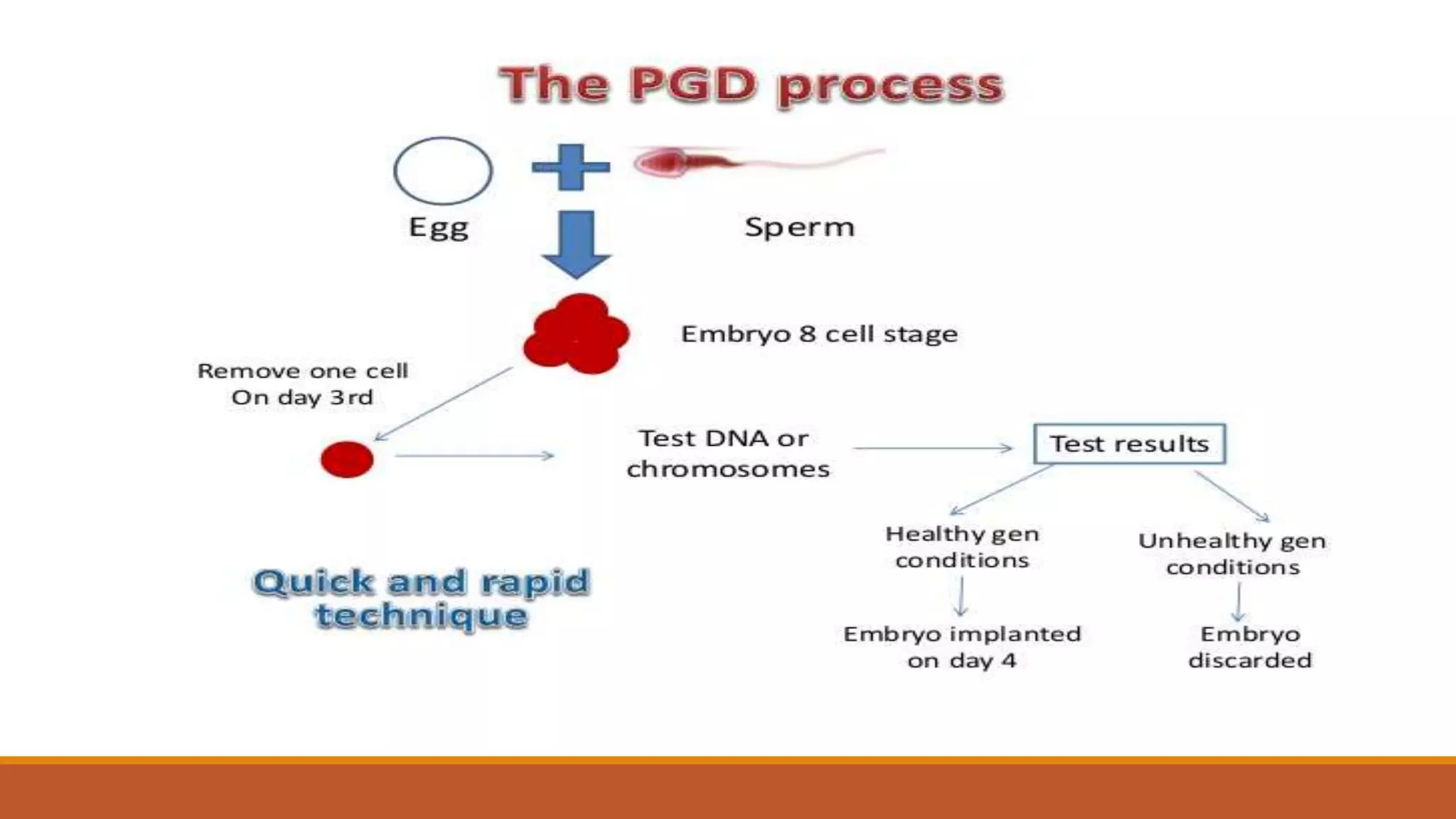
How does PGS work? Procedure-
Step 1. IVF treatment to collect and fertilise eggs.
Step 2. The embryo is grown in the laboratory for two - three days until the cells have divided
and the embryo consists of about eight cells.
Step 3. A trained embryologist removes one or two of the cells (blastomeres) from the embryo.
Step 4. The chromosomes are examined to see how many are there and whether they are
normal.
Step 5. One, two or three of the embryos without abnormal numbers of chromosomes are
transferred to the womb so that they can develop. Any remaining unaffected embryos can be
frozen for later use.
However, embryos that have been biopsied may not be suitable for cryopreservation and use in
subsequent treatment cycles.
Step 6. Those embryos that had abnormal chromosomes are allowed to perish or may be used
for research
Possible variations to this procedure
Testing at five – six days It is possible that instead of removing and
testing one or two cells from a two – three day old embryo, some
centres may allow the embryo to develop to five - six days, when
there are 100-150 cells.
More cells can be removed at this stage without compromising the
viability of the embryo, possibly leading to a more accurate test.
Alternatively some centres may test eggs for chromosomal
abnormalities before they are used to create embryos. Polar bodies
(small cells extruded by eggs as they mature) can be extracted and
tested.
We need to perform a biopsy.....when
and how?
Timing of Biopsy
Polar Body Biopsy
Cleavage Stage Biopsy
Blastocyst Biopsy
Timing of PGS
B
R
U
S
S
E
L
S
P
G
D1. polar body biopsy
 advantages
 less invasive
 both classical non-disjunction and premature
division of chromatids
 most aneuploidies maternal in origin
 disavantages
 accuracy limited to 94%
 maternal information only
 technically more complex
Timing of PGS
B
R
U
S
S
E
L
S
P
G
D
2. cleavage stage biopsy
 advantage
 technically more straightforward
 good concordance rate despite more andmore
specific probes
Mir et al., 2013
 disadvantages
 chromosome instability/mosaicism
 no definite conclusion on the basis of 1cell
Timing of PGS
B
R
U
S
S
E
L
S
P
G
D
3. Trophectoderm biopsy
 advantage
 less invasive
 less embryos for biopsy
 mosaicism diluted
 disadvantage
 labour intensive (variable stages of blastocyst)
 effect on children insufficiently demonstrated
 need for cryopreservation of embryos
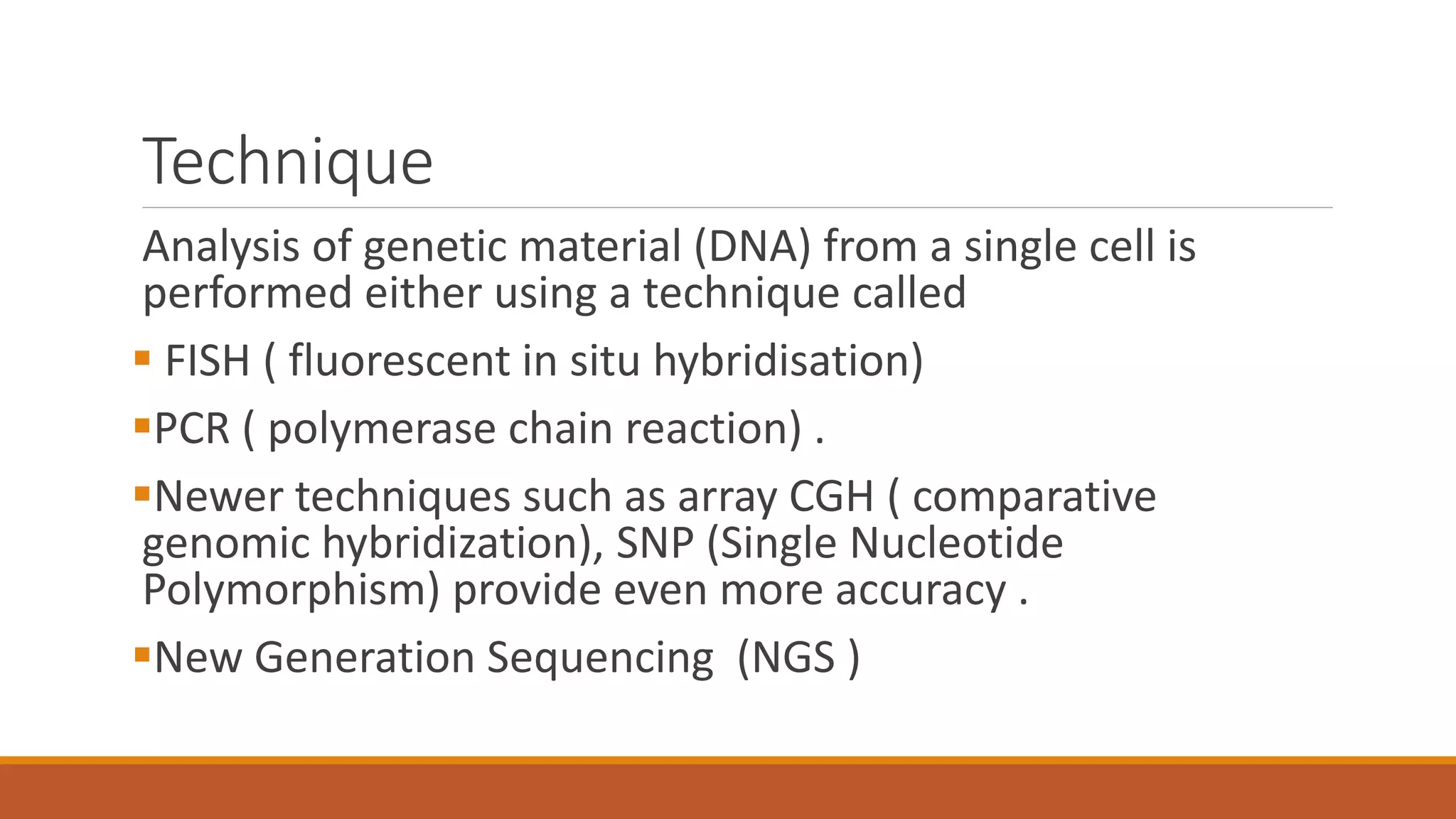
Technique
Analysis of genetic material (DNA) from a single cell is
performed either using a technique called
 FISH ( fluorescent in situ hybridisation)
PCR ( polymerase chain reaction) .
Newer techniques such as array CGH ( comparative
genomic hybridization), SNP (Single Nucleotide
Polymorphism) provide even more accuracy .
New Generation Sequencing (NGS )
Technique
FISH utilises fluorescent probes, which are specific for a given chromosome, and
therefore allows one to screen embryos for chromosomal normality.
PCR allows one to amplify (mutiply ) a selected DNA sequence of interest, so
that it can be analysed.
After the analysis on the single cell, the embryos are kept in culture and allowed
to further divide.
Once the appropriate molecular diagnosis is made, unaffected embryos can be
transferred back into the uterus in the IVF cycle.
Technical aspects
Generally, PCR-based methods are used for monogenic disorders
and FISH for chromosomal abnormalities and for sexing those cases
in which no PCR protocol is available for an X-linked disease.
 These techniques need to be adapted to be performed on
blastomeres and need to be thoroughly tested on single-cell models
prior to clinical use.
Finally, after embryo replacement, surplus good quality unaffected
embryos can be cryopreserved, to be thawed and transferred back in
a next cycle.
FISH- Fluorescent in situ hybridization
FISH is the most commonly applied method to determine
the chromosomal constitution of an embryo.
The cells are fixated on glass microscope slides and
hybridised with DNA probes.
Each of these probes are specific for part of a chromosome,
and are labelled with a fluorochrome.
Currently, a large panel of probes are available for different
segments of all chromosomes,
FISH- Fluorescent in situ hybridization
The main problem of the use of FISH to study the chromosomal
constitution of embryos is the elevated mosaicism rate observed at
the human preimplantation stage.
A meta-analysis of more than 800 embryos came to the result that
approximately 75% of preimplantation embryos are mosaic, of which
approximately 60% are diploid–aneuploid mosaic and approximately
15% aneuploid mosaic.
Van Echten-Arends, J.; Mastenbroek, S.; et el (2011). "Chromosomal mosaicism in human
preimplantation embryos: A systematic review". Human Reproduction Update 17 (5): 620–627
FISH- Fluorescent in situ hybridization
As a consequence, it has been questioned whether the one or two
cells studied from an embryo are actually representative of the
complete embryo, and whether viable embryos are not being
discarded due to the limitations of the technique.
The FISH technique is considered to have an error rate between 5
and 10%.
Fluorescent in situ hybridisation
• Fluorescent in situ hybridisation (FISH) uses fluorescently tagged DNA probes that bind
to their complementary sequence and can be visualised under a fluorescent
microscope. Advantages Disadvantages
It does not require DNA
amplification
It is not able to easily test
for all 23 chromosomes.
It can be completed within
4-10 hours
The risk of potential
misdiagnosis is too high
It does not require cell
synchronisation and
division to produce
metaphase chromosomes
for analysis
-
Despite of its promise of improved clinical outcomes, RCT’s performed over the past 10 years have
found that FISH-based PGS does not improve Live birth rate.
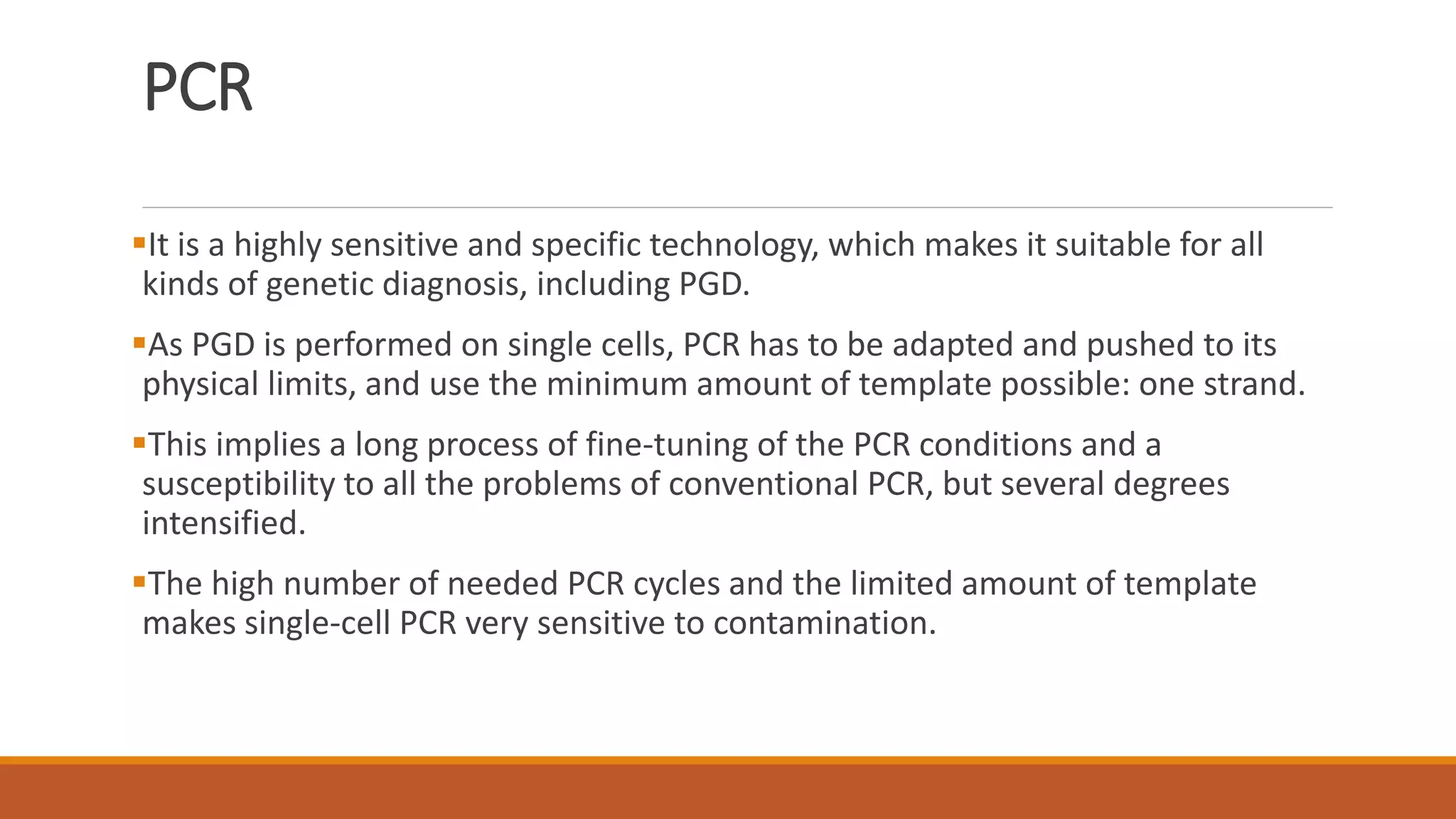
PCR
It is a highly sensitive and specific technology, which makes it suitable for all
kinds of genetic diagnosis, including PGD.
As PGD is performed on single cells, PCR has to be adapted and pushed to its
physical limits, and use the minimum amount of template possible: one strand.
This implies a long process of fine-tuning of the PCR conditions and a
susceptibility to all the problems of conventional PCR, but several degrees
intensified.
The high number of needed PCR cycles and the limited amount of template
makes single-cell PCR very sensitive to contamination.
PCR
Another problem specific to single-cell PCR is the allele drop out (ADO)
phenomenon.
It consists of the random non-amplification of one of the alleles present in a
heterozygous sample.
ADO seriously compromises the reliability of PGD as a heterozygous embryo
could be diagnosed as affected or unaffected depending on which allele would
fail to amplify.
This is particularly concerning in PGD for autosomal dominant disorders, where
ADO of the affected allele could lead to the transfer of an affected embryo
Polymerase Chain Reaction
• qPCR is very effective in the assessment of known single gene defects, and has
traditionally been used for PGS.
• The highlighting advantage of qPCR is that it can be completed in just 4 hour.
Microarray-Based Comprehensive Genomic Hybridisation
Advantages Disadvantages
CGH arrays platforms are
able to complete the entire
analysis in 12-15 hour
It may not detect some
clinically significant
deletions and duplications
It eliminates the necessity
of cryopreserving the
biopsied embryos prior to
obtain results
It is only specific to
metaphase CGH
It cannot detect
polyploidies
Chromosomal
microdeletions can go
undetected because of its
resolution
Single nucleotide polymorphism
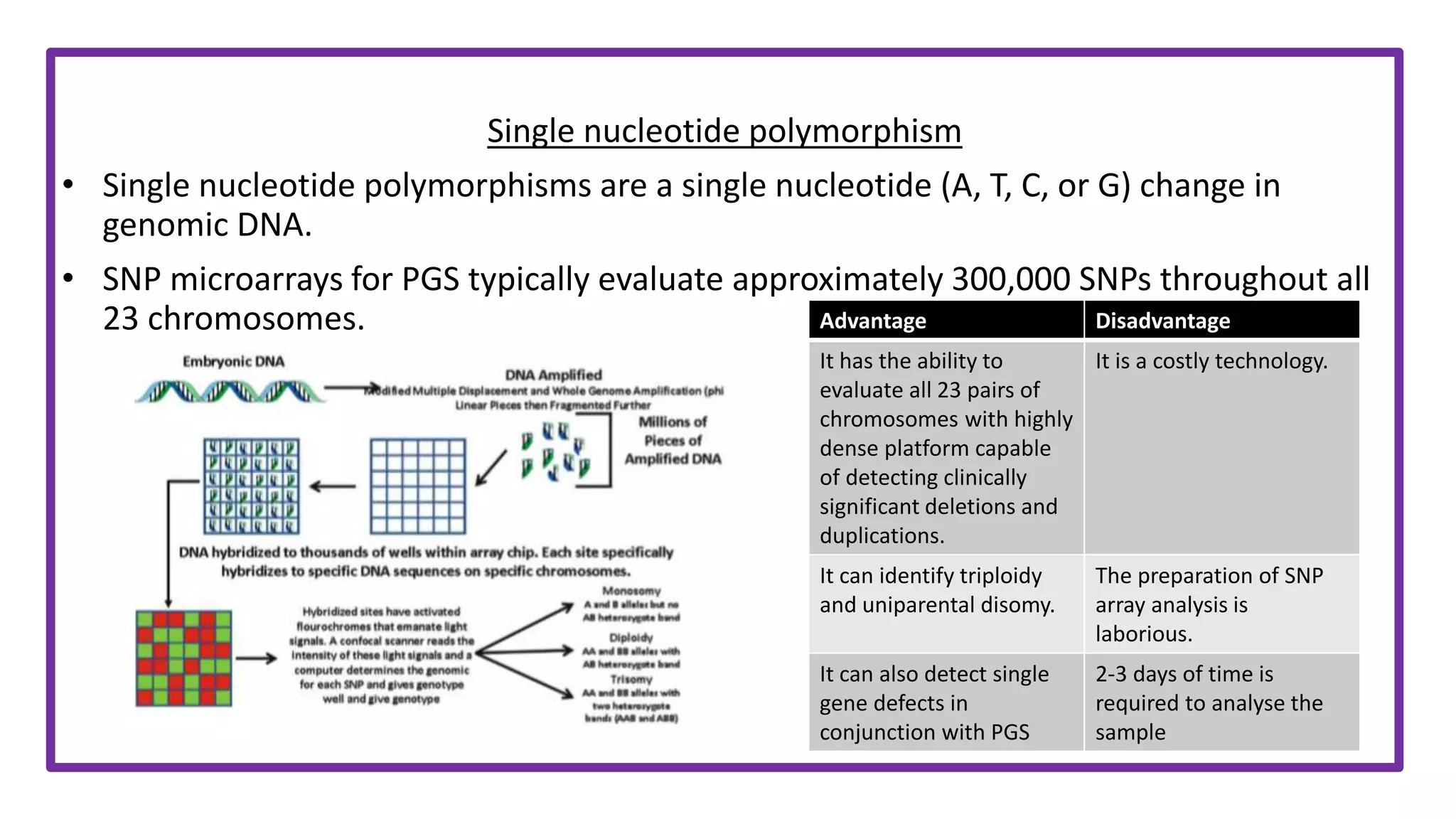
• Single nucleotide polymorphisms are a single nucleotide (A, T, C, or G) change in
genomic DNA.
• SNP microarrays for PGS typically evaluate approximately 300,000 SNPs throughout all
23 chromosomes. Advantage Disadvantage
It has the ability to
evaluate all 23 pairs of
chromosomes with highly
dense platform capable
of detecting clinically
significant deletions and
duplications.
It is a costly technology.
It can identify triploidy
and uniparental disomy.
The preparation of SNP
array analysis is
laborious.
It can also detect single
gene defects in
conjunction with PGS
2-3 days of time is
required to analyse the
sample
Next Generation Sequencing
• NGS is a high-throughput method used to determine a portion of the nucleotide
sequence of an individual’s genome.
• This technique utilizes DNA sequencing technologies that are capable of processing
multiple DNA sequences in parallel.
The potential role for NGS in PGS was
assessed by Yin et al.
• 38 blastocyst biopsy samples were
analysed with both SNP arrays and
NGS.
• NGS detected 6 embryos with
unbalanced chromosomal
translocations, 1 of which was not
identified by SNP array.
NGS + PGS
Side Effects to Embryo
PGD/PGS is an invasive procedure
One of the risks of PGD includes damage to the embryo during the biopsy
procedure (which in turn destroys the embryo as a whole)
Another risk is cryopreservation where the embryo is stored in a frozen state
and thawed later for the procedure.
About 20% of the thawed embryos do not survive.
 There has been a study indicating a biopsied embryo has a less rate of surviving
cryopreservation.
"Reduced survival after human embryo biopsy and subsequent cryopreservation".
Human Reproduction vol.14 no.11 pp.2833-2837.
Ethical issues
By relying on the result of one cell from the multi-cell embryo, PGD
operates under the assumption that this cell is representative of the
remainder of the embryo.
This may not be the case as the incidence of mosaicism is often
relatively high.
 On occasion, PGD may result in a false negative result leading to the
acceptance of an abnormal embryo, or in a false positive result
leading to the de selection of a normal embryo.
PGD can potentially be used
to select embryos to be without a genetic disorder,
to have increased chances of successful pregnancy,
to match a sibling in HLA type in order to be a donor,
to have less cancer predisposition, and
 for sex selection.
Policy and legality
In India, Ministry of Family Health and Welfare, regulates the
concept under - "The Pre-Conception and Prenatal Diagnostic
Techniques (Prohibition of Sex Selection) Act, 1994".
The Act was further been revised after 1994 and necessary
amendment were made are updated timely on the official website of
the Indian Government dedicated for the cause.
http://www.pndt.gov.in/
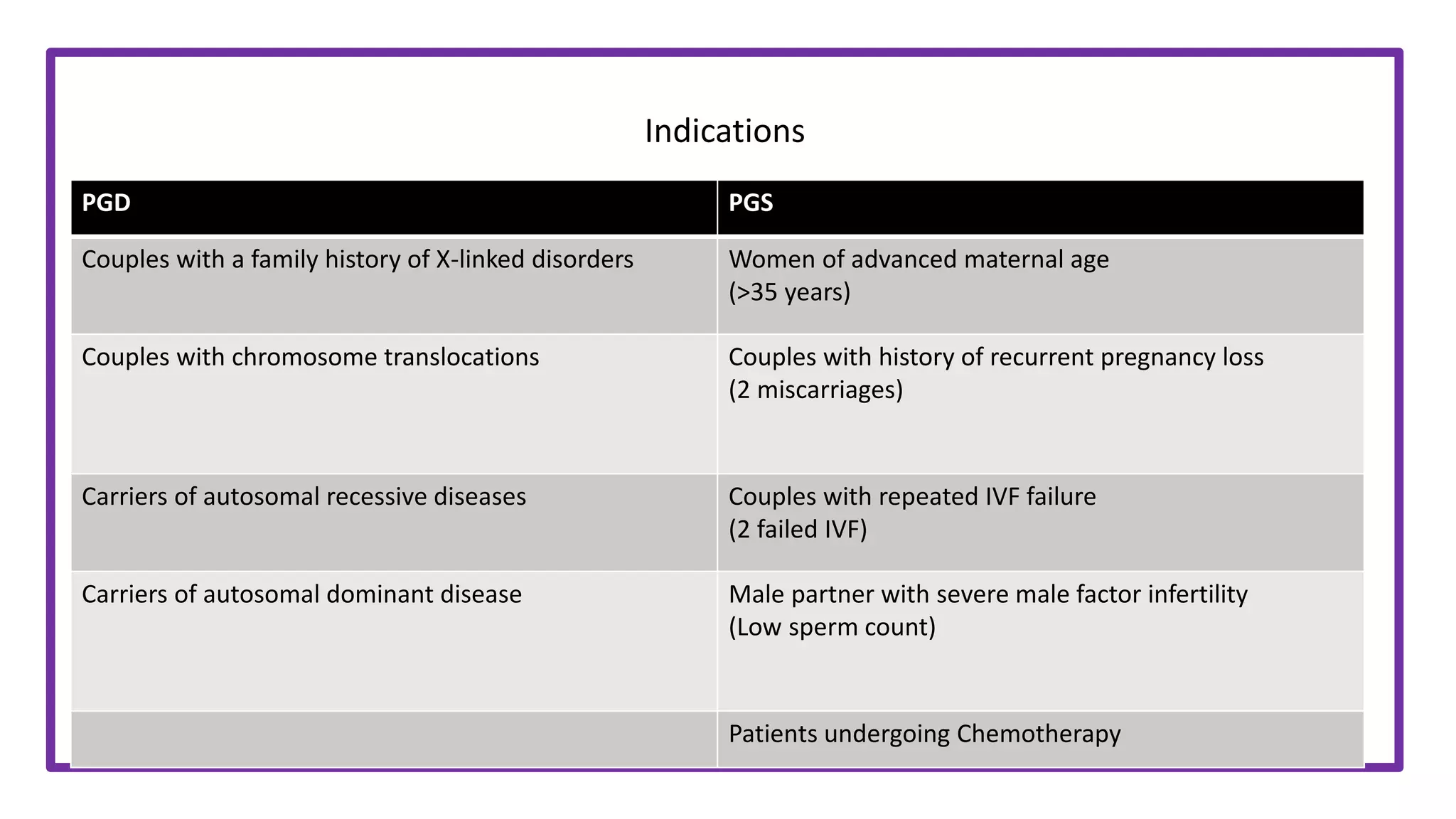
Indications
PGD PGS
Couples with a family history of X-linked disorders Women of advanced maternal age
(>35 years)
Couples with chromosome translocations Couples with history of recurrent pregnancy loss
(2 miscarriages)
Carriers of autosomal recessive diseases Couples with repeated IVF failure
(2 failed IVF)
Carriers of autosomal dominant disease Male partner with severe male factor infertility
(Low sperm count)
Patients undergoing Chemotherapy
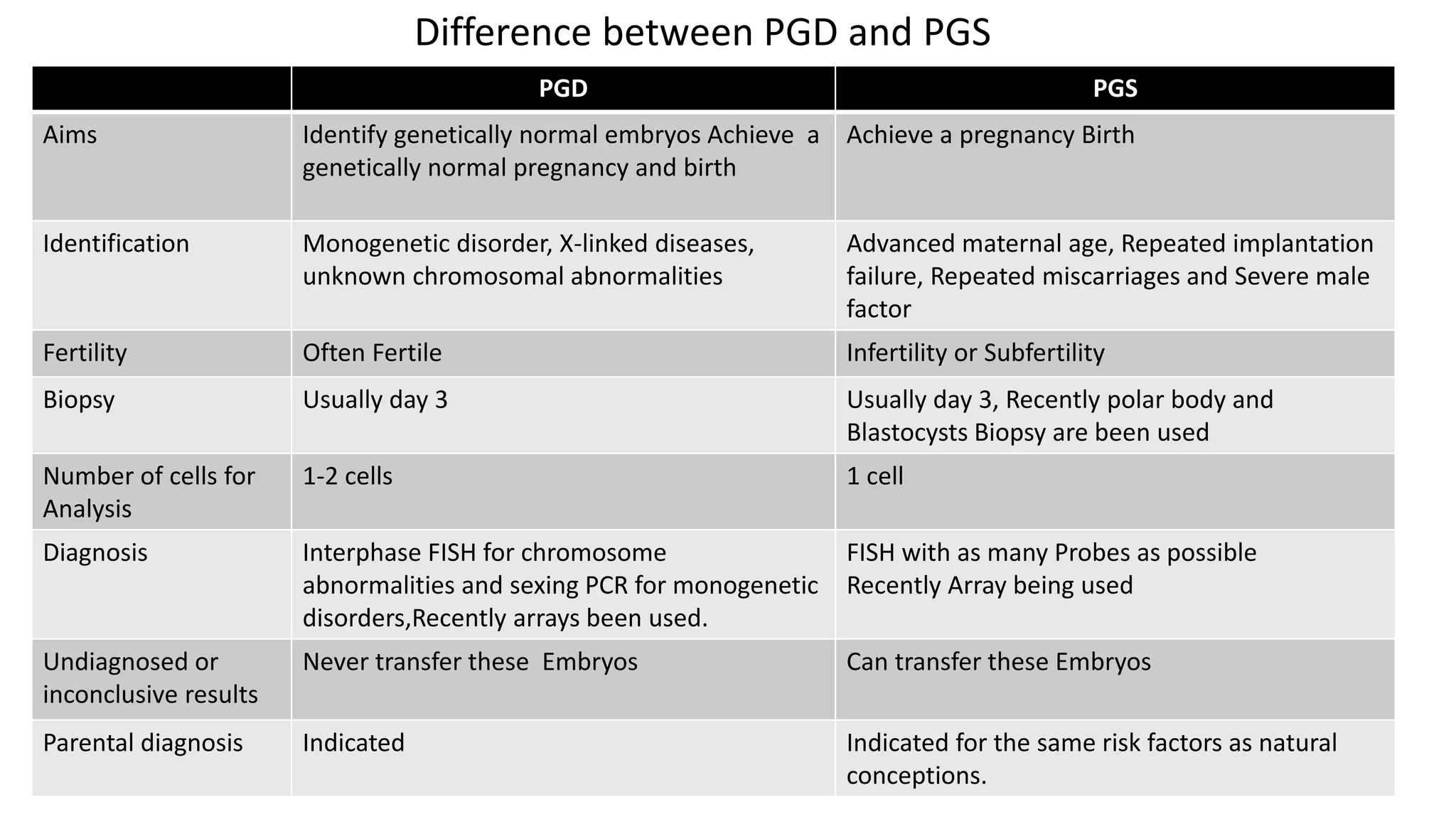
Difference between PGD and PGS
PGD PGS
Aims Identify genetically normal embryos Achieve a
genetically normal pregnancy and birth
Achieve a pregnancy Birth
Identification Monogenetic disorder, X-linked diseases,
unknown chromosomal abnormalities
Advanced maternal age, Repeated implantation
failure, Repeated miscarriages and Severe male
factor
Fertility Often Fertile Infertility or Subfertility
Biopsy Usually day 3 Usually day 3, Recently polar body and
Blastocysts Biopsy are been used
Number of cells for
Analysis
1-2 cells 1 cell
Diagnosis Interphase FISH for chromosome
abnormalities and sexing PCR for monogenetic
disorders,Recently arrays been used.
FISH with as many Probes as possible
Recently Array being used
Undiagnosed or
inconclusive results
Never transfer these Embryos Can transfer these Embryos
Parental diagnosis Indicated Indicated for the same risk factors as natural
conceptions.
Conclusion
• The potential capabilities and efficiency of preimplantation genetic testing
have dramatically increased in recent years due largely to improvements in
the ability to accurately test embryos.
• Defining the exact benefit conferred by PGS and determining exactly which
patient populations could be best served by PGS, however, is currently
controversial.
• There are various pitfalls like False positive and false positive results,
Developmental potential of the biopsied embryos and mosaicism which
may affect the Pregnancy outcome.
• Regardless of improvements, patients must be carefully counselled about
error rates inherent in all the PGS technologies, as well as outcomes
reported to date.
Conclusion
• Patients must be given accurate information with which to make their
treatment decisions, taking into account their age, ovarian reserve, indication
for PGS and method of PGS to be employed.
• Once the patient is pregnant antenatal testing with chorionic villus sampling
and/ amniocentesis must be discussed, and a strong recommendation for
antenatal testing should be included in all PGT consent forms.
• Alternative treatment strategies, such as using donor gametes, should also be
discussed.
Questions
Dr. Laxmi Shrikhande
Shrikhande Fertility Clinic
Ph-8805577600 /8805677600
shrikhandedrlaxmi@gmail.com
The Art of Living
Anything that
helps you to
become
unconditionally
happy and loving
is what is called
spirituality.
H. H. Sri Sri Ravishakar

Presentation on Preimplantation Genetic Diagnosis (PGD)

  • 1.
    Dr. Laxmi ShrikhandeMD; FICOG; FICMU;FICMCH • Medical Director-Shrikhande Fertility Clinic, Nagpur • National Corresponding Editor-The Journal of Obstetrics & Gynecology of India • Senior Vice President FOGSI 2012 • Chairperson Designate ICOG 2020 , Vice Chairperson ICOG 2019 • National Governing Council member ICOG 2012-2017 • National Governing Council Member ISAR 2014-2019 • National Governing Council Member IAGE for 3 terms • Patron & President -Vidarbha Chapter ISOPARB • Chairperson-HIV/AIDS Committee, FOGSI (2007-09) • Received Best Committee Award of FOGSI • Received Bharat excellence Award for women’s health • President Nagpur OB/GY Society 2005-06 • Immediate Past President Menopause Society, Nagpur • Associate member of RCOG • Member of European Society of Human Reproduction • Visited 96 FOGSI Societies as invited faculty • Delivered 11 orations and 450 guest lectures • Publications-Twenty National & eleven International • Received Nagpur Ratan Award at the hands of Union Minister Shri Nitinji Gadkari • Presented Papers in FIGO, AICOG, SAFOG, AICC-RCOG conferences • Conducted adolescent health programme for more than 15,000 adolescent girls • Conducted health awareness programme for more than 10,000 women
  • 2.
  • 3.
    1st Embryo biopsyon rabbit embryos in 1968 PGD was developed in UK in the mid 1980s In 1989, London, Handyside and collegues reported the 1st unaffected child born As of 2010, more than 14,272 PGD cycles have been reported. HISTORY OF PGD PGS pioneers Verlinsky and Kuliev published a first report in 1996 As of 2010, more than 23,276 PGS cycles have been reported. HISTORY OF PGS
  • 4.
    DEFINITION OF PGDAND PGS  Preimplantation Genetic Diagnosis (PGD) applies when one or both genetic parents carry a gene mutation or a chromosomal rearrangement and testing is performed to determine whether that specific mutation or an unbalanced chromosomal complement has been transmitted to the oocyte or embryo.  Preimplantation genetic screening (PGS) applies when the genetic parents are known or presumed to be chromosomally normal and their embryos are screened for aneuploidies. The Practice Committee of the SART and the Practice Committee of the ASRM (2007)
  • 5.
    4 No preliminary workup. The genetic testing method is the same for every couple. Embryological aspects DEFINITION OF PGD AND PGS
  • 6.
    What is pre-implantationgenetic screening (PGS)? PGS (also known as aneuploidy screening) involves checking the chromosomes of embryos conceived by in vitro fertilisation (IVF) or intra-cytoplasmic sperm injection (ICSI) for common abnormalities. This avoids having abnormal embryos transferred to the womb during IVF or ICSI. In vitro fertilisation Intra-cytoplasmic sperm injection (ICSI) Chromosomal abnormalities are a major cause of the failure of embryos to implant, and of miscarriages. They can also cause conditions such as Down’s syndrome.
  • 7.
     Young femalepatients who had experience of Recurrent Pregnancy Loss, usually defined as 2 or more consecutive miscarriages.  Young female patients who had experience of repeated IVF failures, usually defined as 2 or more IVF embryo transfers involving good quality embryos.  Advanced female age, usually defined as > 35 years Indication for PGS ESHRE PGD Consortium, Goossens et al., 2009
  • 8.
    Moving toward eSETfor all IVF patient population 1 ≥ 2
  • 9.
    Increase the cost- effectiveness Decreasetime to pregnancy Decrease in abortion rate Single ET Increase implantation rate Less abnormal pregnancies Expected advantages in IVF PGS application in ART
  • 10.
    Rationale for PGS more aneuploidy in human embryos (7- 10% aneuploid)  low implantation potential  high miscarriage rate (70% aneuploid) B R U S S E L S P G D
  • 11.
    Rationale for PGS aneuploidyin oocytes  factors 1. age 2. intrinsic gamete abnormalities  prevalence 1. 3% at 22 years 2. >50% over 40 years Pellestor et al., 2003; Fragouli et al., 2009 B R U S S E L S P G D
  • 12.
    Rationale for PGS aneuploidyin embryos  prevalence  2/3 human cleavage stage embryos aneuploid  58% under 30 years  77% above 39 years Delhanty et al., 1997; Magli et al., 2000; Bielanska et al., 2005; Mantzouratou et al., 2007 B R U S S E L S P G D
  • 13.
    Rationale for PGS aneuploidyin embryos  factors  chaotic patterns  abnormal ploidy  chromosome loss - not age-related  mitotic non- disjunction - age-related B R U S S E L S P G D
  • 14.
    INDICATIONS FOR PGD •Other indications: Mitochondrial pathologies Late onset disorders (as Huntington Disease) Inherited Predisposition to Cancer HLA Genotyping
  • 15.
    DISEASES SCREENABLE BYPGD •Achondroplasia •ADPKD1 •ADPKD2 •Adrenoleukodystroph •Age-related aneuploidies •Alpha-thalassemia •Alpha-1-antitrypsin •Alport disease •Amyloid precursor protein (APP) mutation •ARPKD •Becker muscular dystrophy •Beta-thalassemia •Charcot Marie Tooth disease •Chromosomal translocations •Congenital adrenal hyperplasia •Cystic fibrosis •Down syndrome •Duchenne muscular dystophy •Dystonia •Epidermolysis bullosa •Familial dysautonomia •Fanconi anemia •FAP •Fragile X syndrome •Gaucher disease •Hemophilia A and B •HLA genotyping •HSNF5 mutation •Huntington disease •Hypophosphatasia •Incontinentia pigmenti •Kell disease •Klinefelter syndrome •LCHAD •Lesch Nyhan syndrome •Marfan syndrome •Multiple epiphysial dysplasia •Myotonic dystophy •Myotubular myopathy •NF1 and NF2 •Norrie disease •Osteogenesis imperfecta •OTC deficiency •P53 mutations •PKU •Retinitis pigmentosa •SCA6 •Sickle cell anemia •Sonic hedgehog mutations •Spinal muscular atrophy (SMA) •Tay-Sachs disease •Tuberous sclerosis •Turner syndrome •Von Hippel Lindau •X-linked hydrocephaly •X-linked hyper IgM syndrome
  • 16.
    Monogenic disorders PGD isavailable for a large number of monogenic disorders —that is, disorders due to a single gene only (autosomal recessive, autosomal dominant or X-linked)— or of chromosomal structural aberrations (such as a balanced translocation).  PGD helps these couples identify embryos carrying a genetic disease or a chromosome abnormality, thus avoiding diseased offspring.
  • 17.
    Monogenic disorders The mostfrequently diagnosed autosomal recessive disorders are cystic fibrosis, Beta- thalassemia, sickle cell disease and spinal muscular atrophy type 1. The most common dominant diseases are myotonic dystrophy, Huntington's disease and Charcot-Marie-Tooth disease; and in the case of the X-linked diseases, most of the cycles are performed for fragile X syndrome, haemophilia A and Duchenne muscular dystrophy. Though it is quite infrequent, some centers report PGD for mitochondrial disorders or two indications simultaneously.
  • 18.
    X-linked diseases In thecase of families at risk of X-linked diseases, patients are provided with a single PGD assay of gender identification. Gender selection offers a solution to individuals with X-linked diseases who are in the process of getting pregnant. The selection of a female embryo offspring is used in order to prevent the transmission of X-linked Mendelian recessive diseases. Such X-linked Mendelian diseases include Duchenne muscular dystrophy(DMD), and hemophilia A and B, which are rarely seen in females because the offspring is unlikely to inherit two copies of the recessive allele. Since two copies of the mutant X allele are required for the disease to be passed on to the female offspring, females will at worst be carriers for the disease but may not necessarily have a dominant gene for the disease.
  • 19.
    X-linked diseases, Males onthe other hand only require one copy of the mutant X allele for the disease to occur in one's phenotype and therefore, the male offspring of a carrier mother has a 50% chance of having the disease. Reasons may include the rarity of the condition or because affected males are reproductively disadvantaged. Therefore, medical uses of PGD for selection of a female offspring to prevent the transmission of X- linked Mendelian recessive disorders are often applied. Preimplantation genetic diagnosis applied for gender selection can be used for non-Mendelian disorders that are significantly more prevalent in one sex. Three assessments are made prior to the initiation of the PGD process for the prevention of these inherited disorders. In order to validate the use of PGD, gender selection is based on the seriousness of the inherited condition, the risk ratio in either sex, or the options for disease treatment Eduardo C. L, et al. (2012). In vitro fertilization - innovative clinical and laboratory aspects. Preimplantation Genetic testing: Current status and future prospects
  • 20.
    Minor disabilities PGD hasoccasionally been used to select an embryo for the presence of a particular disease or disability, such as deafness, in order that the child would share that characteristic with the parents. Simoncelli,Tania."Pre-implantation Genetic Diagnosis: Ethical Guidelines for Responsible Regulation." CTA International Center for Technology Assessment. Retrieved on Nov. 19 2013
  • 21.
    How does PGSwork? Procedure- Step 1. IVF treatment to collect and fertilise eggs. Step 2. The embryo is grown in the laboratory for two - three days until the cells have divided and the embryo consists of about eight cells. Step 3. A trained embryologist removes one or two of the cells (blastomeres) from the embryo. Step 4. The chromosomes are examined to see how many are there and whether they are normal. Step 5. One, two or three of the embryos without abnormal numbers of chromosomes are transferred to the womb so that they can develop. Any remaining unaffected embryos can be frozen for later use. However, embryos that have been biopsied may not be suitable for cryopreservation and use in subsequent treatment cycles. Step 6. Those embryos that had abnormal chromosomes are allowed to perish or may be used for research
  • 22.
    Possible variations tothis procedure Testing at five – six days It is possible that instead of removing and testing one or two cells from a two – three day old embryo, some centres may allow the embryo to develop to five - six days, when there are 100-150 cells. More cells can be removed at this stage without compromising the viability of the embryo, possibly leading to a more accurate test. Alternatively some centres may test eggs for chromosomal abnormalities before they are used to create embryos. Polar bodies (small cells extruded by eggs as they mature) can be extracted and tested.
  • 24.
    We need toperform a biopsy.....when and how?
  • 25.
    Timing of Biopsy PolarBody Biopsy Cleavage Stage Biopsy Blastocyst Biopsy
  • 26.
    Timing of PGS B R U S S E L S P G D1.polar body biopsy  advantages  less invasive  both classical non-disjunction and premature division of chromatids  most aneuploidies maternal in origin  disavantages  accuracy limited to 94%  maternal information only  technically more complex
  • 27.
    Timing of PGS B R U S S E L S P G D 2.cleavage stage biopsy  advantage  technically more straightforward  good concordance rate despite more andmore specific probes Mir et al., 2013  disadvantages  chromosome instability/mosaicism  no definite conclusion on the basis of 1cell
  • 28.
    Timing of PGS B R U S S E L S P G D 3.Trophectoderm biopsy  advantage  less invasive  less embryos for biopsy  mosaicism diluted  disadvantage  labour intensive (variable stages of blastocyst)  effect on children insufficiently demonstrated  need for cryopreservation of embryos
  • 29.
    Technique Analysis of geneticmaterial (DNA) from a single cell is performed either using a technique called  FISH ( fluorescent in situ hybridisation) PCR ( polymerase chain reaction) . Newer techniques such as array CGH ( comparative genomic hybridization), SNP (Single Nucleotide Polymorphism) provide even more accuracy . New Generation Sequencing (NGS )
  • 30.
    Technique FISH utilises fluorescentprobes, which are specific for a given chromosome, and therefore allows one to screen embryos for chromosomal normality. PCR allows one to amplify (mutiply ) a selected DNA sequence of interest, so that it can be analysed. After the analysis on the single cell, the embryos are kept in culture and allowed to further divide. Once the appropriate molecular diagnosis is made, unaffected embryos can be transferred back into the uterus in the IVF cycle.
  • 31.
    Technical aspects Generally, PCR-basedmethods are used for monogenic disorders and FISH for chromosomal abnormalities and for sexing those cases in which no PCR protocol is available for an X-linked disease.  These techniques need to be adapted to be performed on blastomeres and need to be thoroughly tested on single-cell models prior to clinical use. Finally, after embryo replacement, surplus good quality unaffected embryos can be cryopreserved, to be thawed and transferred back in a next cycle.
  • 32.
    FISH- Fluorescent insitu hybridization FISH is the most commonly applied method to determine the chromosomal constitution of an embryo. The cells are fixated on glass microscope slides and hybridised with DNA probes. Each of these probes are specific for part of a chromosome, and are labelled with a fluorochrome. Currently, a large panel of probes are available for different segments of all chromosomes,
  • 33.
    FISH- Fluorescent insitu hybridization The main problem of the use of FISH to study the chromosomal constitution of embryos is the elevated mosaicism rate observed at the human preimplantation stage. A meta-analysis of more than 800 embryos came to the result that approximately 75% of preimplantation embryos are mosaic, of which approximately 60% are diploid–aneuploid mosaic and approximately 15% aneuploid mosaic. Van Echten-Arends, J.; Mastenbroek, S.; et el (2011). "Chromosomal mosaicism in human preimplantation embryos: A systematic review". Human Reproduction Update 17 (5): 620–627
  • 34.
    FISH- Fluorescent insitu hybridization As a consequence, it has been questioned whether the one or two cells studied from an embryo are actually representative of the complete embryo, and whether viable embryos are not being discarded due to the limitations of the technique. The FISH technique is considered to have an error rate between 5 and 10%.
  • 35.
    Fluorescent in situhybridisation • Fluorescent in situ hybridisation (FISH) uses fluorescently tagged DNA probes that bind to their complementary sequence and can be visualised under a fluorescent microscope. Advantages Disadvantages It does not require DNA amplification It is not able to easily test for all 23 chromosomes. It can be completed within 4-10 hours The risk of potential misdiagnosis is too high It does not require cell synchronisation and division to produce metaphase chromosomes for analysis - Despite of its promise of improved clinical outcomes, RCT’s performed over the past 10 years have found that FISH-based PGS does not improve Live birth rate.
  • 36.
    PCR It is ahighly sensitive and specific technology, which makes it suitable for all kinds of genetic diagnosis, including PGD. As PGD is performed on single cells, PCR has to be adapted and pushed to its physical limits, and use the minimum amount of template possible: one strand. This implies a long process of fine-tuning of the PCR conditions and a susceptibility to all the problems of conventional PCR, but several degrees intensified. The high number of needed PCR cycles and the limited amount of template makes single-cell PCR very sensitive to contamination.
  • 37.
    PCR Another problem specificto single-cell PCR is the allele drop out (ADO) phenomenon. It consists of the random non-amplification of one of the alleles present in a heterozygous sample. ADO seriously compromises the reliability of PGD as a heterozygous embryo could be diagnosed as affected or unaffected depending on which allele would fail to amplify. This is particularly concerning in PGD for autosomal dominant disorders, where ADO of the affected allele could lead to the transfer of an affected embryo
  • 38.
    Polymerase Chain Reaction •qPCR is very effective in the assessment of known single gene defects, and has traditionally been used for PGS. • The highlighting advantage of qPCR is that it can be completed in just 4 hour.
  • 39.
    Microarray-Based Comprehensive GenomicHybridisation Advantages Disadvantages CGH arrays platforms are able to complete the entire analysis in 12-15 hour It may not detect some clinically significant deletions and duplications It eliminates the necessity of cryopreserving the biopsied embryos prior to obtain results It is only specific to metaphase CGH It cannot detect polyploidies Chromosomal microdeletions can go undetected because of its resolution
  • 40.
    Single nucleotide polymorphism •Single nucleotide polymorphisms are a single nucleotide (A, T, C, or G) change in genomic DNA. • SNP microarrays for PGS typically evaluate approximately 300,000 SNPs throughout all 23 chromosomes. Advantage Disadvantage It has the ability to evaluate all 23 pairs of chromosomes with highly dense platform capable of detecting clinically significant deletions and duplications. It is a costly technology. It can identify triploidy and uniparental disomy. The preparation of SNP array analysis is laborious. It can also detect single gene defects in conjunction with PGS 2-3 days of time is required to analyse the sample
  • 41.
    Next Generation Sequencing •NGS is a high-throughput method used to determine a portion of the nucleotide sequence of an individual’s genome. • This technique utilizes DNA sequencing technologies that are capable of processing multiple DNA sequences in parallel. The potential role for NGS in PGS was assessed by Yin et al. • 38 blastocyst biopsy samples were analysed with both SNP arrays and NGS. • NGS detected 6 embryos with unbalanced chromosomal translocations, 1 of which was not identified by SNP array.
  • 42.
  • 43.
    Side Effects toEmbryo PGD/PGS is an invasive procedure One of the risks of PGD includes damage to the embryo during the biopsy procedure (which in turn destroys the embryo as a whole) Another risk is cryopreservation where the embryo is stored in a frozen state and thawed later for the procedure. About 20% of the thawed embryos do not survive.  There has been a study indicating a biopsied embryo has a less rate of surviving cryopreservation. "Reduced survival after human embryo biopsy and subsequent cryopreservation". Human Reproduction vol.14 no.11 pp.2833-2837.
  • 44.
    Ethical issues By relyingon the result of one cell from the multi-cell embryo, PGD operates under the assumption that this cell is representative of the remainder of the embryo. This may not be the case as the incidence of mosaicism is often relatively high.  On occasion, PGD may result in a false negative result leading to the acceptance of an abnormal embryo, or in a false positive result leading to the de selection of a normal embryo.
  • 45.
    PGD can potentiallybe used to select embryos to be without a genetic disorder, to have increased chances of successful pregnancy, to match a sibling in HLA type in order to be a donor, to have less cancer predisposition, and  for sex selection.
  • 46.
    Policy and legality InIndia, Ministry of Family Health and Welfare, regulates the concept under - "The Pre-Conception and Prenatal Diagnostic Techniques (Prohibition of Sex Selection) Act, 1994". The Act was further been revised after 1994 and necessary amendment were made are updated timely on the official website of the Indian Government dedicated for the cause. http://www.pndt.gov.in/
  • 47.
    Indications PGD PGS Couples witha family history of X-linked disorders Women of advanced maternal age (>35 years) Couples with chromosome translocations Couples with history of recurrent pregnancy loss (2 miscarriages) Carriers of autosomal recessive diseases Couples with repeated IVF failure (2 failed IVF) Carriers of autosomal dominant disease Male partner with severe male factor infertility (Low sperm count) Patients undergoing Chemotherapy
  • 48.
    Difference between PGDand PGS PGD PGS Aims Identify genetically normal embryos Achieve a genetically normal pregnancy and birth Achieve a pregnancy Birth Identification Monogenetic disorder, X-linked diseases, unknown chromosomal abnormalities Advanced maternal age, Repeated implantation failure, Repeated miscarriages and Severe male factor Fertility Often Fertile Infertility or Subfertility Biopsy Usually day 3 Usually day 3, Recently polar body and Blastocysts Biopsy are been used Number of cells for Analysis 1-2 cells 1 cell Diagnosis Interphase FISH for chromosome abnormalities and sexing PCR for monogenetic disorders,Recently arrays been used. FISH with as many Probes as possible Recently Array being used Undiagnosed or inconclusive results Never transfer these Embryos Can transfer these Embryos Parental diagnosis Indicated Indicated for the same risk factors as natural conceptions.
  • 49.
    Conclusion • The potentialcapabilities and efficiency of preimplantation genetic testing have dramatically increased in recent years due largely to improvements in the ability to accurately test embryos. • Defining the exact benefit conferred by PGS and determining exactly which patient populations could be best served by PGS, however, is currently controversial. • There are various pitfalls like False positive and false positive results, Developmental potential of the biopsied embryos and mosaicism which may affect the Pregnancy outcome. • Regardless of improvements, patients must be carefully counselled about error rates inherent in all the PGS technologies, as well as outcomes reported to date.
  • 50.
    Conclusion • Patients mustbe given accurate information with which to make their treatment decisions, taking into account their age, ovarian reserve, indication for PGS and method of PGS to be employed. • Once the patient is pregnant antenatal testing with chorionic villus sampling and/ amniocentesis must be discussed, and a strong recommendation for antenatal testing should be included in all PGT consent forms. • Alternative treatment strategies, such as using donor gametes, should also be discussed.
  • 51.
  • 52.
    Dr. Laxmi Shrikhande ShrikhandeFertility Clinic Ph-8805577600 /8805677600 shrikhandedrlaxmi@gmail.com
  • 53.
    The Art ofLiving Anything that helps you to become unconditionally happy and loving is what is called spirituality. H. H. Sri Sri Ravishakar

Editor's Notes

  • #33 FISH[edit] FISH is the most commonly applied method to determine the chromosomal constitution of an embryo. In contrast to karyotyping, it can be used on interphase chromosomes, so that it can be used on PBs, blastomeres and TE samples. The cells are fixated on glass microscope slides and hybridised with DNA probes. Each of these probes are specific for part of a chromosome, and are labelled with a fluorochrome. Currently, a large panel of probes are available for different segments of all chromosomes, but the limited number of different fluorochromes confines the number of signals that can be analysed simultaneously. The type and number of probes that are used on a sample depends on the indication. For sex determination (used for instance when a PCR protocol for a given X-linked disorder is not available), probes for the X and Y chromosomes are applied along with probes for one or more of the autosomes as an internal FISH control. More probes can be added to check for aneuploidies, particularly those that could give rise to a viable pregnancy (such as a trisomy 21). The use of probes for chromosomes X, Y, 13, 14, 15, 16, 18, 21 and 22 has the potential of detecting 70% of the aneuploidies found in spontaneous abortions. In order to be able to analyse more chromosomes on the same sample, up to three consecutive rounds of FISH can be carried out. In the case of chromosome rearrangements, specific combinations of probes have to be chosen that flank the region of interest. The FISH technique is considered to have an error rate between 5 and 10%. The main problem of the use of FISH to study the chromosomal constitution of embryos is the elevated mosaicism rate observed at the human preimplantation stage. A meta-analysis of more than 800 embryos came to the result that approximately 75% of preimplantation embryos are mosaic, of which approximately 60% are diploid–aneuploid mosaic and approximately 15% aneuploid mosaic.[23] Li and co-workers[24] found that 40% of the embryos diagnosed as aneuploid on day 3 turned out to have a euploid inner cell mass at day 6. Staessen and collaborators found that 17.5% of the embryos diagnosed as abnormal during PGS, and subjected to post-PGD reanalysis, were found to also contain normal cells, and 8.4% were found grossly normal.[25] As a consequence, it has been questioned whether the one or two cells studied from an embryo are actually representative of the complete embryo, and whether viable embryos are not being discarded due to the limitations of the technique.
  • #37 PCR[edit] Kary Mullis conceived PCR in 1985 as an in vitro simplified reproduction of the in vivo process of DNA replication. Taking advantage of the chemical properties of DNA and the availability of thermostable DNA polymerases, PCR allows for the enrichment of a DNA sample for a certain sequence. PCR provides the possibility to obtain a large quantity of copies of a particular stretch of the genome, making further analysis possible. It is a highly sensitive and specific technology, which makes it suitable for all kinds of genetic diagnosis, including PGD. Currently, many different variations exist on the PCR itself, as well as on the different methods for the posterior analysis of the PCR products. When using PCR in PGD, one is faced with a problem that is inexistent in routine genetic analysis: the minute amounts of available genomic DNA. As PGD is performed on single cells, PCR has to be adapted and pushed to its physical limits, and use the minimum amount of template possible: one strand. This implies a long process of fine-tuning of the PCR conditions and a susceptibility to all the problems of conventional PCR, but several degrees intensified. The high number of needed PCR cycles and the limited amount of template makes single-cell PCR very sensitive to contamination. Another problem specific to single-cell PCR is the allele drop out (ADO) phenomenon. It consists of the random non-amplification of one of the alleles present in a heterozygous sample. ADO seriously compromises the reliability of PGD as a heterozygous embryo could be diagnosed as affected or unaffected depending on which allele would fail to amplify. This is particularly concerning in PGD for autosomal dominant disorders, where ADO of the affected allele could lead to the transfer of an affected embryo.
  • #38 PCR[edit] Kary Mullis conceived PCR in 1985 as an in vitro simplified reproduction of the in vivo process of DNA replication. Taking advantage of the chemical properties of DNA and the availability of thermostable DNA polymerases, PCR allows for the enrichment of a DNA sample for a certain sequence. PCR provides the possibility to obtain a large quantity of copies of a particular stretch of the genome, making further analysis possible. It is a highly sensitive and specific technology, which makes it suitable for all kinds of genetic diagnosis, including PGD. Currently, many different variations exist on the PCR itself, as well as on the different methods for the posterior analysis of the PCR products. When using PCR in PGD, one is faced with a problem that is inexistent in routine genetic analysis: the minute amounts of available genomic DNA. As PGD is performed on single cells, PCR has to be adapted and pushed to its physical limits, and use the minimum amount of template possible: one strand. This implies a long process of fine-tuning of the PCR conditions and a susceptibility to all the problems of conventional PCR, but several degrees intensified. The high number of needed PCR cycles and the limited amount of template makes single-cell PCR very sensitive to contamination. Another problem specific to single-cell PCR is the allele drop out (ADO) phenomenon. It consists of the random non-amplification of one of the alleles present in a heterozygous sample. ADO seriously compromises the reliability of PGD as a heterozygous embryo could be diagnosed as affected or unaffected depending on which allele would fail to amplify. This is particularly concerning in PGD for autosomal dominant disorders, where ADO of the affected allele could lead to the transfer of an affected embryo.
  • #44 S Side Effects to Embryo[edit] PGD/PGS is an invasive procedure that requires a serious consideration, according to Michael Tucker, Ph.D., Scientific Director and Chief Embryologist at Georgia Reproductive Specialists in Atlanta.[30] One of the risks of PGD includes damage to the embryo during the biopsy procedure (which in turn destroys the embryo as a whole), according to Serena H. Chen, M.D., a New Jersey reproductive endocrinologist with IRMS Reproductive Medicine at Saint Barnabas.[30] Another risk is cryopreservation where the embryo is stored in a frozen state and thawed later for the procedure. About 20% of the thawed embryos do not survive.[31][32] There has been a study indicating a biopsied embryo has a less rate of surviving cryopreservation.[33] Another study suggests that PGS results in a significantly lower live birth rate for women of advanced maternal age.[34] Also, another study recommends the caution and a long term follow-up as PGD/PGS increases the perinatal death rate in multiple pregnancies.[35] In a mouse model study, PGD has been attributed to various long term risks including a weight gain and memory decline; a proteomic analysis of adult mouse brains showed significant differences between the biopsied and the control groups, of which many are closely associated with neurodegenerative disorders like Alzheimers and Down Syndrome.[36]
  • #45 Ethical issues[edit] PGD has raised ethical issues, although this approach could reduce reliance on fetal deselection during pregnancy. The technique can be used for prenatal sex discernment of the embryo, and thus potentially can be used to select embryos of one sex in preference of the other in the context of "family balancing". It may be possible to make other "social selection" choices in the future that introduce socio-economic concerns. PGD allows discrimination against those with disabilities, and also, according to Georgiann Davis, those with intersex traits.[37] Only unaffected embryos are implanted in a woman’s uterus; those that are affected are either discarded or donated to science.[38] PGD has the potential to screen for genetic issues unrelated to medical necessity, such as intelligence and beauty, and against negative traits such as disabilities. The medical community has regarded this as a counterintuitive and controversial suggestion.[39] The prospect of a "designer baby" is closely related to the PGD technique, creating a fear that increasing frequency of genetic screening will move toward a modern eugenics movement.[40] On the other hand, a principle of procreative beneficence is proposed, which is a putative moral obligation of parents in a position to select their children to favor those expected to have the best life.[41] An argument in favor of this principle is that traits (such as empathy, memory, etc.) are "all-purpose means" in the sense of being of instrumental value in realizing whatever life plans the child may come to have.[42] In 2006 three percent of PGD clinics in the US reported having selected an embryo for the presence of a disability.[43] Couples involved were accused of purposely harming a child. This practice is notable in dwarfism, where parents intentionally create a child who is a dwarf.[43] In the selection of a saviour sibling to provide a matching bone marrow transplant for an already existing affected child, there are issues including the commodification and welfare of the donor child.[44] By relying on the result of one cell from the multi-cell embryo, PGD operates under the assumption that this cell is representative of the remainder of the embryo. This may not be the case as the incidence of mosaicism is often relatively high.[45] On occasion, PGD may result in a false negative result leading to the acceptance of an abnormal embryo, or in a false positive result leading to the deselection of a normal embryo. Another problematic case is the cases of desired non-disclosure of PGD results for some genetic disorders that may not yet be apparent in a parent, such as Huntington disease. It is applied when patients do not wish to know their carrier status but want to ensure that they have offspring free of the disease. This procedure can place practitioners in questionable ethical situations, e.g. when no healthy, unaffected embryos are available for transfer and a mock transfer has to be carried out so that the patient does not suspect that he/she is a carrier. The ESHRE ethics task force currently recommends using exclusion testing instead. Exclusion testing is based on a linkage analysis with polymorphic markers, in which the parental and grandparental origin of the chromosomes can be established. This way, only embryos are replaced that do not contain the chromosome derived from the affected grandparent, avoiding the need to detect the mutation itself.[citation needed]