Pregnancy and its diagnostics
modern techniques
By, Dr SHAZI NOSH
The state of carrying
a developing embryo
or fetus within the
female body.
 Rectal palpation
 Utrasonography
 Biochemical Test
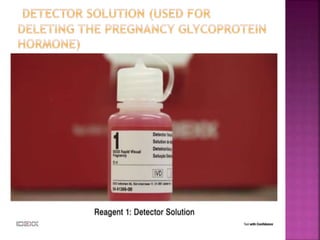
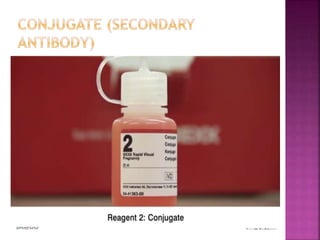
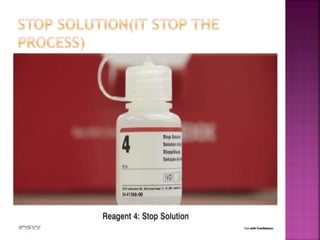
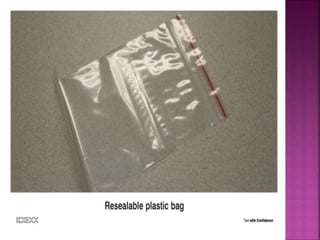
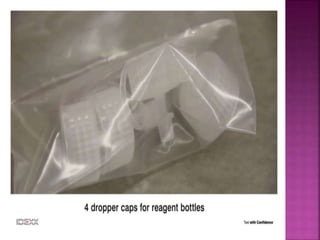
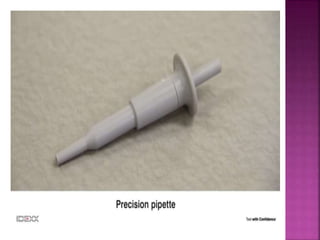
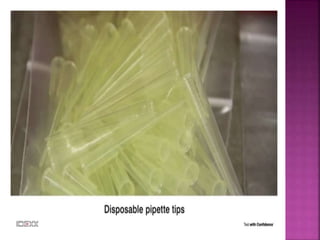
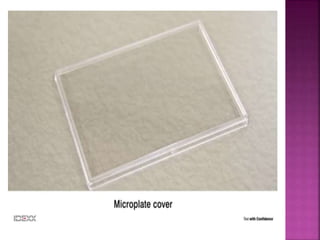
 IDEXX Rapid Visual Pregnancy Test(RVPT)
 Pregnancy diagnosis is an important tool to
measure the success of reproductive
management of a cattle herd.
 Determining pregnancy in cattle by palpation
is not particularly difficult, but it requires
experience, practice, and a thorough
knowledge of the cow’s reproductive system.
 To analyze patterns of pregnancy among
different groups for management and
veterinary care.
 To identify animals for strategic feeding re-
breeding, culling etc.
 To identify replacement heifers.
 To identify infertility problem for timely
treatment.
It is the method through which we
manually examine the reproductive
track of animal to confirm pregnancy.
Major observations include:
Positive signs of pregnancy
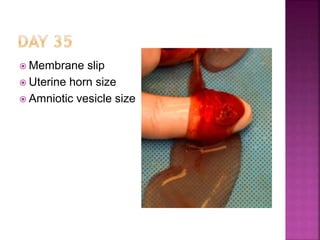
Amniotic vesicle: palpable 28-60 days
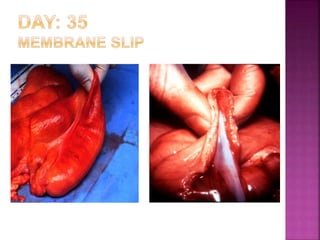
Fetal membrane slip - 30 to 45
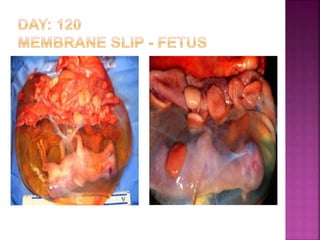
Cotyledons: 65-70 to term
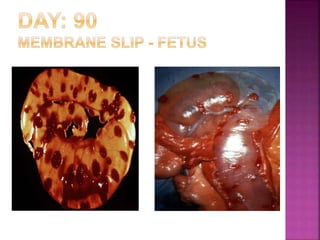
Fetus: 60 days to term
 Advantages
 it is a cheap technique to perform for PD.
 It requires no necessary equipment.
 It can be performed any desired time
 Disadvantages
 It requires technical skills to perform.
Mishandling during RP causes rupture of
reproductive tract.
 Early pregnancy cannot be diagnosed.
 It requires proper restraining of animal
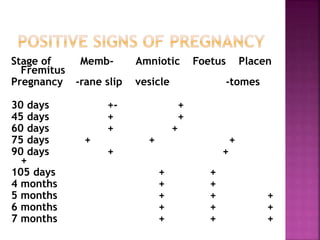
Stage of Memb- Amniotic Foetus Placen
Fremitus
Pregnancy -rane slip vesicle -tomes
30 days +- +
45 days + +
60 days + +
75 days + + +
90 days + +
+
105 days + +
4 months + +
5 months + + +
6 months + + +
7 months + + +
 Membrane slip
 Uterine horn size
 Amniotic vesicle size
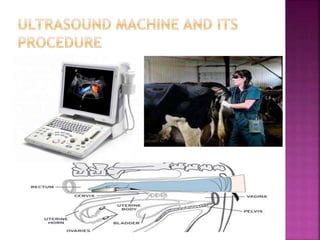
 Detection of pregnancy through the use of
ultrasound may be beneficial during the later
stages of pregnancy (day
 30 and later). A probe is passed over the
cow’s abdominal wall or into the rectum to
transmit two-dimensional
 images to a monitor that can be viewed by a
technician. Organs of the reproductive tract,
as well as a developing
 fetus, can be viewed using ultrasound
technology.
 To detect the heart beat of the fetus
 Advantages of ultrasonography
 The ultrasonography is a noninvasive technique yet a
highly accurate scan to view insides of the body.
 Ultrasound images are captured in real time. They
can show the movement of the body’s internal
organs, fetus, and blood flow through the blood
vessels.
 Unlike X-ray imaging, there is no ionizing radiation
exposure associated with ultrasound imaging. Hence,
it can be used safely in pregnancy.
 Ultrasound can be used in cases where remote
diagnosis or are the only option.
 It can be performed as a bedside investigation.
 Disadvantages
 Ultrasound waves can heat up the tissues
slightly.
 In some cases, it can also produce cavitations
(small pockets of gas in the body fluids or
tissues). The long-term consequences of
these effects are still unknown.
 On-farm test kits are available to producers
to pregnancy check their cows. Some test
kits are easy to use and
 give the producer immediate results. One
example is a milk progesterone test. This kit
allows a producer to test
 the level of progesterone in a milk sample. A
color change in the sample indicates the
pregnant or non-pregnant
 status of the cow.
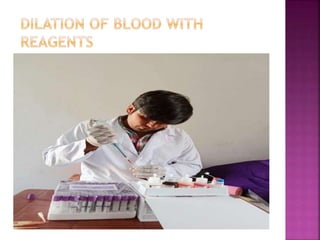
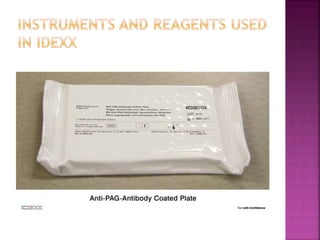
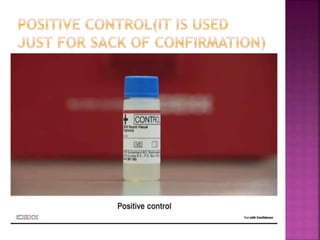
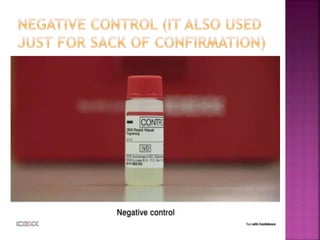
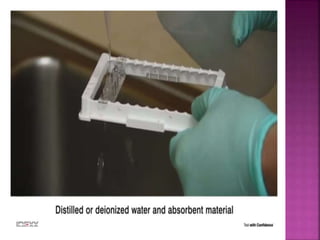
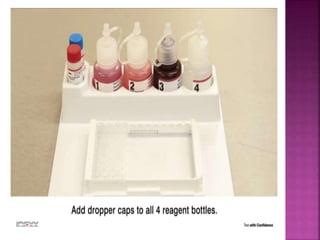
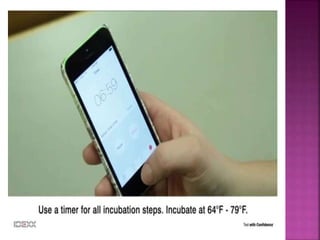
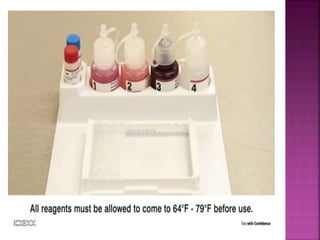
IDEXX
A simple, easy and non invasive method of checking
pregnancy through in animals.
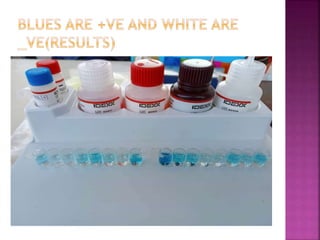
It is an enzyme linked immunosorbent assay with detection of
pregnancy associated glycoprotein(PAGs) in whole
blood(EDTA), or serum in bovine tests.
It's a non-invasive testing method- Saves animals
from abortion - Detects early pregnancy in cows,
buffaloes, goats and sheeps , 28 days post
breeding- Reduces calving interval and ensures calf
per year - Saves the cost of pregnancy loss(A.I,
feeding, treatment,vaccination cost,etc)- Makes
sure timely re-breeding by detecting early non
pregnant (open) animals- Increases conception
rate - it ensures the sustainable and hygienic reproductive
Program.
>Prepare Reagents
>Interpret the results
 Dieleman., S. J., et. al. Clinical Trends and
Basic Research in Animal Reproduction. New
York, NY: Elsevier
 Science, 1992.
 Herman, H. A., Mitchell, J. R., and G. A.
Doak., The Artificial Insemination and
Embryo Transfer of Dairy and Beef Cattle.
Danville, IL: Interstate Publishers, Inc.,
1994.
 Sorensen, A. M. Jr. Repro Lab. 4th ed.
Boston, MA: American Press, 1979.

Pregnancy diagnosis.pptx

  • 1.
    Pregnancy and itsdiagnostics modern techniques By, Dr SHAZI NOSH
  • 2.
    The state ofcarrying a developing embryo or fetus within the female body.
  • 3.
     Rectal palpation Utrasonography  Biochemical Test  IDEXX Rapid Visual Pregnancy Test(RVPT)
  • 4.
     Pregnancy diagnosisis an important tool to measure the success of reproductive management of a cattle herd.  Determining pregnancy in cattle by palpation is not particularly difficult, but it requires experience, practice, and a thorough knowledge of the cow’s reproductive system.
  • 5.
     To analyzepatterns of pregnancy among different groups for management and veterinary care.  To identify animals for strategic feeding re- breeding, culling etc.  To identify replacement heifers.  To identify infertility problem for timely treatment.
  • 6.
    It is themethod through which we manually examine the reproductive track of animal to confirm pregnancy. Major observations include: Positive signs of pregnancy Amniotic vesicle: palpable 28-60 days Fetal membrane slip - 30 to 45 Cotyledons: 65-70 to term Fetus: 60 days to term
  • 7.
     Advantages  itis a cheap technique to perform for PD.  It requires no necessary equipment.  It can be performed any desired time  Disadvantages  It requires technical skills to perform. Mishandling during RP causes rupture of reproductive tract.  Early pregnancy cannot be diagnosed.  It requires proper restraining of animal
  • 8.
    Stage of Memb-Amniotic Foetus Placen Fremitus Pregnancy -rane slip vesicle -tomes 30 days +- + 45 days + + 60 days + + 75 days + + + 90 days + + + 105 days + + 4 months + + 5 months + + + 6 months + + + 7 months + + +
  • 9.
     Membrane slip Uterine horn size  Amniotic vesicle size
  • 13.
     Detection ofpregnancy through the use of ultrasound may be beneficial during the later stages of pregnancy (day  30 and later). A probe is passed over the cow’s abdominal wall or into the rectum to transmit two-dimensional  images to a monitor that can be viewed by a technician. Organs of the reproductive tract, as well as a developing  fetus, can be viewed using ultrasound technology.
  • 15.
     To detectthe heart beat of the fetus  Advantages of ultrasonography  The ultrasonography is a noninvasive technique yet a highly accurate scan to view insides of the body.  Ultrasound images are captured in real time. They can show the movement of the body’s internal organs, fetus, and blood flow through the blood vessels.  Unlike X-ray imaging, there is no ionizing radiation exposure associated with ultrasound imaging. Hence, it can be used safely in pregnancy.  Ultrasound can be used in cases where remote diagnosis or are the only option.  It can be performed as a bedside investigation.
  • 16.
     Disadvantages  Ultrasoundwaves can heat up the tissues slightly.  In some cases, it can also produce cavitations (small pockets of gas in the body fluids or tissues). The long-term consequences of these effects are still unknown.
  • 17.
     On-farm testkits are available to producers to pregnancy check their cows. Some test kits are easy to use and  give the producer immediate results. One example is a milk progesterone test. This kit allows a producer to test  the level of progesterone in a milk sample. A color change in the sample indicates the pregnant or non-pregnant  status of the cow.
  • 18.
    IDEXX A simple, easyand non invasive method of checking pregnancy through in animals. It is an enzyme linked immunosorbent assay with detection of pregnancy associated glycoprotein(PAGs) in whole blood(EDTA), or serum in bovine tests. It's a non-invasive testing method- Saves animals from abortion - Detects early pregnancy in cows, buffaloes, goats and sheeps , 28 days post breeding- Reduces calving interval and ensures calf per year - Saves the cost of pregnancy loss(A.I, feeding, treatment,vaccination cost,etc)- Makes sure timely re-breeding by detecting early non pregnant (open) animals- Increases conception rate - it ensures the sustainable and hygienic reproductive Program.
  • 19.
  • 40.
     Dieleman., S.J., et. al. Clinical Trends and Basic Research in Animal Reproduction. New York, NY: Elsevier  Science, 1992.  Herman, H. A., Mitchell, J. R., and G. A. Doak., The Artificial Insemination and Embryo Transfer of Dairy and Beef Cattle. Danville, IL: Interstate Publishers, Inc., 1994.  Sorensen, A. M. Jr. Repro Lab. 4th ed. Boston, MA: American Press, 1979.