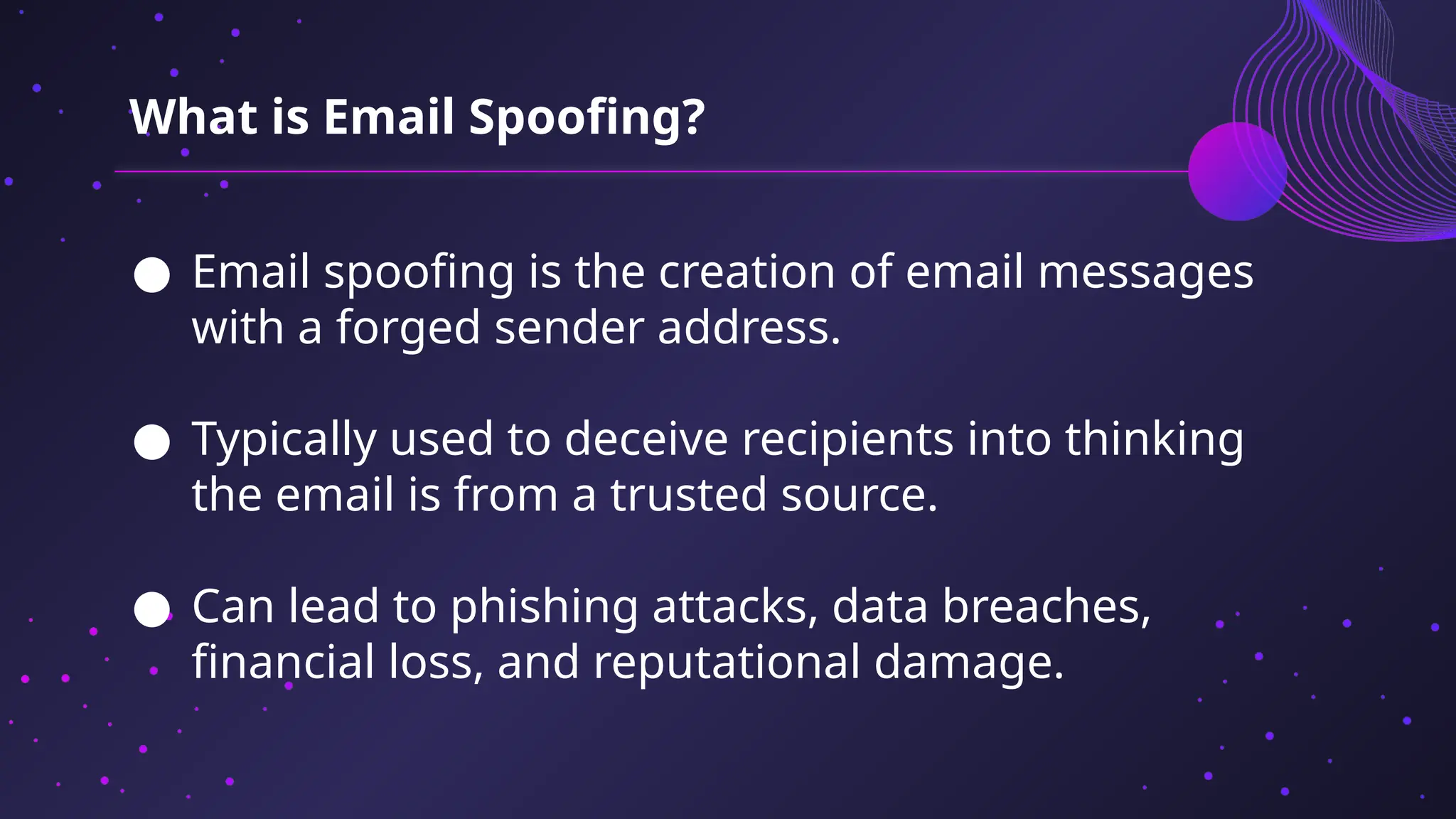
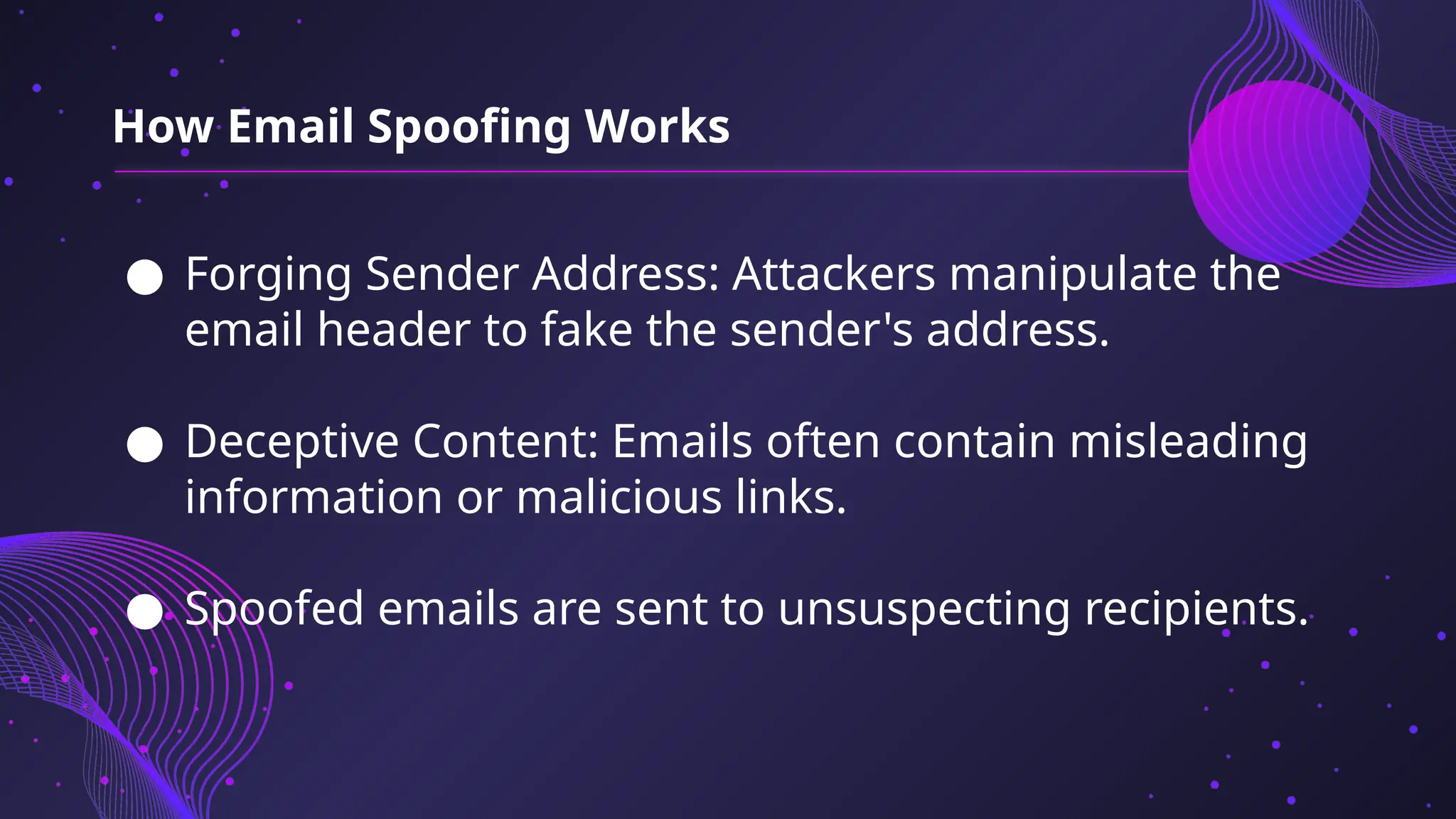
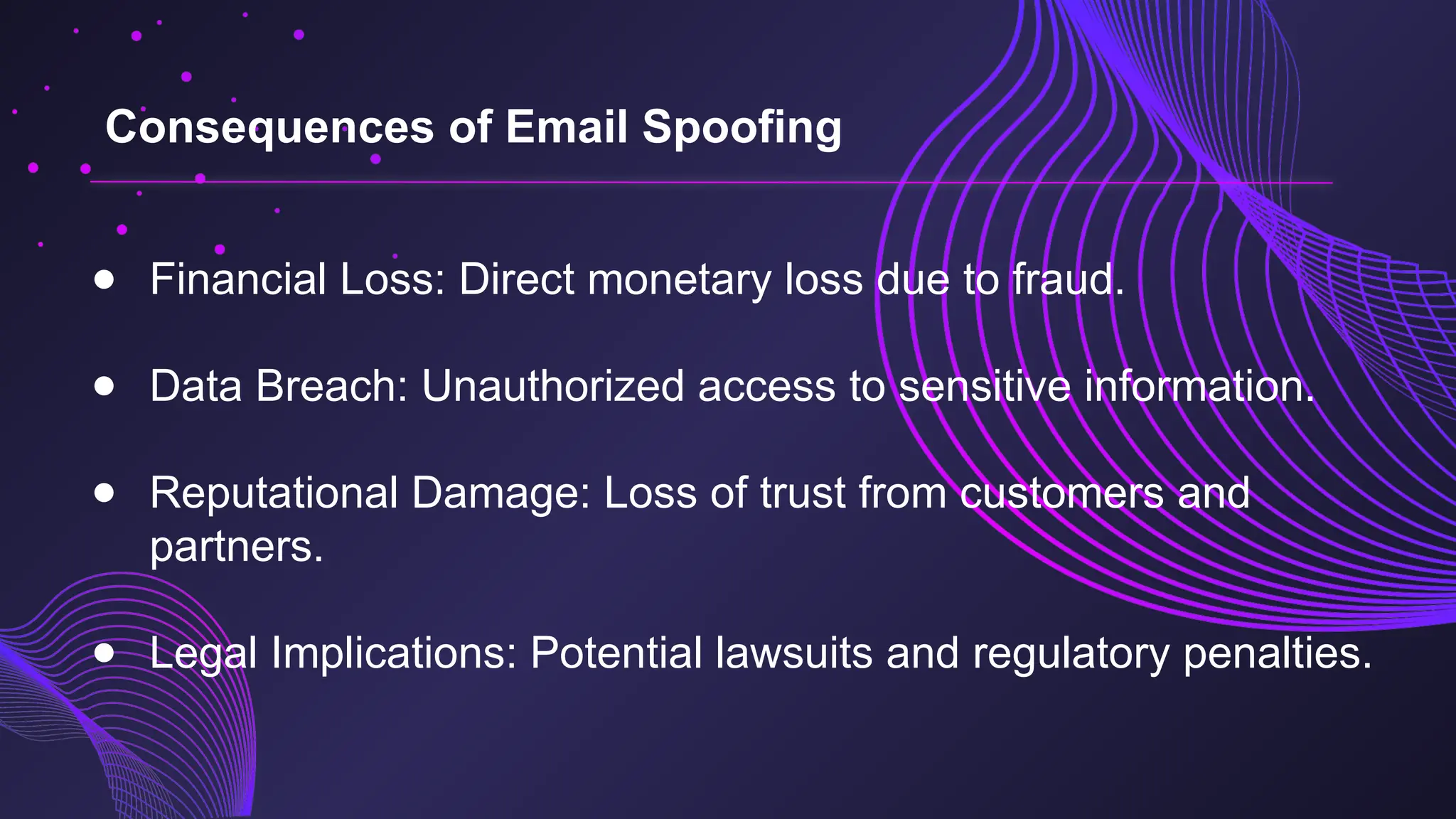
Email spoofing involves creating forged email messages to deceive recipients into believing they are from trusted sources, leading to serious risks such as phishing, data breaches, and reputational damage. Notable incidents, including large financial losses for companies like Google and Facebook, and ransomware attacks against institutions like UCSF, highlight the urgency for effective prevention measures such as SPF, DKIM, DMARC, and user training. The document emphasizes the need for organizations to adopt best practices to protect against the increasing threat of email spoofing.



![Employee Security Training[1]@](https://cdn.slidesharecdn.com/ss_thumbnails/EmployeeSecurityTraining1-122974944243-phpapp01-thumbnail.jpg?width=640&height=640&fit=bounds)


