Download to read offline
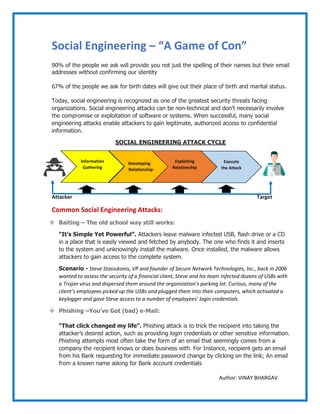


Social engineering is one of the greatest security threats facing organizations today. It involves manipulating people into divulging confidential information rather than exploiting technical systems. Common social engineering attacks include baiting, where malware-infected USB drives are left in public places; phishing, using fraudulent emails to trick recipients into clicking links or revealing login credentials; and pretexting, where attackers establish trust and ask targeted questions to gather personal details. No technical security can fully protect against social engineering, so organizations must educate employees to avoid providing any information to unknown sources via email, phone, or in person. Blocking USB devices and training all staff in security awareness can help reduce social engineering risks.


