Download as PDF, PPTX



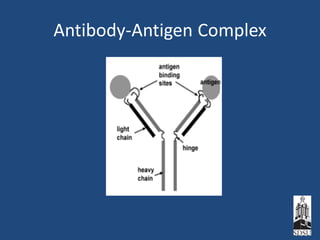

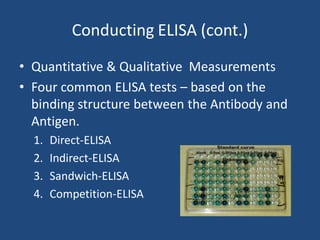
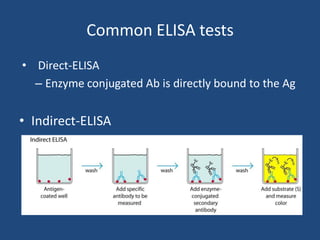
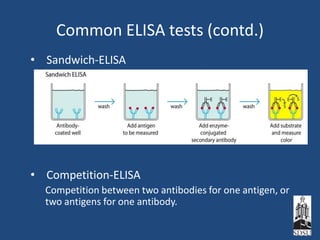




This document provides an introduction to enzyme-linked immunosorbent assay (ELISA), covering its basic principles, procedures, advantages, and applications. ELISA is an antibody-antigen based assay developed in 1971 to detect the presence and quantify concentrations of antigens, antibodies, and other proteins. It works by utilizing antibodies and enzyme-linked substrates to produce a detectable color change in direct proportion to the presence of an antigen or antibody in a sample. Key advantages of ELISA include its speed, sensitivity, specificity, ability to process many samples at once using small sample sizes, and production of easy-to-read colorimetric results. ELISA kits now exist for detecting a wide range of targets like viruses, hormones, toxins, allerg


