ELISA
BY- S.BHARGAVI
ELISA - DEFINITION
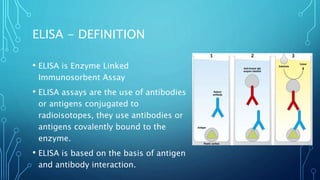
• ELISA is Enzyme Linked
Immunosorbent Assay
• ELISA assays are the use of antibodies
or antigens conjugated to
radioisotopes, they use antibodies or
antigens covalently bound to the
enzyme.
• ELISA is based on the basis of antigen
and antibody interaction.
STEPS IN ELISA
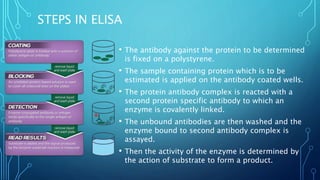
• The antibody against the protein to be determined
is fixed on a polystyrene.
• The sample containing protein which is to be
estimated is applied on the antibody coated wells.
• The protein antibody complex is reacted with a
second protein specific antibody to which an
enzyme is covalently linked.
• The unbound antibodies are then washed and the
enzyme bound to second antibody complex is
assayed.
• Then the activity of the enzyme is determined by
the action of substrate to form a product.
TYPES OF ELISA ASSAY
The different types of ELISA Assay are as follows
1. Indirect ELISA
2. Direct ELISA
3. Sandwich ELISA
4. Competitive ELISA
INDIRECT ELISA
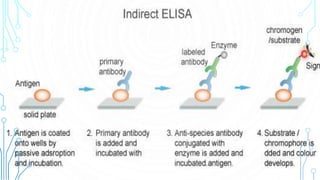
• Antibody concentration can be detected in Indirect ELISA Assay
• Serum or other samples that contain primary antibody is added
to an antigen coated microtiter well and allowed to react with
the antigen attached to the well.
• Primary antibody if left free is washed and the antibody bound
to the antigen is detected by adding an enzyme-conjugated
secondary antibody that binds to the primary antibody.
• Secondary antibody if left free is washed substrate for the
enzyme is added.
• The amount of color change is measured using a specialized
plate reader and then the titer is compared using a standard
curve of known antibody concentration.
DIRECT ELISA
• In Direct ELISA, no secondary antibody is needed, the primary
antibody is used as detection antibody.
• The microtiter wells are coated with antigen. The primary
antibody is added with the enzyme conjugate.
• The unbound antibodies are washed away and then the
substrate is added which reacts with the enzyme and cause the
change in colour.
• This colour change is measured and compared using a
standard curve of known antibody concentration.
SANDWICH ELISA
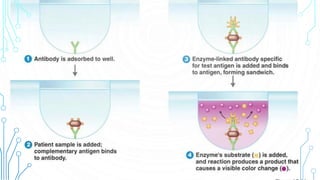
• The antibodies are immobilized on a microtiter well. A sample
containing unknown amounts of antigen is allowed to react with the
immobilized antibody.
• Free unbound antigens are washed away and the secondary antibody
conjugated with the enzymes specific for the antigen are added and
are allowed to react with bound antigen.
• Free unbound antibodies are washed and substrate is added. Change
in color is measured.
COMPETITIVE ELISA
• Competitive ELISA is a very sensitive method for the measurement of
the amount of antigens.
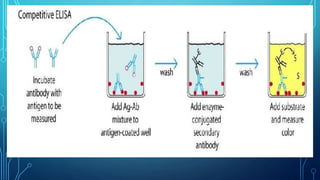
• The antigen-antibody mixture is added to an antigen coated
microtiter well.
• The more the antigen is present is the initial solution phase sample,
the less free antibody will be available to bind to the antigen-coated
wells
• The unbound antibodies are washed and enzyme conjugated
secondary antibody specific for the isotope of the primary antibody is
added and the change in color is used to determine the amount of
antibody in the well.
Elisa
Elisa

Elisa

  • 1.
  • 2.
    ELISA - DEFINITION •ELISA is Enzyme Linked Immunosorbent Assay • ELISA assays are the use of antibodies or antigens conjugated to radioisotopes, they use antibodies or antigens covalently bound to the enzyme. • ELISA is based on the basis of antigen and antibody interaction.
  • 3.
    STEPS IN ELISA •The antibody against the protein to be determined is fixed on a polystyrene. • The sample containing protein which is to be estimated is applied on the antibody coated wells. • The protein antibody complex is reacted with a second protein specific antibody to which an enzyme is covalently linked. • The unbound antibodies are then washed and the enzyme bound to second antibody complex is assayed. • Then the activity of the enzyme is determined by the action of substrate to form a product.
  • 4.
    TYPES OF ELISAASSAY The different types of ELISA Assay are as follows 1. Indirect ELISA 2. Direct ELISA 3. Sandwich ELISA 4. Competitive ELISA
  • 6.
    INDIRECT ELISA • Antibodyconcentration can be detected in Indirect ELISA Assay • Serum or other samples that contain primary antibody is added to an antigen coated microtiter well and allowed to react with the antigen attached to the well. • Primary antibody if left free is washed and the antibody bound to the antigen is detected by adding an enzyme-conjugated secondary antibody that binds to the primary antibody. • Secondary antibody if left free is washed substrate for the enzyme is added. • The amount of color change is measured using a specialized plate reader and then the titer is compared using a standard curve of known antibody concentration.
  • 8.
    DIRECT ELISA • InDirect ELISA, no secondary antibody is needed, the primary antibody is used as detection antibody. • The microtiter wells are coated with antigen. The primary antibody is added with the enzyme conjugate. • The unbound antibodies are washed away and then the substrate is added which reacts with the enzyme and cause the change in colour. • This colour change is measured and compared using a standard curve of known antibody concentration.
  • 10.
    SANDWICH ELISA • Theantibodies are immobilized on a microtiter well. A sample containing unknown amounts of antigen is allowed to react with the immobilized antibody. • Free unbound antigens are washed away and the secondary antibody conjugated with the enzymes specific for the antigen are added and are allowed to react with bound antigen. • Free unbound antibodies are washed and substrate is added. Change in color is measured.
  • 12.
    COMPETITIVE ELISA • CompetitiveELISA is a very sensitive method for the measurement of the amount of antigens. • The antigen-antibody mixture is added to an antigen coated microtiter well. • The more the antigen is present is the initial solution phase sample, the less free antibody will be available to bind to the antigen-coated wells • The unbound antibodies are washed and enzyme conjugated secondary antibody specific for the isotope of the primary antibody is added and the change in color is used to determine the amount of antibody in the well.