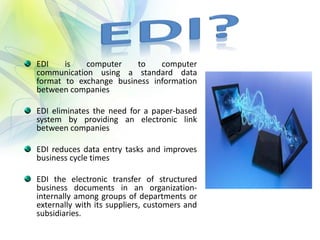
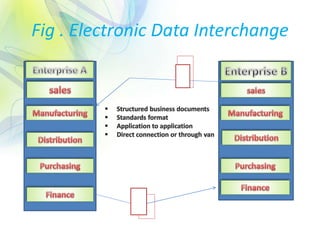
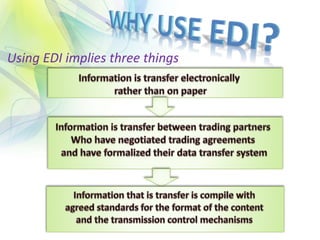
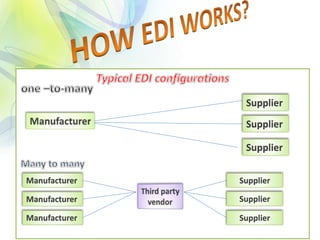
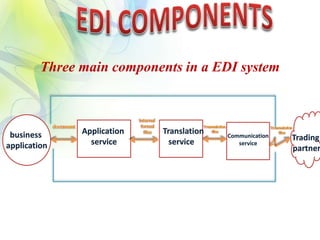
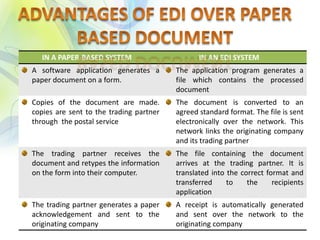
This document discusses Electronic Data Interchange (EDI), including what it is, how it works, its components, advantages over paper-based systems, and cost benefits. EDI involves the electronic transfer of structured business documents between organizations using a standard format. It eliminates paper-based processes by providing an electronic link between trading partners. Key advantages of EDI include reduced data entry and improved business cycle times, as well as lower costs from things like fewer errors and expedited transactions. EDI systems typically involve three main components: business applications, translation services, and communication services to transfer data between partners.






![Electronic data interchange_Project[1][1].pptx](https://cdn.slidesharecdn.com/ss_thumbnails/manojitttrainingproject11-250716042210-6f318242-thumbnail.jpg?width=640&height=640&fit=bounds)
![Electronic data interchange_Project[1][1].pptx](https://cdn.slidesharecdn.com/ss_thumbnails/manojitttrainingproject11-250716041723-58602a1e-thumbnail.jpg?width=640&height=640&fit=bounds)


