Physical chemistry
Topic: Electrode potential
Submitted to: Prof. Mureed abbass
Submitted by:Muhammad huzaifa
Roll no: 367402
Department: B.S Chemistry(6th E)
Session: 2020-2024
Introduction:
At one electrode oxidation takes place, i.e electrons are
evolved. At the other electrode reduction takes place, i.e
electrons are taken up.
For example, Daniel cell consists of two electrodes; zinc
electrode where oxidation takes place and copper electrode
where reduction takes place. Each electrode is regarded as a
half-cell.
The tendency of an electrode to lose or gain electrons when
it is in contact with its own ions in the solution is called
electrode potential or single electrode potential.
Thus the electrode potential is the measure of the tendency
of an electrode to lose or gain the electrons, when it is in
contact with its own ions. Thus we have oxidation and
reduction potential.
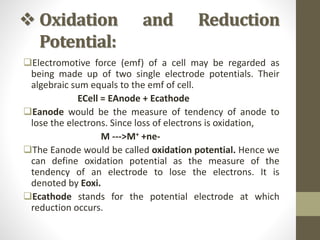
 Oxidation and Reduction
Potential:
Electromotive force (emf) of a cell may be regarded as
being made up of two single electrode potentials. Their
algebraic sum equals to the emf of cell.
ECell = EAnode + Ecathode
Eanode would be the measure of tendency of anode to
lose the electrons. Since loss of electrons is oxidation,
M --->M+ +ne-
The Eanode would be called oxidation potential. Hence we
can define oxidation potential as the measure of the
tendency of an electrode to lose the electrons. It is
denoted by Eoxi.
Ecathode stands for the potential electrode at which
reduction occurs.
 Nernst Theory of Electrode
Potential
It is well known fact that the ultimate source of emf in a
galvanic cell is the Chemical reaction which proceeds when
a current is flowing
According to the theory all metallic elments and hydrogen
have a tendency to pass into solution in the form of
positive ions. This property of the metal is known as
solution pressure or solution tension of the metal and is
constant at a given temperature.
Due to the migration of positive ions, the metallic
electrode is left negatively charged and thus an electrical
double layer is set up at the electrode. If zinc is immersed
in pure water, Zn2+ ions pass into the water under the
stress of solution pressure of the metal.
Possibilities
If the solution pressure is greater than the osmotic pressure
the tendency of the metal to lose ions predominates. A
potential difference is therefore, set up with the metal left
with negative charge with respect to the solution. . For
example, Zn, Mn, Cd and alkali metals
If the solution pressure is less than the osmotic pressure of
the metal in the solution, then ions will have greater tendency
to leave the solution and get deposited on the metal.
Examples are Cu, Ag, Hg and Au
When the solution pressure becomes equal to that of
osmotic pressure, no. Relative charge is developed and hence
no potential difference exists. Such systems are sometimes
termed as null electrodes.
 Measurement of Electrode
Potential
Unfortunately there is no way to measure the single
electrode potential of an isolated half-cell.
 All we can measure is the difference that is produced
when two half cells are connected.
 In order to determine single electrode potentials, it
would be necessary to couple an electrode with a
reference or standard electrode.
The potential of the reference electrode is arbitrarily
assigned a zero value and the potentials of all other
electrodes are then referred to it
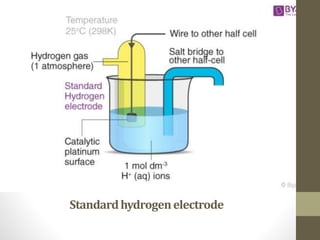
 Standard Hydrogen Electrode
(SHE)
Gaseous hydrogen at a pressure of 1 atm is bubbled over
a platinum electrode that is coated with a very finely
divided platinum, which cause the electrode reaction to
occur rapidly
This electrode is surrounded by a solution whose
temperature 25C and in which the hydrogen-Platinum
sheet ion concentration is 1.00M.
The Dilute acid half-cell reaction that occurs at the
solution platinum surface The double arrows indicate
that the reaction is reversible – whether it occurs as
oxidation or reduction depends on the potential of half
cell with which it is paired.
All other potentials expressed on this basis are referred
to as potentials on hydrogen scale.
 The standard electrode potential of any other electrode
is then obtained by combining the electrode with the
SHE.
 Since the standard potential of hydrogen electrode is
zero, the measured potential is the standard electrode
potential of the other electrode.
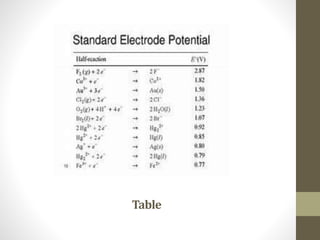
 The standard electrode potential is assigned a positive
value if this electrode is more positive with respect to
SHE and a negative value if it is more negative than the
SHE.
Standardhydrogenelectrode
Table
Calomel Electrode
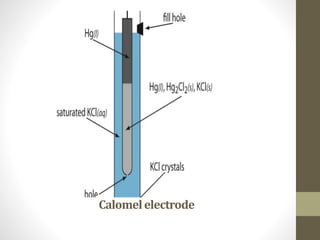
A simple type of calomel electrode generally usedin the
laboratory,It consists of glass vessel with small quantity of
pure mercury at the bottom.
 The mercury layer is covered with paste of mercurous
chloride and is filled with a saturated solution of KCI. A
Platinum wire is fused in glass tube and a siphon tube is
provided for the connection.
 The electrical contact is made with the other single electrode
whose potential is to be determined by means of siphon tube
containing a jelly or agar-agar prepared in saturated KCI
solution.
Such a connecting solution is called salt bridge.
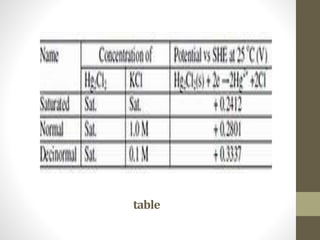
The potential of the calomel electrode depends upon
the concentration of KCl solution. Standard hydrogen
The potentials electrode of calomel are given electrodes
The electrode potential is given negative sign, if the
electrode reaction involves oxidation, when connected
with SHE.
 For example, when zin electrode is connected with SHE
oxidation occurs at the zinc electrode. Hence the
electrode potential of Zn Zn2+ electrode will be negative
and i equal to -0.763 volt. The values of oxidation
electrode potential and reduction electrode potential are
numerically equal but opposite in sign.
Calomelelectrode
table

electrode potential.pptx

  • 1.
    Physical chemistry Topic: Electrodepotential Submitted to: Prof. Mureed abbass Submitted by:Muhammad huzaifa Roll no: 367402 Department: B.S Chemistry(6th E) Session: 2020-2024
  • 2.
    Introduction: At one electrodeoxidation takes place, i.e electrons are evolved. At the other electrode reduction takes place, i.e electrons are taken up. For example, Daniel cell consists of two electrodes; zinc electrode where oxidation takes place and copper electrode where reduction takes place. Each electrode is regarded as a half-cell. The tendency of an electrode to lose or gain electrons when it is in contact with its own ions in the solution is called electrode potential or single electrode potential. Thus the electrode potential is the measure of the tendency of an electrode to lose or gain the electrons, when it is in contact with its own ions. Thus we have oxidation and reduction potential.
  • 3.
     Oxidation andReduction Potential: Electromotive force (emf) of a cell may be regarded as being made up of two single electrode potentials. Their algebraic sum equals to the emf of cell. ECell = EAnode + Ecathode Eanode would be the measure of tendency of anode to lose the electrons. Since loss of electrons is oxidation, M --->M+ +ne- The Eanode would be called oxidation potential. Hence we can define oxidation potential as the measure of the tendency of an electrode to lose the electrons. It is denoted by Eoxi. Ecathode stands for the potential electrode at which reduction occurs.
  • 4.
     Nernst Theoryof Electrode Potential It is well known fact that the ultimate source of emf in a galvanic cell is the Chemical reaction which proceeds when a current is flowing According to the theory all metallic elments and hydrogen have a tendency to pass into solution in the form of positive ions. This property of the metal is known as solution pressure or solution tension of the metal and is constant at a given temperature. Due to the migration of positive ions, the metallic electrode is left negatively charged and thus an electrical double layer is set up at the electrode. If zinc is immersed in pure water, Zn2+ ions pass into the water under the stress of solution pressure of the metal.
  • 5.
    Possibilities If the solutionpressure is greater than the osmotic pressure the tendency of the metal to lose ions predominates. A potential difference is therefore, set up with the metal left with negative charge with respect to the solution. . For example, Zn, Mn, Cd and alkali metals If the solution pressure is less than the osmotic pressure of the metal in the solution, then ions will have greater tendency to leave the solution and get deposited on the metal. Examples are Cu, Ag, Hg and Au When the solution pressure becomes equal to that of osmotic pressure, no. Relative charge is developed and hence no potential difference exists. Such systems are sometimes termed as null electrodes.
  • 6.
     Measurement ofElectrode Potential Unfortunately there is no way to measure the single electrode potential of an isolated half-cell.  All we can measure is the difference that is produced when two half cells are connected.  In order to determine single electrode potentials, it would be necessary to couple an electrode with a reference or standard electrode. The potential of the reference electrode is arbitrarily assigned a zero value and the potentials of all other electrodes are then referred to it
  • 7.
     Standard HydrogenElectrode (SHE) Gaseous hydrogen at a pressure of 1 atm is bubbled over a platinum electrode that is coated with a very finely divided platinum, which cause the electrode reaction to occur rapidly This electrode is surrounded by a solution whose temperature 25C and in which the hydrogen-Platinum sheet ion concentration is 1.00M. The Dilute acid half-cell reaction that occurs at the solution platinum surface The double arrows indicate that the reaction is reversible – whether it occurs as oxidation or reduction depends on the potential of half cell with which it is paired.
  • 8.
    All other potentialsexpressed on this basis are referred to as potentials on hydrogen scale.  The standard electrode potential of any other electrode is then obtained by combining the electrode with the SHE.  Since the standard potential of hydrogen electrode is zero, the measured potential is the standard electrode potential of the other electrode.  The standard electrode potential is assigned a positive value if this electrode is more positive with respect to SHE and a negative value if it is more negative than the SHE.
  • 9.
  • 10.
  • 11.
    Calomel Electrode A simpletype of calomel electrode generally usedin the laboratory,It consists of glass vessel with small quantity of pure mercury at the bottom.  The mercury layer is covered with paste of mercurous chloride and is filled with a saturated solution of KCI. A Platinum wire is fused in glass tube and a siphon tube is provided for the connection.  The electrical contact is made with the other single electrode whose potential is to be determined by means of siphon tube containing a jelly or agar-agar prepared in saturated KCI solution. Such a connecting solution is called salt bridge.
  • 12.
    The potential ofthe calomel electrode depends upon the concentration of KCl solution. Standard hydrogen The potentials electrode of calomel are given electrodes The electrode potential is given negative sign, if the electrode reaction involves oxidation, when connected with SHE.  For example, when zin electrode is connected with SHE oxidation occurs at the zinc electrode. Hence the electrode potential of Zn Zn2+ electrode will be negative and i equal to -0.763 volt. The values of oxidation electrode potential and reduction electrode potential are numerically equal but opposite in sign.
  • 13.
  • 14.