BY : ERICA P
Static electricity
 Refers to the build-up of electric charge on the
 surface of the objects.
 It can be contrasted with current,electricity which
 can be delivered through wires as a power
 source.
 There are 5 types of electric discharge (
 Spark,Brush discharge,propagating brush
 discharge,cone discharge and corona
 discharged)
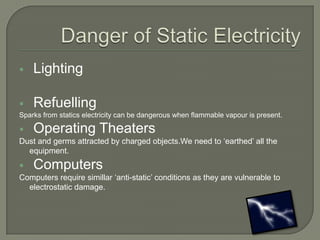
   Lighting

   Refuelling
Sparks from statics electricity can be dangerous when flammable vapour is present.

   Operating Theaters
Dust and germs attracted by charged objects.We need to ‘earthed’ all the
  equipment.
   Computers
Computers require simillar ‘anti-static’ conditions as they are vulnerable to
  electrostatic damage.
Uses of Static Electricity
   Flue-ash precipitation

   Photocopiers

   Inkjet printers

   Painting cars
Electric Current

→ is a flow of electric charge through a medium.

→ Charge typically carried by moving electrons such as
 wire.

→ The SI unit is AMPERE.

→ Is measured using AMMETER.
−   Heating and lighting

−   Magnetic

−   Chemical
   Series
current is the same at all the points in a series
 circuits.
 Parallel
The sum of the current in the branches of a
 parallel circuit equals the current entering
 or leaving the parallel section.


Series and Parallel circuits
Potential Difference

* The difference in electric potential between two
 pointsin an electric field.

* measured in volts


* The work that has to be done in transferring unit
 positive change from one point to the other.
Resistance

 The opposition of a conductor to current called
  RESISTANCE.
 The formulae R=V/I
 the smaller the I is for a given V,the greater R.
 The ohm is the resistance of a conductor.
Ohm’s Law

 Metallic Conductor (current through a metallic
    conductors is directly propotional to the
    voltage)(there are called ohmic or linear conductors)
    Semiconductors diode
    Filament Lamp
    Variation of resistance with temperature
    Variation of resistance with light intensity
   In series same current flows through
    each and total voltage.

   In parallel the voltage between the
    ends of each is the same.
 Is a passive two terminals electrical
 component used to store energy in electric
 field.
 its measured by farads(F)
 Smaller units such as the microfarad are
 more convenient.
 A capasitors store electric charge and its
 useful in many electric circuits
   Practical capacitor

   Polyester capacitor

   Electrolytic capacitor
 Charging
    It can be charged by connecting a battery across
  it.During the charging,there is brief flow of lectrons
  round the circuits.A momentary current would be
  detected by a sensitive ammeter.
 Discharging
  When a conductor is connected across a charged
  capasitors,there is a brief flow of electron from the
  negatively charged plate to the positively one.
Electric Power

 Is the rate at which electric energy is transferred by
  an electric circuits
 The SI of power is watt
  Filament lamps
Is a small coiled coil of tungsten wire,which
  become white hot when current flows throught
  it.Its contain nitrogen and argon,not air.

  Fluorescent strips
Transfer only 10% of the electrical energy supplied
  to light; 90% becomes heat.

  Compact Fluorescent lamps
Last up to 8 times longer.used about 5 less energy
  than others.


Electric lighting
   Heating elements

   Three-heat switch

   Fuses


Electric heating
   Circuits in parallel

   Switches and fuses

   Staircase circuits

   Ring main circuits

   Fused plug

   Earthing and safety

   Circuits breakers

   Double insulation
Danger of electricity

 Electric shock
  electric shocks occurs if current flows from an
  electric circuit through a person body’s to earth.Its
  causes by damaged insulation or faulty wiring.
 Fire risks
How to AVOID!!

1.    Switch off the electrical supply to an appliance
     before starting repairs.
2.    Use plugs that have earth pin.
3.    Do NOT allow appliances or cables to come into
     contact with water.
4.    Do NOT have long cables trailing across
     room,under carpet or in other conditions.
5.    Use plugs that have the correct fuse
6.    Do NOT attach to many appliances to a circuit
7.    Dont overload circuits by using to many adapters
Electricity

Electricity

  • 1.
  • 2.
    Static electricity  Refersto the build-up of electric charge on the surface of the objects.  It can be contrasted with current,electricity which can be delivered through wires as a power source.  There are 5 types of electric discharge ( Spark,Brush discharge,propagating brush discharge,cone discharge and corona discharged)
  • 3.
    Lighting  Refuelling Sparks from statics electricity can be dangerous when flammable vapour is present.  Operating Theaters Dust and germs attracted by charged objects.We need to ‘earthed’ all the equipment.  Computers Computers require simillar ‘anti-static’ conditions as they are vulnerable to electrostatic damage.
  • 4.
    Uses of StaticElectricity  Flue-ash precipitation  Photocopiers  Inkjet printers  Painting cars
  • 5.
    Electric Current → isa flow of electric charge through a medium. → Charge typically carried by moving electrons such as wire. → The SI unit is AMPERE. → Is measured using AMMETER.
  • 6.
    Heating and lighting − Magnetic − Chemical
  • 7.
    Series current is the same at all the points in a series circuits.  Parallel The sum of the current in the branches of a parallel circuit equals the current entering or leaving the parallel section. Series and Parallel circuits
  • 8.
    Potential Difference * Thedifference in electric potential between two pointsin an electric field. * measured in volts * The work that has to be done in transferring unit positive change from one point to the other.
  • 9.
    Resistance  The oppositionof a conductor to current called RESISTANCE.  The formulae R=V/I  the smaller the I is for a given V,the greater R.  The ohm is the resistance of a conductor.
  • 10.
    Ohm’s Law  MetallicConductor (current through a metallic conductors is directly propotional to the voltage)(there are called ohmic or linear conductors)  Semiconductors diode  Filament Lamp  Variation of resistance with temperature  Variation of resistance with light intensity
  • 11.
    In series same current flows through each and total voltage.  In parallel the voltage between the ends of each is the same.
  • 12.
     Is apassive two terminals electrical component used to store energy in electric field.  its measured by farads(F)  Smaller units such as the microfarad are more convenient.  A capasitors store electric charge and its useful in many electric circuits
  • 13.
    Practical capacitor  Polyester capacitor  Electrolytic capacitor
  • 14.
     Charging It can be charged by connecting a battery across it.During the charging,there is brief flow of lectrons round the circuits.A momentary current would be detected by a sensitive ammeter.  Discharging When a conductor is connected across a charged capasitors,there is a brief flow of electron from the negatively charged plate to the positively one.
  • 15.
    Electric Power  Isthe rate at which electric energy is transferred by an electric circuits  The SI of power is watt
  • 16.
     Filamentlamps Is a small coiled coil of tungsten wire,which become white hot when current flows throught it.Its contain nitrogen and argon,not air.  Fluorescent strips Transfer only 10% of the electrical energy supplied to light; 90% becomes heat.  Compact Fluorescent lamps Last up to 8 times longer.used about 5 less energy than others. Electric lighting
  • 17.
    Heating elements  Three-heat switch  Fuses Electric heating
  • 18.
    Circuits in parallel  Switches and fuses  Staircase circuits  Ring main circuits  Fused plug  Earthing and safety  Circuits breakers  Double insulation
  • 19.
    Danger of electricity Electric shock electric shocks occurs if current flows from an electric circuit through a person body’s to earth.Its causes by damaged insulation or faulty wiring.  Fire risks
  • 20.
    How to AVOID!! 1. Switch off the electrical supply to an appliance before starting repairs. 2. Use plugs that have earth pin. 3. Do NOT allow appliances or cables to come into contact with water. 4. Do NOT have long cables trailing across room,under carpet or in other conditions. 5. Use plugs that have the correct fuse 6. Do NOT attach to many appliances to a circuit 7. Dont overload circuits by using to many adapters