Electrical Safety
Electricity - The Dangers
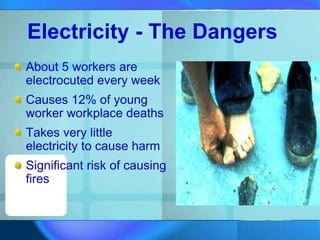
About 5 workers are
electrocuted every week
Causes 12% of young
worker workplace deaths
Takes very little
electricity to cause harm
Significant risk of causing
fires
Electricity – How it Works
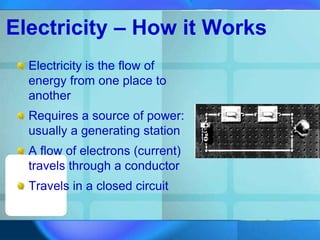
Electricity is the flow of
energy from one place to
another
Requires a source of power:
usually a generating station
A flow of electrons (current)
travels through a conductor
Travels in a closed circuit
BASIC ELECTRICAL TERMS
 What are the definitions of these terms?
 Electricity
 Current
 Voltage
 Resistance
 Amps
 Volts
 Ohms
 Direct current
 Alternating
current
 Conductor
 Insulator
Electrical Injuries
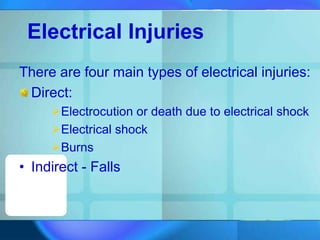
There are four main types of electrical injuries:
Direct:
Electrocution or death due to electrical shock
Electrical shock
Burns
• Indirect - Falls
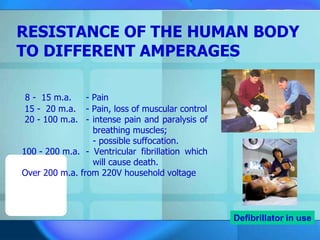
RESISTANCE OF THE HUMAN BODY
TO DIFFERENT AMPERAGES
8 - 15 m.a. - Pain
15 - 20 m.a. - Pain, loss of muscular control
20 - 100 m.a. - intense pain and paralysis of
breathing muscles;
- possible suffocation.
100 - 200 m.a. - Ventricular fibrillation which
will cause death.
Over 200 m.a. from 220V household voltage
Defibrillator in use
Burns
Most common shock-related
injury
Occurs when you touch
electrical wiring or equipment
that is improperly used or
maintained
Typically occurs on hands
Very serious injury that
needs immediate attention
Electrical Burns
Entrance Wound
Exit Wound
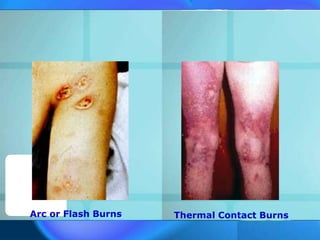
Arc or Flash Burns Thermal Contact Burns
Internal Injuries
Involuntary Muscle Contraction
Current flows through the body from the entrance point,
until finally exiting where the body is closest to the ground.
AVOID THE FOLLOWING UNSAFE ACTS:
Worker’s attitude such as working without
appropriate PPEs.
Improper working method
Wearing of metal objects as watches,
necklaces & rings.
Working in wet and/or damp locations
AVOID THE FOLLOWING UNSAFE ACTS:
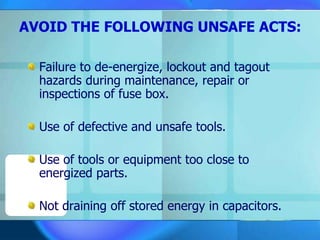
Failure to de-energize, lockout and tagout
hazards during maintenance, repair or
inspections of fuse box.
Use of defective and unsafe tools.
Use of tools or equipment too close to
energized parts.
Not draining off stored energy in capacitors.
Double Insulated Tool
AVOID THE FOLLOWING UNSAFE ACTS:
Using 3 wire cord with a 2 wire plug.
Remove and replace wrong fuse.
Not verifying power is off when making
repair.
UNSAFE EQUIPMENT
What equipment can cause electrical accidents:
Faults in facilities such as exposed
charged part of electrical machines and
equipment
Damaged insulation of electrical wirings
Short Circuit
Overloading
Improper grounding
HAZARDOUS ENVIRONMENT
Flammable vapors, liquids
and gases
Combustible dusts
Corrosive atmosphere
Explosive environments
HAZARDOUS ENVIRONMENT
Deteriorated cords, where the exterior insulation
has cracked, exposing the wires inside.
Cords and/ or plugs produced from substandard
materials.
Use of cords which have no appropriate current
(amp) rating for either the plug or the equipment.
HAZARDOUS ENVIRONMENT
Use of extension cords for permanent
installations.
Equipment which has been incorrectly
wired, representing either a shock or fire
hazard.
ELECTRICAL HAZARDS TO WATCH OUT FOR
Loose electrical connections
Cord with frayed insulations
Plugs that do not match their outlets, e.g.,
3-prong male plug to 2-plug female outlet
Non-waterproof cords, plugs and outlets used
outdoors
Equipment running over capacity
ELECTRICAL HAZARDS TO WATCH OUT FOR
Tools that smell, smoke, spark or shock
Wires running across the floor
Electrical cords in contact with hot
appliances or soaked in water
Extension cords instead of permanent
wiring
Octopus connections
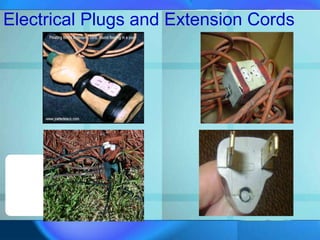
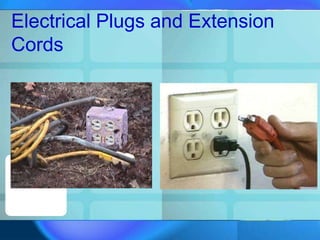
Electrical Plugs and Extension Cords
Electrical Plugs and Extension
Cords
MEASURES TO PREVENT ELECTRIC SHOCK
Use grounding system
Install GFCI
Isolation of electrical conductors
Vault & boxes
Warning signs
Safe Clearance
Elevation (at least 10 ft minimum) of
electrical cable specifically at construction
site
Minimum approach distance
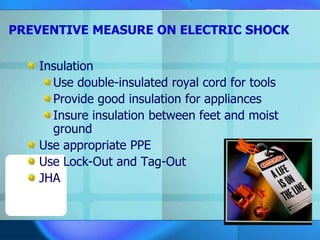
PREVENTIVE MEASURE ON ELECTRIC SHOCK
Insulation
Use double-insulated royal cord for tools
Provide good insulation for appliances
Insure insulation between feet and moist
ground
Use appropriate PPE
Use Lock-Out and Tag-Out
JHA
GROUNDING
Particulars regarding details of conductors
sizes & nature of grounds can be obtained
from the provision of the Philippine Electrical
Code governing them
GROUNDING ROD SPECIFICATION
Steel Rod - 5/8” dia. & 8 ft long
Copper Clad Steel Rod - 1/2” dia. & 8 ft
long
Galvanized Pipe - 3/4” & 8 ft long
Resistance should not exceed 25 ohms
Ground Fault Circuit Interrupters
Portable Ground Fault
Circuit Interrupters
GFCI Panel Mounts
Preventing Electrical Hazards - PPE
Proper foot protection
(not tennis shoes)
Rubber insulating
gloves, hoods, sleeves,
matting, and blankets
Hard hat (insulated -
nonconductive)
SIMPLE RULES TO
FOLLOW
DO NOT GUESS
USE PROPER INSTRUMENTS
ALWAYS USE SAFETY DEVICES
LOCKING & TAGGING
PROCEDURE
NEVER WORK ALONE
USE DANGER SIGNS
THANK YOU ALL!

Electrical Safety.ppt

  • 1.
  • 2.
    Electricity - TheDangers About 5 workers are electrocuted every week Causes 12% of young worker workplace deaths Takes very little electricity to cause harm Significant risk of causing fires
  • 3.
    Electricity – Howit Works Electricity is the flow of energy from one place to another Requires a source of power: usually a generating station A flow of electrons (current) travels through a conductor Travels in a closed circuit
  • 4.
    BASIC ELECTRICAL TERMS What are the definitions of these terms?  Electricity  Current  Voltage  Resistance  Amps  Volts  Ohms  Direct current  Alternating current  Conductor  Insulator
  • 5.
    Electrical Injuries There arefour main types of electrical injuries: Direct: Electrocution or death due to electrical shock Electrical shock Burns • Indirect - Falls
  • 6.
    RESISTANCE OF THEHUMAN BODY TO DIFFERENT AMPERAGES 8 - 15 m.a. - Pain 15 - 20 m.a. - Pain, loss of muscular control 20 - 100 m.a. - intense pain and paralysis of breathing muscles; - possible suffocation. 100 - 200 m.a. - Ventricular fibrillation which will cause death. Over 200 m.a. from 220V household voltage Defibrillator in use
  • 7.
    Burns Most common shock-related injury Occurswhen you touch electrical wiring or equipment that is improperly used or maintained Typically occurs on hands Very serious injury that needs immediate attention
  • 8.
  • 9.
    Arc or FlashBurns Thermal Contact Burns
  • 10.
  • 11.
  • 12.
    Current flows throughthe body from the entrance point, until finally exiting where the body is closest to the ground.
  • 14.
    AVOID THE FOLLOWINGUNSAFE ACTS: Worker’s attitude such as working without appropriate PPEs. Improper working method Wearing of metal objects as watches, necklaces & rings. Working in wet and/or damp locations
  • 15.
    AVOID THE FOLLOWINGUNSAFE ACTS:
  • 16.
    AVOID THE FOLLOWINGUNSAFE ACTS:
  • 17.
    AVOID THE FOLLOWINGUNSAFE ACTS: Failure to de-energize, lockout and tagout hazards during maintenance, repair or inspections of fuse box. Use of defective and unsafe tools. Use of tools or equipment too close to energized parts. Not draining off stored energy in capacitors.
  • 18.
  • 19.
    AVOID THE FOLLOWINGUNSAFE ACTS: Using 3 wire cord with a 2 wire plug. Remove and replace wrong fuse. Not verifying power is off when making repair.
  • 20.
    UNSAFE EQUIPMENT What equipmentcan cause electrical accidents: Faults in facilities such as exposed charged part of electrical machines and equipment Damaged insulation of electrical wirings Short Circuit Overloading Improper grounding
  • 21.
    HAZARDOUS ENVIRONMENT Flammable vapors,liquids and gases Combustible dusts Corrosive atmosphere Explosive environments
  • 22.
    HAZARDOUS ENVIRONMENT Deteriorated cords,where the exterior insulation has cracked, exposing the wires inside. Cords and/ or plugs produced from substandard materials. Use of cords which have no appropriate current (amp) rating for either the plug or the equipment.
  • 23.
    HAZARDOUS ENVIRONMENT Use ofextension cords for permanent installations. Equipment which has been incorrectly wired, representing either a shock or fire hazard.
  • 24.
    ELECTRICAL HAZARDS TOWATCH OUT FOR Loose electrical connections Cord with frayed insulations Plugs that do not match their outlets, e.g., 3-prong male plug to 2-plug female outlet Non-waterproof cords, plugs and outlets used outdoors Equipment running over capacity
  • 25.
    ELECTRICAL HAZARDS TOWATCH OUT FOR Tools that smell, smoke, spark or shock Wires running across the floor Electrical cords in contact with hot appliances or soaked in water Extension cords instead of permanent wiring Octopus connections
  • 26.
    Electrical Plugs andExtension Cords
  • 27.
    Electrical Plugs andExtension Cords
  • 28.
    MEASURES TO PREVENTELECTRIC SHOCK Use grounding system Install GFCI Isolation of electrical conductors Vault & boxes Warning signs Safe Clearance Elevation (at least 10 ft minimum) of electrical cable specifically at construction site Minimum approach distance
  • 29.
    PREVENTIVE MEASURE ONELECTRIC SHOCK Insulation Use double-insulated royal cord for tools Provide good insulation for appliances Insure insulation between feet and moist ground Use appropriate PPE Use Lock-Out and Tag-Out JHA
  • 30.
    GROUNDING Particulars regarding detailsof conductors sizes & nature of grounds can be obtained from the provision of the Philippine Electrical Code governing them GROUNDING ROD SPECIFICATION Steel Rod - 5/8” dia. & 8 ft long Copper Clad Steel Rod - 1/2” dia. & 8 ft long Galvanized Pipe - 3/4” & 8 ft long Resistance should not exceed 25 ohms
  • 31.
    Ground Fault CircuitInterrupters Portable Ground Fault Circuit Interrupters GFCI Panel Mounts
  • 32.
    Preventing Electrical Hazards- PPE Proper foot protection (not tennis shoes) Rubber insulating gloves, hoods, sleeves, matting, and blankets Hard hat (insulated - nonconductive)
  • 33.
    SIMPLE RULES TO FOLLOW DONOT GUESS USE PROPER INSTRUMENTS ALWAYS USE SAFETY DEVICES LOCKING & TAGGING PROCEDURE NEVER WORK ALONE USE DANGER SIGNS
  • 34.