WHAT IS ELECTRICAL ENGINEERING?
Fields of study
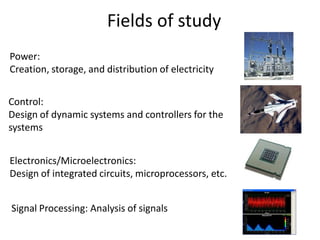
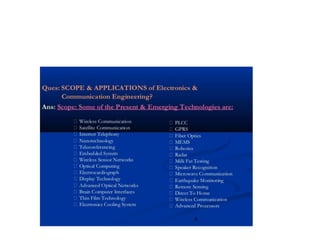
Power:
Creation, storage, and distribution of electricity
Control:
Design of dynamic systems and controllers for the
systems
Electronics/Microelectronics:
Design of integrated circuits, microprocessors, etc.
Signal Processing: Analysis of signals
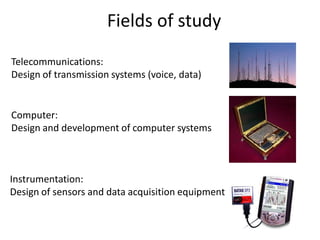
Telecommunications:
Design of transmission systems (voice, data)
Computer:
Design and development of computer systems
Instrumentation:
Design of sensors and data acquisition equipment
Fields of study
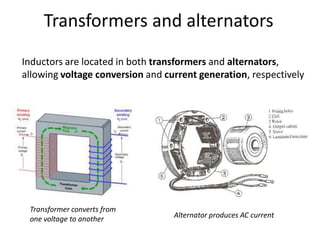
Transformers and alternators
Inductors are located in both transformers and alternators,
allowing voltage conversion and current generation, respectively
Transformer converts from
one voltage to another Alternator produces AC current
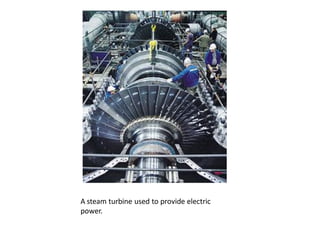
A steam turbine used to provide electric

power.
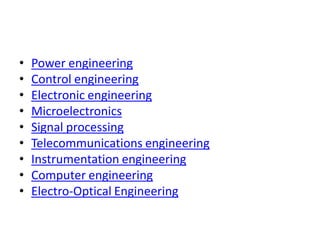
• Power engineering
• Control engineering
• Electronic engineering
• Microelectronics
• Signal processing
• Telecommunications engineering
• Instrumentation engineering
• Computer engineering
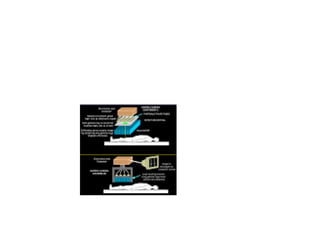
• Electro-Optical Engineering
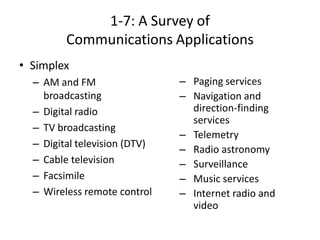
1-7: A Survey of
Communications Applications
• Simplex
– AM and FM
broadcasting
– Digital radio
– TV broadcasting
– Digital television (DTV)
– Cable television
– Facsimile
– Wireless remote control
– Paging services
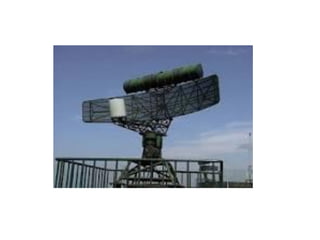
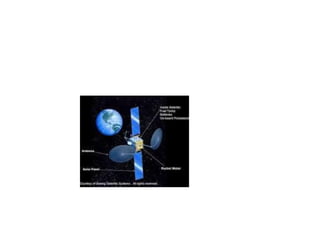
– Navigation and
direction-finding
services
– Telemetry
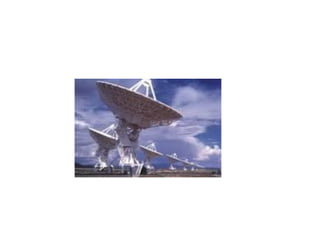
– Radio astronomy
– Surveillance
– Music services
– Internet radio and
video
13
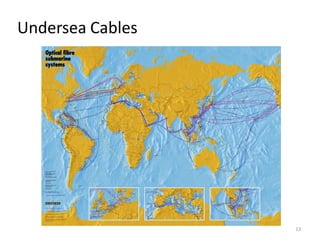
Undersea Cables
14
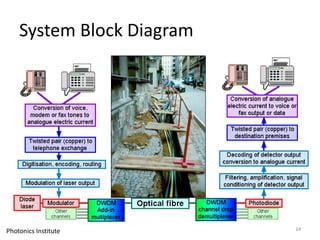
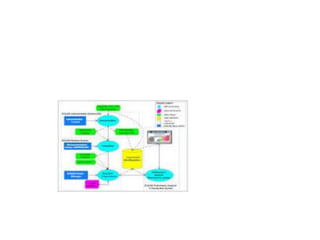
System Block Diagram
Photonics Institute
15
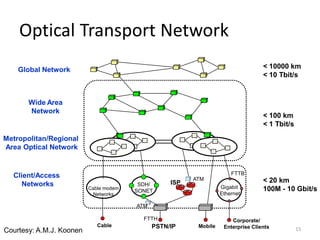
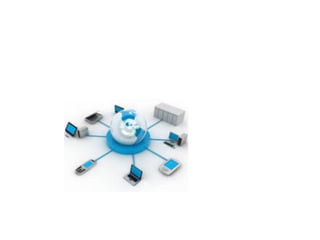
Optical Transport Network
Global Network
Wide Area
Network
Metropolitan/Regional
Area Optical Network
Corporate/
Enterprise Clients
Cable modem
Networks
Client/Access
Networks
FTTH
Mobile
SDH/
SONET
ATM
PSTN/IP
ISP
Gigabit
Ethernet
Cable
FTTB
ATM
< 10000 km
< 10 Tbit/s
< 100 km
< 1 Tbit/s
< 20 km
100M - 10 Gbit/s
Courtesy: A.M.J. Koonen
Electrical and Electronics Ebgineering _ Dr Paul K Joseph

Electrical and Electronics Ebgineering _ Dr Paul K Joseph

  • 1.
    WHAT IS ELECTRICALENGINEERING?
  • 2.
    Fields of study Power: Creation,storage, and distribution of electricity Control: Design of dynamic systems and controllers for the systems Electronics/Microelectronics: Design of integrated circuits, microprocessors, etc. Signal Processing: Analysis of signals
  • 3.
    Telecommunications: Design of transmissionsystems (voice, data) Computer: Design and development of computer systems Instrumentation: Design of sensors and data acquisition equipment Fields of study
  • 5.
    Transformers and alternators Inductorsare located in both transformers and alternators, allowing voltage conversion and current generation, respectively Transformer converts from one voltage to another Alternator produces AC current


  • 7.
    A steam turbineused to provide electric power.
  • 9.
    • Power engineering •Control engineering • Electronic engineering • Microelectronics • Signal processing • Telecommunications engineering • Instrumentation engineering • Computer engineering • Electro-Optical Engineering
  • 12.
    1-7: A Surveyof Communications Applications • Simplex – AM and FM broadcasting – Digital radio – TV broadcasting – Digital television (DTV) – Cable television – Facsimile – Wireless remote control – Paging services – Navigation and direction-finding services – Telemetry – Radio astronomy – Surveillance – Music services – Internet radio and video
  • 13.
  • 14.
  • 15.
    15 Optical Transport Network GlobalNetwork Wide Area Network Metropolitan/Regional Area Optical Network Corporate/ Enterprise Clients Cable modem Networks Client/Access Networks FTTH Mobile SDH/ SONET ATM PSTN/IP ISP Gigabit Ethernet Cable FTTB ATM < 10000 km < 10 Tbit/s < 100 km < 1 Tbit/s < 20 km 100M - 10 Gbit/s Courtesy: A.M.J. Koonen