Polytechnic Institute
Santiago Mariño
Teacher:
Cesar Velásquez.
Made by:
Pamela A. Blasco R
CI: 26.740.126
(44)
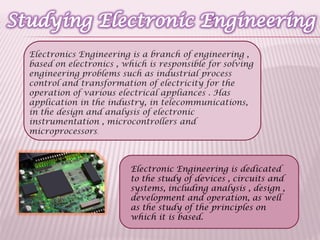
Electronic Engineering is dedicated
to the study of devices , circuits and
systems, including analysis , design ,
development and operation, as well
as the study of the principles on
which it is based.
Electronics Engineering is a branch of engineering ,
based on electronics , which is responsible for solving
engineering problems such as industrial process
control and transformation of electricity for the
operation of various electrical appliances . Has
application in the industry, in telecommunications,
in the design and analysis of electronic
instrumentation , microcontrollers and
microprocessors.
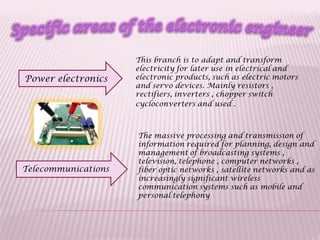
Power electronics
Telecommunications
The massive processing and transmission of
information required for planning, design and
management of broadcasting systems ,
television, telephone , computer networks ,
fiber optic networks , satellite networks and as
increasingly significant wireless
communication systems such as mobile and
personal telephony
This branch is to adapt and transform
electricity for later use in electrical and
electronic products, such as electric motors
and servo devices. Mainly resistors ,
rectifiers, inverters , chopper switch
cycloconverters and used .
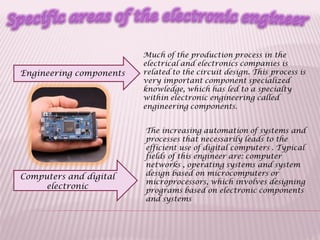
Engineering components
Computers and digital
electronic
Much of the production process in the
electrical and electronics companies is
related to the circuit design. This process is
very important component specialized
knowledge, which has led to a specialty
within electronic engineering called
engineering components.
The increasing automation of systems and
processes that necessarily leads to the
efficient use of digital computers . Typical
fields of this engineer are: computer
networks , operating systems and system
design based on microcomputers or
microprocessors, which involves designing
programs based on electronic components
and systems
Basic industry of the state.
Public companies and private
communications.
Power generation companies.
Oil Industry.
Financial institutions.

Pamela blasco electiva1

  • 1.
    Polytechnic Institute Santiago Mariño Teacher: CesarVelásquez. Made by: Pamela A. Blasco R CI: 26.740.126 (44)
  • 2.
    Electronic Engineering isdedicated to the study of devices , circuits and systems, including analysis , design , development and operation, as well as the study of the principles on which it is based. Electronics Engineering is a branch of engineering , based on electronics , which is responsible for solving engineering problems such as industrial process control and transformation of electricity for the operation of various electrical appliances . Has application in the industry, in telecommunications, in the design and analysis of electronic instrumentation , microcontrollers and microprocessors.
  • 4.
    Power electronics Telecommunications The massiveprocessing and transmission of information required for planning, design and management of broadcasting systems , television, telephone , computer networks , fiber optic networks , satellite networks and as increasingly significant wireless communication systems such as mobile and personal telephony This branch is to adapt and transform electricity for later use in electrical and electronic products, such as electric motors and servo devices. Mainly resistors , rectifiers, inverters , chopper switch cycloconverters and used .
  • 5.
    Engineering components Computers anddigital electronic Much of the production process in the electrical and electronics companies is related to the circuit design. This process is very important component specialized knowledge, which has led to a specialty within electronic engineering called engineering components. The increasing automation of systems and processes that necessarily leads to the efficient use of digital computers . Typical fields of this engineer are: computer networks , operating systems and system design based on microcomputers or microprocessors, which involves designing programs based on electronic components and systems
  • 7.
    Basic industry ofthe state. Public companies and private communications. Power generation companies. Oil Industry. Financial institutions.