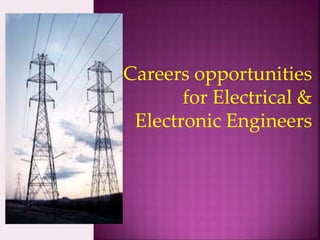
Careers opportunities
for Electrical &
Electronic Engineers
 Education's purpose is to replace an empty
mind with an open one.
By Malcolm S. Forbes
 Knowledge is the eye of desire and can
become the pilot of the soul.
By Will Durant
As on today
Electrical Power is a
Precious Commodity,
So are the Best
Electrical &
Electronic Engineers.
Electrical and Electronics
Engineering is one of the core
branches of Engineering which
started as Electrical Engineering
and has wide applications of
Electronics in controlling and
protecting the electrical
equipment's and systems.
 Contemporary electrical engineering is a
broad discipline that encompasses different
types of equipment's and systems for
 Generation,
 Transmission,
 Distribution
 And utilization of electrical energy,
 Electronic devices and circuits are involved in
 Measurement (instrumentation),
 Control and protection of electrical
Equipments and conversion systems.
 Electrical and electronics engineers are
involved in a wide variety of technology
ranging from huge global positioning
systems (which can pinpoint the location of
a moving vehicle to gigantic electrical power
generators).
 To the Tracking of the Power Generator
system for its efficiency, And Load
Distribution Pattern.
 Electrical Engineers have to combines creative
initiative, invention, practicality, and technology to
turn ideas into the tangible.
 There is tremendous employment opportunities for
EEE graduates.
 Electrical & Electronics Engineers have
multiple career opportunities and huge growth
potential.
 These industries include Electricity Boards/
Utility companies and large industries as engineers and
managers responsible for installation, maintenance,
operation of power handling equipments and systems,
design, production and testing.
 Alstom,
 Suzlon,
 GE Power,
 L&T,
 Crompton Greaves,
 Reliance industries
 Schneider electric
 BHEL,
 NTPC,
 CPRI,
 BEML,
 GAIL,
 BSNL,
 MTNL,
 National Physical Laboratories,
 Bharat Electronics Limited,
 As per Central Electricity Authority monthly review
reports,
 India has ambitious plans of adding over 180,000 MW
of generation capacity as well as associated power
systems in the 11th (2007-2012) and 12th (2012-2017)
plans and it amounts to more than the cumulative
capacity addition achieved till date.
 Over 5 lakh technical manpower need to be inducted
into the power sector during these 11th and 12th plan
periods.
 Thousands of highly skilled engineers and managers
will be required in areas such as project planning,
designing, monitoring. At 8% growth rate, India would
need an installed capacity of 220 GW by 2012 and 306
GW by 2017 (Report of Expert Committee Integrated
Energy Policy, August 2006).
 Increased focus on energy efficiency
and renewable energy shall provide an
opportunity to productively engage millions of
people in harnessing small hydro, biomass &
biofuels, solar and wind resources.
 Our country is poised to build more power
generation capacity as well as supporting
systems in the next 10 years as compared to the
previous 60 years.
 This necessitates induction of significant
specialized manpower in this sector.
 There is also a huge demand for Electrical &
Electronics Engineers in the large number of
electronics companies and Telecom service
providers.
 Growth in this career area is thus projected to be
good, based on the fact that there is ongoing
expansion in the communications industry, defense-
related electronics, and in the ever-popular arena of
consumer electronics.
 Heavy investment by manufacturers is devoted to
research and development projects in order to stay
on top of a highly competitive field with heavy
demand for products.
 Specially In:-
1. Dc Power transmission
2. Super Conductors.
3. (WPT) Wireless power transmission.
4. Electric vehicles.
 How many things in your daily life use power
– Either mains power supply, batteries,
petrol, motors or even solar power?
 There was an Electrical Engineer behind the
creation of every one of those items!
 Electrical and Electronic Engineering involves
the generation, storage and use of power.
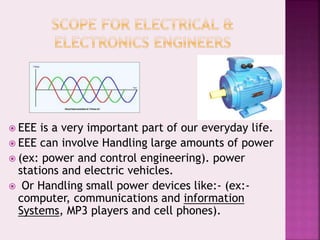
 EEE is a very important part of our everyday life.
 EEE can involve Handling large amounts of power
 (ex: power and control engineering). power
stations and electric vehicles.
 Or Handling small power devices like:- (ex:-
computer, communications and information
Systems, MP3 players and cell phones).
 Electrical and Electronic engineers are involved
in the analysis of existing Systems, Creating &
Designing new products & systems for
manufacturing Industries.
 But there is more to Electrical engineering than
just that.
 Many advances in biomedicine were pioneered
by electrical engineers, many software houses
such as Microsoft employ electrical engineers
and so do aircraft manufacturers such as Boeing
and Airbus.
 Most astronomical observatories employ
Electrical engineers to design their telescopes,
other optical instruments and do advanced signal
processing.
 There is a current trend for engineering
employers not to invest in training to bridge
the gap between the skills acquired through
post-secondary training and the additional
skills required on the job. There has been a
decline in the number of entry-level
positions that provide opportunities for
recent graduates to gain experience and
additional skills. As a result, many recent
graduates are underemployed. A decline in
training also results in skills shortages in the
industry.
 Self-employment may be a less popular
option for electrical and electronic engineers
because the reputation of a consulting
engineering firm is still sought out by
potential clients. Since firms increasingly
obtain electronic engineering expertise from
consulting and service companies, most
employment growth for these professionals
will be in these non-manufacturing firms.
 Opportunities for larger electronic and
electrical engineering companies to work on
international contracts are more likely
available in the aerospace, oil, and high
voltage power system industries. Engineers
who would like to work in international
consulting must have a good professional
reputation and be able to adapt to different
cultures. Consulting firms also recruit
consultants who have experience in project
management and are capable of leading a
project team.
 Rapid advances in technology will continue to make
it necessary for engineers in this occupational group
to keep up-to-date with new developments in their
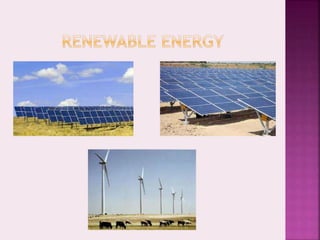
areas of specialty. The alternative and renewable
energy resources sector will have an impact on the
traditional electronic and electrical engineering
occupation. As an example, new technologies, such
as wind, geothermal, solar, tidal, biomass and other
non-traditional resources are becoming increasingly
available. These new technologies will likely have
an impact on how this occupation will evolve in the
coming year, and could result in some demand
outside of urban centres.
 Electrical engineering.
 Electrical Control Engineering.
 Electrical engineering technologist.
 Electricity distribution network technologist.
 Lighting technologist.
 Metering technologist.
 Communications technologist.
 Microwave maintenance engineer.
 Display Electrical Engineer.
 Bajaj International Pvt. Ltd.
 Bharat Heavy Electricals Ltd.
 Crompton Greaves Ltd.
 Dev Denso Power Ltd.
 Info Edge (India) Ltd.
 Penguin Engineering Ltd.
 Bristol Fire Engineering.
 Kelvin Electricals
 Seimens.
 Wipro lighting
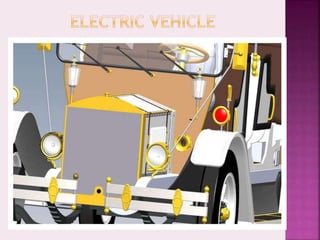
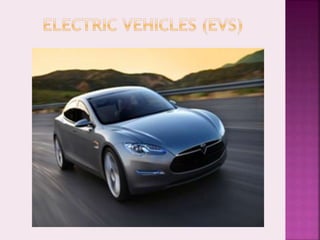
All-electric vehicles (EVs) run on
electricity only.
They are propelled by an electric
motor (or motors) powered by
rechargeable battery packs.
EVs have several advantages over
vehicles with internal combustion
engines (ICEs):
 Energy efficient. Electric vehicles convert about 59–
62% of the electrical energy from the grid to power at
the wheels—conventional gasoline vehicles only
convert about 17–21% of the energy stored in gasoline
to power at the wheels.*
 Environmentally friendly. EVs emit no tailpipe
pollutants, although the power plant producing the
electricity may emit them. Electricity from nuclear-,
hydro-, solar-, or wind-powered plants causes no air
pollutants.
 Performance benefits. Electric motors provide quiet,
smooth operation and stronger acceleration and
require less maintenance than ICEs.
 Reduce energy dependence. Electricity is a domestic
energy source.
 Driving range. Most EVs can only go about 100–
200 miles before recharging—gasoline vehicles
can go over 300 miles before refueling.
 Recharge time. Fully recharging the battery
pack can take 4 to 8 hours. Even a "quick charge"
to 80% capacity can take 30 min.
 Battery cost: The large battery packs are
expensive and may need to be replaced one or
more times.
 Bulk & weight: Battery packs are heavy and take
up considerable vehicle space.
 Battery De-grading over usage & time.
 However, researchers are working on
improved battery technologies to increase
driving range and decrease recharging time,
weight, and cost.
 Efficient use of Batery Power.
 Low power high torque Motors.
 Dynamic use of power.
 Regenerating power.
 These factors will ultimately determine the
future of EVs.
 Energy efficiency.
 Preventing Loss of energy.
 Effective utilization.
 Exploring other forms of energy.
 Power electronics.
 Electric Utility vehicle.
 Wireless power transfer.
 3D Printing.
 High voltage DC transmission .
 Battery storage & efficiency.
 Smart Grid.
 Nuclear Energy.
 Printer Motor.
 Safety requirement for people & equipment.
 Solar power.
 Wind Power.
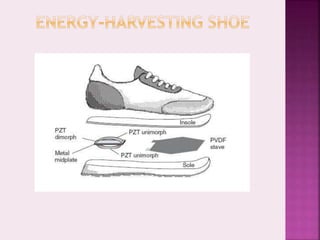
 RF Power harvesting.
 Vibration based energy harvesting.
 Thermo electric Energy harvesting
 Human body heat energy harvesting.
 Micro generators.
 Embedded C & C++.
 Embedded Java.
 Embedded Linux.
 Embedded Android.
 Win CE 6 Microsoft.
 Java ME.
 Pearl Script.
 VHDL.
 Verilog.
 Python for FPGA.
 System C
 System Verilog
Electronic Analog & digital Design.
Power Electronics.
Embedded Design.
RTOS.
FPGA Design.
Robotics.
NI Lab-view.
Matlab HDL Coder.
Comsol.
PCB Design & Drafting.
Security Systems (CCTV)
Solar Panel Installation.
 We are in a transition period between one
era to another in which the old rules do not
apply and the new ones have yet to be
invented.
 To reinforce the imagery, I described the
trapeze artist who must let go of one bar
before catching the other and for a moment
is suspended.
 For many, this described their uncomfortable
uncertainty with this future economy that is
evolving.
 Solar & IR based Thermophotovoltaic Cells
Can Generate Electricity at Night.
 Electric Vehicle.
 Unmanned Sub-stations.
 Super conductors.
 Battery Technology (Lithium Iron Polymer).
Lumen Electronics EEE Career & Employability

Lumen Electronics EEE Career & Employability

  • 1.
  • 2.
     Education's purposeis to replace an empty mind with an open one. By Malcolm S. Forbes  Knowledge is the eye of desire and can become the pilot of the soul. By Will Durant
  • 3.
    As on today ElectricalPower is a Precious Commodity, So are the Best Electrical & Electronic Engineers.
  • 4.
    Electrical and Electronics Engineeringis one of the core branches of Engineering which started as Electrical Engineering and has wide applications of Electronics in controlling and protecting the electrical equipment's and systems.
  • 5.
     Contemporary electricalengineering is a broad discipline that encompasses different types of equipment's and systems for  Generation,  Transmission,  Distribution  And utilization of electrical energy,  Electronic devices and circuits are involved in  Measurement (instrumentation),  Control and protection of electrical Equipments and conversion systems.
  • 6.
     Electrical andelectronics engineers are involved in a wide variety of technology ranging from huge global positioning systems (which can pinpoint the location of a moving vehicle to gigantic electrical power generators).  To the Tracking of the Power Generator system for its efficiency, And Load Distribution Pattern.
  • 7.
     Electrical Engineershave to combines creative initiative, invention, practicality, and technology to turn ideas into the tangible.  There is tremendous employment opportunities for EEE graduates.  Electrical & Electronics Engineers have multiple career opportunities and huge growth potential.  These industries include Electricity Boards/ Utility companies and large industries as engineers and managers responsible for installation, maintenance, operation of power handling equipments and systems, design, production and testing.
  • 8.
     Alstom,  Suzlon, GE Power,  L&T,  Crompton Greaves,  Reliance industries  Schneider electric
  • 9.
     BHEL,  NTPC, CPRI,  BEML,  GAIL,  BSNL,  MTNL,  National Physical Laboratories,  Bharat Electronics Limited,
  • 11.
     As perCentral Electricity Authority monthly review reports,  India has ambitious plans of adding over 180,000 MW of generation capacity as well as associated power systems in the 11th (2007-2012) and 12th (2012-2017) plans and it amounts to more than the cumulative capacity addition achieved till date.  Over 5 lakh technical manpower need to be inducted into the power sector during these 11th and 12th plan periods.  Thousands of highly skilled engineers and managers will be required in areas such as project planning, designing, monitoring. At 8% growth rate, India would need an installed capacity of 220 GW by 2012 and 306 GW by 2017 (Report of Expert Committee Integrated Energy Policy, August 2006).
  • 12.
     Increased focuson energy efficiency and renewable energy shall provide an opportunity to productively engage millions of people in harnessing small hydro, biomass & biofuels, solar and wind resources.  Our country is poised to build more power generation capacity as well as supporting systems in the next 10 years as compared to the previous 60 years.  This necessitates induction of significant specialized manpower in this sector.  There is also a huge demand for Electrical & Electronics Engineers in the large number of electronics companies and Telecom service providers.
  • 13.
     Growth inthis career area is thus projected to be good, based on the fact that there is ongoing expansion in the communications industry, defense- related electronics, and in the ever-popular arena of consumer electronics.  Heavy investment by manufacturers is devoted to research and development projects in order to stay on top of a highly competitive field with heavy demand for products.  Specially In:- 1. Dc Power transmission 2. Super Conductors. 3. (WPT) Wireless power transmission. 4. Electric vehicles.
  • 14.
     How manythings in your daily life use power – Either mains power supply, batteries, petrol, motors or even solar power?  There was an Electrical Engineer behind the creation of every one of those items!  Electrical and Electronic Engineering involves the generation, storage and use of power.
  • 15.
     EEE isa very important part of our everyday life.  EEE can involve Handling large amounts of power  (ex: power and control engineering). power stations and electric vehicles.  Or Handling small power devices like:- (ex:- computer, communications and information Systems, MP3 players and cell phones).
  • 16.
     Electrical andElectronic engineers are involved in the analysis of existing Systems, Creating & Designing new products & systems for manufacturing Industries.  But there is more to Electrical engineering than just that.  Many advances in biomedicine were pioneered by electrical engineers, many software houses such as Microsoft employ electrical engineers and so do aircraft manufacturers such as Boeing and Airbus.  Most astronomical observatories employ Electrical engineers to design their telescopes, other optical instruments and do advanced signal processing.
  • 17.
     There isa current trend for engineering employers not to invest in training to bridge the gap between the skills acquired through post-secondary training and the additional skills required on the job. There has been a decline in the number of entry-level positions that provide opportunities for recent graduates to gain experience and additional skills. As a result, many recent graduates are underemployed. A decline in training also results in skills shortages in the industry.
  • 18.
     Self-employment maybe a less popular option for electrical and electronic engineers because the reputation of a consulting engineering firm is still sought out by potential clients. Since firms increasingly obtain electronic engineering expertise from consulting and service companies, most employment growth for these professionals will be in these non-manufacturing firms.
  • 19.
     Opportunities forlarger electronic and electrical engineering companies to work on international contracts are more likely available in the aerospace, oil, and high voltage power system industries. Engineers who would like to work in international consulting must have a good professional reputation and be able to adapt to different cultures. Consulting firms also recruit consultants who have experience in project management and are capable of leading a project team.
  • 20.
     Rapid advancesin technology will continue to make it necessary for engineers in this occupational group to keep up-to-date with new developments in their areas of specialty. The alternative and renewable energy resources sector will have an impact on the traditional electronic and electrical engineering occupation. As an example, new technologies, such as wind, geothermal, solar, tidal, biomass and other non-traditional resources are becoming increasingly available. These new technologies will likely have an impact on how this occupation will evolve in the coming year, and could result in some demand outside of urban centres.
  • 22.
     Electrical engineering. Electrical Control Engineering.  Electrical engineering technologist.  Electricity distribution network technologist.  Lighting technologist.  Metering technologist.  Communications technologist.  Microwave maintenance engineer.  Display Electrical Engineer.
  • 23.
     Bajaj InternationalPvt. Ltd.  Bharat Heavy Electricals Ltd.  Crompton Greaves Ltd.  Dev Denso Power Ltd.  Info Edge (India) Ltd.  Penguin Engineering Ltd.  Bristol Fire Engineering.  Kelvin Electricals  Seimens.  Wipro lighting
  • 25.
    All-electric vehicles (EVs)run on electricity only. They are propelled by an electric motor (or motors) powered by rechargeable battery packs. EVs have several advantages over vehicles with internal combustion engines (ICEs):
  • 26.
     Energy efficient.Electric vehicles convert about 59– 62% of the electrical energy from the grid to power at the wheels—conventional gasoline vehicles only convert about 17–21% of the energy stored in gasoline to power at the wheels.*  Environmentally friendly. EVs emit no tailpipe pollutants, although the power plant producing the electricity may emit them. Electricity from nuclear-, hydro-, solar-, or wind-powered plants causes no air pollutants.  Performance benefits. Electric motors provide quiet, smooth operation and stronger acceleration and require less maintenance than ICEs.  Reduce energy dependence. Electricity is a domestic energy source.
  • 27.
     Driving range.Most EVs can only go about 100– 200 miles before recharging—gasoline vehicles can go over 300 miles before refueling.  Recharge time. Fully recharging the battery pack can take 4 to 8 hours. Even a "quick charge" to 80% capacity can take 30 min.  Battery cost: The large battery packs are expensive and may need to be replaced one or more times.  Bulk & weight: Battery packs are heavy and take up considerable vehicle space.  Battery De-grading over usage & time.
  • 28.
     However, researchersare working on improved battery technologies to increase driving range and decrease recharging time, weight, and cost.  Efficient use of Batery Power.  Low power high torque Motors.  Dynamic use of power.  Regenerating power.  These factors will ultimately determine the future of EVs.
  • 30.
     Energy efficiency. Preventing Loss of energy.  Effective utilization.  Exploring other forms of energy.  Power electronics.  Electric Utility vehicle.  Wireless power transfer.  3D Printing.  High voltage DC transmission .  Battery storage & efficiency.  Smart Grid.  Nuclear Energy.  Printer Motor.  Safety requirement for people & equipment.
  • 31.
     Solar power. Wind Power.  RF Power harvesting.  Vibration based energy harvesting.  Thermo electric Energy harvesting  Human body heat energy harvesting.  Micro generators.
  • 33.
     Embedded C& C++.  Embedded Java.  Embedded Linux.  Embedded Android.  Win CE 6 Microsoft.  Java ME.  Pearl Script.  VHDL.  Verilog.  Python for FPGA.  System C  System Verilog
  • 34.
    Electronic Analog &digital Design. Power Electronics. Embedded Design. RTOS. FPGA Design. Robotics. NI Lab-view. Matlab HDL Coder. Comsol. PCB Design & Drafting. Security Systems (CCTV) Solar Panel Installation.
  • 35.
     We arein a transition period between one era to another in which the old rules do not apply and the new ones have yet to be invented.  To reinforce the imagery, I described the trapeze artist who must let go of one bar before catching the other and for a moment is suspended.  For many, this described their uncomfortable uncertainty with this future economy that is evolving.
  • 36.
     Solar &IR based Thermophotovoltaic Cells Can Generate Electricity at Night.  Electric Vehicle.  Unmanned Sub-stations.  Super conductors.  Battery Technology (Lithium Iron Polymer).