
Effective Training Delivery Olu segun Akintola   October, 2009
Helping People Master Technology Getting a solid return on technology  Investments takes more than good software. You need users who can Understand it  ! Embrace it  !! & Master it  !!!
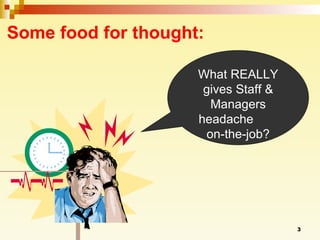
Some food for thought: What REALLY gives Staff & Managers headache  on-the-job?
C H A N G E ‘“ Tell me, and I will forget Show me, and I may remember Involve me, and I will understand ” –  Confucius, 450 B.C..’
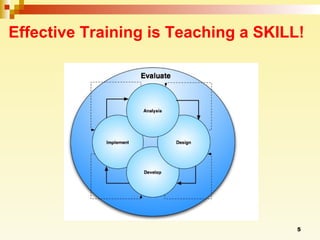
Effective Training is Teaching a SKILL!
Specifically Delivery Plan based on inter-dept collaboration  Training Needs Analysis (TNA) Develop Delivery by Classification IT Skill Levels ( New ,  Experienced ) Modules ( Admin , Inpatients , Outpatients ) Role / Function Monitoring Implementation on  Time  &  Budget Evaluation/Feedback Support
Project Implementation The Team – Human + IT resources The Process - Methodology The Delivery – End Result
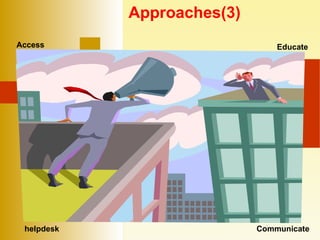
Access Educate helpdesk Communicate Approaches(3)
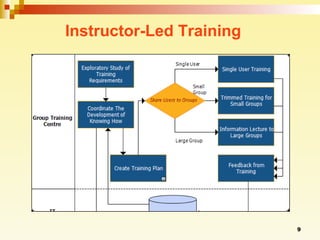
Instructor-Led Training
Scheduling Using Integrated  Learning Management System ( LMS ) "a software application that automates the administration, documentation, tracking, and reporting of training events"
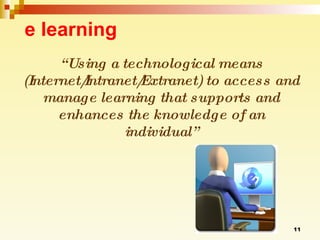
e learning “ Using a technological means (Internet/Intranet/Extranet) to access and manage learning that supports and enhances the knowledge of an individual”
The case for e-learning No more expensive travel costs Immediate availability  Self-paced learning Increased confidence  Instructional quality Consistency  Instant feedback and scores Instant and less costly updates
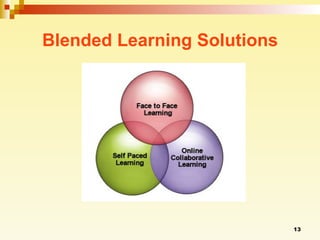
Blended Learning Solutions
Communication Communication  is central to any project and there needs to be clear communication about the reasons and rationale behind it, benefits expected and plans for its implementation.  Communications  are required to keep awareness and commitment high, maintain consistent messages and ensure expectations are managed in line with what is delivered. Communication  channels should be established to ensure that stakeholders’ expectations of the project can be managed and maintained  An ongoing two-way interface between the project team and stakeholders is essential.
Obstacles to learning Human Organizational Cultural Resistance Instructional Technological Bandwidth Interactivity Technology support Development costs
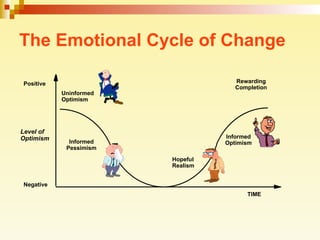
The Emotional Cycle of Change Level of  Optimism Informed Optimism Rewarding Completion Uninformed Optimism Negative Positive Informed Pessimism Hopeful Realism TIME
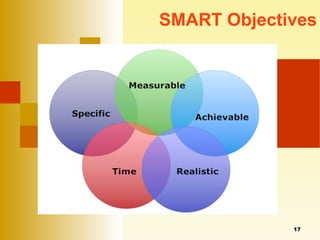
SMART Objectives
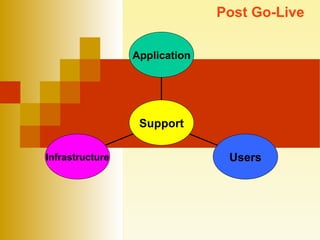
Post Go-Live Infrastructure Users Application Support
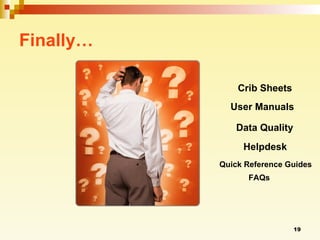
Finally… Helpdesk Crib Sheets Data Quality Quick Reference Guides User Manuals FAQs

Effective Training Delivery

  • 1.
    EffectiveTraining Delivery Olu segun Akintola October, 2009
  • 2.
    Helping People MasterTechnology Getting a solid return on technology Investments takes more than good software. You need users who can Understand it ! Embrace it !! & Master it !!!
  • 3.
    Some food forthought: What REALLY gives Staff & Managers headache on-the-job?
  • 4.
    C H AN G E ‘“ Tell me, and I will forget Show me, and I may remember Involve me, and I will understand ” – Confucius, 450 B.C..’
  • 5.
    Effective Training isTeaching a SKILL!
  • 6.
    Specifically Delivery Planbased on inter-dept collaboration Training Needs Analysis (TNA) Develop Delivery by Classification IT Skill Levels ( New , Experienced ) Modules ( Admin , Inpatients , Outpatients ) Role / Function Monitoring Implementation on Time & Budget Evaluation/Feedback Support
  • 7.
    Project Implementation TheTeam – Human + IT resources The Process - Methodology The Delivery – End Result
  • 8.
    Access Educate helpdeskCommunicate Approaches(3)
  • 9.
  • 10.
    Scheduling Using Integrated Learning Management System ( LMS ) "a software application that automates the administration, documentation, tracking, and reporting of training events"
  • 11.
    e learning “Using a technological means (Internet/Intranet/Extranet) to access and manage learning that supports and enhances the knowledge of an individual”
  • 12.
    The case fore-learning No more expensive travel costs Immediate availability Self-paced learning Increased confidence Instructional quality Consistency Instant feedback and scores Instant and less costly updates
  • 13.
  • 14.
    Communication Communication is central to any project and there needs to be clear communication about the reasons and rationale behind it, benefits expected and plans for its implementation. Communications are required to keep awareness and commitment high, maintain consistent messages and ensure expectations are managed in line with what is delivered. Communication channels should be established to ensure that stakeholders’ expectations of the project can be managed and maintained An ongoing two-way interface between the project team and stakeholders is essential.
  • 15.
    Obstacles to learningHuman Organizational Cultural Resistance Instructional Technological Bandwidth Interactivity Technology support Development costs
  • 16.
    The Emotional Cycleof Change Level of Optimism Informed Optimism Rewarding Completion Uninformed Optimism Negative Positive Informed Pessimism Hopeful Realism TIME
  • 17.
  • 18.
    Post Go-Live InfrastructureUsers Application Support
  • 19.
    Finally… Helpdesk CribSheets Data Quality Quick Reference Guides User Manuals FAQs

Editor's Notes

  • #2 A strategy for an effective IT training delivery
  • #3 Learning is a life long experience.
  • #4 People both great and small will burn the midnight candle to achieve desired success – move up the ladder.
  • #5 Skill Identification, Doing something about it thru learning
  • #6 Training is teaching a skill
  • #7 Liaising with the IT department to establish the most efficient and effective way of carrying out training using existing computer systems i.e NO NEED TO RE-INVENT THE WHEELS
  • #8 Project Implementation Strategy
  • #9 Access, Education, Helpdesk, Communication
  • #10 The importance of Human Capital Development cannot be undermined in organisational development
  • #11 Skill Identification, Doing something about it thru learning
  • #12 Internet/Intranet/Extranet/CDs/Videos etc
  • #13 E-learning cuts across all sectors i.e Information Technology, Leadership & Management, Social Care etc
  • #14 A working combination
  • #15 It’s multi-dymensional
  • #16 Varied obstacles (Human & Technological)
  • #17 Emotions and change
  • #18 SMART objectives
  • #20 Questions and Conclusion