To a Training Session on
Effective Report Writing
2
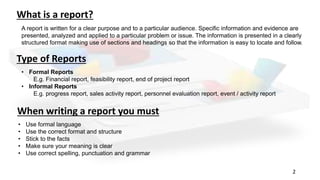
What is a report?
A report is written for a clear purpose and to a particular audience. Specific information and evidence are
presented, analyzed and applied to a particular problem or issue. The information is presented in a clearly
structured format making use of sections and headings so that the information is easy to locate and follow.
Type of Reports
• Formal Reports
E.g. Financial report, feasibility report, end of project report
• Informal Reports
E.g. progress report, sales activity report, personnel evaluation report, event / activity report
When writing a report you must
• Use formal language
• Use the correct format and structure
• Stick to the facts
• Make sure your meaning is clear
• Use correct spelling, punctuation and grammar
3
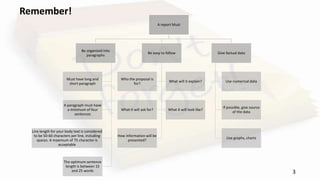
Remember!
A report Must
Be organized into
paragraphs
Must have long and
short paragraph
A paragraph must have
a minimum of four
sentences
Line length for your body text is considered
to be 50-60 characters per line, including
spaces. A maximum of 75 character is
acceptable
The optimum sentence
length is between 15
and 25 words
Be easy to follow
Who the proposal is
for?
What will it explain?
What it will ask for? What it will look like?
How information will be
presented?
Give factual data
Use numerical data
If possible, give source
of the data
Use graphs, charts
4
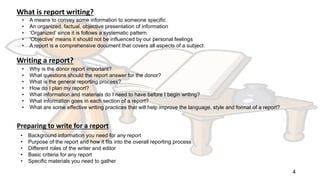
What is report writing?
• A means to convey some information to someone specific
• An organized, factual, objective presentation of information
• ‘Organized’ since it is follows a systematic pattern
• ‘Objective’ means it should not be influenced by our personal feelings
• A report is a comprehensive document that covers all aspects of a subject
Writing a report?
• Why is the donor report important?
• What questions should the report answer for the donor?
• What is the general reporting process?
• How do I plan my report?
• What information and materials do I need to have before I begin writing?
• What information goes in each section of a report?
• What are some effective writing practices that will help improve the language, style and format of a report?
Preparing to write for a report
• Background information you need for any report
• Purpose of the report and how it fits into the overall reporting process
• Different roles of the writer and editor
• Basic criteria for any report
• Specific materials you need to gather
5
Planning the Report
• Purpose
• Audience
• Format
• Deadline
• Report Information Checklist
• Report Template
6
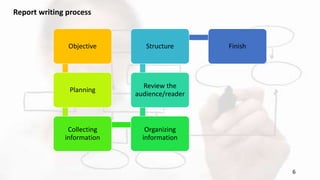
Report writing process
Objective
Planning
Collecting
information
Organizing
information
Review the
audience/reader
Structure Finish
7
The content
• Clear and easily understandable
• Detailed and specific
• Accurate
• Demonstrating Impact
• Effects
• Effectiveness
• Sustainability
8
Sections of a report
• Introduction
• Project Activities and Objectives
• Successes and Key Results
• Challenges and Lessons Learned
• Human Interest Story
• Photos
• Expenditure Report
• Conclusion
9
Effective report writing practices
• Be consistent
• Be as clear and specific as possible
• Use simple language
• Limit yourself to three commas per sentence
• Use active voice
• Use bullet styles
10
Review your report
Try to look at the report with “fresh eyes,” that is, as if you are the donor
and have never seen the report before. Some key questions to ask you
are:
Is all the information included here?
Is all the information clear and accurate?
Did I show the impact of the project?
Does the document reflect the clear tone, language, format and style?
If you answer “yes” to all these questions, it is most likely that you have
created an effective report that will provide the donor with a
comprehensive account of the project and its progress
11

Effective Report Writing

  • 1.
    To a TrainingSession on Effective Report Writing
  • 2.
    2 What is areport? A report is written for a clear purpose and to a particular audience. Specific information and evidence are presented, analyzed and applied to a particular problem or issue. The information is presented in a clearly structured format making use of sections and headings so that the information is easy to locate and follow. Type of Reports • Formal Reports E.g. Financial report, feasibility report, end of project report • Informal Reports E.g. progress report, sales activity report, personnel evaluation report, event / activity report When writing a report you must • Use formal language • Use the correct format and structure • Stick to the facts • Make sure your meaning is clear • Use correct spelling, punctuation and grammar
  • 3.
    3 Remember! A report Must Beorganized into paragraphs Must have long and short paragraph A paragraph must have a minimum of four sentences Line length for your body text is considered to be 50-60 characters per line, including spaces. A maximum of 75 character is acceptable The optimum sentence length is between 15 and 25 words Be easy to follow Who the proposal is for? What will it explain? What it will ask for? What it will look like? How information will be presented? Give factual data Use numerical data If possible, give source of the data Use graphs, charts
  • 4.
    4 What is reportwriting? • A means to convey some information to someone specific • An organized, factual, objective presentation of information • ‘Organized’ since it is follows a systematic pattern • ‘Objective’ means it should not be influenced by our personal feelings • A report is a comprehensive document that covers all aspects of a subject Writing a report? • Why is the donor report important? • What questions should the report answer for the donor? • What is the general reporting process? • How do I plan my report? • What information and materials do I need to have before I begin writing? • What information goes in each section of a report? • What are some effective writing practices that will help improve the language, style and format of a report? Preparing to write for a report • Background information you need for any report • Purpose of the report and how it fits into the overall reporting process • Different roles of the writer and editor • Basic criteria for any report • Specific materials you need to gather
  • 5.
    5 Planning the Report •Purpose • Audience • Format • Deadline • Report Information Checklist • Report Template
  • 6.
  • 7.
    7 The content • Clearand easily understandable • Detailed and specific • Accurate • Demonstrating Impact • Effects • Effectiveness • Sustainability
  • 8.
    8 Sections of areport • Introduction • Project Activities and Objectives • Successes and Key Results • Challenges and Lessons Learned • Human Interest Story • Photos • Expenditure Report • Conclusion
  • 9.
    9 Effective report writingpractices • Be consistent • Be as clear and specific as possible • Use simple language • Limit yourself to three commas per sentence • Use active voice • Use bullet styles
  • 10.
    10 Review your report Tryto look at the report with “fresh eyes,” that is, as if you are the donor and have never seen the report before. Some key questions to ask you are: Is all the information included here? Is all the information clear and accurate? Did I show the impact of the project? Does the document reflect the clear tone, language, format and style? If you answer “yes” to all these questions, it is most likely that you have created an effective report that will provide the donor with a comprehensive account of the project and its progress
  • 11.