

Introduction to Presentation
Skills
Prepare by:-
Ankita Khant
130210116025
Guided by:-
ChetanTrivedi
Government Engineering Collage , BVN.
Agenda
• Preparation and Practice
• Tone and Body Language
• Perfect PowerPoint
• Flipcharts and Whiteboards
• Dealing with questions and interruptions
• Facing your fears
• Where to go next
What makes a good presentation?
• Divide into groups
• What makes a good presentation?
• Some things to think about
- presenter
- resources
- structure
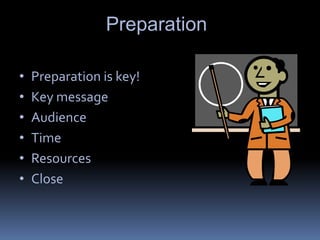
Preparation
• Preparation is key!
• Key message
• Audience
• Time
• Resources
• Close
Structuring your Presentation
• Three section structure:
introduction
information
recap.
• Prepare everything you need in advance
• Check on the day that everything works
Practice
• Practice in front of people
• In the venue
• Fix things that don’t work
• Timing
• Gets you used to being in front of an
audience.
Giving the Presentation
• Only a small proportion comes from what you
say
• Posture.
• Tone of voice.
• Don’t rush!
Warm up!
• Helps you to relax
• Helps you to be heard
• Helps you to sound more confident.
Giving the Presentation, cont:
• Clothing: comfortable, appropriate
• Maintain eye contact
• Use notes if you need them
• Think about when to use handouts
Public Speaking Tips
• Breathe deeply
• Take your time
• Test the microphone
• Smile!
PowerPoint tips
• Look at the audience, not the slides
• Don’t overcrowd
• Pay attention to colour and layout
• Print out slides
• Test beforehand
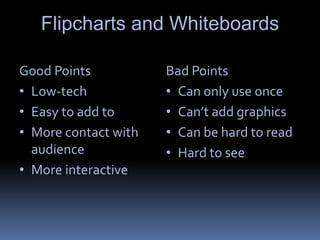
Flipcharts and Whiteboards
Good Points
• Low-tech
• Easy to add to
• More contact with
audience
• More interactive
Bad Points
• Can only use once
• Can’t add graphics
• Can be hard to read
• Hard to see
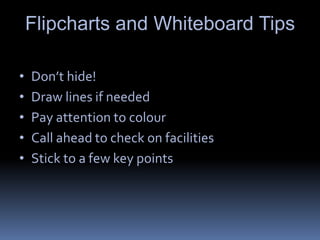
Flipcharts and Whiteboard Tips
• Don’t hide!
• Draw lines if needed
• Pay attention to colour
• Call ahead to check on facilities
• Stick to a few key points
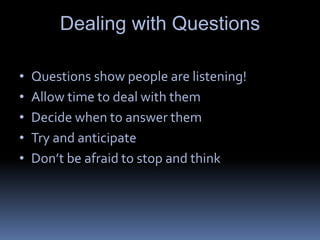
Dealing with Questions
• Questions show people are listening!
• Allow time to deal with them
• Decide when to answer them
• Try and anticipate
• Don’t be afraid to stop and think
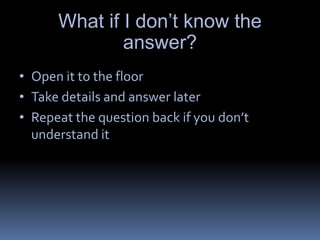
What if I don’t know the
answer?
• Open it to the floor
• Take details and answer later
• Repeat the question back if you don’t
understand it
Facing your Fears
• Write your fears on a post-it
• Stick them up
• Find ways to face them in the group
Any Questions?
Thank you !!

Effective presentation skill

  • 1.
    Introduction to Presentation Skills Prepareby:- Ankita Khant 130210116025 Guided by:- ChetanTrivedi Government Engineering Collage , BVN.
  • 2.
    Agenda • Preparation andPractice • Tone and Body Language • Perfect PowerPoint • Flipcharts and Whiteboards • Dealing with questions and interruptions • Facing your fears • Where to go next
  • 3.
    What makes agood presentation? • Divide into groups • What makes a good presentation? • Some things to think about - presenter - resources - structure
  • 4.
    Preparation • Preparation iskey! • Key message • Audience • Time • Resources • Close
  • 5.
    Structuring your Presentation •Three section structure: introduction information recap. • Prepare everything you need in advance • Check on the day that everything works
  • 6.
    Practice • Practice infront of people • In the venue • Fix things that don’t work • Timing • Gets you used to being in front of an audience.
  • 7.
    Giving the Presentation •Only a small proportion comes from what you say • Posture. • Tone of voice. • Don’t rush!
  • 8.
    Warm up! • Helpsyou to relax • Helps you to be heard • Helps you to sound more confident.
  • 9.
    Giving the Presentation,cont: • Clothing: comfortable, appropriate • Maintain eye contact • Use notes if you need them • Think about when to use handouts
  • 10.
    Public Speaking Tips •Breathe deeply • Take your time • Test the microphone • Smile!
  • 11.
    PowerPoint tips • Lookat the audience, not the slides • Don’t overcrowd • Pay attention to colour and layout • Print out slides • Test beforehand
  • 12.
    Flipcharts and Whiteboards GoodPoints • Low-tech • Easy to add to • More contact with audience • More interactive Bad Points • Can only use once • Can’t add graphics • Can be hard to read • Hard to see
  • 13.
    Flipcharts and WhiteboardTips • Don’t hide! • Draw lines if needed • Pay attention to colour • Call ahead to check on facilities • Stick to a few key points
  • 14.
    Dealing with Questions •Questions show people are listening! • Allow time to deal with them • Decide when to answer them • Try and anticipate • Don’t be afraid to stop and think
  • 15.
    What if Idon’t know the answer? • Open it to the floor • Take details and answer later • Repeat the question back if you don’t understand it
  • 16.
    Facing your Fears •Write your fears on a post-it • Stick them up • Find ways to face them in the group
  • 17.
  • 18.