NATIONAL CURRICULUM
FRAMEWORK FOR
FOUNDATIONAL STAGE
CHAPTER - 6
ASSESSMENT FOR FURTHERING LEARNING
CHAPTER - 7
ORGANIZING TIME
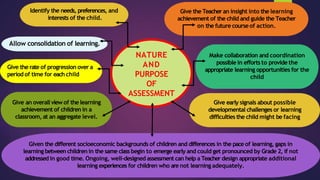
NATURE
AND
PURPOSE
OF
ASSESSMENT
Give the Teacheran insight into the learning
achievement of the child and guide the Teacher
on the future course of action.
Make collaboration and coordination
possible in efforts to provide the
appropriate learning opportunities for the
child
Give an overall view of the learning
achievement of children in a
classroom, at an aggregate level.
Given the different socioeconomic backgrounds of children and differences in the pace of learning, gaps in
learning between children in the same class begin to emerge early and could get pronounced by Grade 2, if not
addressed in good time. Ongoing, well-designed assessment can help a Teacher design appropriate additional
learning experiences for children who are not learning adequately.
Allow consolidation of learning.
Identify the needs, preferences, and
interests of the child.
Give the rate of progression over a
period of time for each child
Give early signals about possible
developmental challenges or learning
difficulties the child might be facing
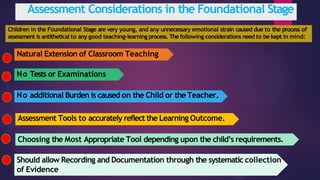
Assessment Considerations in the Foundational Stage
Children in the Foundational Stage are very young, and any unnecessary emotional strain caused due to the process of
assessment is antithetical to any good teaching-learning process. The following considerations need to be kept in mind:
Natural Extension of Classroom Teaching
No Tests or Examinations
No additional Burden is caused on the Child or the Teacher.
Assessment Tools to accurately reflect the Learning Outcome.
Choosing the Most Appropriate Tool depending upon the child’s requirements.
Should allow Recording and Documentation through the systematic collection
of Evidence
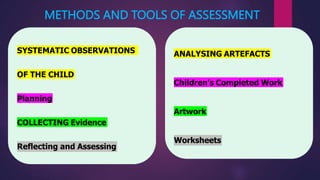
METHODS AND TOOLS OF ASSESSMENT
SYSTEMATIC OBSERVATIONS
OF THE CHILD
Planning
COLLECTING Evidence
Reflecting and Assessing
ANALYSING ARTEFACTS
Children’s Completed Work
Artwork
Worksheets
TOOLS FOR RECORDING OBSERVATIONS
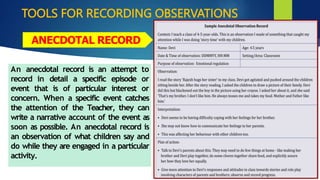
An anecdotal record is an attempt to
record in detail a specific episode or
event that is of particular interest or
concern. When a specific event catches
the attention of the Teacher, they can
write a narrative account of the event as
soon as possible. An anecdotal record is
an observation of what children say and
do while they are engaged in a particular
activity.
ANECDOTAL RECORD
TOOLS FOR RECORDING OBSERVATIONS
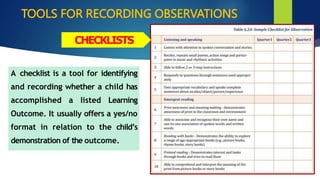
CHECKLISTS
A checklist is a tool for identifying
and recording whether a child has
accomplished a listed Learning
Outcome. It usually offers a yes/no
format in relation to the child’s
demonstration of the outcome.
TOOLS FOR RECORDING OBSERVATIONS
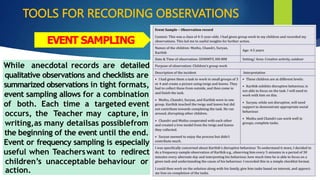
While anecdotal records are detailed
qualitative observations and checklists are
summarized observations in tight formats,
event sampling allows for a combination
of both. Each time a targeted event
occurs, the Teacher may capture, in
writing,as many detailsas possiblefrom
the beginning of the event until the end.
Event or frequency sampling is especially
useful when Teacherswant to redirect
children’s unacceptable behaviour or
action.
EVENT SAMPLING
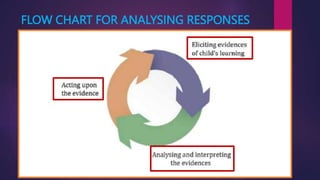
FLOW CHART FOR ANALYSING RESPONSES
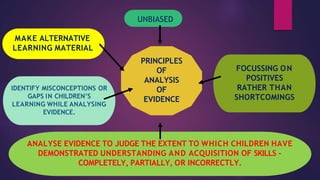
PRINCIPLES
OF
ANALYSIS
OF
EVIDENCE
UNBIASED
MAKE ALTERNATIVE
LEARNING MATERIAL
IDENTIFY MISCONCEPTIONS OR
GAPS IN CHILDREN’S
LEARNING WHILE ANALYSING
EVIDENCE.
FOCUSSING ON
POSITIVES
RATHER THAN
SHORTCOMINGS
ANALYSE EVIDENCE TO JUDGE THE EXTENT TO WHICH CHILDREN HAVE
DEMONSTRATED UNDERSTANDING AND ACQUISITION OF SKILLS -
COMPLETELY, PARTIALLY, OR INCORRECTLY.
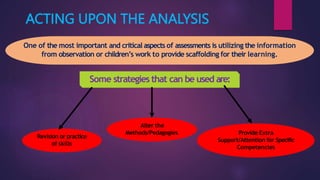
Provide Extra
Support/Attention for Specific
Competencies
ACTING UPON THE ANALYSIS
One of the most important and critical aspects of assessments is utilizing the information
from observation or children’s work to provide scaffolding for their learning.
Some strategies that can be used are:
Revision or practice
of skills
Alter the
Methods/Pedagogies
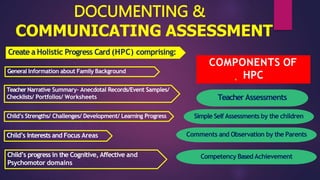
DOCUMENTING &
COMMUNICATING ASSESSMENT
Create a Holistic Progress Card (HPC) comprising:
General Information about Family Background
Teacher Narrative Summary- Anecdotal Records/Event Samples/
Checklists/ Portfolios/ Worksheets
Child’s Strengths/ Challenges/ Development/ Learning Progress
Child’s Interests and Focus Areas
COMPONENTS OF
HPC
TeacherAssessments
Simple Self Assessments by the children
Comments and Observation by the Parents
Child’s progress in the Cognitive, Affective and
Psychomotor domains
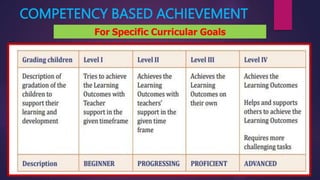
Competency Based Achievement
COMPETENCY BASED ACHIEVEMENT
For Specific Curricular Goals
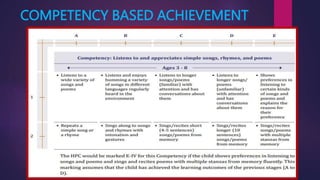
COMPETENCY BASED ACHIEVEMENT
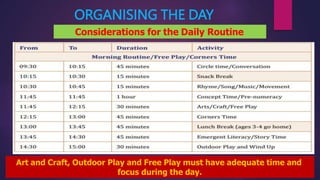
ORGANISING THE DAY
Considerations for the Daily Routine
Art and Craft, Outdoor Play and Free Play must have adequate time and
focus during the day.

education NCF-FOUNDATIONAL-STAGE-PPT.pptx

  • 1.
    NATIONAL CURRICULUM FRAMEWORK FOR FOUNDATIONALSTAGE CHAPTER - 6 ASSESSMENT FOR FURTHERING LEARNING CHAPTER - 7 ORGANIZING TIME
  • 2.
    NATURE AND PURPOSE OF ASSESSMENT Give the Teacheraninsight into the learning achievement of the child and guide the Teacher on the future course of action. Make collaboration and coordination possible in efforts to provide the appropriate learning opportunities for the child Give an overall view of the learning achievement of children in a classroom, at an aggregate level. Given the different socioeconomic backgrounds of children and differences in the pace of learning, gaps in learning between children in the same class begin to emerge early and could get pronounced by Grade 2, if not addressed in good time. Ongoing, well-designed assessment can help a Teacher design appropriate additional learning experiences for children who are not learning adequately. Allow consolidation of learning. Identify the needs, preferences, and interests of the child. Give the rate of progression over a period of time for each child Give early signals about possible developmental challenges or learning difficulties the child might be facing
  • 3.
    Assessment Considerations inthe Foundational Stage Children in the Foundational Stage are very young, and any unnecessary emotional strain caused due to the process of assessment is antithetical to any good teaching-learning process. The following considerations need to be kept in mind: Natural Extension of Classroom Teaching No Tests or Examinations No additional Burden is caused on the Child or the Teacher. Assessment Tools to accurately reflect the Learning Outcome. Choosing the Most Appropriate Tool depending upon the child’s requirements. Should allow Recording and Documentation through the systematic collection of Evidence
  • 4.
    METHODS AND TOOLSOF ASSESSMENT SYSTEMATIC OBSERVATIONS OF THE CHILD Planning COLLECTING Evidence Reflecting and Assessing ANALYSING ARTEFACTS Children’s Completed Work Artwork Worksheets
  • 5.
    TOOLS FOR RECORDINGOBSERVATIONS An anecdotal record is an attempt to record in detail a specific episode or event that is of particular interest or concern. When a specific event catches the attention of the Teacher, they can write a narrative account of the event as soon as possible. An anecdotal record is an observation of what children say and do while they are engaged in a particular activity. ANECDOTAL RECORD
  • 6.
    TOOLS FOR RECORDINGOBSERVATIONS CHECKLISTS A checklist is a tool for identifying and recording whether a child has accomplished a listed Learning Outcome. It usually offers a yes/no format in relation to the child’s demonstration of the outcome.
  • 7.
    TOOLS FOR RECORDINGOBSERVATIONS While anecdotal records are detailed qualitative observations and checklists are summarized observations in tight formats, event sampling allows for a combination of both. Each time a targeted event occurs, the Teacher may capture, in writing,as many detailsas possiblefrom the beginning of the event until the end. Event or frequency sampling is especially useful when Teacherswant to redirect children’s unacceptable behaviour or action. EVENT SAMPLING
  • 8.
    FLOW CHART FORANALYSING RESPONSES
  • 9.
    PRINCIPLES OF ANALYSIS OF EVIDENCE UNBIASED MAKE ALTERNATIVE LEARNING MATERIAL IDENTIFYMISCONCEPTIONS OR GAPS IN CHILDREN’S LEARNING WHILE ANALYSING EVIDENCE. FOCUSSING ON POSITIVES RATHER THAN SHORTCOMINGS ANALYSE EVIDENCE TO JUDGE THE EXTENT TO WHICH CHILDREN HAVE DEMONSTRATED UNDERSTANDING AND ACQUISITION OF SKILLS - COMPLETELY, PARTIALLY, OR INCORRECTLY.
  • 10.
    Provide Extra Support/Attention forSpecific Competencies ACTING UPON THE ANALYSIS One of the most important and critical aspects of assessments is utilizing the information from observation or children’s work to provide scaffolding for their learning. Some strategies that can be used are: Revision or practice of skills Alter the Methods/Pedagogies
  • 11.
    DOCUMENTING & COMMUNICATING ASSESSMENT Createa Holistic Progress Card (HPC) comprising: General Information about Family Background Teacher Narrative Summary- Anecdotal Records/Event Samples/ Checklists/ Portfolios/ Worksheets Child’s Strengths/ Challenges/ Development/ Learning Progress Child’s Interests and Focus Areas COMPONENTS OF HPC TeacherAssessments Simple Self Assessments by the children Comments and Observation by the Parents Child’s progress in the Cognitive, Affective and Psychomotor domains Competency Based Achievement
  • 12.
    COMPETENCY BASED ACHIEVEMENT ForSpecific Curricular Goals
  • 13.
  • 14.
    ORGANISING THE DAY Considerationsfor the Daily Routine Art and Craft, Outdoor Play and Free Play must have adequate time and focus during the day.