Education and Diversity: Framing
the Issues
B. Egbo
• Student diversity (differences) is a reality
in Canadian schools
Critical question: what, why and how to
teach children in ways that reflect their
diverse backgrounds?
Diversity refers to difference
•
•
•
•
•
•

Human diversity
Bio-diversity
Religious diversity
Linguistic diversity
Diversity of opinions
Egbo’s focus: cultural diversity
Culture is defined:
• “…shared system of meaning and symbols that
account for patterned behaviour between
individuals and amoung groups.” (pg. 201)

• “…as the knowledge, values, customs,
attitudes, language and strategies that enable
individuals and groups to adapt and survive in
their environment.” (pg. 201)
Culture is “in us and all around us”
(pg. 201)

• Each person has his or her own cultural
identity (perceptions of who we are)
• Our cultural backgrounds influence our
perceptions of the world and therefore,
constitute an essential part of who we are.
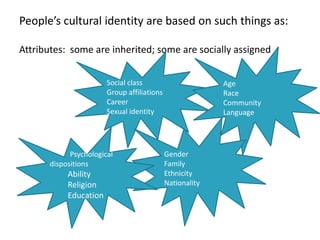
People’s cultural identity are based on such things as:
Attributes: some are inherited; some are socially assigned
Social class
Group affiliations
Career
Sexual identity

Psychological
dispositions

Ability
Religion
Education

Age
Race
Community
Language

Gender
Family
Ethnicity
Nationality
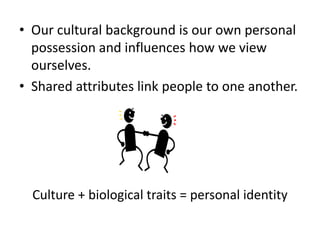
• Our cultural background is our own personal
possession and influences how we view
ourselves.
• Shared attributes link people to one another.

Culture + biological traits = personal identity
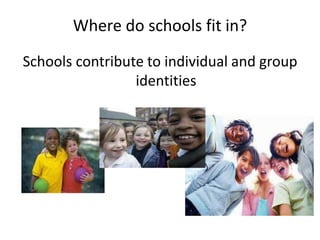
Where do schools fit in?
Schools contribute to individual and group
identities
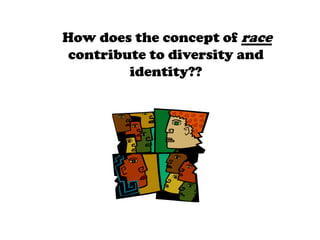
How does the concept of race
contribute to diversity and
identity??
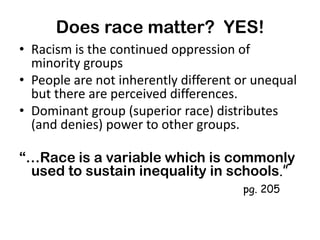
Does race matter? YES!
• Racism is the continued oppression of
minority groups
• People are not inherently different or unequal
but there are perceived differences.
• Dominant group (superior race) distributes
(and denies) power to other groups.
“…Race is a variable which is commonly
used to sustain inequality in schools.”
pg. 205
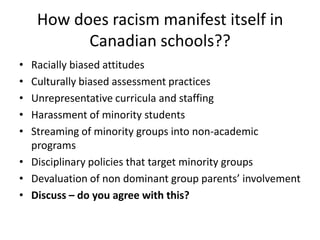
How does racism manifest itself in
Canadian schools??
•
•
•
•
•

Racially biased attitudes
Culturally biased assessment practices
Unrepresentative curricula and staffing
Harassment of minority students
Streaming of minority groups into non-academic
programs
• Disciplinary policies that target minority groups
• Devaluation of non dominant group parents’ involvement
• Discuss – do you agree with this?
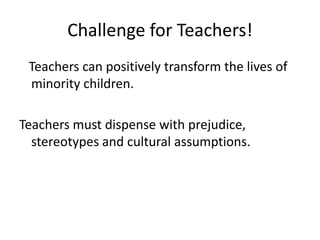
Challenge for Teachers!
Teachers can positively transform the lives of
minority children.
Teachers must dispense with prejudice,
stereotypes and cultural assumptions.
Hidden Curriculum
* Behaviours, attitudes, and knowledge the
school unintentionally teaches through
content, routines, social relationships.

* HC spreads dominant ideologies- examples:
celebrations, concerts, displays, books, values
Prejudice (a set of rigid and unfavourable
attiudes towards a particular group)
and
Stereotyping (generalizations)
can have devastating consequences on teaching
and learning

Teachers are in a unique position to implement
their views (positive or negative)
Test of Individual Prejudice

1. Write down your first thought of what comes to
mind when you hear:
- Asians
- Moslems
- Blacks
- Jews
- Christians
- Whites
- First Nations Peoples
- Women
- Gays and Lesbians
- Immigrants
- People with Disabilities
2. What might you say or students say that would
reflect prejudice?
3. As a teacher how would you respond to
comments that were prejudiced?
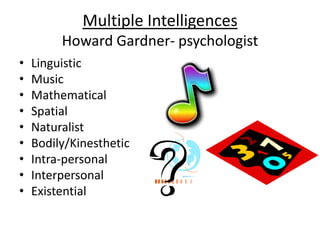
Multiple Intelligences
Howard Gardner- psychologist
•
•
•
•
•
•
•
•
•

Linguistic
Music
Mathematical
Spatial
Naturalist
Bodily/Kinesthetic
Intra-personal
Interpersonal
Existential
What are the implications for
teachers?
• recognize individual differences in
learning (students not necessarily treated
the same)
• Adapt instructional strategies to the
different learning styles
The result = you will optimize academic
success amoung diverse learners!
Gender-Based Differences
Research shows:
• Pedagogical and classroom practices tend to silence
girls
• Boys tend to dominate classroom talk

Recent research/data:
• suggests that variables such as socialization, parental
influence, individual motivation contribute to
differential academic outcomes for boys and girls
• Large gaps that once existed have been eliminated in
most cases
“Here Comes Everyone”
Teaching in the Intercultural Classroom - ATA
How does your cultural identity shape your
thinking and guide your actions?
Pointers for teachers:
• Recognize how your personal biases can affect
instruction.
• To nurture a sense of belonging in your
students, get to know them and help them get
to know each other.
• Have high expectations of all students.
• Use engaging teaching and learning practices.
• Consider ways to differentiate instruction
based on culture and diversity.
• Believe that all families and community
members want their children to succeed.
• Make instruction and assessment more
meaningful and relevant by learning about
your students’ cultures, languages and
learning styles.
Questions
1. What challenges will you face in
ensuring inclusiveness in your
classroom?
2. In what areas do you feel you lack
understanding?
3. What assumptions do you hold in
relation to diversity?

Day 12 education and diversity

  • 1.
    Education and Diversity:Framing the Issues B. Egbo
  • 2.
    • Student diversity(differences) is a reality in Canadian schools Critical question: what, why and how to teach children in ways that reflect their diverse backgrounds?
  • 3.
    Diversity refers todifference • • • • • • Human diversity Bio-diversity Religious diversity Linguistic diversity Diversity of opinions Egbo’s focus: cultural diversity
  • 4.
    Culture is defined: •“…shared system of meaning and symbols that account for patterned behaviour between individuals and amoung groups.” (pg. 201) • “…as the knowledge, values, customs, attitudes, language and strategies that enable individuals and groups to adapt and survive in their environment.” (pg. 201)
  • 5.
    Culture is “inus and all around us” (pg. 201) • Each person has his or her own cultural identity (perceptions of who we are) • Our cultural backgrounds influence our perceptions of the world and therefore, constitute an essential part of who we are.
  • 6.
    People’s cultural identityare based on such things as: Attributes: some are inherited; some are socially assigned Social class Group affiliations Career Sexual identity Psychological dispositions Ability Religion Education Age Race Community Language Gender Family Ethnicity Nationality
  • 7.
    • Our culturalbackground is our own personal possession and influences how we view ourselves. • Shared attributes link people to one another. Culture + biological traits = personal identity
  • 8.
    Where do schoolsfit in? Schools contribute to individual and group identities
  • 9.
    How does theconcept of race contribute to diversity and identity??
  • 10.
    Does race matter?YES! • Racism is the continued oppression of minority groups • People are not inherently different or unequal but there are perceived differences. • Dominant group (superior race) distributes (and denies) power to other groups. “…Race is a variable which is commonly used to sustain inequality in schools.” pg. 205
  • 11.
    How does racismmanifest itself in Canadian schools?? • • • • • Racially biased attitudes Culturally biased assessment practices Unrepresentative curricula and staffing Harassment of minority students Streaming of minority groups into non-academic programs • Disciplinary policies that target minority groups • Devaluation of non dominant group parents’ involvement • Discuss – do you agree with this?
  • 12.
    Challenge for Teachers! Teacherscan positively transform the lives of minority children. Teachers must dispense with prejudice, stereotypes and cultural assumptions.
  • 13.
    Hidden Curriculum * Behaviours,attitudes, and knowledge the school unintentionally teaches through content, routines, social relationships. * HC spreads dominant ideologies- examples: celebrations, concerts, displays, books, values
  • 14.
    Prejudice (a setof rigid and unfavourable attiudes towards a particular group) and Stereotyping (generalizations) can have devastating consequences on teaching and learning Teachers are in a unique position to implement their views (positive or negative)
  • 15.
    Test of IndividualPrejudice 1. Write down your first thought of what comes to mind when you hear: - Asians - Moslems - Blacks - Jews - Christians - Whites - First Nations Peoples - Women - Gays and Lesbians - Immigrants - People with Disabilities 2. What might you say or students say that would reflect prejudice? 3. As a teacher how would you respond to comments that were prejudiced?
  • 16.
    Multiple Intelligences Howard Gardner-psychologist • • • • • • • • • Linguistic Music Mathematical Spatial Naturalist Bodily/Kinesthetic Intra-personal Interpersonal Existential
  • 17.
    What are theimplications for teachers? • recognize individual differences in learning (students not necessarily treated the same) • Adapt instructional strategies to the different learning styles The result = you will optimize academic success amoung diverse learners!
  • 18.
    Gender-Based Differences Research shows: •Pedagogical and classroom practices tend to silence girls • Boys tend to dominate classroom talk Recent research/data: • suggests that variables such as socialization, parental influence, individual motivation contribute to differential academic outcomes for boys and girls • Large gaps that once existed have been eliminated in most cases
  • 19.
    “Here Comes Everyone” Teachingin the Intercultural Classroom - ATA How does your cultural identity shape your thinking and guide your actions? Pointers for teachers: • Recognize how your personal biases can affect instruction. • To nurture a sense of belonging in your students, get to know them and help them get to know each other.
  • 20.
    • Have highexpectations of all students. • Use engaging teaching and learning practices. • Consider ways to differentiate instruction based on culture and diversity. • Believe that all families and community members want their children to succeed. • Make instruction and assessment more meaningful and relevant by learning about your students’ cultures, languages and learning styles.
  • 21.
    Questions 1. What challengeswill you face in ensuring inclusiveness in your classroom? 2. In what areas do you feel you lack understanding? 3. What assumptions do you hold in relation to diversity?