Literature
  Circles
 Katie LaFreniere
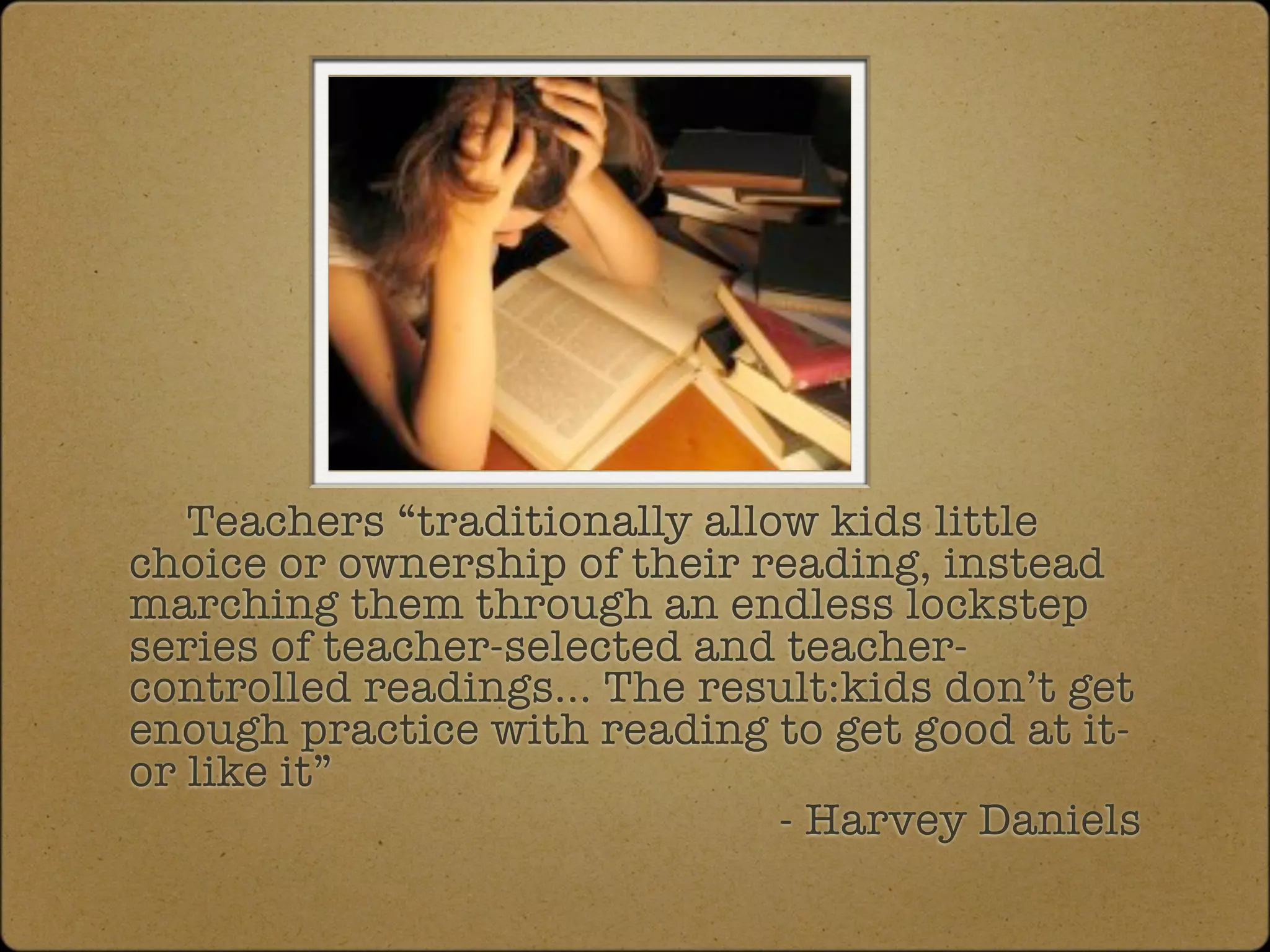
Teachers “traditionally allow kids little
choice or ownership of their reading, instead
marching them through an endless lockstep
series of teacher-selected and teacher-
controlled readings... The result:kids don’t get
enough practice with reading to get good at it-
or like it”
                              - Harvey Daniels
What are literature
     circles?
Literature circles are small, temporary
discussion groups of students who have
chosen to read the same work of literature.
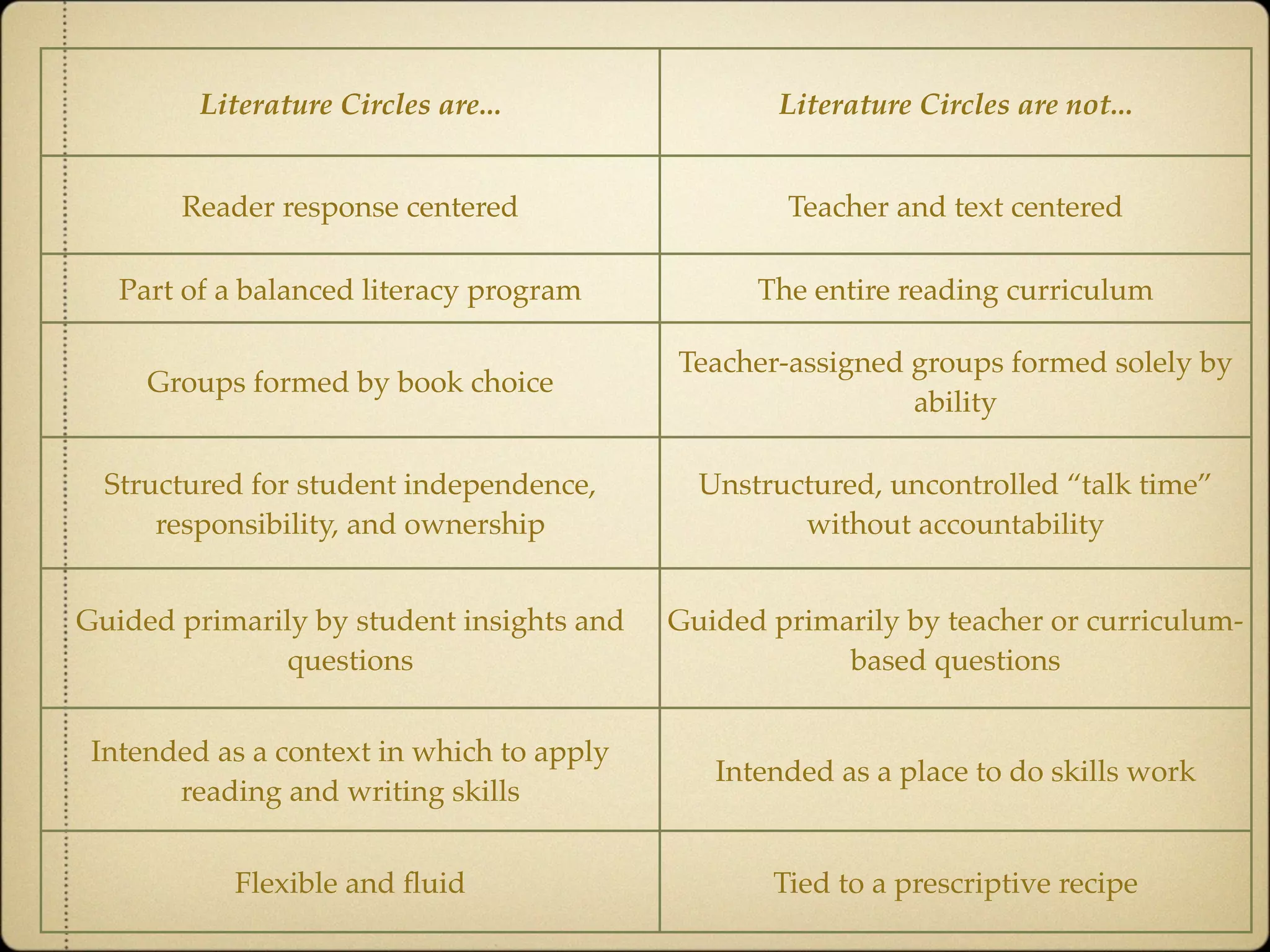
Literature Circles are...                 Literature Circles are not...


       Reader response centered                    Teacher and text centered

   Part of a balanced literacy program           The entire reading curriculum

                                           Teacher-assigned groups formed solely by
     Groups formed by book choice
                                                            ability

  Structured for student independence,       Unstructured, uncontrolled “talk time”
      responsibility, and ownership                 without accountability


Guided primarily by student insights and   Guided primarily by teacher or curriculum-
              questions                                based questions


 Intended as a context in which to apply
                                              Intended as a place to do skills work
       reading and writing skills


           Flexible and fluid                      Tied to a prescriptive recipe
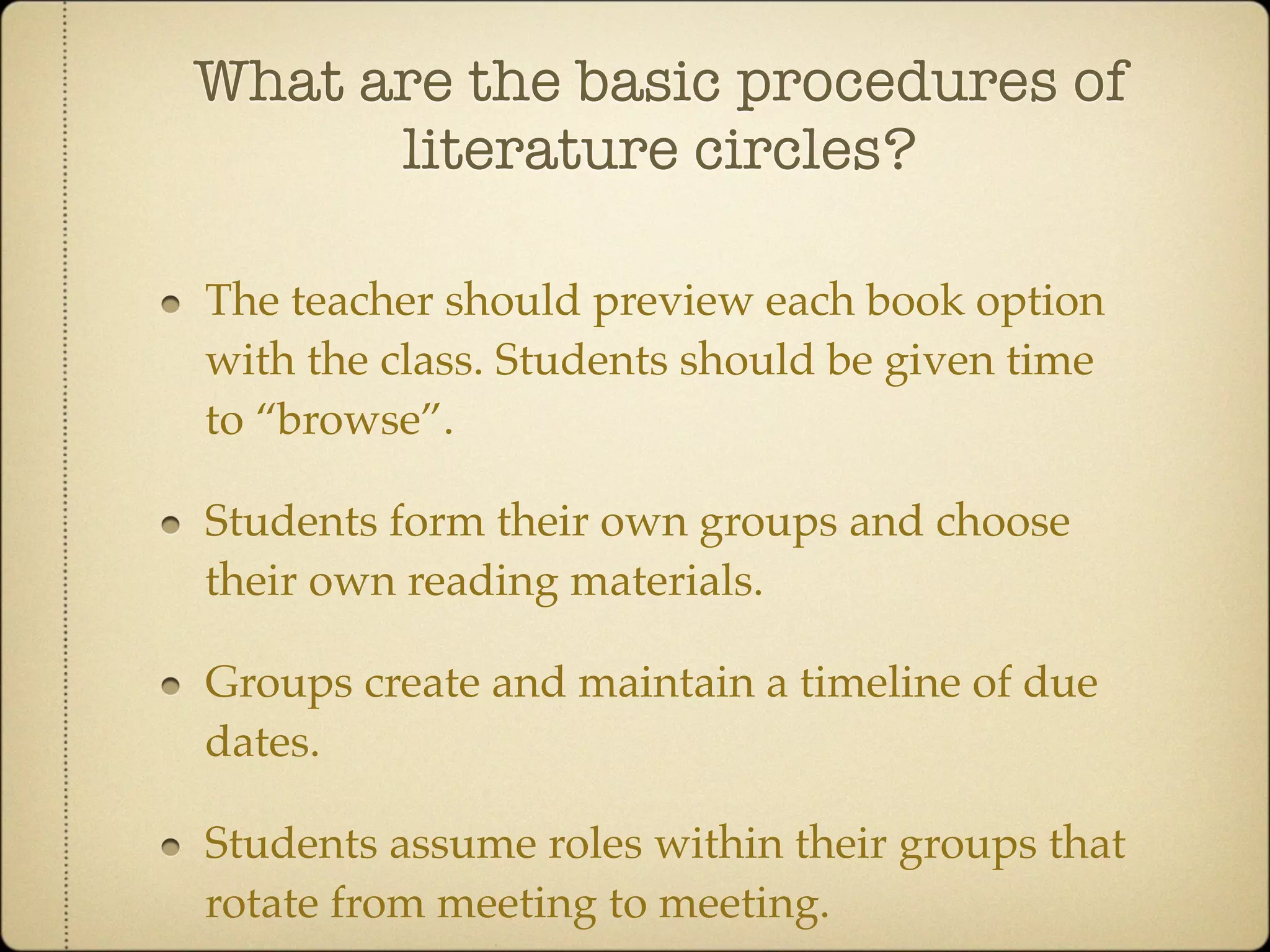
What are the basic procedures of
      literature circles?

The teacher should preview each book option
with the class. Students should be given time
to “browse”.

Students form their own groups and choose
their own reading materials.

Groups create and maintain a timeline of due
dates.

Students assume roles within their groups that
rotate from meeting to meeting.
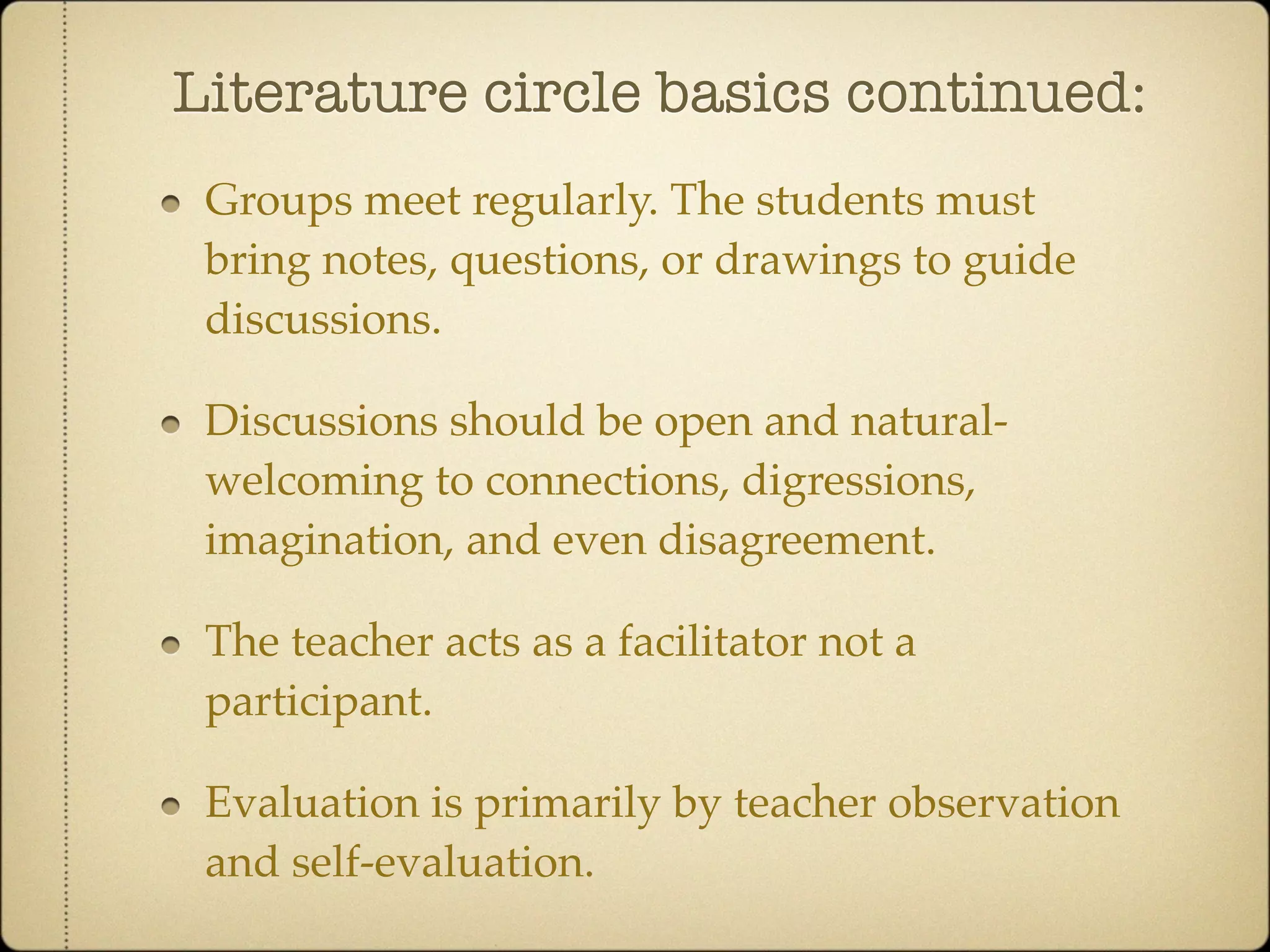
Literature circle basics continued:
 Groups meet regularly. The students must
 bring notes, questions, or drawings to guide
 discussions.

 Discussions should be open and natural-
 welcoming to connections, digressions,
 imagination, and even disagreement.

 The teacher acts as a facilitator not a
 participant.

 Evaluation is primarily by teacher observation
 and self-evaluation.
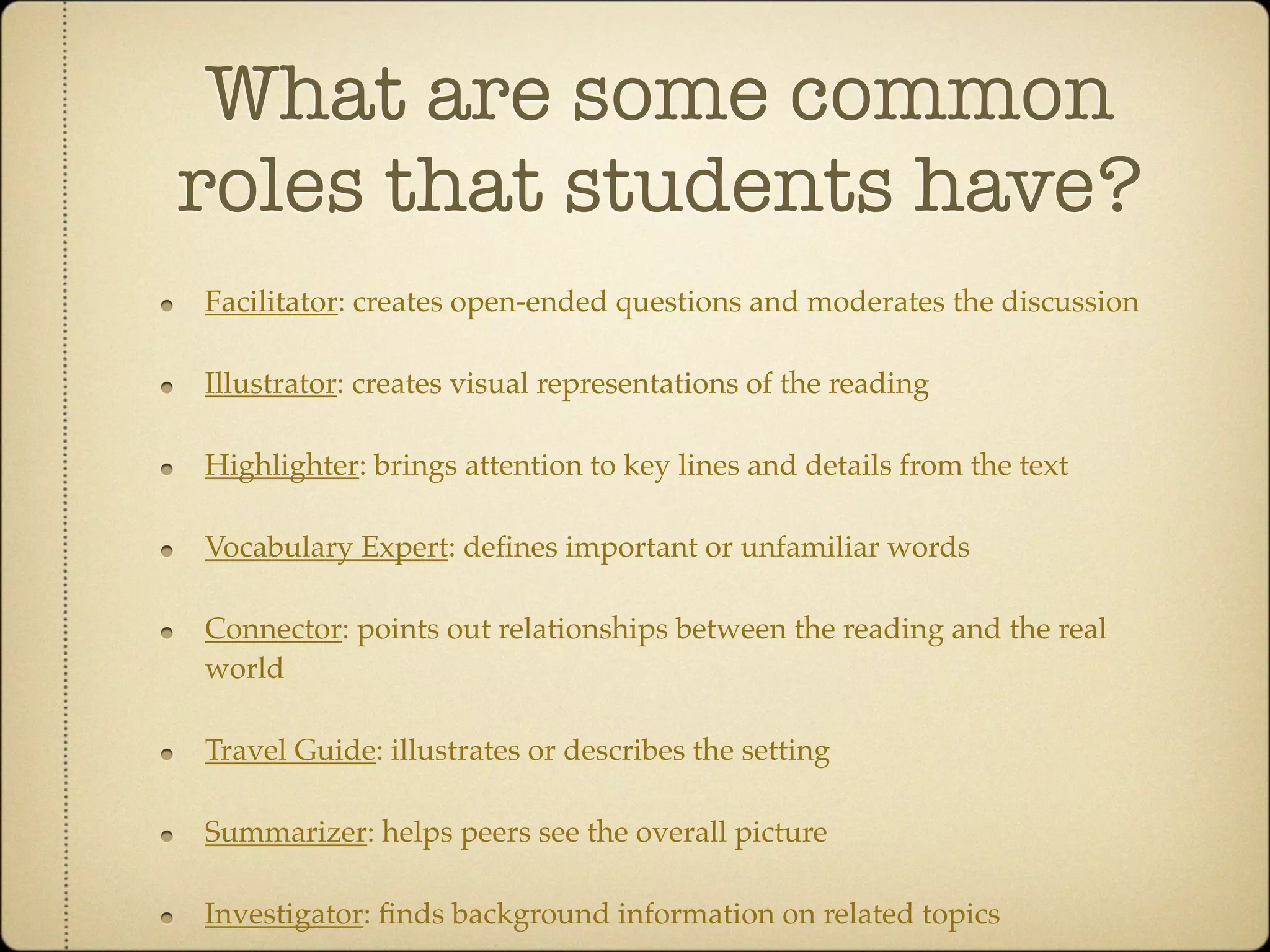
What are some common
roles that students have?
Facilitator: creates open-ended questions and moderates the discussion

Illustrator: creates visual representations of the reading

Highlighter: brings attention to key lines and details from the text

Vocabulary Expert: defines important or unfamiliar words

Connector: points out relationships between the reading and the real
world

Travel Guide: illustrates or describes the setting

Summarizer: helps peers see the overall picture

Investigator: finds background information on related topics
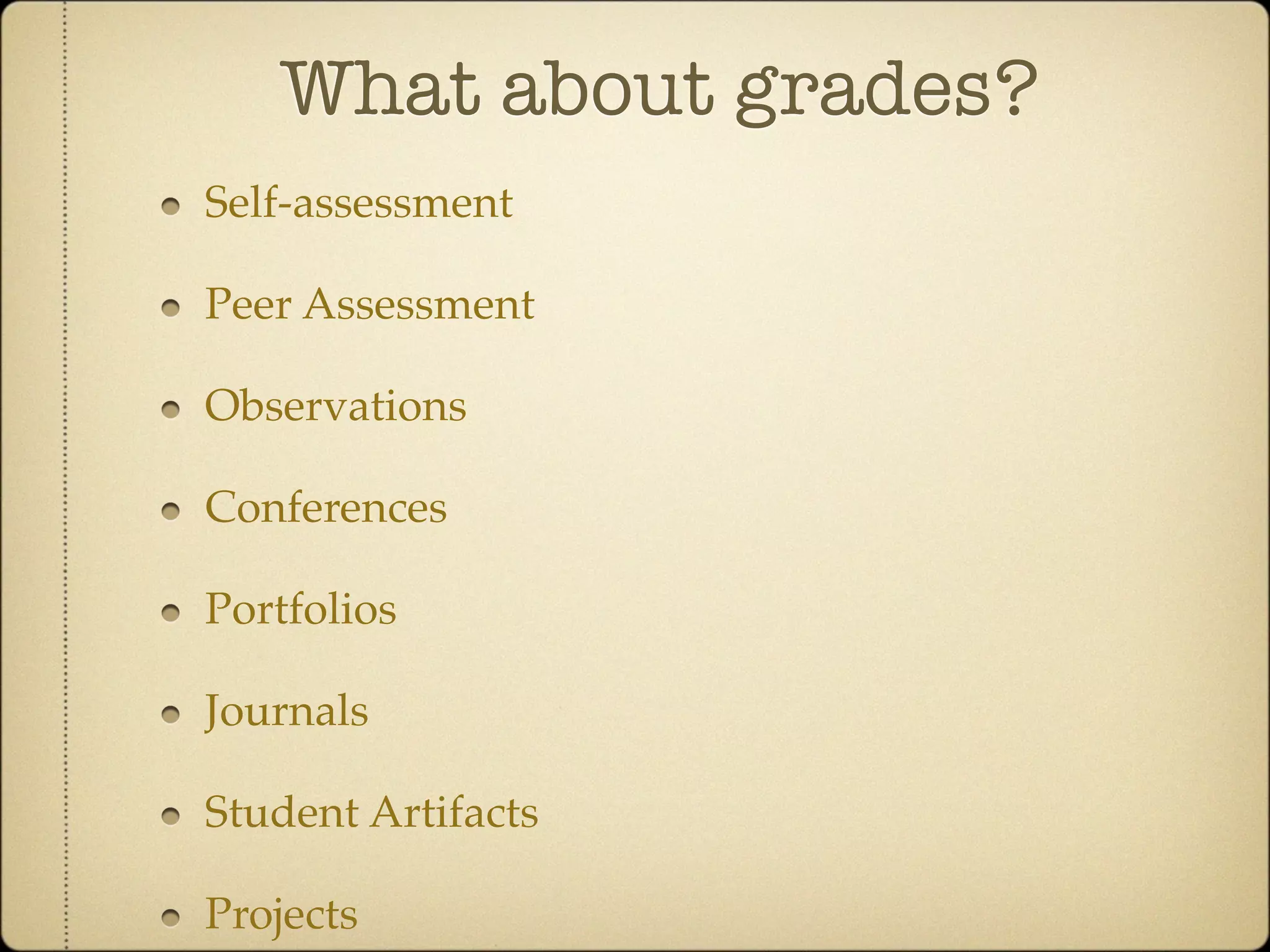
What about grades?
Self-assessment

Peer Assessment

Observations

Conferences

Portfolios

Journals

Student Artifacts

Projects
What are the benefits of
  literature circles?
Student centered learning

Freedom to talk, challenge, experiment, and
collaborate

Empowers students to find their own meaning

Challenges the notion that teachers have all of
the predetermined answers

Versatile and easily modified to meet a variety
of ages, tastes, and needs
What challenges can arise
 with literature circles?
 External incentives such as tests and grades are not as
 prevalent.

 Many high achieving students are more familiar (and
 comfortable) with competition than collaboration.

 Students may not adhere to the timeline that their
 group decides on.

 Students may not understand the responsibilities of
 their given role.

 Differing opinions exist on heterogeneous vs.
 homogeneous grouping.

Edu363litcircles

  • 1.
    Literature Circles Katie LaFreniere
  • 2.
    Teachers “traditionally allowkids little choice or ownership of their reading, instead marching them through an endless lockstep series of teacher-selected and teacher- controlled readings... The result:kids don’t get enough practice with reading to get good at it- or like it” - Harvey Daniels
  • 3.
    What are literature circles? Literature circles are small, temporary discussion groups of students who have chosen to read the same work of literature.
  • 4.
    Literature Circles are... Literature Circles are not... Reader response centered Teacher and text centered Part of a balanced literacy program The entire reading curriculum Teacher-assigned groups formed solely by Groups formed by book choice ability Structured for student independence, Unstructured, uncontrolled “talk time” responsibility, and ownership without accountability Guided primarily by student insights and Guided primarily by teacher or curriculum- questions based questions Intended as a context in which to apply Intended as a place to do skills work reading and writing skills Flexible and fluid Tied to a prescriptive recipe
  • 5.
    What are thebasic procedures of literature circles? The teacher should preview each book option with the class. Students should be given time to “browse”. Students form their own groups and choose their own reading materials. Groups create and maintain a timeline of due dates. Students assume roles within their groups that rotate from meeting to meeting.
  • 6.
    Literature circle basicscontinued: Groups meet regularly. The students must bring notes, questions, or drawings to guide discussions. Discussions should be open and natural- welcoming to connections, digressions, imagination, and even disagreement. The teacher acts as a facilitator not a participant. Evaluation is primarily by teacher observation and self-evaluation.
  • 7.
    What are somecommon roles that students have? Facilitator: creates open-ended questions and moderates the discussion Illustrator: creates visual representations of the reading Highlighter: brings attention to key lines and details from the text Vocabulary Expert: defines important or unfamiliar words Connector: points out relationships between the reading and the real world Travel Guide: illustrates or describes the setting Summarizer: helps peers see the overall picture Investigator: finds background information on related topics
  • 8.
    What about grades? Self-assessment PeerAssessment Observations Conferences Portfolios Journals Student Artifacts Projects
  • 9.
    What are thebenefits of literature circles? Student centered learning Freedom to talk, challenge, experiment, and collaborate Empowers students to find their own meaning Challenges the notion that teachers have all of the predetermined answers Versatile and easily modified to meet a variety of ages, tastes, and needs
  • 10.
    What challenges canarise with literature circles? External incentives such as tests and grades are not as prevalent. Many high achieving students are more familiar (and comfortable) with competition than collaboration. Students may not adhere to the timeline that their group decides on. Students may not understand the responsibilities of their given role. Differing opinions exist on heterogeneous vs. homogeneous grouping.

Editor's Notes