Visual Media
EdTech 101 THW - Group 3
Alentajan, Cabañero, de Castro, Ramos, Senica
What is Visual
Media?
What is
Visual
Media?

 Sources of data or information in the form of visual
representations.
 Abstractions, analogues, rough illustrations, or
digital reproductions of the objects the data
pertains to.
What is
Visual
Media?

 Requires interpretation of the data gatherer
 Level of reliability compared to other sources may
vary considerably
What is
Visual
Media?

 May be hosted on the internet, printed in
publications, displayed through broadcast media,
or otherwise disseminated.
 Generally available or at least citable as stable and
traceable future references.
Elements of Visual
Design
de Castro
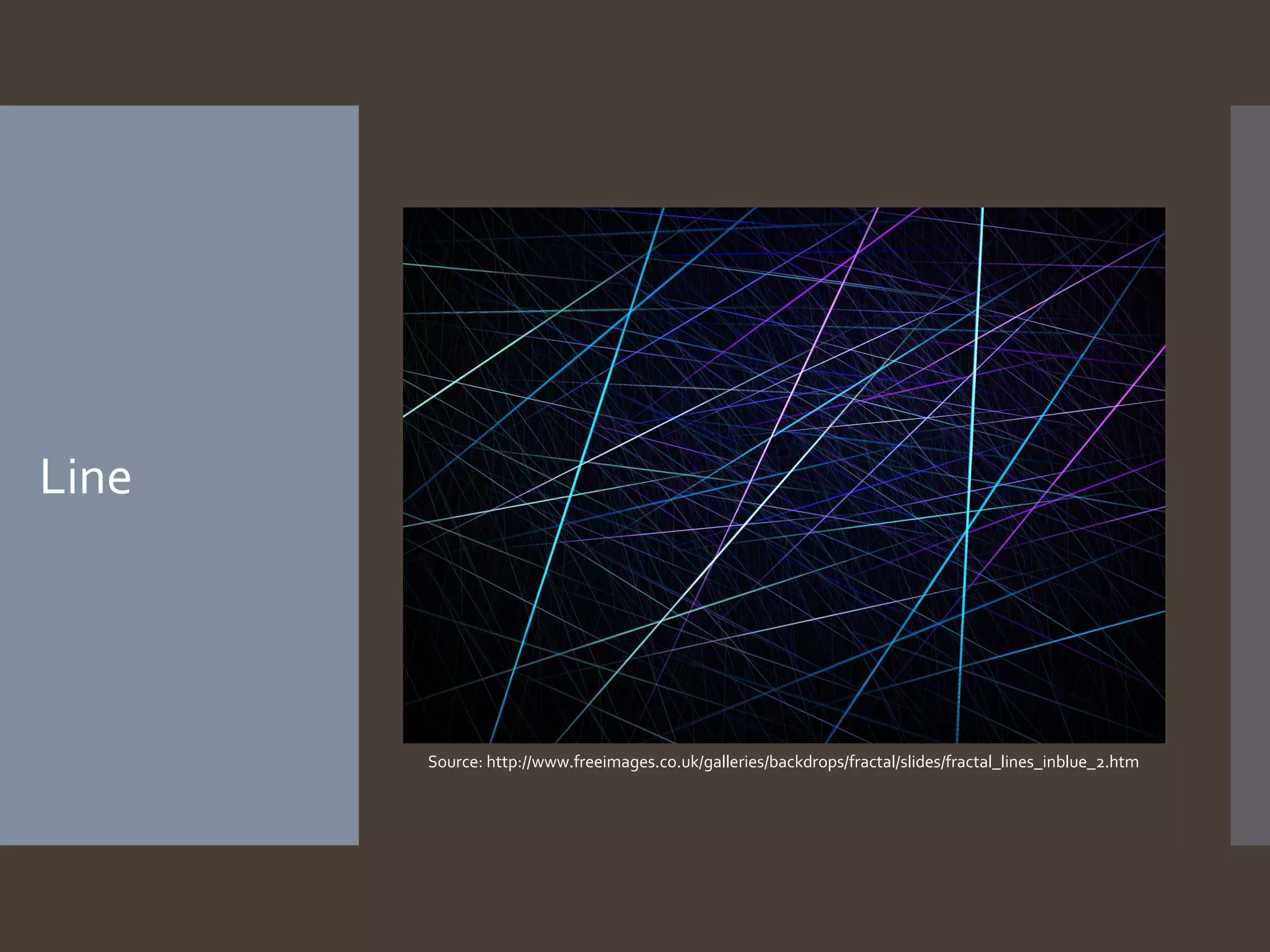
Line

Source: http://www.freeimages.co.uk/galleries/backdrops/fractal/slides/fractal_lines_inblue_2.htm
 A mark on a surface that describes a shape of
outline

Line

 Can create texture and can be thick or thin
 Types of line include actual, implied, vertical,
horizontal, diagonal and contour lines.
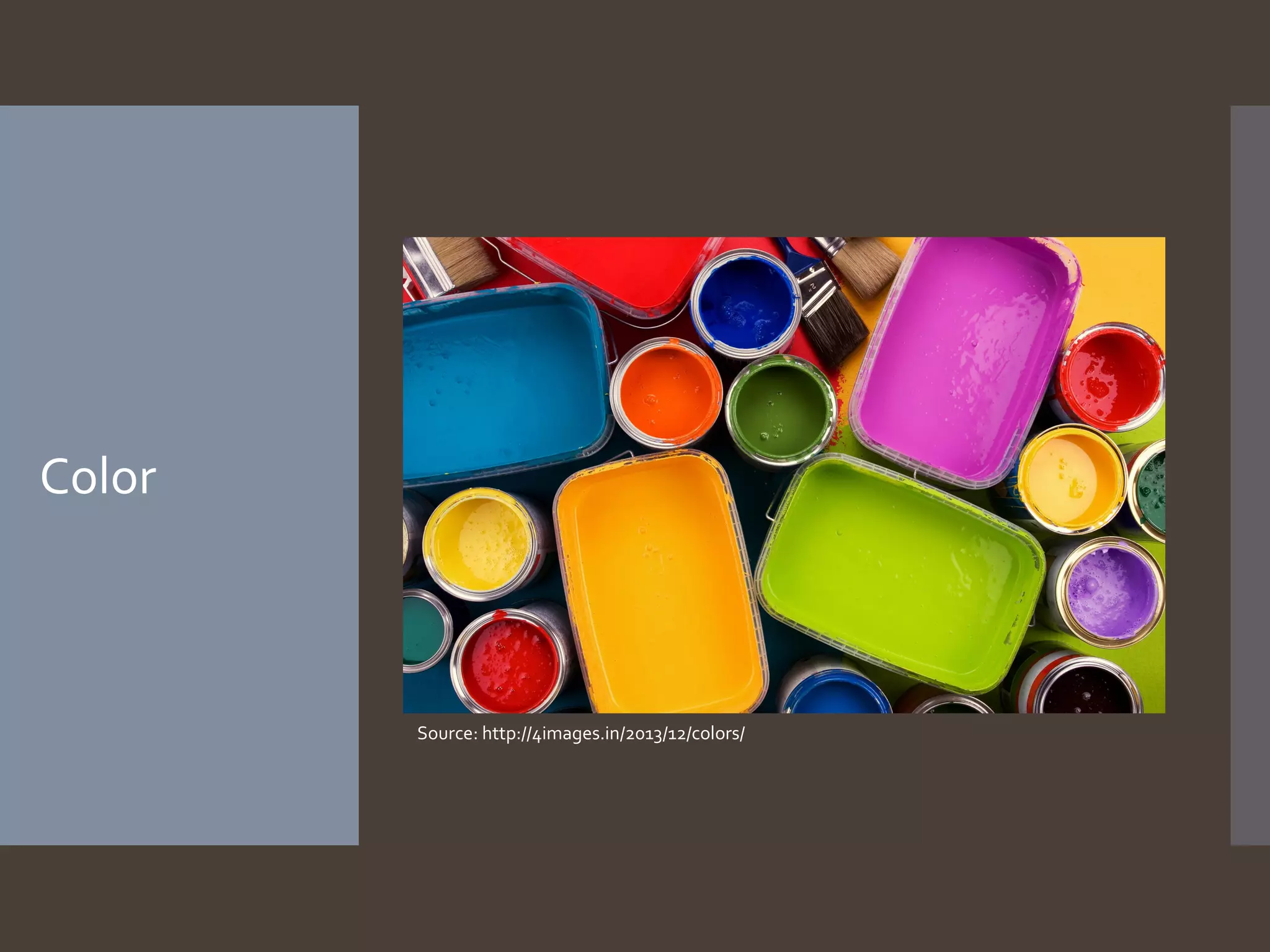
Color

Source: http://4images.in/2013/12/colors/
Color

 Refers to specific hues
 Has 3 properties: chroma, intensity, value
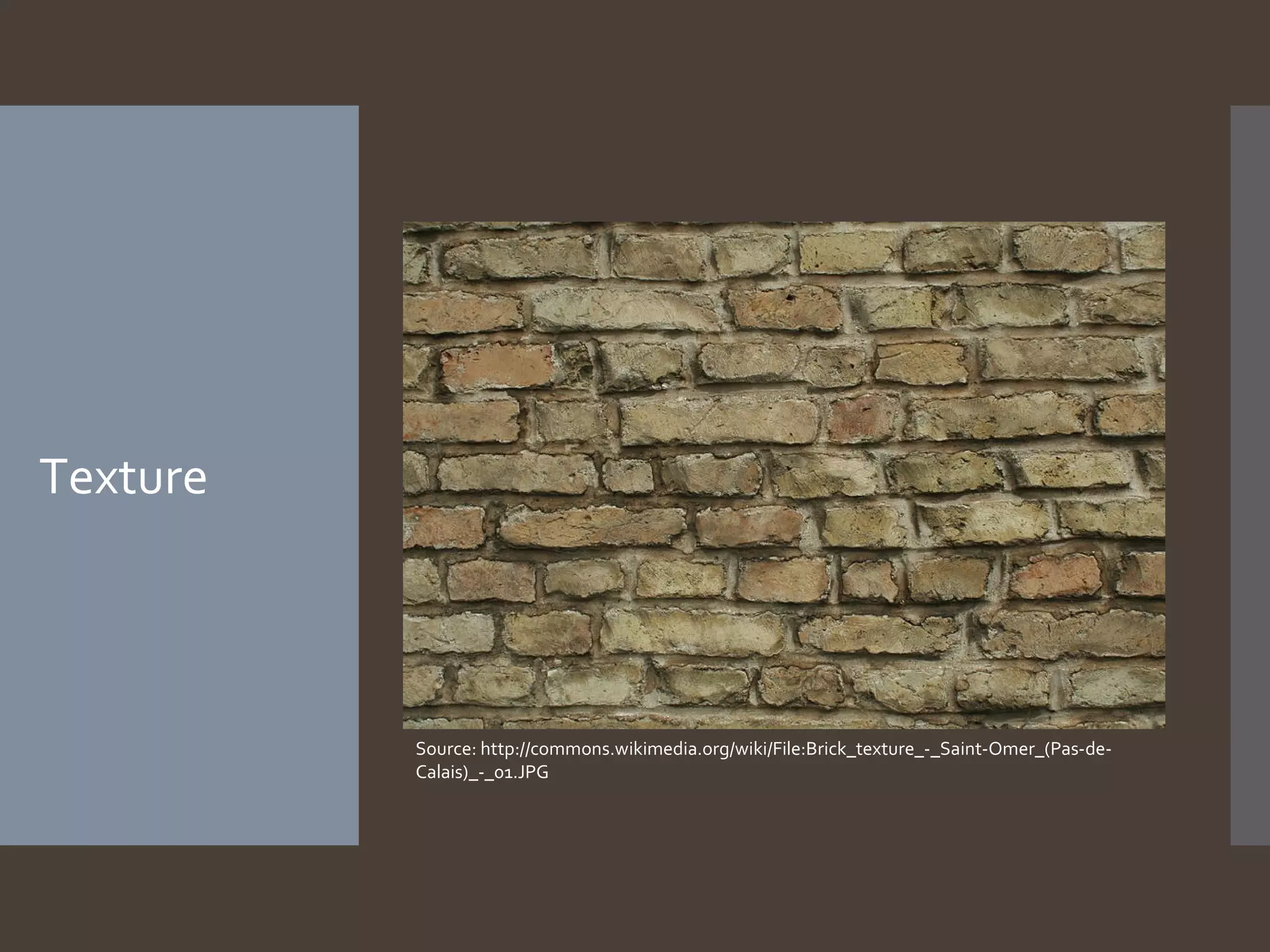
Texture

Source: http://commons.wikimedia.org/wiki/File:Brick_texture_-_Saint-Omer_(Pas-deCalais)_-_01.JPG
 Surface quality, either tactile of visual

Texture

 Degree of roughness or smoothness in objects
 Can be real or implied by different uses of media
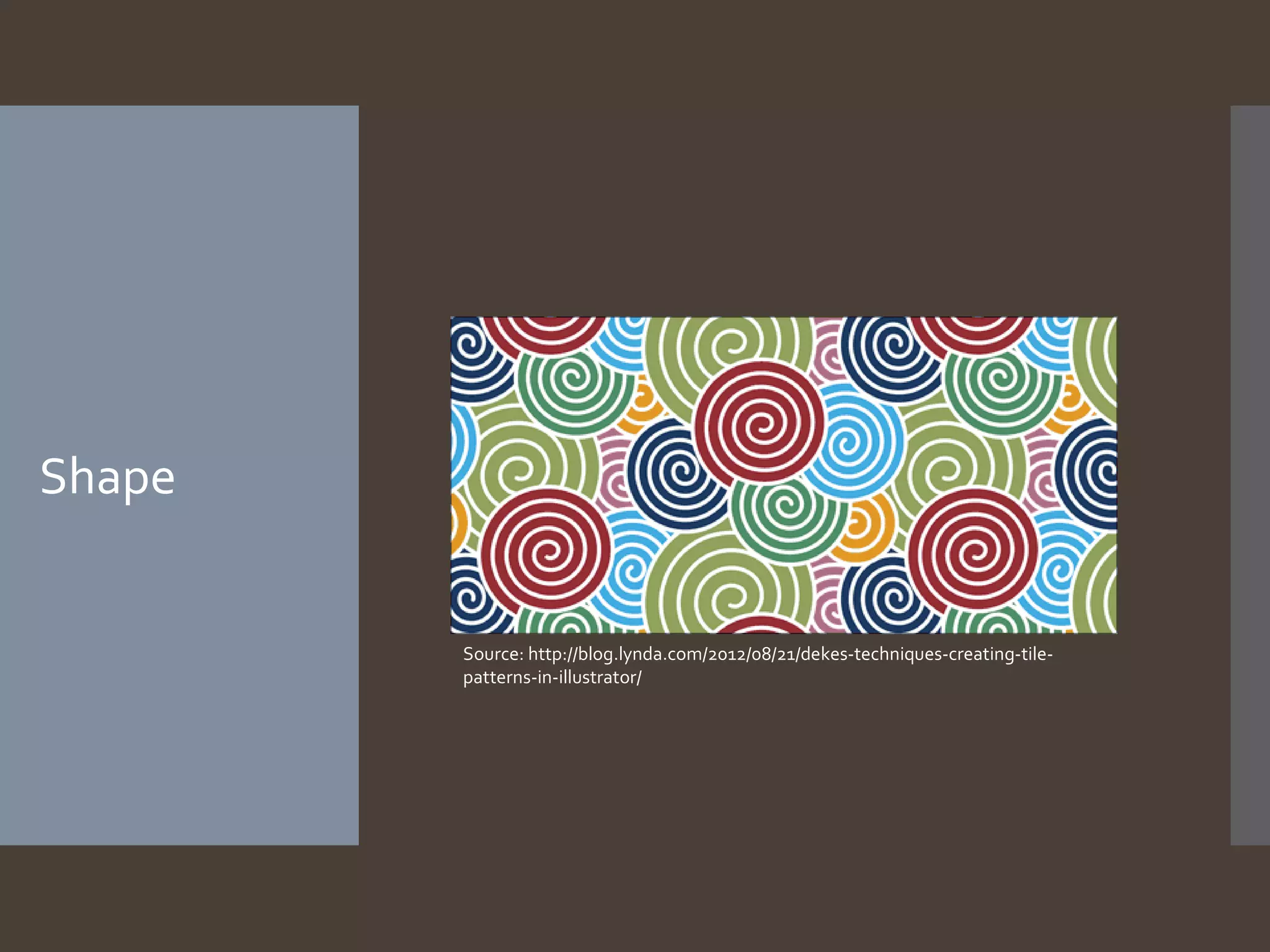
Shape

Source: http://blog.lynda.com/2012/08/21/dekes-techniques-creating-tilepatterns-in-illustrator/
Shape

 2-dimensional, no thickness
 Can be grouped to geometric and organic
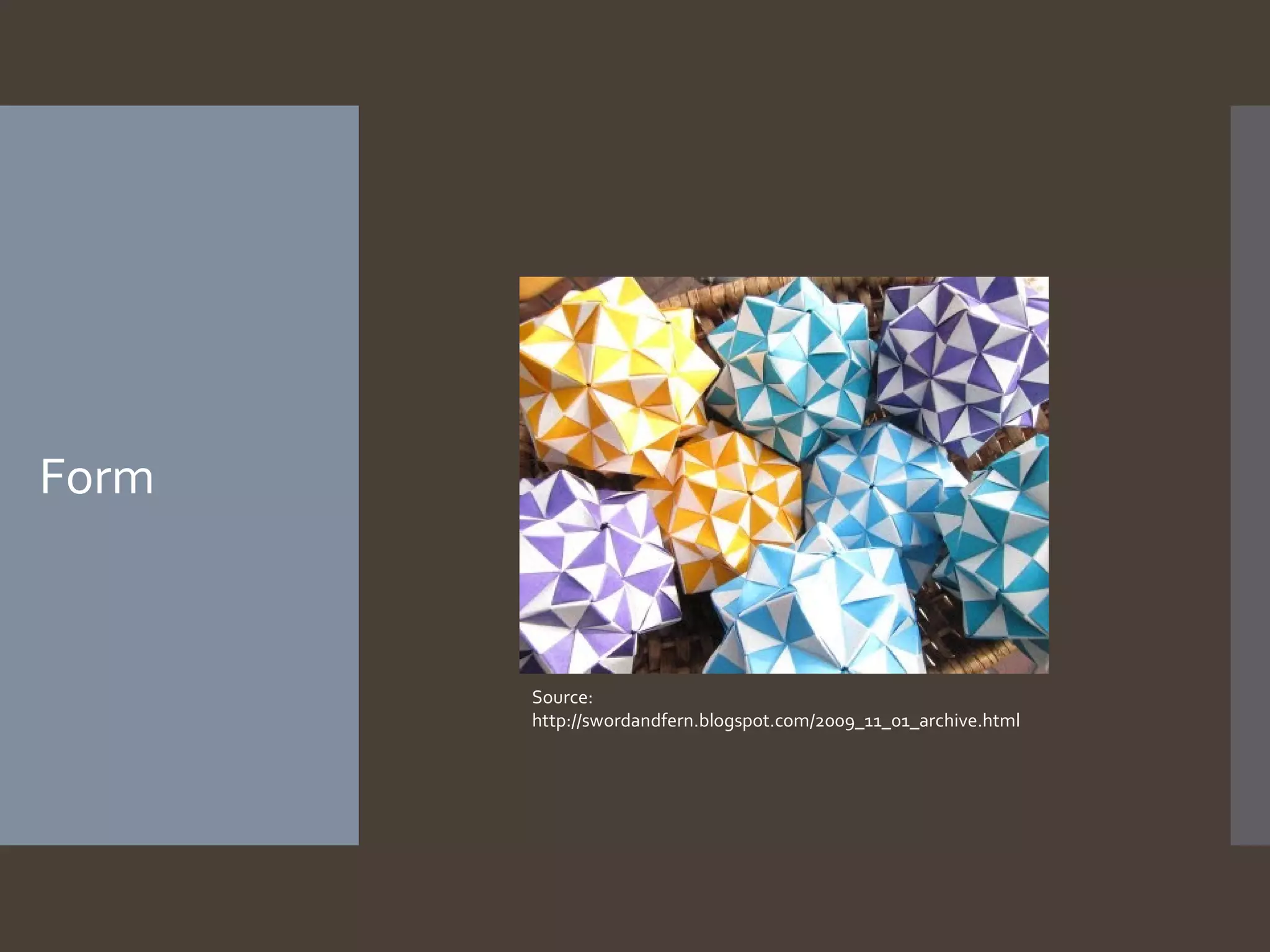
Form

Source:
http://swordandfern.blogspot.com/2009_11_01_archive.html
 3-dimensional; has volume and thickness

Form

 Illusion of 3D effect can be implied using light and
shading techniques
 Can be viewed from many angles
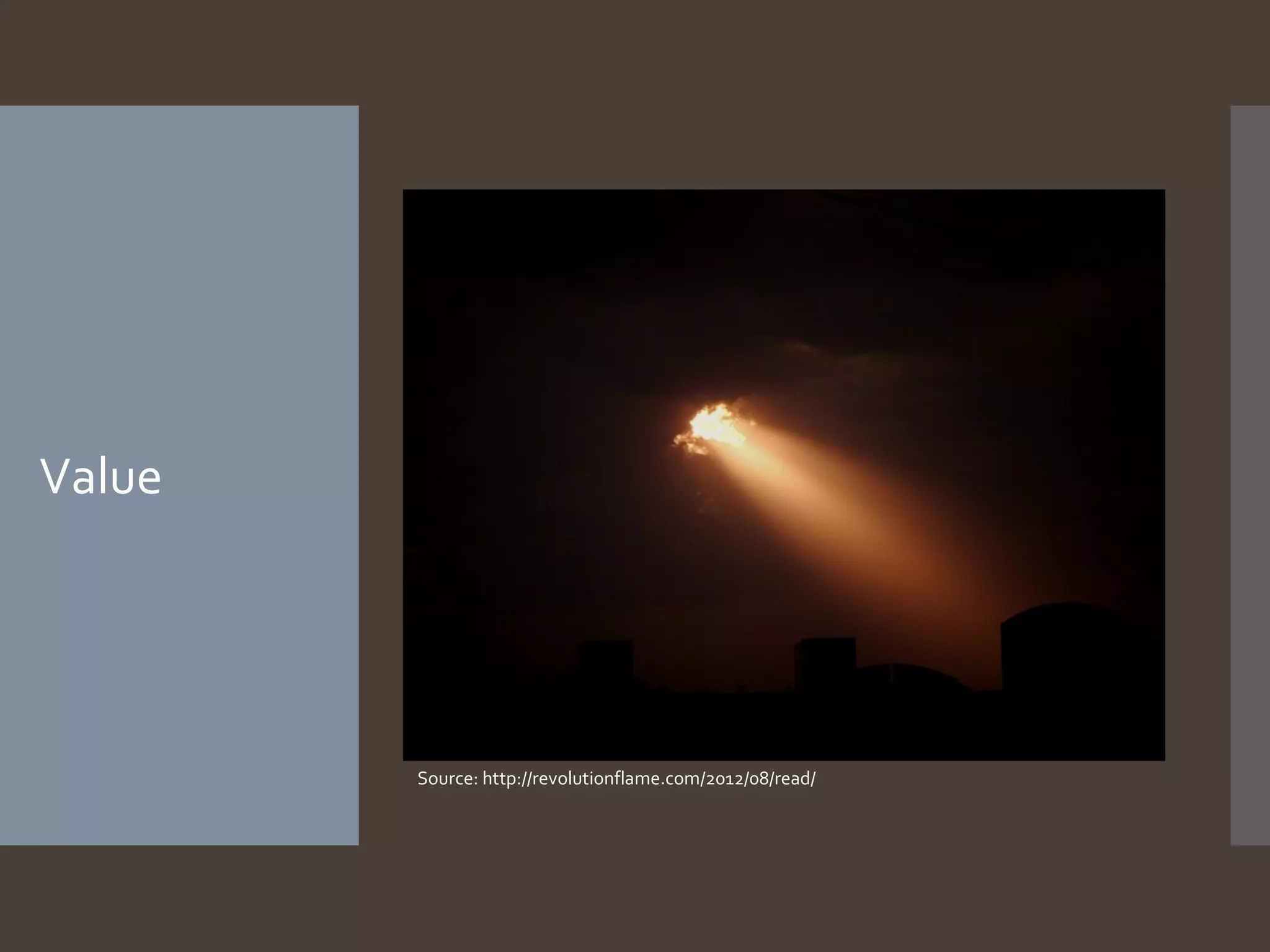
Value

Source: http://revolutionflame.com/2012/08/read/
 Degree of light and dark in a design

Value

 Can be used with color as well as black and white
 Contrast is the extreme changes between values
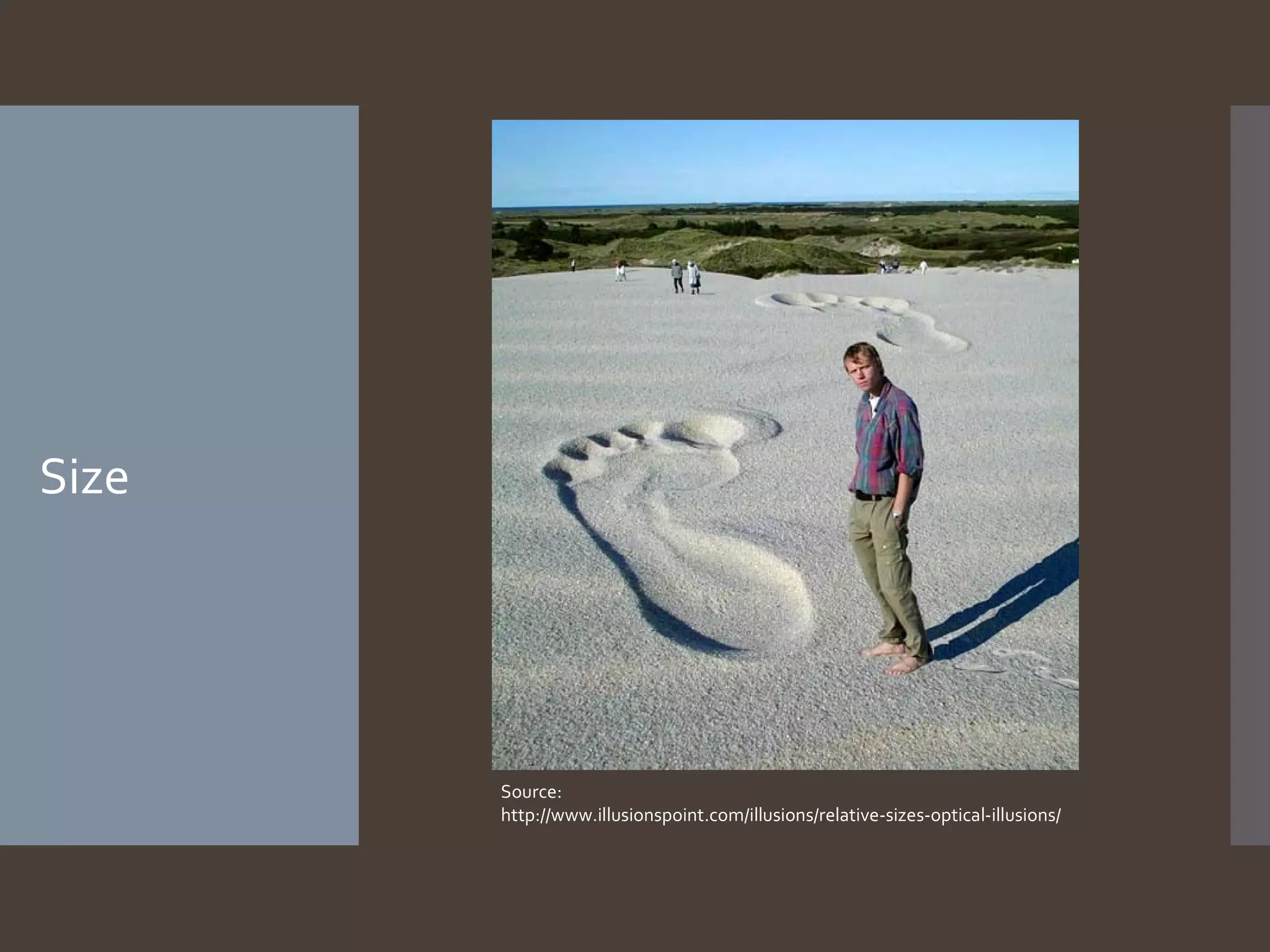
Size

Source:
http://www.illusionspoint.com/illusions/relative-sizes-optical-illusions/
Size

 Variations in the proportions of objects, lines, or
shapes
 Variations can either be real or imagined
Types of Visual
Media
Non –
Projected
Visual Media

 Requires no projection material or electric power
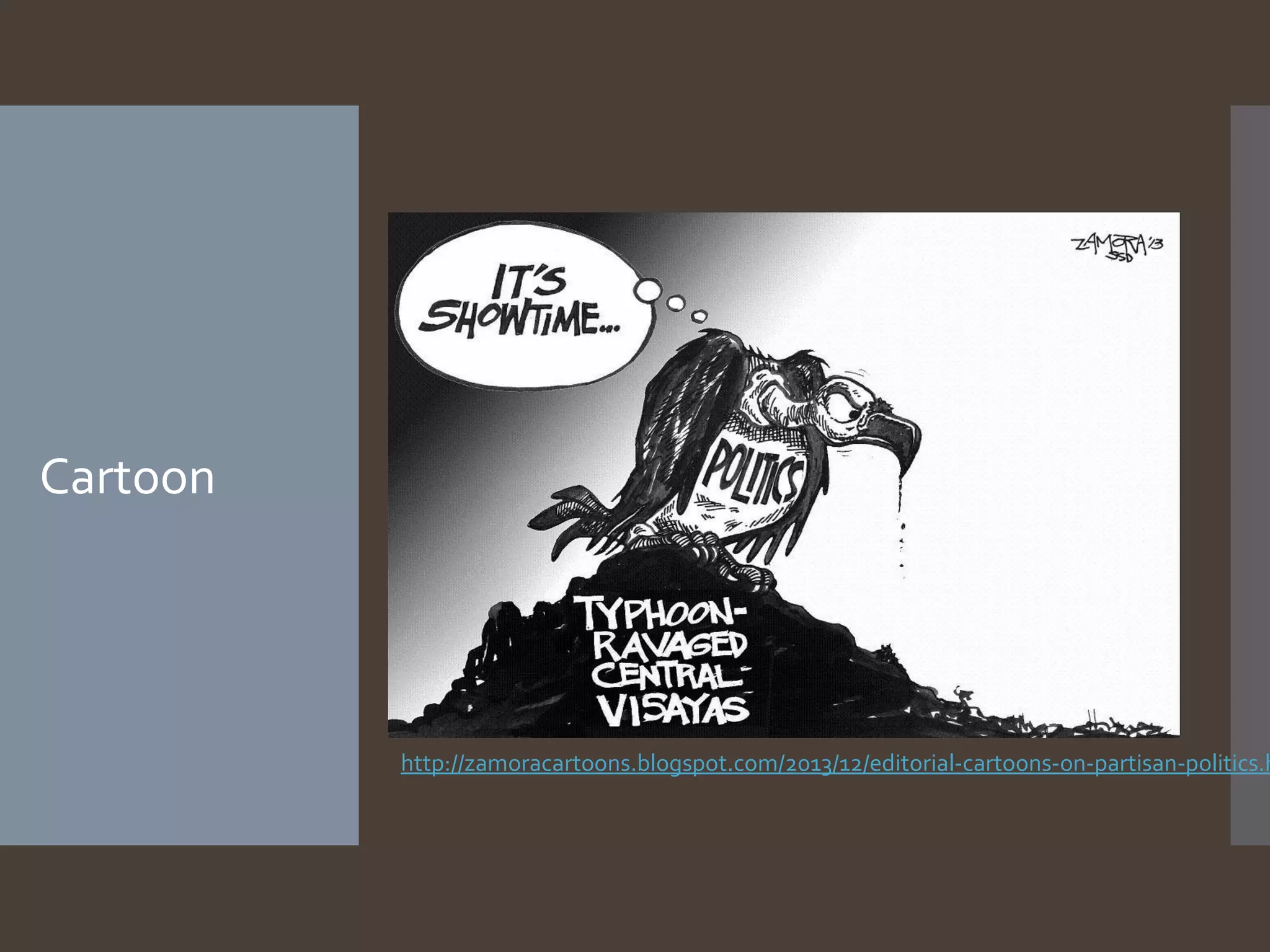
Cartoon
Cartoon

http://zamoracartoons.blogspot.com/2013/12/editorial-cartoons-on-partisan-politics.h
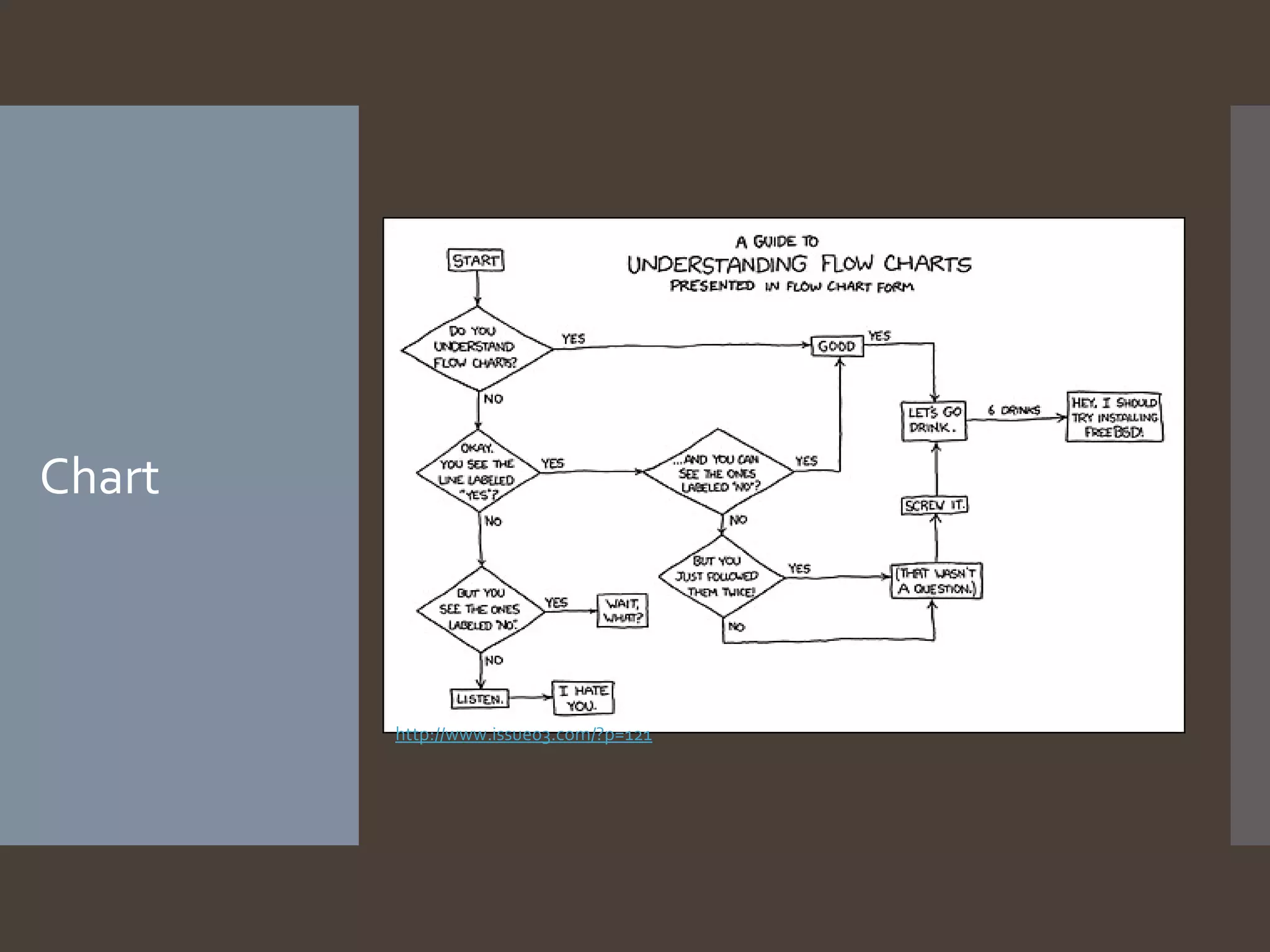
Chart
Chart

http://www.issue03.com/?p=121
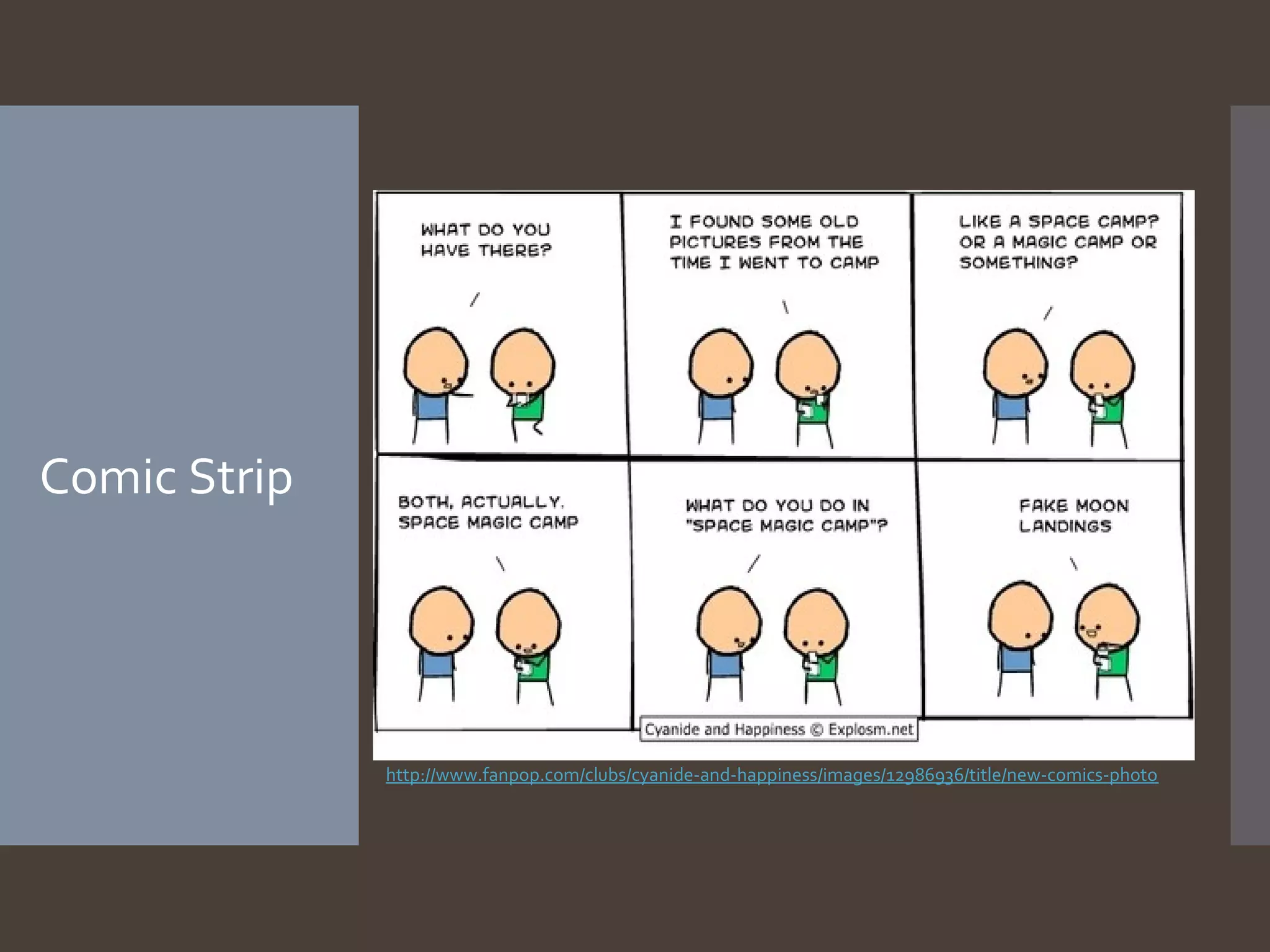
Comic Strip
Comic Strip

http://www.fanpop.com/clubs/cyanide-and-happiness/images/12986936/title/new-comics-photo
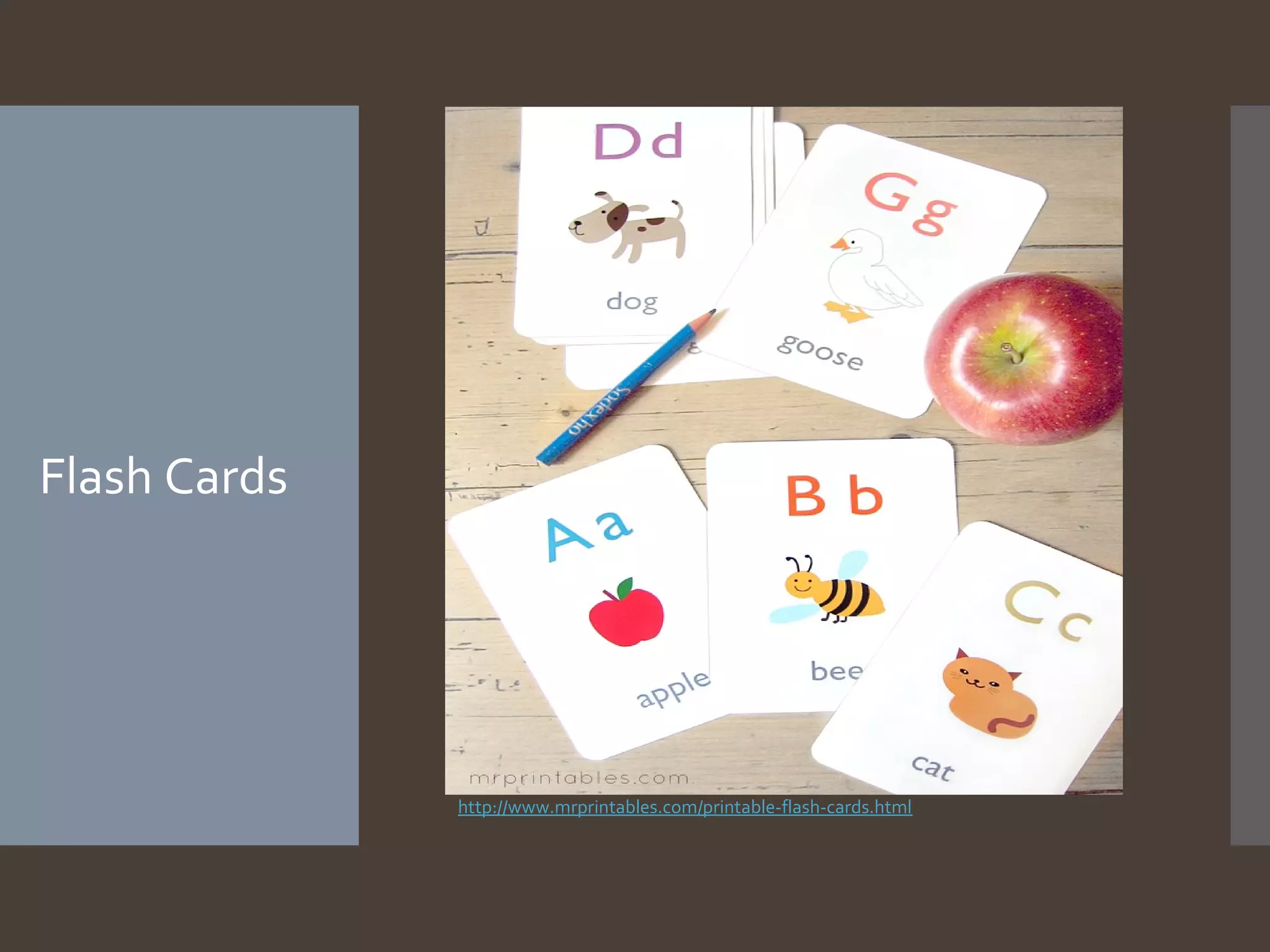
Flash Cards
Flash Cards

http://www.mrprintables.com/printable-flash-cards.html
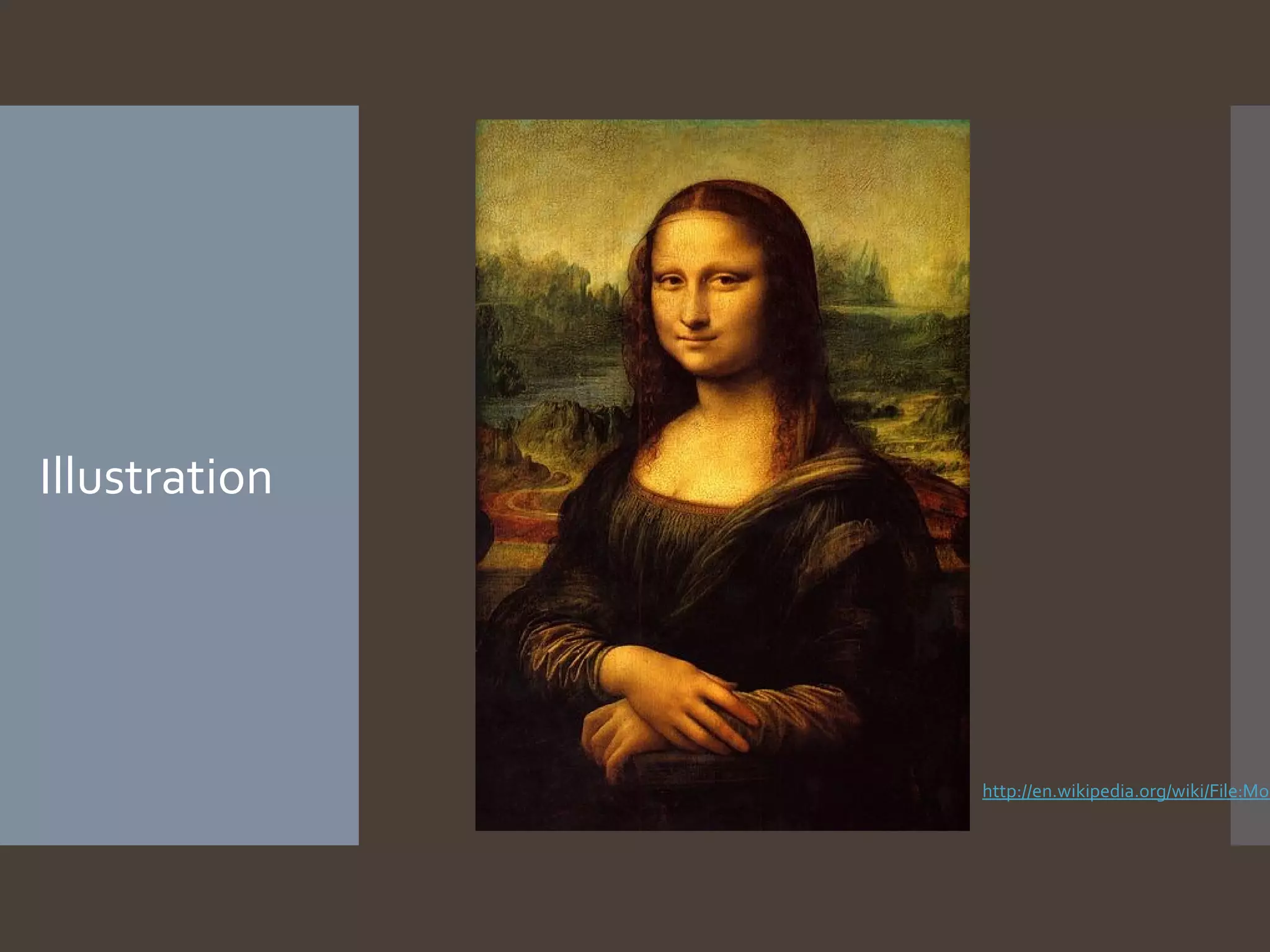
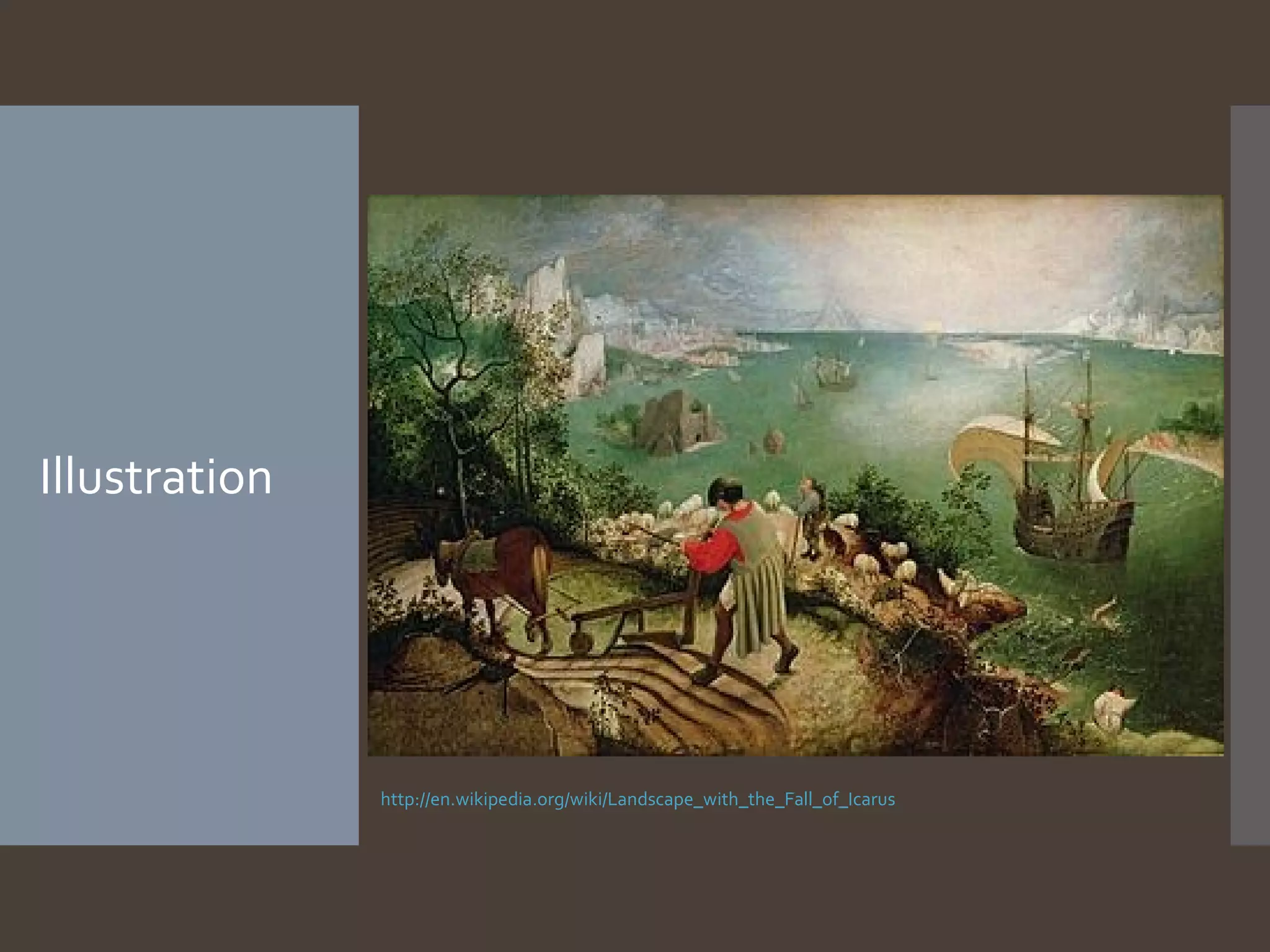
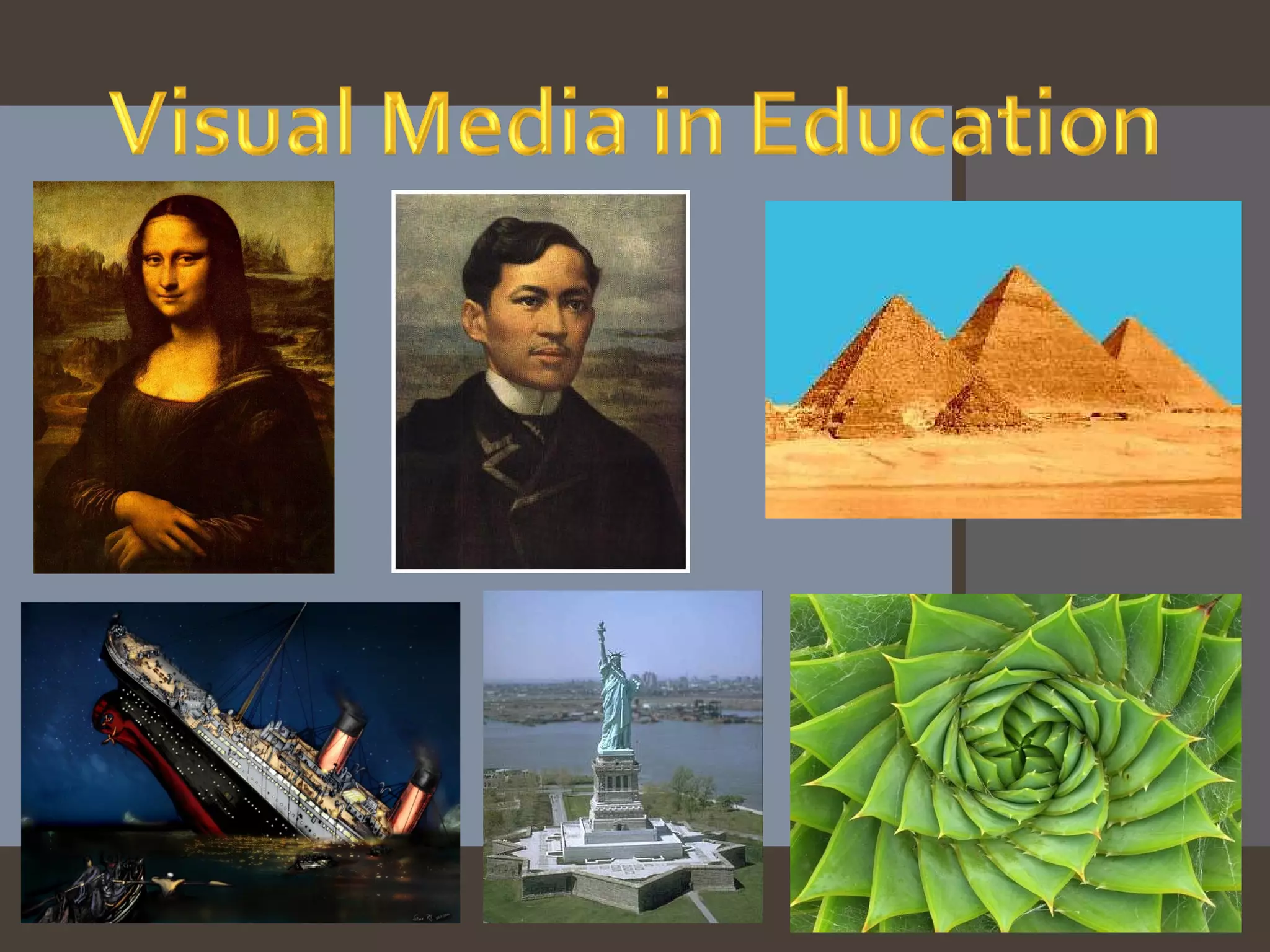
Illustration
Illustration
http://en.wikipedia.org/wiki/File:Mon
Illustration
http://en.wikipedia.org/wiki/Landscape_with_the_Fall_of_Icarus
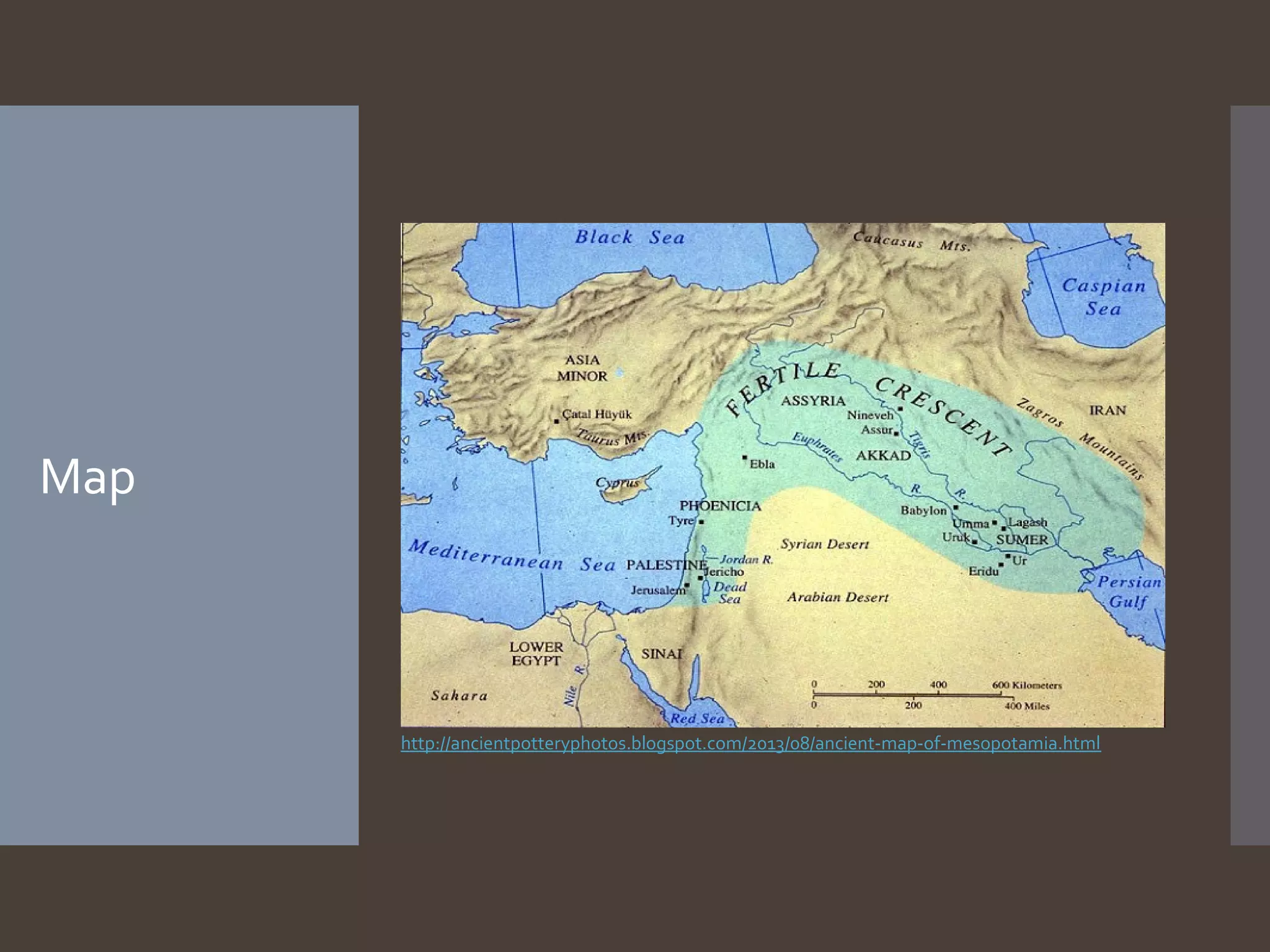
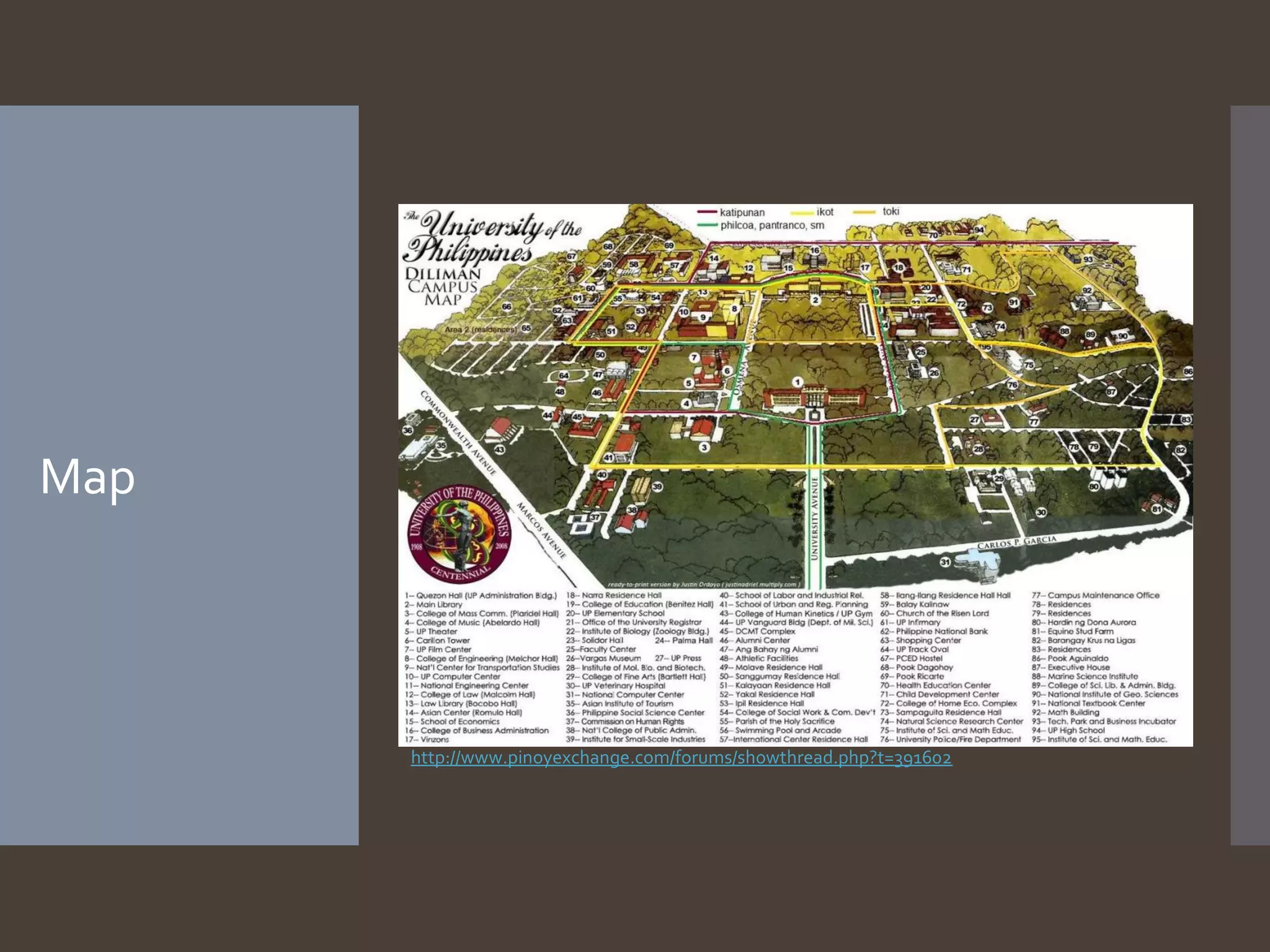
Map
Map

http://ancientpotteryphotos.blogspot.com/2013/08/ancient-map-of-mesopotamia.html
Map

http://www.pinoyexchange.com/forums/showthread.php?t=391602
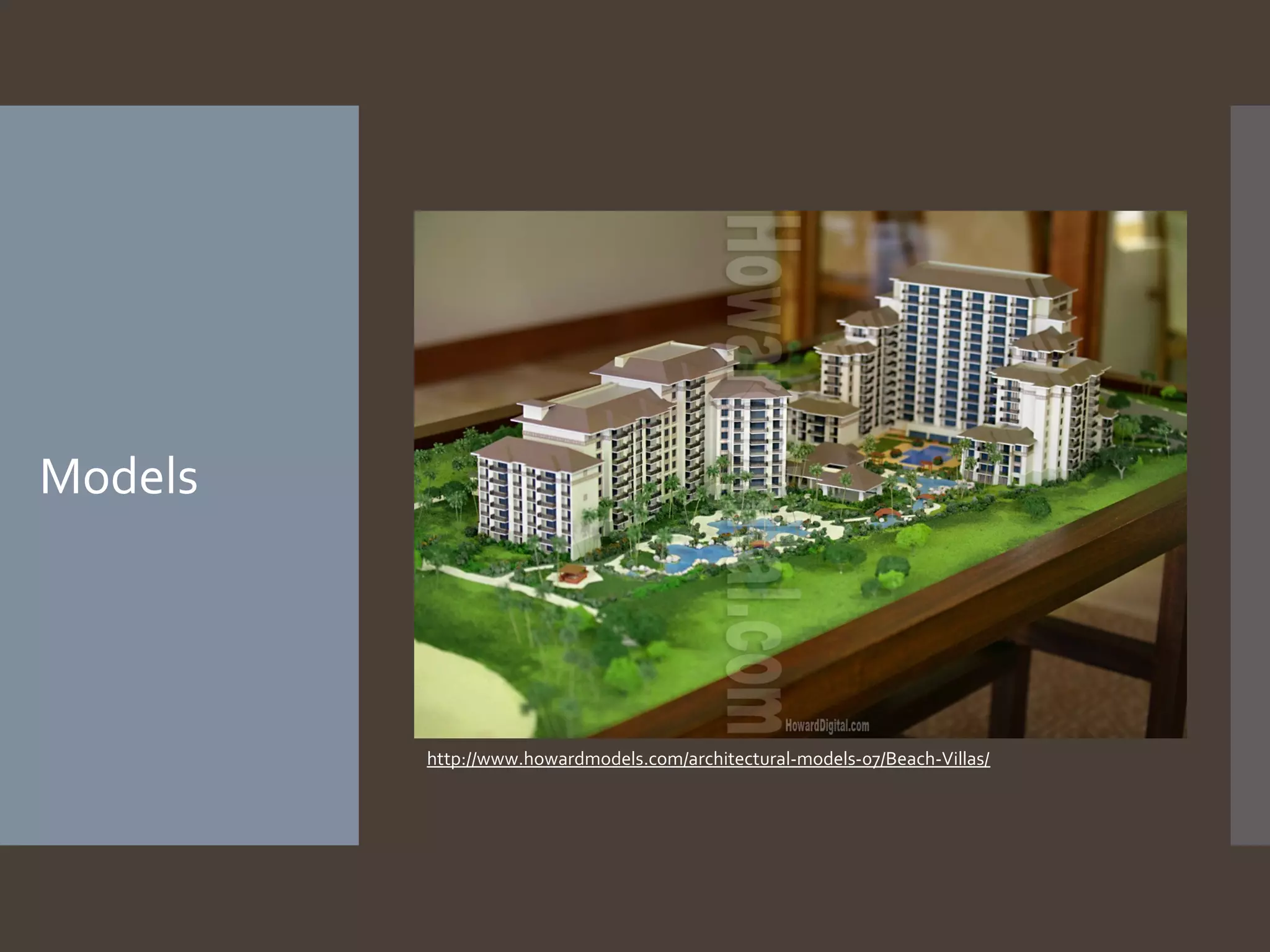
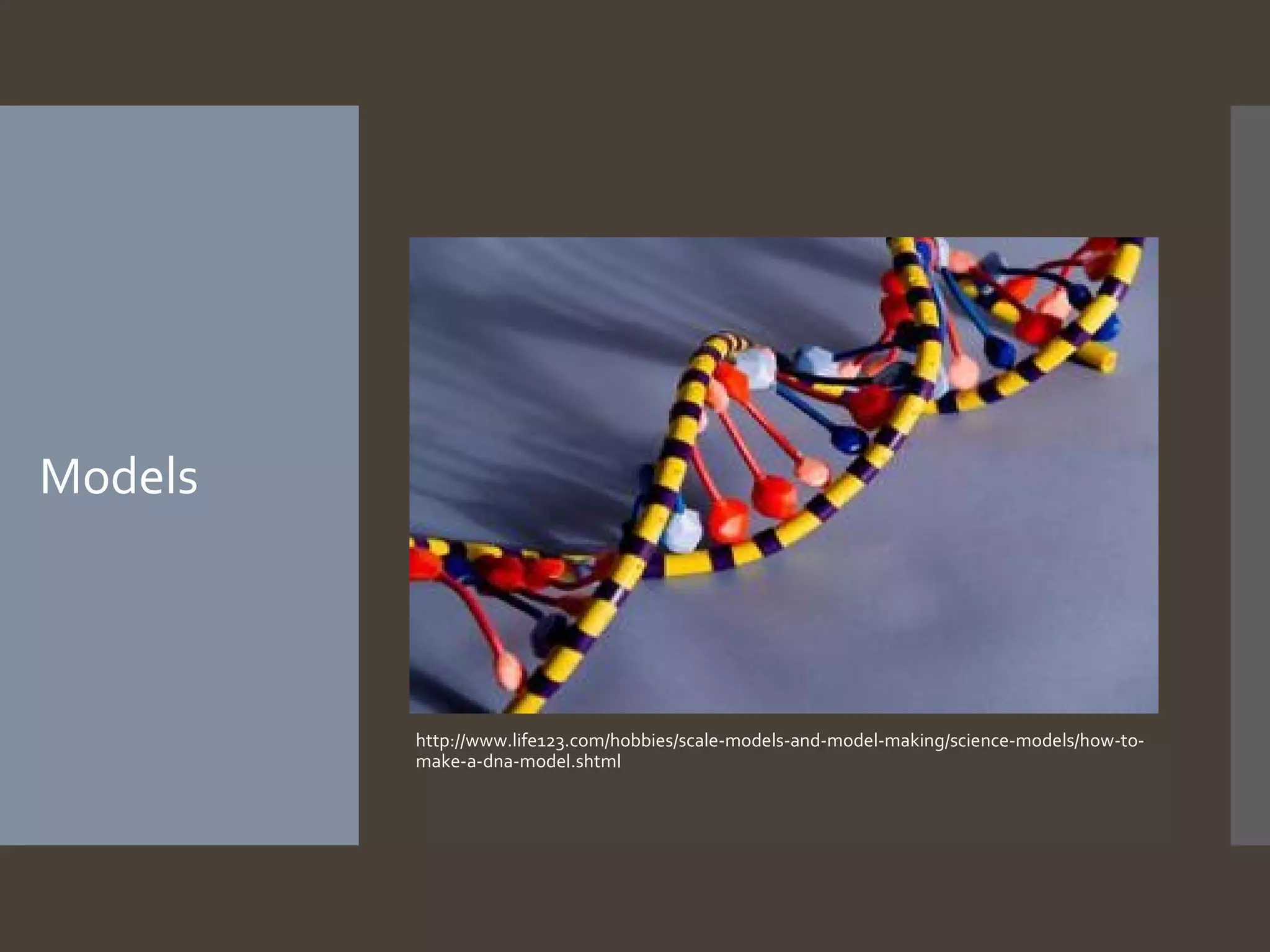
Models
Models

http://www.howardmodels.com/architectural-models-07/Beach-Villas/
Models

http://www.life123.com/hobbies/scale-models-and-model-making/science-models/how-tomake-a-dna-model.shtml
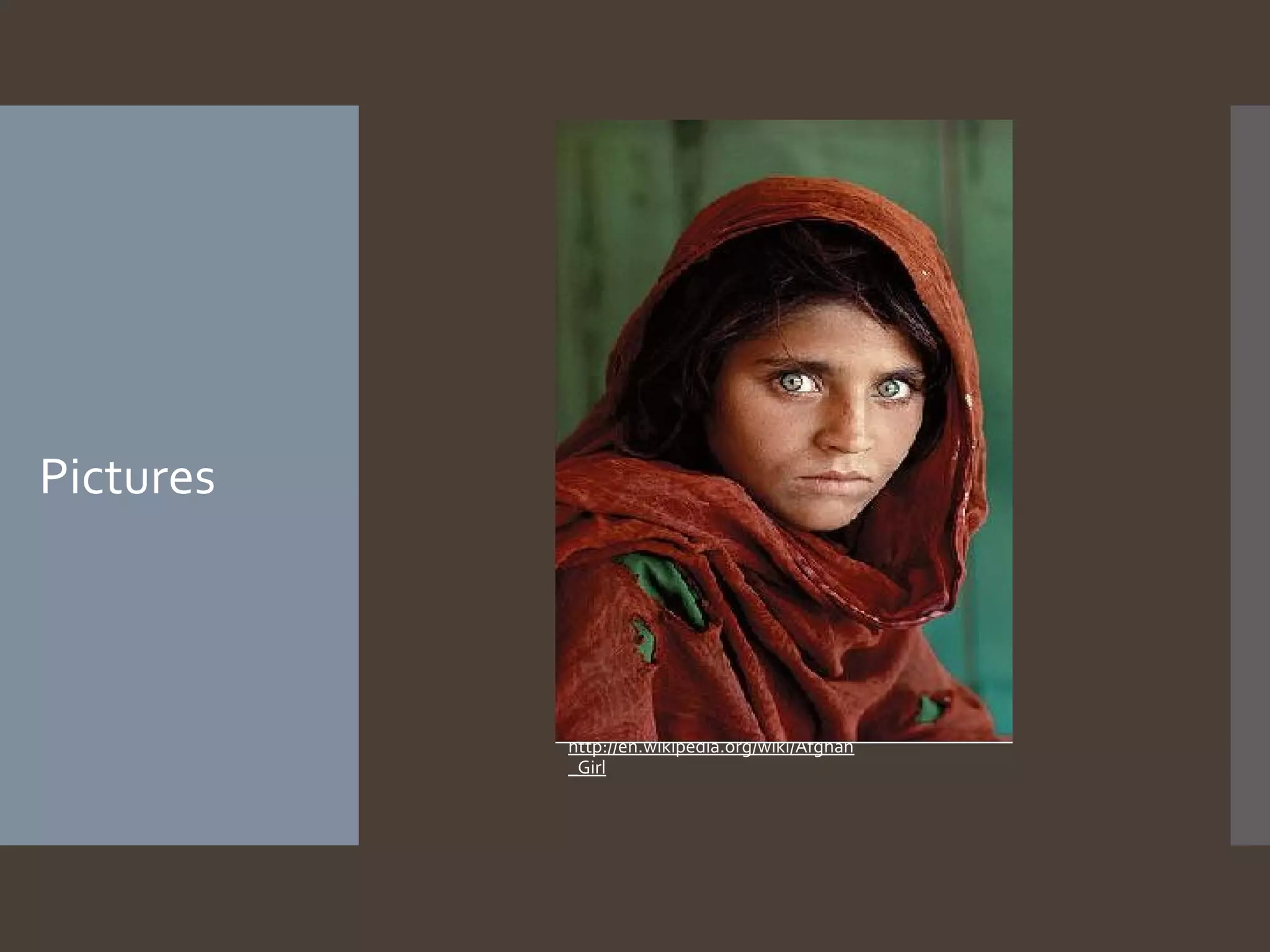
Pictures
Pictures

http://en.wikipedia.org/wiki/Afghan
_Girl
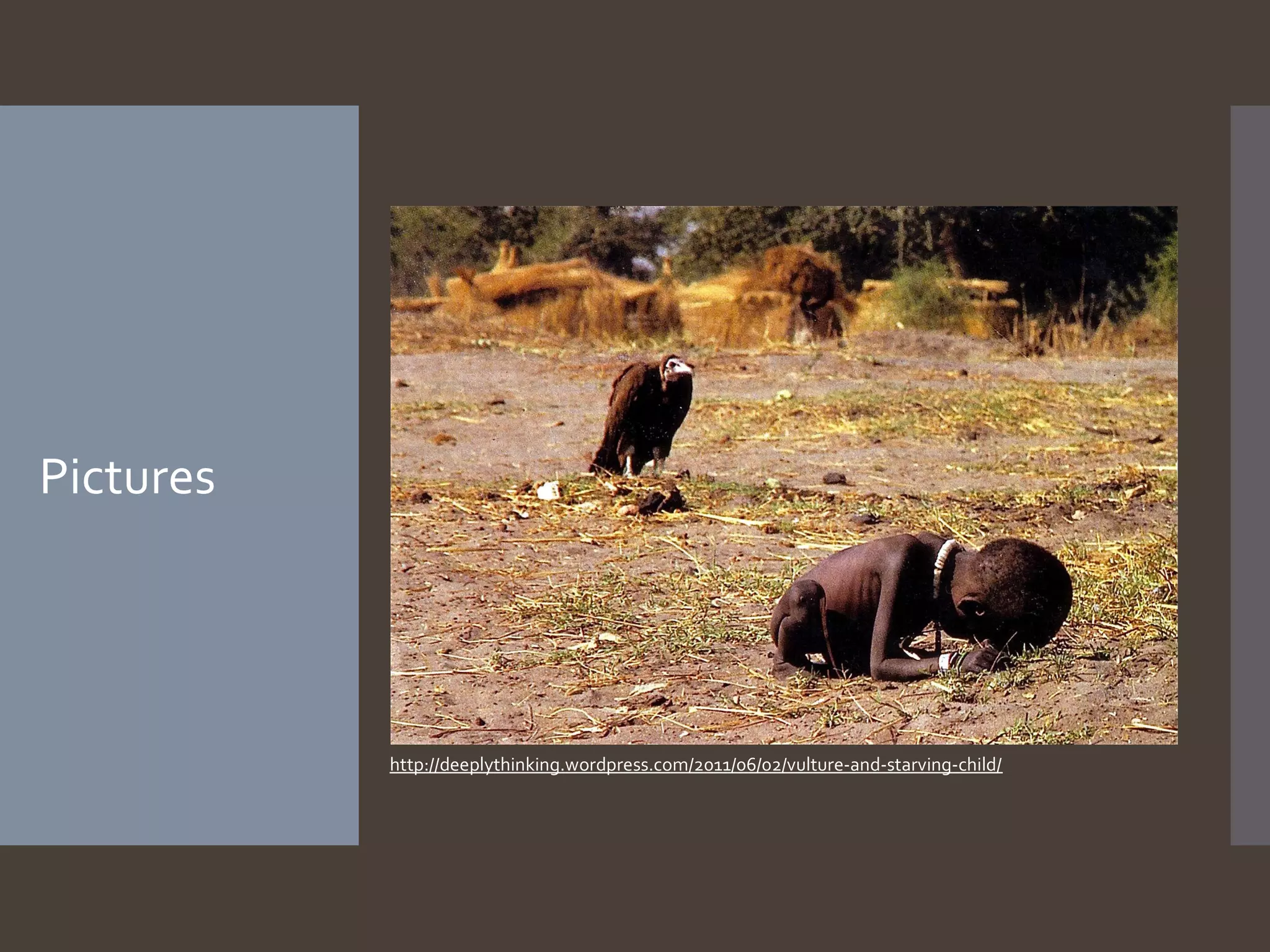
Pictures

http://deeplythinking.wordpress.com/2011/06/02/vulture-and-starving-child/
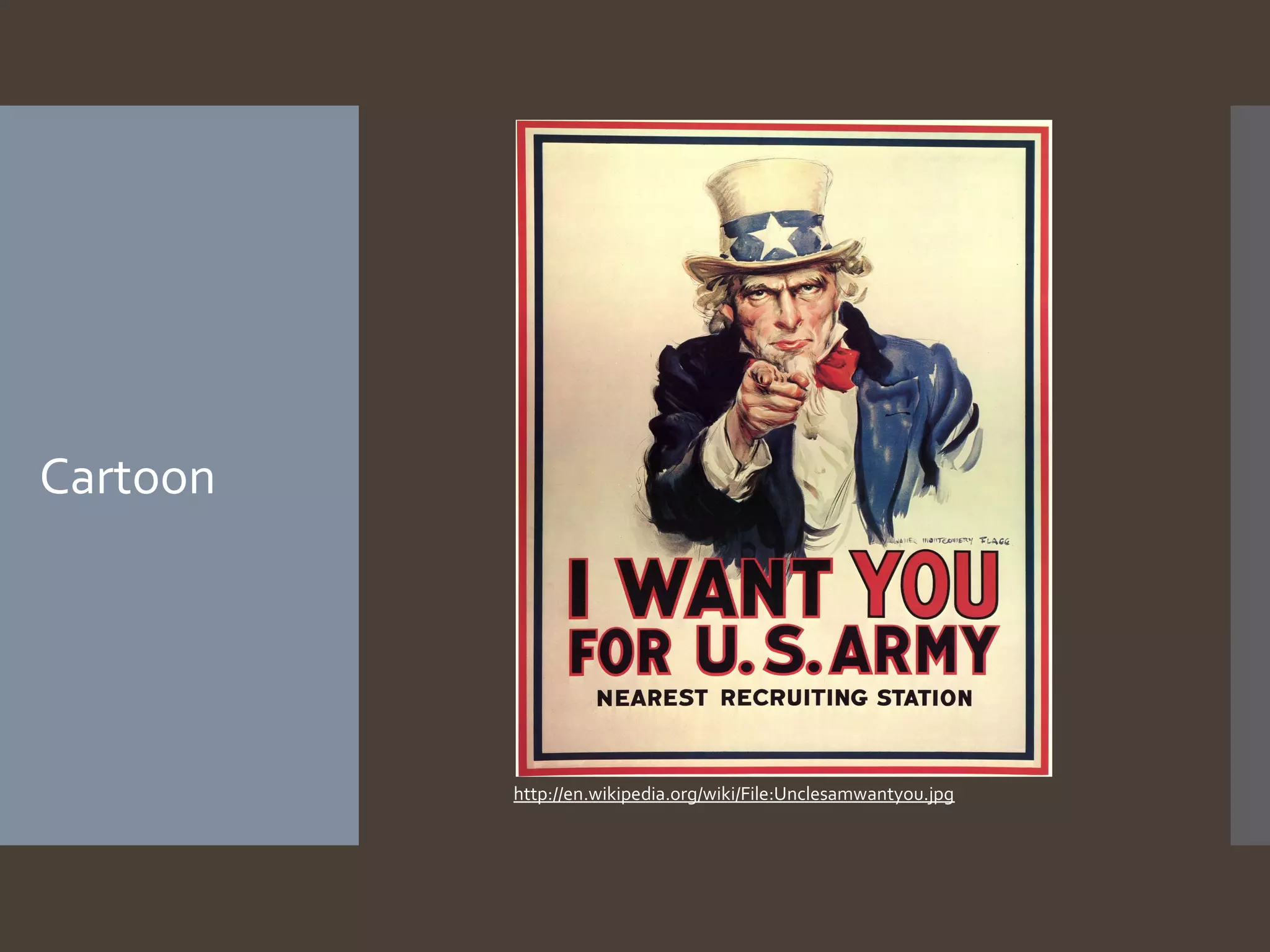
Poster
Cartoon

http://en.wikipedia.org/wiki/File:Unclesamwantyou.jpg
Projected
Visual Media

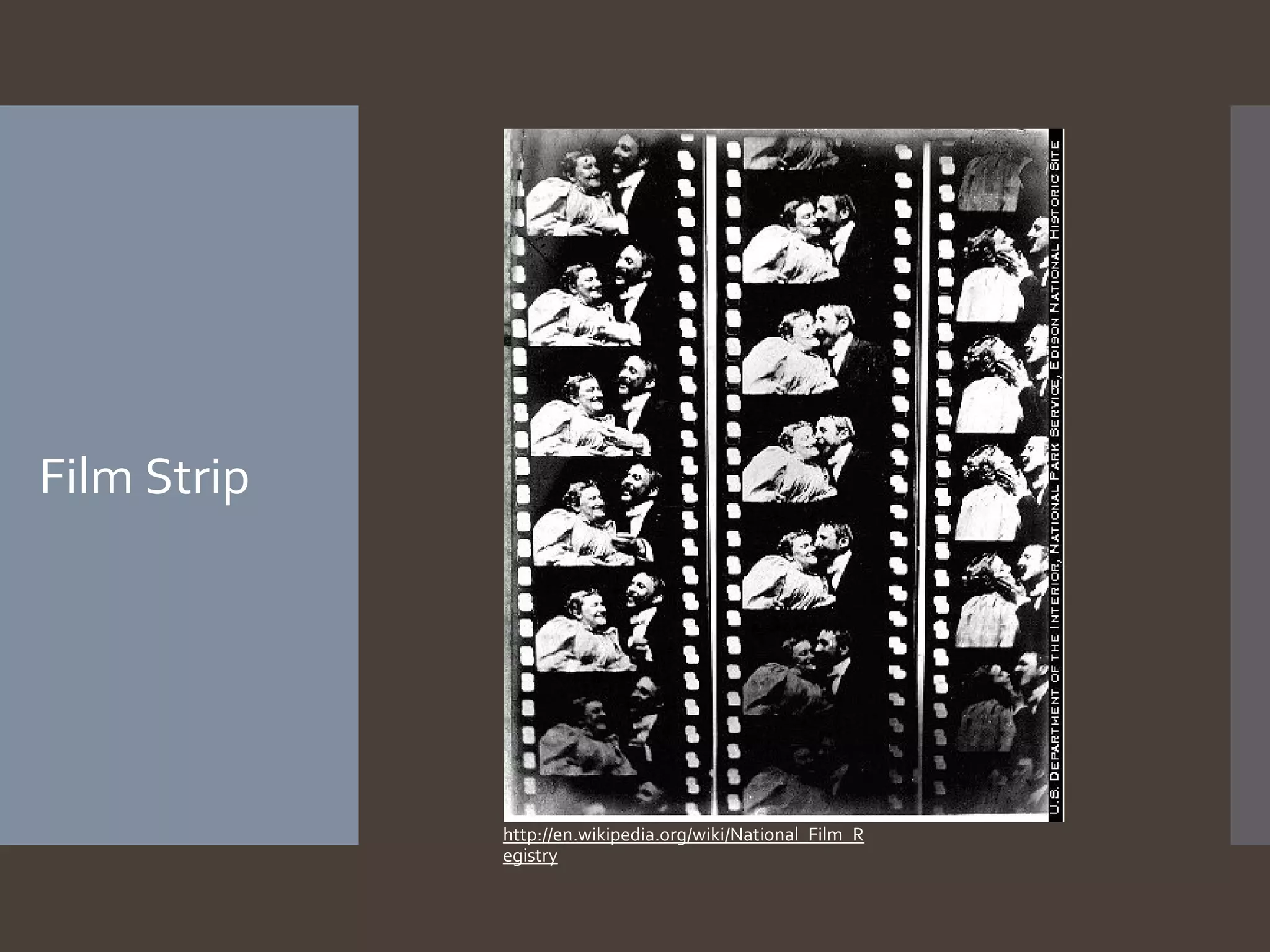
 Uses bright light to pass through a transparent
picture, by means of a lens, or electronic power
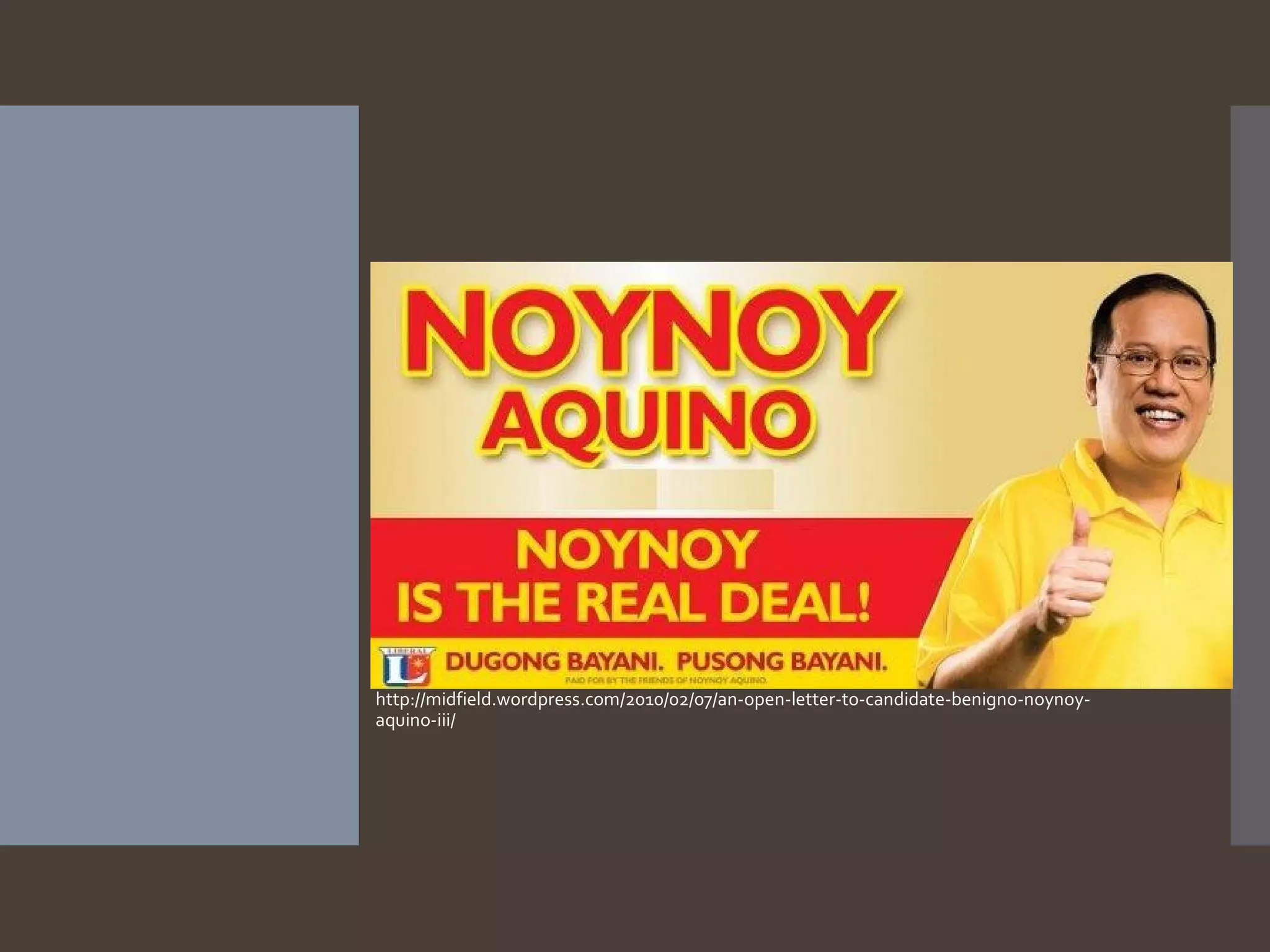
Cartoon
http://midfield.wordpress.com/2010/02/07/an-open-letter-to-candidate-benigno-noynoyaquino-iii/
Film Strip
Film Strip

http://en.wikipedia.org/wiki/National_Film_R
egistry
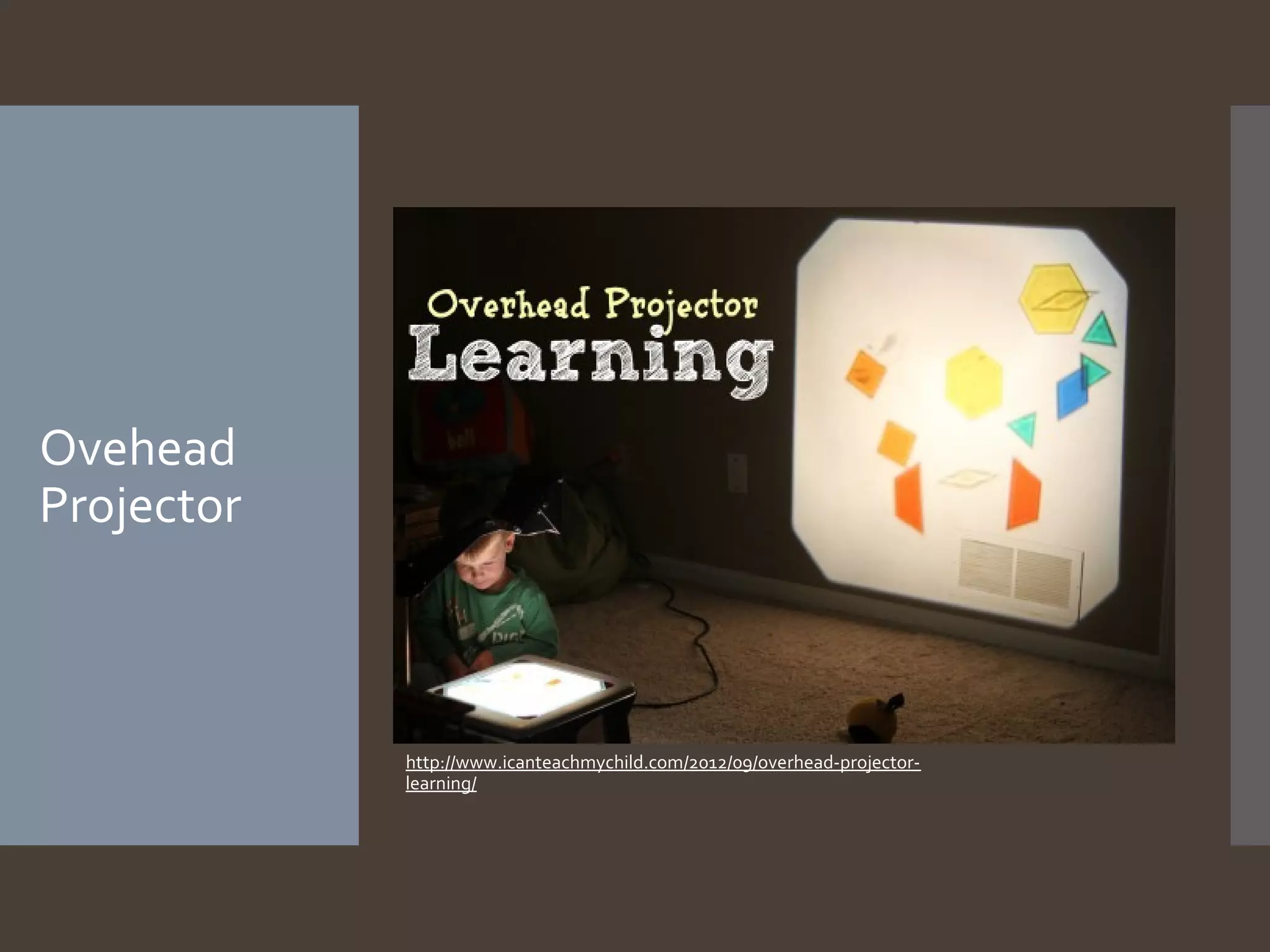
Overhead
Projector (OHP)
Ovehead
Projector

http://www.icanteachmychild.com/2012/09/overhead-projectorlearning/
Presentations
Presentation
s

http://freedesktopwallpapersite.com/7-Lessons-From-the-World%5C's-Most-CaptivatingPresenters-
Integration of
Visual Media in
Education
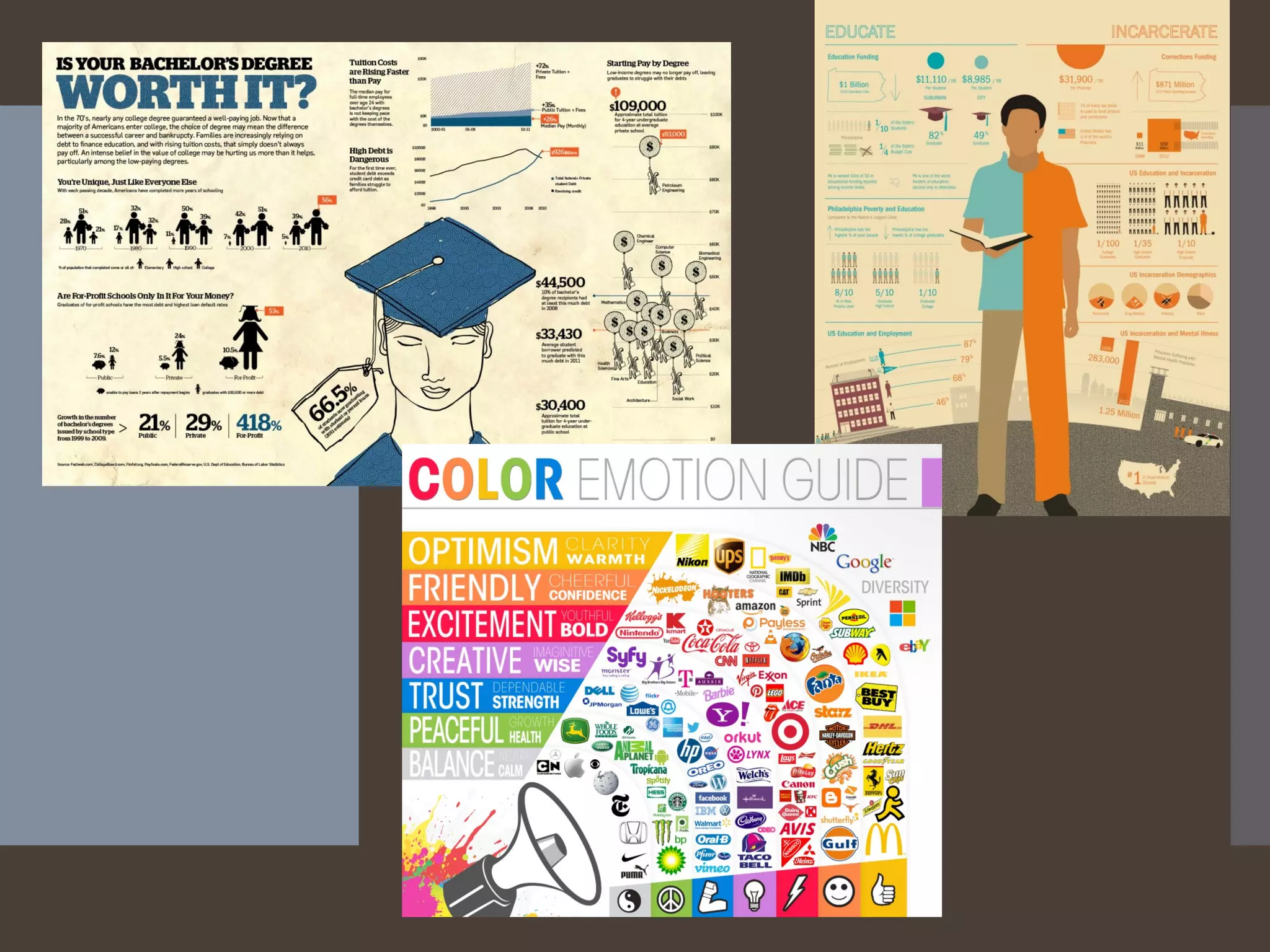
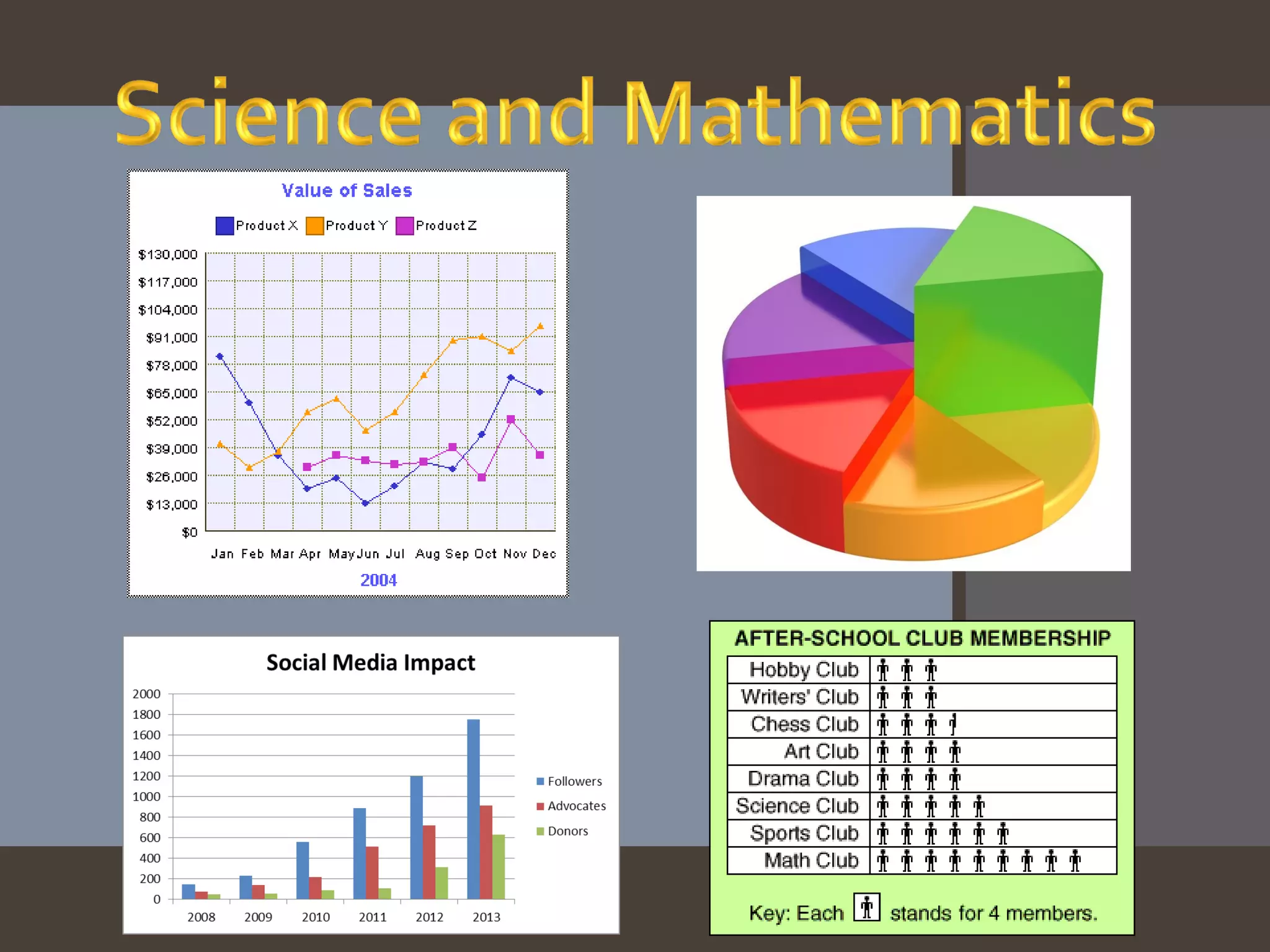
 Information graphics or infographics are graphic
visual representations of information, data or
knowledge. These graphics present complex
information quickly and clearly.

Infographic

 An infographic (information graphic) is a
representation of information in a graphic format
designed to make the data easily understandable
at a glance. People use infographics to quickly
communicate a message, to simplify the
presentation of large amounts of data, to see data
patterns and relationships, and to monitor changes
in variables over time.
Educational
Television

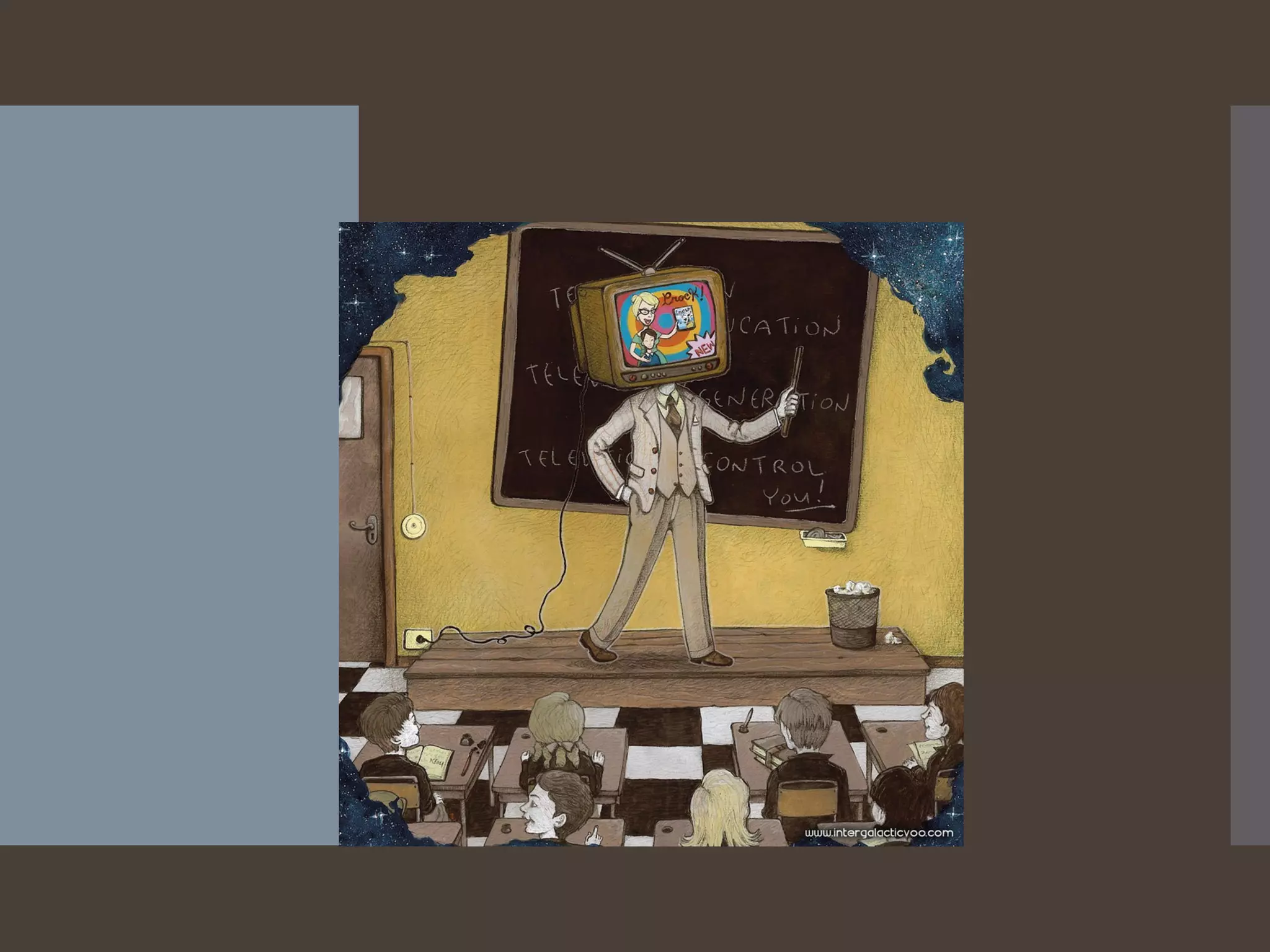
 the use of television programs in the field
of distance education. It may be in the form of
individual television programs or
dedicated specialty channels
 Enriches lessons through documentary-type
programs; or
 Teaches content directly.
Presentation
s

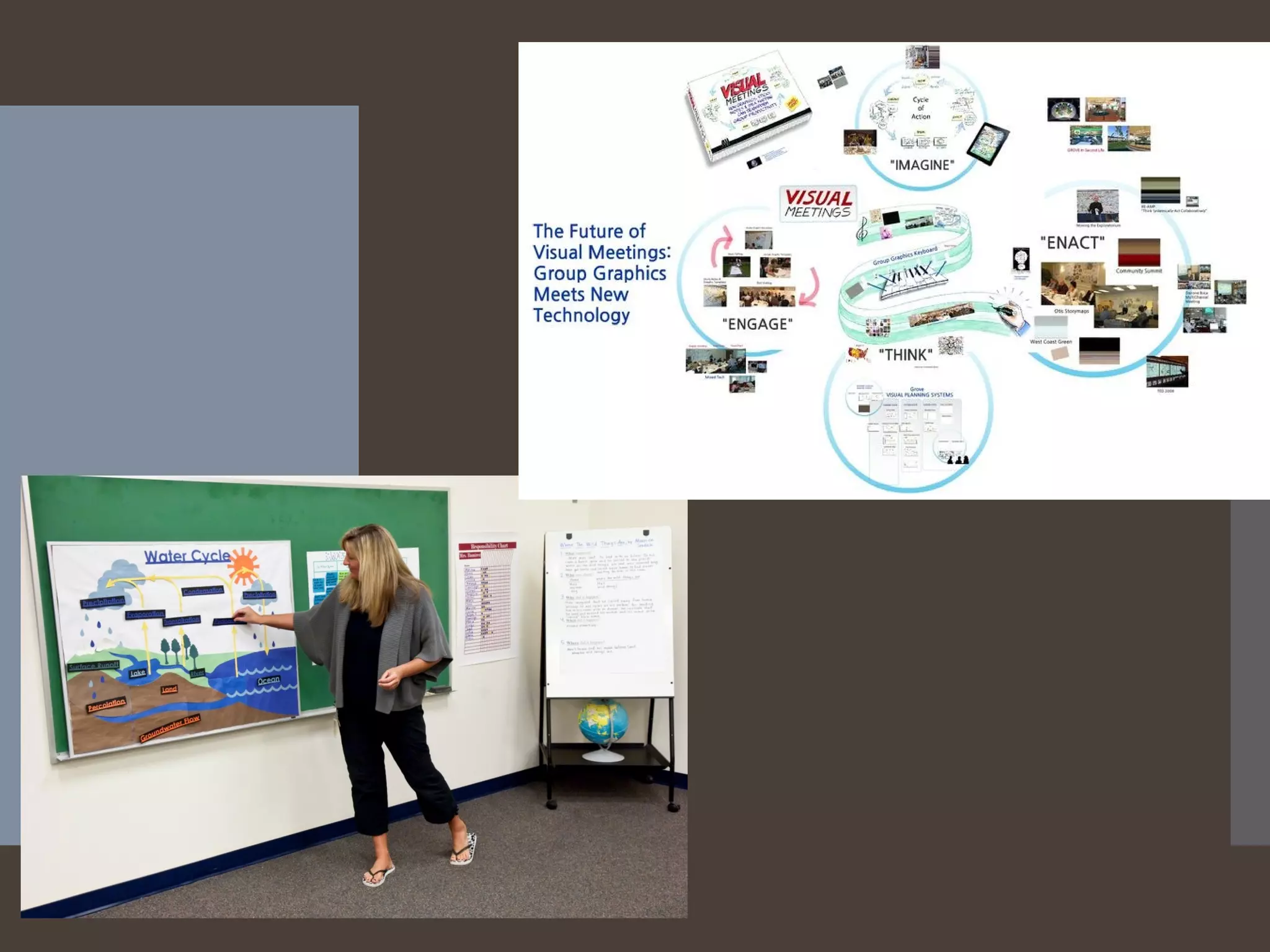
 Visual aids
 Powerpoint Presentations
 Prezi Presentations
 Video Cassettes
 Video Discs

Videos

 Interactive Video
 Video Conferencing
 Youtube
Principles of
Compositional
Design
Principles of
Design
The principles of
design are the
recipe for a good
work of art. The
principles
combine
the
elements to an
aesthetic
placement
of
things that will
produce a good
design.

•
•
•
•
•
•

Center of Interest
Balance
Harmony
Contrast
Directional Movement
Rhythm
Center of
Interest

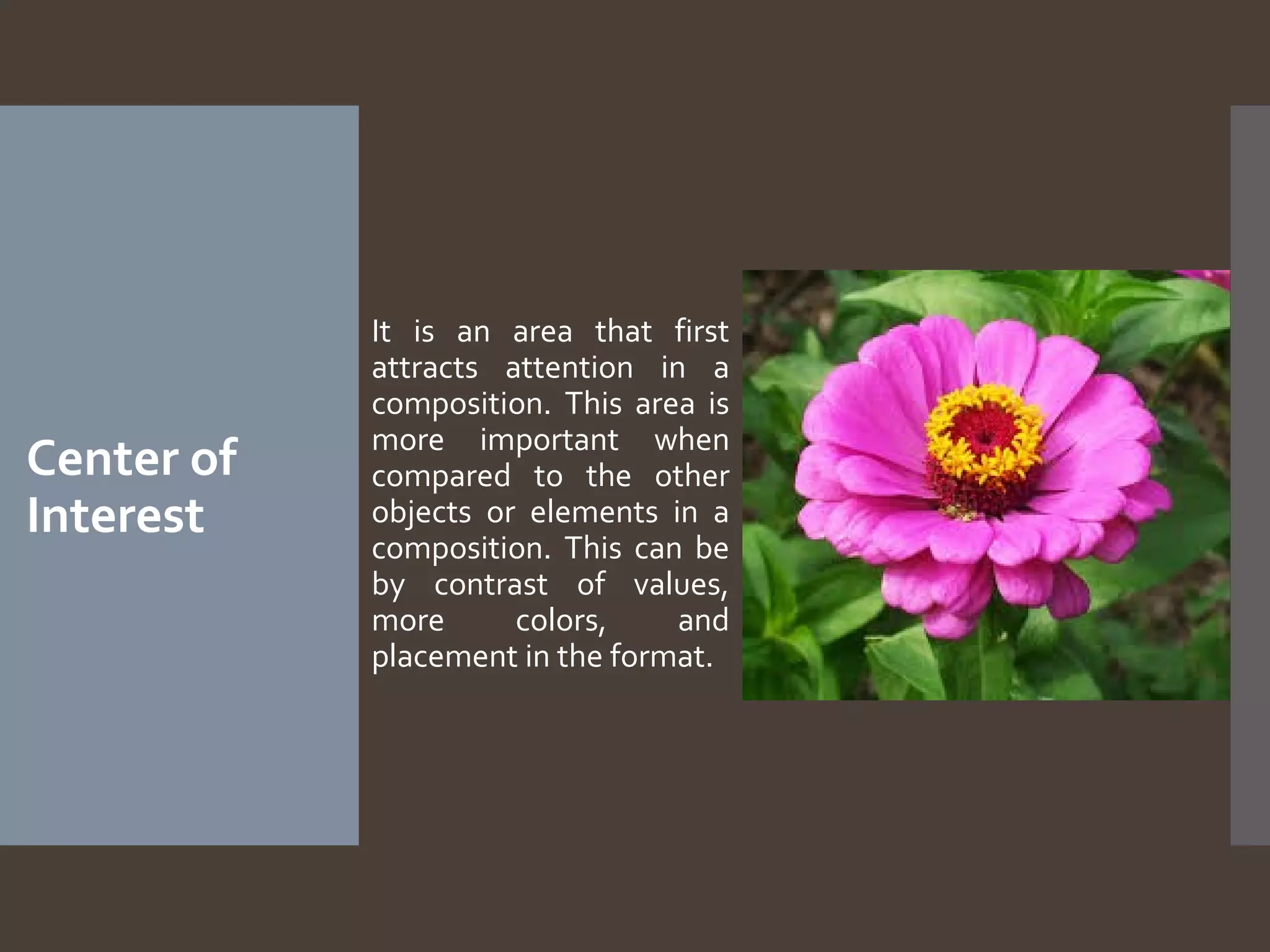
It is an area that first
attracts attention in a
composition. This area is
more important when
compared to the other
objects or elements in a
composition. This can be
by contrast of values,
more
colors,
and
placement in the format.
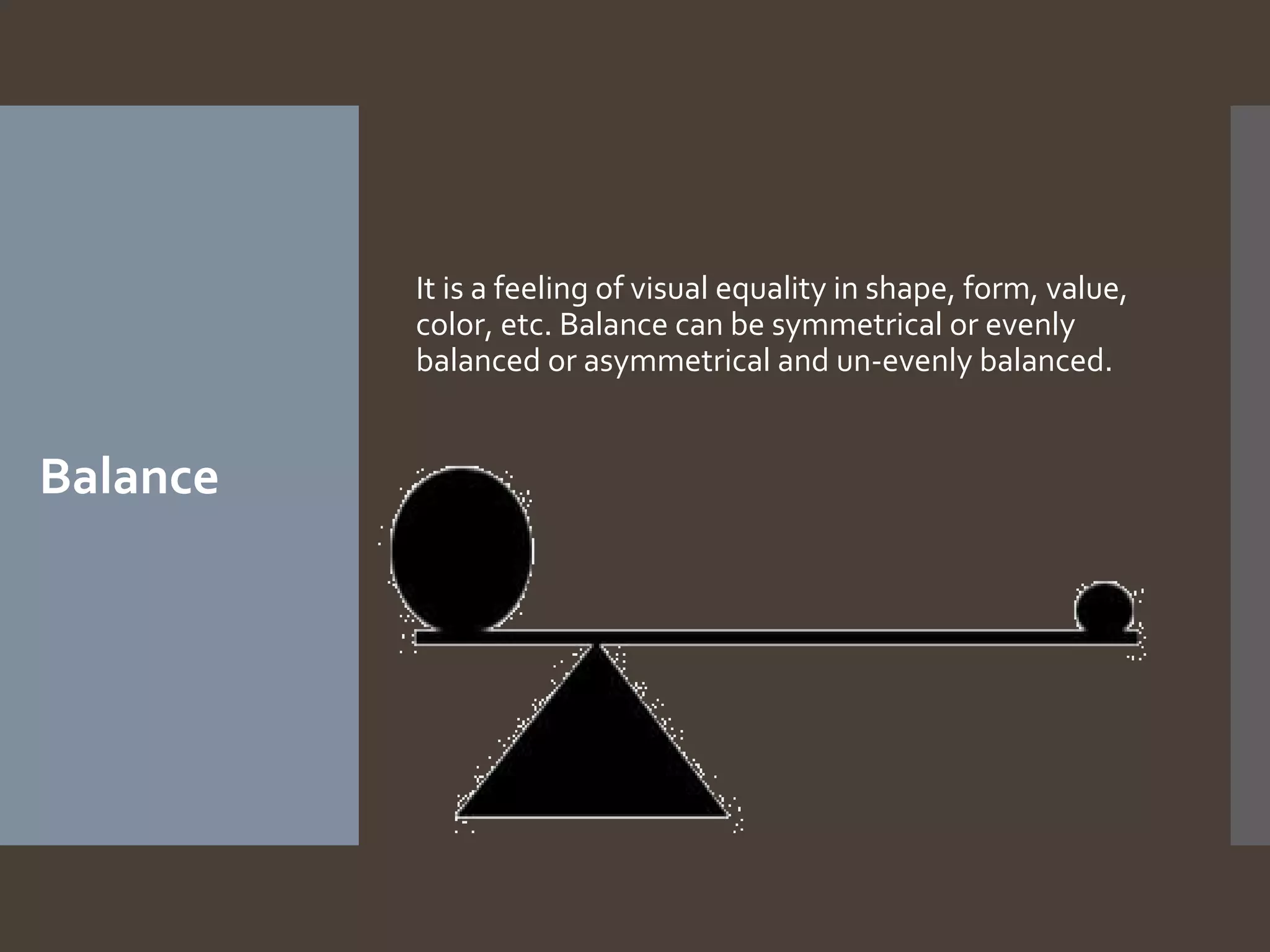
It is a feeling of visual equality in shape, form, value,
color, etc. Balance can be symmetrical or evenly
balanced or asymmetrical and un-evenly balanced.

Balance
Harmony

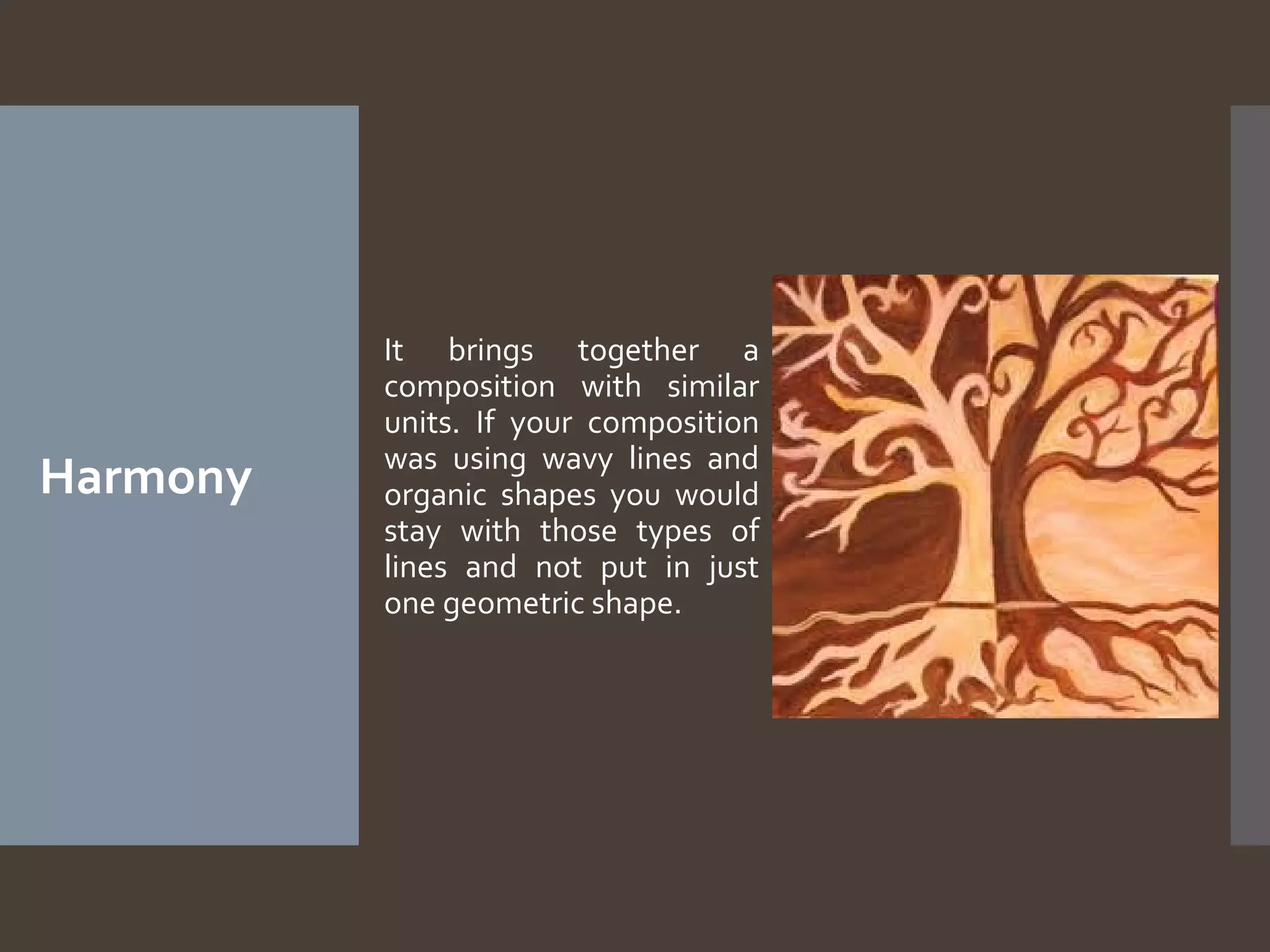
It brings together a
composition with similar
units. If your composition
was using wavy lines and
organic shapes you would
stay with those types of
lines and not put in just
one geometric shape.
Contrast

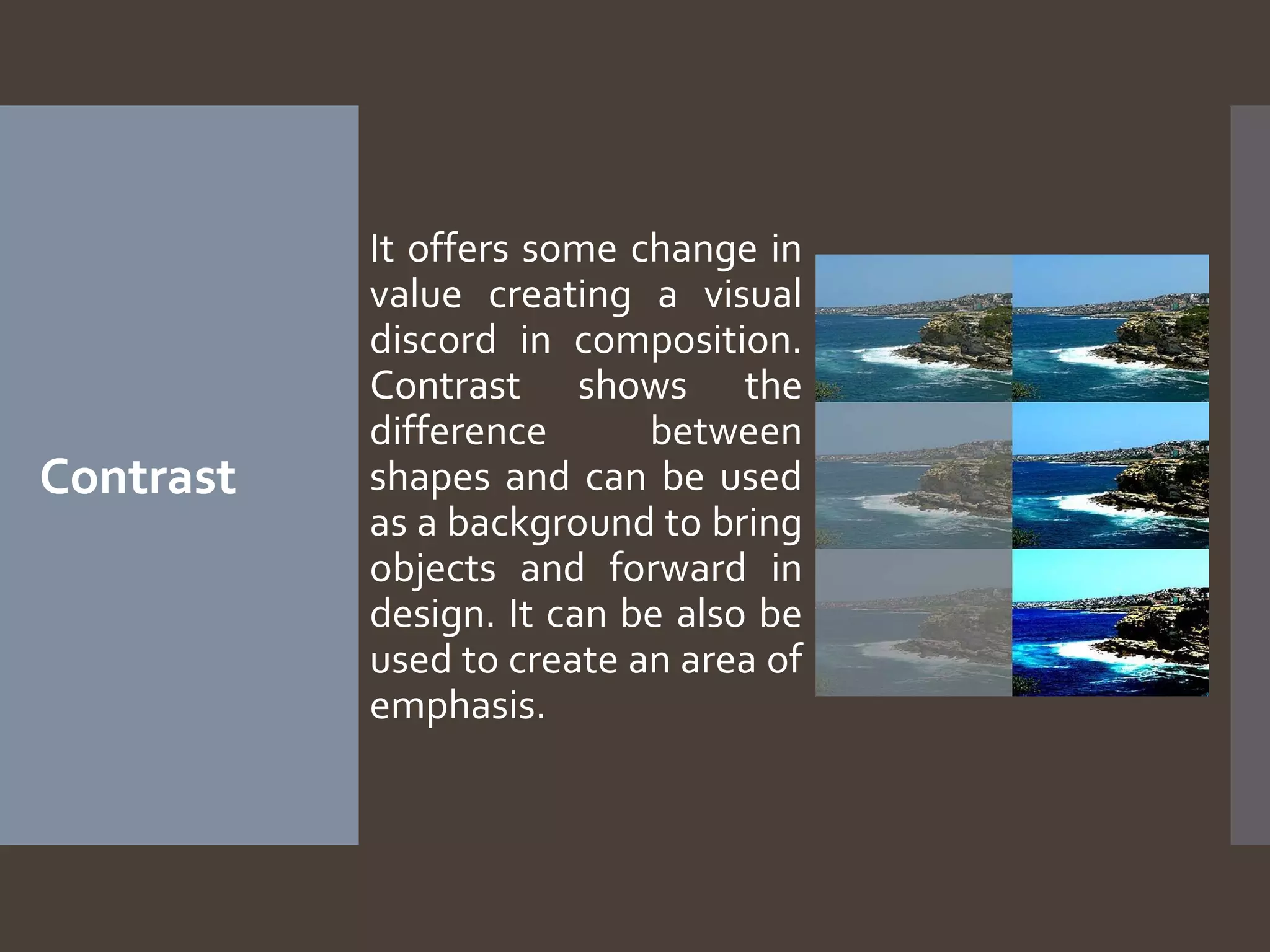
It offers some change in
value creating a visual
discord in composition.
Contrast shows the
difference
between
shapes and can be used
as a background to bring
objects and forward in
design. It can be also be
used to create an area of
emphasis.
Directional
Movement

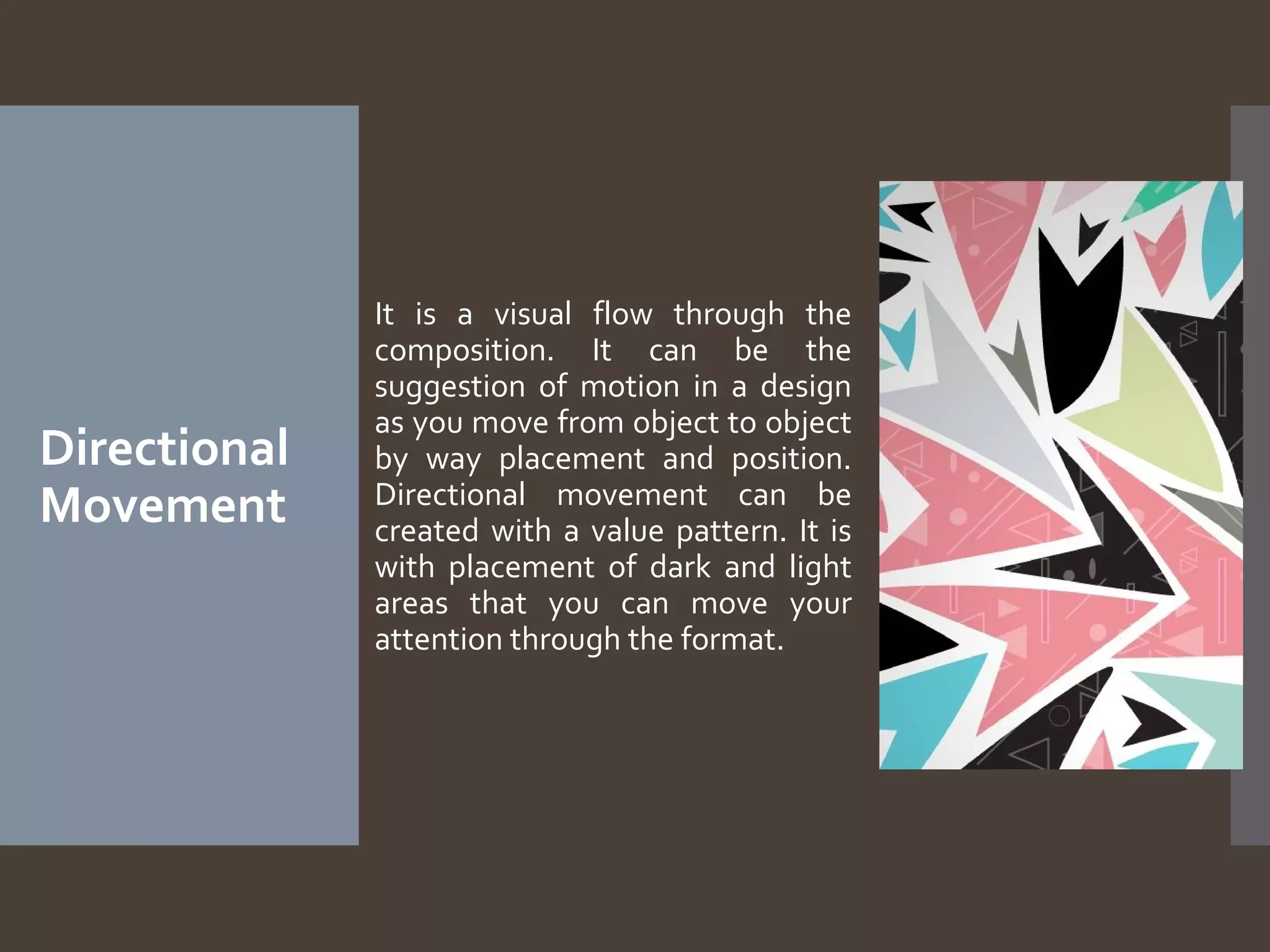
It is a visual flow through the
composition. It can be the
suggestion of motion in a design
as you move from object to object
by way placement and position.
Directional movement can be
created with a value pattern. It is
with placement of dark and light
areas that you can move your
attention through the format.
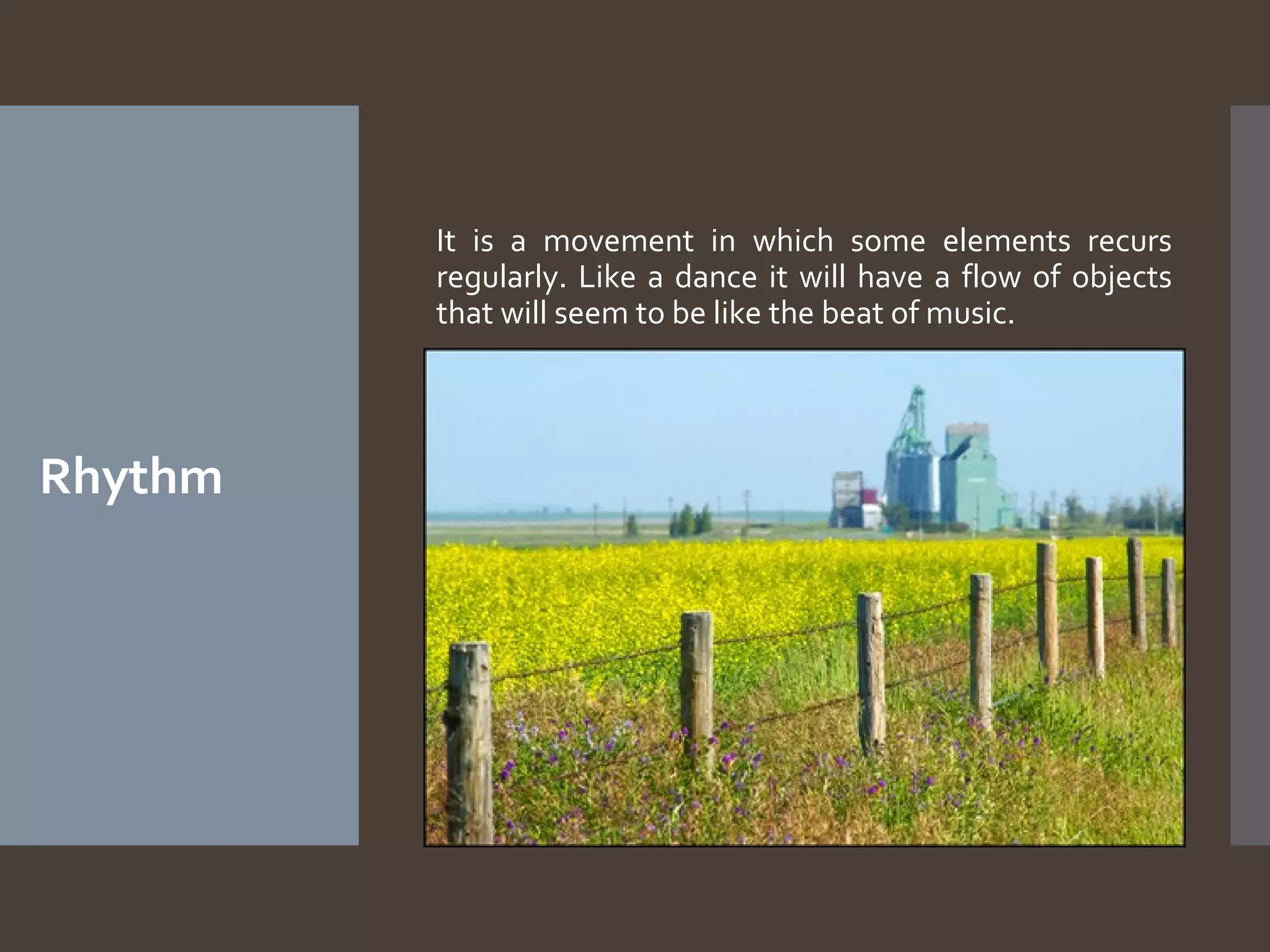
It is a movement in which some elements recurs
regularly. Like a dance it will have a flow of objects
that will seem to be like the beat of music.

Rhythm

EdTech101 THW - Visual Media

Editor's Notes

  • #55 http://mashable.com/category/infographics/ http://whatis.techtarget.com/definition/infographics http://www.researchthroughgaming.com/wp-content/uploads/2013/11/Color_Emotion_Guide22.png http://www.infographicsvillage.com/wp-content/uploads/2013/08/Is-Your-Bachelors-Degree-Worth-It-Infographic.jpg http://infogr8.com/wp-content/uploads/Education-vs-Incarceration-infographic.jpg
  • #57 http://en.wikipedia.org/wiki/Educational_television http://www.col.org/PublicationDocuments/pub_Use_Integration_of_Media_04_web.pdf http://th01.deviantart.net/fs31/PRE/f/2008/198/c/0/Television_Education_by_intergalacticvoo.jpg
  • #59 http://info.variquest.com/Portals/168961/images/Varitronics0522_0233.jpg http://www.davidsibbet.com/.a/6a00d834558f5869e20133f53478fd970b-800wi
  • #61 http://www.col.org/PublicationDocuments/pub_Use_Integration_of_Media_04_web.pdf