
INFORMATION
TECHNOLOGY IN
SUPPORT OF
STUDENT-
CENTERED
LEARNING
The idea of student-centered
learning is not a recent idea. In fact, as
early as the 20th century, educational
educators such as John Dewey argued
for a highly active and individualized
pedagogical methods which place the
student at the center of the teaching-
learning process.
In addition, suggestions
shall be made on how a
student-centered classroom
(SCL) can be supported by
information (IT).
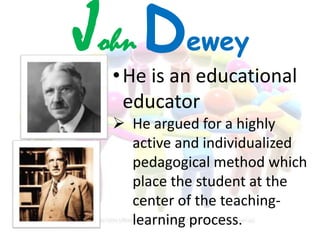
John Dewey
•He is an educational
educator
 He argued for a highly
active and individualized
pedagogical method which
place the student at the
center of the teaching-
learning process.
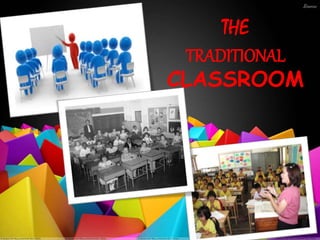
THE
TRADITIONAL
CLASSROOM
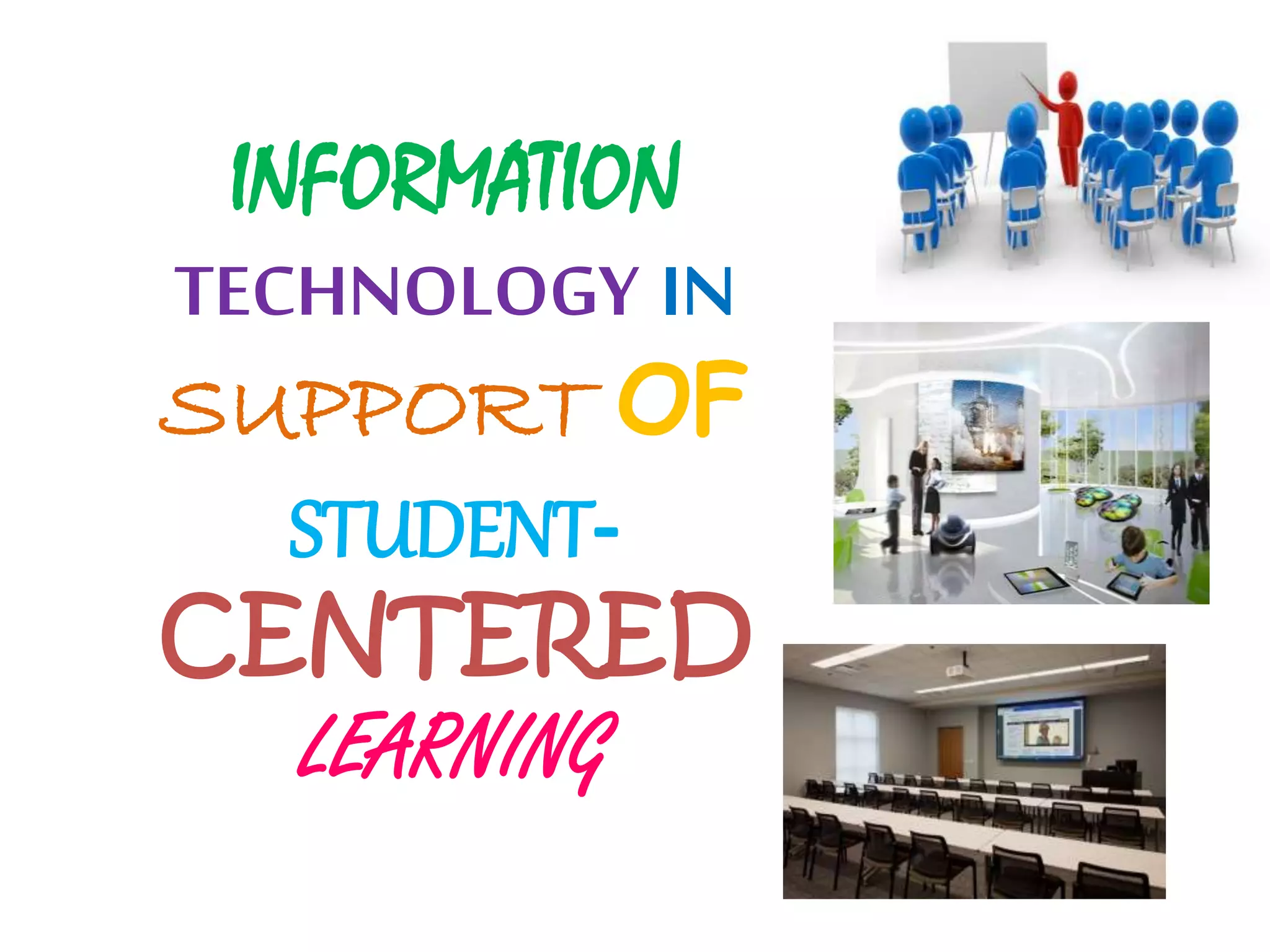
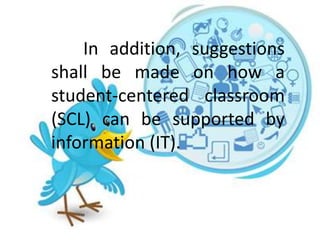
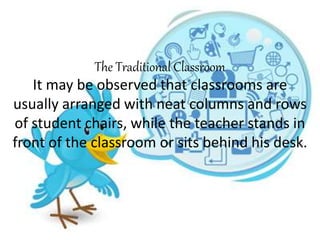
The Traditional Classroom
It may be observed that classrooms are
usually arranged with neat columns and rows
of student chairs, while the teacher stands in
front of the classroom or sits behind his desk.
However, after spending so many
minutes in lesson presentation and class
management, students can get restless
and fidgety. Often enough, the teacher
has to also manage misbehavior in class
as students start to talk among
themselves or simply stare away in lack
of attention. To prevent this situation,
teachers often make students take time
to work individually on worksheets can
help the situation.
THE
SCL
CLASSROOM
The SCL Classroom
John Dewey has described traditional learning as a
process in which the teacher pours information to
students learners, much like pouring water from a jug
into cups. This is based on the long accepted belief that
the teacher must perform his role of teaching so that
learning can occur. This learning approach is generally
known as direct instruction, and it has worked well for
obtaining many kinds of learning outcomes.
The problem with the direct
instruction approach to learning, however,
is the fact that the world’s societies have
began to change. Of course, this change
may not be strongly felt in many countries
in which the economy longer depends
primarily on factory workers who do
repetitive work without thinking on the
job. The traditional classroom and direct
instruction approach to learning conform
to this kind of economies.
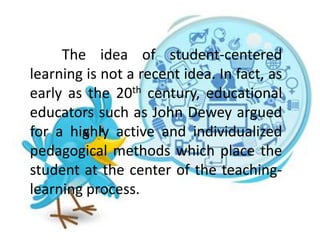
In contrast, in industrialized societies we find
knowledge-based economies in which workers
depend on information that can be accessed through
information and communication technologies (ICTs).
Desiring to gain effectiveness, efficiency and economy
in administration and instruction, schools in these
developed economies have also adopted the support
of ICTs. Their students have now become active not
passive learners, who can interact with other learners,
demonstrating independence and self-awareness in
the learning process.
Generally, the new school
classroom environment is
characterized into:
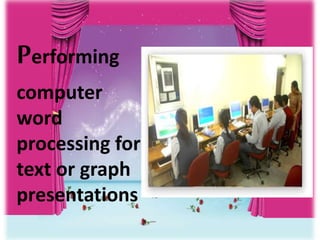
Performing
computer
word
processing for
text or graph
presentations
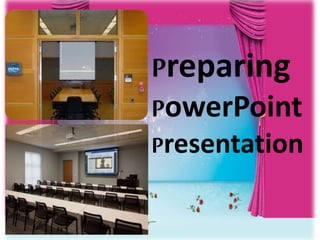
Preparing
PowerPoint
Presentation
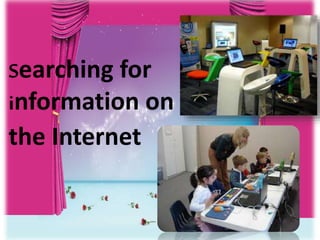
Searching for
information on
the Internet
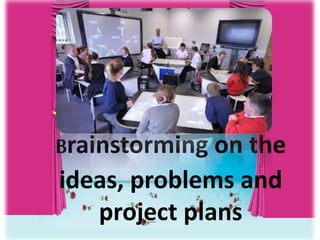
Brainstorming on the
ideas, problems and
project plans
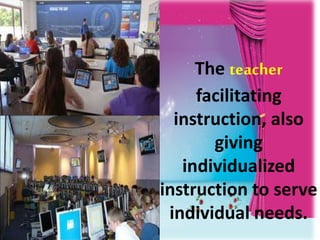
The teacher
facilitating
instruction, also
giving
individualized
instruction to serve
individual needs.
• Observably, there is a departure from
traditional worksheet, read-and-answer,
drill-and-practice activities. Students
also no longer need to mark the tests of
peers since the computer has programs
for test evaluation and computerized
scoring of results.
Given this new trends in teaching-and-
learning, it must be pointed out, however, the
traditional classroom activities – especially in less
developed countries-will continue to have a strong
place in the classroom. In spite of this setback
experienced in some countries, the option has
now been opened for the modern teacher to shift
gears to student centered learning.
THANK YOU FOR LISTENING!!!!
PREPARED BY:
BEVERLY A. DY
HAZEL ANN JAEN DAGODOG
FRANCIS NOEL ELARDO
Ed tech 2 report

Ed tech 2 report

  • 1.
  • 2.
    The idea ofstudent-centered learning is not a recent idea. In fact, as early as the 20th century, educational educators such as John Dewey argued for a highly active and individualized pedagogical methods which place the student at the center of the teaching- learning process.
  • 3.
    In addition, suggestions shallbe made on how a student-centered classroom (SCL) can be supported by information (IT).
  • 4.
    John Dewey •He isan educational educator  He argued for a highly active and individualized pedagogical method which place the student at the center of the teaching- learning process.
  • 5.
  • 6.
    The Traditional Classroom Itmay be observed that classrooms are usually arranged with neat columns and rows of student chairs, while the teacher stands in front of the classroom or sits behind his desk.
  • 7.
    However, after spendingso many minutes in lesson presentation and class management, students can get restless and fidgety. Often enough, the teacher has to also manage misbehavior in class as students start to talk among themselves or simply stare away in lack of attention. To prevent this situation, teachers often make students take time to work individually on worksheets can help the situation.
  • 8.
  • 9.
    The SCL Classroom JohnDewey has described traditional learning as a process in which the teacher pours information to students learners, much like pouring water from a jug into cups. This is based on the long accepted belief that the teacher must perform his role of teaching so that learning can occur. This learning approach is generally known as direct instruction, and it has worked well for obtaining many kinds of learning outcomes.
  • 10.
    The problem withthe direct instruction approach to learning, however, is the fact that the world’s societies have began to change. Of course, this change may not be strongly felt in many countries in which the economy longer depends primarily on factory workers who do repetitive work without thinking on the job. The traditional classroom and direct instruction approach to learning conform to this kind of economies.
  • 11.
    In contrast, inindustrialized societies we find knowledge-based economies in which workers depend on information that can be accessed through information and communication technologies (ICTs). Desiring to gain effectiveness, efficiency and economy in administration and instruction, schools in these developed economies have also adopted the support of ICTs. Their students have now become active not passive learners, who can interact with other learners, demonstrating independence and self-awareness in the learning process.
  • 12.
    Generally, the newschool classroom environment is characterized into:
  • 13.
  • 14.
  • 15.
  • 16.
    Brainstorming on the ideas,problems and project plans
  • 17.
  • 18.
    • Observably, thereis a departure from traditional worksheet, read-and-answer, drill-and-practice activities. Students also no longer need to mark the tests of peers since the computer has programs for test evaluation and computerized scoring of results.
  • 19.
    Given this newtrends in teaching-and- learning, it must be pointed out, however, the traditional classroom activities – especially in less developed countries-will continue to have a strong place in the classroom. In spite of this setback experienced in some countries, the option has now been opened for the modern teacher to shift gears to student centered learning.
  • 20.
    THANK YOU FORLISTENING!!!! PREPARED BY: BEVERLY A. DY HAZEL ANN JAEN DAGODOG FRANCIS NOEL ELARDO