DR MRS OLAYINKA A OLASODE
MBBCH, FWACP,FACP
CONSULTANT PHYSICIAN & DERMATOLOGIST
OBAFEMI AWOLOWO UNIVERSITY, ILE IFE
ECZEMA/DERMATITIS
DEFINITION
 Eczema is a group of skin diseases characterized
by irritation and inflammation of the skin.
 Eczema is a Greek word meaning ‘to boil’
 Therefore eczema skin is an angry disturbed skin.
 Eczema means dermatitis
 All eczema are dermatitis but not all dermatitis
are eczemas
 Eczema in dermatology is not the same as
commonly used nomenclature for a skin disease
among people.
 There are various types of eczema, with slightly
different causes and symptoms.
Three stages of eczema
1. Acute eczemas are weepy, wet, red and pruritic.
2. Sub acute eczema is crusted
3. Chronic eczema is characterized by lichenification.
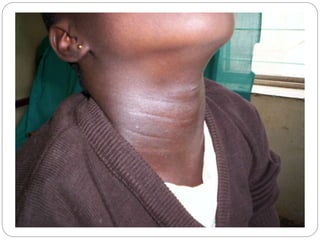
 Lichenified skin is hyperpigmented, thickened with
accentuation of skin markings like the bark of a tree.
Usually follows chronic scratching.
Clinical features of eczema
 Red, inflamed skin
 Dry, cracked skin
 Itchy skin
 Small water blisters on the skin,
 Thickened areas of skin (lichenification) in places
that are scratched frequently
 Scratch marks
 Damaged bleeding skin
 Infected skin
Histology Picture in Eczemas
• In the acute stage, intercellular epidermal oedema
(spongiosis) is most prominent.
• In the subacute stage, spongiosis
diminishes and hyperplasia and thickening
of the prickle-cell layer (acanthosis)
increases.
• In the chronic stage acanthosis is the
dominant feature.
TWO MAJOR CLASSIFICATION IN
ECZEMA
 Eczema may be induced by a wide range of
external and internal factors acting singly or in
combination. Two main classification are:
 Endogenous eczema: based on an inherent
potentiality to have eczema. No contact with a
stimulus needed. Recurrent, self abating
 Exogenous Eczema : contact with outside
stimulant needed. Contact irritant and Contact
allergic types.
CLASSIFICATION OF ECZEMA
 By age e.g Infantile eczema
 By aetiology e.g Atopic eczema
 By anatomical site e.g hand and feet eczema
 By distribution in peculiar areas e.g Seborrhoeic
dermatitis
 By shape e.g Discoid or coin shaped eczema,
Lichen striatus
 By duration e.g Lichen Simplex Chronicus
Endogenous Eczema
• Atopic
• Seborrhoeic dermatitis
• Asteatotic eczema
• Nummular eczema
• Dry discoid eczema
• Exudative discoid and
Lichenoid dermatitis
• Chronic superficial scaly
dermatitis
• Pityriasis alba
• Gravitational
• Juvenile plantar
dermatosis
• Pompholyx
• Chronic acral dermatitis
• Hyperkeratotic palmar
dermatitis
• Metabolic eczema
• Unusual patterns
Atopic eczema
 History suggestive of atopy in patient or a family
member
 Usually inherited
 Usually in the young
 May be seasonal
 Recurrent excercebations
 Flexural in distribution
Seborrhoeic eczema
 Seborrhoeic eczema is associated with
Malassezia yeast, which normally lives on the
skin.
 It affects sebaceous producing areas in adults
 Ketoconazole compounds, 2% Selenium
sulphide shampoo are effective
 Infantile Seborrhoeic eczema is common in
babies under one and involves the scalp, neck
and nappy area.
 The greasy rash usually starts on the scalp as
mild dandruff (sometimes called cradle cap in
babies).
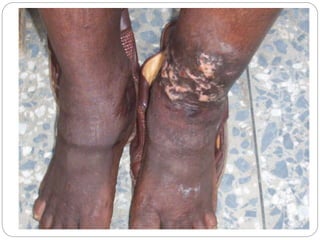
Varicose eczema
 Varicose eczema is found in older people
 Also called Venous / gravitational eczema
 It occurs on the lower legs
 Its associated with poor circulation
Discoid eczema
 Discoid eczema can occur in adults at any age,
but is more common in later life.
 Caused by dry skin becoming infected.
 It appears as disc or coined-shaped lesions
Exogenous Eczema
 Irritant dermatitis
 Allergic contact
dermatitis
 Infective dermatitis
 Photo-allergic contact
dermatitis
 Eczematous
polymorphic light
eruption
 Eczematous
dermatophytosis
 Dermatophytide
Pompholyx
Irritant contact eczema
 Irritant contact eczema is caused by contact with
irritants like acid, sodium hydroxide, common
household detergents and cleaning products.
 Reaction is almost immediate and there can be
burns.
Allergic contact eczema
 Allergic contact eczema develops when
substances cause an allergic reaction. The rash
usually starts at the site of contact with the
substance, but can spread to other areas.
 There is a delay between contact with the antigen
and the manifestation of eczema
 Allergen can be identified using a Patch Test
Treatment of eczema
 Emollients
 Mild steroid creams
 Stronger steroid creams, such as betamethasone
(Betnovate)
 Immunosuppressant tablets, such as cyclosporine for
severe eczema with significant side-effects
 Topical immunosuppressants creams or ointments to
reduce inflammation e.g tacrolimus (Protopic) and
pimecrolimus (Elidel). .
 Antibiotics, such as flucloxacillin or erythromycin, will be
prescribed if your skin becomes infected.
 Antihistamines to relieve itching
ECZEMA presentation for physiotherapy ppt

ECZEMA presentation for physiotherapy ppt

  • 1.
    DR MRS OLAYINKAA OLASODE MBBCH, FWACP,FACP CONSULTANT PHYSICIAN & DERMATOLOGIST OBAFEMI AWOLOWO UNIVERSITY, ILE IFE ECZEMA/DERMATITIS
  • 2.
    DEFINITION  Eczema isa group of skin diseases characterized by irritation and inflammation of the skin.  Eczema is a Greek word meaning ‘to boil’  Therefore eczema skin is an angry disturbed skin.  Eczema means dermatitis  All eczema are dermatitis but not all dermatitis are eczemas  Eczema in dermatology is not the same as commonly used nomenclature for a skin disease among people.  There are various types of eczema, with slightly different causes and symptoms.
  • 3.
    Three stages ofeczema 1. Acute eczemas are weepy, wet, red and pruritic. 2. Sub acute eczema is crusted 3. Chronic eczema is characterized by lichenification.  Lichenified skin is hyperpigmented, thickened with accentuation of skin markings like the bark of a tree. Usually follows chronic scratching.
  • 4.
    Clinical features ofeczema  Red, inflamed skin  Dry, cracked skin  Itchy skin  Small water blisters on the skin,  Thickened areas of skin (lichenification) in places that are scratched frequently  Scratch marks  Damaged bleeding skin  Infected skin
  • 5.
    Histology Picture inEczemas • In the acute stage, intercellular epidermal oedema (spongiosis) is most prominent. • In the subacute stage, spongiosis diminishes and hyperplasia and thickening of the prickle-cell layer (acanthosis) increases. • In the chronic stage acanthosis is the dominant feature.
  • 6.
    TWO MAJOR CLASSIFICATIONIN ECZEMA  Eczema may be induced by a wide range of external and internal factors acting singly or in combination. Two main classification are:  Endogenous eczema: based on an inherent potentiality to have eczema. No contact with a stimulus needed. Recurrent, self abating  Exogenous Eczema : contact with outside stimulant needed. Contact irritant and Contact allergic types.
  • 7.
    CLASSIFICATION OF ECZEMA By age e.g Infantile eczema  By aetiology e.g Atopic eczema  By anatomical site e.g hand and feet eczema  By distribution in peculiar areas e.g Seborrhoeic dermatitis  By shape e.g Discoid or coin shaped eczema, Lichen striatus  By duration e.g Lichen Simplex Chronicus
  • 8.
    Endogenous Eczema • Atopic •Seborrhoeic dermatitis • Asteatotic eczema • Nummular eczema • Dry discoid eczema • Exudative discoid and Lichenoid dermatitis • Chronic superficial scaly dermatitis • Pityriasis alba • Gravitational • Juvenile plantar dermatosis • Pompholyx • Chronic acral dermatitis • Hyperkeratotic palmar dermatitis • Metabolic eczema • Unusual patterns
  • 9.
    Atopic eczema  Historysuggestive of atopy in patient or a family member  Usually inherited  Usually in the young  May be seasonal  Recurrent excercebations  Flexural in distribution
  • 10.
    Seborrhoeic eczema  Seborrhoeiceczema is associated with Malassezia yeast, which normally lives on the skin.  It affects sebaceous producing areas in adults  Ketoconazole compounds, 2% Selenium sulphide shampoo are effective  Infantile Seborrhoeic eczema is common in babies under one and involves the scalp, neck and nappy area.  The greasy rash usually starts on the scalp as mild dandruff (sometimes called cradle cap in babies).
  • 11.
    Varicose eczema  Varicoseeczema is found in older people  Also called Venous / gravitational eczema  It occurs on the lower legs  Its associated with poor circulation
  • 12.
    Discoid eczema  Discoideczema can occur in adults at any age, but is more common in later life.  Caused by dry skin becoming infected.  It appears as disc or coined-shaped lesions
  • 13.
    Exogenous Eczema  Irritantdermatitis  Allergic contact dermatitis  Infective dermatitis  Photo-allergic contact dermatitis  Eczematous polymorphic light eruption  Eczematous dermatophytosis  Dermatophytide Pompholyx
  • 14.
    Irritant contact eczema Irritant contact eczema is caused by contact with irritants like acid, sodium hydroxide, common household detergents and cleaning products.  Reaction is almost immediate and there can be burns.
  • 15.
    Allergic contact eczema Allergic contact eczema develops when substances cause an allergic reaction. The rash usually starts at the site of contact with the substance, but can spread to other areas.  There is a delay between contact with the antigen and the manifestation of eczema  Allergen can be identified using a Patch Test
  • 16.
    Treatment of eczema Emollients  Mild steroid creams  Stronger steroid creams, such as betamethasone (Betnovate)  Immunosuppressant tablets, such as cyclosporine for severe eczema with significant side-effects  Topical immunosuppressants creams or ointments to reduce inflammation e.g tacrolimus (Protopic) and pimecrolimus (Elidel). .  Antibiotics, such as flucloxacillin or erythromycin, will be prescribed if your skin becomes infected.  Antihistamines to relieve itching