Ecosystem
Aims of the lesson
1. By the end of the lesson y
must be able to define
ecosystem
2. Define biotic factors and
the 3 classification with
explanations and examples
• Producers
• Consumers
• Decomposers
Definition
Ecosystem is a community if
living and non living factors
that interact with one another.
The ecosystem consist of two
factors
• Biotic factor
• Abiotic factor
Biotic factor
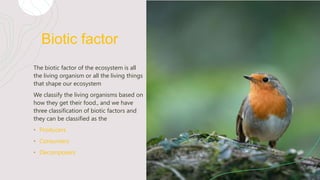
The biotic factor of the ecosystem is all
the living organism or all the living things
that shape our ecosystem
We classify the living organisms based on
how they get their food., and we have
three classification of biotic factors and
they can be classified as the
• Producers
• Consumers
• Decomposers
Classifying of biotic factors
a)Producers
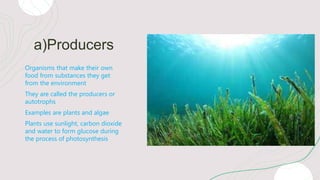
Organisms that make their own
food from substances they get
from the environment
They are called the producers or
autotrophs
Examples are plants and algae
Plants use sunlight, carbon dioxide
and water to form glucose during
the process of photosynthesis
b) Consumers
Organisms that cannot make or
produce their own food and they
have to eat other animals to
survive.
They are called the consumers or
heterotrophs
We classify the consumers into
three groups
Primary consumers (herbivores)
Animals that only feed or eat plants
, examples are zebras, buffalos,
rhino and sheep etc.
Continuation
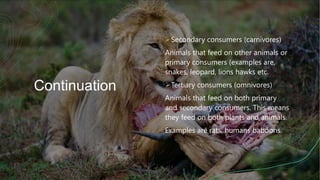
Secondary consumers (carnivores)
Animals that feed on other animals or
primary consumers (examples are,
snakes, leopard, lions hawks etc.
Tertiary consumers (omnivores)
Animals that feed on both primary
and secondary consumers. This means
they feed on both plants and animals.
Examples are rats, humans baboons.
Predators
Predators are the animals that
hunt and kill prey and prey are
the animals that are being
hunted and killed.
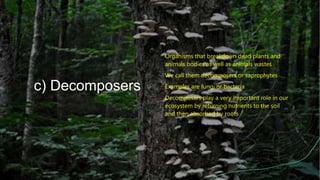
c) Decomposers
Organisms that breakdown dead plants and
animals bodies as well as animals wastes
We call them decomposers or saprophytes
Examples are fungi or bacteria
Decomposers play a very important role in our
ecosystem by returning nutrients to the soil
and then absorbed by roots
THE END
………….
References
+ Ganguli, A. Swami Viekananda Institute of Modern Science.
https://www.slideshare.net/AbhirupGanguli?utm_campaign=profiletracking&utm_medium=sssite&utm_source=s
sslideview.
+ Jschmied. Ecosystem and ecology. Unit notes 2.1.
https://www.slideshare.net/jschmied?utm_campaign=profiletracking&utm_medium=sssite&utm_source=ssslidevi
ew.
+ Star, M. Ecosystem. https://www.slideshare.net/marystar3.
+ Wise, M .Energy flow in ecosystem
https://www.slideshare.net/michelewise1?utm_campaign=profiletracking&utm_medium=sssite&utm_source=sssl
ideview.
+ Yhan, M.Community ecology.
https://www.slideshare.net/YhanMarianne?utm_campaign=profiletracking&utm_medium=sssite&utm_source=ss
slideview.

ECOSYSTEM NOTES .pptx

  • 1.
  • 2.
    Aims of thelesson 1. By the end of the lesson y must be able to define ecosystem 2. Define biotic factors and the 3 classification with explanations and examples • Producers • Consumers • Decomposers
  • 3.
    Definition Ecosystem is acommunity if living and non living factors that interact with one another. The ecosystem consist of two factors • Biotic factor • Abiotic factor
  • 5.
    Biotic factor The bioticfactor of the ecosystem is all the living organism or all the living things that shape our ecosystem We classify the living organisms based on how they get their food., and we have three classification of biotic factors and they can be classified as the • Producers • Consumers • Decomposers
  • 6.
  • 7.
    a)Producers Organisms that maketheir own food from substances they get from the environment They are called the producers or autotrophs Examples are plants and algae Plants use sunlight, carbon dioxide and water to form glucose during the process of photosynthesis
  • 8.
    b) Consumers Organisms thatcannot make or produce their own food and they have to eat other animals to survive. They are called the consumers or heterotrophs We classify the consumers into three groups Primary consumers (herbivores) Animals that only feed or eat plants , examples are zebras, buffalos, rhino and sheep etc.
  • 9.
    Continuation Secondary consumers (carnivores) Animalsthat feed on other animals or primary consumers (examples are, snakes, leopard, lions hawks etc. Tertiary consumers (omnivores) Animals that feed on both primary and secondary consumers. This means they feed on both plants and animals. Examples are rats, humans baboons.
  • 10.
    Predators Predators are theanimals that hunt and kill prey and prey are the animals that are being hunted and killed.
  • 11.
    c) Decomposers Organisms thatbreakdown dead plants and animals bodies as well as animals wastes We call them decomposers or saprophytes Examples are fungi or bacteria Decomposers play a very important role in our ecosystem by returning nutrients to the soil and then absorbed by roots
  • 12.
  • 13.
    References + Ganguli, A.Swami Viekananda Institute of Modern Science. https://www.slideshare.net/AbhirupGanguli?utm_campaign=profiletracking&utm_medium=sssite&utm_source=s sslideview. + Jschmied. Ecosystem and ecology. Unit notes 2.1. https://www.slideshare.net/jschmied?utm_campaign=profiletracking&utm_medium=sssite&utm_source=ssslidevi ew. + Star, M. Ecosystem. https://www.slideshare.net/marystar3. + Wise, M .Energy flow in ecosystem https://www.slideshare.net/michelewise1?utm_campaign=profiletracking&utm_medium=sssite&utm_source=sssl ideview. + Yhan, M.Community ecology. https://www.slideshare.net/YhanMarianne?utm_campaign=profiletracking&utm_medium=sssite&utm_source=ss slideview.