Umm-e-Rooman Yaqoob 
Roll no. 3 
B.S English (4th Semester) 
Positive science / Normative science 
Positive Science Normative Science 
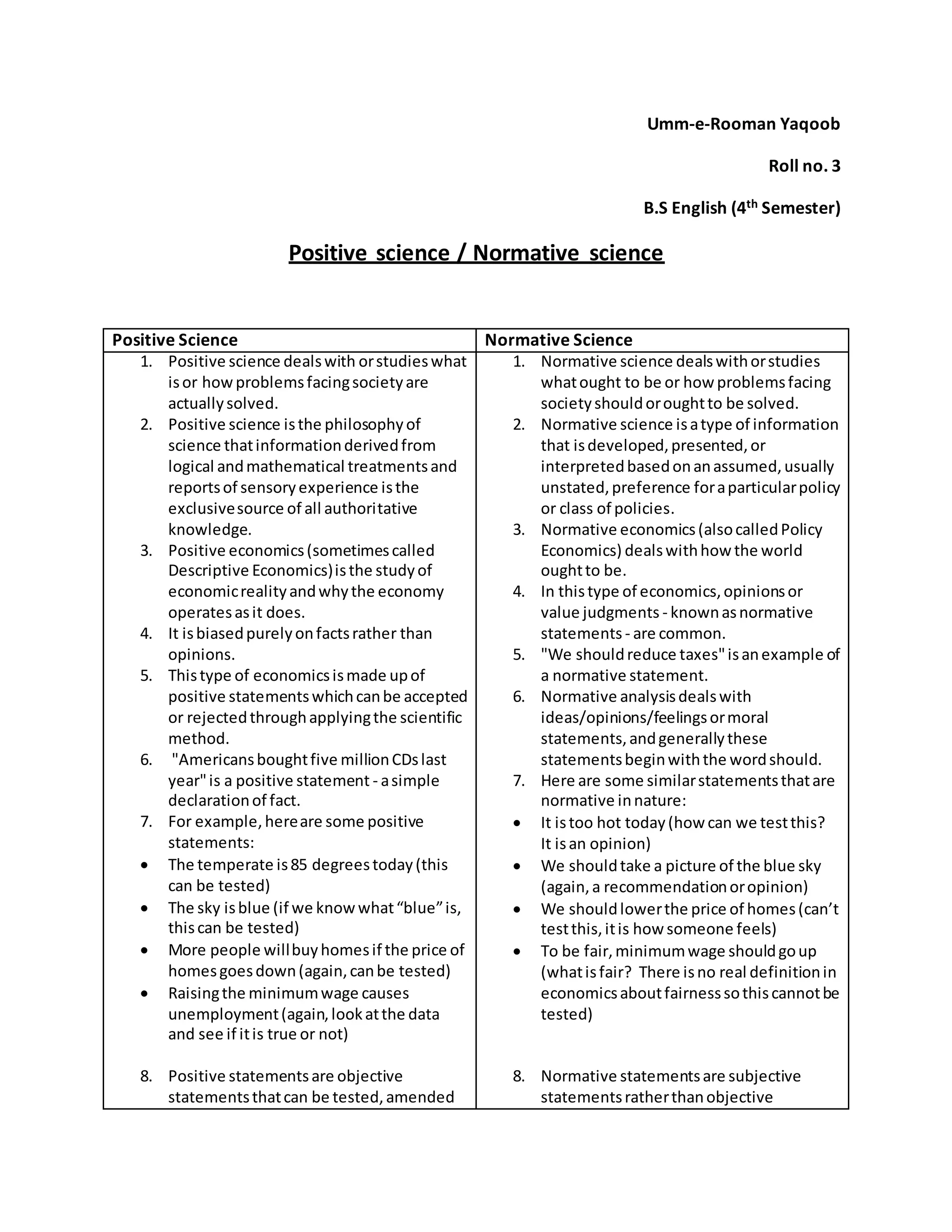
1. Positive science deals with or studies what 
is or how problems facing society are 
actually solved. 
2. Positive science is the philosophy of 
science that information derived from 
logical and mathematical treatments and 
reports of sensory experience is the 
exclusive source of all authoritative 
knowledge. 
3. Positive economics (sometimes called 
Descriptive Economics) is the study of 
economic reality and why the economy 
operates as it does. 
4. It is biased purely on facts rather than 
opinions. 
5. This type of economics is made up of 
positive statements which can be accepted 
or rejected through applying the scientific 
method. 
6. "Americans bought five million CDs last 
year" is a positive statement - a simple 
declaration of fact. 
7. For example, here are some positive 
statements: 
 The temperate is 85 degrees today (this 
can be tested) 
 The sky is blue (if we know what “blue” is, 
this can be tested) 
 More people will buy homes if the price of 
homes goes down (again, can be tested) 
 Raising the minimum wage causes 
unemployment (again, look at the data 
and see if it is true or not) 
8. Positive statements are objective 
statements that can be tested, amended 
1. Normative science deals with or studies 
what ought to be or how problems facing 
society should or ought to be solved. 
2. Normative science is a type of information 
that is developed, presented, or 
interpreted based on an assumed, usually 
unstated, preference for a particular policy 
or class of policies. 
3. Normative economics (also called Policy 
Economics) deals with how the world 
ought to be. 
4. In this type of economics, opinions or 
value judgments - known as normative 
statements - are common. 
5. "We should reduce taxes" is an example of 
a normative statement. 
6. Normative analysis deals with 
ideas/opinions/feelings or moral 
statements, and generally these 
statements begin with the word should. 
7. Here are some similar statements that are 
normative in nature: 
 It is too hot today (how can we test this? 
It is an opinion) 
 We should take a picture of the blue sky 
(again, a recommendation or opinion) 
 We should lower the price of homes (can’t 
test this, it is how someone feels) 
 To be fair, minimum wage should go up 
(what is fair? There is no real definition in 
economics about fairness so this cannot be 
tested) 
8. Normative statements are subjective 
statements rather than objective
or rejected by referring to the available 
evidence. 
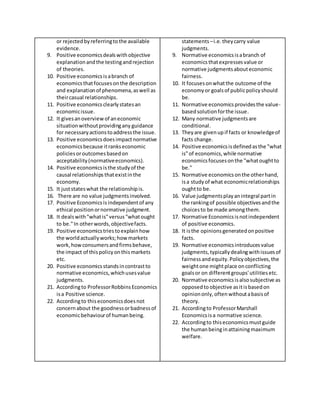
9. Positive economics deals with objective 
explanation and the testing and rejection 
of theories. 
10. Positive economics is a branch of 
economics that focuses on the description 
and explanation of phenomena, as well as 
their casual relationships. 
11. Positive economics clearly states an 
economic issue. 
12. It gives an overview of an economic 
situation without providing any guidance 
for necessary actions to address the issue. 
13. Positive economics does impact normative 
economics because it ranks economic 
policies or outcomes based on 
acceptability (normative economics). 
14. Positive economics is the study of the 
causal relationships that exist in the 
economy. 
15. It just states what the relationship is. 
16. There are no value judgments involved. 
17. Positive Economics is independent of any 
ethical position or normative judgment. 
18. It deals with "what is" versus "what ought 
to be." In other words, objective facts. 
19. Positive economics tries to explain how 
the world actually works; how markets 
work, how consumers and firms behave, 
the impact of this policy on this markets 
etc. 
20. Positive economics stands in contrast to 
normative economics, which uses value 
judgments. 
21. According to Professor Robbins Economics 
is a Positive science. 
22. According to this economics does not 
concern about the goodness or badness of 
economic behaviour of human being. 
statements – i.e. they carry value 
judgments. 
9. Normative economics is a branch of 
economics that expresses value or 
normative judgments about economic 
fairness. 
10. It focuses on what the outcome of the 
economy or goals of public policy should 
be. 
11. Normative economics provides the value-based 
solution for the issue. 
12. Many normative judgments are 
conditional. 
13. They are given up if facts or knowledge of 
facts change. 
14. Positive economics is defined as the "what 
is" of economics, while normative 
economics focuses on the "what ought to 
be." 
15. Normative economics on the other hand, 
is a study of what economic relationships 
ought to be. 
16. Value judgments play an integral part in 
the ranking of possible objectives and the 
choices to be made among them. 
17. Normative Economics is not independent 
of positive economics. 
18. It is the opinions generated on positive 
facts. 
19. Normative economics introduces value 
judgments, typically dealing with issues of 
fairness and equity. Policy objectives, the 
weight one might place on conflicting 
goals or on different groups' utilities etc. 
20. Normative economics is also subjective as 
opposed to objective as it is based on 
opinion only, often without a basis of 
theory. 
21. According to Professor Marshall 
Economics is a normative science. 
22. According to this economics must guide 
the human being in attaining maximum 
welfare.

Economics positive and normative sciences

  • 1.
    Umm-e-Rooman Yaqoob Rollno. 3 B.S English (4th Semester) Positive science / Normative science Positive Science Normative Science 1. Positive science deals with or studies what is or how problems facing society are actually solved. 2. Positive science is the philosophy of science that information derived from logical and mathematical treatments and reports of sensory experience is the exclusive source of all authoritative knowledge. 3. Positive economics (sometimes called Descriptive Economics) is the study of economic reality and why the economy operates as it does. 4. It is biased purely on facts rather than opinions. 5. This type of economics is made up of positive statements which can be accepted or rejected through applying the scientific method. 6. "Americans bought five million CDs last year" is a positive statement - a simple declaration of fact. 7. For example, here are some positive statements:  The temperate is 85 degrees today (this can be tested)  The sky is blue (if we know what “blue” is, this can be tested)  More people will buy homes if the price of homes goes down (again, can be tested)  Raising the minimum wage causes unemployment (again, look at the data and see if it is true or not) 8. Positive statements are objective statements that can be tested, amended 1. Normative science deals with or studies what ought to be or how problems facing society should or ought to be solved. 2. Normative science is a type of information that is developed, presented, or interpreted based on an assumed, usually unstated, preference for a particular policy or class of policies. 3. Normative economics (also called Policy Economics) deals with how the world ought to be. 4. In this type of economics, opinions or value judgments - known as normative statements - are common. 5. "We should reduce taxes" is an example of a normative statement. 6. Normative analysis deals with ideas/opinions/feelings or moral statements, and generally these statements begin with the word should. 7. Here are some similar statements that are normative in nature:  It is too hot today (how can we test this? It is an opinion)  We should take a picture of the blue sky (again, a recommendation or opinion)  We should lower the price of homes (can’t test this, it is how someone feels)  To be fair, minimum wage should go up (what is fair? There is no real definition in economics about fairness so this cannot be tested) 8. Normative statements are subjective statements rather than objective
  • 2.
    or rejected byreferring to the available evidence. 9. Positive economics deals with objective explanation and the testing and rejection of theories. 10. Positive economics is a branch of economics that focuses on the description and explanation of phenomena, as well as their casual relationships. 11. Positive economics clearly states an economic issue. 12. It gives an overview of an economic situation without providing any guidance for necessary actions to address the issue. 13. Positive economics does impact normative economics because it ranks economic policies or outcomes based on acceptability (normative economics). 14. Positive economics is the study of the causal relationships that exist in the economy. 15. It just states what the relationship is. 16. There are no value judgments involved. 17. Positive Economics is independent of any ethical position or normative judgment. 18. It deals with "what is" versus "what ought to be." In other words, objective facts. 19. Positive economics tries to explain how the world actually works; how markets work, how consumers and firms behave, the impact of this policy on this markets etc. 20. Positive economics stands in contrast to normative economics, which uses value judgments. 21. According to Professor Robbins Economics is a Positive science. 22. According to this economics does not concern about the goodness or badness of economic behaviour of human being. statements – i.e. they carry value judgments. 9. Normative economics is a branch of economics that expresses value or normative judgments about economic fairness. 10. It focuses on what the outcome of the economy or goals of public policy should be. 11. Normative economics provides the value-based solution for the issue. 12. Many normative judgments are conditional. 13. They are given up if facts or knowledge of facts change. 14. Positive economics is defined as the "what is" of economics, while normative economics focuses on the "what ought to be." 15. Normative economics on the other hand, is a study of what economic relationships ought to be. 16. Value judgments play an integral part in the ranking of possible objectives and the choices to be made among them. 17. Normative Economics is not independent of positive economics. 18. It is the opinions generated on positive facts. 19. Normative economics introduces value judgments, typically dealing with issues of fairness and equity. Policy objectives, the weight one might place on conflicting goals or on different groups' utilities etc. 20. Normative economics is also subjective as opposed to objective as it is based on opinion only, often without a basis of theory. 21. According to Professor Marshall Economics is a normative science. 22. According to this economics must guide the human being in attaining maximum welfare.