BIOTIC
COMPONENTS
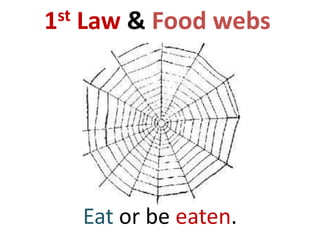
1st   Law & Food webs


      Eat or be eaten.
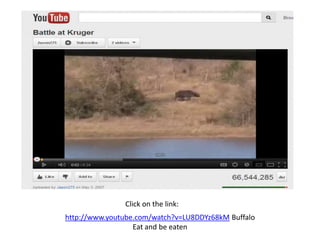
Click on the link:
http://www.youtube.com/watch?v=LU8DDYz68kM Buffalo
                  Eat and be eaten
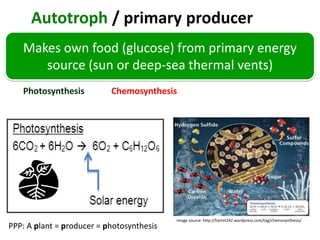
Autotroph / primary producer
   Makes own food (glucose) from primary energy
      source (sun or deep-sea thermal vents)
   Photosynthesis          Chemosynthesis


                                           Image source: http://hartm242.wordpress.com/tag/chemosynthesis/
PPP: A plant = producer = photosynthesis
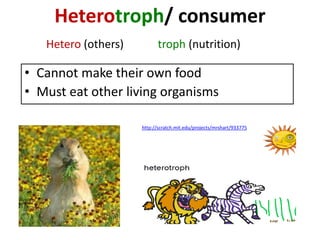
Heterotroph/ consumer
   Hetero (others)         troph (nutrition)

• Cannot make their own food
• Must eat other living organisms

                     http://scratch.mit.edu/projects/mrshart/933775
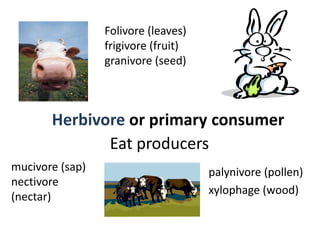
Folivore (leaves)
                 frigivore (fruit)
                 granivore (seed)


       Herbivore or primary consumer
              Eat producers
mucivore (sap)                       palynivore (pollen)
nectivore
                                     xylophage (wood)
(nectar)
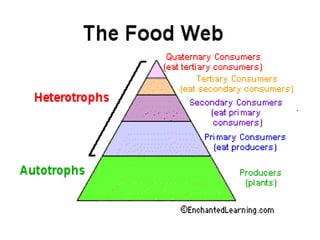
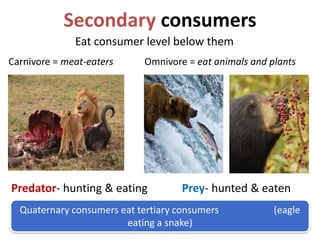
Secondary consumers
              Eat consumer level below them
Carnivore = meat-eaters     Omnivore = eat animals and plants


Predator- hunting & eating           Prey- hunted & eaten
  Quaternary consumers eat tertiary consumers           (eagle
                        eating a snake)
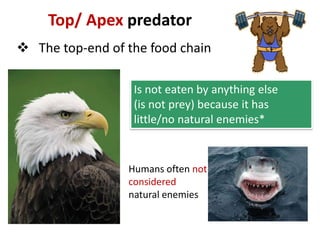
Top/ Apex predator
 The top-end of the food chain

                  Is not eaten by anything else
                  (is not prey) because it has
                  little/no natural enemies*


                 Humans often not
                 considered
                 natural enemies
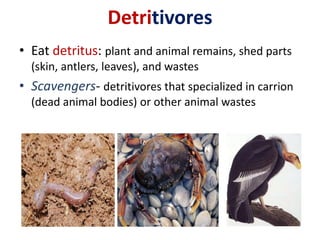
Detritivores
• Eat detritus: plant and animal remains, shed parts
  (skin, antlers, leaves), and wastes
• Scavengers- detritivores that specialized in carrion
  (dead animal bodies) or other animal wastes
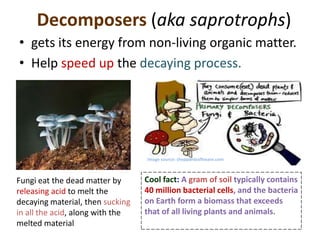
Decomposers (aka saprotrophs)
• gets its energy from non-living organic matter.
• Help speed up the decaying process.


                                  Image source: sheppardsoftware.com


Fungi eat the dead matter by      Cool fact: A gram of soil typically contains
releasing acid to melt the        40 million bacterial cells, and the bacteria
decaying material, then sucking   on Earth form a biomass that exceeds
in all the acid, along with the   that of all living plants and animals.
melted material
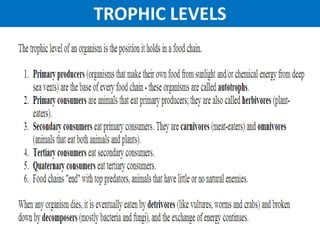
TROPHIC LEVELS
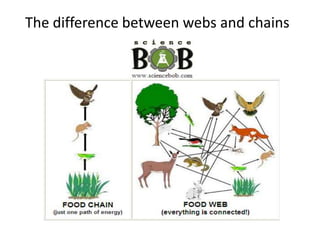
The difference between webs and chains
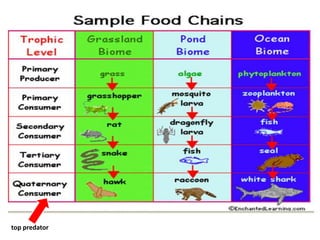
top predator

Ecology notes 2 biotic components

  • 1.
  • 2.
    1st Law & Food webs Eat or be eaten.
  • 3.
    Click on thelink: http://www.youtube.com/watch?v=LU8DDYz68kM Buffalo Eat and be eaten
  • 4.
    Autotroph / primaryproducer Makes own food (glucose) from primary energy source (sun or deep-sea thermal vents) Photosynthesis Chemosynthesis Image source: http://hartm242.wordpress.com/tag/chemosynthesis/ PPP: A plant = producer = photosynthesis
  • 5.
    Heterotroph/ consumer Hetero (others) troph (nutrition) • Cannot make their own food • Must eat other living organisms http://scratch.mit.edu/projects/mrshart/933775
  • 7.
    Folivore (leaves) frigivore (fruit) granivore (seed) Herbivore or primary consumer Eat producers mucivore (sap) palynivore (pollen) nectivore xylophage (wood) (nectar)
  • 8.
    Secondary consumers Eat consumer level below them Carnivore = meat-eaters Omnivore = eat animals and plants Predator- hunting & eating Prey- hunted & eaten Quaternary consumers eat tertiary consumers (eagle eating a snake)
  • 9.
    Top/ Apex predator The top-end of the food chain Is not eaten by anything else (is not prey) because it has little/no natural enemies* Humans often not considered natural enemies
  • 10.
    Detritivores • Eat detritus:plant and animal remains, shed parts (skin, antlers, leaves), and wastes • Scavengers- detritivores that specialized in carrion (dead animal bodies) or other animal wastes
  • 11.
    Decomposers (aka saprotrophs) •gets its energy from non-living organic matter. • Help speed up the decaying process. Image source: sheppardsoftware.com Fungi eat the dead matter by Cool fact: A gram of soil typically contains releasing acid to melt the 40 million bacterial cells, and the bacteria decaying material, then sucking on Earth form a biomass that exceeds in all the acid, along with the that of all living plants and animals. melted material
  • 12.
  • 13.
    The difference betweenwebs and chains
  • 14.