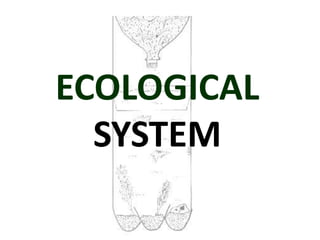
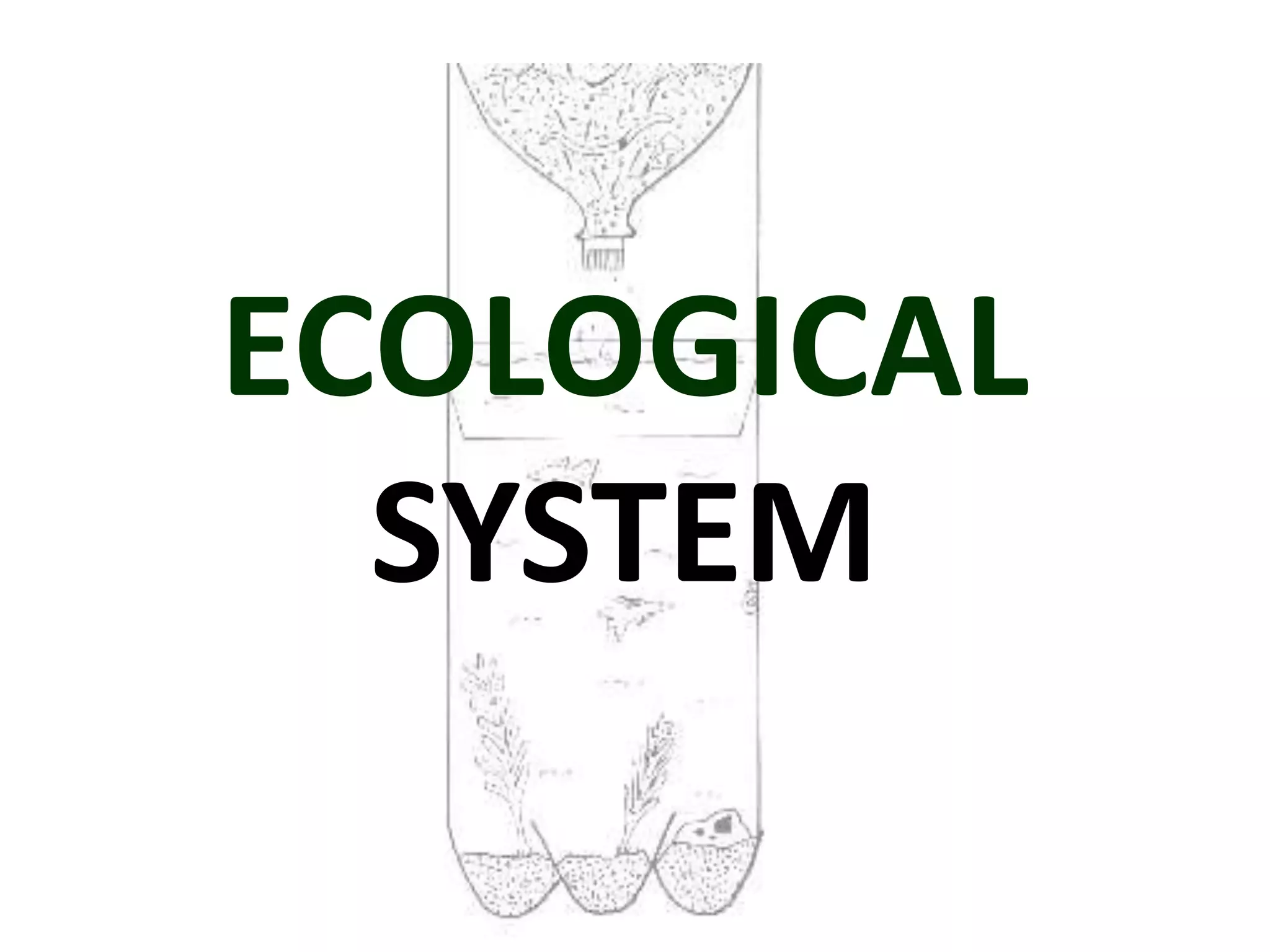
ECOLOGICAL
  SYSTEM
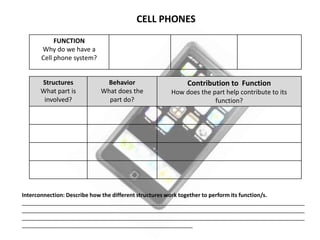
CELL PHONES
           FUNCTION
      Why do we have a
      Cell phone system?


      Structures            Behavior                   Contribution to Function
      What part is         What does the          How does the part help contribute to its
       involved?             part do?                           function?


Interconnection: Describe how the different structures work together to perform its function/s.
___________________________________________________________________________________________
___________________________________________________________________________________________
___________________________________________________________________________________________
_______________________________________________________
Systems have BFS…. IC

• Behavior = Role (role of each part)
• Function = Purpose (purpose of the whole system)
• Structure = Parts

• Interconnection – there are links between parts
• Changes – If a part fails to perform, it will affect
  the whole system
4 Laws of Ecology

1- Everything is connected to everything else.
2- Everything must go somewhere.
3- Nature knows best.
4- There is no such thing as a free lunch


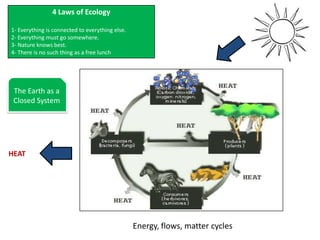
 The Earth as a
 Closed System


HEAT


                                                 Energy, flows, matter cycles
4 Laws of Ecology

1- Everything is connected to everything else.
2- Everything must go somewhere.
3- Nature knows best.
4- There is no such thing as a free lunch


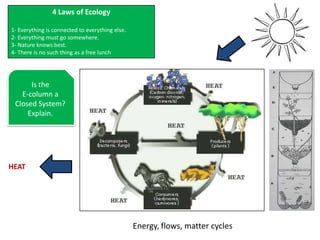
      Is the
   E-column a
 Closed System?
     Explain.


HEAT


                                                 Energy, flows, matter cycles
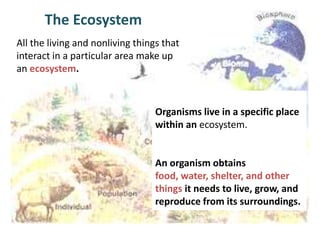
The Ecosystem
All the living and nonliving things that
interact in a particular area make up
an ecosystem.


                                  Organisms live in a specific place
                                  within an ecosystem.


                                  An organism obtains
                                  food, water, shelter, and other
                                  things it needs to live, grow, and
                                  reproduce from its surroundings.
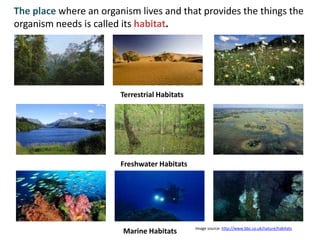
The place where an organism lives and that provides the things the
organism needs is called its habitat.


                        Terrestrial Habitats


                        Freshwater Habitats


                                               Image source: http://www.bbc.co.uk/nature/habitats
                        Marine Habitats
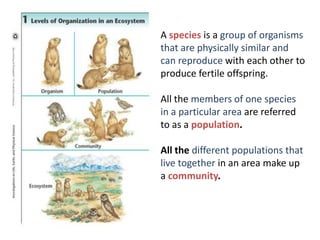
A species is a group of organisms
that are physically similar and
can reproduce with each other to
produce fertile offspring.

All the members of one species
in a particular area are referred
to as a population.

All the different populations that
live together in an area make up
a community.
BIOTIC AND ABIOTIC FACTORS


 http://www.youtube.com/watch?v=y-wpbhnom70


 http://www.youtube.com/watch?v=rNfmew9C508 Learn
           more…. Biotic and Abiotic Factors
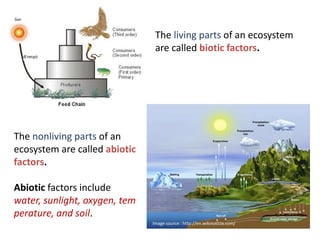
The living parts of an ecosystem
                                are called biotic factors.


The nonliving parts of an
ecosystem are called abiotic
factors.

Abiotic factors include
water, sunlight, oxygen, tem
perature, and soil.
                               Image source : http://en.wikinoticia.com/
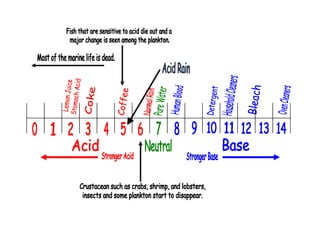
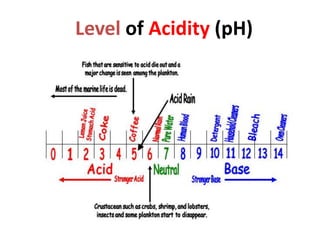
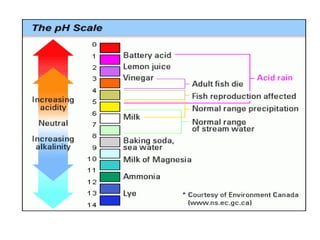
Level of Acidity (pH)
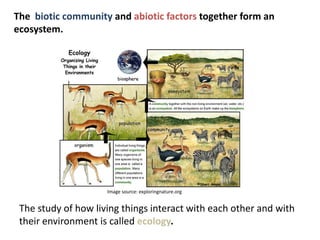
The biotic community and abiotic factors together form an
ecosystem.


                     Image source: exploringnature.org


 The study of how living things interact with each other and with
 their environment is called ecology.
Group Brainstorm:
 Create a list of biotic and abiotic factors for
  your assigned chamber.

 Share your list to your group mates.

 Discuss and make revisions in your list.

  Make a list of 5 important things you need to do to sustain
                        your E-column.
      Think about what each chamber contributes to the other chambers.
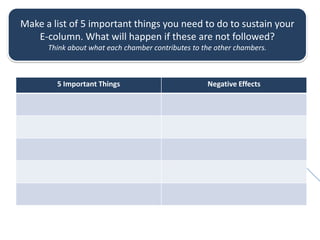
Make a list of 5 important things you need to do to sustain your
   E-column. What will happen if these are not followed?
      Think about what each chamber contributes to the other chambers.


        5 Important Things                          Negative Effects

Ecology notes 1 ecosystem

  • 1.
  • 2.
    CELL PHONES FUNCTION Why do we have a Cell phone system? Structures Behavior Contribution to Function What part is What does the How does the part help contribute to its involved? part do? function? Interconnection: Describe how the different structures work together to perform its function/s. ___________________________________________________________________________________________ ___________________________________________________________________________________________ ___________________________________________________________________________________________ _______________________________________________________
  • 3.
    Systems have BFS….IC • Behavior = Role (role of each part) • Function = Purpose (purpose of the whole system) • Structure = Parts • Interconnection – there are links between parts • Changes – If a part fails to perform, it will affect the whole system
  • 4.
    4 Laws ofEcology 1- Everything is connected to everything else. 2- Everything must go somewhere. 3- Nature knows best. 4- There is no such thing as a free lunch The Earth as a Closed System HEAT Energy, flows, matter cycles
  • 5.
    4 Laws ofEcology 1- Everything is connected to everything else. 2- Everything must go somewhere. 3- Nature knows best. 4- There is no such thing as a free lunch Is the E-column a Closed System? Explain. HEAT Energy, flows, matter cycles
  • 6.
    The Ecosystem All theliving and nonliving things that interact in a particular area make up an ecosystem. Organisms live in a specific place within an ecosystem. An organism obtains food, water, shelter, and other things it needs to live, grow, and reproduce from its surroundings.
  • 7.
    The place wherean organism lives and that provides the things the organism needs is called its habitat. Terrestrial Habitats Freshwater Habitats Image source: http://www.bbc.co.uk/nature/habitats Marine Habitats
  • 8.
    A species isa group of organisms that are physically similar and can reproduce with each other to produce fertile offspring. All the members of one species in a particular area are referred to as a population. All the different populations that live together in an area make up a community.
  • 9.
    BIOTIC AND ABIOTICFACTORS http://www.youtube.com/watch?v=y-wpbhnom70 http://www.youtube.com/watch?v=rNfmew9C508 Learn more…. Biotic and Abiotic Factors
  • 10.
    The living partsof an ecosystem are called biotic factors. The nonliving parts of an ecosystem are called abiotic factors. Abiotic factors include water, sunlight, oxygen, tem perature, and soil. Image source : http://en.wikinoticia.com/
  • 12.
  • 14.
    The biotic communityand abiotic factors together form an ecosystem. Image source: exploringnature.org The study of how living things interact with each other and with their environment is called ecology.
  • 15.
    Group Brainstorm:  Createa list of biotic and abiotic factors for your assigned chamber.  Share your list to your group mates.  Discuss and make revisions in your list. Make a list of 5 important things you need to do to sustain your E-column. Think about what each chamber contributes to the other chambers.
  • 16.
    Make a listof 5 important things you need to do to sustain your E-column. What will happen if these are not followed? Think about what each chamber contributes to the other chambers. 5 Important Things Negative Effects