Ángel Ayuso- Morales Moya
5º de primaria
Colegio maestro juan de Ávila
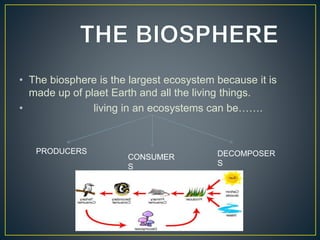
• The biosphere is the largest ecosystem because it is
made up of plaet Earth and all the living things.
• living in an ecosystems can be…….
PRODUCERS
CONSUMER
S
DECOMPOSER
S
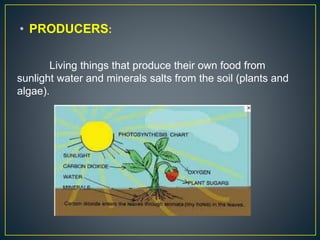
• PRODUCERS:
Living things that produce their own food from
sunlight water and minerals salts from the soil (plants and
algae).
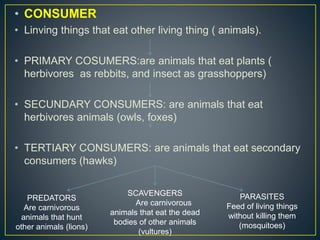
• CONSUMER
• Linving things that eat other living thing ( animals).
• PRIMARY COSUMERS:are animals that eat plants (
herbivores as rebbits, and insect as grasshoppers)
• SECUNDARY CONSUMERS: are animals that eat
herbivores animals (owls, foxes)
• TERTIARY CONSUMERS: are animals that eat secondary
consumers (hawks)
PREDATORS
Are carnivorous
animals that hunt
other animals (lions)
SCAVENGERS
Are carnivorous
animals that eat the dead
bodies of other animals
(vultures)
PARASITES
Feed of living things
without killing them
(mosquitoes)
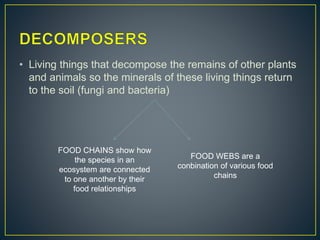
• Living things that decompose the remains of other plants
and animals so the minerals of these living things return
to the soil (fungi and bacteria)
FOOD WEBS are a
conbination of various food
chains
FOOD CHAINS show how
the species in an
ecosystem are connected
to one another by their
food relationships
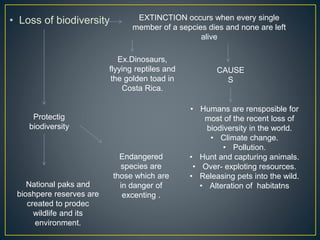
• Loss of biodiversity EXTINCTION occurs when every single
member of a sepcies dies and none are left
alive
Ex.Dinosaurs,
flyying reptiles and
the golden toad in
Costa Rica.
CAUSE
S
• Humans are rensposible for
most of the recent loss of
biodiversity in the world.
• Climate change.
• Pollution.
• Hunt and capturing animals.
• Over- exploting resources.
• Releasing pets into the wild.
• Alteration of habitatns
Protectig
biodiversity
Endangered
species are
those which are
in danger of
excenting .
National paks and
bioshpere reserves are
created to prodec
wildlife and its
environment.

Naturales tema 6 BIOSPHEERE

  • 1.
    Ángel Ayuso- MoralesMoya 5º de primaria Colegio maestro juan de Ávila
  • 2.
    • The biosphereis the largest ecosystem because it is made up of plaet Earth and all the living things. • living in an ecosystems can be……. PRODUCERS CONSUMER S DECOMPOSER S
  • 3.
    • PRODUCERS: Living thingsthat produce their own food from sunlight water and minerals salts from the soil (plants and algae).
  • 4.
    • CONSUMER • Linvingthings that eat other living thing ( animals). • PRIMARY COSUMERS:are animals that eat plants ( herbivores as rebbits, and insect as grasshoppers) • SECUNDARY CONSUMERS: are animals that eat herbivores animals (owls, foxes) • TERTIARY CONSUMERS: are animals that eat secondary consumers (hawks) PREDATORS Are carnivorous animals that hunt other animals (lions) SCAVENGERS Are carnivorous animals that eat the dead bodies of other animals (vultures) PARASITES Feed of living things without killing them (mosquitoes)
  • 5.
    • Living thingsthat decompose the remains of other plants and animals so the minerals of these living things return to the soil (fungi and bacteria) FOOD WEBS are a conbination of various food chains FOOD CHAINS show how the species in an ecosystem are connected to one another by their food relationships
  • 6.
    • Loss ofbiodiversity EXTINCTION occurs when every single member of a sepcies dies and none are left alive Ex.Dinosaurs, flyying reptiles and the golden toad in Costa Rica. CAUSE S • Humans are rensposible for most of the recent loss of biodiversity in the world. • Climate change. • Pollution. • Hunt and capturing animals. • Over- exploting resources. • Releasing pets into the wild. • Alteration of habitatns Protectig biodiversity Endangered species are those which are in danger of excenting . National paks and bioshpere reserves are created to prodec wildlife and its environment.