E-books for the Classroom &
Open Access Textbooks:
Two ways to help students
save money on textbooks
JASON BOCZAR
LAURA PASCUAL
Overview
 Why we need Textbook Affordability Programs
 What the University of South Florida is doing about it
 How two programs were implemented: E-books for the
Classroom & Open Access Textbooks
 Challenges
 Going Forward
2
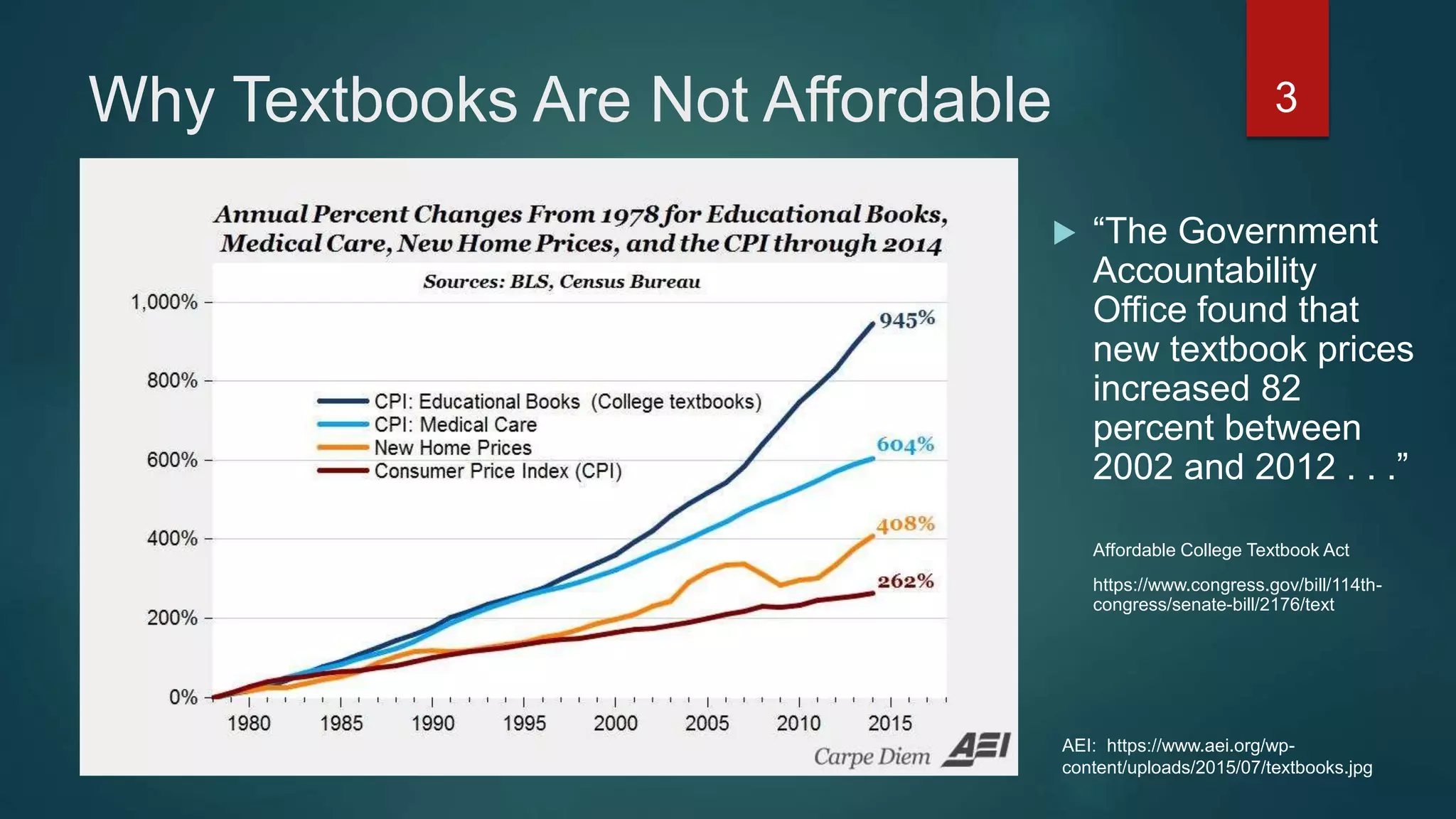
Why Textbooks Are Not Affordable 3
AEI: https://www.aei.org/wp-
content/uploads/2015/07/textbooks.jpg
 “The Government
Accountability
Office found that
new textbook prices
increased 82
percent between
2002 and 2012 . . .”
Affordable College Textbook Act
https://www.congress.gov/bill/114th-
congress/senate-bill/2176/text
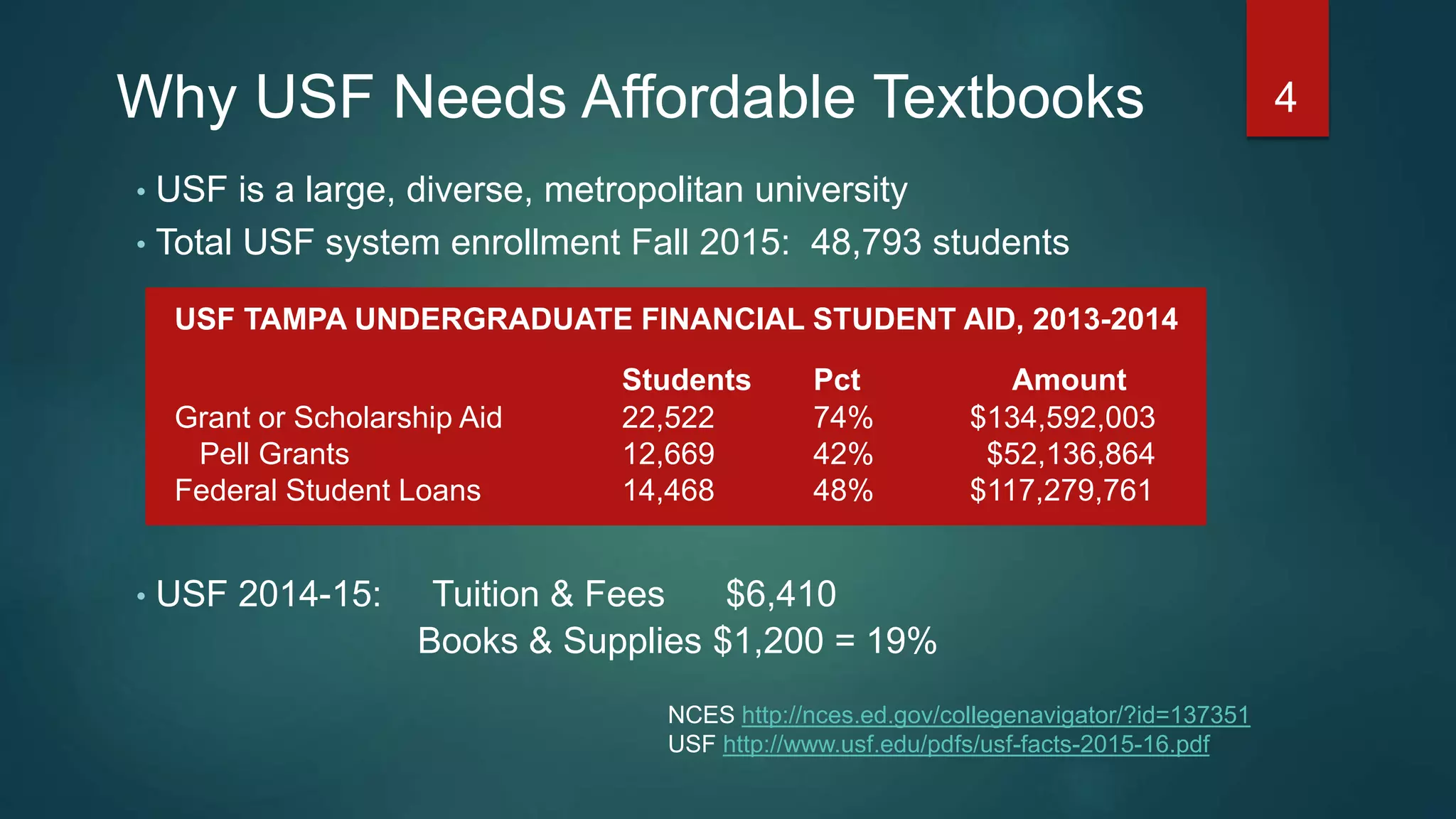
Why USF Needs Affordable Textbooks
• USF is a large, diverse, metropolitan university
• Total USF system enrollment Fall 2015: 48,793 students
• USF 2014-15: Tuition & Fees $6,410
Books & Supplies $1,200 = 19%
NCES http://nces.ed.gov/collegenavigator/?id=137351
USF http://www.usf.edu/pdfs/usf-facts-2015-16.pdf
4
USF TAMPA UNDERGRADUATE FINANCIAL STUDENT AID, 2013-2014
Students Pct Amount
Grant or Scholarship Aid 22,522 74% $134,592,003
Pell Grants 12,669 42% $52,136,864
Federal Student Loans 14,468 48% $117,279,761
Why Students Need Affordable Textbooks
 65% of students have not purchased a textbook due to price.
 94% of students who had foregone purchasing a textbook were
concerned that doing so would hurt their grade in a course. More
than half of the students felt significant concern for their grade.
 Nearly half of all students surveyed said that the cost of
textbooks impacted how many/which classes they took each
semester.
(USPIRG, 1/27/14)
5
The Legislative Reaction
 Higher Education Opportunity Act of 2008 &
Proposed Affordable College Textbook Act
 Fla Statutes Section 1004.085 Textbook Affordability: 45
days prior post list of textbooks. Newly expanded.
 Fla Rule 6A-14.092, Textbook Affordability: Adopt 45 days
prior, instructor certifications, workgroup.
 FLDOE Textbook Affordability Workgroup Report 2009
 USF Regulation: USF3.029 Textbook Adoption and
Affordability
6
Why the Library?
 Libraries are book and instructional material experts.
 Libraries are a central facility for resource distribution (both
physically and online.)
 Experienced in publisher negotiations.
 Established faculty relationships.
 The Libraries care about students and education.
7
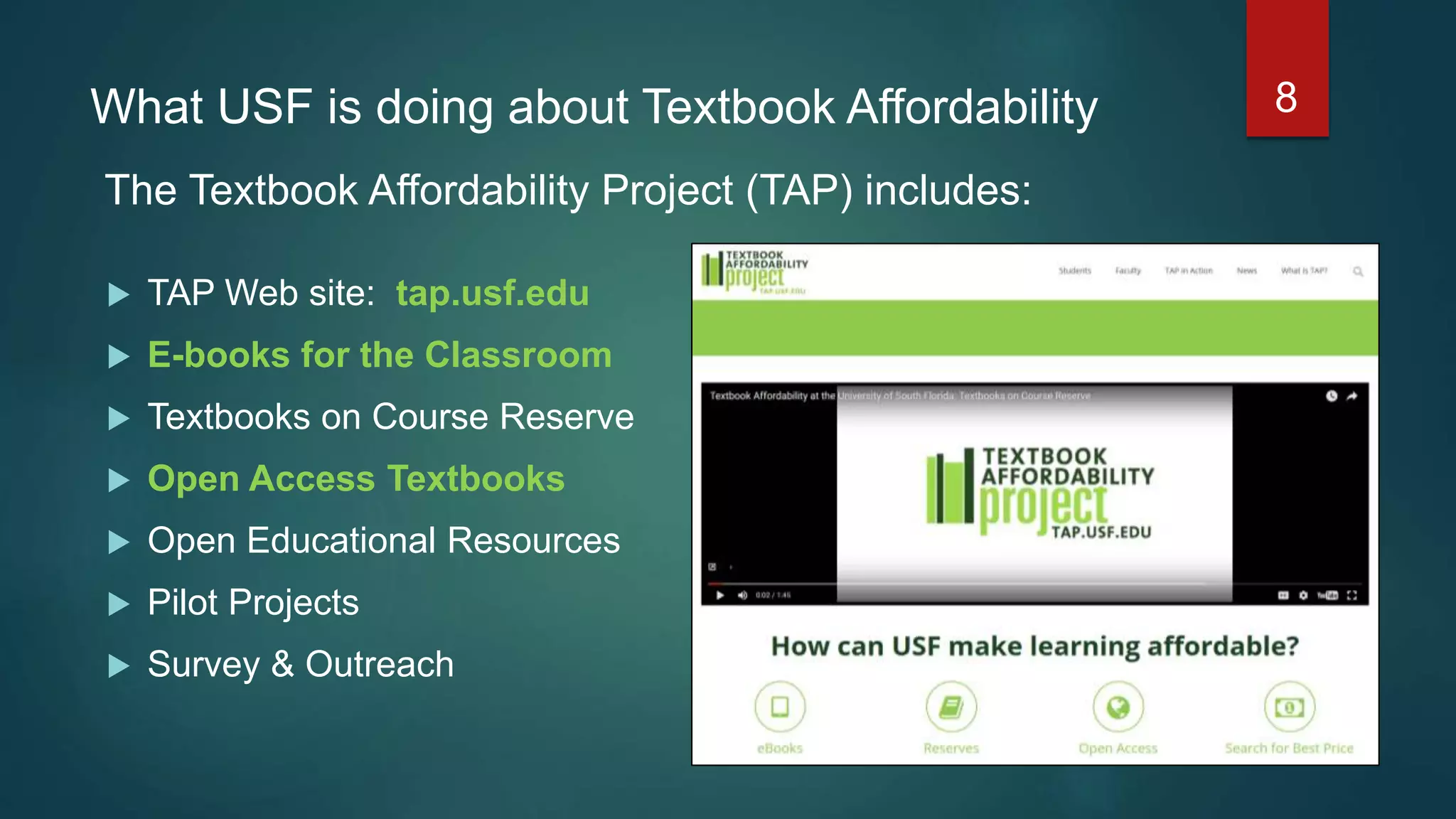
What USF is doing about Textbook Affordability
 TAP Web site: tap.usf.edu
 E-books for the Classroom
 Textbooks on Course Reserve
 Open Access Textbooks
 Open Educational Resources
 Pilot Projects
 Survey & Outreach
8
The Textbook Affordability Project (TAP) includes:
E-books for the Classroom Program
 Purchase E-Books for classroom support if available
electronically
 Includes recommended or required readings for
courses
 Priority is to purchase e-books with unlimited access
 If only limited user access available, consult with
faculty prior to purchase.
9
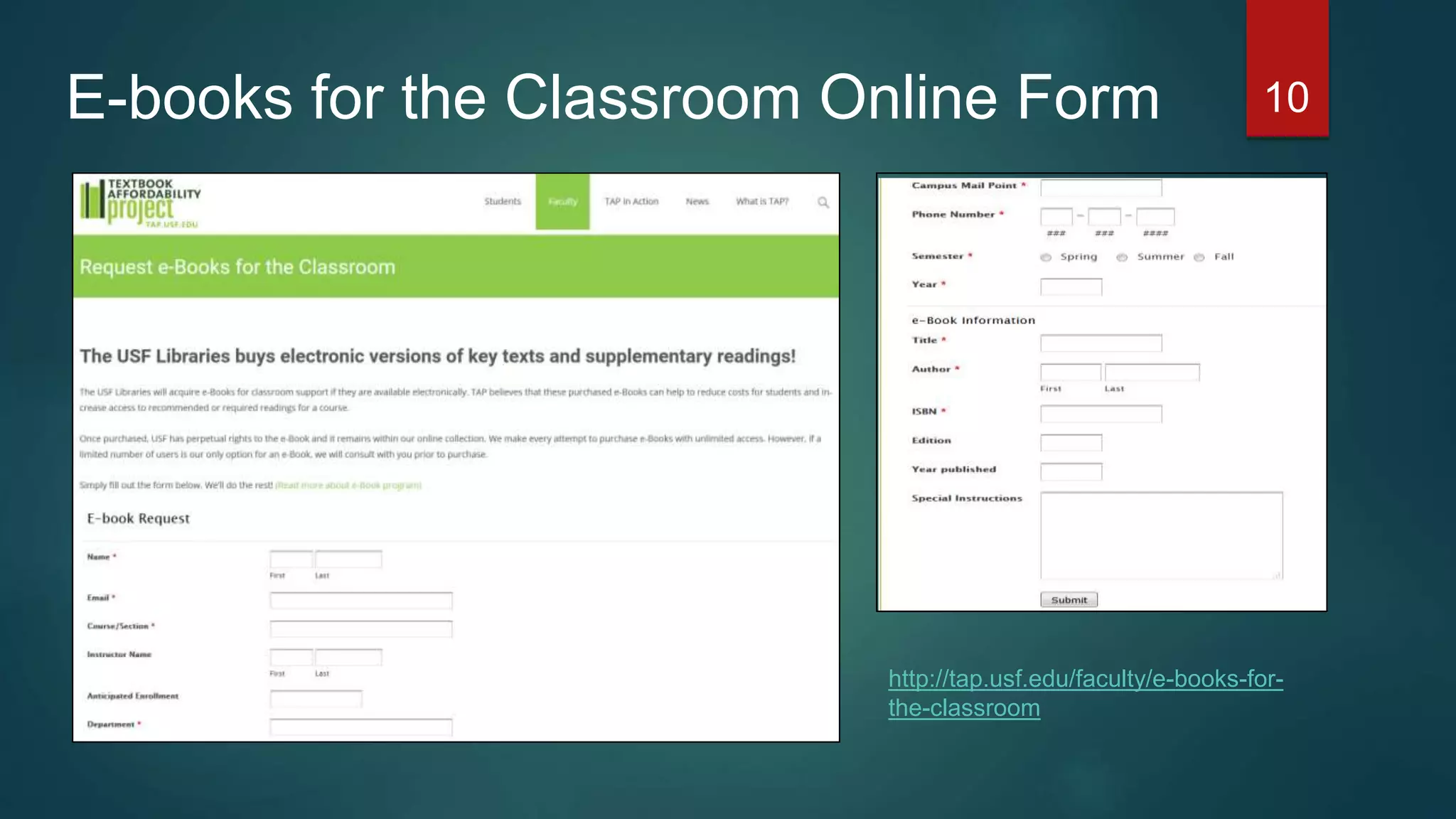
E-books for the Classroom Online Form 10
http://tap.usf.edu/faculty/e-books-for-
the-classroom
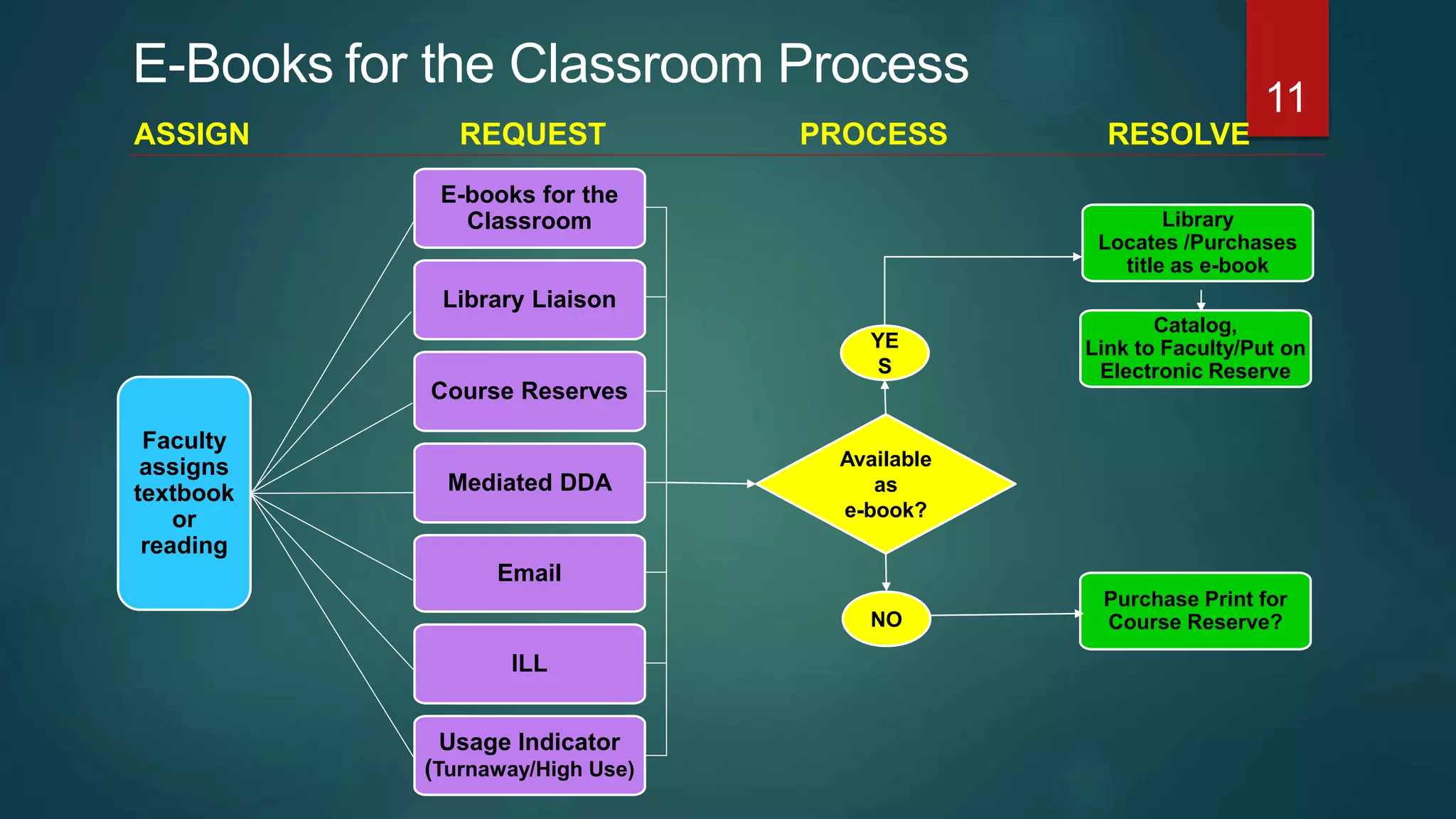
Faculty
assigns
textbook
or
reading
Library
Locates /Purchases
title as e-book
Catalog,
Link to Faculty/Put on
Electronic Reserve
Purchase Print for
Course Reserve?
Available
as
e-book?
YE
S
NO
E-books for the
Classroom
Library Liaison
Course Reserves
ILL
Usage Indicator
(Turnaway/High Use)
Mediated DDA
Email
REQUEST PROCESS RESOLVEASSIGN
E-Books for the Classroom Process
11
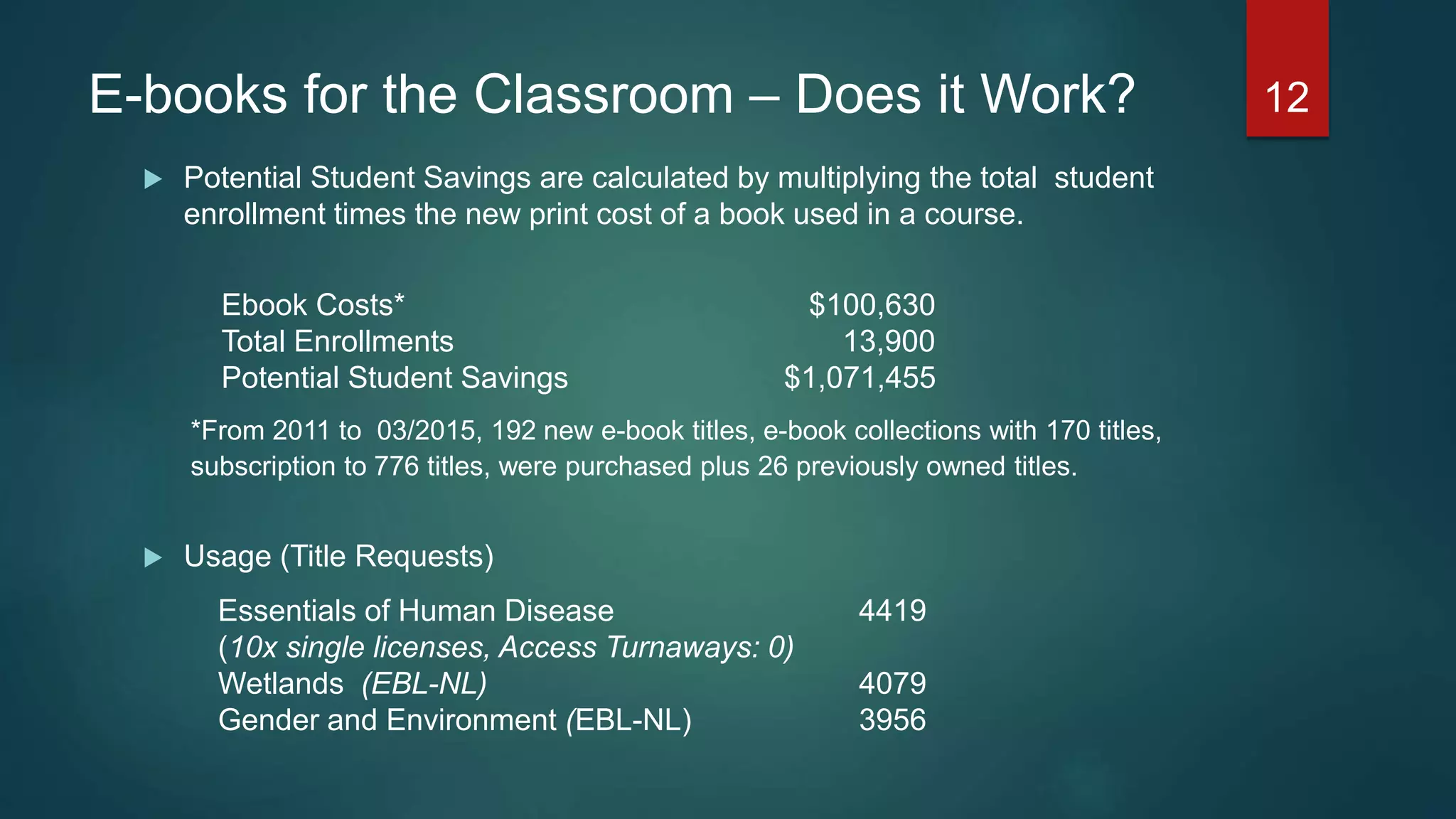
E-books for the Classroom – Does it Work?
 Potential Student Savings are calculated by multiplying the total student
enrollment times the new print cost of a book used in a course.
Ebook Costs* $100,630
Total Enrollments 13,900
Potential Student Savings $1,071,455
*From 2011 to 03/2015, 192 new e-book titles, e-book collections with 170 titles,
subscription to 776 titles, were purchased plus 26 previously owned titles.
 Usage (Title Requests)
Essentials of Human Disease 4419
(10x single licenses, Access Turnaways: 0)
Wetlands (EBL-NL) 4079
Gender and Environment (EBL-NL) 3956
12
Challenges
 Publishers: availability, bundling
 High enrollment courses vs. E-book availability
 Identifying need and use
 Faculty awareness
 Bookstore
 Funding
13
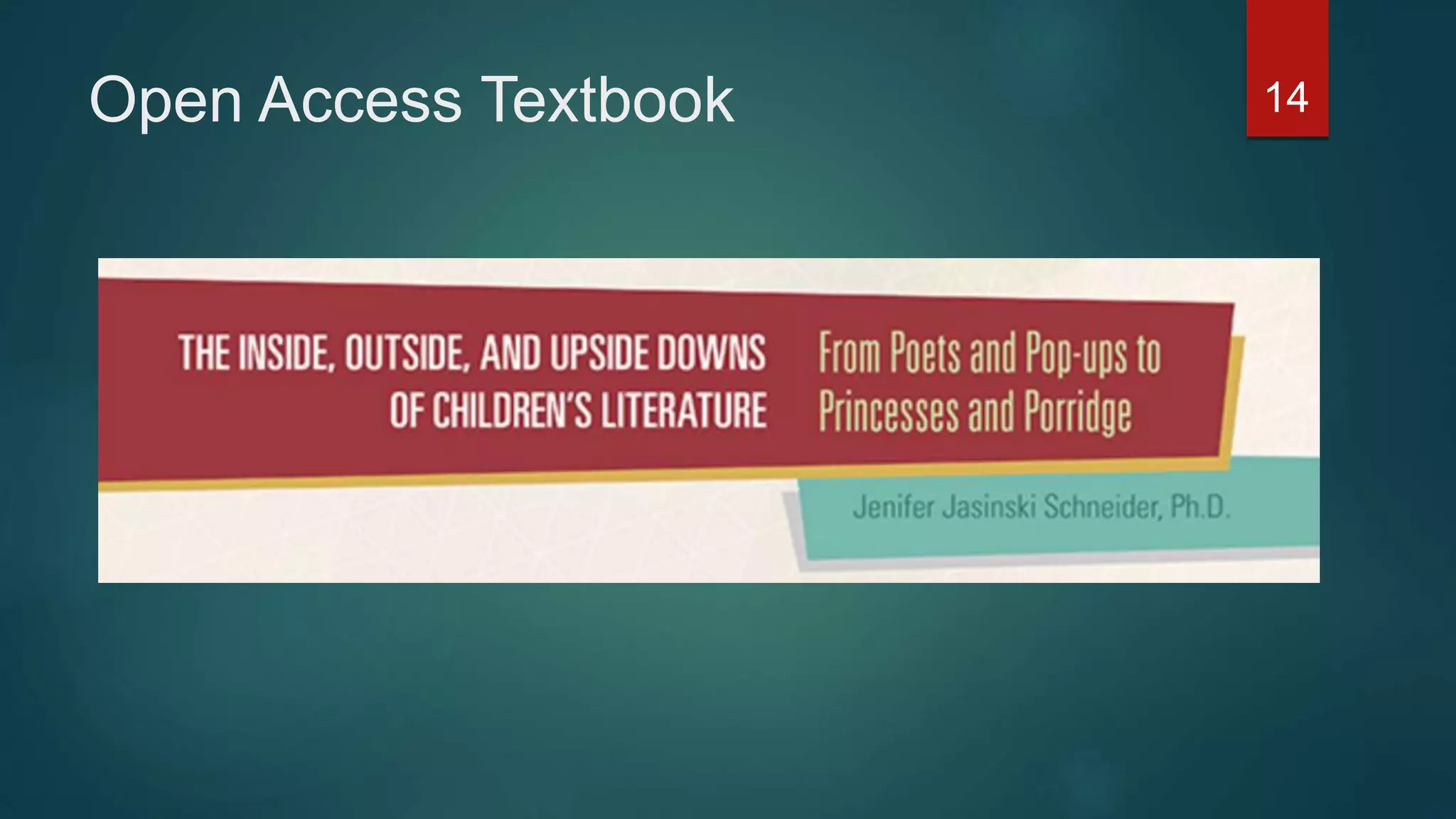
Open Access Textbook 14
Collaboration
Provost Office
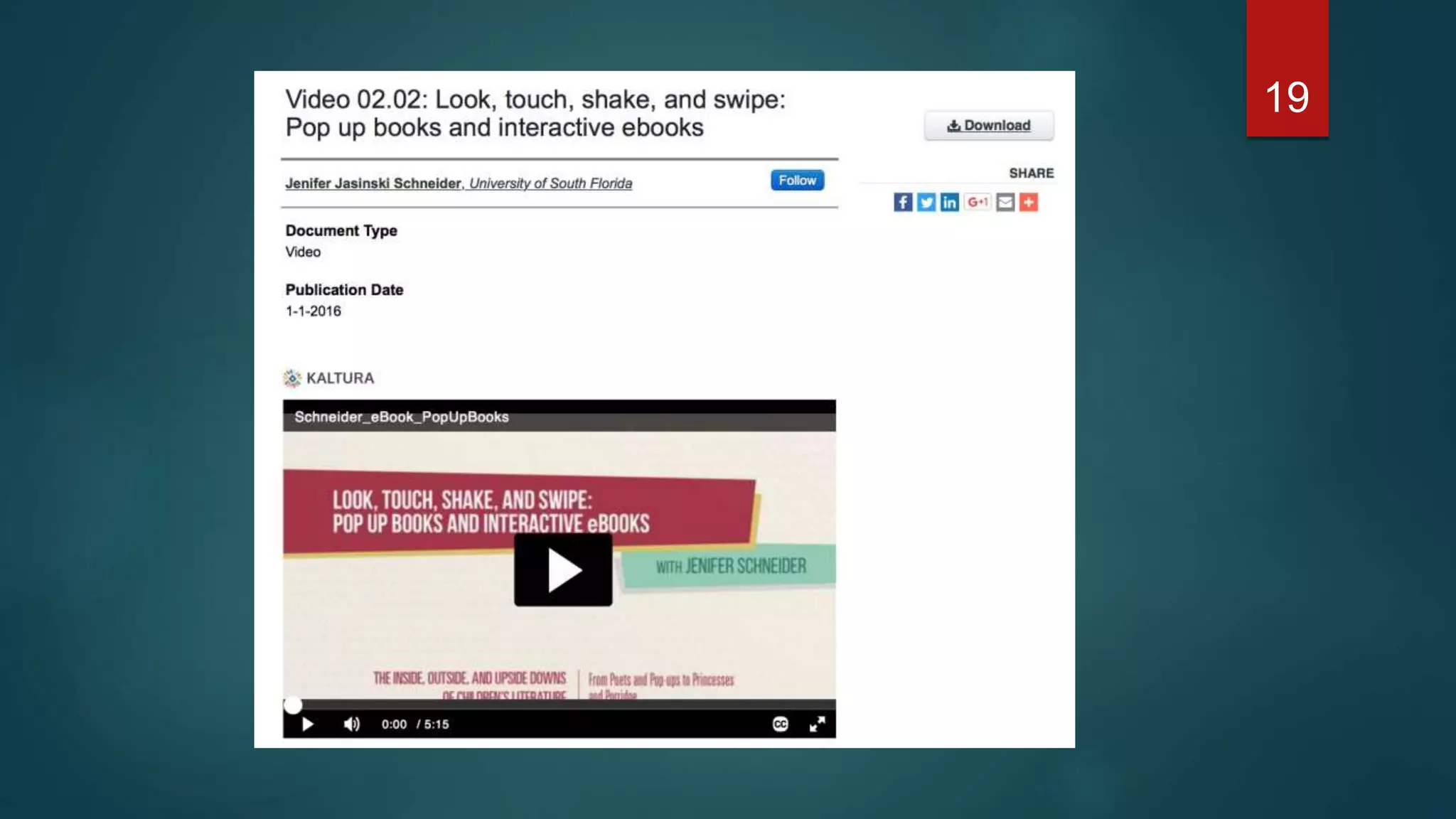
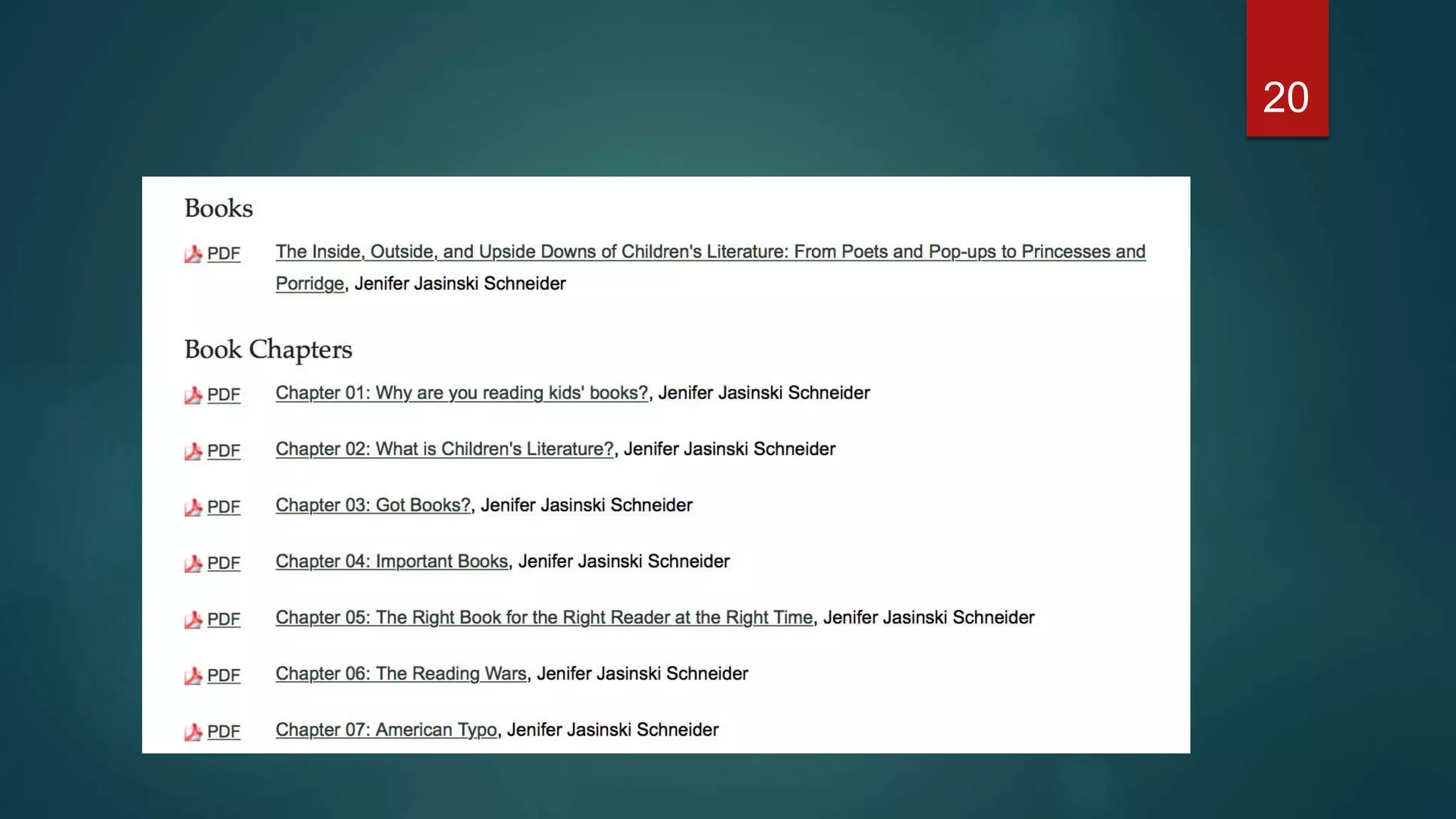
The author, Dr. Jenifer Schneider
Innovative Education
USF Tampa Library
15
Library Support
Copyright Coordinator
Open Access Editor
Editorial Manager
Editorial Project Manager
16
Key points in the library’s role
Peer Review
Copy Editing
Hosting on Institutional Repository
17
Scholar Commons 18
19
20
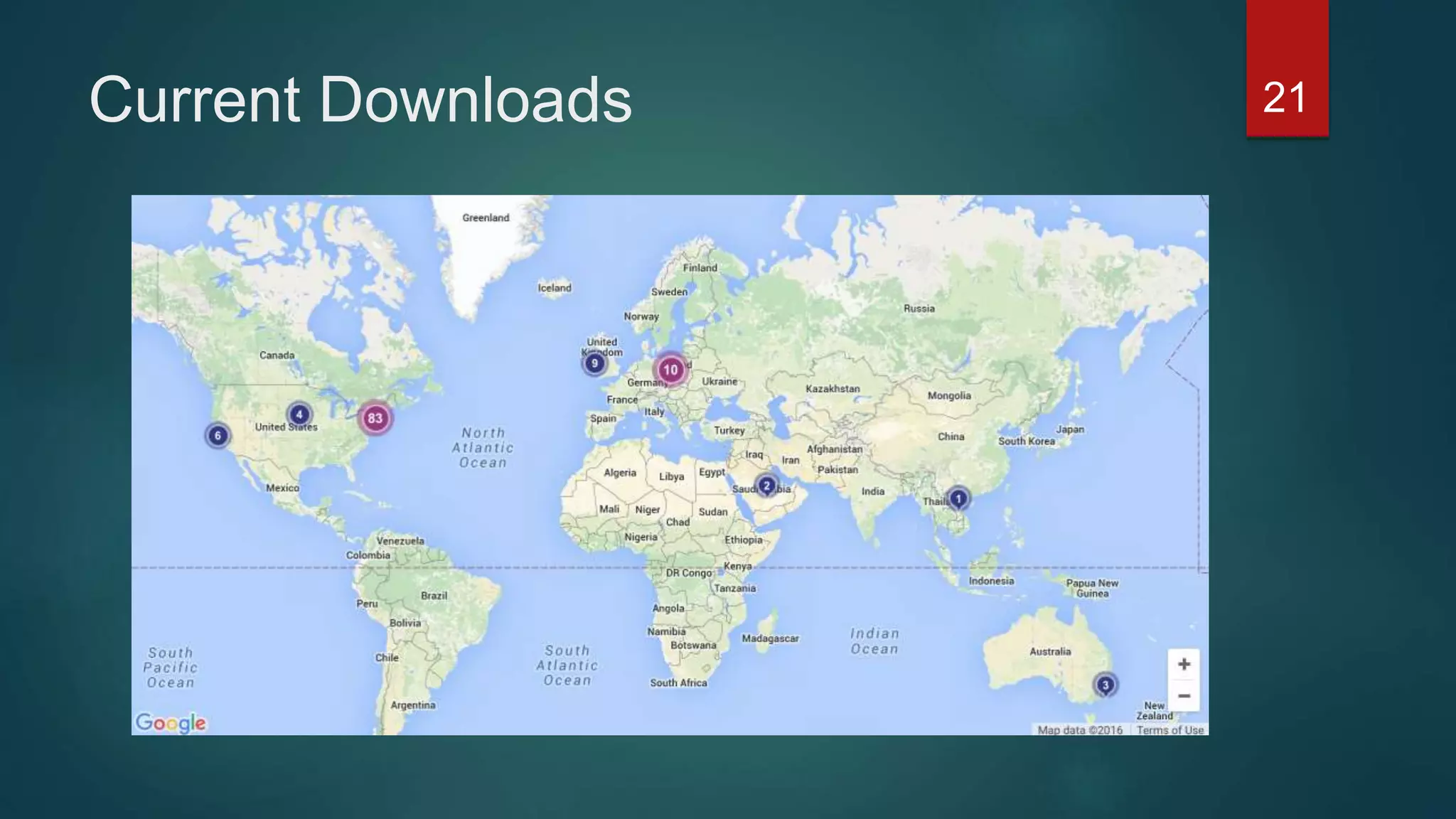
Current Downloads 21
Lessons learned – The Good!
 Innovative Education produced fantastic videos and
textbook layout
 Scholar Commons is able to host the videos as well
as preserve them
 Good support from university administration
22
Lessons learned – Small changes
 Library team involvement earlier in the project
Especially for copyright permissions
 Is it possible to complete a textbook like this in
a year?
23
Can We Do More?
 Expand existing programs
 Analyze required course materials in syllabi
 Review adopted texts for available e-books
 E-book Database
 Faculty surveys
 Encourage open access textbooks (OTN)
 Library supplied textbooks
 More outreach
24
New Initiatives 25
 Pilot project with the College of Engineering to find available
e-books/open access textbooks for core courses.
 Collect and maintain data on adopted textbooks for reporting
required by recent textbook affordability legislation in Florida.
 Use this data to inform our students thru the online catalog of
average textbook costs per course or program.
Questions?
 Jason Boczar
Digital Scholarship and Publishing Librarian
University of South Florida
jboczar@usf.edu
 Laura Pascual
Electronic Resources Librarian
University of South Florida
lcpascua@usf.edu
26
References
 American Enterprise Institute (AEI). 2015, July. Carpe Diem Blog – Textbooks [Chart]. Retrieved
from www.aei.org/wp-content/uploads/2015/07/textbooks.jpg
 National Center for Education Statistics (NCES). (n.d.) University of South Florida Main Campus.
Retrieved from http://nces.ed.gov/collegenavigator/?id=137351
 U.S. PIRG Education Fund and the Student PIRGS. 2014, January 27. Fixing the Broken
Textbook Market.
http://www.uspirg.org/sites/pirg/files/reports/NATIONAL%20Fixing%20Broken%20Textbooks%20
Report1.pdf
 USF Textbook Affordability Project. http://tap.usf.edu/
 Request E-Books for the Classroom. http://tap.usf.edu/faculty/e-books-for-the-classroom
 S.2176 - Affordable College Textbook Act. https://www.congress.gov/bill/114th-congress/senate-
bill/2176/text
 USF Mission Statement: http://www.ods.usf.edu/plans/strategic/vision-mission.htm
27

E-books for the Classroom & Open Access Textbooks: Two ways to help students save money on textbooks

  • 1.
    E-books for theClassroom & Open Access Textbooks: Two ways to help students save money on textbooks JASON BOCZAR LAURA PASCUAL
  • 2.
    Overview  Why weneed Textbook Affordability Programs  What the University of South Florida is doing about it  How two programs were implemented: E-books for the Classroom & Open Access Textbooks  Challenges  Going Forward 2
  • 3.
    Why Textbooks AreNot Affordable 3 AEI: https://www.aei.org/wp- content/uploads/2015/07/textbooks.jpg  “The Government Accountability Office found that new textbook prices increased 82 percent between 2002 and 2012 . . .” Affordable College Textbook Act https://www.congress.gov/bill/114th- congress/senate-bill/2176/text
  • 4.
    Why USF NeedsAffordable Textbooks • USF is a large, diverse, metropolitan university • Total USF system enrollment Fall 2015: 48,793 students • USF 2014-15: Tuition & Fees $6,410 Books & Supplies $1,200 = 19% NCES http://nces.ed.gov/collegenavigator/?id=137351 USF http://www.usf.edu/pdfs/usf-facts-2015-16.pdf 4 USF TAMPA UNDERGRADUATE FINANCIAL STUDENT AID, 2013-2014 Students Pct Amount Grant or Scholarship Aid 22,522 74% $134,592,003 Pell Grants 12,669 42% $52,136,864 Federal Student Loans 14,468 48% $117,279,761
  • 5.
    Why Students NeedAffordable Textbooks  65% of students have not purchased a textbook due to price.  94% of students who had foregone purchasing a textbook were concerned that doing so would hurt their grade in a course. More than half of the students felt significant concern for their grade.  Nearly half of all students surveyed said that the cost of textbooks impacted how many/which classes they took each semester. (USPIRG, 1/27/14) 5
  • 6.
    The Legislative Reaction Higher Education Opportunity Act of 2008 & Proposed Affordable College Textbook Act  Fla Statutes Section 1004.085 Textbook Affordability: 45 days prior post list of textbooks. Newly expanded.  Fla Rule 6A-14.092, Textbook Affordability: Adopt 45 days prior, instructor certifications, workgroup.  FLDOE Textbook Affordability Workgroup Report 2009  USF Regulation: USF3.029 Textbook Adoption and Affordability 6
  • 7.
    Why the Library? Libraries are book and instructional material experts.  Libraries are a central facility for resource distribution (both physically and online.)  Experienced in publisher negotiations.  Established faculty relationships.  The Libraries care about students and education. 7
  • 8.
    What USF isdoing about Textbook Affordability  TAP Web site: tap.usf.edu  E-books for the Classroom  Textbooks on Course Reserve  Open Access Textbooks  Open Educational Resources  Pilot Projects  Survey & Outreach 8 The Textbook Affordability Project (TAP) includes:
  • 9.
    E-books for theClassroom Program  Purchase E-Books for classroom support if available electronically  Includes recommended or required readings for courses  Priority is to purchase e-books with unlimited access  If only limited user access available, consult with faculty prior to purchase. 9
  • 10.
    E-books for theClassroom Online Form 10 http://tap.usf.edu/faculty/e-books-for- the-classroom
  • 11.
    Faculty assigns textbook or reading Library Locates /Purchases title ase-book Catalog, Link to Faculty/Put on Electronic Reserve Purchase Print for Course Reserve? Available as e-book? YE S NO E-books for the Classroom Library Liaison Course Reserves ILL Usage Indicator (Turnaway/High Use) Mediated DDA Email REQUEST PROCESS RESOLVEASSIGN E-Books for the Classroom Process 11
  • 12.
    E-books for theClassroom – Does it Work?  Potential Student Savings are calculated by multiplying the total student enrollment times the new print cost of a book used in a course. Ebook Costs* $100,630 Total Enrollments 13,900 Potential Student Savings $1,071,455 *From 2011 to 03/2015, 192 new e-book titles, e-book collections with 170 titles, subscription to 776 titles, were purchased plus 26 previously owned titles.  Usage (Title Requests) Essentials of Human Disease 4419 (10x single licenses, Access Turnaways: 0) Wetlands (EBL-NL) 4079 Gender and Environment (EBL-NL) 3956 12
  • 13.
    Challenges  Publishers: availability,bundling  High enrollment courses vs. E-book availability  Identifying need and use  Faculty awareness  Bookstore  Funding 13
  • 14.
  • 15.
    Collaboration Provost Office The author,Dr. Jenifer Schneider Innovative Education USF Tampa Library 15
  • 16.
    Library Support Copyright Coordinator OpenAccess Editor Editorial Manager Editorial Project Manager 16
  • 17.
    Key points inthe library’s role Peer Review Copy Editing Hosting on Institutional Repository 17
  • 18.
  • 19.
  • 20.
  • 21.
  • 22.
    Lessons learned –The Good!  Innovative Education produced fantastic videos and textbook layout  Scholar Commons is able to host the videos as well as preserve them  Good support from university administration 22
  • 23.
    Lessons learned –Small changes  Library team involvement earlier in the project Especially for copyright permissions  Is it possible to complete a textbook like this in a year? 23
  • 24.
    Can We DoMore?  Expand existing programs  Analyze required course materials in syllabi  Review adopted texts for available e-books  E-book Database  Faculty surveys  Encourage open access textbooks (OTN)  Library supplied textbooks  More outreach 24
  • 25.
    New Initiatives 25 Pilot project with the College of Engineering to find available e-books/open access textbooks for core courses.  Collect and maintain data on adopted textbooks for reporting required by recent textbook affordability legislation in Florida.  Use this data to inform our students thru the online catalog of average textbook costs per course or program.
  • 26.
    Questions?  Jason Boczar DigitalScholarship and Publishing Librarian University of South Florida jboczar@usf.edu  Laura Pascual Electronic Resources Librarian University of South Florida lcpascua@usf.edu 26
  • 27.
    References  American EnterpriseInstitute (AEI). 2015, July. Carpe Diem Blog – Textbooks [Chart]. Retrieved from www.aei.org/wp-content/uploads/2015/07/textbooks.jpg  National Center for Education Statistics (NCES). (n.d.) University of South Florida Main Campus. Retrieved from http://nces.ed.gov/collegenavigator/?id=137351  U.S. PIRG Education Fund and the Student PIRGS. 2014, January 27. Fixing the Broken Textbook Market. http://www.uspirg.org/sites/pirg/files/reports/NATIONAL%20Fixing%20Broken%20Textbooks%20 Report1.pdf  USF Textbook Affordability Project. http://tap.usf.edu/  Request E-Books for the Classroom. http://tap.usf.edu/faculty/e-books-for-the-classroom  S.2176 - Affordable College Textbook Act. https://www.congress.gov/bill/114th-congress/senate- bill/2176/text  USF Mission Statement: http://www.ods.usf.edu/plans/strategic/vision-mission.htm 27